
Roland DürreThursday July 4th, 2013
My Agile Manifesto …
🙂 … it might look like this or similar:
The more I think about “acting and behaving in an agile way”, the more I believe it to be a basic principle that makes the difference between the “old world” and the “new world”.
Consequently, “AGILE” might well be the next logical step after “enlightenment” and “using your brains”. Being AGILE also means you have to move consciously all the time between the two opposing ends individuality (what do I want, what can I do, what am I permitted to do,…) and the collective (what do we want, what can we achieve, what are we allowed to do,…).
“AGILE” describes our wish to live our lives in freedom – which, at this place, means “being prepared and capable of living your life in responsibility”. At the same time, you have to follow the principle “promote your own and the life of others, rather than reducing them”.
Being “AGILE” means knowing how to deal with responsibility. Being in favour of what change we need and opposed to what change is detrimental for us.
Being “AGILE” also includes the wish to increase your knowledge and then being able to apply them. Naturally, models and approaches, methods and concepts are an important result of additional knowledge. …
Consequently, in order to become “AGILE”, we will constantly have to learn new things, do things we are not used to, try strange things and collect experience. We have to understand and comprehend how processes in our social systems function. Thus, the “integrative and systemic understanding” of our enterprises will become the requirement for successful “leadership”.
This is it for now in a nutshell …
I was motivated to write this outpouring on agility by an article in openPM by Stefan Hagen.
RMD
(Translated by EG)
Roland DürreFriday June 28th, 2013
Now Online: All IF Forum Craftsmanship Videos!
A few days ago, I put the first two IF Forum presentations (Vorträge) – held by Wolfgang Menauer and Kristin Block – online. The same is true for the “Software Development Unit” (Softwareentwicklungsblock) by and with Bernhard Findeiss and Dr. Elmar Jürgens.
Consequently, only the last two presentations are still missing. Here they are:
Bernd Fiedler made us understand in an amusing way what exactly it means to be a “master craftsman”:
And then there was Reinhard Büttner! He gave a review of all the day’s findings and added his own experience in the most suitable way.
I already sent the work of art by Wolf Nkole Helzle created during the day as my way of saying “Thank You ” to all speakers and guests.
Let me, once more, thank all the artists and speakers. And I would like to specifically thank all our guests. They gave me so much feedback saying what a wonderful event it was. This gives me courage to continue. We already decided upon a topic for 2014:
Self-Organization in the sense of
“Self-organization and self-control as a formative model for enterprises and projects”!
As always, I look forward to reading your feedback.
RMD
(Translated by EG)
Roland DürreWednesday June 26th, 2013
Bernhard Findeiss and Dr. Elmar Jürgens at the IF Forum (Video)
The work of art by Wolf Nkole Helzle which was created during our IF Forum CRAFTSMANSHIP has already been submitted to all of you as a form of saying “Thank You” (Danke Schön).
Besides, the first two IF Forum presentations (Vorträge) by Wolfgang Menauer and Kristin Block were made available live by me a few days ago. Today, you get the next two!
Firstly, we see Bernhard Findeiss, “Technology Evangelist” at InterFace AG. He tells you about “a day in the life of a software craftsman”:
Dr. Elmar Jürgens of CQSE reports about his own experience and the good team results with Peer2Peer reviews in the interest of quality:
Thanks to Bernd, Elmar and Friedrich!
RMD
(Translated by EG)
Roland DürreThursday June 13th, 2013
Today: Technological IF Forum at Unterhaching InterFace, Starting at 13:00!
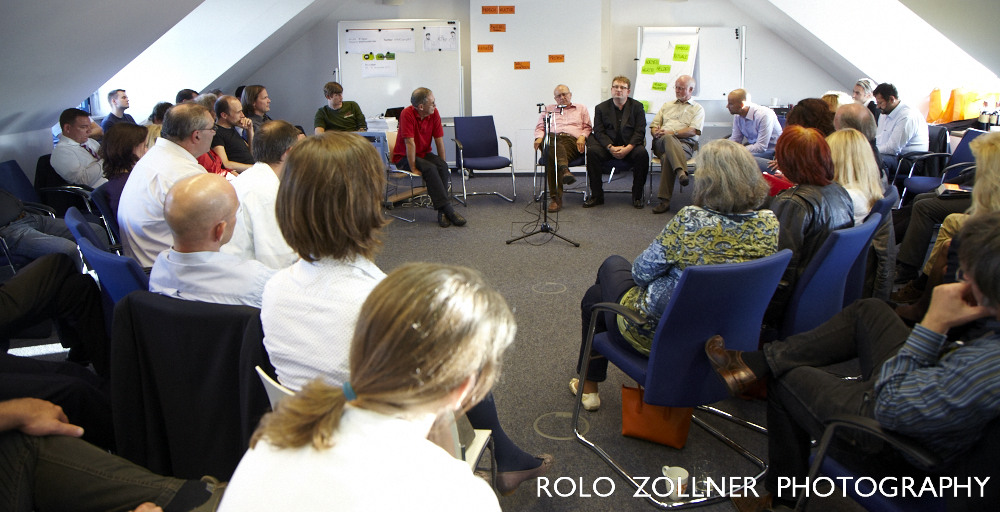 Today is the day!
At 13:00 hours, our Workhop “Craftsmanship” will start!
For more information, click here!
There are still a few vacancies!
And for those who cannot come, we broadcast the presentation live on the internet.
On http://www.ustream.tv/channel/IF-Forum , you can see the video stream of the presentation, starting around 13:45 hours.
In addition, we will – as usual – make a video recording and publish it on youtube (Kanal InterFace AG).
RMD
(Translated by EG)
Roland DürreThursday June 6th, 2013
Workshop at InterFace AG: CRAFTSMANSHIP!
Invitation & Agenda
With the guidance of Wolf Nkole Helzle (Social Media Art Artist), our fourth technological IF Forum will be about
EXPERIENCE, COMPETENCE, CULTURE, QUALITY and KNOWLEDGE.
 To the left on the picture, you can see Wolf Nkole Helzle. He is a famous social media artist living in Baden Württemberg. Wolf will accompany us through this year of IF Forums!
To trigger your memory:
We started our technological IF Forum in 2010 with finding out how “agile development” can be useful for us. During the next two years, we discussed “new leadership” (2011) and “project coaching” (2012).
So far, our IF Forums have been very special events, both for our guests and ourselves. We want it to be the same this time over. This year, it is all about the craftsmanship of a “white collar worker”.
We will start on June, 13th, at 13:00 hours with our workshop “Craftsmanship”. The location is our office building at Unterhaching and, for a change, we will start in the afternoon. The presentations will begin at 14:00 hours.
We will gladly welcome our guests from 13.00 hours on, because that is when we will visit art with Wolf Nkole Helzle in a very craftsman-like and interactive way.
AGENDA
from 13:00 hours: our guests arrive … Welcome Wolf Helzle will take pictures!
14:00 hours: Roland Dürre / Wolfgang Menauer (both of InterFace AG)
Introduction/Warming
Up What is craftsmanship?
14:30 hours: Judith Lell & Kristin Block (wissenswerk):
The Cornerstones of a Knowledge (Sharing)
Culture Leadership as a craft
Coffee Break
15:15 hours: Bernhard Findeiss (InterFace AG):
No Competence without Learning and Practice!
Developing software is a craft
15:45 hours: Dr. Elmar Juergens (CQSE GmbH)
The “Feedback Method”
Delivering quality is also craftsmanship
Coffee Break
16:30 hours: Bernd Fiedler (Datac):
Master and Apprentice
No craft without experience
17:00 hours: Reinhard Büttner (SWM)
Knowledge – Giving and Receiving – Why so Much is Lost!
Sharing knowledge is a craft
Coffee Break
17:45 hours: all of us
“Fishbowl”
Sharing, giving and receiving – and winning?
18:30 Happy Hour
“Craftsmanship” by Wolf Helzle
Art & Pleasure
SPEAKERS
I personally know all the speakers quite well. Appreciating their competence, I also know that they all have the very special ability to convey their knowledge in a charming and exciting manner. Here is a list of speakers:
Judith Lell and Kristin Block founded wissenswerk together.
Bernhard Findeiss is an employee of the InterFace AG. Among other things, he is very active in the field of Open Source and at Socrates.
Dr. Elmar Juergens is the founder and shareholder of CQSE GmbH.
Bernd Fiedler is on the board of directors at Datac. Moreover, he lectures regularly and is the pragmatic mastermind of knowledge management.
Reinhard Büttner is workforce director at the Stadtwerken München, where he built up a functioning model of “knowledge management”.
As early as now, I would like to thank our speakers very much for agreeing to speak. And I know that, thanks to them, our fourth IF Forum will again be a very special afternoon!
And we look forward to welcoming our guests! As always, you can register for the technological IF Forum via E-Mail.
RMD
(Translated by EG)
Roland DürreSaturday May 25th, 2013
What Annoys Me #30 Apple and Taxes
I am no longer very much in favour of Apple. Mind you, this is not because of tax optimization. Rather, it is because they move more and more in the proprietary world, using their technological and economic power in an unethical way. The concern changed. How much openness did we have in one of those OS in former times? And today?
However, what really annoys me is how the “Welt” now berates Apple, just because they kept a few billion dollars from the US Federal Tax Office. They did it simply by declaring some of their profits – totally lawfully – in other countries outside the USA, for instance in Ireland. Well, it was less expensive there, wasn’t it? So they transferred some of the billions they kept from the US Federal Tax Office into other countries because it cost less there. And in doing so, they saved a few billion dollars, too.
This was a bad thing for the US economy, but it was rather nice for the economy in countries like Ireland. And it was good for Apple, because now they can invest some of the money they saved. And it was also good for the shareholders of Apple, because now they can get more dividends.
So what is so bad about it?
We have a free economy. We think globally and we live through a global sharing of labour. Consequently, the huge enterprises, too, operate globally. If they stick by the rules and laws in business – and I mean in the way those rules and laws were written and are intended – then this is fine. To be sure, it might be nice to write values such as “fair” and “upright” into a concern’s statutes, but it is not really helpful, is it?
Because in order for it to be helpful, we would need a categorical imperative, instead of rules. Which is something we (perhaps unfortunately) do not have in business.
And since we actually do have countries with different laws and business is world-wide, the manager in charge actually has the right, if not perhaps even the obligation, to actually take advantage of it – as long as it happens inside the legal boundaries.
And then the “Welt” has no business pointing the finger at them and abusing them. No. If anything, they should point their fingers right back towards themselves. And perhaps change the rules. But I have no idea if that would improve matters.
RMD
(Translated by EG)
Roland DürreWednesday May 22nd, 2013
PM – A New Definition!
Project ≠ Project.
Project Management ≠ Project Management.
 In his PM-Blog, Stefan Hagen published an article with this headline. For me, it is something like a “revolutionary milestone” when considering (project) management.
Using enlightened statements, Stefan dismisses quite a few dogmata of project management from the last century (millennium).
I was fascinated by his article. Consequently, I lost no time and immediately wrote a comment in pm-blog.de. However, I would like to use this opportunity to give you a summary of my comments, although with (significant) changes.
Let me start by citing from Stefan’s article:
“We pretend that there is such a thing as a clear definition of “project” or “project management”. This is an absurdity”.
That is not the only sentence where Stefan hits the nail on the head. In his article, Stefan asks a lot of good questions – and gives some answers, too. It is all so clear and self-explanatory that you start wondering why so many managers still stick with the old dogmata.
To me, the answer seems obvious: dogmata, even if they are antiquated, have a huge “advantage”:
They make life easier for us humans, especially if we are talking complex or paradox situations.Based on dogmata, you can basically do without thinking yourself. Instead, you can decide according to a given “pattern”. The human being who in a situation of decision is often extremely lonely will find something to hold onto and thus reduce his natural (and healthy) uncertainty.
Dogmata also take pressure off our conscience. Even if everything goes wrong, we can say we “did everything right”. After all, we acted exactly like we had been taught, didn’t we? Everything we did was according to the respective standards we have been, after all, successfully certified for. Which means that we are not to blame for the failure and/or detrimental effects of the project…
The way we have been frequently trained to act according to dogmata protects us and makes life easier. Responsibility is delegated to an authority that is perhaps a plausible book or rules and accepted as superior. Basically, it comes “from above” and we trust it will be correct. More often than not, you are even forced to act as you do by an anonymous system, which does not leave you any leeway.
In view of this, you cannot be surprised if doctrines and dogmata are highly cherished by humans. Except they should not go so far as to start questioning dogmata. Because that would mean they often will no longer believe in the world and that means the party is over. So maybe it is a good idea not to start thinking…
Because:
Dogmata are almost always inflexible and antiquated. They do not do justice to the dynamic and, after all, very complex real life, along with the needs of people in social communities. And mostly the same is true for decisions and behaviour based on these dogmata.
For “correct” decisions, and “good” behaviour of humans, the requirement is that they have enjoyed a good education, are equipped with the right amount of experience in life, a high degree of autonomy along with civil courage, the willingness to take responsibility and common sense.
That is exactly what Stefan demands in his definition of project management!
However, autonomous, self-responsible and “good” behaviour will not just fall out of the clouds. Neither in (project) management, nor in real life.
For me, this means that the biggest challenge of all for us humans is to be (become) willing and capable of living our lives in self-responsibility. And this should happen in an ethically responsible way following values shared by all humans like, for instance the Golden Rule or the UN Charta.
And just like this is true for life in general, it is also true for our “sub-lives” in roles such as project manager, leader, entrepreneur, partner, pater familias, official functionary, politician – well, basically wherever we live together socially in communities.
RMD
(Translated by EG)
P.S.
😉
In this article, I took pains to not give in to the temptation of using dogmata of the Catholic Church as examples.…
Roland DürreMonday May 20th, 2013
#barcamp&#pmcamp: Why I Go There!
Great events will cast their shadows before:
 This year, there will be at least four more PM camps.
After the magnificent meeting at Stuttgart #pmcamp13str of May, 3rd/4th, 2013 , we will meet again in Vienna for the #pmcamp13vie on June, 21st/22nd, 2013, in Bad Homburg for the #pmcampRM on 27th through 29th, 2013, in Berlin for the #pmcamp13ber on September, 13th through 15th, 2013 and, as the year comes to an end for the “mother of all PM camps” #pmcamp13 in Dornbirn on November, 14th through 16th, 2013.
Here is the definition:
A PM-Camp is nothing other than a Barcamp, where project managers, entrepreneurs, leaders, students and similarly minded people meet.
This is the reason why I am going to start a small IF blog series on barcamps in general and PM camp in particular.
Today you will read part 1:
Why I Go There!
I was born in 1950. My generation had a nice time to live in. In our Central European home, we experienced luxury as the human race did never before in its history. We were allowed to grow up in a free society. Suppression and force were at least reduced to a tolerable degree. For most of us, education was affordable. And, above all: there was no active war fought on our soil!
To be sure – not all was well. The consumption terror born during the time of the economic miracle was negative. We, too, fell victim to it. The only unnatural threat for our lives was on the streets, where motorized traffic caused many victims, injuries and deaths (in our circles, as well). Perversely, however, we accepted those as logical consequence of our so-called new freedom.
When all is said and done, I and my central European generation probably lived in a time when we were better off than humans had been at any other time. At least that is how I perceive it. I wish to express my gratitude for this and hand as much of my experience and knowledge as possible on to many people.
At the same time, my generation did more damage to this planet than any other generation before us. As I see it, we may not have done it intentionally, but we have certainly been most careless. Because the knowledge we have today (see Club of Rome and others) was already available. Well, there is a lot we would have to make up for, but we will not succeed. For me, this means a duty to also write about the mistakes we made. After all, you can also learn from mistakes.
Consequently, I particularly enjoy doing presentations for young people. Currently, however, the best way to hand on experience and at the same time work on your constructs are barcamps.
This is why I like going to barcamps whenever my time permits it. And I particularly enjoy the PM Camp.
RMD
(Translated by EG)
P.S.
I intend to continue in my series with topics such as
What are my experiences on a PM Camp!
What is my contribution at a PM Camp!
Roland DürreFriday May 17th, 2013
Speaker on Craftsmanship: Kristin Block at the IF Forum
I already introduced Elmar Jürgens and Bernhard Findeiss as speakers at our CRAFTSMANSHIP workshop on June, 13th, 2013, starting at 1 p.m. in our Unterhaching office building.
Today, I would like to introduce Kristin Block. In her presentation, she will, along with her business partner Judit Lell, point out the
Corner Stones of a Knowledge (Sharing) Culture
necessary to not only talk CRAFTSMANSHIP but also live it successfully.
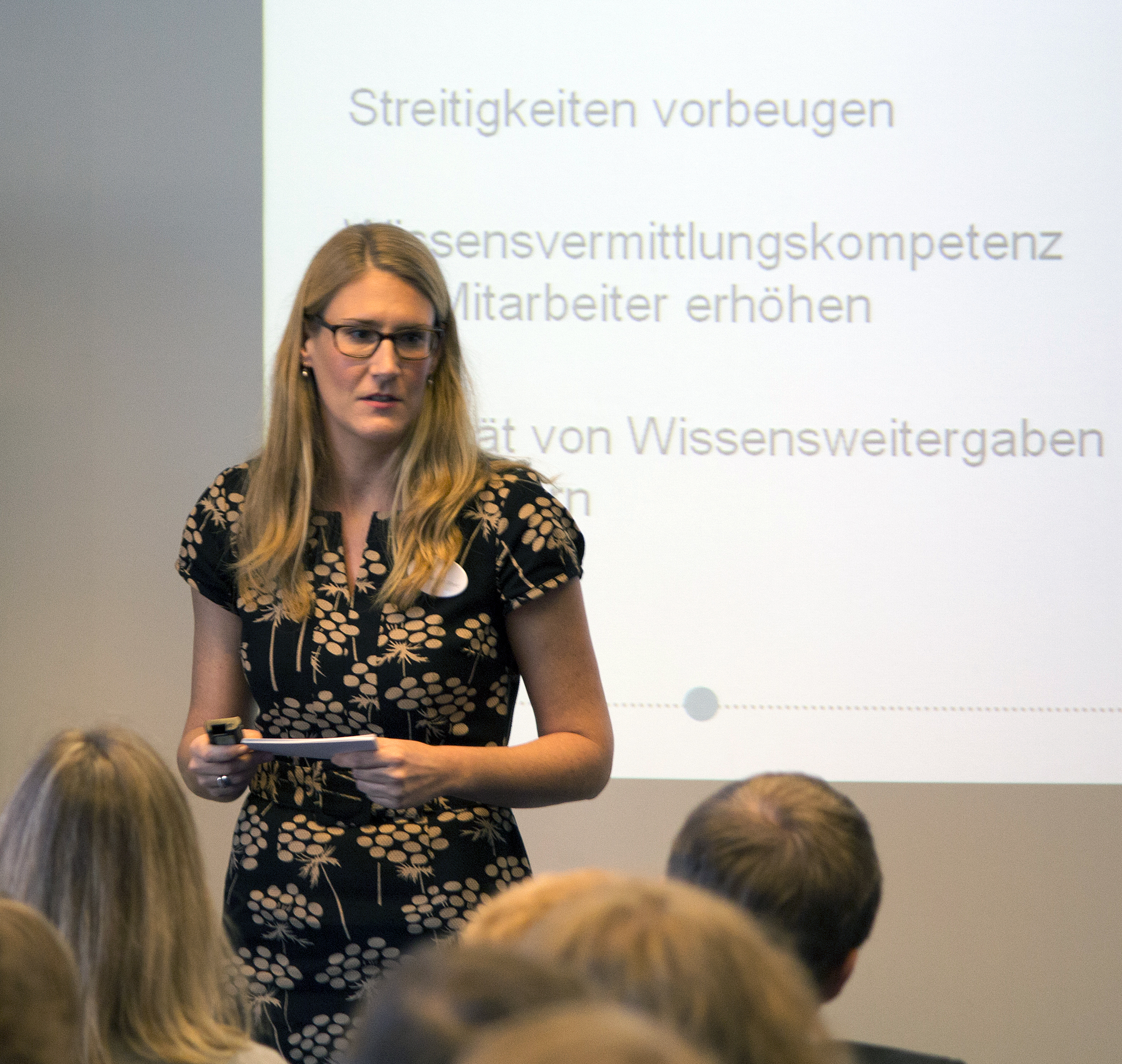 Here is a short abstract of the presentation:
Today, it is vital for an enterprise to make sure the internal supply of knowledge is functioning. After all, it is THE ONE fuel that keeps the daily routine of the enterprise running and thus the enterprise competitive.
However, everyday life at the enterprise is often far from what the employees would consider the ideal, open knowledge exchange all of them would (very much) like to practice.
Phenomena such as the “Knowledge-is-Power” concept, blockage of free knowledge flow and isolated knowledge islands not only use up a lot of energy, they also considerably reduce the active and innovative capacity of organizations. Not to mention social consequences, such as demoralization of the people and the growing frustration, which then will cause inner resignation of white-collar workers who are not at the necessary extent or/and in the necessary form supplied with the material they urgently need.
By now, many leaders actually discovered this danger, along with the need to act – but they do not know how and where to start in order to trigger sustainable change. The presentation “Corner Stones of a Knowledge (Sharing) Culture” supplies you with answers and new ideas in an entertaining and colourful way. Naturally, you also get ample room for discussing the theses. We will introduce five activity fields. Being dynamically linked they cover a diverse scenario of possible approaches. This knowledge, along with a huge portion of will to change, goal-oriented behaviour and patience, are the tools for leaders if they wish to create an active knowledge culture in their organizational units.
About the speaker Kristin Block
Kristin Block is a major shareholder of the consulting company wissenswerk. This company supports enterprises with all the challenges around the topics knowledge distribution, knowledge sharing, knowledge control and knowledge increase. Together with her partner, the communications expert gave meaning to the term «Neuro Knowledge Management»: it is an extremely promising linking of the newest insights in brain research and human centred knowledge management methods. In the role of a coach and speaker, she now hands down her considerable technological knowledge and experience outside here usual consulting projects.
RMD
(Translated by EG)
P.S.
I recommend you read the wissenswerk blog. In it, you will find many interesting ideas and proposals on our topic by Judith Lell and Kristin Block!
Roland DürreWednesday May 15th, 2013
Speaker on Craftsmanship: Bernhard Findeiss at the IF Forum
Besides Wolfgang Menauer, who is going to do the warming-up at our Unterhaching workshop on June, 13th, 2013 with some associative ideas on craftsmanship, a second InterFace colleague will be actively involved.
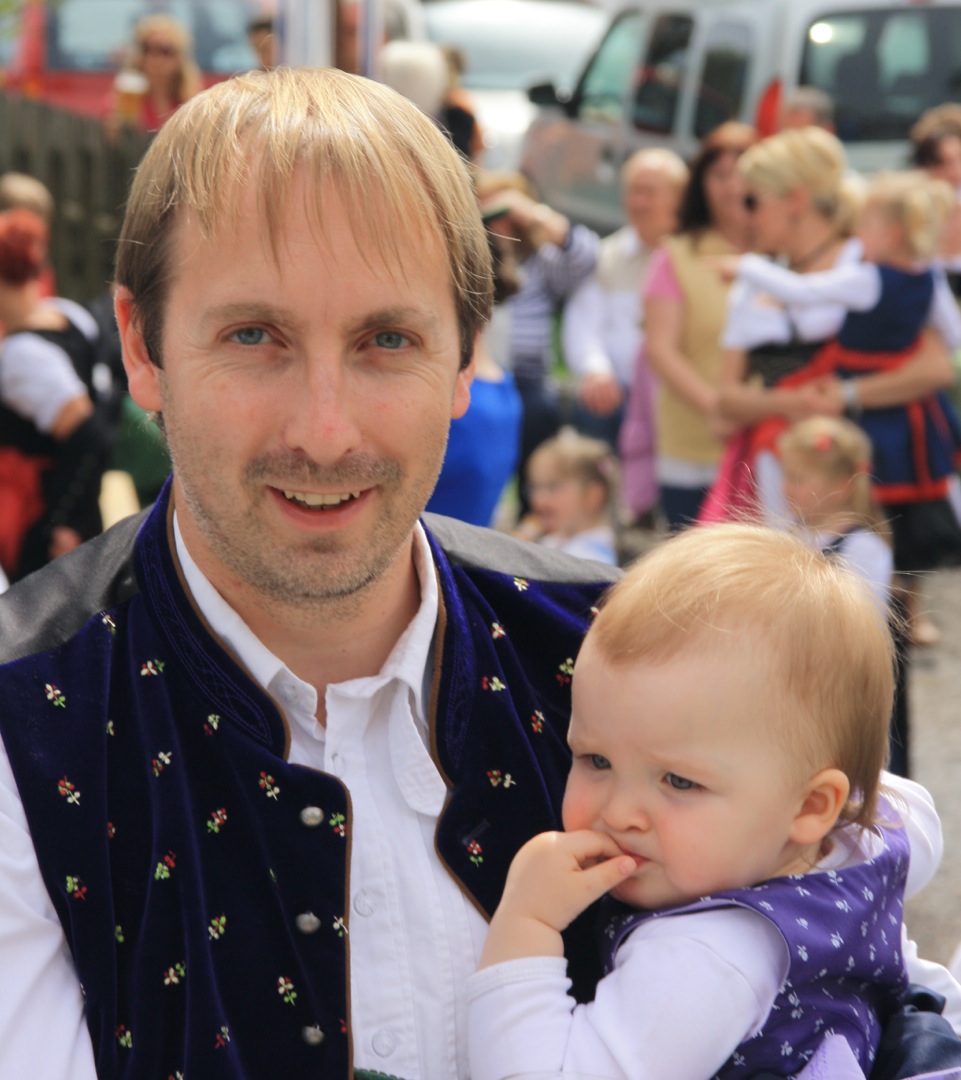 Bernhard Findeiss has prepared a presentation for our Craftsmanship workshop on June, 13th. He will talk about:
“A Day in the Life of a Software Craftsman”
Bernhard sent me a short abstract of his presentation:
During the last few years, many attempts at industrialising software development have been made. However, it turns out that this method will not be a success in all areas.
One example for this is the development of individualized software. Dividing complex processes into many smaller steps that are easy to execute will soon show itself to be impossible.
Perhaps we can find some parallels with traditional craftsmanship here? Consequently, this is another area where we also need well-trained software craftsmen.
So what exactly is a “soft worker”? I would like to use my presentation in order to introduce this and some other questions, thus hoping to make you thoughtful:
- What technologies should you be competent in?
- What are the characteristics of well-made software in the craftsmanship sense?
- What is the work structure of a “soft worker”?
- “Soft worker”?What can an enterprise do in order to make the work surroundings as good as possible for the “soft worker”?
- Saying“Yes”!
- Saying “No”!
- Life-long learning!
- Writing source code!
- Test strategies!
- Working under pressure
- Cooperating in a team
- What can an enterprise do in order to make the work surroundings as good as possible for the “soft worker”?
About Bernhard:
Bernhard Findeiss is a young InterFace colleague. He has already been working for us for quite some time now. His craft is computer science, which, incidentally, he learned at Munich TUM – and other places. He “lives” quality and innovation. The topics sustainability and value appreciation of craftsmanship are particularly dear to him. For instance, in his private life, he buys his rolls at a real bakery, instead of a bake-shop. In his job, he constantly strives to improve his competence.
Bernhard’s technological interests are quite diverse:
- He founded the “Agile Monday Nürnberg”.
- He is one of the organizers of the SoCraTes conference and at the German Softwork Chamber and was among the first members of this community. –
- You might have quite a few chances to see him on various conferences (i.e. XP Days, interPM).
- And you will often meet him on various “agile” community events (like Agile Tuesday München, Agile World)
Here is where we come full circle on craftsmanship. But Bernhard also has quite a “social” life:
- He is on the board of the Fischbachau Shooting Club, where he is recording clerk.
- He is an active member of the Mountain Shooting Club
- And – being truly Bavarian – he believes in the tradition of “Laptop and Lederhosen” and supports the historical local costume group.
- 🙂 And, of course, his small daughter is particularly important to him!
RMD
(Translated by EG)
P.S.
And here in our IF blog, he is also a well-liked author with man readers!


