
Roland DürreSaturday July 6th, 2013
2nd IF FORUM 2013: “Jean Paul & Hypertext”
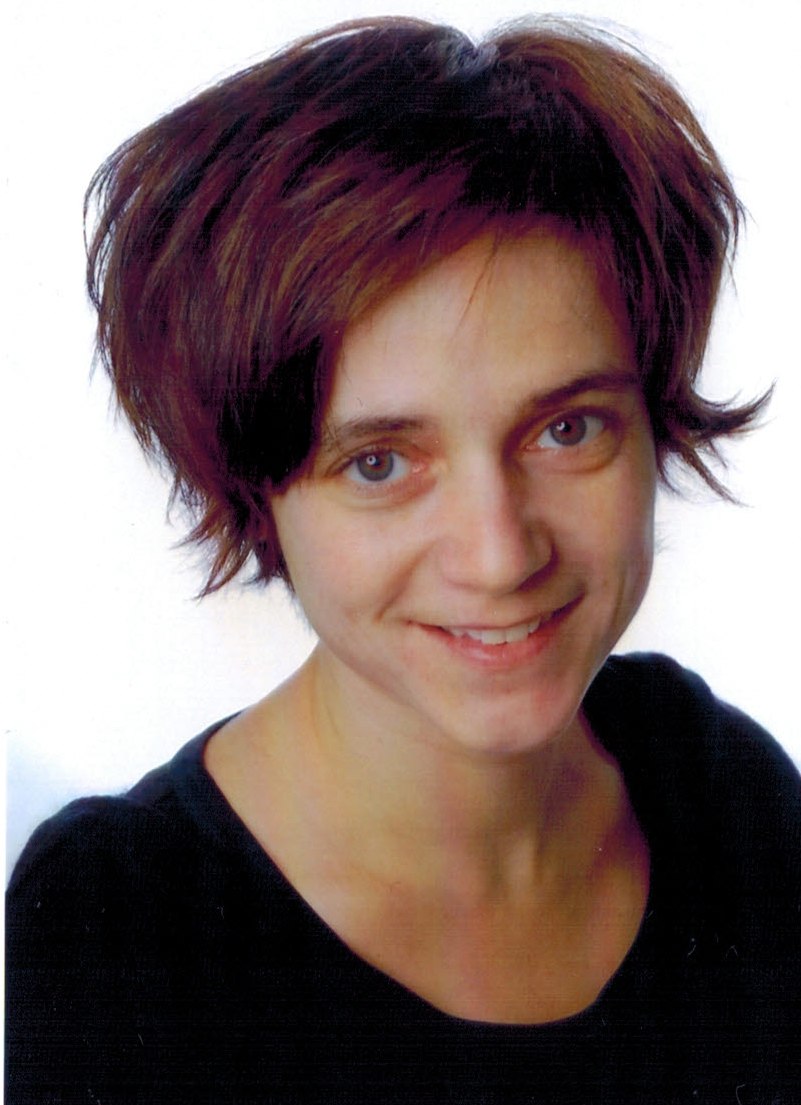 Frau Dr. Annina KlappertFrau Dr. Annina Klappert
is our speaker at the second IF Forum of 2013. She will tell us about:
Jean Paul and Hypertext
On July, 11th, 2013, she will give an entire IF Forum presentation at our Unterhaching InterFace building.
Here is a short outline:
During the 20ieth century, the data volume kept increasing – and along with it the problem of data access.
Well, considering when he lived, Jean Paul actually was quite a “professional” when it came to collecting data. Also, he was already confronted with the same problems, though on his own scale. Using his special excerpt technology, he not only collected knowledge, but also linked it in an intelligent way.
So we can actually ask today as Jean Paul asked then: how can data be stored and linked?
And how can we acquire new knowledge from those data?
A short glimpse at the aesthetics of Jean Paul can show us his concept of wit and also teach us possible linking technologies. On the whole, the method of writing as theoretically overloaded in Jean Paul’s ‘pre-school of aesthetics’ and practiced in his poetic works can show us why today’s hypertext systems are so helpful, how they function in their structuring of knowledge and what are their challenges.
About the speaker:
Frau Dr. Annina Klappert wrote her dissertational thesis at Bonn University on: “Die Perspektiven von Link und Lücke. Sichtweisen auf Jean Pauls Texte und Hypertexte” – The Perspectives of Link and Gap. Views on Jean Paul’s Texts and Hypertexts. Between 1999 and 2004, she worked at the Köln Forschungskolleg SFB/FK 427 “Medien und kulturelle Kommunikation”.
Frau Klappert is currently an employee at the chair of General and Comparative Literature at Erfurt University. Her interests and special fields of research are: virtual theories, hypertext theories, slip boxes as knowledge technology and digital practice, as well as modern literature.
Registration:
The If Forum will take place at our Unterhaching headquarter building in the seminar zone on the top floor. We start at 18.00 hours. We look forward to welcoming our guests! As always, you can register for the IF Forum by sending an E-Mail.
Here is an overview of the three “Jean Paul presentations” of the year 2013.
A Visit to the Present
Jean Paul presentations at the IF Forum
In 2013, our IF Forum will be about how modern Jean Paul’s topics and ideas actually are.
With presentations on entrepreneurship, hypertext, wit and new media, we want to project new perspectives and questions to the Here and Now. Why don’t you join us?
Jean Paul the entrepreneur
Jean Paul was one of the first German authors who actually made a living out of his writing. Mind you, he did so regardless of a start under very difficult circumstances. He visited the intellectual centres of his time: Leipzig, Weimar, Berlin – and his books were a success to make Goethe envious. When Jean Paul married, even the Prussian Queen invited him for tea and gave him a silver tea set.
Jean Paul did not owe his ascent and success to accident, but to careful planning with entrepreneurial instinct. Even when times turned bad and the Napoleonic wars devastated half of Europe, he still was able to maintain his position. The way Jean Paul combined success and sustainability looks still remarkably modern today. .
Our speaker Bernhard Echte, scientific literature expert, exhibition organizer and publicist, worked many years as director of the Zürich Robert Walser archive. Today, the entrepreneur has his own publishing company: “Nimbus, Kunst und Bücher”.
The presentation will be on: April, 11th, 2013 (Thursday) | Starting at: 18.00 Hours | At InterFace AG, Unterhaching
Jean Paul and Hypertext
Even before he called himself Jean Paul, young Johann Richter read everything he could lay hands on: hardly any of the books actually belonged to him. Whatever he read, he excerpted in notebooks. In those same notebooks, he also commented ideas currently coursing through his head. Jean Paul added catch phrases to his entries, now called tags. In this way, he created a huge private encyclopedia. It was structured like a modern database and was the foundation of his literary work. Only through his database, Jean Paul was able to realize his unique style. A style that is at the same time erratic and precise. He managed to turn the financial misery of his youth into a virtue the result of which surprises us to this day.
Our speaker Annina Klappert, is a scientist at the seminar for General and Comparative Literature at Erfurt University. Her dissertational thesis is a structural comparison of Jean Paul’s texts and hypertexts. Her scientific research is mainly concerned with media, references and virtual reality.
The presentation will be on: July, 11th, 2013 (Thursday) | Starting at: 18.00 Hours | At InterFace AG, Unterhaching
Jean Paul, wit, post-modernism and the new media
He was a “God-Denier” and an “intellectual disintegrator”, a fervent cosmopolitan, sceptic and joker. His educational theory “Levana” is highly praised, since it advertises wit and irony against the strict no-nonsense attitude of Fichte’s oratory as the basis of a healthy personality. In his policy of “the third person between Germandom and Bonapartism”, you can anticipate the post-modern indecision between the opposing poles of “the truth”. With his aesthetics of straying, he already uses the interruptive and jumpy hypertext aesthetics of the internet. Who was this man who hardly ever left home and still intellectually and mentally was way ahead of his contemporaries?
Our speaker Roberto Simanowski is professor for media sciences at Basel University. He is concerned with the changes in writing caused by the digital era and publishes the online journal dichtung-digital – journal for digital aesthetics.
The presentation will be on November, 7th, 2013 (Thursday) | Starting at 18.00 Hours | At InterFace AG, Unterhaching
RMD
(Translated by EG)
Roland DürreThursday July 4th, 2013
My Agile Manifesto …
🙂 … it might look like this or similar:
The more I think about “acting and behaving in an agile way”, the more I believe it to be a basic principle that makes the difference between the “old world” and the “new world”.
Consequently, “AGILE” might well be the next logical step after “enlightenment” and “using your brains”. Being AGILE also means you have to move consciously all the time between the two opposing ends individuality (what do I want, what can I do, what am I permitted to do,…) and the collective (what do we want, what can we achieve, what are we allowed to do,…).
“AGILE” describes our wish to live our lives in freedom – which, at this place, means “being prepared and capable of living your life in responsibility”. At the same time, you have to follow the principle “promote your own and the life of others, rather than reducing them”.
Being “AGILE” means knowing how to deal with responsibility. Being in favour of what change we need and opposed to what change is detrimental for us.
Being “AGILE” also includes the wish to increase your knowledge and then being able to apply them. Naturally, models and approaches, methods and concepts are an important result of additional knowledge. …
Consequently, in order to become “AGILE”, we will constantly have to learn new things, do things we are not used to, try strange things and collect experience. We have to understand and comprehend how processes in our social systems function. Thus, the “integrative and systemic understanding” of our enterprises will become the requirement for successful “leadership”.
This is it for now in a nutshell …
I was motivated to write this outpouring on agility by an article in openPM by Stefan Hagen.
RMD
(Translated by EG)
Roland Dürre
Tweets on Twittering and Blogging #174
Here are my tweets of last week on:
Blogging and Twittering, Wisdoms and Rules:
130711 If something grows roots, it means to stay – also a rule for twittering and blogging? #Twitter #Blogging #Wisdom
130712 Things will not get better if you laugh at them – also true for twittering and blogging! #Twitter #Blogging #Wisdom
130713 If you wish for something, you want to believe it – also true for blogging and twittering! #Twitter #Blogging #Wisdom
130714 If something does not belong to you, let it lie – also if you are a blogger and twitterer? #Twitter #Blogging #Wisdom
130715 Never say die – not to forget, twitterers and bloggers. #Twitter #Blogging #Wisdom
130716 Something that does not come from the heart will not go to the heart – also true for twittering and blogging! #Twitter #Blogging #Wisdom
130717 If something was not made for cutting, no amount of whetting will make it sharp – careful, twitterers and bloggers. #Twitter #Blogging #Wisdom
There is a new tweet each day. See twitter.com and “follow” RolandDuerre!
Enjoy!
RMD
(Translated by EG)
P.S.
I took the proverbs from Alle deutsche Sprichwörter.
Roland DürreMonday July 1st, 2013
Managing Knowledge Transfer Successfully!
I enjoy cooperating with the “wissenswerk” – which was founded by Kristin Block and Judith Lell. Now they designed a totally new seminar with totally modern content and approaches on “knowledge transfer”. The first time this seminar is held will be on August, 20th and 21st, 2013 at Frankfurt/Main!
Here is a short paragraph from their announcement.
 Knowledge is fuel that pushes enterprises to the top!
Knowledge management will give you the necessary conditions for a functioning creation of value. When all is said and done, your enterprise will become unique through knowledge paired with competence, behavioural efficiency and innovative power. In modern times, knowledge gets both more and more complex, whereas its half-value period gets smaller.
Time limits for projects in ever-changing teams and the ever shorter time employees remain in the enterprise, too, are a challenge when it comes to finding, preserving and improving knowledge. Consequently, it is necessary to install a goal-oriented knowledge transfer in the enterprise. This process of sharing knowledge will not happen by itself. Instead, you need know-how, as well as the active design and control by the management.
The seminar will link innovative methods of knowledge management with new insights from neuro-science. In this way, you will get a better understanding of processes and can optimize knowledge flow in your enterprise.
Feel free to just download the Flyer “knowledge stransfer” (3) . It tells you all you need to know about the event.
.
RMD
(Translated by EG9
Roland DürreFriday June 28th, 2013
Now Online: All IF Forum Craftsmanship Videos!
A few days ago, I put the first two IF Forum presentations (Vorträge) – held by Wolfgang Menauer and Kristin Block – online. The same is true for the “Software Development Unit” (Softwareentwicklungsblock) by and with Bernhard Findeiss and Dr. Elmar Jürgens.
Consequently, only the last two presentations are still missing. Here they are:
Bernd Fiedler made us understand in an amusing way what exactly it means to be a “master craftsman”:
And then there was Reinhard Büttner! He gave a review of all the day’s findings and added his own experience in the most suitable way.
I already sent the work of art by Wolf Nkole Helzle created during the day as my way of saying “Thank You ” to all speakers and guests.
Let me, once more, thank all the artists and speakers. And I would like to specifically thank all our guests. They gave me so much feedback saying what a wonderful event it was. This gives me courage to continue. We already decided upon a topic for 2014:
Self-Organization in the sense of
“Self-organization and self-control as a formative model for enterprises and projects”!
As always, I look forward to reading your feedback.
RMD
(Translated by EG)
Roland DürreThursday June 27th, 2013
Tweets on Twittering and Blogging #173
Here are my tweets of last week on:
Blogging and Twittering, Wisdoms and Rules:
130704 If you cannot hold it, set if free – rule for twittering and? #Twitter #Blogging #Wisdom
130705 If there are things you cannot learn, maybe you can experience them while hiking – also true for twittering and blogging! #Twitter #Blogging #Wisdom
130706 If there is something you hate doing, do it up front – also true for blogging and twittering! #Twitter #Blogging #Wisdom
130707 Never promise something you cannot deliver – also if you are a blogger and twitterer? #Twitter #Blogging #Wisdom
130708 What you write down is permanent – not to forget, twitterers and bloggers. #Twitter #Blogging #Wisdom
130609 If you want to sell something at a high price, your first estimate also has to be a high one – also true for twittering and blogging! #Twitter #Blogging #Wisdom
130710 If you drive something on, it will remain with you – so be careful, twitterers and bloggers. #Twitter #Blogging #Wisdom
There is a new tweet each day. See twitter.com and “follow” RolandDuerre!
Enjoy!
RMD
(Translated by EG)
P.S.
I took the proverbs from Alle deutsche Sprichwörter.
Elwood P. DowdWednesday June 26th, 2013
Transparency
 Is there anyone who ever took something out of a sailor in the nude’s pocket?
On the other hand, many preach to the choir, few, however, bang their heads against locked glass doors.
That is exactly when the masses yell: transparency!
Do you want total transparency?
Transparency is an optical characteristic – the opposite of reflectivity.
Transparency equals diaphanousness – we see through it, consequently we see nothing.
Soccer reporters understood that a long time ago.
“…on the left off-side, Meyer was totally transparent.” In other words: Meyer was not seen on the field.
Transparency is a magic hood, there is no better hiding place!
Where everything is transparent, we will no longer see anything.
So, welcome, transparency fans, in the country of the blind,
where even the one-eyed is no longer king, because there is nothing left to see.
My Friend Harvey Says:
Which sentence on transparency is valid? If you have nothing to hide, there is nothing you have to fear. Those who have nothing to hide already lost everything.
A homosexual soccer player is ostracized. He has to suffer mobbing. He commits suicide. Later, it is totally normal for a soccer player to be homosexual. Now is that good or bad transparency?
In times of RAF, you were considered suspicious if you used a false name for paying your electricity bills. Thousands were spied on, one was caught. Good or bad transparency?
The sensor-supported emergency call system e-call
will automatically notify the nearest ambulance station if something happens.
Simultaneously, it notifies the insurance company if the driver was speeding.
Good or bad transparency?
Google gets better and better with what I am interested in. I only get results to fit my need. All that is new, different, hindering, remains unlisted. Good or bad transparency?
Politicians will tell everybody openly on the web why they decided as they did. Decisions will be made or not. Good or bad transparency?
Refined algorithms can predict our behaviour in road traffic with surprising precision. It runs rather smoothly, because the system knows our ways. Both those of today and tomorrow. Good or bad transparency?
Entertainment movies can react to the taste of the audience in tailor-made fashion and in real-time.
Everyone gets the best possible entertainment individually.
There are no surprises left.
Good or bad transparency?
With the methods of personalized medicine, we know exactly when and why we are going to die. To be sure, we can postpone death by a few years through an individually adapted therapy.
Good or bad transparency?
Let me add that spectacles equipped with full-body scanners would make an effective speed dating possible.
(Elwood P. Dowd).
The work of art by Wolf Nkole Helzle which was created during our IF Forum CRAFTSMANSHIP has already been submitted to all of you as a form of saying “Thank You” (Danke Schön).
Besides, the first two IF Forum presentations (Vorträge) by Wolfgang Menauer and Kristin Block were made available live by me a few days ago. Today, you get the next two!
Firstly, we see Bernhard Findeiss, “Technology Evangelist” at InterFace AG. He tells you about “a day in the life of a software craftsman”:
Dr. Elmar Jürgens of CQSE reports about his own experience and the good team results with Peer2Peer reviews in the interest of quality:
Thanks to Bernd, Elmar and Friedrich!
RMD
(Translated by EG)
Roland DürreMonday June 24th, 2013
Infra Structure Companies, Privatization and the Purpose of an Enterprise
🙂 The InterFace AG sees to it that the modern nervous system of our planet functions …
Of course, we cannot do this all by ourselves. We do it together with many other small and big enterprises world-wide. It is a gigantic “co-working process” – and we try to contribute significantly.
If you view it in this light, we could be called something like an “infra-structure company”?
I had the idea of calling us an infra-structure company, because every enterprise should have a meaning. And said meaning cannot be the mere maximization of the shareholder value (see Alfred Rappaport). You have to provide more – and this is where infra-structure companies might have it easier. Because, as I see it, they are implicitly meaningful.
For instance, the railway and postal workers were a proud team, at least during the first half of the last century. After all, they were those who saw to it that the cars rolled and the letters and parcels were reliably transported. The power plants, too, had meaning easily explained. After all, it was due to them that we never had to live in darkness. The same was true for the municipal suppliers, who also provided water and disposed of sewage and waste, drove the trams, maintained the city’s entire infra-structure and much more. Even the central dairy and the public butchery made some kind of sense to me.
Not too long ago, all the relevant infra-structure companies were exclusively publicly owned. This system had both advantages and disadvantages. As I see it, the advantages outweighed the disadvantages. Basically, the only disadvantage was that the publicly owned companied tended to develop feudal structures. If that happens, the class of civil servants will form a privileged caste giving itself advantages and rights – while forgetting that they actually are obliged to practice special responsibility.
Unfortunately, it seems that this is partly what happened. Publicly owned companies were misused by the government in favour of run-down politicians. This too, did not have a beneficial effect on them. After all, a system where the leaders are chosen for some strange interests, rather than because they are the most competent candidates for the challenges of the job at hand cannot function, can it?
It seems that matters changed for the worse as time went by. Consequently, it was just a logical consequence that a time had to come when “the last drop made the cup overflow”! This is what happened at the end of the last millennium. And now, everybody wanted “privatization”. It became the universal cure for everything. And we threw the baby out with the water.
And then the meaning of the formerly so important infra-structure companies was gone. Huge federal concerns were created. They had to enter the stock market. And all of a sudden, the most important thing was not that every citizen was reliably provided with all the necessities. Instead, the most important thing was now the “Shareholder-Value”. The former federal giants dreamed of record profits and of becoming the leaders world-wide.
But neither shareholder value nor world-wide domination will basically provide the employees with meaning. The same is true for well-loved alternatives, such as the artificially introduced “Champion Mentality” (We are the number 1!) or the orientation of enterprises according to designer criteria: none of these can give meaning. In fact, all these methods have failed when it came to motivation and entrepreneurial culture. Consequently, many employees went into “giving notice inside”- mode or developed an “I could not care less”- attitude. See also my comments (Bemerkungen) on the “brand eins” June edition.
I know from personal experience that it was different in former times. My father was a civil servant. But above all, he was a railway person. With all his heart. For him, it was important that all the trains were on time. He did everything for his employer, the Bundesbahn. He was often sad when something did not work as it should have. And he worked hard to improve conditions.
In industry, too, I know another kind of mentality from former times. For instance by the then big enterprise with a great reputation “Volkswagen” under Herrn Nordhoff. But from early on, I also followed small enterprises with great interest. For example a small dairy plant near Augsburg. Regardless of its very common name, it has gained world-wide fame by now.
The first enterprise I consciously knew as a child was the meat plant Zimmermann. It was in the mid 1950ies and I had just started my career as a young learner of the alphabet.
The owners, the Zimmermann family, were the kings of Thannhausen, which was the place where my grandparents on the mother’s side lived. My mother had two sisters who were going to inherit grandfather’s farm in Sudetenland, which meant that they had never enjoyed proper training for a profession. As opposed to this, my mother had been permitted to study at university, because at the time the farm was to be distributed, she would not have inherited any share of it.
As we all know, the end of the German conquering strategy during WW-II was a huge Rollback (displacement) – and nothing was left of the family farm I never knew! According to legend, the former owners were brought into Bavaria in the last stock car. My parents called it expulsion. Since my aunts, believing they would at one time manage their father’s farm, had never officially learned anything, they were more than happy to work as unskilled labour in the Zimmermann meat plant in their new lives.
The income was poor, but the Zimmermann family made up for it by supplying their employees with good meat at very special bargain prices. In those days, I heard quite a few legends about this enterprise and the glamorous family who owned it.
Basically, the only reason why there was a railway line between Dinkelscherben and Thannhausen was the Zimmermann meat plant. Behind the company building, there was a tarmac from which the Zimmermann family often started their trips into the great wide world. And the Zimmermann family was definitely travelling the world extremely often. The stories about their alleged adventures were told among the employees.
And regardless of all the meat workers knowing full well that the Zimmermann family was doing a whole lot better than they, they found meaning in their work. Because times were improving and there was at long last again meat to go with the bread. The Zimmermann family were a well-loved employer who saw to it that people had jobs and they were adored by everybody. They were both the sun kings and the sensation of Thannhausen. The employees knew this and loved their glamorous and mundane Zimmermann family, regardless of the hard work and poor pay.
Well, this, too, was one way (even if, to me, it seemed strange at the time) for an employee to find meaning in an enterprise. Everybody had to work hard, and still they were happy in some fashion. As I grew older, there was a change in the stories of my aunts. There was less and less meaning and negative comments became more and more frequent. Wealth became the normal state of affairs and they discovered that work meant hardships.
It seems like the glamorous and rich Zimmermann family, too, decided one day that the development was no longer to their liking. Consequently, one day they sold their company to a huge meant concern and probably disappeared from Thannhausen. Perhaps they now needed more time for their “social obligations”. It seems that the new life in the world of luxury looked more meaningful to them than the entrepreneurial work with all its responsibility. But that is not something I would know.
However, the reason why I am telling this story is another one. I think that, in modern times, it would be difficult to give meaning to a meat plant. Even a family full of legends would not do the job. Instead, you will probably have to live the right values and have an entrepreneurial culture which will give meaning in the craftsmanship sense even to butchering animals.
As a general rule, it is quite difficult to give meaning to an enterprise. And I believe infra-structure companies have a natural competitive advantage – having a meaning that comes as a matter of course and which can be the basis for everything that follows. However, said meaning might turn to become the opposite if they turn private and then forget their major duty – which is providing infra-structure reliably and at a fair price. Instead, all they think about is turnover and profit.
And then I get the impression that infra-structure companies, in particular, had better be publicly owned. If that is the case, the advantage of a natural meaning will not turn into the opposite. Except that the “new publicly owned” federal concerns must not repeat the mistakes as known and listed above. Perhaps “good management” could contribute.
And perhaps this is also true for the – as I see it – ever so important nervous network of our planet we call internet and which our leading politicians calls frontier land. Especially in the “frontier”, freedom, openness and availability should be guaranteed by a democratic country! And, as a condition for the development of social consensus, this so important infra-structure for forming the future must be protected from attacks from all possible sources.
RMD
(Translated by EG)
Roland DürreSaturday June 22nd, 2013
Two IF Forum CRAFTSMANSHIP Presentations as Video
The work of art by Wolf Nkole Helzle created during our IF Forum CRAFTSMANSHIP has already been published by me as a “Thank You” (Danke Schön) note. Now I am already in a position to download the first two presentations by Wolfgang Menauer and Kristin Block to Youtube. Here they are in the sequence they were given.
Firstly, we see the introduction to the workshop by Wolfgang Menauer, an InterFace colleague. He associates terms and cites statements that might enlighten the meaning of the word CRAFTSMANSHIP:
Our first guest and speaker, Kristin Block supplied us with wonderful groundwork for the workshop. She related what the corner stones of an entrepreneurial knowledge-culture should look like.
Many thanks to the two speakers and also to Friedrich Lehn who was responsible for the recording and production.
RMD
(Translated by EG)


