
Roland DürreSunday May 17th, 2015
#AktMobCmp Report
 In January, just before Epiphany (Unterhaching, January, 4th and 5th, 2016, in the “Kubiz”), the first BarCamp for
“Active Mobility in Everyday Life“ will take place.
Website, FB-Seite and Google+Community of #AktMobCmp have been activated; in Twitter we made reservations with the login codes @AktMob and @AktMobCmp and are using the respective tags. On July, 1st, we want to activate the online registration.
In order to make it a very special BarCamp, we are now looking for sponsors. Here is the article I wrote in ActMobCmp about it. Since I believe that said article nicely relays our goals and motivation, I would be happy to know that you actually take a closer look.
I would also wish to ask another favour of you. Please visit our Website, our FB-page and also ourGoogle+Community. And give us plenty of “I likes”. And if you find great articles on “active mobility in everyday life”, then please share them with us. Or simply send the link for the article to me.
And if you can think of someone who might be the ideal sponsor for us, then this would be an extra bonus. Why don’t you just send this sort of advice to me, as well?
Many thanks in advance!
RMD
(Translated by EG)
Roland DürreSaturday May 16th, 2015
Torturmtheater Sommerhausen & InterFace Part 3
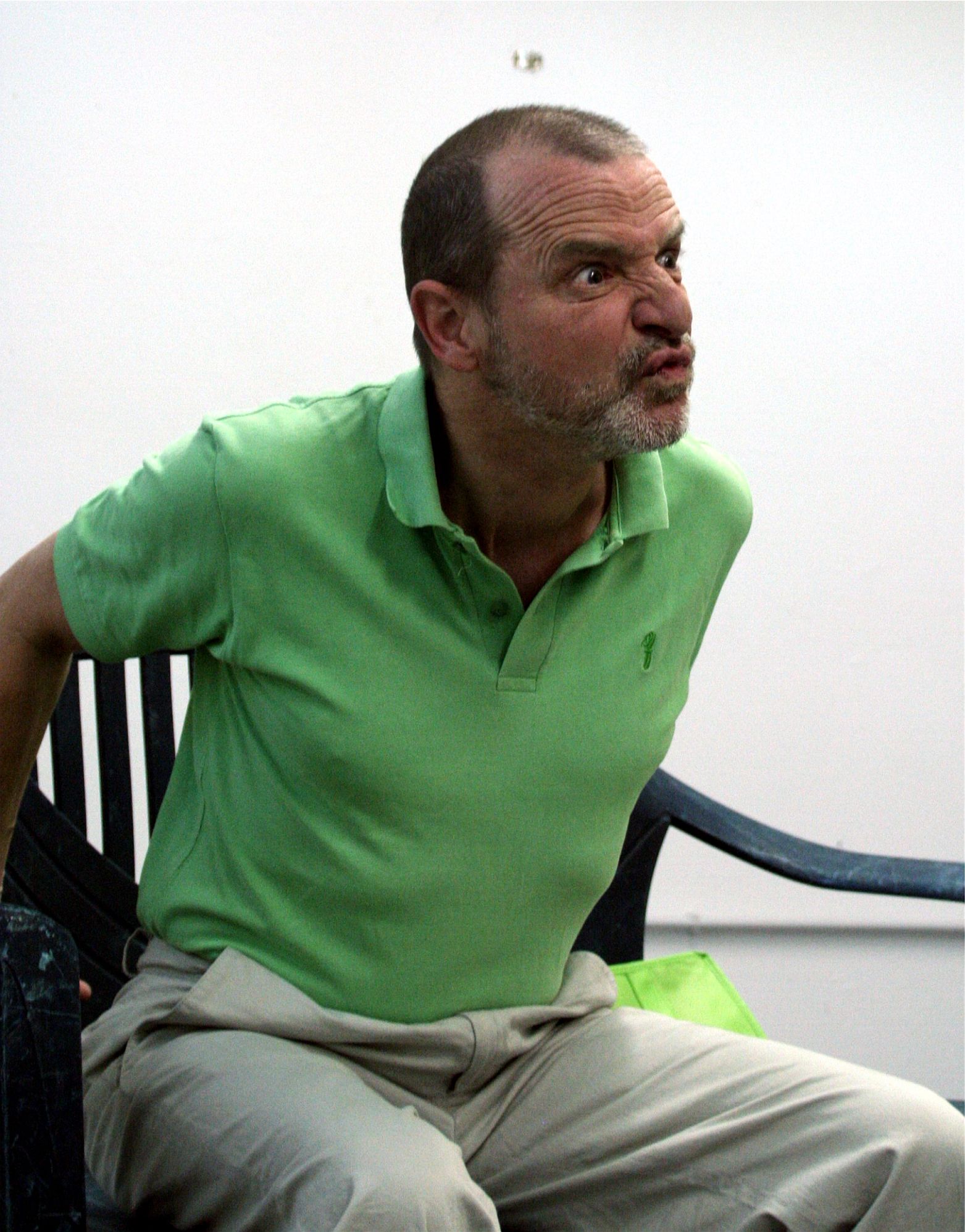 This is the third time that the Torturmtheater did their rehearsals to a new piece in the offices of InterFace AG in Unterhaching.
After “Fast Perfekt” by Nicole Moeller and “Sag nix!“ – the love dialogues by Fitzgerald Kusz –it was now the “Norman” by Mike Stott. “Norman” is a one-person performance translated into German by Gerda Poschmann-Reichenau.
Norman is played by Christian Buse and directed by Eos Schopohl. Those two spent several weeks working quite hard in our KreatIF room.
I was lucky enough to watch a few minutes of rehearsals and was truly impressed. And I will definitely again go and watch the performance.
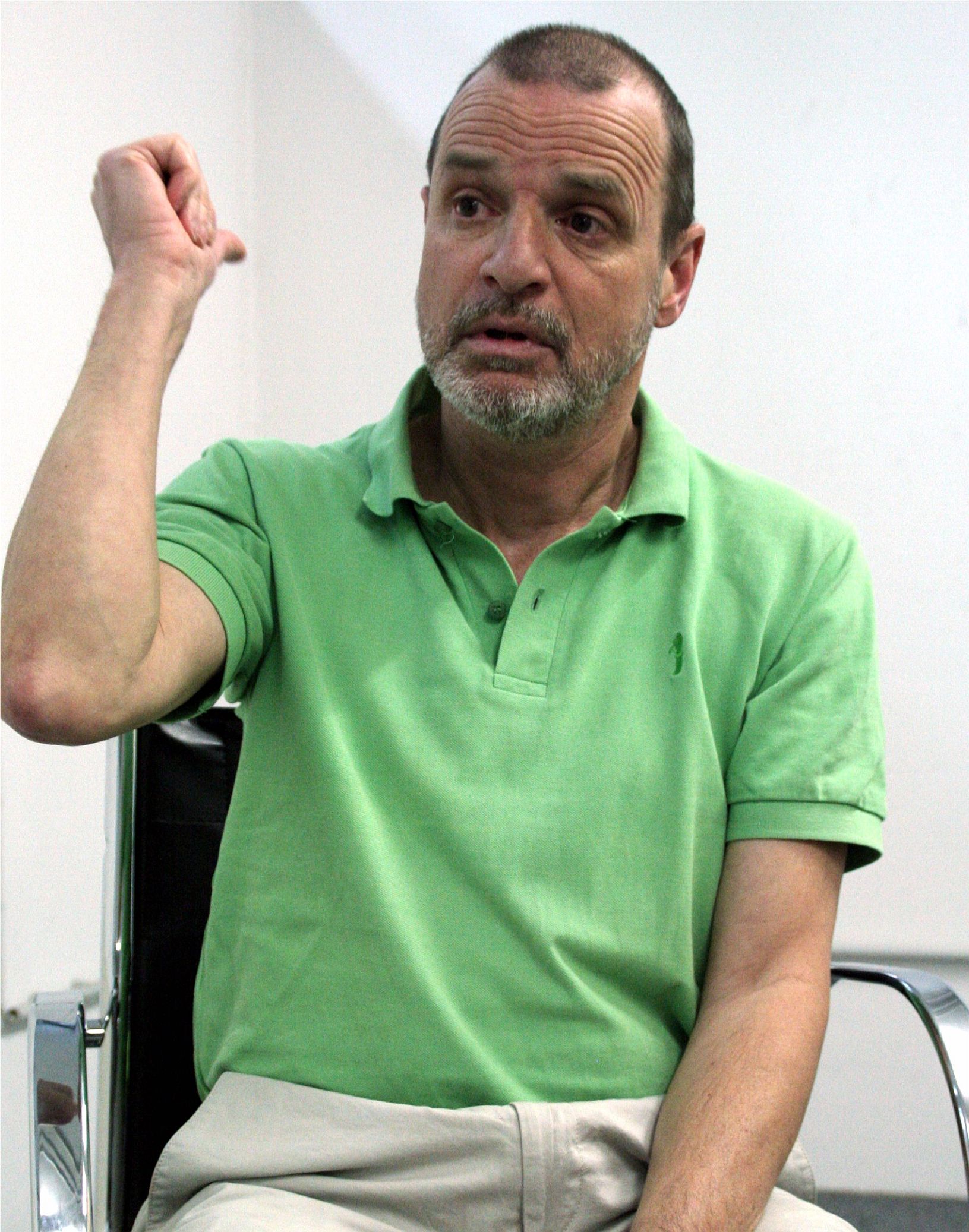 The premiere in the Torturmtheater in Sommerhausen will be on Wednesday, June, 3rd, 2015 at 8 p.m. And starting from then, there will be performances for two months.
Angelika Relin is the boss and creative muse of the perhaps most exquisite theatre in Germany. Again and again, she manages to bring great theatre onto the stage under the roof of the tower.
This is all I want to say about it at this time.
But: Angelika took scene pictures during rehearsals and sent me some of them. I think they are great and can actually publish them here.
 Incidentally, a trip to Sommerhausen is well worth it. To be sure, it is just a small but very beautiful village. There are a few nice hotels and you can eat well.
How to get there:
The best option is to take the Regional-Express to Winterhausen (coming from Ansbach or Würzburg). From the Winterhausen railway station, it is a nice and leisurely walk across the Main bridge to the Sommerhausen theatre. Exactly one kilometre.
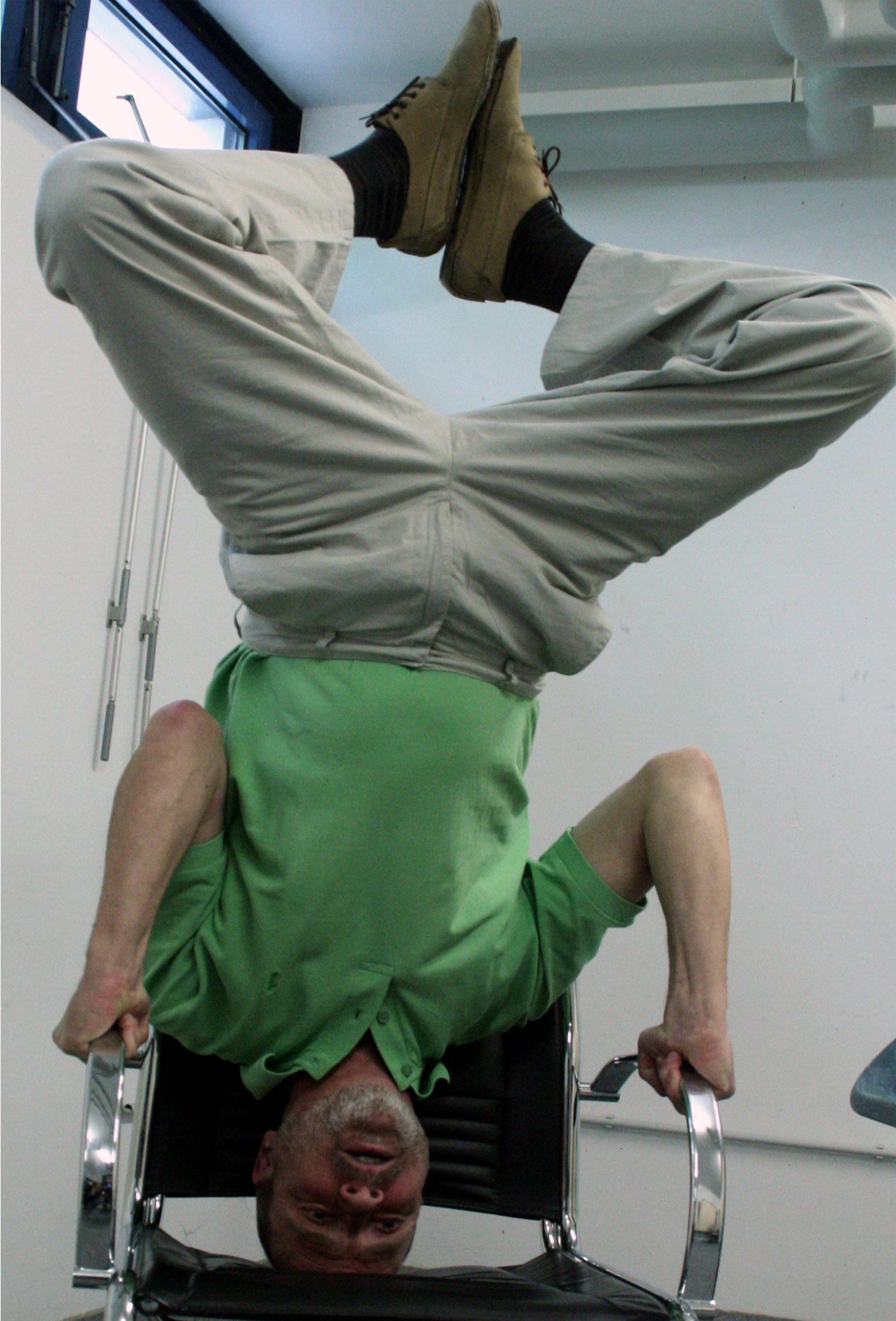
In order not to make you guess endlessly when you see the left picture – yes, Christian Buse is standing on his head.
RMD
(Translated by EG)
Roland Dürre
Zero Interest Until 2025
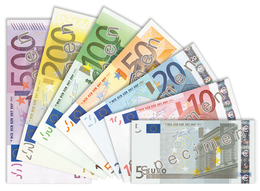 Just now, I again read:
“Quite a few analysts predict that the zero interest – due to the financial politics of our currency bands – will continue until at least 2025.”
Which means that paradise on earth lies before all investors.
Here is what I have to say about it:
- Talking about zero interest is just a lie:
Because the only persons who benefit from it are the few who are rich enough to further increase their money by speculating in relatively secure products. And - It has always been true that:
Being indebted will make you rich, saving money will destroy richness. And unfortunately, the poor ones are those who save money while the rich ones (can afford to) be indebted..
Well, this is my spontaneous short economics theory in two sentences/paragraphs!
RMD
Roland DürreSaturday May 9th, 2015
The Merry Month of May.
Train conversations.
 The day before yesterday (May, 6th), I sit at a table of the ICE 516 on my way to Stuttgart. From Munich, two unknown ladies “of indeterminate age” sit opposite me.
To me, it looks like these two are quite intelligent. They are on their way to Frankfurt. Starting from there, they want to share a vacation. They are very talkative and I learn a lot about their lives that might actually be quite interesting to relate here. Since some of the material was actually quite private, I will, however, refrain from doing so.
When we reach the Geislinger Steige, the two ladies switch to another topic of conversation. Ever so enthusiastically, they look out of the window and then they seem to compete finding admiring comments on the lush greens they see. They get intoxicated. Using boisterous exclamations, they wind each other up more and more. I actually get worried that they might soon end up in ecstasy (Ekstase).
And then there is the one sentence I hear often and that always annoys me. One of them says something like: “you could not really enjoy this wonderful time of year if you had not experienced the bare and cold winter before”.
And her friend immediately joins in, emphasizing the point – which to me seems a little stupid – by saying that: “This is exactly how she, too, felt about it and that it would not be possible for her to truly and intensely enjoy the summer if there were not the long and ever so bleak winter”.
Initially, I was going to ask the two ladies if they had “ever been near the equator, where the cradle of man had stood”.
But then I come up with the following:
“Dear ladies, please allow me to find fault with your opinions – which I had to listen to, even though they do not interest me at all.
Let me use the following metaphor to illustrate my counter-argument against your thesis. Let us assume you are married. And let us assume you have a husband who beats you six months each year and then carries you on his hands to the ends of the world during the next six months.
Would you then also say how much you appreciate the six months of beatings, because they alone make you appreciate the other six months of a relationship in harmony?”
Before I actually started saying this, I changed my mind. My incentive to beat those two because of their continuing talking was not so unsurmountable, after all. Besides, I was in a good mood, because I was on my way to the PM Camp.
 🙂 Yet I would like to wish the two ladies who, in the ICE 516 from Munich to Stuttgart on this sixth of May, wanted to tell me (elderly gentleman wearing black polo-shirt and potbelly) about their lives, a nice vacation. I am sending these wishes from the ICE 515 on my way back to Munich! Basically, they were quite nice, just a little wound-up.
(written on my way back from the #PMCampSTR, again in a very good mood because it was, again, a truly beautiful barcamp).
RMD
(Translated by EG)
P.S.
I took the picture from Wikipedia. It is by Sebastian I Terfloth – Own work, licenced underCC BY-SA 3.0.
Klaus HnilicaMonday May 4th, 2015
Super Model
Carl and Gerlinde (XLIII)
”Well, you know, you and your ’Super Company TRIGA’ certainly hibernated through all and sundry, did’t you?”, Gerlinde smirked.
Her taunting grin said it all while she took a good sip from her evening glass of Riesling.
”What do you mean?“ Carl’s brains were totally elsewhere while he kept cautiously putting yet another layer of his much-loved tongue black sausage onto the slice of baguette, even though the mountain of sausage definitely already looked like it might collapse at any time… At long last, he took a bite! There was a short roar! And from one second to the next, he fell into some kind of rigor mortis …
”Shit“, he moaned, took his chin into his right hand and stared at Gerlinde with wide-open eyes.
“What is the matter with you?” a terrified Gerlinde, still not having finished the process of putting her glass to her mouth, asked him.
”Well, this was the second when another of my thousand-year-lasting amalgam fillings kissed me good-bye“!
“What a bugger – doesn’t that just fit? Tomorrow, you have to go to Munich really early!” – Gerlinde said while hastily drowning her last drop of Riesling.
“Fact is that now I have a crater the size of a meteorite hole I my mouth…“
“Where exactly?“
“In the back!“
“Where in the back?“
“Lower row!“
“Where in the lower row?“
“Right side!“
“Does it hurt?“
“No, the nerve ends have been dead for a long time”, Carl grunted while he allowed his tongue to circle around the freshly produced crater region like an exploration drone. “I must have chewed and swallowed the filling!“
“Great – amalgam in your stomach!“
“Perhaps! But I am sure it will not remain there very long”, Carl added after a short pause in surprisingly good spirits. And then he really relished eating the remainder of his frightened tongue blood sausage. Afterwards, he gave the new crater hole another rinse with Riesling and two glasses of fruit brandy, before again asking Gerlinde what she had meant when she had said this about TRIGA having hibernated.
“Did you really fail to notice the market opening that sprang out of nowhere for all underwear firms two days ago almost as suddenly as your hole in the tooth?”
“What market opening?” Carl asked hesitantly, quickly letting a third brandy disappear in his crater.
“Man – the huge hole in the skin-tight suit trousers Pep was wearing”!
“Do you mean Guardiola’s misfortune during the last Bayern match against FC Porto?“
“Well, if this was a misfortune, then you can call me Trinchen from now on, and you can pinch me here”, Gerlinde scoffed as she pointed towards her appetising neckline.
“And where would you say is the market opening about this Armani suit trousers rip?” Carl gurgled while he asked, since it seemed that the remainder of the fruit brandy had pulled back into his throat like a tsunami. …
“Well – just imagine”, Gerlinde instructed him, “what would have happened if this sad piece of black underwear that good old Pep Guardiola offered up to a then totally surprised audience of millions had been one not quite so sad piece of underwear designed by TRIGA?”
“And?” – Carl was still a little disoriented.
“Oh my God – are you really telling me you do not realize that these inconspicuous dark boxers the ’Hot Mister Guardiola’ was wearing could just as well have been an attractive ’net piece’ by TRIGA in glamorous ’Bavarian Red’?!”
“You mean at this unique moment of underwear happiness, good old Pep might well have been wearing one of our racy red ’men’s net bodies’ made by TRIGA? “
“That is exactly what I mean! How nice that, at long last, you now seem to be awake!“
“Women’s phantasies … “ Carl bleated.
“Possibly. But I can guarantee”, Garlinde enthused, “that the ’Bavaria-red net-trouser clad Pep’ would have been impossible to get off the “Bild” title page after this super win over Porto – and I am talking several days!“
”Wasn’t he on the title page, anyway”? Carl asked.
“But only for one day and not wearing TRIGA underwear. Instead, he wore some nameless black pair of jersey boxers… “ Gerlinde complained.
“Yet it was what everybody talked about … “, Carl grinned and self-confidently drowned his fourth fruit brandy in his lower right meteorite crater!
“Sure, but then all that talk never once included the name TRIGA, did it?”, Gerlinde kept taunting him while cautiously moving the fruit brandy bottle closer to the house bar.…
Carl gave her an annoyed look and asked if this sudden prohibitive activity against his brandy glass perhaps had something to do with hurt female pride?
“I certainly do not know what you are talking about, my dear Carl, but it seems to me that, in your particular instance, said fruit brandy already has had a strong negative influence on your capacity to think logically – which, after all, men are supposed to be able to do.“
“My dearest Gerlinde, this might well be true, but still it is beyond dispute that one small section of underwear worn by Guardiola actually almost got more media coverage than usually the common half-naked beauties on the title pages get? Isn’t that something to make the ladies thoughtful and violate their self-confidence? Or am I totally wrong here?”, Carl continued with persistent sympathy.
“My God, Carl”, Gerlinde pointedly replied, “you should not try and follow the deep thoughts of females. Instead, why don’t you come up with strategies for taking hold of this Pep as your new TRIGA ’Super Model’, before the board of directors at Bayern will drown him in leather trousers for reasons of morality… …“
“Yes, my dear Gerlind, that is what I will do. But only if you manage to convince Armani that the ’ripping suit pants’ are added to their regular sales program … “
Carl jeered with a heavy tongue, thanking God that, for the time being, the only thing he had to cope with was his injured dental outfit, rather than a ’female power overflowing with Gerlinde-ish ideas’ at TRIGA…
KH
(Translated by EG)
Roland DürreSunday May 3rd, 2015
Numbers & Taxes & Calculations.
On April, 23rd, 2015, the Federal Ministry of Finances (Bundesfinanzministerium) published information on its website about the entire tax revenue (total tax revenue of the country and states without those of the communities per month) having increased by 4.7 % over the same month of last year in March 2015 to now 57.970 billion Euros. Wow. Doesn’t that sound nice! After a balanced federal budget. Because the economy booms. Consequently, we have a high turnover and increased tax revenue. What a brave new world.
However, it is not as easy as it sounds. There is one adjective missing: “nominally”. Because this would clarify that the number is not such a great number, after all.
Here are a few ideas of mine.
In “West Germany”, the retirement money will be increased by 2.1 per cent in 2015, in “East Germany” by 2.5 per cent. The Federal Government decided late in April that this is going to happen on July, 1st, 2015.
The annual increase of retirement money basically takes the development of the total income into account, separately for western and eastern counties. Let me cite fromRenten-Recht.org:
The data relevant for the increase in retirement money have been processed in the spring of 2015. Now we can give the precise number for the retirement money increase. Due to a statistical once-only effect, however, the retirement money increase of 2015 will be one per cent lower than without this effect. We are talking EU regulations requiring a revision of the workforce statistics. For instance, certain groups of low-income employees have to be included in the statistics, which has a negative influence on the central incomes the retirement money increase rate is based on.
Now that, too, is a topic – just because of a new EU regulation, the retirees get less than they would actually be entitled to. But this is not what this article is about. I conclude that the extra tax revenues result from higher incomes (around 3%) and the additional cold progression.
I also read:
Consequently, the increase in retirement money in 2015 is higher than has been predicted by the German Retirement Money Insurance Association. Neither is there an inflation influence, since the last inflation rate was minus 0.1 per cent.
This is also something that makes me thoughtful. Does that mean that the poor predictions actually make the incorrect increase more legitimate? And how is it possible that persons who have to rely on their retirement money are worse and worse off, regardless of life getting cheaper and cheaper and retirement money increasing? No. In fact, it is not correct. In my own environment, I regularly perceive considerable price increases. For good food on the market, at the (real) bakery and butchery, having to pay craftsmen and doctors, for public transportation, for everyday products such as good bikes. Or for real estate and rent. Everything gets more expensive. Beer, ice-cream and pizza. The increase is actually surprisingly high. And with those (not just) felt inflation rates, those 4.7 % more tax revenues are basically no longer such a great thing.
Only junk gets less expensive. But then, every child knows that cheap junk will eventually cost you more. And fuel (temporarily) got cheaper. But then, who needs fuel if they have no money, anyway? Only the well-to-do (I count myself among them) burn a few hundred litres of fuel each month with their luxury limousines (which is not something I do). The savings might then be spent on a luxury item. For instance a beautiful scarf – which today might well be 370.- Euros at Loden-Frey. I saw it last week. And since even the cheap scarves were all around 200,- Euros, as well, I exited the shop empty-handed. Because the prices for luxurious items actually explode – as a side-effect of which again more tax revenues are earned by the Federal Office. Except that if more luxurious items are sold, this is not an indicator that people in the country are generally better off.
For instance the increase in tax revenues for added value tax and other taxes such as real estate transfer tax benefit from an actually happening inflation, even if it is not statistically visible. The shopping cart developed for statistical reasons is a lie.
Regardless, one should rejoice at hearing that the revenues have increased. Except that you should not forget the opposite side: the money spent. And that basically increases to a far higher extent than the aforementioned 4.7 per cent. Just think of the major components of the Federal Budget such as Social Welfare, for instance pensions for former public servants. Or the almost normal cost increases when it comes to public infra-structure projects. For instance when we consider the construction (Bau) of the Ismaning motorway junction (see also my IF Blog article).
And after reading an article on this where a District Administrator said that “a general increase by 15 per cent for these kinds of projects is rather normal”, I think this is realistic.
Consequently, I am afraid the story they tell us about the balanced federal budget, too, is just a lie. Because we are lucky to have these low interest rates. You know, matters might change quite quickly. No reserves are kept for actually threatening losses. Everybody seems to accept securities that lie in the future for loans, knowing full well that there will be a time when you have to pay them back. It will probably happen quite soon that massive cost increases can only be met by strict economizing, which many parties concerned will have to pay for. Those proudly proclaimed 4.7 per cent will not be any help and presumably the low-wage earners will again be the ones who have to pay the price. Their savings are already being downgraded by the zero-interest policy, anyway.
But let me return to taxes and added value tax. Why don’t you try a hilarious experiment and ask (not just) young persons in this country how high the added value tax rate is? You will be surprised to hear the answers. “I have no idea” is among the harmless ones. Here are the currently important numbers on taxes (from Wikipedia): Since January, 1st, 2007, the normal rate is 19 per cent and the reduced rate of 7 per cent has been active since July, 1st, 1983.[2]
And if you wish to be even more surprised, then ask all those people – after having informed them about the correct rate – how much of the 370 Euros you would have to pay for the scarf are added value tax. Many will not know. Consequently, you will get quite humorous replies, but not very often the right answer (that you have to divide the 370 Euros by 119 and then multiply the result with 19). And then people look at their mini calculators and see the result with an air of amazement.
Incidentally, I am quite surprised that they did not make 20% the normal added value rate. The calculation would be so easy: you take 1/6 of the total price and add 1/5 to the net price. But then, who knows the difference between “net”, “gross” and “tax weight” today? And who knows in-hundred, of-hundred, or on-hundred calculation?
To make up for the one extra per cent, one might have lowered the income tax a little. Or at least, they might have coordinated the progression intervals with the inflation rate.
And if you want to further annoy your partner, you can ask him about duty on spirits, duty on energy, real estate transfer tax, coffee tax, tobacco tax, (… Branntweinsteuer, Energiesteuer, Grunderwerbssteuer, Kaffeesteuer, Tabaksteuer …) …
RMD
(Translated by EG)
Roland DürreFriday May 1st, 2015
The Power of the Printing Press (and of the Internet).
In the “Übersetzerportal“, I found the following article.
Let me cite:
This was the first time Arabian experts, during a UN study, examined the political, economic and cultural situation of the 280 million persons living in the 22 member states of the Arabian League. Among other things, the final report says: “The situation is even worse when it comes to translating books from other countries. Currently, only 330 books are translated in the Arabian world each year; that is about a fifth of the number of books translated into Greek. Spain alone translates as many books every year as have been translated into Arabian in the last 1,000 years. Mind you, the Arabian Countries have the enormous practical advantage of having a shared language.
(From the “Arab Human Development Report 2002“– which was written with the support of the UN Development Program, UNDP).
This makes me thoughtful. Here is another citation from the article:
The per-capita income of Arabians is the second smallest of the world. Only the African countries south of the Sahara are worse off. Consequently, the fabled oil-riches of the Arabian world are just a myth. The gross domestic product of all Arabian countries, that is including the oil-exporting countries, was only 531.2 million US dollars in 1999 – which is less than that of Spain.
The researchers conclude that the primary reason for the Arabian societies being hindered in their development is their own deficits: lack of political freedom, suppression of women and an isolation from the exchange of ideas that drowns all creativity. The study was mostly done by Arabian intellectuals and experts, which means that you cannot write off their results as western arrogance.
I also read about the “books translated” in “brand eins” – and the more recent numbers were no different. Nothing has changed in this relation. Here is a comparison: the persons speaking Greek as their main language are probably considerably less than 20 million worldwide. As opposed to this, the number of persons speaking primarily Arabian has increased and is probably now more than 300 million. In a nutshell, that means: a Greek gets 75 times as many books translated into his language than an Arab. Surprisingly enough, the economic situation in the Arabic countries, too, did not really undergo significant change over the last 15 years.

Columbia-Press of 1820, exhibited at the DASA in Dortmund
In the last millennium, the availability of technology and media (the printing press –Buchpresse) was a formative factor for the development of various empires, kingdoms and domains (and of the thus developing public sector with the long-term consequence of democracy emerging). Today, this role has been taken over by the internet. However, it is not dominated by text, but by sound and image. Consequently, many more podcasts are listened to than text posts are read. And we have a mass consumption of videos. The tendency is on the incline.
Hence, the number of illiterates increases in the American/European cultural circle, as well. In the USA, they already demand as part of the “barrier free internet” that, for instance, civil office pages must be comprehensible and easy to use not only for handicapped persons, but also for “functional illiterates”. With good reason. While in Germany, according to the “Federal Association for Literacy and Basic Education”, only around 7.5 million persons (less than 10 % of the population) are considered illiterates (source), the number is higher than 15% in the USA. Here, too, the tendency is on the incline both in the USA and Germany.
As you see, the future will belong to the podcast, the video and the illiterate. It is quite possible that the competence to use written language in everyday life as it is a matter of course in our (contemporary) social environment might get lost, as, for instance the competence to calculate or add, subtract, multiply, divide, or extract a second root on paper has been lost or forgotten. Why don’t you just try? For instance when you want to do the winnings calculation after your game of cards without using the App on your iPad.
For the mostly Islamic Arabian world, podcasts should not be a problem for religious reasons. Strangely, though, the Islam also seems to have no problem with videos (see not only ISIS), despite the fact that videos are, after all, just a series of images. But then: basically, we are just talking files consisting of zeroes and ones, be it a document, a spreadsheet, an image, an audio or a video. But apparently, the videos can be tolerated by the religion? Does that mean videos might be the beginning of the end of Islam?
And it might just be that the internet creates a kind of illiteracy that makes the Arabian world again competitive, thus starting a new era for the Arabian World.
RMD
(Translated by EG)
P.S.
“Functional illiteracy” is if you cannot use written language in everyday life in a way that is considered self-evident in your social context.
P.S.1
I took the picture from Wikipedia – the licence and the author are:
Roland DürreThursday April 30th, 2015
Entrepreneur’s Diary #108 – Morals of Metric
A value-based enterprise culture is an essential requirement for its sustainable success. And what is more – if all the performers in an enterprise are well-educated and work on shared projects with courage and joy, then you are on the home run already.
This was and is my belief. Except how are persons in leading positions (according to my definition, those with the normative responsibility for the enterprise) supposed to manage that? Perhaps they could be role models to some extent? But then, can you really generate entrepreneurial culture from top to bottom?
I experienced myself that it cannot be done. On a small scale, it happened in my own enterprise – on a larger scale, for instance at SNI (may it rest in peace). At this company, I met for instance Gerhard Schulmeyer. He started out with great expectations and introduced many creative measures that seemed very prudent to me – and finally he failed regardless. He was unable to change or break the system.
Basically, building a “good enterprise culture” is nowhere near as easy as it sounds. You cannot grow enterprise culture “like in the test-tube” by adding the right ingredients and creating the optimal temperature. Either it will develop by itself or it will not develop at all.
Perhaps the contribution by and skill of the ”leader” – possibly acting a little like the jester – lies in again and again forcing the people to deviate from their daily routines. He constantly has to find and activate new impulses all stakeholders in the enterprise enjoy and draw motivation from. Thus, he has to try and push the enterprise towards ambitious and – above all – exciting projects and challenges at all times.
In the context of these topics, I experienced a nice philosophy seminar a short time ago. It was about morals. Also about enterprise morals as part of enterprise culture. Morals are a dangerous thing, not just for and in enterprises. Values can easily become hardened or turn independent. Or else, they might often cause a less than optimal “This is how you want to do it” or “This is not how you can do it”, thus preventing change.
More often than not, these “basic rules” are then made to become part of a strict system of processes which – well-meant but poorly executed – has been developed from “best practice experience”, but which again seals the system. And thus, it takes away the air to breath for the internal stakeholders. Just take a look at one of those ISO 9001-certifications behind its façade.
However, the “new” enterprise (anti) culture, especially in big enterprises, seems to spring from a totally different source. A few years ago, the entire entrepreneurial world was absolutely keen on the “Balance Score Card“- system. The underlying idea was that everything can be measured and thus evaluated with numbers and digits.
Even the knowledge of an enterprise was to be summarized in a “knowledge balance sheet” (Wissensbilanz). Human resources – note the term -, too, were to be processed by profiling your colleagues in order to find underperformers. And there are still places where this belief is adhered to even today.
This metrication of enterprises causes a totally new form of enterprise morals. Decisions are no longer based on: “This is how you want to do it”, but on the question: “What do we gain by this?”. And the answer to that question should preferably be backed by numbers.
However, numbers as such make no sense. As all metrical measures, they need a unit. And, of course, the unit of entrepreneurial metrics is money (EUROS) – which then quite logically leads to the maxim “shareholder value”. ..
P.S.
For more articles of my entrepreneurial diary, click here: Drehscheibe!
Roland DürreMonday April 27th, 2015
Project & Product – #PMCampSTR
 The Stuttgart PM-Camp (Hashtag #PMCampSTR) will take place from May, 7th through May, 9th, 2015 at the Stuttgart “Hochschule der Medien” – and I already look forward to being part of it. I bought both the admission and train ticket and made my reservation for the room at the Commundo.
The team in charge of organising the event chose “Project and Product” as their title. This is how the Stuttgart Organizational Team wants to open its PM-Camp for interested persons outside the classical field of project management, for example for IKT (information and communication technologies), as well. Using the term “product”, for instance, they aim at engineers who build high-end products.
What is a project?
Let me cite Wikipedia:
A project is a goal-oriented, one-time proposition consisting of a number of coordinated and controlled activities. It has both a clearly defined beginning and an end and will be realized taking into consideration all necessary restrictions with respect to time, resources (such as money/cost, production and work conditions, employees) and quality in order to attain a goal .[1]
This definition, which in my opinion is a rather simplified view, of “project” means:
- Every project has a beginning (project start).
- Every project has an end (deadline for completion).
- The desired results have been defined as project goals.
- All resources to be used are pre-defined.
- The project goal must be attained on time.
- The planned resources must not be exceeded.
- There is a plan: the project plan.
- The milestones defined in the planning are to be adhered to.
As I see it, projects only deserve the name if they cause a considerable change or if they create something really innovative or new. And that tells you at first glance that something is obviously wrong with the above definition.
Regardless of excellent planning, we witness massive deviations from the goal with the resources often being enormously exceeded, even with simple engineering projects. The reason is probably that even tasks that sound simple have a surprising complexity.
Innovative Change!
The situation gets worse if we are talking projects that are supposed to creatively influence all kinds of social systems and the evolution that happens anyway. If you look at the way a project is described, you will realize that the motto “close your eyes and do is hands-on” is something you are basically forced to apply. In the process, you will not be able to integrate new and better findings into the developing project path at all times.
Even in retrospect, it will be hard to judge the causal connections between measures and their effect (usefulness?). So how is anybody supposed to do so in advance? Basically, innovative change is not something you can just plan linearly. Instead, you have to find a soft and agile way to reconcile change and permanent developments.
Consequently, projects are a contradiction to innovation. Innovation is creative destruction. Which is something that will additionally make the enemies of change interested, especially if they are parties concerned with the intended change. That will make it even harder.
Projects as a part of change?
Hence, I find a definition of project more appealing if it considers a project as one of many integrated parts of a continuing process of change and improvement. Controlled change is supposed to generate useful results. Basically, I consider all well-thought-through activities designed to change or influence developments projects. To me, it does not matter if the project is actually “tangible” or if it renders abstract “virtual” results.
What is a product?
The planning, development, and production of a product, as well as its marketing, sales, support and service are the result of many small and bigger projects. They are all multi-dimensionally linked and thus connected to form a multi-dimensional “mega project”. You will want to remember phrases such as network, dynamics, learning, trial and error, innovation… But then, this is not only true for the tangible product, but also for services.
Box product or service?
So a product might be a tangible object – meaning something you can “touch” – which has been developed by an organisation with engineering competence and in huge quantities. It is also “sold” to either many customers or produced individually and “on demand” in small numbers. As a general rule, such products need to be complemented by a support service if they are supposed to be a market success and generate a “sustainable business”.
However, a product may also be a service rendered at the customer’s place or for the customer by persons who acquired special qualifications and “best practice” with their organisation. Those qualifications are usually the result of decades of personal and collective learning.
Creating a “tangible” product might actually necessitate more projects than creating a “virtual” product.
The difference it makes for an entrepreneur.
Sometimes there is a huge difference for the entrepreneur between designing a “true” product enterprise and an enterprise the product of which is offering a special service.
For instance, whenever selling a “true” product, the entrepreneur should keep in mind that feedback from the customers and from the market usually takes a lot longer than if he offers a service. More often than not, you will invest long-term into a “true” product that still has to prove its value on the market. In that sense, such a product is easier to scale in case of success than a service. But then, it also involves a higher risk.
If you sell a service, you will have your feedback rather quickly, which also means that you can learn from mistakes and perhaps change your strategy.
Well, that is about all I can think of when it comes to product and project. Except that projects, basically, are the small modules of our lives. All conscious decisions for behaviour that makes a relevant difference – for yourself or for the market – are in some way projects.
RMD
(Translated by EG)
Roland DürreWednesday April 22nd, 2015
Entrepreneur’s Diary #107 – Twenty Hours of Continuing Education During your Leisure Time?
 In 2013,we at InterFace AG had a beautiful “Technological IF Forum”. It was about “Software Craftsmanship”. We had great guests and competent speakers. The discussions were about questions such as: So how do you become a champion? How to get the necessary experience? How can you get motivated towards perfection? How to best achieve optimality and quality in a team?
One comment in this workshop, in particular, remains unforgotten: at the time, Bernhard Findeiss related (perhaps he also meant it a little provocatively) that a good “craftsman” who wants to become a real champion in his field will have to invest up to 20 hours for his continuing education. And that usually this will not be possible during working hours. Instead, a significant part of your leisure time will have to be sacrificed for it.
Initially, I was surprised to hear the number. I had to think of how many people strictly divide their time between leisure and work. And I remembered quite a few discussions I had with my colleagues. For instance about how much of the time you spend on your continuing education program can be considered official work time. Consequently, I did a lot of thinking on the topic during the last two years. On the one hand, you certainly need twenty hours each week for practicing and learning if you strive towards championship.
I totally agree. On the other hand, you still need plenty of time in order to work towards success. And then, you also want enough time for your family and private affairs. And I think it can be done. Many of my friends – experts, managers and entrepreneurs, both male and female – live and love their jobs. They are true “champions” and basically spend all their time tackling topics they consider important. And still they are good spouses and mothers/fathers.
I am now a “retiree”. And still, I learn and practice twenty hours each week. Except, I doubt if I am a champion. But I will continue practicing …
RMD
(Translated by EG)
P.S.
For video recordings of the IF Forum, click here: “Craftsmanship“.
P.S.1
For all articles of my entrepreneurial diary, click here: Drehscheibe!


