
Roland DürreTuesday June 9th, 2015
G7
 Now it is over, the G7 summit. It hardly mattered to me – except that, on my way back home from Zurich in the DB IC-BUS last Saturday, I was subjected to massively armed and gum-chewing policemen at the German border. Also, many helicopters made a lot of noise during the G7 weekend and before in the skies over our home country. We in the south-east of Munich had high air traffic.
But what moved me was that, apparently, the top leaders of nations still have not learned what wise managers already should know in the third millennium: part of good leadership should be to display a certain amount of humility and mindfulness. The same is true for understanding the people emotionally and being capable of some empathy for their sorrows. If possible, it should come along with a sense of reality – applying modesty and with the adequate appearances.
However, this plays no role when our political elite act. They will quickly declare that they represent an “association of values”. And the bad guy Putin is not invited. Because he would be a risk factor for the unity as demonstrated by the others. Even if, behind the façade, said unity is not all that pronounced.
Yet we know that those who talk most about values have the fewest. After all, it is no coincidence that the “rich nations” basically always live at the cost of the “poor ones”, enjoying to leave them in suppression and dependence. Protection of acquired possession is the motto. After all, none of us want to jeopardize our prosperity, even if it reduces us and will eventually kill us.
On the other hand, the gentlemen of the world have learned that you need to announce positive things. Consequently, they announce what “results” have been achieved. Now they really want to find an approach for doing something about the climate. Everybody knows that declarations of will are often publicly manifested and celebrated, yet even one week later they will be meaningless.
RMD
(Translated by EG)
Roland DürreSunday June 7th, 2015
PM Camp – Yesterday: Zürich – Tomorrow: Bad Homburg.
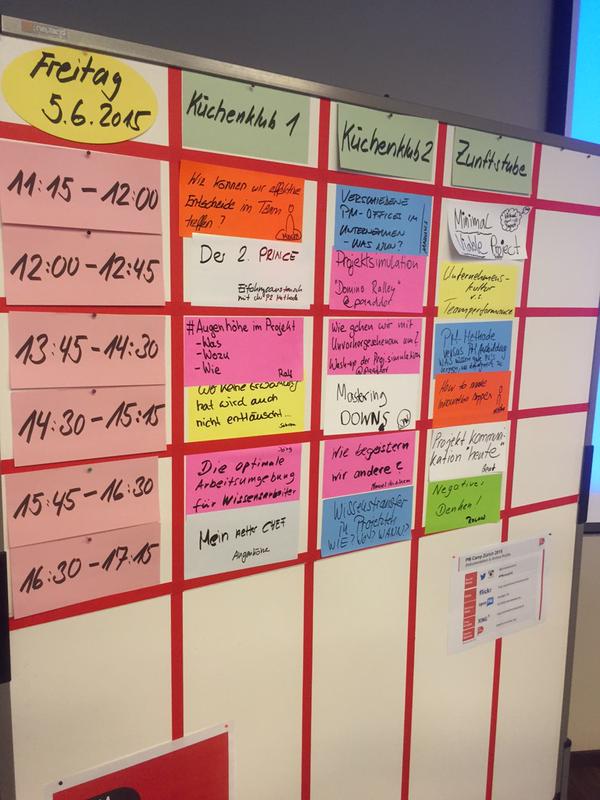 Yesterday evening, I arrived back home from the PM Camp in Zürich #pmcampzue. It was a small but very exquisite PM Camp and gave me two great days.
The first day was opened by Nadja Schnetzler who is also co-chair at word and deed. She bewitched the Camp participants with her wonderful postcards: and she showed us how you can “Embrace Chaos” in a very unobtrusive and serene way.
To me, it seemed that this nice impulse presentation went a long way towards many other sessions considering it important to talk about the situation of humans in their various roles whenever project-typical tasks are concerned.
Consequently, much was about the change in our society and consequently also the change in our projects that progress brings in its wake. It was all about intended and unintended change – and about “Innovation as creative destruction”.
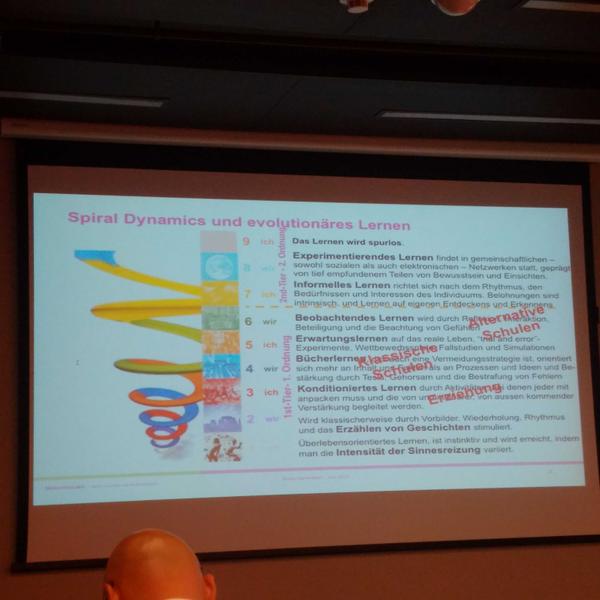 On Saturday, which was the second day, we all started the day with a drumbeat. Bruno Gantenbein, owner of Unschooling.ch, who has been a successful business counsellor for many years, started the day early in the morning with a strong impulse on “learning, too, is part of evolution”.
And his way of doing so was so emotional that some of the audience were moved to tears of emotion and joy.
And then he, too, spanned the bridge between what he had said and project management – asking the for me absolutely central question: “How, where and what do projects managers actually learn?”
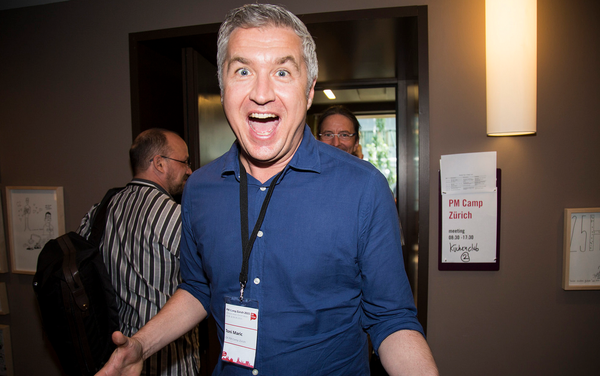
Toni (Anton Maric) in action.
It was no surprise that the second day eventually led to a broad exchange of knowledge about the question how meaningful, efficient and humane learning might, should or must be.
As you can see on the pictures taken at the PM-Camp Zuerich, it was a great event. You can also see the pictures on the Flickr Account of the Zurich PM Camp!
Consequently, I would like to say many thanks to the PM Camp Zürich Orga-Team, namely Dagmar, Bruno, Christian, Matthias, Silvio and Toni, who initiated the Zurich event.
And in less than one month, from July, 2nd to July, 4th, the next PM Camps are waiting. They will be held in Bad Homburg! Then the day will be called #pmcamprm!
I definitely also want to be there and, of course, you will also read my report on it in the IF Blog!
RMD
(Translated by EG)
Roland DürreMonday June 1st, 2015
Entrepreneur’s Diary #109 – How High Should a Company’s Return Be?
 This is also one of the questions with no easy answer. The answer depends on far too many parameters and influence values. And one of those factors are certainly also the entrepreneurial goals, such as sustainability and common good economy (Gemeinwohl-Ökonomie).
It is frequently discussed and I am frequently asked: What is the “right” return for an enterprise with a certain concept and in a certain area? I also keep seeing absurd numbers set as obligatory values. For many enterprises, those numbers are utopia. Consequently, I want to use this article to try and give some reasonable advice.
If, on reading this now or on starting to read what follows, you get bored, then I would recommend you continue with the next paragraph written in bold letters, which is under the heading “All Bullshit?”.
First and foremost, let me again define the term “return”. We distinguish between return on sales and return on capital. They both tell you in per cent how high the proportion of the return is profit, or how much of the capital you gain from. That sounds fairly easy, doesn’t it?
One piece of information:
People often totally forget the trivial fact that even a small sales return might well mean a huge capital return. After all, the return is supposed to be many times the capital. And if I have a return of, for example, fifty times the used capital, then this means I get a capital return of 100 % for only 2% sales return! In the 1950ies and 1960ies, for instance, the German economy mainly focussed on the capital return – and it is surprising what low numbers (sometimes even in the low one-digit per cent range) were considered good results in trustworthy companies, such as Siemens and VW.
Second piece of information:
Well, basically, it is difficult to determine the “correct” absolute number for the profit (what exactly is the profit and how high is it?), since it is the profit per sale. More often than not, both the term and the reference are not clearly defined. Consequently, you usually take the EBIT (earnings before interest and taxes) for calculating the sales profit.
Third piece of information:
But the last profit contribution from the business statement, too, is a valid and yet not easily calculated basis. If you use it, the employee and/or director bonuses are already part of the salary and as such have been subtracted. Yet those were only due because the “profit strength” of the enterprise was very high, better than the EBIT, which has been reduced by the success premiums paid to the colleagues. The question arises if one should not, at least mentally, add them to the result.
Fourth piece of information:
“Investments“, into products (which, when we are talking software development, must be considered costs for services, rather than investments in the bookkeeping sense) reduce the EBIT in the bookkeeping sense. After all, the software that has been developed may/need not appear on the balance sheet in our company. The same is true for some other investments into the future you cannot put on your balance sheet, for instance training programs and the reputation of the enterprise. They minimize the profit, yet they are important “investments” into the future of the enterprise.
Fifth piece of Information:
I, however, propose that you should see this as your duty that goes without saying as an entrepreneur and that you first consider the profit as “return power of the enterprise”.as seen in the last contribution margin. The rest (all the measures taken with a view of the future or all the things that probably would not have happened if you had had less return, such as extensive trainee programs, team building, success parties, luxury and also investments in your own tools and the like) will be stored “mentally” for further reference.
Sixth piece of information:
When judging the situation of the enterprise, I can certainly virtually add to the return. On the other hand, I will subtract hidden costs and risks of the enterprise. Being the entrepreneur myself, I will know best what these are. Apart from and on top of the actual numbers, this is the best way to judge where the enterprise is standing.
Seventh piece of Information:
As far as the actual numbers for the profit (the return) are concerned, many factors play a role. The size of the enterprise may need to be considered. There might be critical numbers below optimum. Small firms, in particular, can be organized in such a lean way that they can render a high profit. Because you have a high awareness of costs and only little infrastructure and administration, everybody assigns to the account, much is just done in passing and what remains is done by the boss, anyway.
Eighth piece of information:
Of course, your sector is also a determining factor. If you sell mass products wholesale, an extremely small turnover return means a huge profit. And if you are into services or niches, your profit might well break away, with the result that you have not enough to make a living.
Ninth piece of information:
Usually, growth will cost money and therefore decrease your return. Consequently, you can never regard the return isolated from the growth. Growth is not a value per se, but a sensible organic growth is probably something natural and necessary for all enterprises.
Tenth piece of Information:
If you are into services, growth will happen either by working more hours or through adding persons, i.e. more employees. It gets harder and harder to increase the hours. So you will need more employees. It is rather costly and time consuming to find new employees. Young employees, such as graduates from universities, often need long adjustment phases and training on the job. A head hunter (which is something I usually would not recommend) who provides you with “finished” new employees, too, costs a lot of money and therefore minimizes the returns. But finished employees, too, will initially make the degree of capacity smaller.
Eleventh piece of information:
As you can see, return and growth belong together. And growth will cost money. Consequently, it seems rather logical that there is an inverse correlation between sales return and sales growth. And a “healthy” firm can probably only get its old profit through growth breaks.
Mind you, sometimes it might make sense to have a negative growth or a negative return. For instance if changes in your environment make it necessary.
Twelfth piece of information:
So, talking actual numbers, you could actually put x per cent growth in relation to a return change y (which is often negative with a strong growth). A very rough rule of thumb (formula) might be that the growth should always be considerably higher than the decrease in return.
If, compared to the previous year, the growth of a service providing firm was 10% while the sales return remained stable, then this is a rather good sign. If the growth increased by 10 %, you might well get a decrease in returns of y %, for instance 2 %. This might well be quite acceptable.
And it is the talent of the entrepreneur to see to it that the gradient of the sales growth is higher than the negative gradient of the sales return, i.e. that x > y remains or gets valid.
Mind you, all this is only true for a pre-defined “sustainable development” in the enterprise, for instance in the sense of “common good economy“ (Gemeinwohl-Ökonomie). Of course, if you are interested in short-term results, you can sometimes make a huge profit through depletion. But you should be careful not to damage too much of the substance.
Thirteenth piece of information:
Another formula, especially for start-ups, has been developed in the USA: 40%-Rule. The advice is:
Your annual revenue growth rate + your operating margin should equal 40%!
In other words, the sum of growth and operating margin should always be critical. See also the following comment:
This means you can build the sum of growth and return. So if I have 10% return, I should have 30% growth. And for 5%, I get 35%? That sounds logical, doesn’t it? And you can even apply it for negative numbers: If I have a negative return, (-10 %), I will have to have 50% growth. Perhaps in order to build up a particularly strong market position and thus attract the attention of an investor.
All bullshit about the return?
Regardless of the fact that I believe my ideas are quite reasonable, or else that they are backed by quite good sources, I believe that the “return question” is the totally wrong approach in terms of entrepreneurship. The question: How good is my return if compared to other enterprises? Is more like a game – if everything is running so smoothly that there is nothing better or more urgent you need to do.
What is truly important is the entrepreneurial culture. To what extent does it create a “sphere” for teamwork that is innovative, instead of making people ill? Does the enterprise give people a chance to actually participate? Is there a meaningful purpose that is not polluted by bureaucracy? How do the employees see themselves? (Everybody is a champion)? How to recruit the right persons for your enterprise?
Those are the important questions you permanently need to find answers to. They also call for never ending work. And that can only function if you have the right kinds of persons by your side. And if you employ the good ones.
That is what has absolute priority. It goes without saying that those considerations do not absolve the entrepreneur from taking the “business component” seriously and to always carefully and skilfully keep in mind what the connection between “the numbers” and “the development of the enterprise” signifies.
But if you take good care of this, the high “return” will be a natural result. And more likely than not, you will then gladly notice that, as a general rule, your results are better than those of the competition on the market.
And then you have to answer a totally different question:
How to distribute the good results:
- How much do you need to keep as reserves?
- What share do the people in the enterprise get?
- What remains for the shareholders?
But this is a totally different matter. And, as I see it, it is a very enjoyable task.
RMD
(Translated by EG)
P.S.
Many of the ideas in this article were motivated by Elmar Jürgens. Many thanks to Elmar.
P.S.1
For more articles of my entrepreneur’s diary, click here: Drehscheibe!
Roland DürreWednesday May 27th, 2015
(Deutsch) PM-Camp in Zürich – “Umarme das Chaos” und “Unschooling” – 5./6. Juni
 PM-Camp Zürich – “Embrace Chaos” and “Unschooling” – June, 5th and 6th. I truly look forward to the next week. Our second PM Camp will take place in Zürich on Friday and Saturday (June, 5th and 6th). For me, Switzerland is a particularly innovative country. Having participated in many RISE workshops opened the doors for me to meet many great Swiss enterprises and entrepreneurs.
Consequently, I look forward to seeing many well-known faces, including my friend Ton (Anton Maric, important part of the organizational team and initiator of the #PMCampZUR), attending great sessions and, last not least – two impulse presentations.
Let me cite those two here:
Nadja Schnetzler, associate of word and deed will open the PM Camp with the presentation ‘Embrace Chaos’:
In an environment determined by dynamics and constant change, old and established project management technologies will not be much use. Today, what we need are persons and instruments who/that not only accept chaos but also see it as a necessary part of project work. Nadja Schnetzler has had 25 years of experience in project management and today counsels firms, organizations, teams and individuals on new collaboration and communication techniques. Her keynote «Embrace Chaos» will show you how to accept constant change, at the same time introducing key ideas from innovative management, collaboration and communication all project managers should be familiar with.
Bruno Gantenbein, associate at Unschooling.ch, will give a presentation on “Learning, too, is Evolution” on Saturday:
In his book: “Drive: Was wirklich motiviert” (What Really Motivates People), best-selling author Daniel H. Pink writes about intrinsic motivation. He also gives some interesting advice: “Ask the unschooled to give you a lesson!” The Swiss unschooling pioneer Bruno Gantenbein will let us take a glimpse at the practice when applying this new WAY of learning, at the same time building a philosophical bridge to project management.
For the entire program, click here: Programmseite.
If you know me, you will also know that I am a person who is immediately interested when hearing about these topics, especially in the context of management, leadership and entrepreneurship. And I also assume that very special sessions will spring from this initial topic. Consequently, I would like to encourage as many of you as possible to come and join me in Zürich.
And here are my best greetings to Zürich and an many thanks for the organizuational Team of #PMCampZUR in 2015!
RMD
(Translated by EG)
Roland DürreTuesday May 26th, 2015
The Wheel Inside the Flag.
 Today, I am saying good-bye to India. On Tuesday, at 00:40 hours, we are scheduled to fly from the New Airport of Mumbai back to Munich. An intense week is at its end.
My impressions are full of mixed feelings. I read about the culture and history of the country. There is an interesting Wikipedia article about the national flag of India. I strongly recommend reading it to all those who are interested.
The wheel on the early version of the flag is a spinning wheel. As an addition, I can give you the following story which you will not find in Wikipedia:
Ghandi is said to have converted his people into a species that learned the spinning and weaving techniques in order to make them able to produce the sought-after cotton fabrics from England themselves, instead of always being dependent on the import from England. That is why the Indians integrated a spinning wheel into their flag as a symbol.
Well, with this in mind, you might well see the great Ghandi as a forefather of Sina Trinkwalder who, quasi as his predecessor, carries the art of creating jeans and dresses back to the former textile town of Augsburg. She also wants to use it as one means to fight the exploitation of human beings.
Exploitation which definitely takes place in India and which is practiced basically by European and German enterprises. Quite a few big brands take their profits made in India and use them for improving the statistics for their not always great budgetary numbers.
However, the nice numbers of India are the result of structures that originated in colonial times, of a concept of humanity that considers people merely as labour resources, of a crippling external balance (and with this, I do not mean the damage to the environment that is considered acceptable) and of a violation of (all the) rules.
In India, too, there are massive movements fighting these developments. They are not even totally without success. Actually, I witnessed an extreme variety in society; my few days in Bombay truly moved me.
And the more I digest what I experienced, the more I come to the conclusion that there is basically no “right” or “wrong”. I cannot and must not judge what is “good” or “bad”. We are all part of an evolution we should under no circumstances condemn with an attitude of knowing better morally – which is something we all (and I in particular) have a tendency towards doing. When all is said and done, even the best causal and rational explanations and wise constructs will not help. On this world, things are happening that I just cannot rationally understand.
The only resort for me is to try and work constructively for myself and others in my small microcosm. That is hard enough and it means first and foremost that I must not do or decide anything that will apparently have destructive consequences. And in doing so, I also have an obligation towards myself. Because I can only have a constructive influence on others if I also manage to function well myself.
RMD
(Translated by EG)
P.S.
I really look forward to a few highlights awaiting me in late May and early June. One of them is the Zürich PM Camp #PMCampZUR on June, 5th and 6th. It is going to be a great event and will also be what my next article – then back from Munich – will be about.
Roland DürreSunday May 24th, 2015
The Mumbai MonoRail.

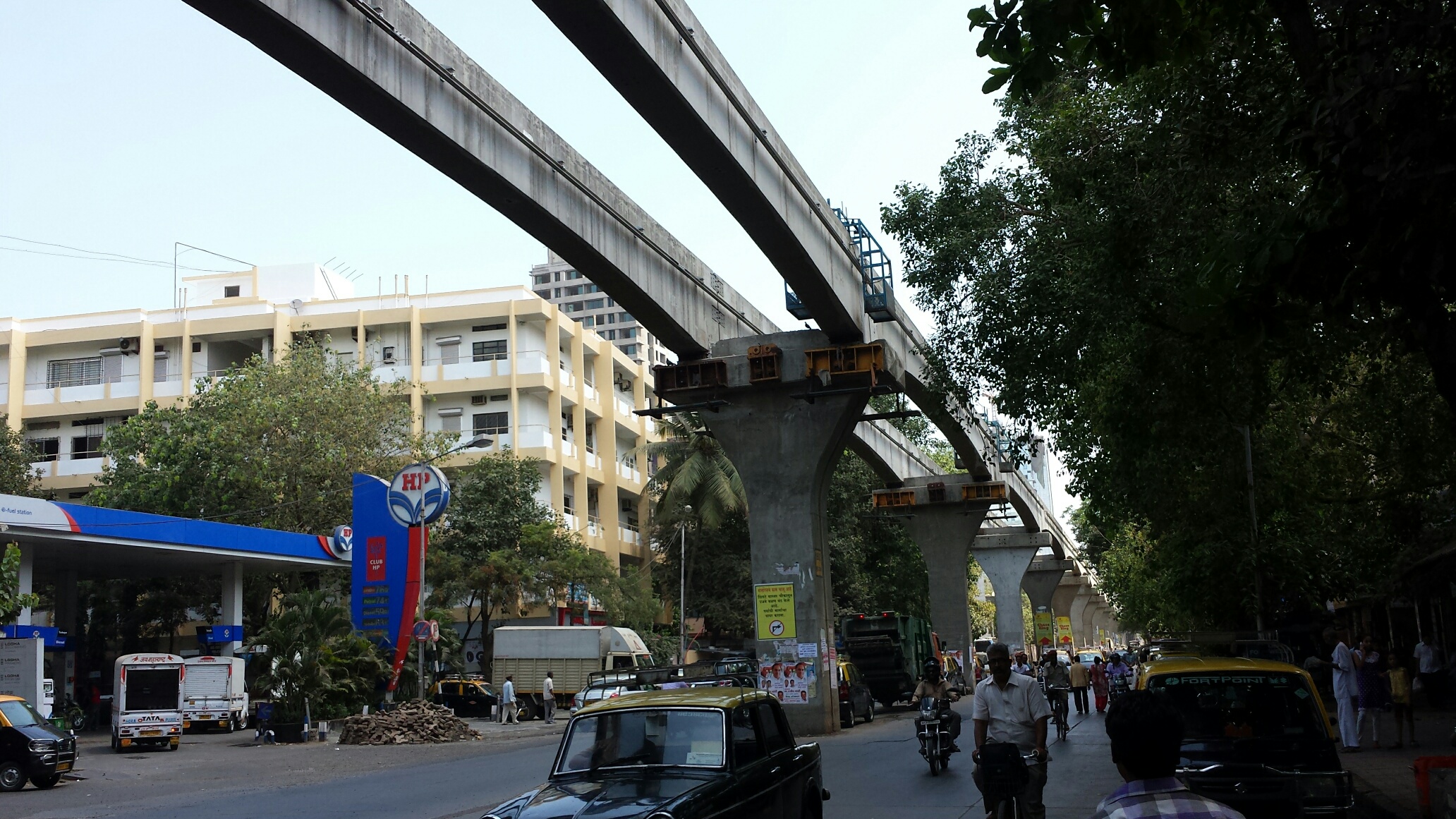
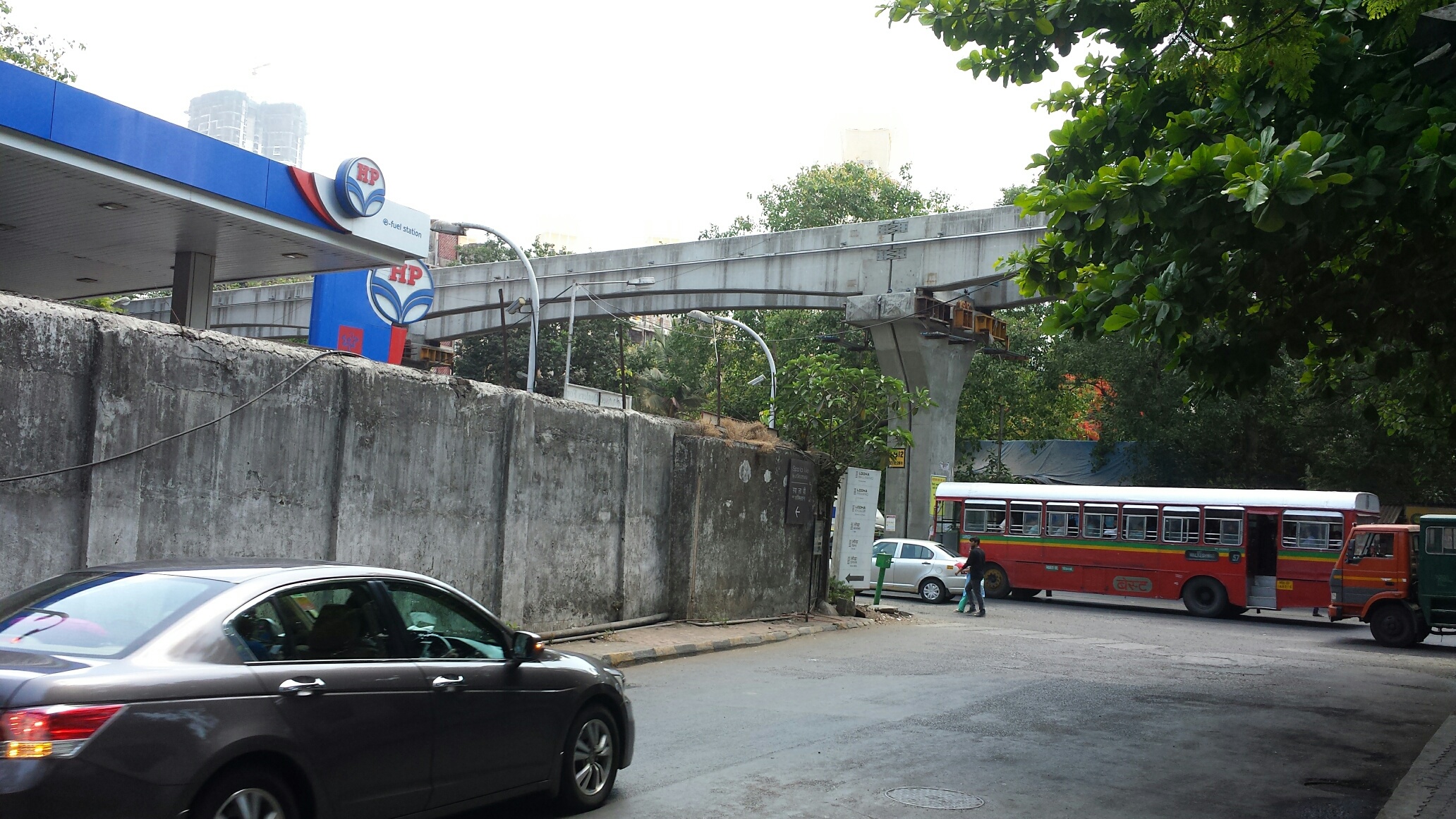
In the street facing the Dodha complex – which is the skyscraper I am currently living in – a lot of concrete is being used for building the MonoRail tracks. Over the narrow street, a two-lane concrete line is snaking its way through many very different houses. Eventually, it is supposed to prepare the way for the Mumbai monorail train through the city.
The only other project of this kind is the “Fly Over”, probably the most important higher-level street in Mumbai, part of which also detours onto the ocean, thus connecting the city districts and their skyscrapers. As I already wrote, you can categorize the skyscrapers into three classes: “already finished”, “still under construction” and “not finished, but no longer under construction”. In fact, I am sure you could find quite a few other exciting categories, as well.
Somewhere in Mumbai, the MonoRail is already active, connecting it to a not-yet finished future city. It has almost become a tourist attraction. However, one cannot really call it a tourist attraction in the same league as the magnetic levitation train to Shanghai Airport.
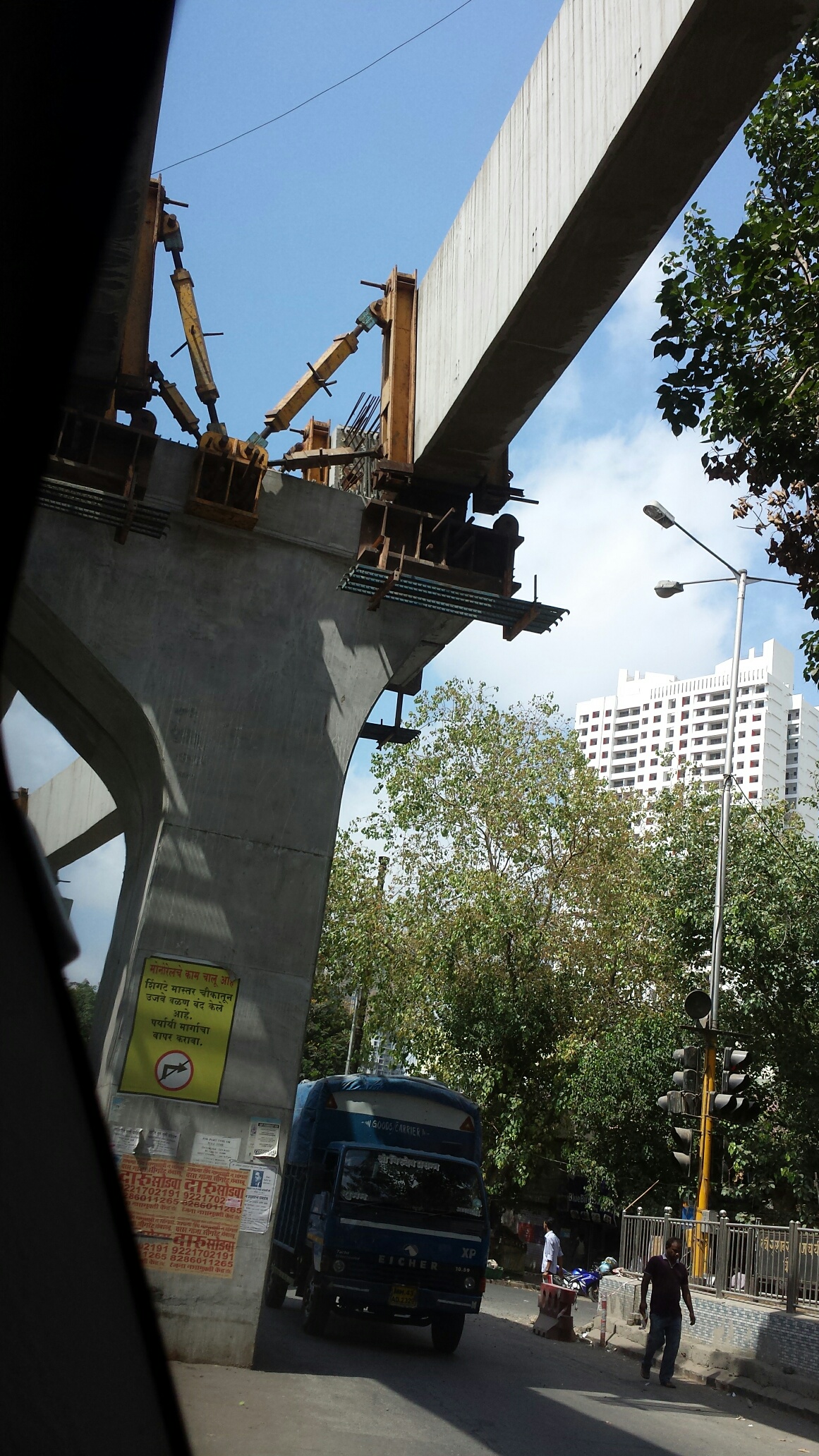
To me, the MonoRail looks like a prestige object of Mombai. In terms of public transportation, I doubt that it will be all that beneficial. But then, a MonoRail is definitely something special and therefore a good means to improve the reputation of Mumbai as a modern city. Besides, the project will also mean that some very rich will become even richer. In India, a few always means a few more. And whenever a huge project will increase private prosperity, then it is definitely justified.
A short time ago, a new government was installed. It is leaning towards right-populist. Instead of dealing with apparent problems, the first thing it did was forbid the consumption of beef, making it punishable most severely. And before the elections, they promised to install air-conditioning in all those many old Metro trains with open doors and windows. Because AC is always something people are in favour of. This intent is probably something totally impossible to put into practice.
In another district, they want to introduce an identity card for every cow. In order to guarantee that the cow has a happy life. Regardless of the fact that India is one of the world’s biggest – if not the biggest – beef exporting nation. However, it seems more like these measures are meant to oppose Muslims, who allegedly are the powers behind the Indian beef industry.
To me, it also seems the women are still treated rather strangely in India. They do not seem to be met at eye-level, there is always the insinuation that they are second-class persons. Sexuality is rather absent from public life, so it seems that the society is a rather prudish one.
And apparently, this causes friction, at least among the male population. In order to avoid escalation, you get separated compartments for women in the often over-crowded metro. Just like there are compartments that may only be used by disabled persons or cancer patients. These are easy to recognize by the symbol for cancer, which is a big circle with a huge crab in the middle and the handicapped symbol we, too, are familiar with.
We, however, being Westerners, mostly go places by car (a white Toyota six-seater) and consequently spend (too) much time on the streets of Mumbai. Somehow or other, there is no alternative. Even if we go only short distances, it takes quite long, because of the traffic jams. The ever-present AC makes it bearable.
Our driver works for a company that is a sub-company of a sub-company of a very big company. They also drive for Western companies. Formerly, these enterprises had their own cars and employed drivers. But that was expensive – although objectively it was very cheap. And then they started saving money and outsourcing.
Now, the combination driver/car is supplied as a full service by huge enterprises, using various providers. Some provide the cars, others the drivers and again others the service. The drivers get less money, the customers are less happy, but the enterprises make a mint. Basically, all services seem to be provided by huge service enterprises.

Foreign companies in India mostly produce things that probably nobody will need any more in the near future, for instance turbines for steam engines. They are for coal-fired power stations. In fact, they mostly do not produce the high-end products. After all, who wants a steam turbine from India for his nuclear power station?
As early as May, the temperature is higher than 40 degrees Celsius, even in the office buildings where the engineers work and where the quality management and similar things take place. You have propellers on the ceilings, but no air conditioning. Because electricity is expensive in India. So it is no surprise that the customers are not always satisfied with how the projects are finished.
The representatives of the state are all friendly and eager to help, which is true for most of the people I met in this country. Allegedly, however, corruption has gigantic dimensions: they say that, without small or larger contributions, nothing goes.
Some families are incredibly rich. The truly rich persons can afford everything; the high import tax on luxury articles does not make the slightest difference. In some underground car parks, you will find a collection of the newest cars with the logos we know quite well, next to some vintage cars that look like they were new. The rich live in fenced communities. In the underground car parks of these areas, you will see entire brigades of people giving their luxury state coaches a new polish after each outing. I have not often seen so much car tin polished to high-gloss and shining chrome as during my few days in India.
More and more people get poorer and poorer. They live on streets that, to my perception, seem even dirtier than they used to be. People live in circumstances that almost defy description. As soon as, two weeks from now, the monsoon will arrive, their homes will regularly be under water.
Live is considerably better in the mostly self-administered slums. But it is not at all easy to get access. Especially if you have absolutely nothing.
At the crossroads and noisy streets, beggars are aplenty. Among them are women and children, elderly persons and handicapped persons. Some women carry a toddler or small child in their wraparound garment while begging. Strangely enough, those children always seem to doze. I never saw any of them cry or sob. Someone told me the babies get medication in order to make them peaceful when the beggaring is under way.
All of Mumbai has a funny odour. You could say it smells. Leaving the plane is not the only moment when you realize that this is so. It seems like the rubbish and dirt increases every year. And Mumbai is a noisy city.
On the 29th floor of the skyscraper, the smell of the city is a little less obvious, but, regardless of the so-called “sound proof window”, this is not true for the noise. On the cars, it often says “horn me” – and that is how it sounds, too.
In between all the common noise, both in the day and at night, you will occasionally get the shrill trumpets of the railway and the loud humming of the helicopters. They drive and fly both by day and night. The noise of the trains comes from below, that of the helicopters from all sides as they fly over or between the skyscrapers. And from above, the noise of regular air traffic will add to the ruckus. All of these contribute to, again and again, robbing me of my sleep in the hot Mumbai.
Some developments I seem to remember from home. Well, not quite as strongly as here. But at home, we also have notices for building contracts concerning public transport where providing the vehicles and the drivers are separate affairs. Especially as a biker, I notice that the plastic waste along our streets constantly gets more. Just like I discover more and more prestigious projects and a tendency towards gigantism by our administration. I also know laws that make no sense and politicians who are incompetent in Germany. And the fact that society drifts apart is not something unknown, either.
It seems like we are learning from the Indian example. But then, as I see it, this sort of “progress” and “growth”, which I am not at all in favour of, seems to happen all over the world: in India and Cuba, China and the USA, Italy and Portugal… And also in Germany.
Luckily, we at home have not yet reached the dimensions I witness in Mumbai. Yet the tendency seems to be the same. The question is: will we manage to turn around? In India, I see no hope that it might still happen.
When I last visited India late in 2013, one Euro still changed into more than 80 Rupies. Currently, I get 70. I ask myself how many Rupies I would still get for my Euro late in 2016? Perhaps only 60? However, since my last visit, life in India has not become any cheaper.
This makes me thoughtful. Perhaps the Indian society is actually the pattern after which the future will form itself –in our country, too?
And yet!
So far, our days in Mumbai were very nice. To be sure, we had a privileged life. I was annoyed to witness the circumstances as I related them. Because noise, smell, sitting in the car during traffic jams and similar things are not at all the world I feel comfortable with.
Yet it was a good time with very happy days. It was nice to share and experience so much with Barbara, my son and his family. And I was lucky enough to see many “Shiny Eyes” in the faces of many simple and certainly in those of poor people on the streets. That is also something to make me happy.
It is probably both the sad and nice thing about being human that we can stand and endure so much. And absurdly enough, we find it easier to be happy when we have less. And when we have to suffer a little. As soon as we are too well off, the shiny eyes disappear in expensive pubs and bars. And near the swimming pool, more often than not, the only shining eyes you sometimes see are among the children.
Consequently, you get happy eyes more often in Mumbai than on the streets of Munich. Basically, this is incredible. But then, I got the same impression during my bike tour through the west of Cuba a few months ago.
RMD
P.S.
I learned the term “Shiny Eyes“ from Nadja. With her work, Nadja wands to contribute towards “more shiny eyes”. As I see it, this is a wonderful idea.
Roland DürreSaturday May 23rd, 2015
Mumbai and its Skyscrapers.
 We are spending this week in Mumbai and living with my son in the Mumbai Dodha housing complex. At first sight, it looks like a very well-maintained housing area with a beautiful club building and swimming pool. It has two towers with 49 structural levels. My son lives on the 29th floor with bright rooms that are considerably higher than three metres. It is a very nice flat with a wonderful view of the ocean. However, they built a new skyscraper with many flats exactly between the ocean and Dodha, which now makes it impossible for many of the Dodha flat holders to see the ocean. We just manage to look around the new skyscraper.
Late in 2013, I already lived here. During my first night in 2015, I was surprised, because I seemed to remember even more noise. So what had happened? Well, the answer is easy: not far from the building we are staying in, more skyscrapers still in the construction phase rise to the sky, among others the one I just described. During our last visit, they were just in the construction process, and I mean day and night – and that had made the noise almost unbearable.
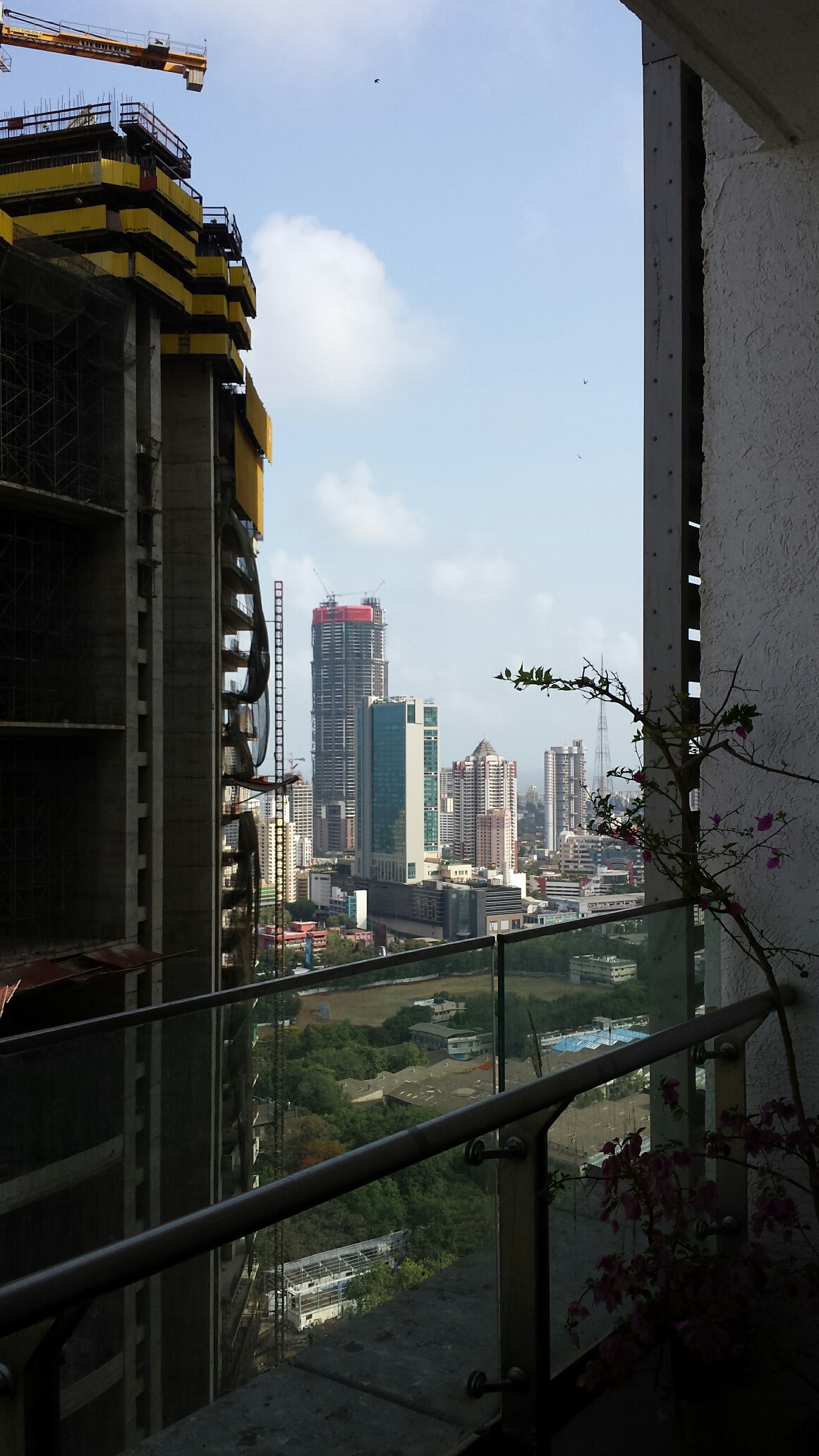 Now the construction work has been terminated one year ago. As likely as not, it will never be resumed. Because the construction company closed down. The skyscrapers facing our flat have become hideous ruins. But they are not the only closed down skyscraper construction sites in Mumbai. You can see huge building shells without any construction activity going on in many places all over the city. Many of them already look like ruins.
There is a simple explanation for this.
Either the construction companies are bankrupt. After all, in India, the concept for getting rich is simple: for instance, you start a realty project and sell the flats in advance. There is more than enough money in India. Then you build the house. Naturally, as you proceed, the costs will increase. But not only by around 70% as in Germany with huge projects. Here, too, the Indians have surpassed us.
So what do you do if you find it will cost more? You start new projects that will be planned and sold. Using the money from those projects, you finish the first building. And you use the good press you get for even more projects with which to finance the old ones. Except this is a snowball principle, isn’t it? And since they are always finite, you will soon have a few concrete skeletons sitting around. For me, they look like threatening memorials of a degenerate economic system.
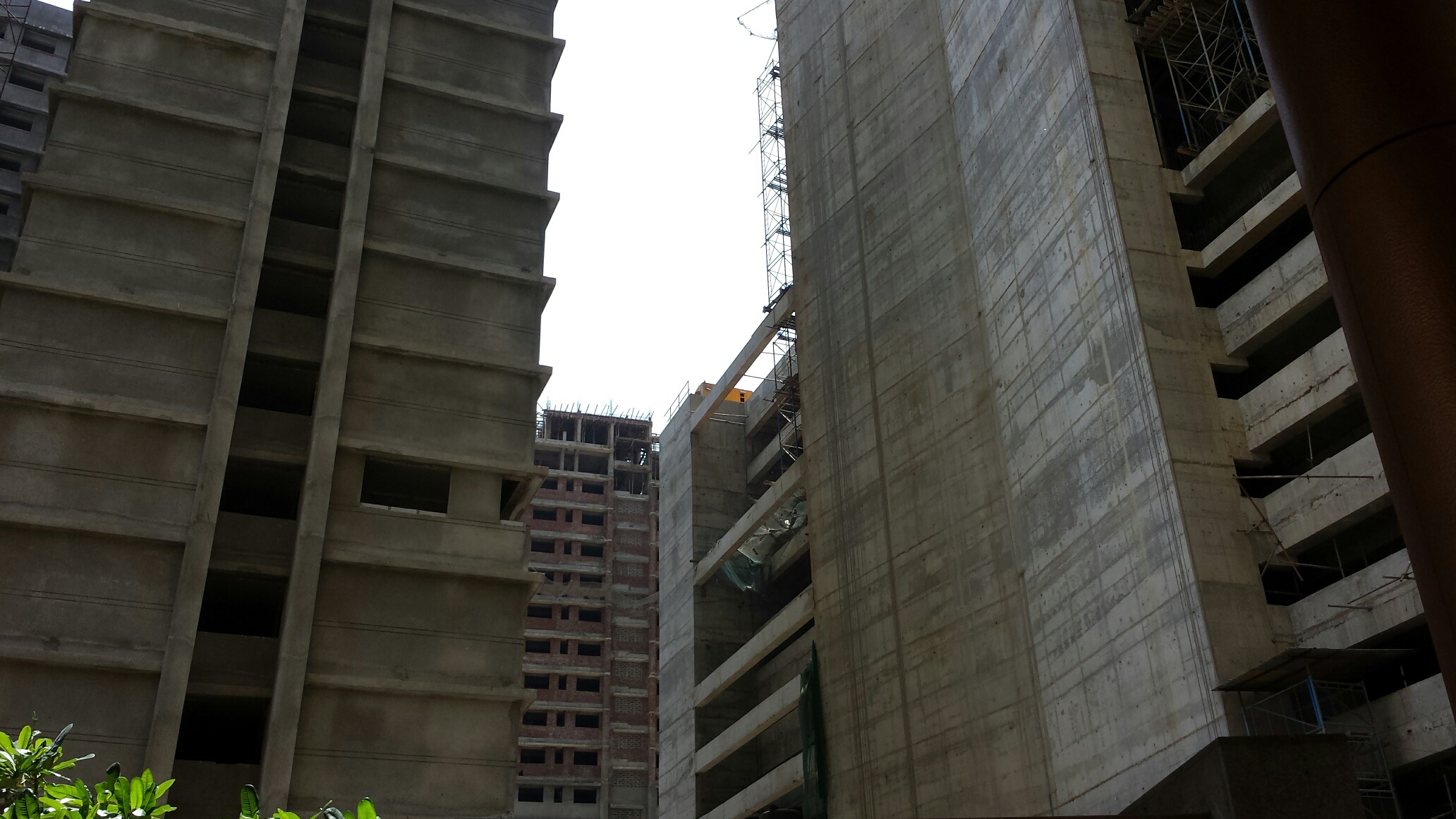 Sometimes, you also see skyscraper construction sites where work has been terminated for another reason. The builder-owner dramatically ignored the official requirements. Perhaps he was hoping to get away with first creating facts which later can be cured by bakshish. Except this method is not always a success, perhaps even because the competition offered more money. Now the authority demands deconstruction.
Except how to deconstruct a skyscraper you started with twice the base area you were supposed to? So what you do is just let the concrete skeleton with all its many floors sit there. In neither case, you need to continue, because, after all, you already did your business. The money has been earned and ended up in all the various private purses.
And we are talking a lot of money. Let me take the towers I am living in with my son as an approximation: there are six flats on each level. If you have 50 levels, that means 300 flats. Depending on the situation within the tower (before the unfinished skyscraper was built right in front of it), the flats were between 1.5 million (lower floors) and two million (upper floors) USD. That gives you a total project volume of 45 million USD: Well, that should suffice for all the parties concerned to become rich: the financiers, the salespersons, the project workers, the lawyers.…
The ones who suffer are those who bought the flats. However, they are mostly so rich that they hardly notice. Besides, they also know where and how to retrieve their money. Eventually, it will be the public. As usual – the profit has already been privatised, the loss is socialized – at some future point.
Consequently, you see them more and more often, the Mumbai ruins. But it seems that nobody is really upset about them. The poor ones living down in the streets are certainly not upset. Why should they revolt against things they cannot change, anyway?
However, in Mumbai you also keep coming across new construction sites where people work industriously. Among them are those buildings that, a few years from now, are supposed to be the highest buildings used purely as living quarters world-wide…
Please note that, when writing this, I do not wish to criticise India or Mumbai – in fact, no matter what I see here, I always have to think of back home!
RMD
(Translated by EG)
P.S.
The building I am currently living in is perhaps 15 years old. Yet some of it looks like, basically, a renovation is more than due. At least if your socialization happened as middle-European as mine did.
Roland DürreFriday May 22nd, 2015
No More Border Controls
This time around, we applied for our visa to Mumbai on the internet. It was the first time for us. In fact, it was considerably cheaper and less effort – without having to go to the visa agency. Consequently, on arrival at Mumbai airport the day before yesterday, we had to proceed to the desk “visa at arrival“.
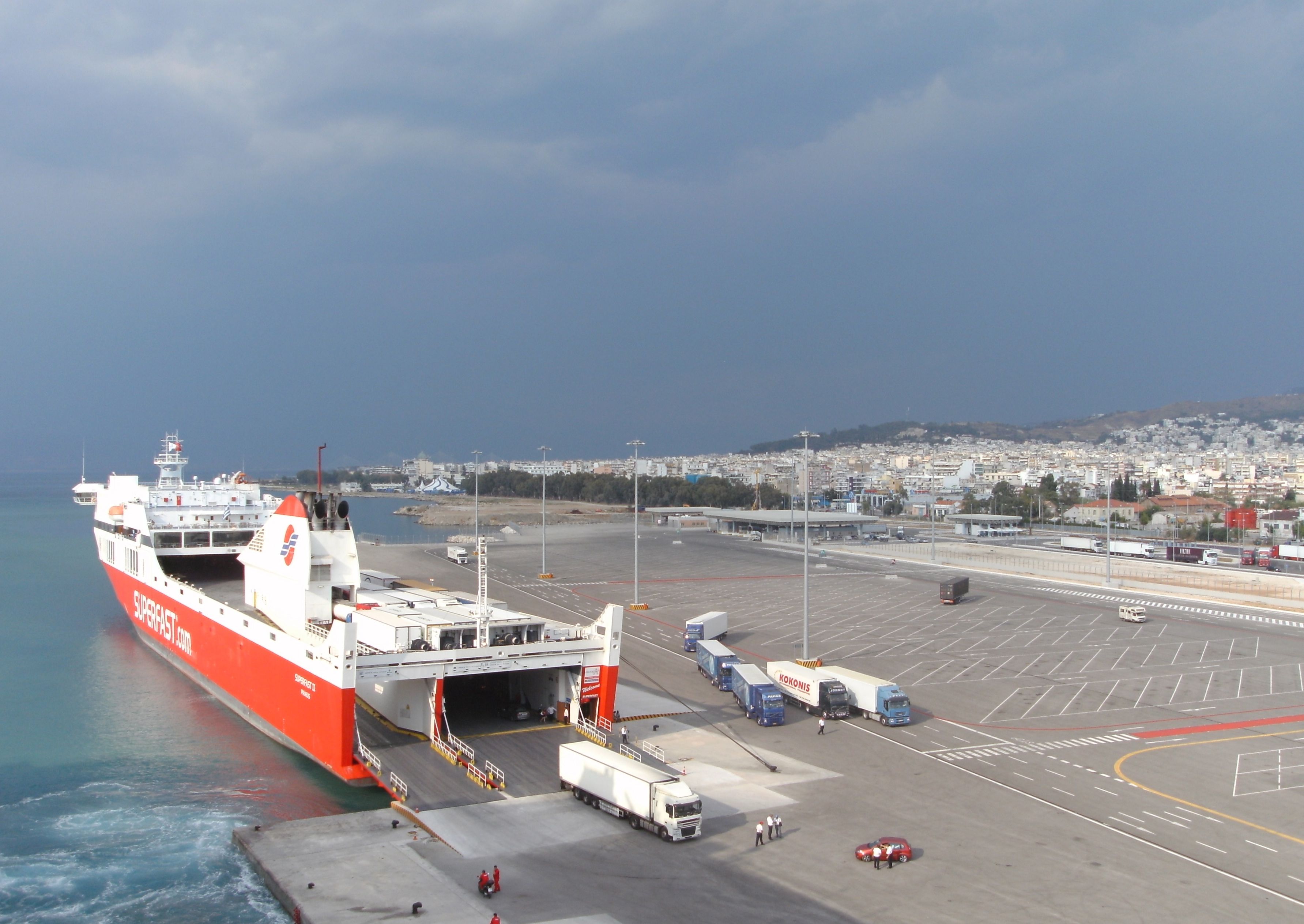
Done – getting on board in Patras lies behind us 😉
I was impressed by how smoothly you can enter into a country like India. This is something I write about because, as we know, there are no longer any border controls in Europe. At least officially. Just take, for example, the ferry from Greece to Italy. Or when the G8 will meet in Elmau – then it will be tough going even between Germany and Austria.
And you will easily realize that in Europe, too, there are still border controls – which actually can be rather inconvenient.
Now I hear as a justification for data storage that we need them in order to fight terrorists and organized crime. And another – indirect – reasoning is that this is necessary in Europe since we abolished the border controls.
And then I think that, perhaps, we were a little too fast when we abolished border controls. For me, border controls are lesser of the two evils if compared total surveillance of the citizens is the other option. Using modern technology, it would also be quite easy to realize – as easy as entering the lift when you go skiing.
Incidentally, I currently feel a lot worse about corruption and white-collar crime, a criminal financial policy of the issuing banks, politics without any social responsibility for the present and the future and the like than about some “organized crime” that is certainly very much to be condemned and the frustrating senseless terrorism.
Because in Mumbai, you can see very well what it leads to. I will report.
RMD
(Translated by EG)
P.S.
After a boarding process that – due to border/duty controls – was very time consuming and cost a lot of energy in Patras, I took this picture before leaving Venice.
Roland DürreThursday May 21st, 2015
Everywhere: Less and Less Transparency – and To Make Up For It: More Design and Marketing.
The wrappings look nicer and nicer, yet the content gets weaker and weaker“
 Yesterday, I flew LH from Munich to Mumbai. Regardless of the GermanWings crash of Barcelona, the fear I felt was limited. The direct connection was uneventful – perhaps the landing was a little more robust than usual. Other than that, everything was as always.
But: one riddle has been solved for me.
I am not a frequent flyer, nor do I care very much about entertainment on board. As a general rule, what I have on my screen while dozing is the “flight info”. That is an image where the position of the flight and data such as flight altitude, outside temperature, speed and more is (used to be) displayed.
And consequently, I never understood why, among the passengers on board the Barcelona crash flight, there was no panic or uproar. Because if I imagine myself looking at a flight altitude of 1,000 metres on my flight info screen – and that directly before the Pyrenees – then I can easily imagine myself being bathed in cold sweat.
As of yesterday, I know that the new entertainment system of LH no longer makes such a thing possible. And that probably the crash flight already had the new system on board. Just like yesterday my flight from Munich to Mumbai had it.
The new system will provide the user with only very little information. You have a menu with four items to choose from: the display of connecting flights, two cameras you can watch and something called SmartFly whatever.
The screen for connecting flights had a notice that you will be able to see information on connections shortly before the end of the flight. As to the cameras: one of them probably was tilted downwards and the other towards the front. Neither of them rendered special information yesterday – there were clouds underneath and darkness up front. The fourth (smart) item showed virtual images – beautifully designed with a Lufthansa plane in the middle – about the area we were flying over with occasional names of cities. However, there were only three items of information.
Well, we are talking distance from destination, remaining flight time and current time. No flying speed and altitude. …
I am only writing about this because, to me, this development seems strongly representative for what generally happens in our society. There is less and less transparency, information is kept secret from us, everything is wrapped in cotton wool and delivered… and then we are told this is all in our best interest.
I do not like it. I would like to know what is happening, instead of always only being made a fool of. Even if facts are not pleasant. Just like I do not appreciate constantly being spied upon.
RMD
(Translated by EG)
P.S.
I took the picture from Wikpedia – but we flew a smaller Airbus.
Roland DürreMonday May 18th, 2015
If there is no maintenance of infrastructure – or …

Here is what happened when the Amtrak train drove into Culpeper station on the Cardinal Route.
Why Amtrak Trains are in Such a State of Disrepair …
This weekend, there was an SZ article about the poor condition of the US state railway Amtrak.
The motivation for this article was another report about the train accident where a regional train went off its tracks between Washington and New York. Seven persons were killed, 200 more were injured, some of them severely.
The train drove twice as fast as permitted. And the accident could have been prevented, if…
I would like to recommend both articles for reading. Regardless of increasing passenger numbers, the infrastructure of the railroad system is suffering neglect in the USA. There is no money for necessary safety measures.
Especially the Republicans remain quite unmoved. They are the ones who cannot understand why you would need a railroad, anyway. After all, we are living in a time after the invention of the car, so taking a train would be a waste of time, wouldn’t it?
This is what it is like in “God’s own Country”.
Shouldn’t we count our blessings?
RMD
(Translated by EG)
P.S
.
I took the picture from Wikipedia, it was taken by jpmueller99 from Shenandoah Valley of VA, USA.
This image, which was originally posted to Flickr.com, was uploaded to Commons using Flickr upload bot on 22:16, 26 October 2008 (UTC) by TheCatalyst31 . On that date it was licensed under the Creative Commons Attribution 2.0 Generic license.


