
Roland DürreSaturday November 9th, 2013
My Presentation “Change in Management” Now Available as a Video
On October, 24th, I spoke at the University of the Armed Forces. Since what I talked about is extremely important to me, I had the presentation video-taped and published in Youtube. Here it is:
Enjoy!
RMD
(Translated by EG)
Roland DürreSunday November 3rd, 2013
brand eins in November
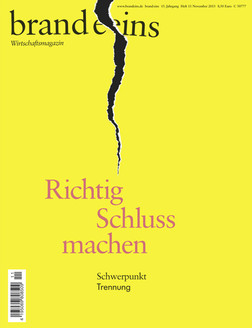 This time around, the “brand eins” edition arrived rather early. Because, after all, it will soon be Christmas. And I assume that they want the “brand eins” January edition to sit underneath as many Christmas trees as possible on Christmas Eve. So the motto was to speed up. Incidentally, “brand eins” is truly good advice if you are still a Christmas present hunter.
I had almost expected the ripping on the title page not to be real. After all, the post-it of the “brand eins” October edition taught me a lesson, didn’t it?
The title “How to Best End It”, along with the “focal point: separation” actually appeals to me. Finding an end and separating is always rather sad.
But I, too, made similar experiences to those described by Frau Fischer in her editorial. My separations, too, were always useful for me. Just remember what a good thing it turned out in retrospect that I first left Siemens and later Softlab in order to find my own responsible path in life.
Saying good-bye to the children when they grew older and started their own lives was always a good separation, just like the imagined relinquishing of freedom when I started family life. Leaving our last house a short time ago was also painful. After all, we had been living there for 23 mostly happy years. Now, however, I live in another, smaller house I am absolutely enthusiastic about.
Last Sunday, I said good-bye – although hopefully only temporarily – to our two cats Minz and Maunz alias Stalin and Lenin alias Joschi and Wladi to be on my way to India and visit my son for travels through India with him and his Chinese in-laws.
And the “brand eins“ accompanies me. Since Lufthansa – at least in the economy class – no longer seems to be as generous with providing daily newspapers as they used to be, I was rather happy to have it in my hand baggage. On such a long flight, I enjoy reading good material.
Consequently, I read about saying good-bye while sitting in the plane. And this helped me a little to prepare for the next separations to come in my life – the big one from my job at the end of 2014 and several small ones that loom ahead. I am absolutely determined to allow nobody to “take me as a hostage” (see page 70). Instead, I want to allow “jumps and separations”.
And here is what I especially liked: my favourite white beer (see title: Unertl) was also mentioned in the magazine. Of course, the Lenovo numbers are also quite interesting, but one might easily write a separate article about those. However, here is what shows best the high quality of “brand eins”: my ever so critical son, too, basically swallowed it up from the first to the last page.
After having spent two years in China, he now lives in India and had never heard of “brand eins”.
RMD
(Translated by EG)
Roland DürreFriday October 11th, 2013
“The Wise Animals in the Zoo” or “Academia”
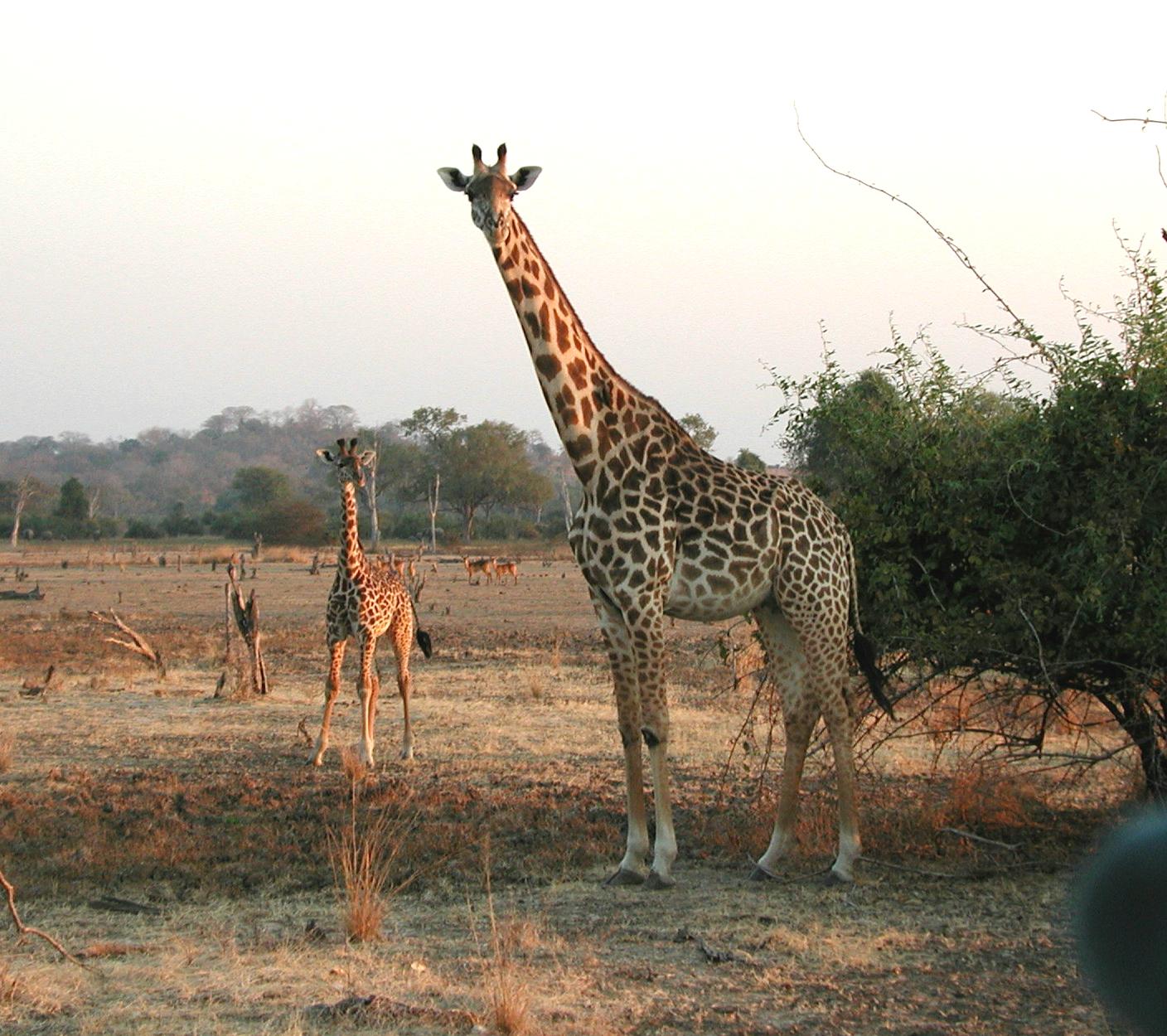 Once in a while, I also meet professors of the faculties business and philosophy. On those occasions, we talk, for instance, about business ethics and business morals. And I get the impression that academia is a nice zoo. Many quite fascinating animals live therein.
They are well tended and fed. Their health is exemplary, because the medical attention they receive is excellent. How their smooth coats shine! When they show their teeth, you see a faultless set. You will immediately notice that they have excellent knowledge and a precise understanding of things. Mostly, they have very agreeable personalities.
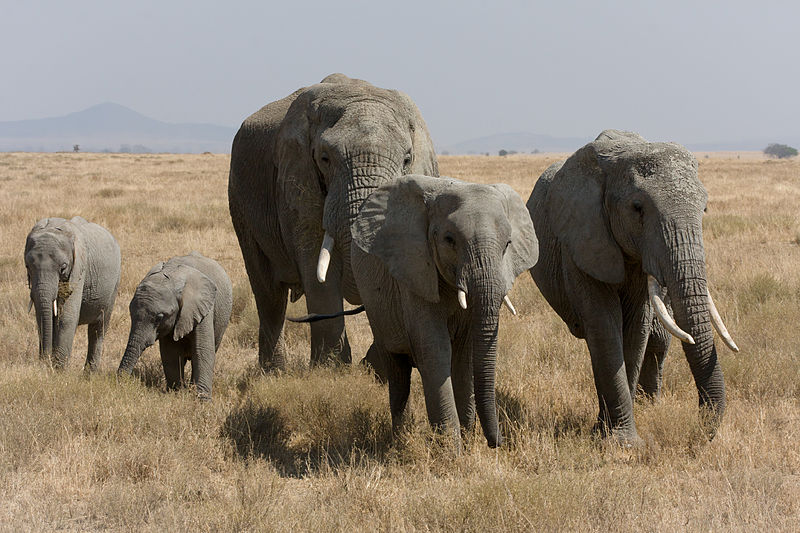 These animals have plenty to think about. Yet, there is but one glitch: more often than not, their knowledge is very abstract and theoretical. Because these animals sit in the zoo. Mostly, that is where they were born, too. Unfortunately, they never lived in the wilderness.
And in the zoo, they try to find out what life in the wilderness might be like. Of course, they can only make a guess. After all, they live in the zoo.
More often than not, their ideas are right on the mark. Once in a while, their wild guesses cause strange outpourings. And that is when many things start just going wrong.
 Regardless, the animals in the zoo do an important job. They teach us animals living in the wilderness many beautiful theories. We can play with these theories and come up with our own opinions: are they useful or not?
However, we, too, do not really live in the wilderness. Perhaps once in a while you could say we live in a biotope. The cultural world prevails. The natural world is something that no longer exists.
Thinking of the animals in the zoo brings something else to mind, totally associatively:
Die süßesten Früchte fressen nur die großen Tiere (The sweetest fruits are for the big animals only).
Somehow or other, it seems to fit, doesn’t it? Or maybe this is the reason why all the big mammals are usually vegetarian? Perhaps that should be a reason for us to start thinking?
RMD
(Translated by EG)
P.S.
The picture of the giraffe was taken by John Walker (Images of Africa), the elephants by Ikiwaner and the African Buffalo by Stefan Ehrbar.
And since it is so beautiful: Here is Peter Alexander in the year 1952:
Roland DürreSunday July 21st, 2013
Is There Still Hope For Us … ?
Or will we drown in stupidity …?
Due to the current state of affairs, I remembered a theatre play Norbert Weinberger and yours truly drafted and then wrote during a flight to India late in the last millennium. At the time, the two of us were going to New-Delhi flying Swiss Air from Munich via Zürich in order to visit our subsidiary enterprise. The business class seats were almost all unoccupied and several charming Swiss ladies were really interested in making us feel comfortable.
There was more than enough champagne and Norbert and I thought it might make sense to use the time in a constructive way and write a small sketch on the stupidity of late capitalism.
During that night, a short theatre play was created. It introduces simple pictures and messages, told by our fairy tale story teller (Muschka):
Two free-lance workers (Norbert and yours truly) are in a tight situation. Consequently, they sit on a draughty park bench drinking their beer. By chance, a business student (Markus) passes them. They tell him their dilemma and start a company with him. Soon, they are overjoyed by the nice yearly balance, but their financial auditor (Christian) quickly brings them back to earth. He recommends a business angel to them (Hans) whom he personally knows. Said angel immediately solves all their problems and takes them to the stock market with golden wings (on his back). The director’s personal assistant (Claudia) also rather likes the idea and serves champagne. Now the motto is to grow, which means “hire & buy”. All of a sudden, all the euphoria is gone and bad things start to happen. Mr. Buy becomes Mr. Sell (Alfred). And at the end of the story, the two friends will again sit on their park bench and drink their beer.
So much on what goes on in this very sentimental satire on New Economy by Norbert Weinberger and Roland Dürre. The play was first on stage with the managing directors and directors of the medium-sized IT companies cooperating in the IT-Treff. It was on June, 29th, 1999 in front of an audience of almost 550 at the München Schlachthof – all of whom laughed until they nearly collapsed. So this is now almost 15 years ago. But it is as explosive as it was then.
Here is the text if you wish to read it or play it yourself.
[download#11]
There is also a video tape of the play, but the quality is sub-standard. I would be glad if a group (amateurs or professionals) were to play the piece again and make a new video recording. In fact, I am prepared to support such a project and pay 1,000 € for this first staging of the play in a nice environment. Since it is short and easy to produce, it might well also serve as “preliminary” piece. Like a pre-band. Isn’t that an innovative idea?
RMD
(Translated by EG)
Roland DürreSaturday July 20th, 2013
DATA SECURITY
 Richard Gutjahr (in Twitter: @gutjahr) calls himself a journalist and blogger who is often ahead of the times.
I discovered him “online” rather early. (Unfortunately,) He often says what I feel.
The current post at gutjahrs blog is titled:
Why don’t you cypher? (Verschlüssel’ doch!)
This article motivated me to write a comment. For reasons of laziness, however, I only posted it at facebook, which basically was a bad idea. So here you get my ideas once more, including some revised notes:
We delegated the right to exercise legislative power to the state. Consequently it is the state that has a power monopoly. That is wise, but also dangerous. It gives the state immense power. If the state turns “evil” or “bad”, (which can happen any time and happens all the time), it will become our worst threat. Consequently, the “state” must be transparent and subjected to control by the citizens at all times in all (!) dimensions!
The same must be also demanded of data security. Because if the state is not a hundred per cent transparent for the citizens, doors for abuse are wide open. I cannot think of any (!) area where a federal transparency might be detrimental for the common good in a transparent society. This includes reservations with respect to safety and other often construed aspects. Paranoia will always cause more harm than good!
Consequently, the transparent society is a necessary condition for a successful “digital” society. Because a state can only be truly transparent in a transparent society. That means that “FRONTIER LAND” will need transparency as a central value on top of tolerance and respect. So we must work towards a social consensus where we call for a free, open and transparent society! That is actually what our political powers should aim at.
It is just ridiculous to call for better data security. Laws protecting data have ZERO use, but they cause a huge amount of blind work.
And you should never forget: the state holds the legislative power. And we are just witnessing how even a “still good” nation will create or change its laws as it likes or as it is useful. Not to mention an evil nation.
Let me also add that I warmly recommend you reading the gutjahrs blog!
RMD
(Translated by EG)
Roland DürreSunday July 7th, 2013
(Deutsch) Industrie 4.0
Roland DürreWednesday June 5th, 2013
(Deutsch) Berichten oder Teilen?
Roland DürreSaturday May 25th, 2013
What Annoys Me #30 Apple and Taxes
I am no longer very much in favour of Apple. Mind you, this is not because of tax optimization. Rather, it is because they move more and more in the proprietary world, using their technological and economic power in an unethical way. The concern changed. How much openness did we have in one of those OS in former times? And today?
However, what really annoys me is how the “Welt” now berates Apple, just because they kept a few billion dollars from the US Federal Tax Office. They did it simply by declaring some of their profits – totally lawfully – in other countries outside the USA, for instance in Ireland. Well, it was less expensive there, wasn’t it? So they transferred some of the billions they kept from the US Federal Tax Office into other countries because it cost less there. And in doing so, they saved a few billion dollars, too.
This was a bad thing for the US economy, but it was rather nice for the economy in countries like Ireland. And it was good for Apple, because now they can invest some of the money they saved. And it was also good for the shareholders of Apple, because now they can get more dividends.
So what is so bad about it?
We have a free economy. We think globally and we live through a global sharing of labour. Consequently, the huge enterprises, too, operate globally. If they stick by the rules and laws in business – and I mean in the way those rules and laws were written and are intended – then this is fine. To be sure, it might be nice to write values such as “fair” and “upright” into a concern’s statutes, but it is not really helpful, is it?
Because in order for it to be helpful, we would need a categorical imperative, instead of rules. Which is something we (perhaps unfortunately) do not have in business.
And since we actually do have countries with different laws and business is world-wide, the manager in charge actually has the right, if not perhaps even the obligation, to actually take advantage of it – as long as it happens inside the legal boundaries.
And then the “Welt” has no business pointing the finger at them and abusing them. No. If anything, they should point their fingers right back towards themselves. And perhaps change the rules. But I have no idea if that would improve matters.
RMD
(Translated by EG)
Roland DürreSunday April 28th, 2013
Evolution, Innovation and “Dominant Logic”
Last week, I was permitted to attend a very special conference. It was the LEADERSHIP FOR INNOVATION, supported by the Peter Pribilla Foundation. It was about VISUALIZING THE INVISIBLE. The event was in Munich, at TUM, or – to be precise -, at IAS on the Campus Garching between April, 25th and April, 26th, 2013.
Even the fact that it was a rather conventional conference did not do any harm. There were quite a few rather “innovative” sessions. Being one of the first-timers, I quickly realized that it was mainly about “meeting” – in the environment of an important network and with the right kinds of people.
Quite logically, the highlight of those two days was the evening event “Network Convention 2013″ on Friday honouring Herrn Prof. Reichswald, who had celebrated his seventieth birthday in April, 1st, 2013. And during this event at the Seehaus in the Englischer Garten, everything was “Boundless Interaction” in the truest sense of the word.
During those two days, I talked with quite a few people about highly exciting things. There were so many new ideas raining in on me that the first thing I had to do was mentally process all the input. Here are a few personal thoughts after my first round of digestion.
DOMINANT LOGIC
It seems to be one of the main problems of our species, both in professional and private life, that we always want to solve challenges with “dominant logic”. However, “real life” is always part of the evolutionary process and said evolutionary process is all but “domineering and logical”. Today, innovation is our attempt at influencing evolution to our advantage.
To me, it seems that this is one of the central tasks of entrepreneurial behaviour: to influence the evolution every enterprise will experience anyway while undergoing the evolutionary “aging process” in such a way that its negative consequences are at least balanced by the positive “innovative change”.
And that is something you cannot do with ratio or logic. You cannot explain the ineffectiveness of dominant logic by dominant logic. All you can do is explain it with experience and wisdom gained from life. Consequently, entrepreneurs will have to live in the “now” and find out what is good and bad for the enterprise, before they hopefully come up with more “right” decisions than wrong ones.
If you deduce decisions with dominant logic from common rules, you will fail. You will end up with many wrong decisions, some of them with profound negative consequences. That is what experience shows us. In order to find more correct decisions in the innovative sense, your criteria for deciding must be based on culture and values.
Examples for absolutely common (and in my understanding detrimental) business rules are: “growth is a must”, “we have to be number one world-wide in our business sector” or “increased shareholder value is the one and only goal of the enterprise”. These are platitudes with no conceptual background, but not rational sources for behavioural incentives.
Here are a few examples for useful cultural rules: “The Golden Rule“ (Die goldene Regel), “human beings are not resources”, “creativity needs fear-free areas”, “successful communication calls for meeting at eye-level”, “generating knowledge creates new knowledge”, “leadership means respect for others”, “consideration and civil courage are the most important virtues”…
The application of these and similar rules will generate more correct decisions in the sense of a sustainable and consequently innovative enterprise development that is mindful of resources. After all, an enterprise, too, is just a social system with a business purpose.
And if management truly wants a sustainable development, the enterprise will have to live by these cultural rules when making decisions. The process may (and must) well be based on ratio and common sense. Because, ethics, too, has a lot to do with ratio – otherwise it can easily cause wrong dogmata. Mind you, even if we stick by that rule, we will not be able to avoid evolution, but maybe we can influence it a little bit to our advantage by applying innovation.
Business leaders often try to learn from mistakes and transfer what they learned into the future. This is also an area where I suspect it will not work if the basis is “dominant logic”. Because dominant logic will always fail when it comes to humans and their social systems.
I am often tempted to prove these theses by using “dominant logic”. Naturally, this cannot be done. After all, what makes evolution so sensational is the fact that it cannot be rationally explained. Instead, it is free of purpose – thus having nothing to do with “dominant logic”. It is not about survival of the fittest“ and perhaps not a “huge, collaborative process”, either. Innovation will always depend on the stream of evolution. We humans alone are bold enough to try and modify evolution through ratio and logic innovatively. But in order to do so, we need “evolutionary knowledge” that can NOT be projected on spread-sheets.
Well – and then there is this other, for me central, characteristic:
OPEN
We will never create evolutionary knowledge without being “OPEN”! We have to share our knowledge and our experience. With as many other persons as possible. Without any reservations and at eye-level. It is the only way to generate positive innovation as a modification of evolution in order to improve matters both in our enterprises and on this our only world. And this will never be done by one person alone. It will have to be a cooperation of many who will often play totally different roles.
Otherwise, evolution will waste no time in extinguishing us humans from this our planet. To be sure, in the cosmic dimension of things, it would not be much of a loss, but still: wouldn’t it be a pity?
To put it plainly: you cannot see what is invisible, can you? This is especially true for an individual being. But perhaps we can augur it, like in feel it?
RMD
(Translated by EG)
Roland DürreMonday April 15th, 2013
Bernhard Echte: Jean Paul, the Entrepreneur!
On Thursday, April, 11th, our first IF Forum speaker of the year 2013, Bernhard Echte did a marvellous job with his presentation about: Jean Paul, the Entrepreneur (Jean Paul, der Unternehmer).
In a fascinating manner, Herr Echte built the bridge between modern life and concepts and those around two hundred years ago. He gave us some sort of modern guide line which values to stick to as an entrepreneur if you want to be a success and then preserve said success. During the entire presentation, he never forgot to give countless examples taken from the events around and the life of Jean Paul.
Our speaker particularly impressed the audience with his historical competence. He managed to draw us all into the time he spoke about with excitement and precision, right up until the last phase of Jean-Paul’s life – which was spent in misery during the Napoleonic Wars.
We will publish the video recording of the presentation soon. For now, here are a few pictures taken during the event:

Bernhard Echte, a competent speaker, always with a smile on his face…

… who manages to really take his audience along.

At the end of the discussion, he has more than deserved our gratitude!
RMD
(Translated by EG)
P.S.
The pictures were taken by Johannes Naumann.


