
Roland DürreMonday September 21st, 2015
IF Forum on October, 29th, 2015 – Dr. Andreas Zeuch – The Democratic Enterprise
ALL POWER TO NOBODY LIVE EXPERIENCE!
Now About:
All Power to Nobody! LIVE!
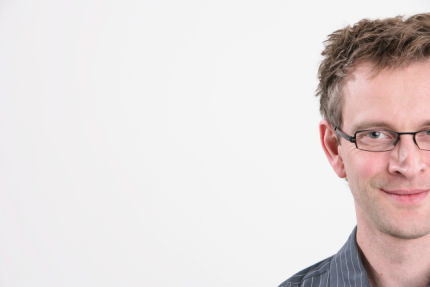 All Power to Nobody – that is the motto proclaimed by Dr. Andreas Zeuch. In his new book, which was published on September, 8th of this year, he discusses “entrepreneurial democracy” at great length. And it certainly is not a theoretical pamphlet, but an exciting report full of life. I would call it a courageous and provocative work that is the exodus of quite a few prejudices.
I personally met Andreas at the 2014 Berlin PM Camp. He gave the impulse on the morning of the first day. His topic was “how much intuition can an enterprise stomach?”. This presentation was such an inspiration for me that I spent the entire morning with Andreas. Consequently, I missed all the first sessions of the PM Camp morning.
Here is some of what you can read in the preview:
Entrepreneurial democracy – is that the future of work-life, or the punchline of the week? Can enterprises be a democratic event at all, or will shared decision processes not disable the enterprise and cause bankruptcy? After all, we do not exclusively need captains, but also privates, don’t we?
What happens when a CEO is elected? If a bank abolishes all its hierarchical levels, if employees choose their own tasks or if the cleaning personnel gets a vote when innovations are discussed? Will chaos be the consequence, or will the inner motivation of all start blossoming?
Andreas Zeuch went on a journey and found enterprises that show that entrepreneurial democracy is a living and economically successful alternative of the centralized top-down system.
 As always, you can register for the IF Forum by sending an E-Mail. Again, I will be permitted to moderate and I already look forward to exciting discussions and nice conversations!
RMD
(Translated by EG)
Roland DürreSunday September 20th, 2015
I almost forgot: Karlsruhe PM Camp on September, 25th and 26th!
 I am angry with myself. I almost forgot the Karlsruhe PM Camp. And it would not have been advertised. This is not tolerable!
Dear organizational team in Karlsruhe: please accept my apologies. I feel truly contrite. And I promise to do better in the future.
In Karlsruhe, the motto will be:
Projects with enthusiasm – where does the magic come from?
Unfortunately, I cannot attend next Friday and Saturday. Which I find a true pity. Because the Karlsruhe organizational team did a fabulous job. And they would certainly have deserved a few more participants.
So here is my appeal to you: if you live near Karlsruhe and are at leisure this Friday and Saturday – and if you are at all interested in project management, management in general, leadership, entrepreneurship and such, you should definitely attend the PM camp at the Karlsruhe Hochschule für Technik.
As always, the program is exciting. It will be well worth the trip and, as always, all PM Camp participants will return home content, wiser and happier.
And, in absentia, I will follow the timeline of the tag #PMCampKA and be happy about many, many twitters from the camp by the participants!
And here is a special request by me:
If, to give Karlsruhe extra advertisement, you twitter this article more often than usual, you would also make me very happy!
RMD
(Translated by EG)
Roland DürreSaturday September 19th, 2015
Preliminary Event for the Barcamp #ActMobCmp with Jörg Schindler (Invitation)
Invitation to a Preliminary Event for the AktMobCmp on October, 14th, 2015 at Unterhaching
 I already told you about our plans on the IF Blog. On January, 4th and 5th next year (2016), just before Epiphany, we want to start a new Barcamp.
It is the AktMobCmp, the first barcamp for “Active Mobility in Everyday Life”. With this barcamp, we want to address the topic “mobility”, which will be truly important for our future.
The preparations are finished: we have a location that is well suited, a nice website, a flyer for sponsors and a general flyer – and even some first interested sponsors.
Now we wish to get people’s attention for the event. Consequently, we invite everybody to attend preliminary events. The first of these events will be on October, 14th at the Agenda 21-Meeting-Hall (Treff) in Unterhaching (Rathausplatz Unterhaching, Hofmarkweg 12) between 18:00 and 20:00 hours. This is the first time we want to inform everybody about our “Barcamp Active Mobility”.
During the event, the following questions will be answered:
Why is “active mobility in everyday life” so important?
and
What exactly is a “Barcamp and why do we organize this as a Barcamp“?
During this evening, Jörg Schindler will tell us all why mobility is such an important topic in the future and why we all need to get more concerned with the so-called remaining traffic beyond the “individual & motorized” and “public transportation” sectors.
I know Jörg as a very competent, but also a very convincing and entertaining speaker. You will also find his very exciting and valuable presentations on YouTube. Here is an example:
Afterwards, I (Roland Dürre) will give you the definition of Barcamp and also tell you why such an “anti-conference” is so much better for sharing knowledge and developing and applying new insights than the common classic formats. And I will use PM-Camp as an example to demonstrate all the things you can achieve if you share knowledge and “communicate with each other”.
After the short presentations by Jörg and yours truly, we will discuss what has been presented. Perhaps in the form of a FishBowl.
This is how we want to advertise our January 2016 AktMobCmp. All colleagues of the “Agenda-21 organizations” in the district of Munich will receive personal invitations. But we also welcome all other persons interested in “Agile Mobility in Everyday Life” and who wish to think of and act towards a future that is worth living in. That means that you, too, are invited. And it would make us especially happy if persons from the media were to find their way to our event.
Participation at the preliminary event for AktMobCmp is free of charge. All participants are welcome and we would appreciate it if you send a short E-Mail confirming that we might expect you. Because if there are not enough seats available at the meeting hall of the “Agenda 21”, we will move to another location. One which can easily be reached on foot from the meeting hall. Naturally, we will notify you in advance if such a change of location has become necessary.
RMD
(Translated by EG)
Roland DürreFriday September 18th, 2015
”Living/Loving Complexity” – Session at #PMCampBER
Here is my report on the session I triggered off with Maik (Maik Pfingsten) on Saturday, the second day – which was practically the end – of the Berlin PM Camp #PPMCampBER.
It had been our intention to relate and discuss a few ideas to show how, even in a complex environment, you can manage to live content and successfully, both in your private and professional (business) life.
In order to show this, we developed a few theses:
Truth
As we see it, there is no absolute truth. To be sure, there are more “correct” and more “incorrect” ideas. But you should not use correct and incorrect as terms. Instead, you should see them metaphorical, meaning “goal-oriented”. Other than that, it seems to us that people often discuss certainties and totally forget that much they believe in is just a construct of their brains.
Complicated versus complex
I used to believe that all that is determined is also complicated. And that complexity starts where “determinedness” ends. Whenever the end was not predictable or describable as an algorithm, I used the term complexity. Others used the metaphors “dead” for the “complicated” and “alive” for “complex”. This means that organic chemistry can only always be complicated, whereas inorganic chemistry might well become complex.
Maik provided us with a very nice description of “complex” – from the viewpoint of a system engineer. He draws an axis of coordinates. The x-axis represents the complicatedness, the y-axis the change and dynamics. And the system will change more and more from complicated to complex as complicatedness and dynamics increase.
I find it quite easy to come to terms with this pragmatic definition. Here, too, the decision whether something is complex or complicated is in the eye of the beholder. Incidentally, this is something Nico Banz gave a very nice session about at the #MCampBER – just before us and in the same lecture hall. Using an example, he showed us that judging whether something is complex or complicated is, indeed, a very subjective process.
By now, I have come to believe that the academic discussion about complex versus complicated is not very useful. What actually counts is right decisions and projects.
Decision
The definition of the term “decision” is based on two requirements: it has to happen under uncertainty and it must have relevant consequences. Otherwise, it is not really a decision.
In the context of decisions, it is also exciting that neural science keeps proving that decisions only seem to be made by ratio (cerebral cortex). The truth is that they are made by our subconscious, which means involuntarily.
Incidentally, they found out at St. Gallen college that the huge majority of management decisions are wrong decisions.
Mind you, the distinction between “right and wrong” decisions is not at all easy. In fact, it gets even harder: if you analyse an enterprise or a project in retrospective, it often becomes “story telling”. Even if there is no doubt that the stories might be useful, precise scientific research (studying the protocols, etc.) will show that it is not at all easy to judge “à posterio“ what decision caused which event.
I always wanted to be a “good” manager and entrepreneur. And I wanted to make the right decisions. And today, I ask myself how any manager can decide correctly “à priori“ if, even in retrospect, he cannot say with certainty how the causality was.
Projects
As I see it, it is not a good idea for us to distinguish between our professional and private lives. Living a life is more joy if you live it integrated. That means I have to act in the same way in my private life as I would act in my professional life. There is no difference.
I like asking third parties the question: what do you think is my most important project? They are often surprised by my reply – but for me, it is absolutely clear: my life.
There is no doubt that my life is a project. It has a beginning and an end. I have a multi-dimensional budget – which consists of time, talent, knowledge, experience and much more. The goal of my life project is my path of life. Part of it is my death. I would like to have made my peace with everybody I ever met when I die.
My life consists of many projects. Some are mostly private, others mostly business. Consequently, I need to act in the right way.
Acting Right
So this is the central question: how to learn to act right?
After all, I know that there is no absolute truth. Also, I know that the future cannot be predicted. I also know that I live inside the constructs of my subconscious and that the competence to act according to reason and ratio is a mere chimera!
As I see it, the only thing that will help us is finding behaviour-oriented values and live according to them.
Recommendations:
I no longer believe in best practice, methods and complex tools. I do not like tips (tipping me on the shoulder is beating me on the shoulder). These days, all I believe in is simplicity and reducing life to the essentials. And I believe in craftsmanship. Practice. On my way towards mastering things, I need support by a master. In my life, mentors and wise persons helped me a lot both interactively and as an ideal.
Consequently, I gave a short description of what Hans Ulrich and John Izzo recommend during our Berlin session.
Hans Ulrich
Hans Ulrich died several years ago. He was the father of the St. Gallen Management Model and wrote a wonderful and short essay about change in management in 1982. I read this article on December, 8th, 2011, sitting in the train and preparing for a workshop in St. Gallen. And I was totally electrified by it. I regretted not having read it earlier.
Here is the concise form of the “8 theses on the change in management” by Hans Ulrich, along with short comments:
- Accept the uncertainty and unpredictability of the future as the normal state of affairs!
Well, the future simply cannot be predicted.… - Set a broader horizon for your limits of thinking!
Against the “but”… and for freedom of ideas. Share knowledge. - Apply the categories “both”, instead of “either-or”!
Black-and-white is out, colourful is in. - Think multi-dimensional!
Ethically responsible balance of values. Basically, humans can only deal with three ideas simultaneously. - Use self-organization and self-control as formative models for all your enterprises!
Responsibility, principle of subsidiarity. - Consider managing things a meaningful and important function!
New management image. - Focus on what is really important!
Work economy. - Make use of group dynamic!
Cultures, symbols, rites, rituals …
Of course, the theses developed by Hans Ulrich were intended primarily for modern management. Yet they are also very useful for your private life.
For more information on leadership and Hans Ulrich, see the IF Blog underWandel im Management and under another Session Report, as well as, of course, my “Enterpreneur’s Diary“.
John Izzo
The second wise counsellor I mentioned is John Izzo. He did some research on values shared by elderly persons conceived as successful, happy and prudent. And he discovered a common characteristic among those people, which he summarized as the “five secrets”
First Secret Remain true to yourself! This is about “destina”, a term originally from South America. Mind you, it does not mean destiny or even kismet, but your own call and vocation in life.
Second Secret
Live in such a way that you will have nothing to regret later!
Also try new things! Have courage to start something that, at first sight, seems rather unusual. This might actually help you when you have to make a decision.
Third Secret
Love yourself and enjoy it!
First and foremost, you must learn to love yourself! Because only those who love themselves can also love others. Ban enmity from your life. Choose humanity as your life’s principle. Make persons you are surrounded by bigger, instead of smaller.
Fourth Secret
Carpe Diem!
Enjoy, instead of thinking too much. Remove “yes, but” from your active vocabulary. Replace them by “yes, and”. Do not capitulate before “that is not what you want to do!“
Fifth Secret
Give more than you take!
Those who give get a lot more in return. Give trust. Open yourself up and show others something of yourself.
I discussed the book by John Izzo at great length in a separate article. I think it is well worth reading and you should certainly think about those recommendations for life. And perhaps you would like to adapt them for your own life.
If these recommendations do not reach far enough for you, then why don’t you read the Agile Manifesto? Or maybe you want to become theALO-man (see also my article leadership-values-principles) who is only agile, lean and open? And when you come to “lean”, you want to remember the importance of the “Why?“-question in Kanban.
If you do this, you will find the path through the world even easier, regardless of it being complicated or complex. And it will not matter if you are talking your private or your business life, either.
RMD
(Translated by EG)
Roland DürreMonday September 14th, 2015
PM-Camp Berlin (Report)
 Last week, on Friday and Saturday, Berlin hosted its already third PM Camp. If you wish to find it ion twitter: the hashtag is #PMCampBER.
Weeks before the event, the Camp was sold out. Everything was fine. This time, the “anti-conference” took place at the Alexander von Humboldt University, where the impressive halls gave the PM Camp a wonderful glamour and beautiful patina. I was there and, again, it was just great.
This time, I was a little less active than usual, only in charge of two sessions. The first of them was early on Friday afternoon. I called it “PM Vintage” (project management vintage). Having prepared four stories about projects in my life between 1973 and 1985, I presented them to the audience. It was “story telling” with a little background information. I started with a small project I had been put in charge of all by myself when I was a student worker, then came more complex ones…
Here is an overview of my four projects:
- We need high Mersenne Prime Numbers for developing a random generator on HW basis (winter semester 1973 – WS at Siemens)!
This is where I learned the importance of decisions. Even at a time when there was no internet, etc. And that you can achieve nothing without courage. - Responsibility for a language in one of the teams that – in cooperation with many other teams – achieved great things (APS, Transdata, PDN – 1977 – 1978 – employee at Siemens).
This is where I made the experience how fast creativity and success can go down the drain if there is an excess of processes and Taylorism. - Technological responsibility for a huge project at Siemens for the Bavarian Police (DISPOL – 1979 – 1982 – originally as a Siemens employee, later as a Softlab employee)
This was the first time in my life I came to know a “true” project manager. He had to appease the overhead, which was not a very nice job. However, he could not contribute to the project success. - Foundation of a company and generation of our own product, the HIT/CLOU (starting 1984 – at InterFace Connection GmbH – today InterFace AG).
This was where my partner Wolf Geldmacher and yours truly were lucky in that there were many things we did right. Consequently, we had a really great team.
As soon as the opportunity arises, I will write down the story of those four projects and publish them here on the blog (including the links).
The second session was a spontaneous one on Friday evening during the great PM Camp Party at the Microsoft “Digital Eatery“ not far from the university. I met Maik Pfingsten during one of those many “after-the-pm-camp-conversations” of the evening event. And we decided to initiate a session together on the very next day.
We truly got into complexity. The title of the session was “Living/Loving Complexity”. I was going to recommend that all those confusing discussions about complexity and complicatedness should simply be forgotten or ignored. Because you always get all those complicated (complex?) mind games. And consequently, I was going to recommend that you should not spend a lot of time thinking about whether or not a project is complicated or even complex. Instead of talking, I was going to recommend you should act. And in preparation, I formulated some simple, behavioural theses which will make us successful and happy – regardless of the world being complicated or complex.
I guess Maik and I succeeded – and I was truly happy with the positive feedback I received after our presentation. The next thing I will do is write the article about this session “Living/Loving Complexity”. I hope to finish it by the day after tomorrow. Then you can read it in the IF blog. Of course, there will be a link.
It was a great PM Camp in Berlin and, for me, those were two happy days in Berlin. Consequently, I would like to thank the fantastic organizational team: Ralf Eicher, Christian Vogel, Fabian Fier and last not least Heiko Bartlog!
RMD
(Translated by EG)
P.S.
After the event, they gave me a book because I had been the first to register. So here is what you want to do: register extremely early for the then fourth Berlin PM Camp. It is well worth the effort.
Roland DürreFriday August 14th, 2015
A Serious Cocktail Discussion – “Leadership Experience Over an Entire Work-Life“
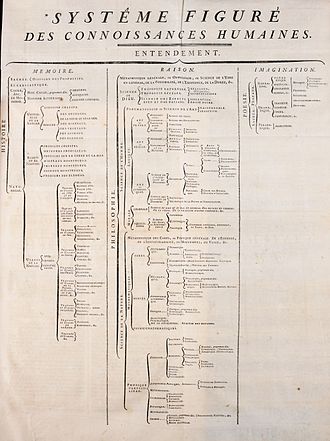
On this picture, you see the genealogical tree of human knowledge at the beginning of volume 1 of the Encyclopédie ou Dictionnaire raisonné des sciences, des arts et des métiers. There are 28 volume, and they were finished in 1772.
A short time ago, at a garden party, I meet an old colleague of mine whom I had not seen in many years. He used to study mathematics and informatics at TUM. I think his focus was on informatics. After he had finished his studies, he worked for a huge electronics concern – just like I did. Except that he stayed there for all his work-life – which is not what I did, because I went my own way after a little more than four years (luckily).
We had not met in many years, which means there was plenty for us to talk about over one or several glasses of good beer. He, in particular, told me a lot about his life. For instance what he is doing today and how exactly life was in those days.
He also told me that, after having retired, he made a mental balance sheet of his life. And in retrospective, he let all the direct bosses he had had during his work-life parade before his inner eyes. And he wrote their names down very diligently, in the correct sequence.
And lo and behold: there was none he could not easily remember. In all the years of his work-life, he had had 26 (twenty-six) bosses, all of whom had personally looked out for and supervised him.
And since he was at it anyway, he drew a matrix. On the left column, he wrote the names of his former bosses and as a header of the columns, he wrote all the personal qualities that he considers requirements for good leadership.
And then he filled the lines for each one of the bosses with grades, from 1 to 6 (very good to non-satisfactory). Just as they do it at school. And then he calculated the average grade per line (of bosses).
And what do you think was the result? Only two (!) of his twenty-six former bosses actually were graded better than inadequate on average. He also told me the names of the only two bosses he had had who were actually fit to be leaders. I knew both of them and totally agreed with him, because, over the years, I really came to truly appreciate them, too.
But the calculated result on the whole really gave me pause. Personally, I had never thought it was all that bad. If only two out of twenty-six bosses over an entire work-life have the necessary qualities, then what sort of enterprise is this? One would wonder if an enterprise where less than 10 % meet the basic requirements for leadership is not perhaps on the downward spiral already?
This might explain a lot. Can such an enterprise be successful at all?
Incidentally, as I see him, my friend is a very objective and fair thinker. He is active in many areas and everything but a grumbler or the like – basically, he is a really cool guy. Which is why I think one should take seriously what he told me.
I am also familiar with the entrepreneurial surroundings he had spent the major part of his life in. And I must admit that, in my personal opinion, it was probably not the best possible surrounding. That, too, could be an explanation for the poor grades.
Then I tried to apply the model created by my friend to my own horizon of experience. And I realized that, where my personal experiences are concerned, at least every third boss had been basically ok. That would at least be nine out of twenty-seven. But then, you cannot call this a really good result either, can you?
A few days later, this story still had not left me alone. And I asked myself: “Why did he stay with this enterprise for such a long time?” After all, my memory had him down for a colleague who was both technologically and otherwise competent.
I think the answer is because these enterprises are some kind of golden cage (see also my article “Golden Wired Fence” / “Goldener Stacheldraht“). During the first ten years, you could not give notice if you were a “responsible person”, because you would lose all the company retirement money. Then you were a little more at liberty, but the job protection gave you the next “golden chain”. It made the move to another enterprise, or even the decision to become self-employed, an adventure the start of which would have meant you have to relinquish a whole lot of security. And then you had to be very courageous if you actually took such a huge step.
RMD
(Translated by EG)
P.S.
The illustration of this article was taken from Wikipedia, see the term “hierarchy” (Hierarchie).
Roland DürreSunday August 2nd, 2015
#Unschooling: Presentation “Learning in Innovation” by Bruno Gantenbein now available as video.
I am glad to announce that now the video recording of the great presentation by Bruno Gantenbein at the St. Gallen IF Forum of July, 23rd, 2015, is available on youtube and can be watched by all of you:
The presentation ”Learning in Innovation“ held by Bruno Gantenbein at the IF Forum left me deeply impressed. Many of the audience felt the same. But some who also were very impressed by Bruno’s theses came back with the important reply that what he spoke about was not something “normal people” can live in a “normal life” in the “real world”. Because your normal Jim and Jack cannot really manage it. And it simply cannot be done. Once in a while, it sounded really like people were despairing.
To me, it seems the reason is that
“most people cannot really imagine living in another world than the one we are living in“
and that
“we are no longer capable of distinguishing between what is important and what is not important. Consequently, what is unimportant is dominant in our lives.“
To me, this seems to be the major problem both for us and our society. A degree of external control through marketing and lobbyism as we never had it manipulates us in a totally new way. It is totally different from, but certainly no less dangerous than, for instance, religious indoctrination of persons in the Middle Ages or, if we are unlucky, the manipulation as practiced by the Nazis.
The formatting of our lives through a super-powerful but not tangible system took away our autonomy. Now we get nervous and start talking change. Yet we lack all desire to start another life outside our comfort zone. In fact, more often than not, we are not even capable of imagining such a life. For instance, the strength to develop utopias for the future seems to have left us. Looking for values and visions no longer plays a role in our society. In fact, if we do look for visions, it is actually something others are belittling us for. The attempt to re-create a new “social consensus” is smothered in the very first stages. Consequently, we assume that the status quo is true and there is no alternative.
We no longer have the courage for change. We accept our dependence and are happy to be “enslaved”. Be it by technology or as our social concepts of life (our lies of life) determine it. We believe you cannot live without a car, a TV set and electricity all over the place. We believe in the omnipotence of medicine. That the federal administration must and has to guarantee our security and safety. And that the planet will certainly find a way to survive it all.
Except that so many of the things we take for granted can be easily disproved. There is no absolute security. We experience it all the time. The sudden death of an important partner or a surprise illness totally throw us off balance. We can easily fall victim to some mishap.
But then, there are also harmless examples. The stamp collection we inherited
from our grandfather that was so precious, but for which now not even the wastepaper trader is prepared to pay, shows us how difficult it is with security. Many things that used to cost a lot are totally valueless today. I made the same experience when pay day came for my direct insurance. What a discrepancy between the money I received from what I had expected when, decades ago, I first signed the insurance contract. Instead of the imagined free-hold apartment, the only thing I got for it was a medium-size car…
Regardless of all this, the (alleged) security of our modern financial world suggest for some that we actually are in total control of the risk of our material life through retirement money and savings. Except where will the Euro be ten years from now? Will we be able to solve future problems with it? What will money be worth? Have we not learned a long time ago that “you cannot eat” money? Especially if it is just virtual money and perhaps out of the blue will have to be shortened by the occasional digit.
To make up for it, we capitulate for fear of terrorism. And we are prepared to sacrifice our present freedom for these kinds of mind games. Sacrificing freedom for what we believe is an investment in increased future safety! And we are even prepared to start a modern (crusade) war for it.
This is how we follow the stupid and brazen battle cries of politicians and economic leaders who, more often than not, are no longer sane. We swallow pointless laws they serve us with, regardless of the fact that we know those will do more harm than good. And we surrender before the stupidity of our “representatives”. In fact, I actually yearn for a German or European Spring. But I do not mean one triggered by hunger or poverty like the one in Northern Africa – which inevitably dooms it.
Why do we believe them when our politicians tell us that “without the Euro, there would be no Europe” and that the so-called “Grexit” would ruin us all? Why do the politicians tell us such fairy tales? We know as well as the politicians that the Euro is good for those who stand in the light. And it is detrimental for those standing in the shadow. Just as we all know that the exploitation structures, both globally and within Europe and Germany, must fail or cause conflicts, either in the near or not-so-near future.
But we get the impression that we cannot do anything about it and perhaps that is really what happens. Also, we no longer have the courage to oppose the structures of the administrative and economical systems that rule over us. And we no longer stand up against this, even though we know that human beings – which is we! –, and not system interests that have de-personalized and de-humanized themselves, should be the centre of the society, politics and economics. First and foremost, the economy and the state must serve the interests of the people. Just like it is written in the Bavarian Constitution.
The system of the oligarchy of the parties (Oligarchie der Parteien ) – see Jaspers -rules over us and the morals of mercantile metric in economy sharpens the boundary conditions of our behaviour. Thus, the systemic mills will continue to grind, making the restrictive nets of bondage tighter and tighter. It happens in small portions, which means that we often do not even notice it and almost consider it normal.
Consequently, here is what we need to do:
Let us also get back to remembering that we, as “natural beings” are also part of the “natural world”. To be sure, the “cultural world” we created makes some things easier for us, but it also took a lot from us. It made us lazy. And we forgot that the price we are paying is rather high.
As I see it, we should return – and radically so – to thinking about whether, perhaps, we could also live in other worlds and probably even be happier living in other worlds. As you all know, my favourite example is the “away from the car” and turning towards active freedom through “active mobility”. Yet it is just as important to take a close look at the working and living conditions we subjugate ourselves under, be it in social systems such as families or otherwise. We need to question all that seems self-evident and draw conclusions from the answers. Formerly, one would have said: Destroy what destroys you.
Part of this is also to live a “life in harmony with nature” as Seneca formulated it. And he meant more than just the biological nutrition process and the preservation of the environment. He also meant we need to listen to our inner voice.
After all, Seneca was a great teacher who wanted to help his pupils on their way to become successful and happy persons. So let me finish this article with another sentence by Seneca that might perhaps make it a little easier for us to start travelling towards other worlds:
“It is not because things are difficult that we dare not venture. It is because we dare not venture that they are difficult”.
Yet – there is hope. What is currently happening on the internet is actually something I rather delight in.
RMD
(Translated by EG)
Roland DürreMonday July 27th, 2015
Entrepreneur’s Diary #111 – What to do if a rupture goes through the leadership team?
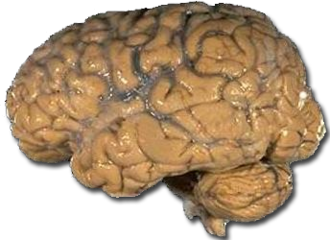
Human Brain
A short time ago, a very good friend of mine who, like myself, is the founder of an enterprise, told me something that gave me pause. He informed me that in his enterprise – actually quite a successful enterprise, which is way beyond being a start-up – the following scenario can be observed:
“The four active founders no longer see each other as often as they used to and whenever they do see each other, they talk about the few negative things, instead of the many positive things that happen.”
This information, which actually was meant only at an aside, fell on very fertile ground with me, because it reminded me of my own experiences. After all, this rather considerate founder has a huge amount of sensitivity and awareness – which I probably had a lack of in a similar situation.
It is exactly those aside noises you often only perceive “subconsciously” that may sometimes be extremely important. Noticing this kind of thing and then proceeding to actually act in the right and in a most determined way is what makes a wise and successful entrepreneur.
Discoveries such as these must not be ignored, even if they seem to be harmless enough. Actually, they must initiate a high degree of watchfulness and mindfulness. After all, we have to nip things in the bud.
It is never an easy task to keep a team together, even if we are only talking four persons who (allegedly?) work “at eye level” and seem to treat each other with respect. Because as soon as humility loses priority over what (for me) is the almost “never-ending” task of leading an enterprise – or rather leading people -, the downward spiral will quickly start its work.
In such difficult situations – even if you only see the very first forebodings – you probably need very prudently designed measures. Yet even those measures might not necessarily be a success. Because with these solution approaches, success is the one thing you can never guarantee.
Human beings are full of mystery, and even those mystery factors change over time. Frustration and anger are elemental emotions nobody can actually switch off. They influence both your own and the other person’s way of thinking. And, when all is said and done, everything happening in the brain is a series of mind games leading to the most diverse and often incomprehensible constructs. And probably nobody can really understand them rationally.
Consequently, it is an illusion to assume you can understand it all and therefore act prudently. This means that, as the years go by, a huge amount of contentedness can turn into discontentedness for some persons. Said discontentedness might actually not be rationally traceable, yet it can have dire consequences. And even the best knowledge of disciplines such as philosophy and psychology, but also neurology, cannot really help.
Because, after all, those “life sciences” cannot describe the complex inside of every person, either. They teach us to think about how you should live. But that is all they do.
Consequently, the only thing that can help is attentiveness and openness. You need to remain alert in life, let love prevail and remain true to yourself. And you need the courage to try new things. Along with being prepared to give more than you take. All of which is, indeed, quite difficult.
RMD
(Translated by EG)
P.S.
For more articles of my entrepreneur’s diary, click here:Drehscheibe!
P.S.1
I took the picture from Wikpedia:
„Frontal lobe animation“ by Polygon data were generated by Life Science Databases(LSDB). – Polygon data are from BodyParts3D.[11]. Licenced under CC BY-SA 2.1 jp through Wikimedia Commons –
Roland DürreThursday July 23rd, 2015
Ada Lovelace and Unschooling?
Here is my introduction to the presentation “Learning in Innovation” by Bruno Gantenbein “Learning in Innovation” as I would like to see it tonight. What I am going to say is meant to connect the person ADA LOVELACE both with the term “unschooling” and with “project management”.
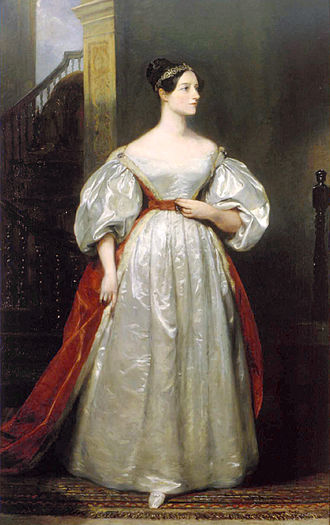
Ada Lovelace 1836,
Painting by Margaret Sarah Carpenter (1793–1872)
ADA LOVELACE was a very controversial lady. As I see it, she must have had a very exciting – both successful and desperate – life. Even reading about her in Wikipedia gave me the following ideas.
If we want to become masters of our profession, we have to exercise the “best practice” of great masters and make use of humanity’s experiences condensed in “design patterns”. Until we reach a dead end – where we have to say good-bye to what we learned. Now you have to rebel and question “things” like “but that is how we always did it”.
Consequently, learning means familiarizing yourself with patterns and sticking by them.
Learning in innovation, however, calls for breaking with patterns. Breaking old patterns and developing new patterns will lead to creative destruction. Thus, living in a social community means you have to not only accept but even use the compromise between your individual needs and the collective rules for your own unfolding.
We love the formatted life, because it is secure and comfortable. We are prepared to subjugate ourselves under morals, because we want to be good.
On the other hand, we crave for freedom and novelty. Because we know that a moralising society will take away our freedom and confine us, at the same time making us look small.
This is the case both in private life and in our work life (if the distinction is still permitted at all). In the social communities of our private lives, we permanently manoeuvre between often paradox positions. And the same is true for our professional lives.
Because the enterprise where we work is also a social system, albeit with an economic purpose. Leadership is communication and communication is, again, a balancing act – between listening and speaking.
I do not know many biographies more laden with the conflict between autonomous self-determination and external control than those of the great mathematicians and Mrs. Ada Lovelace. Spontaneously, the only other person who comes to mind is Nietzsche, who was born a little less than 30 years after ADA LOVELACE.
I think we can only be “good” project leaders, managers and leading personalities if our important projects are a success. To me, it seems like the most important project for all persons are their own lives. If we want to meddle in other people’s lives, the first thing we have to do is make our own life a success.
However, our own life can only be a success if we focus on the really important things and if we change habits detrimental to life. Consequently, I have to be prepared to unfold my own life autonomously and bring order into it. In my personal life, I chose my mobility. I try to avoid unhealthy mobility as far as possible. It is very simple, isn’t it? –
How am I supposed to live a self-determined life if, for example, I cannot even manage to do it with respect to my own mobility? Consequently, I have to change and practice. Instead of letting myself be externally controlled.
Well, this is what I associate with the disrupted life of ADA LOVELACE.
During the presentation by Bruno Gantenbein, I would recommend that you look for parallels with your own life.
RMD
(Translated by EG)
Roland DürreWednesday July 22nd, 2015
What does Ada Lovelace have in common with Galileo Galilei and what is their connection to Unschooling?
Tomorrow’s (July, 23rd, 2015, at 6 p.m.)IF-Forum (guests are still welcome, here is the invitation) in our Unterhaching office building will be about “Learning in Innovation”. Taking the metaphor of “Unschooling”, Bruno Gantenbein will show how children can and want to learn. He will also show parallels between this concept and the experiences made by famous project managers and grown-up leaders.
At InterFace, the year 2015 is dedicated to Ada Lovelace. Consequently, Florian Specht asked me to give an introduction and answer the question:
What is the connection between Ada Lovelace and “unschooling“?
🙂 Here is an introduction I will not present tomorrow. Still, I can publish it here, can’t I? The proper introduction is for you all to hear live tomorrow.
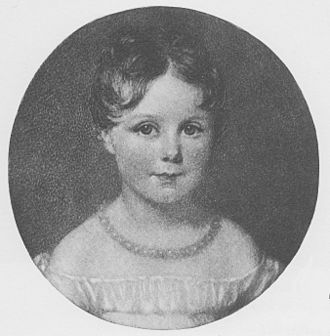
Ada at the age of four
What is the connection between Ada Lovelace and other persons, such as for instance Galileo Galilei (the InterFace face of 2014), Blaise Pascal, Leonardo da Vinci or “the Ancient Greeks”, such as Archimedes or Socrates – as well as other outstanding personalities in science and “unschooling”?
When preparing for this presentation, the first thing I did was read the Wikipedia article on compulsory school education. We learn that
- There was a time when it was not compulsory.
- It was introduced rather late and put to practice even a lot later.
- There were places where only part of the population was affected, and often only the male part
- But the learning process was always associated with life and persons, rather than schools.
Then I took a closer look at the life of Ada Lovelace. In Wikipedia, the first sentence you find on “Ada Lovelace“ (article) is:
“Augusta Ada Byron King, Countess of Lovelace, commonly known as Ada Lovelace (nee Augusta Ada Byron;[1] * 10th of December 1815 in London; † 27th of November 1852 also in London), was a British Mathematician.”
The article is well worth reading. There is no doubt that she was a genius.
However, all the other persons I named never really seem to have attended any school:
Blaise Pascal (* 19th of June 1623 in Clermont-Ferrand; † 19th of August 1662 in Paris) was a French Mathematician, Physicist and Literary person, as well as a christian Philosopher.
Galileo Galilei (* 15th of February 1564 in Pisa; † 29th of December 1641jul./8th of January 1642greg. in Arcetri near Florence) was an Italian philosopher, mathematician and astronomer whose discoveries in several fields of natural science were breakthroughs.
Well, this is hardly a surprise, because when the last two lived, such a thing as schools in the modern sense did not exist.
When I was a child, I used to adore the “ancient Greeks”. Imagine what enormous and revolutionary discoveries they made with the most primitive means and a little calculation. Some of them were due only to observation, thinking and simple experiments. And, surprise, surprise: in those days, they did not have a formal school system as we have it today.
Consequently, the suspicion inside me grows that quite a few innovations would not have been possible during the history of mankind if humans in those days had been indoctrinated from early on as it is common in a normal school today.
But the light inside me was really turned on when I saw the film “Alphabet”.ALPHABET, the film was produced by Erwin Wagenhofer in 2013. After WE FEED THE WORLD and LETS MAKE MONEY, ALPHABET was the last and final part of his famous trilogy. ALPHABET is a film that describes in a very soft way what situation the children world-wide are in during their education.
I particularly liked one citation in the film. It seems to be the result of scientific research:
98 % of all babies are born as a genius. After their education, the ratio is 2 %.
The only question that remains is how Mrs. Lovelace could preserve her genius. After all, 200 years ago we already had the first stages of compulsory school education. Maybe it was because in those days there were some regions where only boys went to school? Boys who always had to be brave and never were allowed to cry?
RMD
(Translated by EG)
P.S.
Now I need to do a little more work on my introduction (version 2.0). Incidentally, I took the picture from Wikipedia.


