
Roland DürreFriday April 5th, 2013
First 2013 IF FORUM: “J.P. – The Entrepreneur” – April, 11th, 2013
About entrepreneurship exemplified by Jean Paul!
Every year, the InterFace AG investigates a special person who celebrates an exceptional jubilee and whom we find exciting. This year, the face-of-the-year at InterFace AG is Jean Paul. He would have been 250 on March, 21st. Consequently, the three presentations of the 2013 IF Forum are associated with Jean Paul.
Our first speaker is Bernhard Echte.
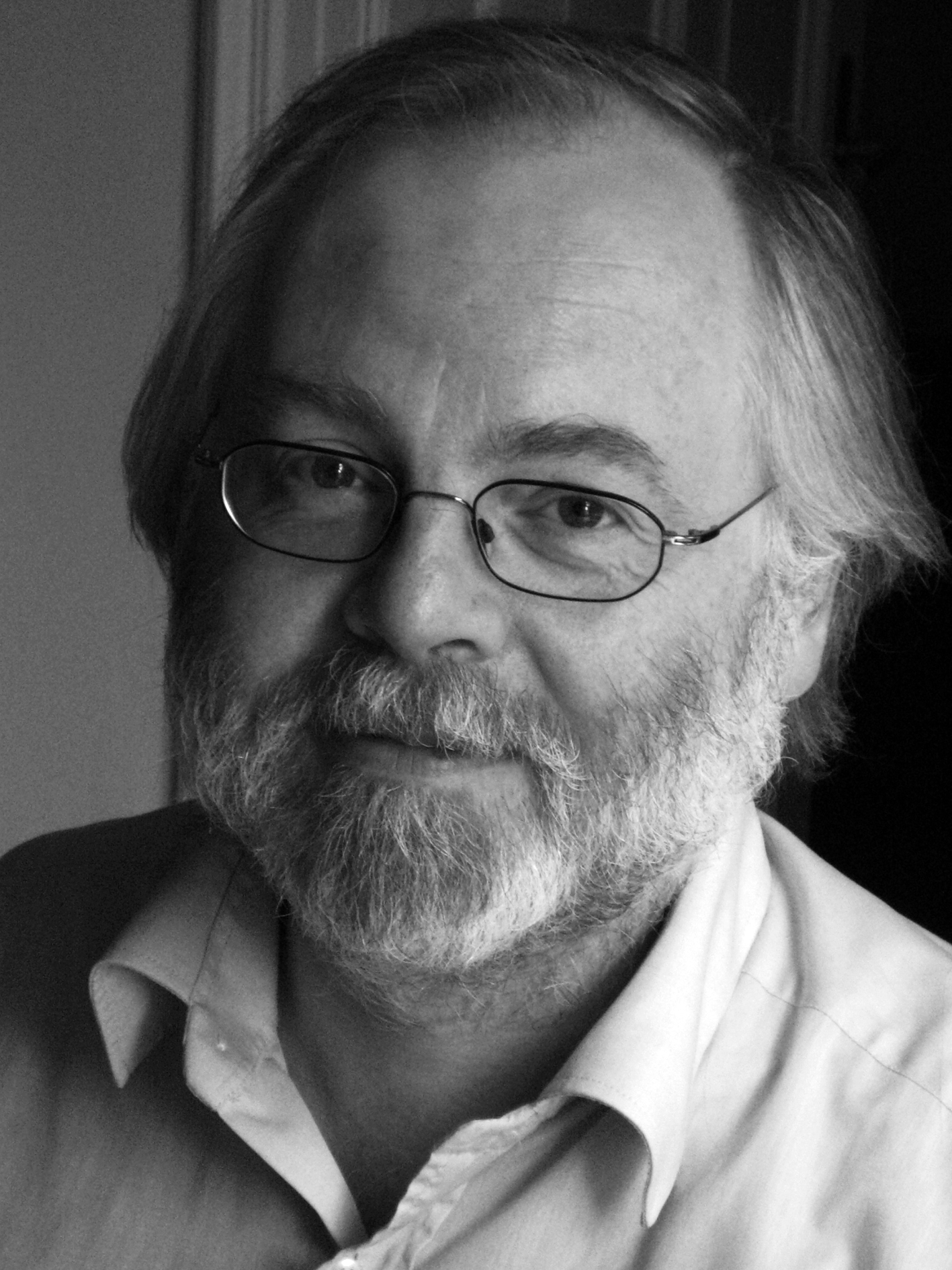 Unser erster Referent ist Bernhard Echte. Herr Echte is a linguist, organizer of exhibitions and publicist. For many years, the Zurich Robert Walser-Archive was directed by him. Today, he is an entrepreneur, managing the publishing company “Nimbus, Kunst und Bücher”.
His presentation will be on Thursday, April, 11th, 2013 at the Unterhaching InterFace AG building. As usual, the event will start at 6 p.m. – we asked the speaker to start at 6.30 p.m. After the presentation, you can exchange ideas and sit together enjoying the evening.
There are still a few vacancies. If you would like to register for the IF Forum with Herrn Bernhard Echte, send us an e-mail!
Herr Echte is not just entrepreneur with all his heart. He is also someone who can tell an exciting story. He knows how to make his audience fascinated by alien worlds. Naturally, his favourite topics are enterprises and entrepreneurship.
In his scientific role, he knows Jean Paul and his work particularly well. Consequently, he is the ideal person to draw parallels between the small-scale entrepreneur Jean Paul and today’s entrepreneurs. And that is exactly what he will do next Thursday. Come and let yourself be carried away to the world of entrepreneurship as it looked more than 200 years ago.
I look forward to seeing you!
RMD
(Translated by EG)
 A Visit to Modern Times

JJean Paul presentations at the IF Forum
In 2013, the IF Forum will deal with the modern parallels to Jean Paul’s topics and ideas.
With presentations about entrepreneurship, hypertext, wit and new media, we wish to show new perspectives and questions with respect to the here and now.
Come and watch!
Jean Paul the Entrepreneur
Jean Paul was among the first German authors who actually could make a living from their art. Mind you, this was regardless of him having started under hard circumstances. He went to the intellectual centres of his time: Leipzig, Weimar, Berlin – and his books were a success to make Goethe envious. When Jean Paul married, even the Prussian Queen invited him to have tea with her and gave him a silver dinner set.
Jean Paul’s ascent and success was not due to accident. Instead, it was because of prudence and entrepreneurial instinct. Even when times were hard and the Napoleonic Wars devastated huge parts of Europe, he was still able to maintain his position. The way Jean Paul combined sustainability with success is still remarkably modern today.
Our speaker Bernhard Echte, linguist, organizer of exhibitions and publicist, used to be the managing director of the Zurich Robert Walser-Archive for many years. Today, he is the director of the publishing company “Nimbus, Kunst und Bücher”.
Time: April, 11th, 2013 (Thursday) | Starting at 18.00 hours | Location InterFace AG, Unterhaching
Jean Paul and Hypertext
Even before he took the name Jean Paul, the young Johann Richter read everything he could lay hands on. Hardly any of the books he read belonged to him. He wrote down summaries of everything he read in his notebooks. In the same notebooks, you would also find comments on ideas currently cursing through his brains. Jean Paul added catch phrases to all his ideas, now called Tags. In doing so, he created a huge private encyclopedia. It was structured like a modern database. Said encyclopedia was to be the basis for his literary works. Without this database, Jean Paul would never have been able to put into practice his unique style – a style which is volatile and exact at the same time. He managed to make a virtue out of the financial misery of his youth the result of which still surprises us today.
Our speaker Annina Klappert is an assistant teacher at the seminar of general and comparative literature at Erfurt University. Her dissertational thesis was a structural comparison between the texts and hypertexts of Jean Paul. She specializes in media, referencing and virtual reality.
Time: July, 11th, 2013 (Thursday) | Starting at 18.00 hours | Location InterFace AG, Unterhaching
Jean Paul, Wit, Postmodernism and the New Media
He was a “Non-Believer in God”, a “witty decomposer” and an ardent cosmopolitan, sceptic and joke-teller. His pedagogical doctrine Levana is highly praised. It advised to use wit and irony as the basis for a healthy personality, rather than the grim sternness known from Fichte’s oratory to the German nation. In his policy of the “third position between the Germanics and the Bonapartists” you can anticipate the post-modern irresoluteness between opposing poles of “truth”. With his esthetical deviation, he already practices the typical interruptions and jumps common in the hypertexts of the internet. Who was this man who hardly ever left his home and yet was mentally so far travelled that he surpassed many of his contemporaries?
Our guest Roberto Simanowski is professor for media sciences at Basel University. He investigates the changes in writing caused by the digital age and publishes the online magazine dichtung-digital – a journal for digital aesthetics.
Time: November, 7th, 2013 (Thursday) | Starting 18.00 hours | Location InterFace AG, Unterhaching
Roland DürreWednesday April 3rd, 2013
INDEPENDENT MINDS!
Again, I found a nice article in Eberhard Huber’s projekt (B)LOG “about projects and people”:
It is not easy to have an independent mind (Mitdenken ist nicht einfach).
Eberhard isolates four reasons for “the lack of an independent mind”:
- Solutions are not clear;
- Information is not complete;
- There is no freedom of ideas;
- Fear
He might well be correct. But what a pity! Because if everyone in a team, project, enterprise were willing and capable of “having an independent mind”, everything would work a lot better.
So what exactly is the meaning of having an independent mind?
For me, having an independent mind means that you are willing and capable of contributing towards a shared future concept with your own competence. If everybody in a team, project, enterprise did it on the right topics, at the right time and at the right place in the appropriate way, we would probably no longer need any “project managers”. And everything would run smoothly, anyway.
One of the cornerstones of success is the culture lived inside a team, project, enterprise. A second cornerstone is the social network of the team, project and enterprise.
In order for the culture to work well, such elements as communication at eye-level and transparency must basically be a matter of course. Values, such as civil courage and constructive disobedience must be accepted and lived. In fact, it is quite simple: the social system team, project, enterprise must create a fear-free and transparent setting for knowledge and creativity as a basis for cooperation.
Networking is easily organized and the rest can also be practiced together. You will soon see huge improvements.
RMD
(Translated by EG)
Roland DürreTuesday April 2nd, 2013
My Proposed Paper on Knowledge Management
I no longer like the “huge events” where you talk through microphones and loudspeakers from the front end of the lecture room. My preference is towards the free formats where you can exchange knowledge at eye-level. Consequently, I – along with friends – initiated the PM-Camp. By now, it has turned into a beautiful success story. In June alone, we will organize three local PM Camps in Stuttgart, Vienna and Bad Homburg near Frankfurt. You can expect news from those events pretty soon.
Regardless, I decided to write and send a proposal paper for an old-style event a short time ago. The event I am talking about is the 9th Stuttgart Management Days “Knowledge Will Bring Us Together”. It will be from November, 12th to November, 13th, at the Stuttgart Liederhalle. The event is organized by “wissensmanagement – Das Magazin für Führungskräfte”. I know Neusaß (near Augsburg), where the publishing company is situated, quite well from my youth.
I designed the presentation because I think we absolutely should share knowledge and we need transparency and clarity. That is why knowledge must not be locked up in some kinds of systems. It must be set free to reach social areas of humans in enterprises, institutions and society. This is the only way for us to give our knowledge a chance to be applied and achieve something.
If you want to practice “good” knowledge management, it does not really matter what technology you use. Instead, the important thing is a “good” entrepreneurial culture. With this in mind, I wanted to give a presentation before an audience of “knowledge management experts”.
So I booted my last remaining MS computer, accessed the “form to be filled in by applicants” on the website of the “wissensmanagement”, downloaded a terrible word form and spent a nice Saturday afternoon formulating my ideas for the presentation in word (!).
Firstly, I read the deadlines to be met:
April, 30th, 2013 – deadline for submitting papers
October, 11th, 2013 – deadline for final documentation/slides
November, 12th – 13th, 2013 – congress
😉 And here is the first problem already: How am I supposed to know all the things that will move me between now and November? Even today, I already feel a lot like changing some things in the paper I submitted on March, 23rd. Here are the data I entered on the form to be filled in by prospective speakers:
Speaker
Name: Dürre First Name: Roland. M.
Academic Title: Dipl. Math. Univ.
Position: Managing Director Enterprise: InterFace AG
Postal Address of Enterprise: Leipziger Str. 16, 82008 Unterhaching (www.interface-ag.de)
Telephone Number: 089 – 61049-0 Fax: 089 – 61049-85 Mobile Phone: 0171 48 50 115
E-Mail: roland.duerre@interface-ag.de
Biography
Short CV outlining your professional career – will be published on the internet (max. 500 symbols)
Pioneer of the third computer science and communications technology generation. 1969: studied mathematics and computer science with F.L. Bauer (TUM). Worked at Siemens UB D as a student until 1979 (developed IT basic technologies) and later as a regular employee (operating systems for big “special projects”). After two years at Softlab: founded InterFace Connection GmbH, today InterFace AG with Geldmacher in 1983.
Sideline: blogger and network activist (if-blog.de, duerre.de, pm-camp.org …)
Title of Presentation
”Our Enterprises Need New Knowledge“
Sub-Title
How values and culture can help us to accept and utilize change.
Focal Points
4-6 points that outline the focal issues of your presentation
Humans will be successful if they have education and knowledge, along with courage – and if they enjoy their work. The success of an enterprise is based on values and trust. The huge challenge in an enterprise is strategic clarity and communication at eye-level! The knowledge of an enterprise must not be locked away. Instead, it must be set free! ”Social Media“ can help with more than just change.
Abstract
(max. 500 symbols)
The world changes all the time. Innovation becomes “creative destruction”. Transparency and sharing are demanded. How does leadership in the 3.0 Enterprise meet this challenge? What does a competitive entrepreneurial culture of “today” look like? How can we make sure to make “the right decision” more often, instead of “the wrong decision”? How to know the difference between “good” and bad”?
What role do “Social Media” play?
Content
Extended description of content (250 to 500 words)
Change is a logical conclusion of evolution and to be lived and supported by all in our enterprise. The always necessary process of continued improvement will be worked on together. … … The people working in our enterprise collaborate closely. Change is nourished by ideas from everyone. The basis for our future is empowering of people“. (Citation from our entrepreneurial principles):
Problem or chance?
More knowledge will generate change, change will generate new knowledge. This development seems to gain speed. The requirements our “world” confront us with change quickly. The entrepreneurial knowledge and competence must remain dynamic – it must not become dogmatic.
More and more enterprises will fail because of their “individualistic hierarchies”. On today’s markets, they can only survive with “new ways of thinking”: concepts developed from insights that were gained through the entity of the enterprise. Popular and important catch-phrases are crowd and swarm. There will be a merging and morphing of individual knowledge into shared knowledge.
Why is that so?
Humans live in “social systems”. Social systems can be NGOs, unions, associations, churches or enterprises.
Enterprises explicitly have an economic goal. It is to provide products and services for the market and thus feed their employees. They are subjected to the permanent change of their environment and must react flexibly.
Where something is deficient, we must find and improve on it. Where you have a special strength, you must identify and utilize it. You must remain aware of risks and chances at all times. Events that seem neutral or outside of potential evaluation might quickly become relevant.
It only makes sense to think about solutions after you have identified the important (correct) questions. “Future management” must become part of your daily routine.
How to achieve it?
Sharing experiences and learning of the “world inside and outside the enterprise” is the basis. Information must be collected by all parties concerned and made available to all parties concerned. Everyone may comment, add to, evaluate and weigh… The “enterprise crowd” will evaluate the relevance, develop the strategy and eventually decide upon operative measures.
What do we need?
Especially in distributed worlds, these kinds of processes can only be managed with supporting IT systems. They have to be designed like “games” (”Gamification“). The game must guarantee the gain of both the enterprise and the individual employee. Credits gained during the game must become part of a bonus in real “Euros”. Success will increase your reputation inside the enterprise and will become an asset for your future career.
Naturally, this is something you will only be able to do in an open, transparent and free entrepreneurial culture. The enterprise must realize fear-free areas. “Sharing knowledge” must be perceived by all as something advantageous.
Please include a digital picture (Portrait) (JPEG/GIF, 300 dpi)!
Thank you very much.
So far the form I filled in. I immediately processed it via email and photo to the given address.
I did not have to wait long for the reply. It was an invitation to sponsor the Stuttgart Knowledge Management Days.
Well, I am almost tempted. Because if I act as a sponsor, my application might well be taken more seriously. You can hardly refuse a sponsor’s presentation, can you?.
Now I am no longer surprised that the presentations on these kinds of events often sound so much like adverts and self-display. And why, consequently, so many people prefer barcamps.
Well, I decided not to sponsor the event. I am almost sorry I sent my paper. If the presentation will be accepted, I will still go and speak. And I will give my best. I will try not to speak as a front-end orator, but instead, as far as the surrounding will make it possible at all, I will invite the audience to participate.
And if my paper is not accepted, I will present it elsewhere. And I will then have a good warming-up-story.
During this activity of mine, I also discovered the Deutsche Gesellschaft für Wissensmanagement (GfWM). It cooperates with the publishing company of “knowledge management”. I am not yet familiar with the association and lobbyist structure of knowledge management. However, I am assuming that it is quite similar to other associations in the sphere of project and quality management. It is mainly about power and “that funny stuff”.
So now I have the idea of founding a barcamp for “sharing knowledge” (WI-Camp). It would enable us to meet just as nicely for knowledge management and to exchange ideas on knowledge as we are now doing it at the PM camps on topics around project management. If you are interested, just contact me.
RMD
(Translated by EG)
Roland DürreSunday March 17th, 2013
Emily Post of the 21st Century
Today: communication, mail and messages!
I take calls from everybody at all times. Most of my friends, however, know that you should only call others if you have something really, really important to tell them. Consequently, I have to answer the telephone relatively infrequently. But there are some exceptions . Some people call me more often than strictly necessary. And since those people are very nice people, I forgive them.
But seriously: if it were up to me, I would write quite a few new things on communication in “Etiquette in Society, Business and at Home – 2013”.
For instance, when it comes to the letter C as in “communication”, I would write the following commandments:
- Never call anybody unnecessarily!
- Only use the telephone function of your small, mobile computer when you are in a totally hopeless situation!
- In particular, avoid calling while travelling – no matter if you are walking, riding a bike, driving a car or going by train!
- Only call someone if you have arranged to call beforehand!
- If you cannot avoid calling someone, find out if maybe communicating via Hangout or perhaps Skype is a better alternative!
- And, please, prepare in advance what you want to talk about. Arrange your ideas and have all documents you may need for reference handy before you start dialling!
- And, please, do not be too talkative and long-winded!
Under the letter M like in “Mail” I would formulate as follows:
- Only send an email if there is no better alternative!
- How about re-reading about TOFU!
- If you have to send an email, avoid long footers!
- Avoid at all costs attachments with some strange legally necessary and yet totally useless phrases!
- Wherever possible, send your email only to one recipient!
- If at all, use “cc” only as in the way of sending a “copy to”!
- Never send “bcc”, because it is forbidden!
- Well – and if we are talking one of those ping pong emails: why don’t you just delete all the rubbish and all those footers!
More on the letter M like in “Messages” :
- Wherever possible, avoid SMS!
- If you have to send short messages to people, use the medium preferred by your partner. You might use “What’s App”, FB Messenger, Twitter DM or some such!
- Do not write short messages unnecessarily long!
And here another letter M like in “Miscellaneous” where I would give you basic advice as follows:
- Never think in terms of distribution, but always in terms of communities!
- In communication, too, transparency and openness are the central values!
- Whenever you write about persons, keep in mind that the person concerned might read it!
I am sure you could find more on the subject. And if necessary, I am quite willing to justify every one of the aforementioned points. And in the future, I will also try to adhere to my own rules a little better.
RMD
(Translated by EG)
Roland DürreFriday March 15th, 2013
Chess & Management
When you have reached old age in the form of being more than 60, you will look back on your own life more and more often. And since I am rather happy with what I achieved and accomplished, I also once in a while think about the persons who helped me in life. Well, there are quite a few. Studying mathematics and computer science was certainly a good choice at the time. I learned a lot when I worked at Siemens. All through life, I kept meeting people who accompanied me for some of the way, thereby being a huge help. And it also seems that I married the right woman.
But some other things also helped a lot. For instance the fact that I learned accounting and business very early in life when attending the business-oriented Jacob Fugger Grammar School.
And something else, too, had a very beneficial effect on me: playing chess. It all started on those Sunday afternoons with my father. Even then, I had a lot of joy playing chess. But during the first few years of grammar school, when I started really getting into playing chess as a competitive sports in the club, my grades at school also quickly improved. Simply because chess had told me how to really concentrate.

But chess gave me a lot more than that. I would even go so far as to say I learned for life through playing chess. Difficult situations, both in private and business life, certainly have a lot of similarities with problems you face on the chess board. The problem solving strategies I learned while playing chess were useful for me in real life. Chess will help you to solve difficult problems “with intuition and strategy”.
 I also made many new friends while playing and competing in chess. Dijana Dengler and Stefan Kindermann are two examples for like-minded people. Both of them are also chess players, although considerably better than I. Dijana holds a diploma degree in economy and is FIDE champion. She already took part in many Olympic Games. She made chess her mission and is chief coach of the Münchner Schachstiftung. The Münchner Schachstiftung is very successful when it comes to re-socialization of extremely disadvantaged children. An experience Street Worker of Landeshauptstadt München confirmed that chess is often the only means by which these children and adolescents can be reached.
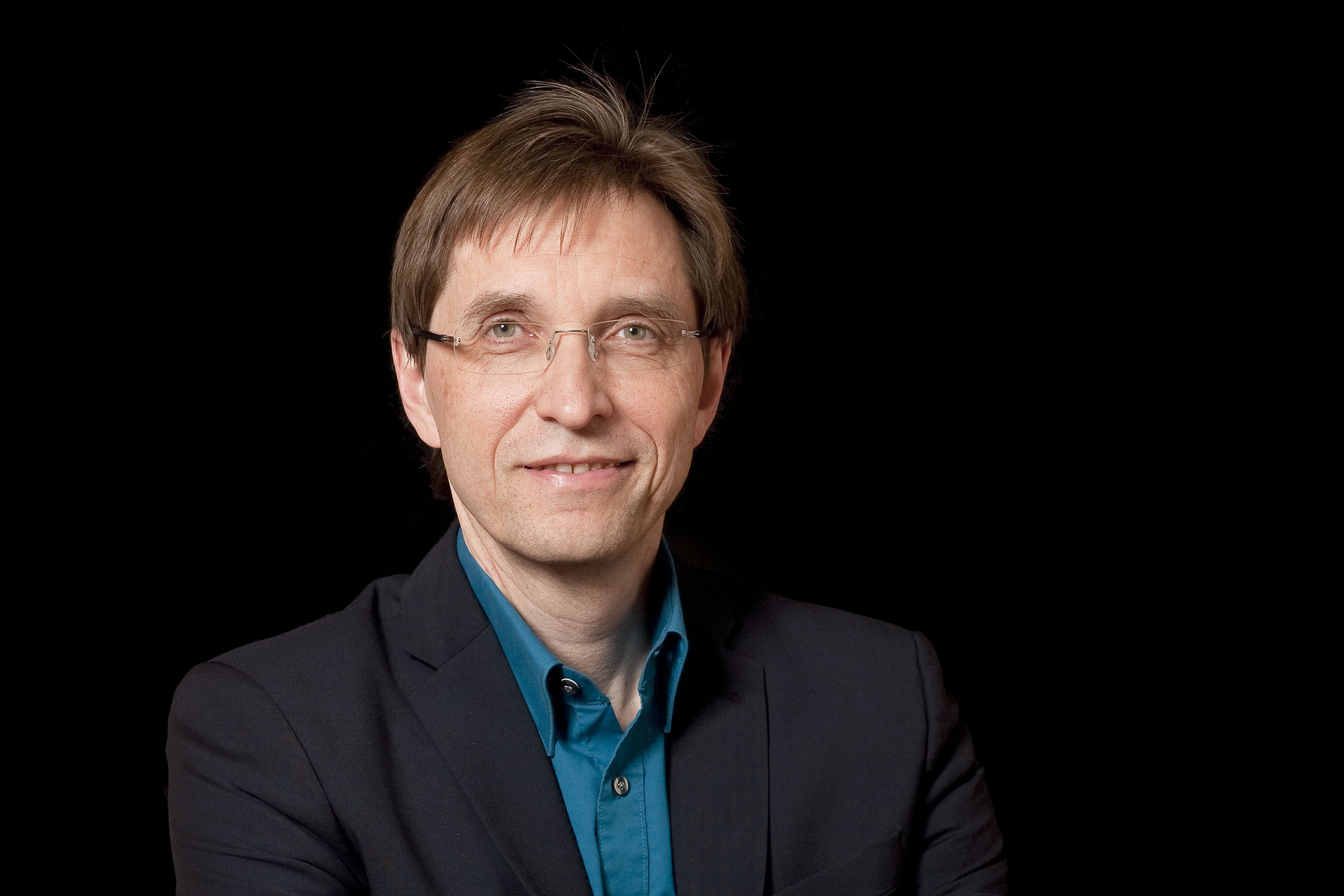 Stefan is Chess Grand Master and managing director of the Münchner Schachakademie. He, too, took part at Chess Olympics and even once qualified for the world championships. He works as a coach and psychological counsellor, as well as author of several books. Together with Professor Dr. Robert K. Freiherr von Weizsäcker and Dijana, Stefan developed the Master Plan. He coaches leaders in seminars and workshops in this discipline.
And this here is also about the Master Plan. Because it transfers the strategies of chess into real life. And it helps you to make “decisions” by a prudent change of perspective towards an advantageous combination of ratio and intuition.
 I keep experiencing how what I learned when playing chess also helps me in real life (both in private and business life, but they cannot be separated, anyway). It helps me to evaluate situations a little better. I find it easier to determine whether I am in a good or poor position. Based on this evaluation, I manage to come up with the right decision, instead of the wrong one, a little more often.
And I believe a small advantage like this can contribute hugely towards feeling well and having the chance to become a content person.
Since you can learn so much by playing chess, I am assuming that you can learn even more from the masters of this discipline. Consequently, I will go to an open seminar day “Master Plan” on Saturday, May, 11. The seminar is from 9:30 to 17:00 and the location is in central Munich, at Zweibrückenstraße 8. That is directly next to the Deutsches Museum.

I look forward to the seminar and, of course, also to all the people who will share the Mater Plan experience with me.
RMD
(Translated by EG)
P.S.
There is another seminar even earlier: on Friday, April, 26, 2013, at the same place. It costs € 580, including VAT. Meals for the day and a signed copy of the “Königsweg” are also included. For information on the Master Plan, click here Website. Registration: here.
Roland DürreThursday March 14th, 2013
Presentation by “(Fe)Male Students for (Fe)Male Students”
Since it is our upcoming event, here is the poster announcing the next IF Academy presentations. I am always happy to remind you of “upcoming events”:
Johannes Schmidt (TUM, IF-Lab/InterFace AG, Glassbox Games) will speak on Thursday, March, 21st, 2013, starting at 6 p.m. at the InterFace building in Unterhaching. His Topic
Get Under Way!
How video games and movement control want to get us away from being couch potatoes!

Of course, this invitation is not exclusively for f(e)male students. The event is free for all who want to come. After the event, we will again have a little “happy hour”.
For more information on the series of presentations by “(Fe)Male Computer Scientists for (Fe)Male Computer Scientists” click here. If you want to print the poster in high quality, just send an email to me – I will gladly send you the print PDF version.
RMD
Roland DürreFriday March 8th, 2013
Why Some Decisions Were Made
The big German energy suppliers are doing poorly. But there is a story behind it.
First, they privatized healthy state-owned enterprises. In retrospect, the price you had to pay for them was bordering on the ridiculous. Then the powerful energy giants paid record dividends on the stock market. Later, the tide turned. The irrational energy market demanded its tribute. To be sure, the EEG (Renewable Energy Law) / EEG (Erneuerbare-Energien-Gesetz) was based on the best of intentions, but it was poorly executed. The same was true for the first reduction of running times for nuclear power stations. Both did nothing to help the situation of energy enterprises.
The write-offs were not the only things that moved up dramatically. On the operative front, there were also suddenly more and more losses. To be sure, good lobbyism gained longer running times. But that was only a temporary improvement of the situation. Because then there was the Fukushima accident – which made everything a lot worse for the energy suppliers.
Now the big energy suppliers will sue the State. Mind you, this is not because the managers of these enterprises believe in nuclear energy. Instead, they think (probably correctly) that this is the only thing they can do. After all, it is their job to avoid damage to the enterprise. And if they do not go to court for something like the energy about-face, then they have to fear they will themselves be taken to court.
Consequently, the managing directors file suit, even though they know even better than we that nuclear energy is by far the most expensive and irrational way to generate electricity.
This is what we have come to. Managing directors have to file suit against the Federal Government and against their own convictions, just because otherwise they would have to stand trial. It is always about money, accountability and security.
At the same time, parliament decides that the barrels stored at Schachtanlage Asse have to be retrieved under all circumstances. Ethically, this is totally understandable. It is also absolutely justified in terms of worrying about the future. But then, after recovery, we will be just as much at a loss as before when it comes to the question: where to store it?
This pathetic voting, too, happened against better judgement of the engineers. They say that even the construction of machines necessary for such a project will take ten years. And they are sure that in the meantime quite a few things will happen at Asse. Also, the recovery will only be possible if you build a new mine into the old one.
All of which is going to cost gigantic sums.
ore than a couple of S21 and Brandenburg airports taken together. And regardless of it being unaffordable, they decide to do it with plenty of talk and with strong rhetoric. There is no information about how to finance this mega project. Another example for the typical lack of truthfulness in politics.
The original causers – incidentally, they have been forced into the nuclear business by the government with huge subsidies (of course, not totally unwilling) – can no longer pay the price, because they are bankrupt themselves. Quite apart from the fact that they already paid for the “disposal” – that is dumping the waste into the chute.
If we were serious about retrieving those barrels, we would have to announce some sort of financial State Emergency. And we would also have to think about where to deposit the retrieved waste.
At least now we have one example for a situation where there are truly no alternatives. It is hopeless, because there is no good solution. After all, you cannot leave the waste where it is, can you? Since, on the other hand, it is extremely hard to get it out, this might still be the most likely end. Regardless of all the nice words and strong slogans.
RMD
(Translated by EG)
Roland DürreFriday February 15th, 2013
Get In Shape! IF Academy – March, 21st, 2013
On March, 31st, 2013, Johannes Schmidt will be our speaker at the IF Academy. He studies Informatics at TU München, minoring in Medicine. “Additionally“, he also works at the InterFace AG IF lab.
 He has also several years of experience as an entrepreneur and started Glassbox Games with a group of friends. The young team programmed all kinds of smaller video games and Apps for various platforms.
In order to try and learn new things, Glassbox Games was founded by the same group. By now, Glassbox Games already won some smaller prizes and developed into a small enterprise. The goals have grown and now include serious entrepreneurial visions. And, of course, the Glassbox Games and InterFace AG are closely connected and on very friendly terms.
In his presentation, Johannes will focus on “movement control”. He will tell us about the historical development of this technology and show in a practical exercise how easily this technically really demanding topic can now be programmed.
Besides, he will introduce an IF lap project that reasonably integrates movement control. The presentation will conclude with a short outlook on what we might expect in this sector in the near future.
As always, the presentation will be held in our seminar zone. I strongly recommend it. Johannes will take us on a trip to a world that is alien to many of us, but it might suddenly become a very relevant part of ”common IT“. You really should have some basic understanding of it.…
We start at 6 p.m. – visitors are welcome from 5.30 p.m. After the presentation, there will again be a happy hour, called “beer and informatics”.
We look forward to welcoming many visitors from all age groups!

- Here is where Glassbox Games had their display in the Olympia-Halle when the Major League Volleyball match Generali Haching – Berlin Recycling was playing.
Of course, Glassbox Games also have their own Website and can be found on Facebook.
If you are interested in the tournament, click here.
RMD
(Translated by EG)
Roland DürreSunday February 10th, 2013
Future – Volatile, Disruptive, Unpredictable!
At Christmas time, we sing:
O thou happy, o thou holy, glorious peace-bringing Christmas time!
And today, I will sing the song of the future:
O thou volatile, o thou disruptive, unpredictable future time!
Volatile – what a nice new fashionable word. Volatility as the illness of apocalyptic times. Five years ago, I still had to look it up. And today, I keep hearing it far too often, accompanied by far too many and mostly very empty nouns. All of a sudden, everything has turned volatile.Not to mention disru
ptive! This attribute only found its way into my consciousness two years ago. But I learned quite fast to apply it more and more often. It is also a good adjective to use if you need a killer phrase. For instance if you want to refuse concepts that seem sensible but you personally do not like. You just have to say things like: “and what are we going to do if something disruptive happens?”. Immediately, everybody will get scared and – thank God – nothing more will be said about it.
The newest development is that now all sorts of people tell me about the “unpredictable future “.
The entire science of management always tried to tell us entrepreneurs that future was something you could “make”. They said an enterprise can be planned and controlled with just the same amount of precision as a machine or a car-trip. They actually said all you had to do in order to make good decisions was collect information and then evaluate it correctly. That was the message in a nutshell. The same “management wisdom” is also available a little more detailed and seemingly even more convincing using five or seven sentences. There was a time when I, myself, fell for it.
All you had to do was “profile“ your employees correctly. Then you could assign them to deterministic processes and roles easily and totally mechanically. It was all to happen for the improvement of the sole growth criteria: turnover and marge. “Shareholder value” was the only entrepreneurial goal.
And now the business becomes volatile and is threatened by disruptive events. And, to make matters worse, the future is no longer predictable. Regardless of the fact that Hans Ulrich (the “founder“ of the St. Gallen Management Model at St. Gallen) formulated his theses about “Change in Management (Wandel im Management)” as early as the beginning of the 1980ies.
Now, even Academica starts voicing doubts about their basic believes. Well, it is never too, late, is it? Uncertainty starts invading the brains. “In former times, everything was better, anyway”.
On the other hand – would it not be sensible and nice if we became a little more modest? And perhaps the more and more frequent use of these kinds of anti-words and sentences is only a (for me: positive) signal that more and more persons understand that they are, after all, not deity. Neither are they “Creation’s Crowning Glory”. Rather, they are just very complex mammals (and I rather like the species).
Life as such has always been volatile, disruptive and unpredictable, hasn’t it? Everything else happens only inside our heads. Fear, religion, truth, …
RMD
(Translated by EG)
Roland DürreSaturday February 9th, 2013
Homo Oeconomicus
Some friends of mine organise a conference or a workshop. I am part of the team. Here is a first outline of what the conference will be about. It was written by Marc Borner (mb). We have not yet decided on a title and date.
Since the content nicely supplements one of my recent articles (Work has not been created for humans – Nicht der Mensch ist für die Arbeit da …), I would like to publish the following text by Marc:
Since the 19th century, Homo Oeconomicus has been the dominating concept of our business life. It views the individual person as part of a total mechanism that is supposed to function and can be optimized and analysed mechanically. The individual person becomes an “homme machine”, represented by a number. The belief that those numbers can then be controlled in volatile work surroundings is based on exactly this short-sighted image of business players.
This approach totally ignores who actually initially did all the work. To be sure, every individual person is also part of a company, but besides being a mere means to an end, he is always also the reason why the company exists. If this idea is forgotten, the consequence will not only suffer massive economical loss, but also a progressive alienation felt by the individual participants in a business process, which will cause damage to the emotional capital.
More recent scientific work, especially in the fields of psychology and neuroscience, proves that the aforementioned assumptions are correct. They also show a way out, pointing towards non-reduced work conditions characterized by participation, trust and responsibility. In this manner, you can create a fear-free, transparent area where clarity prevails and individual persons work together at eye-level, instead of against each other.
Generating these kinds of work conditions that meet the needs of the individual persons a lot better will stimulate a homeostasis between enterprises, entrepreneurs, managers, employees and laborers. It will create a new concept of leadership and make an enterprise not only more successful, but also take it back to where it originated: as an institution serving the general well-being.
The workshop will explicitly deal with this topic and try to both enlighten us on the current scientific state of the art and build the bridge to practical applications.
I rather like this text. We were already successful in finding eminent speakers for the event. Now I am interested in finding out how you feel about the text and/or if, for example, you would be interested in the topic and probably attend this kind of workshop.
RMD
(Translated by EG)


