
Roland DürreMonday October 14th, 2013
New IF Blog Author: Dr. Cordian Riener
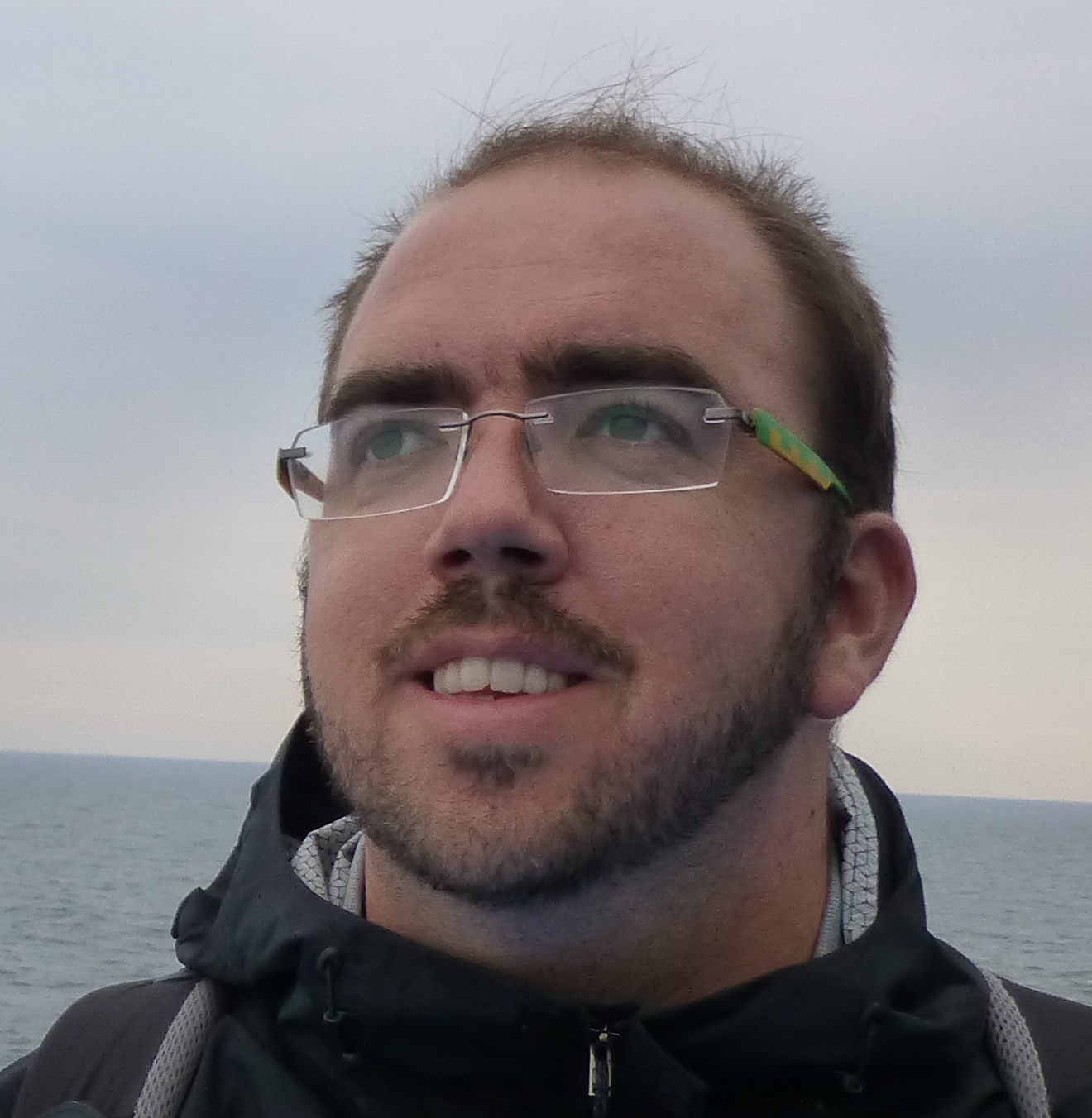 Just a short time ago, I heard another presentation by Dr. Cordian Riener that made me very thoughtful.
Cordian is first and foremost a human being and then a friend of simple and clear statements.
He manages to need few words in order to get to the point.
Which is exactly how Cordian describes himself:
Born in Swabia.
Studied mathematics and philosophy in Ulm and Bordeaux, subsequently earned his mathematics Ph.D. in Frankfurt.
Now living up north in Helsinki for some time to come.
I like spending time riding my bike, hiking, reading about world history and good discussions – preferably accompanied by a nice cup of coffee.
During my stay in Finland, I try to find out what the Fins are better with than we, what we could learn from then and why, even here, not everything is always perfect.
🙂 I also know about Cordian that he likes apple cake – not to mention strawberry tart, which he likes even better.
I already look forward to reading Cordian’s articles! Perhaps there will be regular news from Finland for us?
RMD
(Translated by EG)
Roland DürreSunday October 13th, 2013
Remembering the Philosophical Colloquium with Klaus-Jürgen Grün
Ideas by Cordian Riener
After our shared experience of the seminar under Klaus-Jürgen Grün on “Business Ethics” between October, 4th and 7th, I received the following letter from Dr. Cordian Riener.
Dear Roland,
many thanks for your diverse ideas during the seminar. During the train trip back, with my mind on the seminar, I came up with a number of comments I would not wish to forget – so I am making notes on my iPad and sharing them with you.
Firstly, here is how I feel about his definition of sustainability as “no waste“: a short while ago, I had heard about “cradle to cradle” as a new concept of production planning. Apparently, it is quite possible to really reduce the waste to a minimum by prudently defined product cycles and to make used articles the raw material for other articles with a minimum of energy. Especially in architecture, this is getting more and more attention – probably mostly in Holland. This kind of thing would, indeed, be sustainable according to your beautiful definition.
Note by me: I took the definition from Dr. Klaus Töpfer.
If and how these kinds of product cycles can actually be realized purely with market mechanisms without outward control, however, will certainly be an exciting question. During the discussion, you also very correctly remarked that we currently have a lack of responsibility: on the one hand, profits are privatized, on the other hand, the risks and losses are socialized. I liked your argument very much and it also made me thoughtful.
In fact, I actually do have the impression that people (whoever exactly we mean with “people”) try to get rid of responsibility. On the one hand, this might be one of the reasons why institutions telling you which is “the right way” were so successful for such a long time when it came to telling people what they should do. On the other hand, it is certainly also one of the reasons why parts of our society have been marketized: where formerly you said “what God wants is good” has become “what the market wants is the right thing to do” and where formerly the will of the Gods was spoken to us through the mouth of the priests, modern prophets now use quantitative expressions and mathematical formula, along with an army of business priests who will then interpret them for us.
Initially, this might sound like a more or less beautiful analogy, but when it comes to responsibility, you unfortunately discover even more things they have in common: in former times, priests had power over the monarchs, because they were also in a position to take over their responsibility: for instance, if a king caused famine through poor planning, he was on the safe side if there was also an easy way to get out of the responsibility; to be sure, there might be some polemics included here.
I got exactly the same impression while I was doing my practical training at a bank: there was the market; quantitative models discovered the will of this metaphysical entity and the portfolio managers acted according to what the model told them. If things went wrong – and there were quite some times when it did go wrong – the customer (i.e. the bank director) was told that the market had changed its opinion – which was exactly what the models had foretold. I hope this makes some sense at all.
Basically, I suspect that what I experienced quite often (not only as described in the above example) is a very common phenomenon: people are not sure yet have to make decisions. Instead of trusting their “instincts” which – if they have been trained by long years of experience – will come up with the right (best possible) decision, you prefer to rely on things that look more “solid”.
That gives you the advantage that, afterwards, you are not the one who can be held responsible. Instead, you can say there was something like market failure – the market God changed his opinion on short notice. With these considerations, I suspect that your statement was correct when you said that there is a lack of responsibility. And I also suspect that this lack is heightened by our marketized society. As far as this is concerned, I am sure it would be very exciting to take a closer look at our social development on next year’s seminar, wouldn’t it?
With kind regards, Cordian
Well, that was the text by Cordian. Many thanks!
I have now had several more exchanges of ideas with Cordian and am happy to tell you that, in the future, he will also be an IF blog author. This is great – and I will introduce him shortly in the IF blog as a new comrade-in-arms. I already look forward to reading his articles.
RMD
(Translated by EG)
Roland DürreSaturday October 12th, 2013
PM Camp DACH in Dornbirn, November, 14th to 16th #pmcamp13
SPONSOREN WANTED!
The picture was taken almost two years ago. Stefan Hagen and yours truly as co-founders of PM-Camp are absolutely delighted. During the evening party of the very first PM Camp in 2011, we realize that the event is a great success.
In a little more than four weeks, we will meet again. At the third Dornbirn PM CAMP. And much has happened in the time in between. We now have yearly PM Camps at Bad Homburg (Rhein-Main), Berlin, Stuttgart and Vienna. And we are positive that there will be even more of them in 2014.
The next Dornbirn PM Camp on November 14th to 16th has been well organized. The seminar rooms at Fachhochschule Vorarlberg are ideal for us. Again, the motto is “Work hard, party hard!”. There is no shortage of work. Fabulous participants with important topics already promised to come.
Just for the party, we could do with another sponsor or two. Because some of the sponsors who used to support Dornbirn do now support one of the many regional Barcamps. Consequently, there is an opening for new sponsors who wish to show by their contribution that they share a modern concept for the 21st century which I would formulate as follows:
 Share experience and knowledge openly and transparently, co-operate at eye-level and in respect with courage and joy and thus take care of a future in shared responsibility.
RMD
(Translated by)
Roland DürreMonday October 7th, 2013
Presentation – The Change in Management – October, 24th
 On October, 24th, I will give a presentation titled as you see above at the University of the German Armed Forces. The sub-title of my presentation is:
Why German enterprises, too, must become more agile!
Since what I am going to talk about is very dear to me, I would be particularly happy to see familiar faces among the audience. The presentation is open for all.
Here is what you can read in the invitation by the University of the German Armed Forces about the series of lectures. I can recommend all presentations of the series.
We would like to cordially invite you to our EAA colloquium on: ”Current Developments in Technology and Business“.
This is a series of lectures open for all and held during the coming autumn trimester (October through December) on Thursdays at 18.15 hours at lecture hall/building 33 / 0101 on the premises of the University of the German Armed Forces at Neubiberg. Registration is not necessary. You are welcome to bring colleagues, friends, family.
We attached a description of how to get to our institute to this invitation. From there, you will easily find the way to the lecture hall (and, please, do not forget to carry your passport)
As you can see, it is not altogether trivial to find the lecture hall. Consequently, I will be happy to assist when it comes to reaching the university campus and the way to the lecture room, for instance by sending you the description of how to get there.
Here is an overview of all the presentations of the EAA Colloquium “Current Developments in Technology and Business “ in the autumn trimester of 2013 at the University of the German Armed Forces in lecture room/building 33 / 0101
October, 10th, .2013 18:15 hours
Dirk Hornickel Volkswagen AG – Wolfsburg
From the 1-litre car to the 40-ton truck – driving motor concepts at Volkswagen concern
October, 17th, .2013 18:15 hours:
Dr. Jürgen Friedrich Daimler AG – Kirchheim-Nabern
Fuel-cell electronic cars at Mercedes-Benz – current state of affairs, development and experiences.
October, 24th, 2013 18:15 hours:
Roland Dürre InterFace AG – Unterhaching
The change in management – why German enterprises, too, must become more agile
November, 14th, .2013 18:15 hours:
Dr. Stefan Gillessen – Max-Planck-Institute for extra-terrestrial Physics – Garching
Astronomy and astrology: what is science?
November, 21st, 2013 18:15 hours
Dr. Franz-Josef Bierbrauer UBB Business Consulting Bierbrauer (formerly at Osram München) – Wörthsee
Technological change on the illumination market and its consequences.
November, 28th, .2013 18:15 hours:
Dr. Ralf Geßlein Siemens AG / Large Drives – Nürnberg
Driving motor systems and sales approach for the oil and gas sector
December, 12th, .2013 18:15 hours:
Dr. Werner Zittel LBST Ludwig-Bölkow-Systemtechnik GmbH – Ottobrunn
Peak Oil, Fracking and the energy about-face.
RMD
(Translated by EG)
Roland DürreFriday October 4th, 2013
“Careful: Email” – First Video Recording Available – of IF Academy from September, 19th
On September, 19th, we welcomed our guests Hans Bonfigt and Marc Haber of redoxSystems at the IF Forum. The topic was: Careful: EMAIL! Their two courageous and personal presentations, they not only informed us about the
“History, Basics, Spam&Virusses”, but also introduced “Concepts for Operating Your Own Secure and Reliable Mailservers”.
In particular, they also reminded us of the perhaps fundamental threats we all face these days.
After the presentations, we had an extremely lively and fruitful discussion. And our guests went back home with a sense of awareness and yet content..
As (almost) always, we made a video recording of the two presentations. You can view the basic parts of the presentation by Marc Haber on youtube.
Both this video and the one by Hans Bonfigt were made and produced by Lukas Ziegler. The part done by Hans Bonfigt will be put online shortly.
RMD
(Translated by EG)
Roland DürreThursday October 3rd, 2013
My Next Presentations…
I will soon again give some presentations; for instance at the University of the German Armed Forces in Neubiberg on October, 24th during a colloquium, or at the DOAG Conference in Nuremberg in November. Regardless of the fact that the “frontal exposure to sonic waves” usually happening on conferences are no longer my favourite, I still enjoy giving these presentations. Inter-active events, such as barcamps, are much more to my liking, because those are the occasions where “many” learn “so much more from many others” than during a workshop or conference. Apart from that, it also gives you a lot of joy and delight, on top of providing all parties concerned with knowledge and experience.
In my current presentations, I will, on the one hand, deal with the “Change in Management” which is so necessary in order to make the “enterprises and social systems in Germany more agile”. On the other hand, I wish to discuss the widespread “marketization” of our society.
As I see it, it is based on a short-sighted human concept of “homo oeconomicus”.
For me, it is important to make sure that I am not being a “presenter”, “speaker” or even “key note speaker” (keynote speaker” – see comment) . I give my presentations because I enjoy the matter I am speaking about and I do not see myself as a paid duty performer. Instead, I would like to be considered a human being who welcomes the opportunity to share his life experience, especially when I get the chance to do so with friends and young persons to whom the future belongs.
Consequently, I will not bring a set of slides that have been only marginally modified as time went by, except that the date and place of each presentation has been updated. I avoid using the often-applied tricks in presentations from “kitchen psychology”, or else building in suggestive diagrams/sketches or other special effects. In my presentations, I try not to take advantage of populist sentiments. Instead, I simply present my experience.
All this means that I prepare for the current situation and expected audience with each presentation, before presenting my ideas more or less extemporaneously.
Here is the content of my next presentations:
This time around, I aim at showing how well-off we Middle-Europeans are, at least as far as the economy is concerned. I keep reading about crises – and then I often think that if this is what they call “crisis”, then I wish for a permanent crisis. I could easily imagine that many in this country suffer from a value or purpose crisis and I actually believe that we partly live “decadently”. Because we have become victims of a radical marketization which rules all our areas of our life. And, of course, we ourselves, too, are to blame for it.
We might actually be able to flee from this trap if agile humans (and managers) are prepared to take responsibility, to make prudent decisions and to act wisely. Consequently, my presentation will tell you my definition of an agile manager.
And I also want to show the importance of distinguishing between ethics and morals. As I see it, this is very important, because enterprises, too, have their “morals”. And those will often lead to schematic but poor decisions. I believe we will only be able to decide well instead of poorly if we are aware of the difference between morals and ethics.
So what I want to show with the example of the type “dogmatic manager” – which dominates many of our enterprises – is how using “dominant logics” gained through set opinions our enterprises (social systems with economic goals) and their worlds produce no end of wrong decisions.
RMD
(Translated by EG)
P.S.
Of course, I will be very happy if many of my friends come, for instance, to watch my presentation on Thursday, October, 24th at 18.00 hours in the Neubiberg University of the German Armed Forces. For more information just send me an Email .
Roland DürreWednesday October 2nd, 2013
Please Note: New Time!!! Third IF Forum in 2013 with Roberto Simanowski on October, 25th, 2013
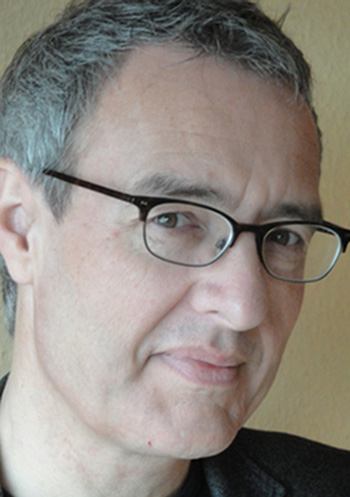 Our speaker of the third and last big IF Forum in 2013 is
Professor Dr. Roberto Simanowski!
He was going to give a presentation about:
Jean Paul, his witticism, the post-modern area and the new media.
The presentation was going to take place on November, 7th. For several reasons, we had to change the date. But be not afraid: the speaker will be the same.
On Friday, October, 25th, 2013 (please note – rescheduled!), Roberto Simanowski will tell us about a Jean Paul who, considering the times he lived in, was rather autonomous, revolutionary, in fact, almost anarchistic. Afterwards, he will give his opinion on the following current topic:
Big Data and Transparent Society: NSA, Self-Tracking and the Internet of Objects.
Here is what he will provide us with:
- Big Data being the “crude oil” of the 21st century also raises the questions of environmental pollution and of an informational sustainability concept.
- Both politicians and citizens refusing to talk about the NSA affair not only points towards non-existent problem awareness, but also to a camouflaged complicity.
- The “cold civil war” does not take place between the citizens and the secret service/surveillance society, neither does it happen between individual citizens. It actually happens inside every citizen. Databases replace stories as a form of understanding the world and yourself. The algorithm becomes the psycho therapist. It neither tells the patient what it found out, nor asks if it may use what it found out
About the speaker:
After having studied literature and history, Roberto Simanowski received his doctorial title in 1996 at the Friedrich-Schiller University of Jena with a work on the mass culture around 1800. Following his time as a scientist at Göttingen University, he was a visiting scholar at Harvard University (1998-2000) and the University of Washington (2001-2002), as well as representing the chairholder for media sciences and cultural theory of digital media at Jena University.
Between 2003 and 2010, Roberto Simanowski worked as an assistant professor at the Department of German Studies of Brown University in Providence (USA). He has now held a professorship at the seminar of media sciences of Basel University since 2010.
In 2011, he habilitated in media sciences at Siegen University with a work about digital media. He is the founder and editor of the online journal for art and culture of digital media dichtung-digital.org.
Here are some of his publications in the field of digital media:
- Text machines – kinetics poetry – interactive installation. On understanding art in the digital media (Transcript 2012)
- Digital Art and Meaning. Reading Kinetic Poetry, Text Machines, Mapping Art, and Interactive Installations (University of Minnesota Press 2011)
- Reading Moving Letters: Digital Literature in Research and Teaching. A Handbook (Mhg; Transcript 2010)
- Digital Media in our adventure society. Culture – Art – Utopia (Rowohlt 2008)
- Interfictions. About writing on the internet (Suhrkamp 2002)
- Digital literature: forms and ways of new literature (Hg., DTV 2002)
- Digital Literature (Hg., Text & Kritik Oktober 2001)
Note:
This IF Forum will be held in our headquarters building at Unterhaching, in the seminar zone under the roof. We start at 18.00 hours. We look forward to welcoming our guests! As always, you can register for the IF Forum via e-mail.
RMD
(Translated by EG)
Roland DürreSaturday September 28th, 2013
Still Wanted: Sponsor for PM Camp!
Three years ago, we had the first PM Camp in Dornbirn. It was initially intended for DACH (Germany, Austria, Switzerland). Many people liked it so much that this year more PM Camps have taken place in Vienna, Stuttgart, Bad Homburg (Rhein-Main) and Berlin.
However, this great development motivated some of the sponsors to support local Bar Camps close to their own home, rather than the far-off one on the lake Bodensee. Well, this is certainly an understandable development. Yet now its consequence is that we are still looking for some sponsors to support our Dornbirn PM Camp. After all, we want to maintain the high standards of this perhaps best-frequented PM Camp of all.
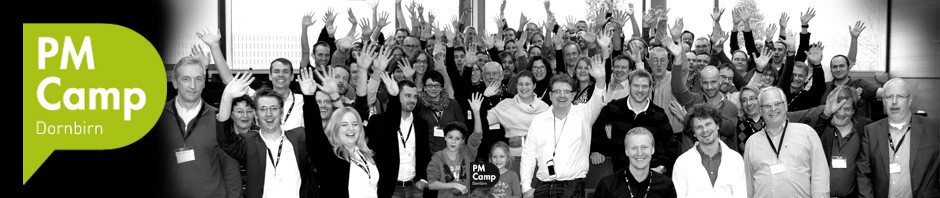 Here is the invitation for potential sponsors by the Dornbirn organization team:
As all other PM Camps, the one in Dornbirn is also a non-profit event. The entry fees are kept low on purpose (99 Euros plus added value tax for two days including all meals). They do not cover the actual costs of the event.
Consequently, we need sponsors who share the PM Camp vision and are prepared to contribute. As a sponsor, you will leave no doubts about your own innovative and future-oriented position. You can introduce your own topics during the open space sessions and gain many new impulses. Last not least, you can meet interesting people, either as potential future customers or employees.
Be part of the PM Camp movement which started three years ago in Dornbirn and now has been extended to also reach to Vienna, Berlin, Stuttgart and Bad Homburg! Show your potential employees and customers that you are prepared to leave the antiquated paths of established conferences and to think in new terms of project management. You can actively support the most important and (in-)famous anti-conference on project management in the German-speaking area!
For details of our sponsoring arrangement, click here. Do not wait too long, because sponsor opportunities, too, are limited.
Incidentally, sponsors do not pay a very high sum. I look forward to your questions!
RMD
(Translated by EG)
Roland DürreTuesday September 24th, 2013
Capable of Dealing with Difficult Situations
Here is a Little Anecdote from a Manager’s Daily Routine:
I am sitting here and reading an excellent job application. It is truly excellent. And it makes me absolutely happy.
At the bottom of the letter, I read under “personal strengths”:
Very capable of dealing with difficult situations.
That gives me pause.
Why?
Because this is not what I want. I want colleagues with courage. I want colleagues who have the energy to develop joy and carry others along with their enthusiasm. I want people who invest time and energy for the enterprise to a healthy extent. I want colleagues who can and must also at times be emotional and sensitive, and who can say “NO” where necessary. I want employees who love and like themselves. Because that is the only way they will also be able to love and like others.
But I do not want persons who are capable of “dealing with difficult situations”. They are something to bury with the management mothballs: throw them in and close the lid.
But be not afraid – I know what the applicant meant with “capable of dealing with difficult situations”.
RMD
(Translated by EG)
Roland DürreSaturday September 21st, 2013
Before the #pmcamp is after the #pmcamp … (2) continued: report of my session
By now, the Berlin PM Camp is also already a thing of one week in the past. I had designed a session about “Ethics/Morals & Management Today”.
You already read the first part of my presentation “Morals versus Ethics” (LINK). So here is part 2 as an attempt at formulating an “idea-typical” image of the modern manager.
What are the characteristics and qualities a person should have if he or she wants to take an extraordinary degree of responsibility for a social system such as an enterprise, along with making important decisions and initiating consequential behaviour? Because, for me, that is the definition of managers, leaders, entrepreneurs, or whatever you wish to call them.
In order to structure the entire presentation, I have formed three clusters:
Operatively – Strategically – Normatively.
- Operatively
In this category, I would wish to list the “normal” qualities a manager should or even must have today. Basically, we are talking about a good technological and business competence, a capability to listen attentively, a mastering of active communication, both in writing and speaking. But it also means that you should be able to present yourself as an intelligent, quick-witted and confident person, basically being able to negotiate and equipped with good instincts. In other words: you should have a suitable degree of extroversion and flexibility. Also, a halfway decent upbringing and a good measure of the law-abiding disposition seem important to me. All these qualities are certainly useful. I will not go so far as to judge which of those are really necessary. But I am sure none of the mentioned criteria are sufficient. - Strategically
This is where I see the leadership quality. The expectations get higher: terms such as “inner freedom”, “empathy”, the ability to handle conflict situations and living up to your own high standards come to mind. A healthy identification with the values and cultures of the enterprise seem very important to me. Also, I would wish to see a good portion of humility before the task. And in particular, a leader should understand the difference between morals and ethics (see part one of my presentation), along with being able to behave in an “ethically responsible” way. - Normatively
Here comes another rather challenging issue. We are asking for “entrepreneurial qualities”! It is all about moving “beyond randomness” and into “responsibility”. You have to be able to discuss the values of the enterprise and the culture (in a very powerful world which constituted itself quasi automatically) in a constructive and critical way. You have to be willing to accept “change”. In order to do this, you will need primary virtues such as “civil courage” and “constructive disobedience”.
During one of my presentations on leadership, we had a discussion about “charisma”. Is “charisma” a necessary requirement for leadership? As I see it, charisma is a misunderstanding. Because it is not a person who is charismatic; instead, their behaviour is perceived as charismatic.
But let us return to my image. To be sure, it is a rather random model. Besides, you can easily imagine other requirements to add, or structure it differently. The division into three parts is also something you might wish to extend or modify. And as always, my model is also one of those where you should not think in terms of “black-and-white”.
Of course, I cannot imagine any person blessed with all the qualities I described. For us common humans, this is also rather a relief. But perhaps my image can help if you want to walk along the lines of the triangle or even move into it and ask “where am I?”. Also, you might ask where you are headed and what you can do in order to get there.
RMD
(Translated by EG)


