
Roland DürreMonday March 3rd, 2014
LEAN, OPEN, AGILE – Today: AGILE
Basically, it is a very simple concept. You need three very central personal characteristics which – on top of a huge number of useful qualities – are absolutely necessary if you want to make a project or an enterprise a success:
- LEAN
Structure (build-up) and activity (procedures) must be simple and streamlined. And both must be continually improved without over-complicating. - OPEN
Both in life and in an enterprise, openness, clarity and transparency are three very important requirements for success. - AGILE
This is what I will discuss in today’s article.
Let me cite from the “Agile manifesto” of software development as it was drawn up by an illustrious circle of famous s-w developers:
Manifesto for Agile Software Development
We are uncovering better ways of developing software by doing it and helping others do it. Through this work we have come to value:
- Individuals and interactions over processes and tools
- Working software over comprehensive documentation
- Customer collaboration over contract negotiation
- Responding to change over following a plan
That is, while there is value in the items on the right, we value the items on the left more.
Translated into “common language”, these rules might well also apply to our lives in general:
We show better ways for persons to (co-)operate, both in how we live and how we help others. This is how contentedness and perhaps a little more peace and joy can be achieved.
- The people and their interactions are more important than social rules and conventions.
- Making your life something you feel comfortable with is more important than making a good impression on others.
- Living together constructively is more important than striving after (what seems to be) security.
- Reacting after change is more important than an (allegedly) reliable “same procedure as always”.
No matter how useful the elements on the right side of the equation may occasionally be: the left side is a lot more important in life.
So, basically, to me it seems that the “Agile Manifesto” is not only helpful when it comes to software development, but also in real life. Isn’t that an indication that something rather reasonable might be written in it?
RMD
(Translated by EG)
P.S.
I was inspired to write this article by the sweeping session Dominik Rose led during the Nuremberg OpenUp Camp a little more than two weeks ago. Consequently, I enjoy reminding people of the “Agile Manofesto”. As I see it, it is still as valid as ever.
Roland DürreSunday March 2nd, 2014
IF Forum 2014 – Starting With Jörg Schindler – TURN OF AN ERA
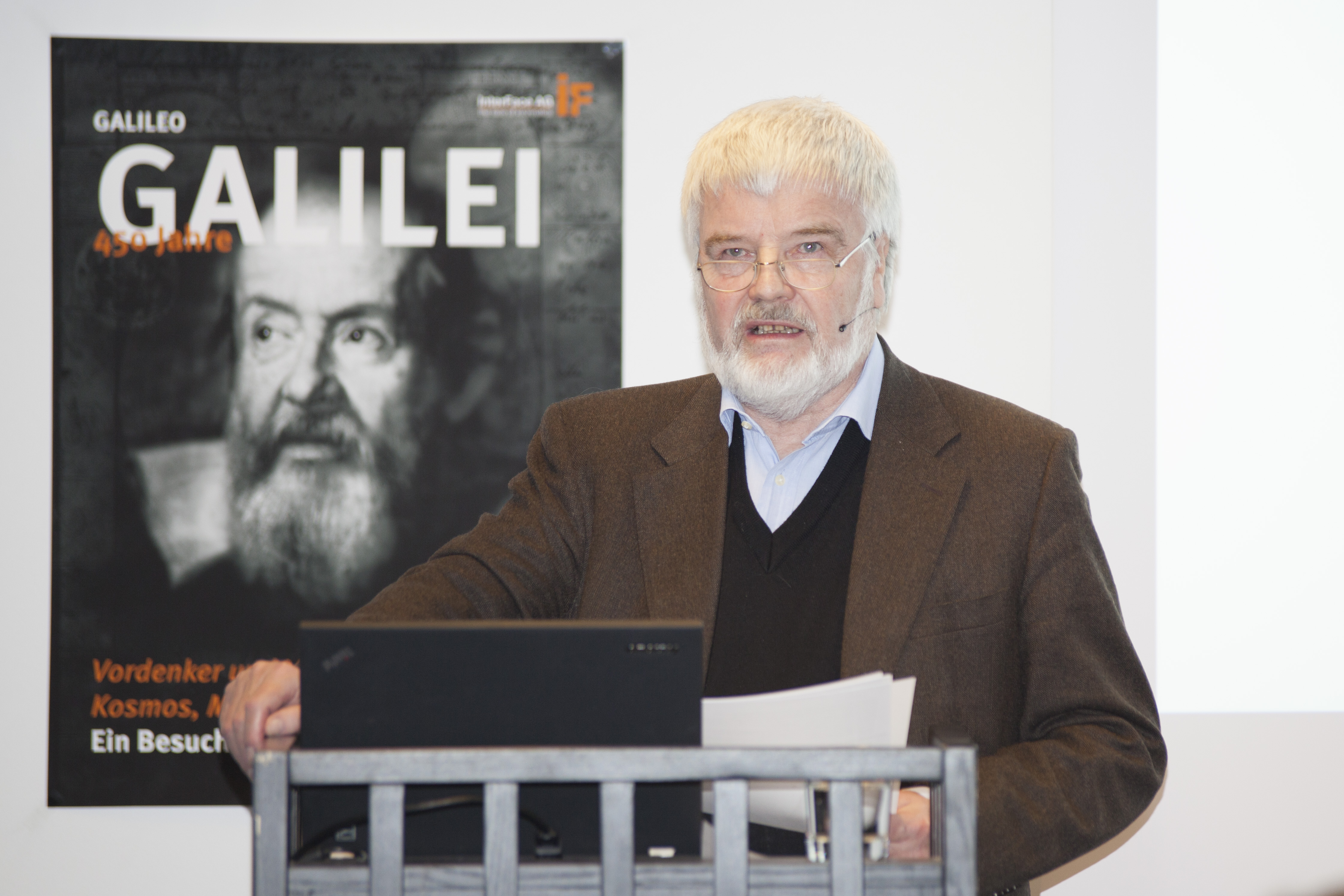 The start-up of the 2014 IF Forum “Galileo Galilei” at InterFace AG was a huge success. Under the heading TURN OF AN ERA, Jörg Schindler delivered a strong appeal in favour of “the future” on February, 27th, at Unterhaching.
With his facts about “The Beginning of the End of the Fossil Era” and the subsequent “Great Transformation of Our World”, he made is pretty clear that, even though we can perceive how the world changes, we actually cannot predict the exact consequences.
Because we are already in the middle of an absolute transformation. It will continue to take place, no matter if this is what we desire or not. Besides, we cannot come up with a master plan, because the transformation cannot be planned. All we can do is refrain from acting in ways that we perceive as non-sustainable.
As often before with other presentations, Friedrich Lehn recorded the presentation held by Jörg Schindler. I will publish the film soon on our YouTube Channel “RolandDuerre”.
There will be two more IF Forum presentations on Galilei Galileo in the 2014 IF Forum:
COSMOS
On Thursday, July, 17th, we will welcome Dr. Stefan Gillessen as our guest speaker. He will talk about:
Big, Bigger, Sharpest
Where is the development of telescopes headed? From Galilei (37 mm lens) to the European Extremely Large Telescope (39 m mirror). What could be more exciting than witnessing how material falls into a Black Hole? Insights into current research.
Stefan is one of the leading scientists at the Max-Planck-Institute for Extra-Terrestrial Physics (MPE)
HUMANS
On Thursday, October, 23rd, 2014, Thomas de Padova will give a presentation. He will talk about the
Secret of the World
400 years ago, two totally different scientists went beyond the limits of the known world. In Venice, Galileo Galilei looked through his telescope and discovered the Jupiter moons. An exciting expedition of human thinking begins – and along with it the turn of the era towards modernity.
Thomas de Padova is a physicist, journalist and historian of science.
RMD
(Translated by EG)
Roland DürreWednesday February 26th, 2014
Tomorrow: Live Stream at InterFace – IF Forum with Jörg Schindler
Thursday, February, 27th, 2014 – tomorrow – the first 2014 IF-Forum is taking place:
In 2014, we chose Galileo Galilei (1564-1642) as our InterFace person. Since his ideas are very modern, this choice allows us to open new perspectives for the here and now. The topics of the 2014 IF Forum will be cosmos, humans and the turn of an era.
 We look forward to exciting insights into the past and the future and will start tomorrow with Jörg Schindler.
He will talk about the turn of an era. His presentation is titled:
The Beginning and End of the Fossil Era
“The great transformation of our world” and “resilience will follow efficiency”
As always, the event will take place in the seminar zone of the InterFace AG building at Unterhaching. We welcome our guests from 6 p.m. and the presentation will start at 18:30 hours prompt.
 A few seats are still available. For all those who cannot come, the presentation will be broadcasted live on the internet: http://www.ustream.tv/channel/IF-Forum.
From around 18.15 hours, you can see the video stream on http://www.ustream.tv/channel/IF-Forum .
In addition, we will do a video recording which will be accessible on youtube (Kanal InterFace AG).
We look forward to welcoming you – both live and online.
RMD
(Translated by EG)
Roland DürreTuesday February 25th, 2014
PM Camp: Now Also in Zürich (April, 25th to 26th)
I am delighted!
In 2011, we (Kornelia Hietmann, Dr. Eberhard Huber, Jens Hoffmann, Dr. Marcus Raitner, Dr. Stefan Hagen and yours truly) initiated the first barcamp for Project Management in Dornbirn.
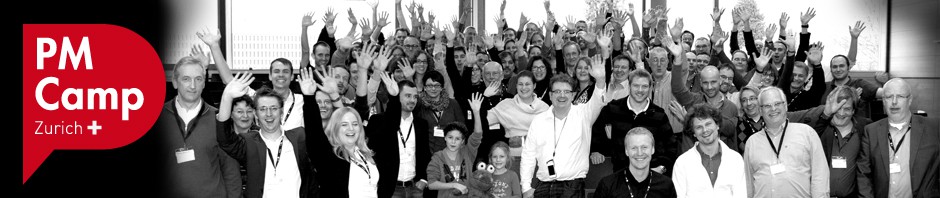
In 2012, we had PM Camps in Dornbirn and in Vienna.
And in 2013, we had PM Camps in
Bad Homburg, Berlin, Dornbirn, Stuttgart and Vienna!
And now matters continue to improve, because in 2014, there will also be such events in Munich and Zürich! The time for Zürich has already been determined: the first 2014 PM Camp of the year will be held there between 26. April 25th and April, 26th, 2014! Tickets are already available – to buy them, just click here: Ticket-Kauf.
For those of you who do not yet know what a PM Camp is, here is some information:
PM Camp is a high-quality barcamp for project managers. Persons who are prepared to share their knowledge and who wish to learn from others will meet there. And, as a general rule, we are talking persons who are prepared to accept entrepreneurial and social responsibility.
PM Camp is neither a club nor an institution. There is a core team which currently consists of the following persons: Eileen Hörtreiter, Dr. Eberhard Huber, Dr. Marcus Raitner, Dr. Stefan Hagen and myself. You could say that we accept the “normative responsibility”. The local events are organized by “organizational teams”. Their representatives meet once a year for the PM Camp closed meeting. During this meeting, strategy, future and operative agenda for the PM Camp are coordinated.
PM Camp closely cooperates with openPM. openPM is an open platform for project managers and all those who work in projects. You could say that PM Camp is the “face2face” partner of openPM. PM Camp creates a free environment to make it possible for project managers to meet face to face and exchange ideas. During a PM Camp, the “normal” barcamp procedures are usually supplemented by impulse presentations.
For lots of interesting information, such as a review of past events, general principles and values of PM Camp, publicly voiced opinions and much more, click here: PM-Camp Dornbirn.
My friend Toni Maric, who is one of the initiators and member of the Zürich organizational team, looks forward to many registrations. I, too, very much intend to go to Zürich.

RMD
(Translated by EG)
Roland DürreThursday February 20th, 2014
BRAIN SET
 I first met Roger Dannenhauer at the Dornbirn PM Camp. However, his name was not new to me, because he had significantly contributed towards a great literary project (Buchprojekt) on project management with the Turnaround-Team.
In Dornbirn, he inspired all the participants with a fascinating session. For me, this was reason enough to arrange a four-eye meeting with him one afternoon where we exchanged opinions at length and with great intensity.
Roger Dannenhauer is also the author of GEISTESHALTUNG. As I see it, this is a very important book with an absolutely future-oriented message. Even if the sub-title “WIRTSCHAFTLICHER ERFOLG IN EINER NEUEN ZEIT” (business success in our new time) sounds almost conservative, the content is definitely revolutionary.
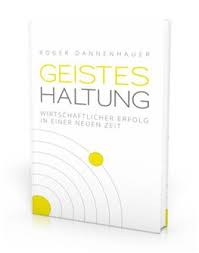
And even the very first message of the book is quite clear: there is no alternative to reality!
When attending podium discussions or other similar events, I am often surprised to meet people who consider growth the solution to all problems. They deny that using up fossil energy is actually a problem, regardless of the oil peak and climate change.
We are talking people living in our times who still consider humans as functional parts of a mechanistic system. People who cannot understand terms such as “lean”, “agile” and “open” – and neither do they wish to understand them.
And I am surprised that there are people who actually still believe we could continue to daydream through the decades with “business as usual” and who forget that generations who will not be amused about this behaviour at all will probably come sooner than we like.
And in the book itself, you will also find topics such as
Ignorance – Manipulation – Waste of Resources.
The book fascinated me, because it is a document emanating wisdom, competence and civil courage! It motivates to start thinking about the future and gives suggestions for a possible approach towards solving the problem. I am not going to tell you more at this time.
RMD
(Translated by EG)
P.S. Here is “affiliate Link” if you want to buy quickly.
Gastautor(en) Wednesday February 19th, 2014
Planning Substitutes Error for Coincidence
The stock market depends on good news and the hope that even more can be earned, which means that the stock-oriented enterprises have to show better results all the time in order to live up to the expectations of the investors and to the promises of the fund managers. What you need for this are transparent strategies and an optimistic planning of results.
In order to increase the market share, you have to provide a constant push: be it in terms of turnover, profit, or buying out the competition. As opposed to this, deviations from the plan (warnings about potential profit) will make poor news and consequences will not be long in coming. The entrepreneur or manager must “pull a new parrot out of his hat” at all times, otherwise the investment experts will lose patience.
In the ’New Economy’, the importance of planning increased drastically and the vocabulary of the neo-liberal business concept introduced the respective terms as a fixed part of news and leadership methods: ”Business Plan, Strategy Planning, Performance, Shareholder Value, Profits, Annual Growth, Controlling“ and „Win-Win – Situation“.
While the long-term result planning and planning control mechanisms were basically restricted to huge enterprises, this concept now spreads more and more to the medium-sized enterprises.
For me as managing director of one branch of a medium-sized company, this was reason enough to critically investigate planning and its accompanying concepts: error and coincidence. I will shed a little light on the relationship between and the consequence of planning in small and medium-sized industrial firms and the increasing collection of data.
Planning
On Wikipedia, you can find about planning: ”Planning describes the human ability to mentally anticipate behavioural steps that seem necessary for achieving a goal. You get a plan, mostly in the form of a set of data structured according to time.“
Coincidence
On coincidence, Wikipedia can be cited as follows: ”If an individual event or the convergence of several events cannot be explained causally, then this is called coincidence. Potential causal explanations for events are mostly general rules or the desires of active persons. This means that the explanation of coincidence is the very absence of a (causal) explanation“.
Error
For error, someone wrote in Wikipedia: “Basically, error is a wrong assumption, statement, opinion or belief – with the party concerned being absolutely convinced that his or her statement(s) are/is correct.“
In Planning, you replace coincidence by error.
Planning in the course of history
The first groups of humans or hordes roamed the country looking for food, followed the herds of animals or explored the rest of the world seeking new sources of food. These migrations were triggered by lack of food and followed no strategy. Nothing is known or handed down about a long-term life planning.
Conversely, agriculture necessitates order and organization, i.e. planning.
After the first step towards founding settlements came the building of towns and countries, which is what we generally call civilization. Civilization will not be possible without planning.
The people in Mesopotamia and China were masters of early civilizations. We still admire their competence, for instance the Mesopotamian system of aqueducts and the Chinese Wall(s). Planning genius was displayed by the Romans, who gave us countless and sustainable proof of their strategic settlement policy. It is justifiable to say that the planned realization of a population census in the Roman Empire still influences the world today.
Planning became the cornerstone of our modern world.
Basically, planning is supposed to see to it that coincidences no longer happen.
You can have different opinions about when planning became part of business life. We know that the Sumerians wrote down business transactions on clay tablets. The Phoenicians, the merchants of antiquity, developed a simple alphabet and wrote it on papyrus, which was the determining progress for business planning. In my personal opinion, the double entry bookkeeping is the basis of modern management. In bookkeeping, there is no room for discrepancies, errors, coincidences or mistakes. A business transaction must be transparent and the balance must be precise if you want it to be the basis for a reliable planning process.
But any coincidence can change the plans.
A reliable bookkeeping is necessary, but outside influences, such as natural catastrophes, economic crises or the intensions of other parties can change or even destroy plans. It is the nightmare of every businessman that non-causal influences will make it impossible to reach the goals. But on the other hand, coincidence is also a motivation to plan anew or to correct the direction of your planning.
If you exaggerate, beneficence will become a menace.
Order controls rights and duties for group members and planning is the mental anticipation of future behaviour in order to reach a goal.
If you exaggerate order or discipline, then the unconditioned obedience will quickly become will-free dependence on others.
If you exaggerate planning, you will also get dependent and subordinate in order to reach a goal.
It is clear that the anticipation of future behaviour, planning and the secondary virtue of order, along with exaggeration, can easily cause an unpleasant controlling mechanism in our lives. To put it provocatively: the exaggeration, going over the top, is the menace coupled with planning.
Planned Economy
Thinking planned economy or centralized administration will automatically make you remember the times of the USSR and COMECON, where all decisions on work, capital, property ownership, production of goods and services were planned by a central office for a fixed time of five years.
However, the first ideas for the business concept of planned economy go back to ancient times. Plato himself summarized the planned economy of a state in his “state designs”. Jean Jacques Rousseau also dealt with planned economy in his “social contract”, before it was realized as a fixed part of Marxism.
During the cold war era, where ideologies clashed, the Western States foulmouthed the planned economy as an economy of shortages. They kept pointing out the plan derivations and shortages “in the East” and considered the social or free market economy superior. It is little known that Charles de Gaulle, too, introduced five-year plans in France after the end of the war. They ended in 1992. Well, the French central planning survived the end of the social planning economy by one year.
In this article, I do not wish to discuss how much sense state-controlled planning makes for the economy. It is a fact that we in our complex state structures and connections cannot really do without plans and business regulations, unless we are willing to accept a one-sided distribution of goods, capital and property. The argument about what the ideal planning of our global economy would be, however, is not yet resolved.
Planning in the New Economy
After the strategy comes the business plan, which is accompanied by reporting and controlling. This is what the successful multi-millionaires show us.
Can we transfer this model to smaller industrial units 1 : 1?
- The answer might be yes if we are talking the production of serial parts the amount of which has been budgeted in advance with the customer and when precision, quality and a deadline are the relevant factors. A typical example is the automobile industry, which depends on component suppliers of various sizes.
- You can also agree if we are talking consumable supplies, such as screws and tools.
For both instances, planning and control is absolutely necessary.
Plant engineering, where special solutions are required, is a totally different issue. After all, industrial engineering plants – unlike automobiles or canned goods – are not produced in a series. The sub-contractor, who is often a medium-sized enterprise, will have to adapt with his solutions.
Planning CANNOT replace the following qualities: communication, spontaneity, creativity and flexibility. These functions are demanded every day.
The setting of the course towards error: exaggeration.
Whenever a universal program for managing a company is introduced, grown and harmonious teams are destroyed, because they will not fit into the logic of the program. In sales and technological leadership, which formerly were often held by one person, communication, spontaneity, creativity and flexibility might be considerably impeded.
A deep-rooted structuring and re-distribution of tasks into units that can be planned will slow down the work because overlapping functions are hard to unite in the program.
This is how the way towards error is opened even wider, because structuring and strict adherence to tasks according to a master plan are exaggerated.
With the best of intents, errors are committed if adaptations are not possible, even though everything has been arranged according to the book and planning logic. Coincidence as a possible approach to solve the problem has never been taken into consideration.
Or, returning to the original topic: coincidence is replaced by error.
Examples
In this article, I will only take small and medium-sized industrial enterprises into consideration. More often than not, the processes in these companies from the sales contract to the production and distribution are organized in few departments. Sales and contracts were realized in one department, in close cooperation with construction. Acquisition was often separate, which was also true for preparation and production.
If these processes are realized by some software or system which takes care of all internal processes, then the overlapping tasks are cut down into individual steps as the logic of the software requires. The old departments have to be dissolved and new departments have to be created. Orders are cut up into many small steps. It is not unheard of for an order to first have to pass seven or eight stations before it can be approved. This is how three to four weeks can pass before a deadline can be approved. Said approval might well be far from the originally planned goal. This will cost the salespersons nerves. They will constantly have to execute time-consuming research in order to find out where exactly in the system the order is at a given time. Unfortunately, precise information will not be returned with pressing a button – as in view of the central data base you should assume.
Criticism
Time and again, I see company counsellors or new holders of leadership positions trying to change structures in specialized companies of small or medium size according to the model of the ’Big Ones’. Demolishing these old structures causes enormous friction. The planning costs a lot of energy and time if finally you want to present a modern and planned entrepreneurial structure on paper.
Systems generated for entrepreneurial leaders strictly demand data input which in old times was only available after the project had started and which was then entered flexibly. Overlapping competence is amputated, because the planning phase has to follow a structure determined by the software program and strictly distinguishing between the tasks. The individual tasks pass this structure as emails or program codes and not through personal communication.
During these planning games, it is not at all assured that the desired success, the slimming down of the process and the quicker processing, will be achieved. More often than not, the opposite is true. Caused by additional costs because of extra jobs created in planning, the total cost increases, which generated financial pressure. In order to cover the cost, you would have to increase the marginal return at the same ratio. This means you would soon need new products with a higher marge, but the planning process has its own rhythm and will hinder spontaneity – so this is a truly vicious circle.
It is an error to believe that planning can replace the knowledge in the technological or distribution sectors. Especially medium-sized companies need personalities versed technologically who are appreciated both by the customers and in the firm because of their competence and long years of experience. They need the support of a routine staff. You cannot replace such characteristics with the planning of structures, neither are those persons simply replaceable. I get the impression that the “new economy” planning staff has a different opinion on this. In fact, they seem to consider those ideas highly suspect, preferring the “renovator” with planning technology software. Expertise is not something that necessarily matters.
Claiming that software contaiining all business processes for small and medium-sized companies is an exaggeration is provocative.
So what can we do?
Medium-sized companies in plant engineering must remain flexible. Planning certainly has its place. There is no doubt that production must be efficient. The machines must work properly, but there must still be room for flexibility in exceptional cases.
It goes without saying that costs and results must be written down instantly, but who says this needs to be done by a huge number of control reports, monthly balance sheets, three-month balance sheets, sales input planning, controlling, three-year plans, distinguishing between products and numerous other tables for every individual problem.
Data control and tables are back-oriented, but the real challenge lies in the future. There must be time to philosophize about the future and to give coincidence a chance, instead of remaining erroneous.
I know our guest author well. For good reasons, he will not publish his name (RMD)
(Translated by EG)
Roland DürreMonday February 17th, 2014
Tomorrow: A Small Discussion in Neubiberg.
I have now been a Neubiberg citizen for half a year – which means that I am still fairly new to the community. And already I have been invited to a local SPD-event as an expert on Februar, 18th, 2014. It is to be a sort of “podium discussion” which takes place as part of the “Neubiberg Business Dialogue”.
It is about “Community Marketing & Entrepreneur Settlement”. The event takes place at the restaurant MINOA in the Zwergerstr. 28 at Neubiberg and will start at 19:30 hours.
The invitation was issued by the SPD candidate for mayor Tobias Heberlein. Consequently, we can assume that it is also an event meant to promote the electoral campaign. However, this is not something I am worried about, because the question:
“What can a community do in order to motivate enterprises to settle”
is one I find extremely exciting. And I also have quite a few ideas on the topic!
And as always, I would be delighted to recognize a few persons in the audience. Maybe we can go for a beer afterwards!
RMD
(Translated by EG)
Roland DürreFriday February 14th, 2014
Ultimative Software Quality!
The awareness for the relevance of “software” as a critical factor towards the success of an enterprise has increased. In Germany, too, the big concerns focus more and more on the IT-based applications and evaluate the quality of same in order to improve it.
For me – totally unstructured – the following questions come to mind:
- Why are there still such big software projects with a hundred and more programmers?
- Why do they still believe high specialization (requirement engineering, architecture, quality, implementation, configuration or project management, …) and division of labour in global development triangles such as India-USA-Europe is a way towards success and minimal costs?
- Why does management never seem to learn anything from all the numerous failures and crises with so many IT projects?
Here are a few answers and theses for improvement:
- Focus on the future!
In order to create quality and thus gain truly precious software, I would recommend to first focus on the new software projects in the enterprises. Basically, this is a huge challenge per se. I would only touch the “old” applications where it is absolutely necessary (except if I have too many resources and too much money). Because, as a general rule, the organizational, systemic and inter-human problems are just too huge, which means that the improvement you get comes at a high price. With new projects, I can at least start on the green field when it comes to project and methodical issues. I can be strict about false structures and developments not getting a chance to develop. - The competence of the employees makes all the difference!
I can now look back on more than 30 years of experience in the s-w development sector and time and again I found out that only a fourth or, if you are lucky, a third of the persons working in projects as programmers – no matter what titles or certificates they can show you – can actually deliver top quality. With the remaining two thirds, there might be the potential for some improvement through intense additional education and training programs with half of them. The remainder would have been better advised if they had never chosen to become programmers. In my perception, this relation grew worse, rather than better, during the last few years. That means that many not very well-educated and/or less talented programmers get carried along with the flow in extremely huge projects. Mind you, this is not because I want to foul-mouth an entire profession. However, what I need in software development are a hundred per cent “top quality” results. And that is something actually only a very small number of programmers working in projects can deliver. When it comes to “architects” or “requirement engineers”, the ratio of truly qualified experts is probably even smaller than with the “implementers” – which makes software development even more doubtful. Incidentally, it seems to me that other sectors do not differ too much with respect to those numbers.
For instance, I also noticed that among “craftsmen”, as a general rule, only one third actually are qualified enough in their job to deliver truly top quality products. And this is also an area where roughly one third would have been better advised to choose another career.
This means that if you constitute a new team, you should only recruit colleagues into the project who actually really know what they are doing. That is true for all roles within the project – and this selection is anything but easy. It is a lot easier said than done – because you have to say “NO” just too often. Regardless of the fact that you really badly need people to work for you. But a compromise in this particular respect will, as a general rule, blow right into your face when it comes to the quality of the results. And if you only take the “good” ones, you will need far fewer … - Communication
The communication within the development team and between all parties concerned with the project must function! How is that supposed to work if in many projects we do not even have a common language? Or if all of the team speak English but every one of them brought his or her “private English version”, which the other party finds hard to understand? It is important to strictly limit the number of meetings. There must be put a stop to the meeting overflow. Because the actual benefit of meetings will decrease with the number of persons attending and the time they take. To the same extent, the damage will increase. A solution of this dilemma is the organization of communication through a reasonable “peer2peer” mechanism. - “Requirement Engineering”
So far, the attempt at describing application software precisely and completely before its implementation has never rendered optimal results. This procedure will always end up showing that many unnecessary items have been built and, to make up for it, some really necessary items are missing. As a consequence, you get costly change requests that often conflict with the functions to be implemented. In other words: the success of every project depends on the quality of the person or persons who constitute the “product owner”. High quality product owners will never know everything in advance. Instead, they constantly learn during the development process. An iterative and agile process of “requirement engineering” is an absolute necessity. For new projects, it is advisable to think in terms of “user stories” and then (to a limited extent) describe the corresponding “use cases”. However, this can only work out if the architecture is flexible. - “Flexible Architecture”
Due to the product owners’ learning process and the iteratively changing functionality, an open and resilient architecture becomes a central requirement for the success of the project. This causes higher expectations for the architectures, but also for the communication between the “product owner” and the “architect” and ultimately also the entire team. Incidentally, as I see it, the two last mentioned factors are true for projects in general, not just software projects. - Mind-set
The mind-set has an impact in many dimensions. For instance, all project participants have to pledge themselves towards an ultimate quality requirement from day one. They must understand that, first and foremost, they create quality for themselves. There must be a shared project vision. Cooperation has to take place at eye-level and with everybody respecting everybody else. Politics in the project is a NO-GO! Quality control factors, such as peer2peer reviews will be a matter of course, meetings must be extremely short and far between and if they take place, they absolutely have to be restricted to discussing necessary coordination processes. To make up for it, there is no reason why you should not once in a while celebrate your success. Unnecessary bureaucracy is another NO-GO, a “good” project culture will make bureaucracy obsolete. The project and its current state are transparent for all parties concerned at all times, “insider knowledge” and “esoteric knowledge” are the exception. Wherever possible, you will dispense with unnecessary efforts for “estimates” and “planning”! - Responsibility
The project participants will never just reduce their own role to one of responsibility. Every one of them must be prepared to work “hands on”. The responsibility for everything – if only for a small fraction of it – is with every individual participant: requirement engineering, project control, architecture, quality, configuration and implementation. Everyone must help reduce unnecessary obstacles against free communication between all the others. This is true for everyone, because every one of them is responsible for the success of the project. Of course, due to the individual qualification, the way how the responsibility is distributed differs. - Craftsmanship
And all parties concerned have to practice their craft all the time. They must be prepared to “learn from the master craftsman” and to “”hand on their special master craftsman competence”, that is to share their knowledge.
If these requirements are met, even small teams can achieve unbelievable things, both with respect to quality and functional quantity. The often unnecessary overhead of big teams does not happen. And eventually, the management will be surprised how a ten-person team could have accomplished something where a team of a hundred failed.
RMD
(Translated by EG)
Roland DürreTuesday February 11th, 2014
What Annoys Me #33 – Again Someone “Taking Responsibility” Afterwards
Now, yet again, someone “took total and political responsibility” – and then he resigned, before his club excluded him.
Politicians, too, like to “take responsibility” after something has gone awry. Or if something was made public knowledge that was basically “strictly confidential” and not at all meant for publication. Except that, today, politicians no longer resign. That was in former times. Today, if they have become truly unacceptable, they will wait for a lucrative offer to change careers.
The term “taking responsibility”, more and more often also “full” or “political” responsibility, has become mere lip service. Not much will happen afterwards. The best you can hope for is a few new compliance rules to be sanctioned and publicly sworn to. And then they will instantly be secretly circumnavigated.
We all have already done something stupid in our lives. I know the feeling well. But then I admit to what happened and try to control the damage or see if things can be put right again. It would not be appropriate for me to lament about the consequences or to come up with excuses, or else to point towards the “true culprit”.
And then I would be well advised to keep quiet, because nobody needs a public “taking the responsibility”. Nor does it help anybody.
RMD
(Translated by EG)
Roland DürreSunday February 2nd, 2014
Between “Agile” and “Planned”, Intuition and Ratio.
A short time ago, another friend of mine told me how great he felt about his participation at a barcamp weekend. He said how much frontier-spirit he had experienced and how much energy he had filled up on. And how he sadly had to confront everyday work-life again on Monday after this ever so enthusiastic weekend and how it felt painful to get propelled back to hard reality.
That is when, again, I started pondering a few questions which keep making me thoughtful:
Acting and planning:
Why is it so hard for us to be “agile” and why are we sticking so persistently with “planning”? Why do we not accept that the future is unpredictable?
Deciding:
Why do we mistrust our intuition and will in the end prefer basing our decisions on ratio, which seems to be the level of reason and where we give ourselves security by the most complex explanations?
Or, to say it in a “populist” way:
Why are persons who think and act intuitively and who sail through life in an agile way and who promote things successfully to the benefit of all constantly thwarted by Apperatschiks (Apperatschik) who manage to destroy what has been laboriously built with their never-ending rules and regulations?
Here are my answers …
My guess is that, on the one hand, we have been taught to do it in this way by our elders and, on the other hand, our fears make us do it this way.
Let me first give you an example for what past generations said:
Everything is under control, we can achieve everything we wish to achieve, all we have to do is plan properly. We have to organize our world like clockwork, then nothing can go amiss. Boys do not cry and emotions are not good counsellors. Consequently, you should free yourself from emotions – they can only do damage. And, above all: do not fear progress! Technology can achieve anything! Wars are there to be won! So, boy, be reasonable! Basta!
The generations of our forefathers believed in this. They fell victim to the explosion-like developments of the 19th and 20th centuries that seemed to promise limitless opportunities for humans. In the brains of the people, the concept of being omnipotent took hold. It was based on the belief in technology and progress. All of a sudden, homo sapiens was almighty, death was suppressed.
The sudden abundance of available energy (in particular from fossil sources), along with the ruthless technological progress seemed to make anything possible. This is how a feasibility and planning mania like the history of homo sapiens had never known was created. Everything was oriented towards progress and modernity.
Words such as “humbleness” and “caution” were frowned upon or else called backwardly. With a degree of ruthlessness, violating nature and life like we never did before, we declared technology and progress the new Messiah. A full-fledged war against nature started. In their abnormal social systems, the planners of the future even wanted to create the “new human”, just like they had built their new cities.
The belief that an exploding technology, paired with limitless availability of energy, the future can be controlled through ratio and that everything can be determined and mechanically developed was supported by the corresponding ever stronger fear of freedom.
Our imagined omnipotence created a chimera of security that we wish for and that relieves us. Even if it is very treacherous. The greater our imagined security, the greater is the fear of losing it and the greater is our fear of taking responsibility and accepting freedom.
Now more and more people realize that all this was just one of many cavorts humans have liked to embrace during their history. The assumption that the future of humans can be planned through ratio, too, proves more and more often to be wrong. We know about the climate catastrophe, yet we do nothing about it. Just like we know about all the many problems of our social and economic world, yet here, too, we do nothing.
But it seems that we are approaching the turn of another era. All of a sudden, everything changes quickly. We have the internet with its new density of information. We feel that something is wrong.
Consequently, more and more among us flee from this imagined security. They realize that contentedness cannot be bought, not to mention “happiness”. They no longer want to bend before the forces of a society controlled by material desires. A society which gives all its members the one format: consumer.
They no longer want to become the slaves of a strangely economized world. Instead, they just want to start living again. They want to live their lives in responsibility and freedom. And they are fed up with the laws of a late-capitalist and globalized world.
I think that the more we humans will manage to regain our autonomy and independence, the more we will be collectively prepared to overcome our fears and go the agile and intuitive way in society, as well. And our willingness to accept the necessary transformation in a proactive way will also increase – regardless of the radical consequences with their many, non-predictable alternatives.
The more, however, we humans base our lives on alleged security and on the ownership of property and the more we pretend that all is under control because everything can be planned since it is deterministically explainable and mechanistically designable, the more we will lack the courage to decide intuitively and to live agilely. And we will have no chance against the confusion created by scenarios which, just like our fears, only happen between our ears. And then we will rather abruptly be confronted with changes we will not like at all.
The war of survival can probably only be won through “agile” and “intuitive”. And the great singer Janis Joplin might actually have been ahead of her time with her song Me & Bobby McGee – where she gave a totally different definition of the term “freedom”:
Freedom’s just another word for nothing left to lose …
RMD
(Translated by EG)


