
Roland DürreWednesday July 24th, 2013
Crowd Sourcing & BahnScout
Last Thursday, the “IF Academy” travelled to the TUM at Garching where we were welcomed as guests. In the afternoon, there was a presentation on Crowd Sourcing at the Konrad Zuse lecture hall.
Felix Köbler gave an outline of how it works and introduced “BahnScout” as a good example. ”BahnScout” is short for the application of an APP providing clean and functioning railway stations. We made two video recordings:
Part 1: Crowdsourcing
Part 2: BahnScout
Enjoy!
RMD
Roland DürreSunday July 21st, 2013
Is There Still Hope For Us … ?
Or will we drown in stupidity …?
Due to the current state of affairs, I remembered a theatre play Norbert Weinberger and yours truly drafted and then wrote during a flight to India late in the last millennium. At the time, the two of us were going to New-Delhi flying Swiss Air from Munich via Zürich in order to visit our subsidiary enterprise. The business class seats were almost all unoccupied and several charming Swiss ladies were really interested in making us feel comfortable.
There was more than enough champagne and Norbert and I thought it might make sense to use the time in a constructive way and write a small sketch on the stupidity of late capitalism.
During that night, a short theatre play was created. It introduces simple pictures and messages, told by our fairy tale story teller (Muschka):
Two free-lance workers (Norbert and yours truly) are in a tight situation. Consequently, they sit on a draughty park bench drinking their beer. By chance, a business student (Markus) passes them. They tell him their dilemma and start a company with him. Soon, they are overjoyed by the nice yearly balance, but their financial auditor (Christian) quickly brings them back to earth. He recommends a business angel to them (Hans) whom he personally knows. Said angel immediately solves all their problems and takes them to the stock market with golden wings (on his back). The director’s personal assistant (Claudia) also rather likes the idea and serves champagne. Now the motto is to grow, which means “hire & buy”. All of a sudden, all the euphoria is gone and bad things start to happen. Mr. Buy becomes Mr. Sell (Alfred). And at the end of the story, the two friends will again sit on their park bench and drink their beer.
So much on what goes on in this very sentimental satire on New Economy by Norbert Weinberger and Roland Dürre. The play was first on stage with the managing directors and directors of the medium-sized IT companies cooperating in the IT-Treff. It was on June, 29th, 1999 in front of an audience of almost 550 at the München Schlachthof – all of whom laughed until they nearly collapsed. So this is now almost 15 years ago. But it is as explosive as it was then.
Here is the text if you wish to read it or play it yourself.
[download#11]
There is also a video tape of the play, but the quality is sub-standard. I would be glad if a group (amateurs or professionals) were to play the piece again and make a new video recording. In fact, I am prepared to support such a project and pay 1,000 € for this first staging of the play in a nice environment. Since it is short and easy to produce, it might well also serve as “preliminary” piece. Like a pre-band. Isn’t that an innovative idea?
RMD
(Translated by EG)
Roland DürreSunday July 7th, 2013
(Deutsch) Industrie 4.0
Roland DürreThursday July 4th, 2013
My Agile Manifesto …
🙂 … it might look like this or similar:
The more I think about “acting and behaving in an agile way”, the more I believe it to be a basic principle that makes the difference between the “old world” and the “new world”.
Consequently, “AGILE” might well be the next logical step after “enlightenment” and “using your brains”. Being AGILE also means you have to move consciously all the time between the two opposing ends individuality (what do I want, what can I do, what am I permitted to do,…) and the collective (what do we want, what can we achieve, what are we allowed to do,…).
“AGILE” describes our wish to live our lives in freedom – which, at this place, means “being prepared and capable of living your life in responsibility”. At the same time, you have to follow the principle “promote your own and the life of others, rather than reducing them”.
Being “AGILE” means knowing how to deal with responsibility. Being in favour of what change we need and opposed to what change is detrimental for us.
Being “AGILE” also includes the wish to increase your knowledge and then being able to apply them. Naturally, models and approaches, methods and concepts are an important result of additional knowledge. …
Consequently, in order to become “AGILE”, we will constantly have to learn new things, do things we are not used to, try strange things and collect experience. We have to understand and comprehend how processes in our social systems function. Thus, the “integrative and systemic understanding” of our enterprises will become the requirement for successful “leadership”.
This is it for now in a nutshell …
I was motivated to write this outpouring on agility by an article in openPM by Stefan Hagen.
RMD
(Translated by EG)
Roland DürreWednesday June 26th, 2013
Bernhard Findeiss and Dr. Elmar Jürgens at the IF Forum (Video)
The work of art by Wolf Nkole Helzle which was created during our IF Forum CRAFTSMANSHIP has already been submitted to all of you as a form of saying “Thank You” (Danke Schön).
Besides, the first two IF Forum presentations (Vorträge) by Wolfgang Menauer and Kristin Block were made available live by me a few days ago. Today, you get the next two!
Firstly, we see Bernhard Findeiss, “Technology Evangelist” at InterFace AG. He tells you about “a day in the life of a software craftsman”:
Dr. Elmar Jürgens of CQSE reports about his own experience and the good team results with Peer2Peer reviews in the interest of quality:
Thanks to Bernd, Elmar and Friedrich!
RMD
(Translated by EG)
Roland DürreThursday June 13th, 2013
Today: Technological IF Forum at Unterhaching InterFace, Starting at 13:00!
 Today is the day!
At 13:00 hours, our Workhop “Craftsmanship” will start!
For more information, click here!
There are still a few vacancies!
And for those who cannot come, we broadcast the presentation live on the internet.
On http://www.ustream.tv/channel/IF-Forum , you can see the video stream of the presentation, starting around 13:45 hours.
In addition, we will – as usual – make a video recording and publish it on youtube (Kanal InterFace AG).
RMD
(Translated by EG)
Roland DürreTuesday June 11th, 2013
B2 Talk of the Town: Data Security
The US secret service knows everything: can we forget about data security?
That was the title of yesterday’s Bayern2 talk of the town. Let me start with two citations from the Website of the broadcast on June, 10th, 2013:
With its spying program Internet-Prism, the US secret service has access to billions of internet data. Apple, Google and Facebook: they are all tapped into. So can we forget about data security?
The “talk of the town” asked about the role of national data security in this affair. It was also discussed if and how German and European politicians could counteract this spying program. … As a studio guest, they had invited the NDR terrorism expert Joachim Hagen, the computer scientist and author Constanze Kurz was apparently available through a video conference. … she pointed out that the politicians have to make sure we have data security and also that the users have to protect their data through data encryption. The honorary spokesperson of the Chaos Computer Club also told the audience what data are processed for which purpose. It is not just the secret services that are interested in the data pools. Behind the machine-driven selection and collection of data, there are also very real business interests.
Since the expert seemed to be quite open to conspiracy theories and the entire show was also oriented towards inviting people to fight for data security, I thought: why not call them?
So that is what I did. And I also got through on the line and told them my personal opinion. Here it is:
In practice, data security failed. There is no way out of this fact. And we should not fight for more data security, but for more transparency. And I find it outrageous that the citizens get more and more transparent while the federal and business powers continue working secretly.
I demanded in a conclusive way that, instead of calling for more data security, we should demand a symmetrical transparency.
Unfortunately, it seems that the “terrorism expert” did not quite understand what I had intended to say. Because he countered my statement with a short comment about what enterprises would say if they had to disclose all their business secrets.
I was quickly cut off the line. Well, the show was about protection of personal data, wasn’t it? Not about industrial or military secrets. And demanding a symmetrical transparency in this field should, basically, be a matter of course.
In my personal opinion, a transparency for all other (outside personal) data might actually be more beneficial than detrimental for the public good.
During the second half of this “talk of the day”, I listened to what another caller had to say. Like me, he demanded transparency. He actually gave an interesting reason for his demand. Here is roughly what he said:
To be sure, today, we in Germany are still quite well off. But what do you think would happen if dire times hit us? And if, like in Egypt or Turkey, people in Germany were to go onto the streets in masses and protest against the powers that be? What would the state do with all those data if that happened?
So far, so good.
RMD
(Translated by EG)
P.S.
Here are the data for the Talk of the day (Tagesgespräch):
In Bayern2 (Rundfunk) weekdays between 12.00 and 13.00 hours
Tel: 0800 – 94 95 95 5 free of charge from 11.00 hours
E-Mail: tagesgespraech@bayern2.de
Internet: www.br.de/tagesgespraech
Roland DürreSaturday May 11th, 2013
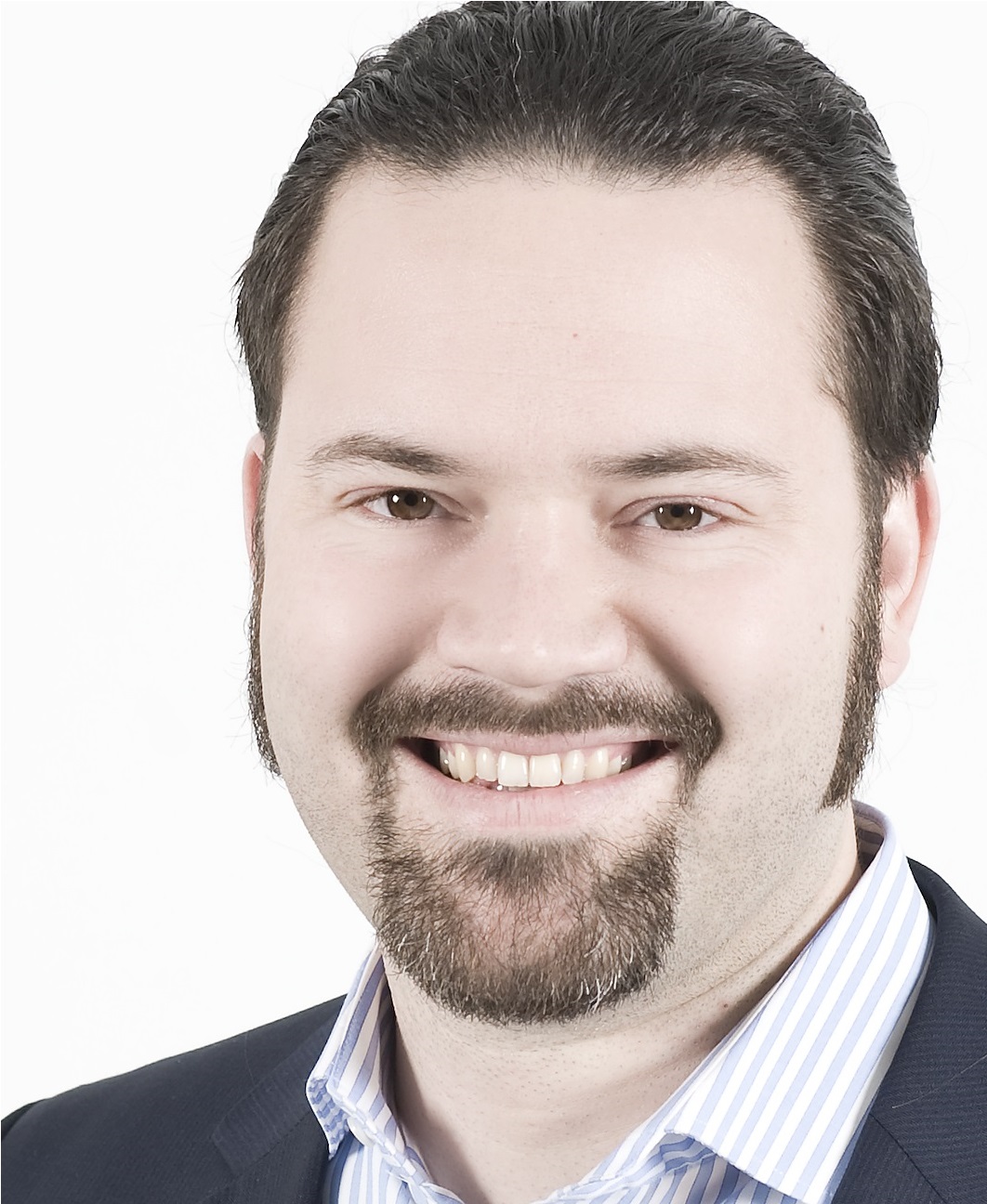
Speaker at Craftsmanship: Dr. Elmar Jürgens at the IF Forum
Dr. Elmar Jürgens is one of the speakers at our Craftsmanship workshop on June, 13th, 2013. His presentation will be about:
 Knowledge Transfer through Lightweight Reviews
Experiences from six years of working in a heterogeneous team
Here is the abstract of the presentation he will give for us:
Experience, competence, culture, quality and knowledge are the focal issues of the IF Forum on craftsmanship. How can we generate a software development culture that promotes mutual exchange of experience, competence and knowledge in such a way that the software quality will benefit?
For me, the answer is a culture of lightweight peer reviews. There is hardly any quality control mechanism the usefulness of which has been more thoroughly investigated than peer reviews. Moreover, they give us an effective tool for knowledge transfer. We have been using it for many years now. Regardless of this, many teams still do not conduct any peer reviews during their development phases.
In my presentation, I will introduce a lightweight approach for continuous code reviews where the programming and review phases are separate. This gives the programmer and reviewer respectively the chance to decide by themselves when, where and how fast they wish to work. In the development of the Open-Source programming tool ConQAT, we have been using these reviews for seven years in quality control of all code modifications. On a voluntary basis. We are convinced that this is the main reason why ConQAT is so easy on maintenance and so flexible. I will tell you about our experiences and will also report social challenges and best practices.
About the Speaker:
Dr. Elmar Jürgens is founder and associate of the CQSE GmbH. Elmar wrote his dissertational thesis at Munich Technical University about the discovery, consequences and handling of clones, for which he was awarded the software engineering prize of the Ernst Dehnert Foundation in 2011. As one of the founders of CQSE GmbH, he supports enterprises when they analyse and improve the quality of their software systems. He was among the five best speakers of the Software Quality Days 2013.
Moreover, Elmar is the co-chair of the Nineteenth International Workshop on Software Clones held in San Francisco this year. It is part of the “International Conference on Software Engineering”.
Elmar also initiated a very special community: together with other doctoral candidates of TUM and colleagues of CQSE GmbH, he organizes a regular “Tasting Group”. Whenever they meet, the “Tasting Group” tries out a new idea (in the form of an established scientific paper in the field of software quality) and a new taste (for instance in the form of testing wine or a special cuisine). To me, this sounds like a truly innovative concept!
RMD
(Translated by EG)
Roland DürreTuesday April 23rd, 2013
Strange World
In its new advertising folder for Thursday, April, 25th, Aldi sells one of those multimedia notebooks for 459.- €. To be sure, I would not want it even if it cost nothing. In the flyer, they say that “Medion® recommends Windows 8”, because it is so “nice, quick and fluid”. They also wrote: “Windows 8 with Windows® Experience Surface”. Well, there we have it again, the old Wintel connection between Microsoft® and Intel®. And then, they will again wonder why so many of these computers will remain unsold at Aldi.
On the back of the folder, I read that the 1,000 giga-bytes of hard drive now cost 69.99 Euros. A decade ago, such a thing was unimaginable. It seems that hardware still develops in record time.
Other than that, everything is in motion in the IT world. Microsoft tries to get to the top again. Apple does their own thing and Google will leave the HTML community. You can never really tell what Amazon is doing. IBM and HP seem to be reduced to the role of spectators, watching how the “big ones” are fighting each other. Dell starts a new approach and Japan’s Fujitsu is also still kicking around.
Yet, all of this will not really be important, because the future of IT technology will belong to the Asians anyway. For quite some time, companies with totally new names have been setting the pace technologically and conquering the markets.
From powerful CIO circles, I hear that Java is no longer fashionable – perhaps because of the purchase of Sun by Oracle. Other augurs tell me that c# (c sharp) probably is not the language of the future, either. I no longer know which way to turn and ask myself: what will be our programming language five years from now?
Pragmatists give a shrug of their shoulders and tell us that Phyton is a fashionable way of programming in the USA. That is something I really find hard to believe. People in Academica explain to me that, unfortunately, we neglected to further research and develop programming languages during the last two decades. Moreover, they relied on the Mozilla Foundation, but apparently, it is too weak.
These are the things I hear IT analysts say. To be sure, I have no idea how much technological competence they have, because I myself do no longer understand the current developments, either. Some way or other, IT became very complex and confusing – which went (and goes) along with such breath-taking speed that I was literally run over.
But I remember a time when Unix seemed to converge (X-OPEN). It was a good thing – even if, in the end, it did not work out. In those days, I liked programming with “c” and found it the best language of my programming life. To be sure, it was a language that suffered from a certain lack of clarity – but it was rather nice for development. And the results were efficient systems and solutions.
Since everything is so complex, I repress it. And I look forward to my small Nexus with Ubuntu. I might even get it as early as tomorrow. It cost me 250 Euros, value added tax included. This is probably also a lot too expensive, considering the additional devices – like my Airbook. It was registered on November, 23rd, 2010 – which means it is almost three years old already. It still runs like clockwork, but some way or other, I keep returning to the tablet. And then the mixture Ubuntu/Nexus might replace the Airbook in my creative everyday life …
Well, let’s wait and see …
RMD
(Translated by EG)
Roland DürreTuesday April 16th, 2013
Video: “Get in Shape!” Now Available (Beer&Informatics)
In our Lecture Series (Vortragsreihe)
“IF Technology – from Computer Scientists for Computer Scientists”
(also known as Beer&Informatics), Johannes Schmidt gave a presentation on March, 21st, 2013:
Get In Shape!
How Video games and activity control will get us off the sofa?
We made a recording of this beautiful and interesting presentation and filled two video tapes with it. Here they are – very much to be recommended!
In the first part of the presentation, Johannes Schmidt gives an overview of the history of activity control.
What is the difference between Sony EyeToy & Nitendo Wii and Microsoft Kinect?
The second part shows you how easy it is nowadays to program this technologically very challenging topic.
Including live programming!
Our next Beer&Informatics presentation will be on May, 16th, 2013. Again, the location is our Unterhaching office building.
The presentation will be about:
“Ubuntu & Android as Used in Business”
The practical test. – What exactly can the windows alternatives do? Features, problems and solutions. An overview.
Alexander Jachmann (IF-Tech AG) will tell us everything about the current state of affairs on that Thursday. And, of course, there will again be beer and meatloaf afterwards.
RMD
(Translated by EG)


