
Roland DürreSaturday May 30th, 2009
Twitter and the Punchcard
For several years, I worked a lot with punch cards. In those days, punch cards were totally innovative. They meant an end to those stupid strip cards and more flexibility. In punch cards, it was possible to insert some text of your own (which was absolutely impossible with the strip cards).
 The punch card in this picture (which, by the way, is taken from wikipedia) contains 40 symbols. Our punch cards were more modern than that and contained 80 symbols (columns in our “sheets”, also known as programming forms which we filled in with pencil and were given back as a package of stamped punchcards. What a programming method!).
You had to mark column 72 if the program continued on the next card. The text fields from column 73 on were reserved for numbering. Column 71 was reserved for something special (it might have been a commentary symbol or something of the sort – I no longer remember). The first 70 columns were the “useful symbols”, dependent on the language, sometimes further structured.
Willi StreitThursday May 28th, 2009
PowerPoint Crimes
Bill Gates probably never used it himself, but millions of MS customers around the world use PowerPoint. As the name says, it is supposed to powerfully bring presentations to the point. My personal experience as a counsellor, however, shows it to be almost exclusively a communication killer, a daily instrument of torture, a neglected chance.
I asked myself for a long time where this violation of a basically sound idea originated and whether at least Microsoft themselves use it productively. The message from Seattle, however, does not give much hope: there, too, a flood of grey-in-grey text overwhelms the PowerPoint victims.
So now it is my duty to tell the people who hired me to throw the PowerPoint slides they produced for a lot of money into the rubbish bin. If I were that unfeeling, the engineers, managers and politicians sitting opposite me would all be trembling. FEAR spreads wherever the security line PP is dismantled.
Roland Dürre
The Curse of Wysiwyg!
Wysiwyg is – as probably everybody knows – short for “What you see is what you get”. It was the great hype of 20 years ago and the death of the likes of symbol-oriented UNIX terminals (VT-100 compatible) and many other beautiful applications.
We at InterFace, too, were convinced that in the future everything had to be “wysiwyg”. Therefore, we developed first HIT/CLOU and then MagicHIT. For X windows and MS windows. With ODA-ODIF, and fascinating semantics in the documents. It was great, but economically spoken it was not (at all) a success.
We were deeply impressed by the first sensible desktop publisher – all “wysiwyg”! It was the “frame maker”. To us, Microsoft Word was the one and only “wysiwyg” editor for all possible situations of life, the product of the future – which is exactly what it really got to be.
Today, I see it differently.
Roland DürreMonday May 18th, 2009
Wikipedia and Me #8 – “Wikipedia and the Press” or “Humbug”
A close friend of mine pointed me towards the following text published in the SZ (presumably in the weekend edition of May, 9th and 10th, in the paper version only). Here is what he wrote:
Dear Roland,
this weekend I had a little time for browsing through the SZ. The two articles in the supplement caught my attention. There is this Irish student who faked a wikipedia entry – naturally, that put another damper on my enthusiasm about wikipedia…
The second of the articles mentioned in this email referred to blogging and is also very much worth reading. But first things first…
Here is the article by that Irish student (original Süddeutsche version):
Robert KulzerFriday May 15th, 2009
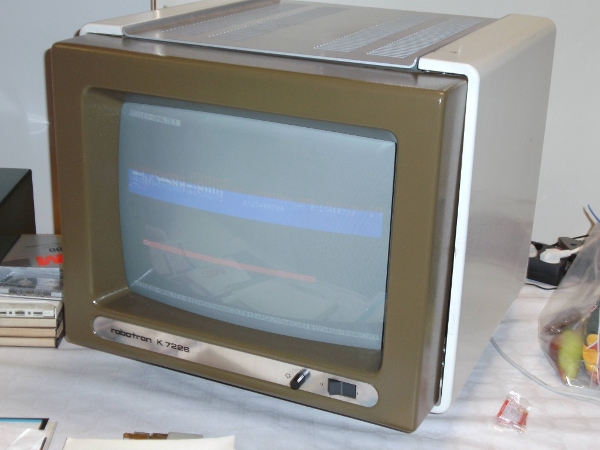
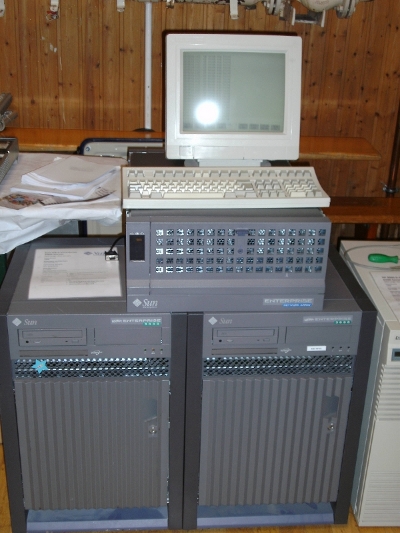
VCFE impressions (Vintage Computer Festival Europe)
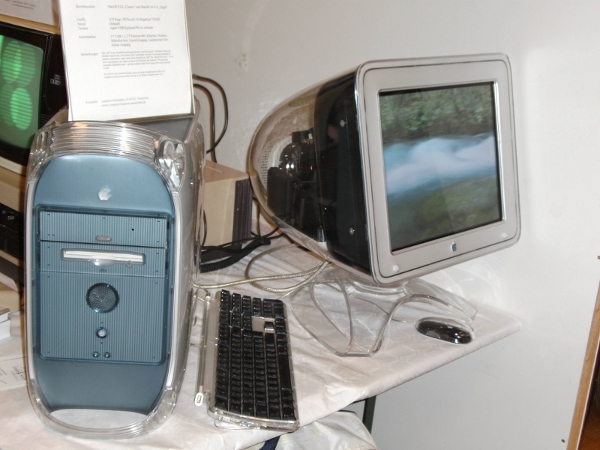
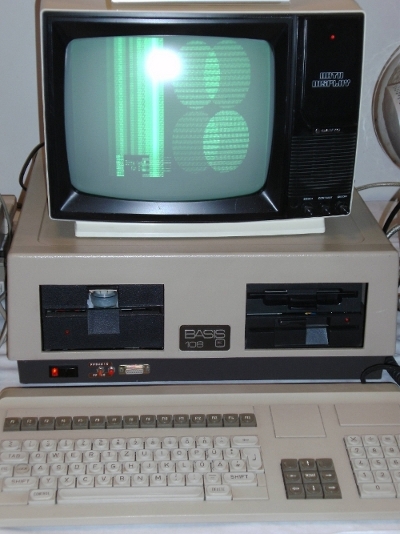
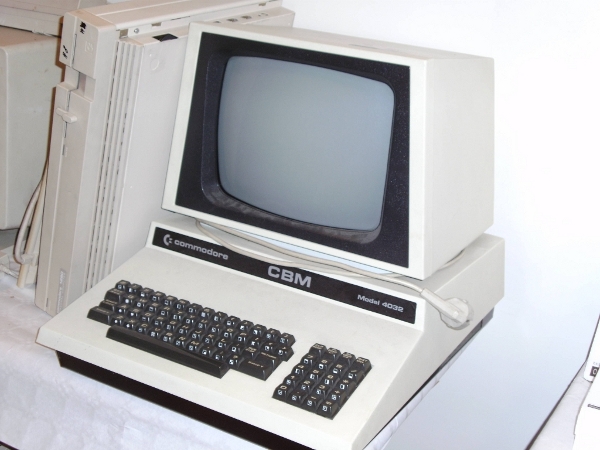
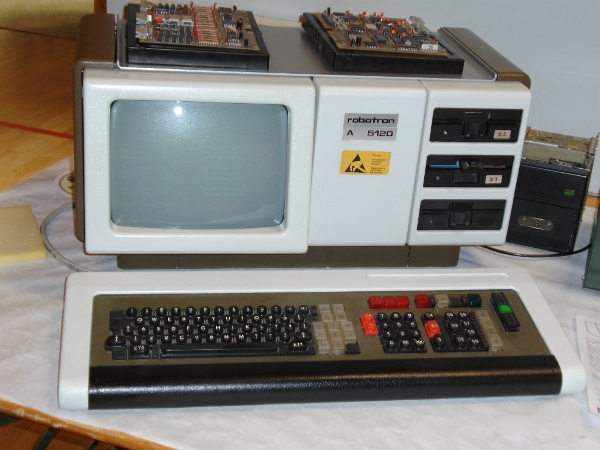
Between May, 1st and May, 3rd, Munich hosted the VCFE (Vintage Computer Festival Europe). I am sure you remember my Post announcing it.
At the end of this article, you can find a few snapshots taken by Roland Dürre. All these beautiful machines were displayed, most of them in perfect running condition.
The gentleman on the last picture is Wolfgang Stief. We all know him from the GUUG.
Rok
(Translated by EG)

Bernhard FindeissMonday May 11th, 2009
ScrumDay Munich: Ken Schwaber’s keynote
On May 6th, 2009 Munich saw its first “ScrumDay”, a new conference on Scrum. It paralleled “TeamConf”, a conference on “Microsoft Visual Studio Team System.
The day began with a keynote by Ken Schwaber, one of the inventors of Scrum, on “Scrum, but … “.
At first, he gave a brief introduction to the topic of Scrum and the underlying values (self, transparency, integrity).
Afterwards, he made clear software development in general (and Scrum in particular) is an empirical process, as it is necessary to periodically look at the project situation and make corrective adjustments. He compared it to an air conditioning system’s temperature sensor, which periodically checks the temperature in a room and then sets the system accordingly.
This approach is necessary because the complexity of today’s software development projects is generally too high to understand everything in detail. It’s sufficient to detail the next 4 weeks. In addition, approx. 35% of a project changes anyway, so too much planning in advance is a waste of time.
Bernhard FindeissThursday May 7th, 2009
Presentation on Retrospectives at ScrumDay Munich
Yesterday, Alexander Maisch and I were at Munich’s first “ScrumDay” to give a presentation on retrospectives.
We explained why agile methods rely heavily on retrospectives, and showed some best-practices for holfing them (most of it can be found in my two articles on retrospectives here and here).
In addition, we made a short detour to the topic “culture of criticism”.
We thougt the ScrumDay was a very successful event with many interesting presentations and even more interesting people.
Here are the slides of our presentation (currently only available in German):
[download id=”30″]Of course, this download can also be found in the “technical corner” of our document section.
Bernhard FindeissWednesday April 29th, 2009
Scrum and hyperproductivity Part 2 – or: Advanced Scrum
Roland DürreTuesday April 28th, 2009
(Deutsch) Noch ein Nachspiel zu “Ethik jenseits von Humanismus”
Roland DürreSunday April 26th, 2009
(Deutsch) Feiern Sie mit uns: 25 Jahre InterFace!


