
Roland DürreFriday October 4th, 2013
“Careful: Email” – First Video Recording Available – of IF Academy from September, 19th
On September, 19th, we welcomed our guests Hans Bonfigt and Marc Haber of redoxSystems at the IF Forum. The topic was: Careful: EMAIL! Their two courageous and personal presentations, they not only informed us about the
“History, Basics, Spam&Virusses”, but also introduced “Concepts for Operating Your Own Secure and Reliable Mailservers”.
In particular, they also reminded us of the perhaps fundamental threats we all face these days.
After the presentations, we had an extremely lively and fruitful discussion. And our guests went back home with a sense of awareness and yet content..
As (almost) always, we made a video recording of the two presentations. You can view the basic parts of the presentation by Marc Haber on youtube.
Both this video and the one by Hans Bonfigt were made and produced by Lukas Ziegler. The part done by Hans Bonfigt will be put online shortly.
RMD
(Translated by EG)
Roland DürreWednesday October 2nd, 2013
Please Note: New Time!!! Third IF Forum in 2013 with Roberto Simanowski on October, 25th, 2013
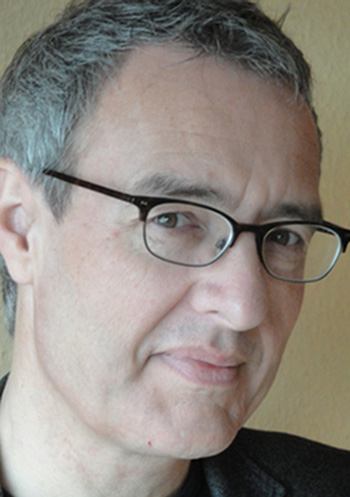 Our speaker of the third and last big IF Forum in 2013 is
Professor Dr. Roberto Simanowski!
He was going to give a presentation about:
Jean Paul, his witticism, the post-modern area and the new media.
The presentation was going to take place on November, 7th. For several reasons, we had to change the date. But be not afraid: the speaker will be the same.
On Friday, October, 25th, 2013 (please note – rescheduled!), Roberto Simanowski will tell us about a Jean Paul who, considering the times he lived in, was rather autonomous, revolutionary, in fact, almost anarchistic. Afterwards, he will give his opinion on the following current topic:
Big Data and Transparent Society: NSA, Self-Tracking and the Internet of Objects.
Here is what he will provide us with:
- Big Data being the “crude oil” of the 21st century also raises the questions of environmental pollution and of an informational sustainability concept.
- Both politicians and citizens refusing to talk about the NSA affair not only points towards non-existent problem awareness, but also to a camouflaged complicity.
- The “cold civil war” does not take place between the citizens and the secret service/surveillance society, neither does it happen between individual citizens. It actually happens inside every citizen. Databases replace stories as a form of understanding the world and yourself. The algorithm becomes the psycho therapist. It neither tells the patient what it found out, nor asks if it may use what it found out
About the speaker:
After having studied literature and history, Roberto Simanowski received his doctorial title in 1996 at the Friedrich-Schiller University of Jena with a work on the mass culture around 1800. Following his time as a scientist at Göttingen University, he was a visiting scholar at Harvard University (1998-2000) and the University of Washington (2001-2002), as well as representing the chairholder for media sciences and cultural theory of digital media at Jena University.
Between 2003 and 2010, Roberto Simanowski worked as an assistant professor at the Department of German Studies of Brown University in Providence (USA). He has now held a professorship at the seminar of media sciences of Basel University since 2010.
In 2011, he habilitated in media sciences at Siegen University with a work about digital media. He is the founder and editor of the online journal for art and culture of digital media dichtung-digital.org.
Here are some of his publications in the field of digital media:
- Text machines – kinetics poetry – interactive installation. On understanding art in the digital media (Transcript 2012)
- Digital Art and Meaning. Reading Kinetic Poetry, Text Machines, Mapping Art, and Interactive Installations (University of Minnesota Press 2011)
- Reading Moving Letters: Digital Literature in Research and Teaching. A Handbook (Mhg; Transcript 2010)
- Digital Media in our adventure society. Culture – Art – Utopia (Rowohlt 2008)
- Interfictions. About writing on the internet (Suhrkamp 2002)
- Digital literature: forms and ways of new literature (Hg., DTV 2002)
- Digital Literature (Hg., Text & Kritik Oktober 2001)
Note:
This IF Forum will be held in our headquarters building at Unterhaching, in the seminar zone under the roof. We start at 18.00 hours. We look forward to welcoming our guests! As always, you can register for the IF Forum via e-mail.
RMD
(Translated by EG)
Roland DürreMonday September 16th, 2013
Bi-Weekly News #34: IF Akcademy / IF-Forum – Thursday, September, 19th, 2013 – Careful! – E-Mail!
This week, the time has again come: on September, 19th, 2913, at 18:00 hours, there will be another interesting IF Forum as part of our IF Academy. You can hear an exciting presentation about:
Mailserver & Mail-Client (Careful E-MAIL!)
“History, Spam&Virusses” or “concepts for the secure and reliable operation of a mail server”
(Hans Bonfigt / Marc Haber – redoxSystems)
And here is the good news:
 Marc Haber will also come.
By now, we can verify that, besides Hans Bonfigt, Marc Haber will also be there. The two of them are experts when it comes to the technology and the depths of our so often-used medium email. In fact, with these two persons we have a couple of “supremely knowledgeable” guests who are both extremely competent and radically critical, since they are “chips of the old block”. Both of them have the special talent of coming up with simple explanations even when the topic is complex. I know them both personally and they will give very interesting reports as co-speakers.
For instance, they will deduce logically that an enterprise basically cannot avoid having its own mail server. They will also show how easy it is to install said mail server and how cheaply it works if you use free software.
Simultaneously, they will give a quasi “first-hand account” about the rather “common” concept of “SINA-Boxes” potentially abusing your civil rights on a daily basis without your having even the slightest chance of so much as noticing it.
Since currently this topic is rather much-discussed, we promoted the IF Academy presentation to become a “special IF Forum”.
Consequently, this coming Thursday evening is another very good opportunity to introduce InterFace AG to our friends, partners, customers and all interested persons, as well as to new colleagues.
So here I am asking you all to support the IF Forum and make it a lively event. I will also be very happy to welcome participants who failed to register on time or decide to visit spontaneously.
For details and registration, click here: LINK !
I look forward to welcoming many visitors!
RMD
(Translated by EG)
Roland DürreMonday August 12th, 2013
Technological IF Forum – Mailserver and Mailclient –September, 19th, 2013
On September, 19th, 2013, at 18.00 hours, we of the InterFace AG invite you for another interesting presentation in our “IF Academy” series:
Mailserver & Mail-Client
“History, Basics, Spam&Virusses” or “Concepts for a Private Secure and Reliable Mail Server”.
(Hans Bonfigt / Marc Haber – redoxSystems)
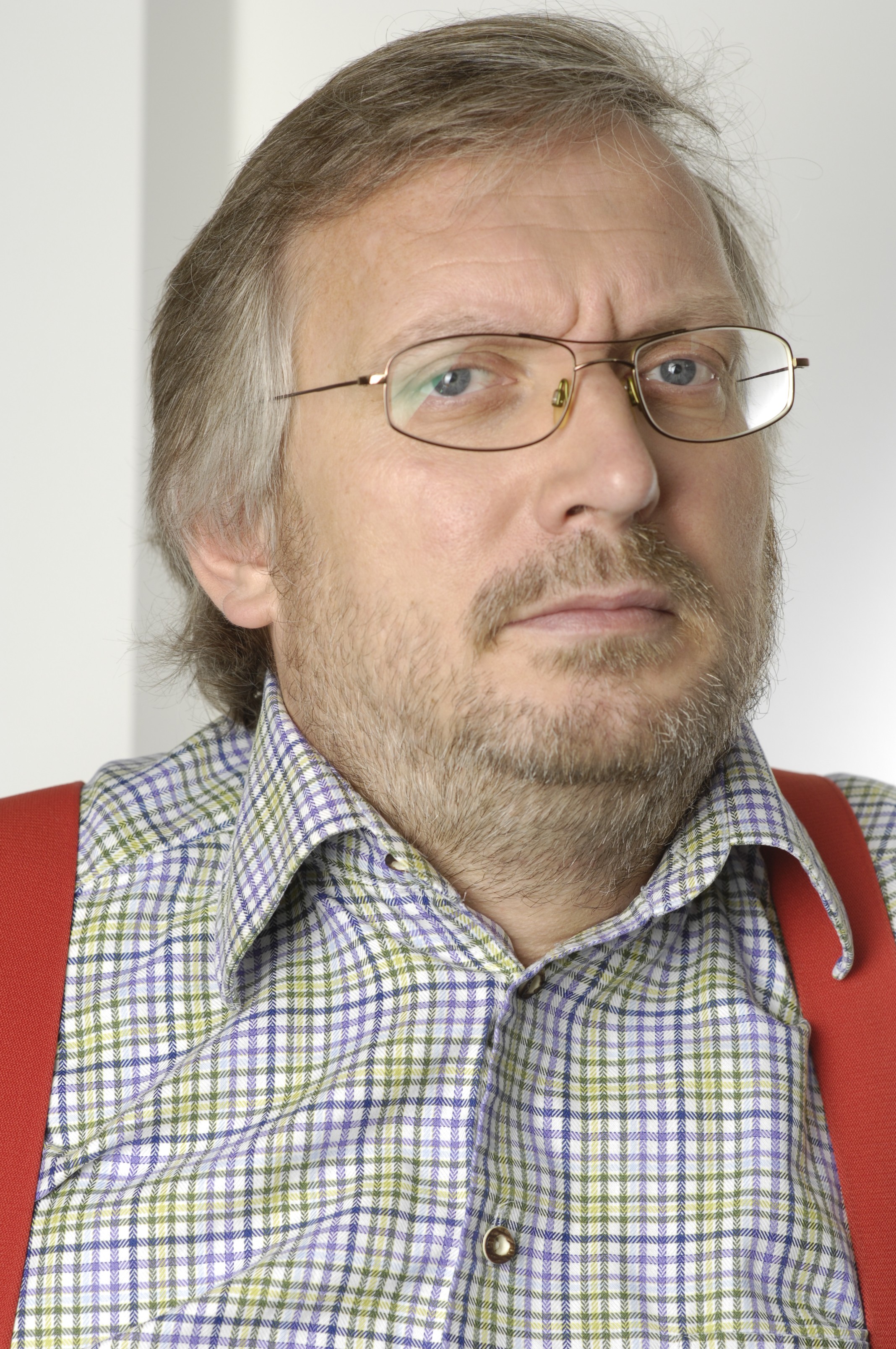 Hans Bonfigt will be our speaker. We are optimistic that his co-author Marc Haber can also come. After the current events and in times of PRISM and Tempora, the timing for this presentation about email and mail in general is just ideal. Consequently, and because we have two of the best experts in the field with us with Hans Bonfigt and Marc, we decided to make a technological IF Forum of this IF Academy event and invite the extended circle.
Every day, we send and receive many emails. It is our totally normal routine and we might very well often be quite thoughtless about it. The underlying technology seems to be a matter of course, even though, more often than not, it is nowhere near as easy as it looks. Hans Bonfigt will introduce the deep secrets and abysses of email traffic and the underlying technology. Here is his summary:
I will give you a historical introduction to the topic “mail”. You will get to see the roots where rats like spammers, viruses and other parasites feast. Also, I will give a clear differentiation between the terms mail server and mail client. This distinction is important, because a mail client is also among those devices you can host centrally. Eventually, I will show you two operating concepts.
My presentation will be structured as follows: warming-up, basics, introduction (around 20 minutes), actual operating concepts (less than 30 minutes) and live demonstration (10 minutes). This should leave enough time for a discussion.
As always in our IF Forum, we will have our “happy hour” after the discussion. I am quite certain that there will be plenty of exciting material to discuss, especially after this kind of presentation.
About the Speaker:
I first met Hans Bonfigt through the IF blog. Hans is a passionate programmer and IT technologist. He actually learned his craft from scratch and consequently also knows all the “camouflaged” levels of many systems. You will find various articles and comments written by him in the IF blog. They are always straight to the point. He ruthlessly criticizes where the development goes astray and where technology is poorly executed. Also, he points directly towards mistakes frequently made. His outstanding ability is to put things in a nutshell.
Registration:
As always, the presentation will be held in the seminar zone under the roof of our Unterhaching headquarter building, starting at 18.00 hours. We look forward to welcoming our guests! For registration to this IF Forum, send an E-Mail.
RMD
(Translated by EG)
Roland DürreWednesday July 24th, 2013
Crowd Sourcing & BahnScout
Last Thursday, the “IF Academy” travelled to the TUM at Garching where we were welcomed as guests. In the afternoon, there was a presentation on Crowd Sourcing at the Konrad Zuse lecture hall.
Felix Köbler gave an outline of how it works and introduced “BahnScout” as a good example. ”BahnScout” is short for the application of an APP providing clean and functioning railway stations. We made two video recordings:
Part 1: Crowdsourcing
Part 2: BahnScout
Enjoy!
RMD
Roland DürreThursday July 18th, 2013
Beer & Informatics – July, 18th, 2013 -– Felix Köbler – “Crowdsourcing & RailScout”
Thursday, InterFace Event at TUM:
Technological Presentations for Computer Scientists
July, 18th, 2013 – earlier than usual: 4 p.m. at TUM!
The next presentation in our series IF Academy – Technological Presentations 2013 will be on July, 18th – as usual on a Thursday. This time, however, we will not remain in the Unterhaching InterFace building. Instead, we will go on tour with our circus and the event and Happy Hour afterwards will be at TU München in Garching. The TUM has reserved the lecture hall “Konrad Zuse” for us.
 The speaker if Felix Köbler. Felix spent a huge part of his computer science training and research at TUM.
He will tell us what totally new ways of thinking and opportunities have already been realized through the internet and the corresponding technologies – and also how it might go on from there. His topic will be:
Crowdsourcing & RailScout
An introduction and selected delicacies and crowdsourcing solutions for safe and clean railway stations.
Abstract provided by Felix:
The first part of my presentation will give you an outline of the current technological and socio-technological developments. For example the adoption and use of ubiquitous and mobile technologies which not only are immersed in our daily lives but also make totally new applications possible.
One promising and totally new application is crowdsourcing. It means the outsourcing of tasks or value-creating activities to an un-defined group of voluntary users by an enterprise or institution.
I will discuss the potential and problems of these innovative concepts using various examples beyond the widely known applications and initiatives such as Wikipedia and OpenStreetMap. One of the specialties of crowdsourcing is the extension of existing job-sharing models by the factor motivation, which is often used for applying gamification – that is the use of game elements in non-game contexts – in its socio-technological application.
The second part of my presentation will be about an actual solution and application: “RailScout”, which belongs to the area of the so-called “Mobile Crowdsourcing” as made possible by the technological development in the field of mobile end devices. “RailScout” is a smartphone application for passengers and gives them the chance to call in problems, like technological or maintenance damage and littering at railway stations and infra-structure buildings, directly to the responsible administration.
My presentation is meant to give you both the current results gained from the experiment still under way and diverse insights in to the craftsman-like process (Participatory Design/User-centered Design) and conceptual challenges in the field of gamification during the problem solution development phase.
The Speaker
Felix Köbler is a doctorial candidate at the chair for Business Informatics of Munich Technical University. He holds a B.Sc. and an M.Sc. in Information Systems/Business Informatics of Munich Technical University and studied, among other places, at Shanghai Jiao Tong University, Shanghai, China and Technical University of Tampere, Finland and University Tampere, Finland.
His research is mainly on distributed software engineering, social networking, gamification, persuasive technologies and ubiquitous and mobile computing with a strong focus on human-computer interaction. The results of his research has been published in international technological journals, such as AIS Transactions on Human-Computer Interaction and International Journal of Human-Computer Interaction (IJHCI), as well as presented on international conferences, such as the International Conference on Information Systems, European Conference on Information Systems and ACM SIGCHI Conference on Human Factors in Computing Systems.
Besides having established RailScout, he is also active in the fields of User Experience Design and strategic advice, as well as in Business Development at “FELD M” , which is a counselling company for digital marketing. Also, he works as a freelance counsellor.
Here is some information on the event series
At two-month intervals, we invite people to listen to a presentation with some technological, leader-specific or entrepreneurial topic. Our invitations go out to all interested computer scientists living in the area and, of course, especially to all our colleagues at InterFace AG.
The presentations are meant to hand on innovative knowledge and special experience from practice for practice, following the idea of craftsmanship. Our focal point and content is in the fields of programming as a German engineering feat, modern basic know-how, future-oriented technologies, insider knowledge, changes in established technologies, experience from project such as management and leadership and much more.
Usually our speakers take 30 minutes for their presentation, then you have 60 minutes for discussion. And afterwards, there will always be a “Happy Hour”.
The events take place on every third Thursday of the uneven months of the year.
RMD
(Translated by EG)
Roland DürreTuesday July 9th, 2013
Art and InterFace …
A software solution provided by InterFace was rather helpful for the media artist Wolf Nkole Helzle when he did his project “Homo universalis”. Wolf Helzle first tested said software during our technological IF Forum “Craftsmanship” on June, 13th. If you want to see the results, including a brief introduction, just click on Video. Now the software made its first big appearance in Münsingen. And our system worked just fine!
Here is the press release written by the artist after his project was finished:
P R E S S R E L E A S E
HOMO UNIVERSALIS – the face of the bio-spherical area is available!
Media artist Wolf Nkole Helzle used the portraits of 1,000 visitors for his project „Homo universalis“ during the INTERIM Biennale at the Altes Lager Münsingen.
The artistic event right in the middle of the bio-spherical area “Schwäbische Alb” lasted 16 days and the temporary studio of Wolf Nkole Helzle was open daily from 11.00 to 18.00 hours. Every evening, he did the computing with software specially designed for the purpose in order to find out what the current state of affairs with the portrait was.
Those 16 days were filled with exciting discussions about human nature between individuality and collectivism, between individual image and the total concept. There were many questions and assumptions about how the final picture was to be generated, about the prevailing significant characteristics, about the face and age of this bio-spherical creature, about the percentage of those wearing spectacles and why people were so open and friendly with him.
First and foremost, Helzle took individual photographic portraits of 1,000 visitors. They were all directly printed. After having been signed and numbered, the portraits were given to the persons shown on the pictures. They were of all age groups. Copies of all photos were also pinned to the wall of the interim studio, which filled up as time went by, giving an overview both of the visitors and the parties involved with the final portrait at equal parts.
The software specially designed for this project by InterFace AG of Unterhaching near Munich will now make it possible for the internationally active artist to unite entire regions with hundreds or thousands of persons in one face.
You can buy the face of the bio-spherical area in various formats (www.helzle.com).
Münsingen, July, 8th, 2013
Social Media Art Wolf Nkole Helzle
Schloßberg 1 D-72525 Münsingen
fon_+49 7384 959 72 89
mobil_+49 170-188 71 40
mail@helzle.com
www.helzle.com
www.interactive-image.org

On this picture, you see the installation of the Homo universalis in building BT23 of the Altes Lager with the individual portraits and projected final portrait (photo by Luca Siermann)

Helzle´s interim studio during the Biennale (photo by Claudio Hils)

“Homo universalis – we give a face to the bio-spherical area”
by Wolf Nkole Helzle, 2013
RMD
Roland DürreSaturday July 6th, 2013
2nd IF FORUM 2013: “Jean Paul & Hypertext”
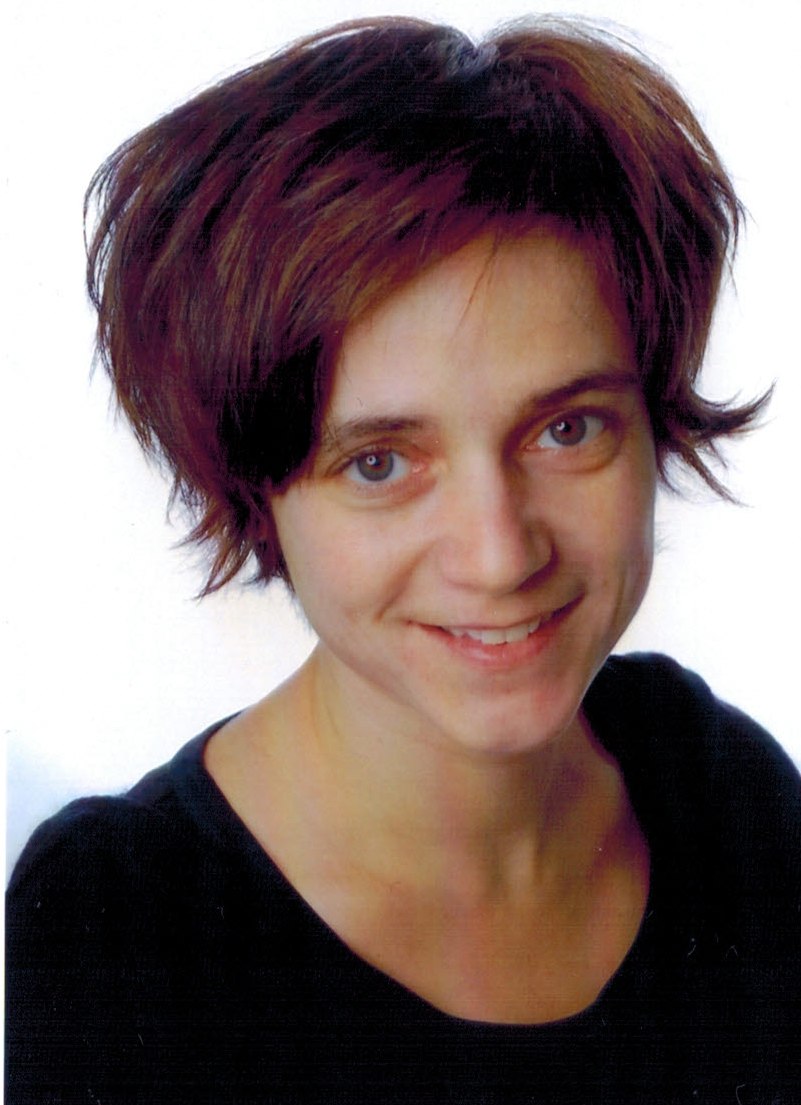 Frau Dr. Annina KlappertFrau Dr. Annina Klappert
is our speaker at the second IF Forum of 2013. She will tell us about:
Jean Paul and Hypertext
On July, 11th, 2013, she will give an entire IF Forum presentation at our Unterhaching InterFace building.
Here is a short outline:
During the 20ieth century, the data volume kept increasing – and along with it the problem of data access.
Well, considering when he lived, Jean Paul actually was quite a “professional” when it came to collecting data. Also, he was already confronted with the same problems, though on his own scale. Using his special excerpt technology, he not only collected knowledge, but also linked it in an intelligent way.
So we can actually ask today as Jean Paul asked then: how can data be stored and linked?
And how can we acquire new knowledge from those data?
A short glimpse at the aesthetics of Jean Paul can show us his concept of wit and also teach us possible linking technologies. On the whole, the method of writing as theoretically overloaded in Jean Paul’s ‘pre-school of aesthetics’ and practiced in his poetic works can show us why today’s hypertext systems are so helpful, how they function in their structuring of knowledge and what are their challenges.
About the speaker:
Frau Dr. Annina Klappert wrote her dissertational thesis at Bonn University on: “Die Perspektiven von Link und Lücke. Sichtweisen auf Jean Pauls Texte und Hypertexte” – The Perspectives of Link and Gap. Views on Jean Paul’s Texts and Hypertexts. Between 1999 and 2004, she worked at the Köln Forschungskolleg SFB/FK 427 “Medien und kulturelle Kommunikation”.
Frau Klappert is currently an employee at the chair of General and Comparative Literature at Erfurt University. Her interests and special fields of research are: virtual theories, hypertext theories, slip boxes as knowledge technology and digital practice, as well as modern literature.
Registration:
The If Forum will take place at our Unterhaching headquarter building in the seminar zone on the top floor. We start at 18.00 hours. We look forward to welcoming our guests! As always, you can register for the IF Forum by sending an E-Mail.
Here is an overview of the three “Jean Paul presentations” of the year 2013.
A Visit to the Present
Jean Paul presentations at the IF Forum
In 2013, our IF Forum will be about how modern Jean Paul’s topics and ideas actually are.
With presentations on entrepreneurship, hypertext, wit and new media, we want to project new perspectives and questions to the Here and Now. Why don’t you join us?
Jean Paul the entrepreneur
Jean Paul was one of the first German authors who actually made a living out of his writing. Mind you, he did so regardless of a start under very difficult circumstances. He visited the intellectual centres of his time: Leipzig, Weimar, Berlin – and his books were a success to make Goethe envious. When Jean Paul married, even the Prussian Queen invited him for tea and gave him a silver tea set.
Jean Paul did not owe his ascent and success to accident, but to careful planning with entrepreneurial instinct. Even when times turned bad and the Napoleonic wars devastated half of Europe, he still was able to maintain his position. The way Jean Paul combined success and sustainability looks still remarkably modern today. .
Our speaker Bernhard Echte, scientific literature expert, exhibition organizer and publicist, worked many years as director of the Zürich Robert Walser archive. Today, the entrepreneur has his own publishing company: “Nimbus, Kunst und Bücher”.
The presentation will be on: April, 11th, 2013 (Thursday) | Starting at: 18.00 Hours | At InterFace AG, Unterhaching
Jean Paul and Hypertext
Even before he called himself Jean Paul, young Johann Richter read everything he could lay hands on: hardly any of the books actually belonged to him. Whatever he read, he excerpted in notebooks. In those same notebooks, he also commented ideas currently coursing through his head. Jean Paul added catch phrases to his entries, now called tags. In this way, he created a huge private encyclopedia. It was structured like a modern database and was the foundation of his literary work. Only through his database, Jean Paul was able to realize his unique style. A style that is at the same time erratic and precise. He managed to turn the financial misery of his youth into a virtue the result of which surprises us to this day.
Our speaker Annina Klappert, is a scientist at the seminar for General and Comparative Literature at Erfurt University. Her dissertational thesis is a structural comparison of Jean Paul’s texts and hypertexts. Her scientific research is mainly concerned with media, references and virtual reality.
The presentation will be on: July, 11th, 2013 (Thursday) | Starting at: 18.00 Hours | At InterFace AG, Unterhaching
Jean Paul, wit, post-modernism and the new media
He was a “God-Denier” and an “intellectual disintegrator”, a fervent cosmopolitan, sceptic and joker. His educational theory “Levana” is highly praised, since it advertises wit and irony against the strict no-nonsense attitude of Fichte’s oratory as the basis of a healthy personality. In his policy of “the third person between Germandom and Bonapartism”, you can anticipate the post-modern indecision between the opposing poles of “the truth”. With his aesthetics of straying, he already uses the interruptive and jumpy hypertext aesthetics of the internet. Who was this man who hardly ever left home and still intellectually and mentally was way ahead of his contemporaries?
Our speaker Roberto Simanowski is professor for media sciences at Basel University. He is concerned with the changes in writing caused by the digital era and publishes the online journal dichtung-digital – journal for digital aesthetics.
The presentation will be on November, 7th, 2013 (Thursday) | Starting at 18.00 Hours | At InterFace AG, Unterhaching
RMD
(Translated by EG)
Roland DürreFriday June 28th, 2013
Now Online: All IF Forum Craftsmanship Videos!
A few days ago, I put the first two IF Forum presentations (Vorträge) – held by Wolfgang Menauer and Kristin Block – online. The same is true for the “Software Development Unit” (Softwareentwicklungsblock) by and with Bernhard Findeiss and Dr. Elmar Jürgens.
Consequently, only the last two presentations are still missing. Here they are:
Bernd Fiedler made us understand in an amusing way what exactly it means to be a “master craftsman”:
And then there was Reinhard Büttner! He gave a review of all the day’s findings and added his own experience in the most suitable way.
I already sent the work of art by Wolf Nkole Helzle created during the day as my way of saying “Thank You ” to all speakers and guests.
Let me, once more, thank all the artists and speakers. And I would like to specifically thank all our guests. They gave me so much feedback saying what a wonderful event it was. This gives me courage to continue. We already decided upon a topic for 2014:
Self-Organization in the sense of
“Self-organization and self-control as a formative model for enterprises and projects”!
As always, I look forward to reading your feedback.
RMD
(Translated by EG)
Roland DürreWednesday June 26th, 2013
Bernhard Findeiss and Dr. Elmar Jürgens at the IF Forum (Video)
The work of art by Wolf Nkole Helzle which was created during our IF Forum CRAFTSMANSHIP has already been submitted to all of you as a form of saying “Thank You” (Danke Schön).
Besides, the first two IF Forum presentations (Vorträge) by Wolfgang Menauer and Kristin Block were made available live by me a few days ago. Today, you get the next two!
Firstly, we see Bernhard Findeiss, “Technology Evangelist” at InterFace AG. He tells you about “a day in the life of a software craftsman”:
Dr. Elmar Jürgens of CQSE reports about his own experience and the good team results with Peer2Peer reviews in the interest of quality:
Thanks to Bernd, Elmar and Friedrich!
RMD
(Translated by EG)


