
Chris WoodFriday April 30th, 2010
Ruining Our World
The last 10,000 years have seen a fairly nice stable climate on Earth, during which the human race has expanded from one million to 7000 millions. This period is called the Holocene. We are now entering the Anthropocene, which due to humans will not be so comfortable. The “New scientist” of 27.02.2010 reported on a conference of 28 environment experts, concerning how close we are to ruining things completely. Besides climate, they considered eight other aspects. The following is a summary of their tentative conclusions, with some comments from me. It starts with the only positive case and finishes with the most urgent.
Werner LorbeerThursday January 7th, 2010
Desert Tec #006 – København
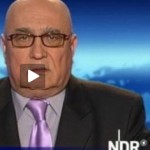 The result of Copenhagen is a disaster. Christoph Lütgert calls the USA an ecological villain and the industrial nations the axes of evil. Politics have failed miserably. When it comes to protecting our climate, we, too, are a total failure every day. Our children and grandchildren will curse us.
You can read this comment on the Tagesschau.de, commentary in the NDR “Tagesthemen”.
Since Cassandra is always correct – at some time and in a way – he, too, is probably correct.
ersonally, I want to introduce another position.
Werner LorbeerSunday December 20th, 2009
Desert Tec #003 – Paradise Now
 “Copenhagen was a failure”. Huge pains were taken to reach a global agreement of the greatest industrial-political dimensions according to the slogan “two degrees non plus”. The end of the coal, petrol and gas ages was going to be just as revolutionary as the end of the steam engine had been. What motivated the parties concerned was the fear of the planet’s own dynamics. After all, there is a good chance that the planet will regulate itself and thereby cut deeply into the habitat of expanding homo sapiens – “sapiens”.
Based on historical experience, it does not seem such a good idea to try and find a solution based on contracts. Pacta sunt servanda! And if not? Technological advance has shown itself to be more long-lived – the age of the windmills lasted 3,000 years during which many empires came and went. Consequently: it seems more promising to design and apply new CO2-neutral civilization techniques than to talk about certificates.
Roland DürreMonday November 16th, 2009
War is the Father of All Things!
A short time ago, in my article “Nano Technology and Ethics”, I outlined a few ethical questions and requirements that should be discussed before new technologies are promoted or installed. In my opinion, this kind of discussion could be extremely helpful if we wish to have a responsible attitude as we introduce new technologies.
Whether a new technology is more detrimental than beneficial in the long run can usually not be determined at such an early stage. Consequently, new technologies must be initiated and promoted. Still, an early ethical discussion is necessary, because it might pave the way for the introduction of reasonable rules and perhaps even help to prevent collateral damage.
That is how I felt. But now I was reminded of the old saying that
“War is the father of all things”!
Roland DürreFriday October 9th, 2009
Great Numbers? Great Fear? Great Irrationality?
Or else: The Darwinian year moves toward its end!
In the year 2009, I was able to tackle the matter of evolution to some extent. I heard and read great numbers.
Here are some examples.
- Two billion years ago, the earth first had an environment where life could exist.
- 1.8 billion years ago, the first forms of life existed.
- That means the development from “unanimated” to “animated” only took 200 million years.
- Humans first evolved maybe around 200,000 years ago. It is a matter of definition.
- Language, literature, and a little culture and technology probably started 20,000 years ago. That, too, is a question of how you define it.
- I might live to the age of 80.
From my perspective, two billion, 200 million, 200,000 and 20,000 are forever. These are purely virtual numbers. I can neither touch, nor taste, nor feel them.
Roland DürreWednesday July 22nd, 2009
Absurdities – Energy-Saving Electronic Bulbs – Environment-Friendly Electronic Motors – Long Jeans or Short Jeans?
Soon the time will come when you will no longer be permitted to buy normal electronic bulbs in the European Community, only Energy-Saving Bulbs (or halogen lights). And there will also be a law forcing you to use exclusively environment-friendly electronic motors.
The underlying concept is that a lot of energy can be saved by decree.
Here is my contribution:
 In order to produce a pair of jeans, you allegedly (SZ) need 8,000 litres of water. That is much, probably too much.
Now let us assume that you need only a third of the material you would need for a proper pair of jeans if you produce a pair of shorts in the same jeans material. That means you would only need a third of the water to produce that material. (In fact, if you take the extremely short jeans of my great love, you could save even more).
Consequently, let us make a law. In summertime, you are only permitted to wear shorts made of jeans material! That would save almost 5,400 litres of water per pair of jeans!
With this example, I only want to show how absurd our efforts are. We worry about the symptoms while the core of the problem is elsewhere. We are not even prepared to accept where the real problem lies.
That gives me pause, which is why I will now finish (at least with this article).
RMD
(Translated by EG)
Roland DürreSunday July 12th, 2009
Sustainability – Firstly: On Sustainability in General.
I just heard an interesting Podcast in Bayern 2 – Ethik als Erfolgsfaktor – Führungsethik in Zeiten der Rezession (Ethics as a Factor of Success – Leadership Ethics in Times of Recession) of July, 12th, 2009 (it was broadcast this morning at 8.30). It contained a lot of interesting statements and evaluations. One of them was:
“Not thinking of catastrophes as a possible scenario is neither economically sensible, nor ethically acceptable”
To me, this sounds plausible. I rather like that statement. It complements with sustainability. And sustainability as a value is very important for me. “Nachhaltigkeit”, however, is a term that includes many facettes and is hard to define.
Roland DürreMonday May 25th, 2009
(Deutsch) Kurzbericht Darwin II an der TUM – Interessante Vorträge zu Evolution und Innovation an der TUM im Juni!
Chris WoodMonday May 18th, 2009
Chris Wood on Darwin
Lamarck
Regarding Roland on Darwin, I am happy to see Darwin honoured in the blog. But it does not do proper justice to Charles Darwin to put him “next to Lamarck”. There were various ideas floating about, regarding evolution before Lemarck’s, in particular from Charles’ grandfather Erasmus. They were surely discussed at the Lunar Society. It was well known that animals changed a bit from generation to generation. The English country gentry were particularly interested in breeding the dogs and horses they needed for chasing foxes. Early geologists, particularly William Smith recognised that the world was much older than the Bible supposed, and that different animals had existed at different times. mehr »


