
Roland DürreThursday November 12th, 2015
The World’s Biggest Project?
Today (November, 12th, 2015), there was an SZ article about a mega project in the “knowledge” category. It was titled: “India links its rivers” and written by Robert Gast. Let me cite:
India links its rivers
In order to distribute the water reserves of the country more evenly, they plan to build 30 channels and 3,000 water reservoirs. It would necessitate moving half a million people.
As early as December, the Indian Government wants to promote the realization of a gigantic infra structure project. Over the next years, they plan to build 3,000 water reservoirs and 30 channels with a total length of 15,000 kilometres. For instance, they want to connect 37 rivers on the sub-continent. The project, which is assumed to cost more than 150 billion Euros, is a reaction to the fact that there is extremely much rain in some regions of India while other regions have extreme aridity. The west and north of the country regularly fight against floods, while the districts in the east and south of the sub-continent again and again suffer under the drought.
 Consequently, India started as early as ten years ago making plans to connect the great rivers of the country. Also, they want to pond rivers, especially in the Himalaya region. This is how engineers want to store excess water and then transfer it to dry parts of the country. They plan to re-route 174 billion litres of water each year. Farmers could then work their fields in times of drought, as well, says the Indian Authority for Water Development – who promote the channel building project. On top of this, they also plan to install water-driven power stations with a total capacity of 34 gigawatts.
However, the project meets resistance among the citizens. According to a study done by Upali Amarasinghe of the International Water Management Institute of 2008, more than half a million persons would probably have to be relocated. Environmentalists think the project intervenes too strongly with nature. For instance in the tiger reservation of Panna. After all, they plan to pool the river Ken and re-route it to merge with the Betwa river through a 230 kilometre channel as part of the channel project. Yet this would cause the flooding of parts of the national park and 1,600 families would have to move. Additionally, the 32 tigers living in the reservation would become totally isolated from other preserved areas. Regardless, the Indian government is determined to run the project. In September, they already inaugurated a new waterway between the rivers Krishna and Godavari in the south-west of India.
For me, this article was interesting for several reasons. Firstly, this project might well be the world’s biggest project. Secondly, there are many similar projects all over the world. They all want to facilitate access to water, initiating huge geographical changes. Because water gets more and more dear. And perhaps India does not really have a choice if they want to cope with the expected climate changes like long droughts and extreme amounts of rain.
Except that, to me, this all does not really sound sustainable in terms of our planet. Perhaps India and all these many other countries planning similar projects can postpone their collapse by a few decades. But in the end, it reminds me a little of the “thinking in terms of the next three months” as practiced by the concerns. Except that, in politics, the three months are a little longer and perhaps closer to a five-year period.
Perhaps we should, along with these projects that might well be necessary, try to heal the worst destructions we subjected our planet to during the last hundred years?
RMD
(Translated by EG)
P.S.
About the author:
Robert Gast, born in 1984, is editor in the science sector of the Süddeutsche Zeitung. He studied physics and wrote his diploma thesis about Gamma Radiation in Space. Afterwards, he worked on a nine-months grant of the „Initiative Scientific Journalism “. This initiative gave scientists a journalistic training. Before signing up with SZ, he had worked for some time editing the “Zeit”, as well as the “Frankfurter Allgemeinen Sonntagszeitung”, the “Stuttgarter Zeitung”, the “Deutschen Presse-Agentur dpa” and the “Spektrum der Wissenschaft”. In 2013, he was awarded the Georg von Holtzbrinck Preis für Wissenschaftsjournalismus (category: young academics).
About the photo:
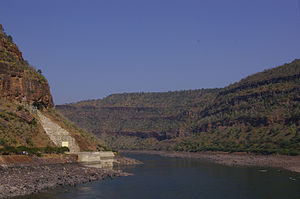
Krishna River Gorge by Srisailam, Andhra Pradesh, India, 13 January 2008, own work of Zeman, the file is licensed under the Creative Commons Attribution-Share Alike 3.0 Unported license.
Roland DürreTuesday November 10th, 2015
“Unjustified Wealth” and “Protection of Acquired Possession”… Two Unfortunate Siblings!
On November, 8th, Sina Trinkwalder wrote on Facebook.

You simply have to sit down and realize; what currently happens in Germany is not “like 1933”.
In those days, the people followed a rat-catcher, because there was mass unemployment. They went onto the streets hoping for a better life.
Today, the people follow a rat-catcher, regardless of the fact that, officially, with 2.6 million unemployed, we have full employment. They populate the streets because they fear they might have to share even a slight morsel of their unjustified wealth.
That is the difference. Both are comprehensible. Both are condemnable. And the social community must oppose both
I found it impossible to resist, so I commented:
I rather like the term “unjustified wealth”. And I would find it a good idea for us to, at long last, step by step reduce our “reserves in wealth”. Incidentally, I find going places by car a good metaphor for unjustified affluent behaviour.
Wouldn’t that be a good place to start renouncement? – See also #aktmobcmp.org
The reply was:
Do I understand correctly: if you work in car production, that makes you an “unjustified affluence profiteer”?
Again, I could not resist and replied somewhat polemically:
Well, naturally the conclusion “if you work in car production” is wrong in many logical/dialectical ways. For me, everyone who takes more from the world than his due is an “unjustified affluence profiteer”. And I am afraid we all who write so wisely belong in that category. As to cars: I actually do believe that it is possible today to use your competence, creativity and intelligence for more important things than for building cars. After all, cars kill more than 1.3 million persons world-wide and, for example in Bavaria, the motorised individual traffic (cars) generates more carbon dioxide per capita than would be allowed even if you even wanted to preserve the current situation.
But I truly believe that the term “unjustified wealth“ as entered into the discussion by Sina is a very central term. So far, I never used it. It gave me pause.
I believe you should extend it to read “unjustified collective wealth”. And we should never forget that, basically, whatever we do is oriented towards the goals of “protecting our acquired possession” and “preserving habits that are often nonsense (and sometimes even detrimental)”.
If, however, we continue as before, a world that was once worth living in for me will probably be lost very few generations from now. And that is not an attractive idea in my book, because in some way or other, I see myself as part of an entity – and that also includes the dimension of time. Maybe we already lost our nice world …
RMD
(Translated by EG)
Roland DürreTuesday October 13th, 2015
Will all those Regulations and Sentences Weaken our Constitutional Democracy?
There is a constant flow of new legislation. From the EU, the Federal Government, the State. They have become a flood. Many of them do not seem to make sense at all. More often than not, you cannot see what effect exactly they are supposed to have or why they have been passed. Neither is it clear why you should actually abide by them.
Simultaneously, courts of law come up with sentences. For instance one week ago on safe harbor. This may well be a good idea in some way, yet there is no direct positive effect. Because it simply is not practicable.
And it has almost been forgotten already, regardless of the great ado that has been made about it not too long ago. Consequently, I am sure that, soon, nobody will be interested at all to hear what the “safe harbour judgement” was all about. And why should anybody? You want to bet?
One might start assuming that people in this country will take laws less and less seriously in the future, which would mean there is an end to our constitutional democracy. Which, indeed, might be a huge threat to our democracy.
I do not happen to share this fear. To be sure, as I perceive it, law and order are no longer taken as seriously as they used to be. But it seems to me that this is only true for all those many administrative regulations.
Let me call it the “extrinsic morals“ as given from the outside. And that is something that gets more and more absurd, which means you actually cannot really take it seriously.
To make up for it, it seems to me that the “intrinsic morals” develop more and more into something most people agree upon. It is about what you do and what you do not do, which I find rather appealing.
Said intrinsic morals come from inside a person, regardless of the nonsense the legislative and judicative conveyor belts of the EU, as well as its countries and states pour over us.
I do not wish to sound the warning bells that letting the “extrinsic morals” dwindle might threaten our constitutional democracy. After all, the “intrinsic morals” might actually be more important for survival than the “extrinsic morals”.
We saw quite frequently that countries with rule of justice toppled and became rules of injustice, yet they were all based on “justice”. Just like the Third Reich, too, made laws and installed courts of law that brutally executed the verdicts. Which means that this unholy system actually was based on law and order, except that the assumptions it was based on were truly something to give me pause.
RMD
(Translated by EG)
Roland DürreSunday October 4th, 2015
I am not a hero.
After my Angry article, there is the question:
So what is my contribution?
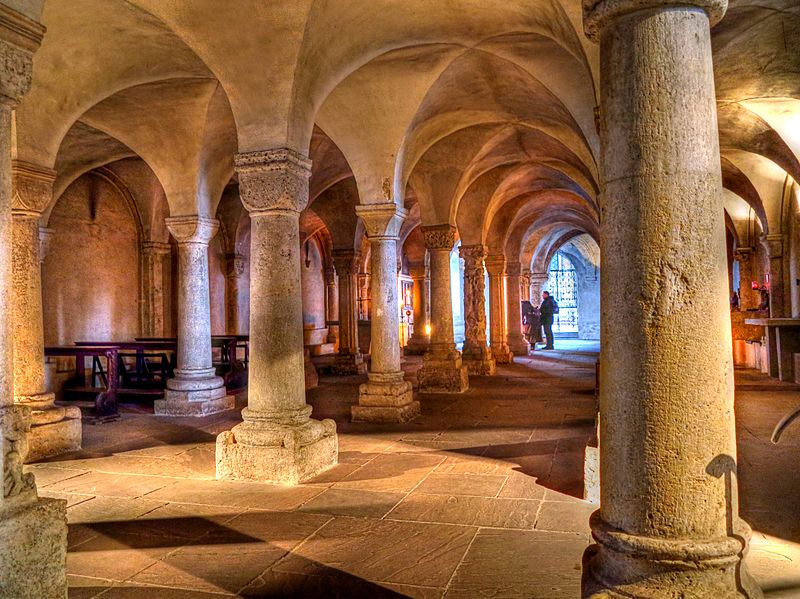
Crypt of the Freising Cathedral
For me, philosophy is something like the science of living. I think of Seneca. A long time ago, he said to his students:
Philosophy teaches you to act, not to talk.
Consequently, the angry person, too, should see if his actions speak the same language as his words. And I must admit that I am not satisfied with the outcome of my self-analysis.
To be sure, I try to leave the social norms and patterns I so criticize. And, where possible, I also try to initiate change. But is that enough?
Far too often, I realize how I am trapped in my bourgeoisie. My trainers, among others, were my parents and my teachers. Numbers of system agents tried to form me according to what they thought I should become and tell me where to go and what to do. Morals and an extremely capitalist consumption-oriented society already influence me massively on a daily basis.
Regardless, I hope I am one of those persons who basically to not consider our “trained lives” unavoidable. At least, I always tried to flee the reins of the aforementioned animal tamers. And already I feel better. But what I do is not enough. To be sure, I no longer go places by car. But then, that is something you could almost call egoism. After all, I am now suddenly a lot more mobile and free than I ever was before. And through this change and (allegedly) these restrictions, my life has become a better life. That certainly helps when it comes to thinking new thoughts.
Looking upon my own generation, it truly gives me pause to see how many of my companions never knew anything other than being trapped in their emotional jails. I know people who, in their entire lives, obediently believed all nonsense that was ever dished out to them. They actually relinquished their autonomy in small portions for the sake of being comfortable.
Others never once in their lives, when at a point of bifurcation in their lives, followed the motto “love it, change it or leave it“ . As a consequence, they were made to feel smaller and smaller. Regardless, today they think they are the most important thing in the universe, live their status and drown in their anxiety. The constant fear of losing what they own makes them inhuman. They seem to have forgotten that they, too, are just mortal beings.
I am fed up with following the nonsense of this society. In the coming years, I want to do more. So I was looking for models. I already found one: Carl Amery. I find his life and work impressive. I think he was a true hero.
Unfortunately, I am not a hero. But who knows, perhaps in the future…
RMD
(Translated by EG)
P.S.
I took the picture from Wikipedia. It is the illustration of the article on Carl Amery (real name: Christian Anton Mayer), originally by Richard Huber.
Roland DürreSaturday October 3rd, 2015
Angry!
 Once in a while, I get really angry. The last time this happened was during a forum. It was about “un-schooling”. The system of collective (federal) schools was judged to be the only appropriate variant of teaching and “education” for young persons and “un-schooling” was said to be socially inacceptable.
There are other statements I also very much object to. For instance, I see red when I hear
THAT
- We have to produce weapons.
- Lobbyism is a necessary part of our economy.
- A speed-limit would ruin said economy.
- Concerns have to make maximum profit.
- There is no alternative to constant growth.
- Dismissal protection cannot be abolished.
- It is total nonsense to think about a “UBI” (unconditional basic income, instead of all the social subsidies).
- BND and the Federal Office for the Protection of the Constitution are absolutely important and necessary.
- Total transparency and openness in society and software is not possible.
- There is no alternative to patents and copyright.
- The climate catastrophe is just an invention of green nerds.
- You have to tolerate both circumcision
- And the suppression of women
- …
But back to the school discussion: if some people shun classic systems such as the school system, then this is, for me, the last and as I fear eventually unsuccessful attempt of individual persons to flee from a world I actually do not like at all..
I MEAN A WORLD
- Where people, both individually and collectively, act in a way I disapprove of;
- Where stupidity always wins and where I get the impression that it is not possible to be so stupid unless you act as a group (see also Dueck – Schwarmdumm),
- Where few of us actually get far too much warmth and calories, yet others get nothing – which means everything is taken from all of us;
- Where they tell us we are omnipotent, yet de facto there is the permanent attempt at total manipulation;
- Where they try to take away our freedom and to convert us into becoming servants fitting the system;
- Where nobody likes you if you critically ask “why”;
- Where the question “what profit can I make from this?” is the motivating factor for all our actions;
- That tries to make unequal things equal;
- That tries to discourage us from being creative;
- That dissuades us from believing in utopia;
- Where all you hear all the time is “it cannot be done, anyway”, “this is how we always did it” and “yes, but…”;
- Where, from earliest childhood on, we are accused of being “guilty”, regardless of the fact that our brains are not all built to know how to deal with such accusations;
- Where everybody talks about eye-level, sharing, participation, respect, tolerance, civil courage, … but
- Where every attempt at autonomy is first and foremost punished;
- Where invitations to “give more than you take” and to “remain true to yourself” sound like mockery;
- Where, as a matter of course, you make others feel smaller, rather than bigger;
- Where rules from the natural sciences are welcome as long as they are useful, but abhorred when they clash with what we want.
- …
In evolutional theory, they say that matters will only change when the old generation dies out. Consequently, I have all the respect in the world for parents who take responsibility and decide to teach their own children. These days, such a pledge in favour of the family is scarce. And to do so, you have to focus on the important things in life and to forego many luxuries.
Isn’t it a lot easier and more comfortable to put children (incidentally, the same is true for the elderly) into storage? To be sure, sooner or later the parents will bow under the pressure of the school. They will become aliens in the eyes of their own children and eventually even turn into the agents of the system “school” – against the interests and wishes of their own children.
This means that the variants of “un-schooling”, “no-schooling” and “home-schooling” are not arrogant or uppity, but revolutionary. In fact, we need this kind of courage to replace thoughtless following in many other areas of our lives (nutrition, leisure time, life style, …). Just like we need the willingness to make “sacrifices” for our future and to work towards contentedness and happiness, rather than buying it.
For a good “un-schooling”, you have to give your children much. Especially the most precious commodity you have: time. It is scarce. It also takes a lot of time to change your own life. Consequently, time is something we should not waste. And we have to distance ourselves from what they want to sell us as desirable.
Abstinence takes an effort. Yet abstinence is probably the first counter-measure against being controlled by others. You can easily be heading towards disaster if your life is controlled by others. Perhaps it is even harder for lonely persons to find their own lives.
It is well worth trying to flee the formatting of a perverse society. We humans have spent enough time letting others turn us into trained monkeys. It was especially perverse during the long 19th century. Enlightenment can only have been a first step. It brought us peace and freedom, but also war and destruction.
Well, for me this means more than ever that we need a second enlightenment. And we have to continue dreaming our utopian dreams of a soft and violence-free world without “punishment” and “revenge”.
Thank you very much!
RMD
(Translated by EG)
P.S.
Incidentally, in Germany, the “un-schooling” discussion is beside the point. As opposed to other European countries, it is explicitly forbidden by law. Regardless of the EU and all the bureaucracy that comes with it…
Klaus HnilicaTuesday September 22nd, 2015
Is ‘Social Justice‘ just a Misunderstanding?
Yes – if we continue to hold onto what we have been considering the definition so far! /1/
According to this definition, everybody, strangely, thinks him- or herself socially just yet at the same time laments about the growing injustice in this world.
It seems that this discrepancy is insurmountable.
 We are simply too much in love with our unclear terminologies. In fact, we actually wallow in the concept that ‘social justice‘ has to be some kind of ‘moral, egg-laying wool-milk-sow‘, rather than just a minimum standard for human behaviour consisting just a few rules even evil persons have to stick by!
If, however, we accept this definition, we soon find out that ‘social justice‘ tends to have little in common with ‘romantic equality‘. Instead, it has a lot to do with not-so romantic ‘voluntariness‘. And that this is why politics in general have an inherent structural problem when it comes to generating ‘social justice‘, even if it very industriously tries to find and remove ‘legal loopholes‘. It is easy to show this in three steps. All you have to point out is:
A) the common principle of ‘exchange justice‘,
B) the principle of ‘equal treatment and equality of results‘ and
C) the particularly apparent ‘distribution justice‘.
Let us take a closer look at all three of them:
A) After all, we basically have a very special form of ‘exchange justice’ when, in the name of ‘social justice‘, people demand fair prices and fair incomes!
For instance when it comes to: here the aromatic Alp Butter, there the ridiculous one-euro-eighty; or here the super manuscript and there the low fee. If we were to demand ‘equality of values‘, then we would need the general ‘principle of exchange justice‘! But how to objectively determine this ‘equality of values‘ for every individual exchange process?
For instance: would one ounce of gold be too much for a bucket of water in the Sahara if it means the difference between life and death? And are 50 cents too much for two litres of milk if someone has a lactose incompatibility? Or what is the adequate fee for a manuscript which, later, will only be pushed underneath the one too short table leg?
Doesn’t this mean that the ‘evaluation‘ of an exchange object is by nature a very subjective thing and that this value has nothing to do with equality? Especially since said exchange only takes place because all the parties concerned see the object of exchange differently, which is why each considers his own deal profitable.
Naturally, this ‘exchange profit‘ is just as unprovable as the ‘exchange value‘; but it is also clear that any profit can only exist and be proved if the exchange has been voluntary! Which means that an exchange is always ‘socially just‘ if none of the parties concerned has been forced to accept it!
Of course, this voluntariness in an ‘exchange‘ does not guarantee that both parties can get what they hoped to achieve. Neither is it a protection against erroneous decisions, such as for instance the imprudent purchase of low-price milk regardless of lactose incompatibility. But this is not necessary, either. Because the evaluation of the ‘exchange profit‘ is subjective, which means that it cannot later be forced into a wrong equality measurement just because someone had erroneously and intuitively assumed that this ‘equality‘ in an ‘exchange profit‘ is closely related to ‘social justice‘!
Consequently, we can conclude that prices and incomes are always socially just when they can be accepted without one of the parties having been forced to accept!
B) Now let us discuss the allegedly socially just ‘equal treatment and equality of results‘!
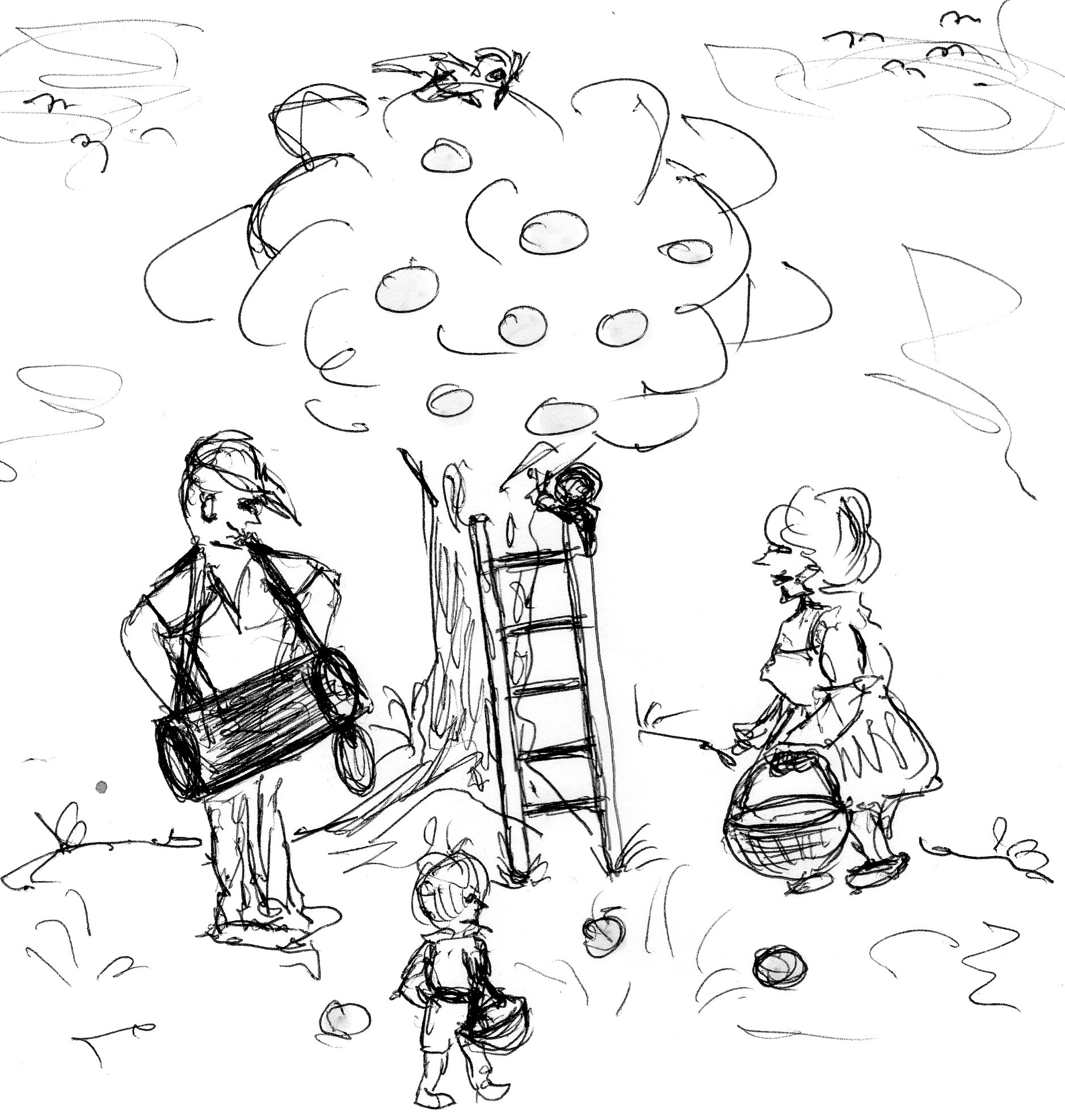
Again, our equality mania brings us into a similar logical one-way road, as can be easily shown with a simple example: If, under the aspect of equality, you ask a retired lady, a sportsman and a six-year old boy to pluck apples from a four metre high apple tree with a ladder standing at its trunk, you will get considerably different results; the help you will have to give will, indeed, be rather diverse, before all three candidates will have plucked the same amount of apples – which means they have equal results.
Since, however, there are no two identical individuals on this earth, you will never get equal results if you treat them equally, and vice versa!
And regardless of this fact being absolutely obvious, we keep demanding equality along with social justice. But if equality were really socially just, then the state of affairs where all persons are poorly off would, according to justice theory, be the best that could happen, wouldn’t it?
Luckily, nobody believes this! But still we insist that the logical consequence cannot be to stop seeing equality as a manifestation of social justice.
C) The tendency towards equalization is particularly apparent when it comes to discussions about ‘fair distribution’!
To distribute something means to hand out from a supply. Fair distribution demands that this has to done following certain rules. However, the fairness is most obvious when the owner does the distributing him- or herself, because then it is his or her will alone that counts. To be sure, it might be reasonable to consider the expectations of third parties, but that is not demanded by social justice! Social justice is served by the protection of ownership rights.
But it gets truly difficult when you cannot clearly define ownership, as it is the case with all political systems because the spheres of interests of the distributors and the recipients will often be identical. Conflicts are unavoidable and the ‘just solution‘ of said conflicts are not just a theoretical challenge, but mostly no more than a noble goal!
Compared to this, private persons and enterprises have a rather easy life, don’t’ they? All they have to do is not cheat, not steal, not use violence and not break contracts – and already they are just. They need not abide by more rules than that!
When all is said and done, this consideration not only generates a theory of justice, but also a surprising solution for economic and social politics: why not move as many decisions as possible to the private sector – since this is where you have clear and, according to what has been stated above, ‘socially just‘ circumstances?
Well, I assume this will remain wishful thinking, because many will still refuse to abandon the inacceptable ‘equality saturated‘ definition of justice! And they will be even less willing to forego the potential increase in power derived from this ‘usurpatory definition of equality‘!
KH
/1/ Dagmar Schulze Heuling; „Was Gerechtigkeit nicht ist“; Nomos – Verlag Baden – Baden
Roland DürreSaturday September 19th, 2015
Preliminary Event for the Barcamp #ActMobCmp with Jörg Schindler (Invitation)
Invitation to a Preliminary Event for the AktMobCmp on October, 14th, 2015 at Unterhaching
 I already told you about our plans on the IF Blog. On January, 4th and 5th next year (2016), just before Epiphany, we want to start a new Barcamp.
It is the AktMobCmp, the first barcamp for “Active Mobility in Everyday Life”. With this barcamp, we want to address the topic “mobility”, which will be truly important for our future.
The preparations are finished: we have a location that is well suited, a nice website, a flyer for sponsors and a general flyer – and even some first interested sponsors.
Now we wish to get people’s attention for the event. Consequently, we invite everybody to attend preliminary events. The first of these events will be on October, 14th at the Agenda 21-Meeting-Hall (Treff) in Unterhaching (Rathausplatz Unterhaching, Hofmarkweg 12) between 18:00 and 20:00 hours. This is the first time we want to inform everybody about our “Barcamp Active Mobility”.
During the event, the following questions will be answered:
Why is “active mobility in everyday life” so important?
and
What exactly is a “Barcamp and why do we organize this as a Barcamp“?
During this evening, Jörg Schindler will tell us all why mobility is such an important topic in the future and why we all need to get more concerned with the so-called remaining traffic beyond the “individual & motorized” and “public transportation” sectors.
I know Jörg as a very competent, but also a very convincing and entertaining speaker. You will also find his very exciting and valuable presentations on YouTube. Here is an example:
Afterwards, I (Roland Dürre) will give you the definition of Barcamp and also tell you why such an “anti-conference” is so much better for sharing knowledge and developing and applying new insights than the common classic formats. And I will use PM-Camp as an example to demonstrate all the things you can achieve if you share knowledge and “communicate with each other”.
After the short presentations by Jörg and yours truly, we will discuss what has been presented. Perhaps in the form of a FishBowl.
This is how we want to advertise our January 2016 AktMobCmp. All colleagues of the “Agenda-21 organizations” in the district of Munich will receive personal invitations. But we also welcome all other persons interested in “Agile Mobility in Everyday Life” and who wish to think of and act towards a future that is worth living in. That means that you, too, are invited. And it would make us especially happy if persons from the media were to find their way to our event.
Participation at the preliminary event for AktMobCmp is free of charge. All participants are welcome and we would appreciate it if you send a short E-Mail confirming that we might expect you. Because if there are not enough seats available at the meeting hall of the “Agenda 21”, we will move to another location. One which can easily be reached on foot from the meeting hall. Naturally, we will notify you in advance if such a change of location has become necessary.
RMD
(Translated by EG)
Roland DürreMonday September 7th, 2015
The Second Enlightenment – New Book by Rupert Lay!
My mentor Rupert Lay is already quite advanced in years. Yet, he wrote a new book. It was published by Monsenstein and Vannerdat on July, 29th, 2015. The title is:
The Second Enlightenment:
An Introduction to Constructivism
I have not yet read it, but will still write about it, because I know that many friends of Rupert read the IF Blog. And I certainly would not wish to keep this beautiful item of news secret from you.
On September, 7th, Rupert Lay gave a long presentation for the Ronneburger Kreis and friends, where he summarized his life’s work. This presentation also contained parts of his idea as written down in the book.
Here is some information you can find in the jacket text and the Amazon book review:
The First Enlightenment (1650 to 1800) had a formative effect on how Europe and North America think and behave. It reformed what had been undisputable facts in terms of politics, economy and religion. Yet, without noticing it, it also created new undisputable facts – and those fall rather short of meeting the requirements of a humane society and its structures. Both in those days and today, philosophy takes the justification of its existence from critically asking questions about what is considered undisputable, thus initiating a second enlightenment.
Since what we want has its origins in what we know and what we do has its origins in what we want, the roots of our knowledge and thereby the justification of our behaviour must undergo scrutiny. This book is about the reasons why the First Enlightenment was never put into practice. It will bring the broad horizon of a Second Enlightenment, which will hopefully create the groundwork for a better communication between humans. We wish to give tolerance a new basis and thus, at long last, reach a humane practice of enlightenment.
RMD
(Translated by EG)
Werner LorbeerSaturday August 22nd, 2015
Myths About Teaching
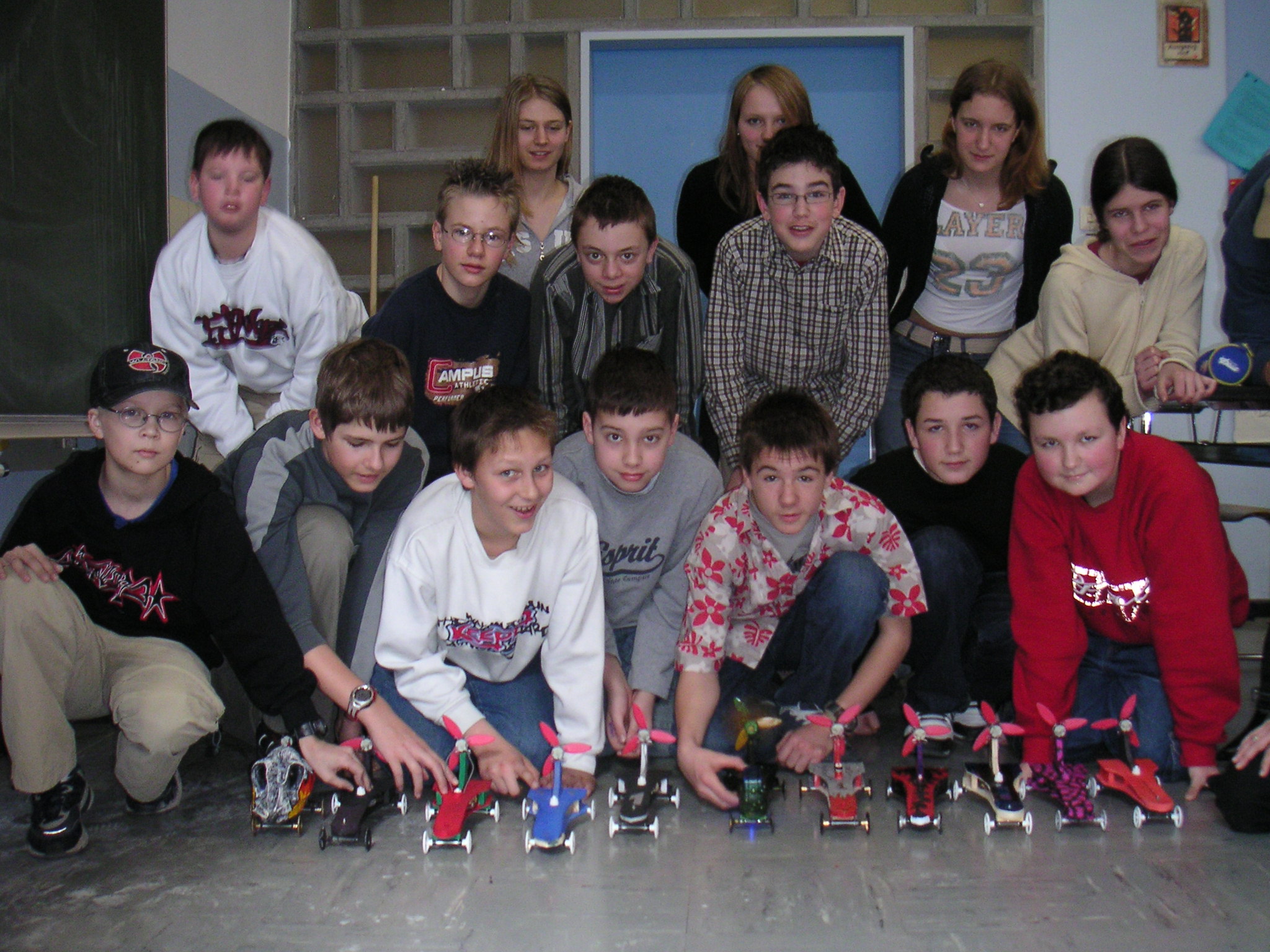
School as a variable social system.
Current argument in BW! It is – politically tried and tested – about the school system. And it is always also about the teacher/student ratio and inclusion.
What I find rather shocking is that the parties who are arguing do not seem to know anything about the empirical research literature.
It remains to be said that one-on-one teaching or teaching only a few is an art that, as you can read in the research literature of the 18th and 19th centuries, was a total failure.
It is also known that the well-researched autonomous learner will create a strong differentiation in his structural development status. The PISA studies show that the group size is basically determined by the discipline of the learning group but that it does not limit the success.
Jauch’s shows are not a mirror of the current social concepts in our schools. They are characterized by a huge amount of variable social forms, even if this seems to be hardly understood by the educational editing boards. On the picture, you see a routine situation at the Augsburg Holbein Gymnasium: the final stage of a project phase.
However, this does not mean that matters could continue endlessly in this way. Instead, this class, too, is entitled to be taught physics systematically; because knowledge has a structure that has been fought for over many decades. The more gifted a child is, the more successful he or she will be when it comes to transferring said knowledge structure to other problems.
Incidentally, we also know from empirical research that specific teacher talents will also substantially contribute to the learning success. “Success” always has to be understood multi-dimensionally in pedagogical research – social effects, academic effects, impacts on the development of a child’s personality, etc.
Not every teacher has an equal chance when it comes to personality structure. Neither will his effect on students be the same for all pupils. There is numerous “trait-treatment interaction“ research to prove this. In this light, the argument they are having in Baden-Württemberg is superfluous, because the quarrelling parties have no interest whatsoever in promoting the pedagogical practice, let alone pedagogical research.
Here is one last note on the teacher:
If you feel stressed out by children and if you are close to “burnout”, then you should ask yourself if your personality is suitable for “educating”. Children have the daily right to a “friendly, relaxed teacher” (Hefendehl-Hebecker), and they offer the teacher a new start every day.
So tell me where, in the world of grown-ups, you ever get this kind of opportunity!
wl
(Translated by EG)
Roland DürreFriday August 7th, 2015
Revenge & Hatred
Here are some ideas of mine on the two IF Blog articles by Klaus Hnilica: ”Only Forgiving Will Set You Free“ and ”Revenge Will Make You Strong“ („Nur Verzeihen befreit“ und „Rache gibt Kraft“).
 Hatred is the most hideous brother of revenge. Because hatred and revenge are an obscure pair of siblings who will delight in their negative activities and feed off each other.
They belong together – revenge will cause hatred and hatred will call for revenge.
It will easily turn into: “As long as … , hatred will be my office and revenge will be my virtue!“ – just like Kleist said it in his Hermannsschlacht.
As a pair, this black couple will generate an eternal circle of misery that will often self-reproduce – more often than not in the disguise of grotesque morals.
The wish for revenge might well be something we can easily understand. After all, you hope to find a release for your own pain by causing similar or even worse pain for the person you hate.
Hatred as such, however, is a true paradox. If I hate someone, then I would wish to harm him. Except that the effect of my hatred is totally different. Because the person I hate will feel just as comfortable as if I did not hate him or her. Hatred directed against a third party will damage me. It will turn against myself and make me feel even worse. The person I hate might even delight in my hatred, because I am ruining myself in the process.
Hatred is especially absurd if directed towards the past. That is, if hatred is directed against a person I cannot reach in space and time. A person who might not even know of my existence. For instance if said person is already dead. Then my hatred will be nothing but self-destruction. And in this case, it would be a good idea for us to be beyond the phase of blood-revenge.
There is an easy conclusion to be drawn from this: It would be best if I did not let hatred find the way into my heart and life – then I will not need revenge, either. And then I can also safe the energy it takes to practice forgiveness. After all, I no longer need forgiveness in order to beat my hatred.
The other side of forgiveness, i.e. helping the “enemy” to get rid of his guilt feeling – if such feelings are present – can then be used very deliberately.
And once in a while, not without inwardly smiling, I will refrain from externally forgiving. Why should I forgive someone I do not like – if I am at peace with myself and do not let myself be concerned with the injuries I suffered? Some of them will only have taken place in my head, anyway! Inside, I already forgave, because I no longer hate.
If you look at it with this in mind, not hating is a rather desirable goal. It should be learned and practiced and probably only “the wise ones” and “the best” will ever achieve it. It has a lot to do with sovereignty. Which is not something you come by easily.
Many thanks to Klaus for both his nice articles.
RMD
(Translated by EG)


