
Roland DürreTuesday March 26th, 2013
How Rich the Poor Are …
Here is part of a discussion I came across as some kind of “exchange of letters on the internet”.
In the 1950ies and 1960ies, science fiction was a much-loved genre imported from the USA. Among other works, Frederik Pohl, representing a mainstream I will – for reasons of simplicity – just call “Social Fiction”, published a story titled “The Midas Plague”. It is based on a consumer society busily trying to sell products and services produced in over-abundance by robots to the people. The citizens have rationing cards: the lower their social position, the higher the minimum consumption they are allowed. In other words: if you order something on yourself, the others will have to pay.
Consequently, luxurious residential areas represent the slums and allotment holders’ colonies are some kind of Beverly Hills. At this time, it is irrelevant that the author does not really do a lot with this ingenious idea of his.
I remembered said story when one of my friends pointed me towards an article in the “Welt”. It says:
According to a study by the Deutsche Bundesbank, the fortune owned by private households in Germany is a lot less than that held by private households in Euro crisis countries like Spain or Italy. Last Thursday, the Deutsche Bundesbank, at Frankfurt/Main, informed us that the average wealth of German households amounts to 51,400 Euros. In Italy, the sum is 163,900 Euros, in Spain 178,300 Euros.
In France, so the Deutsche Bundesbank, the average wealth of a household is 113,500 Euros. In Austria, it is closer to the German sum with 76,400 Euros. In Germany, the citizens living in the East own a lot less than those living in the West: 21,400 Euros as opposed to 78,900 Euros.
[There are more interesting numbers to be found in the same article about what people are worth in diverse EU countries]
That means that, compared with the highly indebted crisis country Spain, the forerunner and highly productive Germany is as poor as a dormouse when it comes to property (fortune minus liabilities). Even the French who, after all, statistically work six days per year less than the Germans, are far better off than the Germans. Maybe that is because the real incomes sank by 4.5 % between 2000 and 2010. Or maybe the Germans prefer spending their money at Malle, rather than practicing “build your own house”?
I prefer leaving comments on the informative value of these average numbers (what age exactly is it and where aver is it going?) to the statisticians. However, the logical conclusion seems obvious:
The poorer the countries, the richer the citizens, and the poorer the citizens, the richer the countries.
Or
Countries that fail economically will create wealthier citizens.
Well, the EZB saw that a long time ago, didn’t they? But then, only the rich will get rescue funds.
Now I know: wealth will not come as a result of thriftiness and hard work. It will come as a result of debts and spending. It is an innovative, realistic and economical concept.
So why did I ever study economy? Errrare humanum est!
I know the author of the text quite well. He likes pointing our noses towards contradictions. To me, considering the current situation, the numbers look at least exciting. However, I would certainly not wish to stir evil between us and our European neighbours. But still, in some way or other, these numbers, too, show that things have gotten into a real mess, haven’t they? And we will hardly be able to avoid a huge reform, because otherwise the “great reform” will come and catch up with us without our consent.
Personally, I am actually glad that I did not study economy.
However, I, too, believe you will never accumulate riches by hard work and thriftiness. It might be better to indebt yourself…
RMD
(Translated by EG)
Roland DürreMonday March 25th, 2013
Get In Shape! – IF-Academy – March, 21st, 2013
“Get in Shape!” held on March, 31st at the IF Academy is now over. It was a truly nice presentation by Johannes Schmidt. As soon as the video recording is finished, we will make it available to you.
After “Get In Shape!”, we will present
“Ubuntu & Android Usage in Business”
The test in practice – what can Windows alternatives really achieve? Features, problems and solutions. An overview.
On May, 16th, 2013, Alexander Jachmann of the IF-Tech AG will update us on the current state of affairs. It will, again, be very well worth watching, so write down the time! And the other scheduled presentations can also already be seen on the poster.

RMD
(Translated by EG)
Roland DürreSunday March 24th, 2013
“I like” & Facebook or “WiTuN”
I like Facebook, Google+, Twitter and many more …
I constantly hear sentences like…
“… all those Facebook and twitter affairs are evil … personally, I absolutely boycott social media … virtual friendships are rubbish, because you have to see each other face-to-face, anyway… and worst of all is, after all, this stupid: I like!”
… from persons who are otherwise basically to be taken quite seriously. I mean people who climb into their cars and drive off at high speed or go back to watching TV – which means they actually use technology that used to be quite modern and relevant.
I prefer to keep quiet on hearing their comments. After all, I know that any and all of my attempts at explaining things (social media) to them is totally useless. There is nothing you can ever do about dogmatic know-all manners, especially if those know-alls do not even know what they are talking about and consequently cannot understand it. This is actually true in general.
In the last ifcamp (barcamp at InterFace) on our BlueFriday (of March, 22nd, 2013), I introduced one “knowledge management” session. It was about how we can set knowledge free and then share it. In order to then evaluate it together and identify what is relevant. With the goal of finding the right and probably better decisions for the future from the “crowd”.
In the course of our discussion, the Facebook phrase “I like” also came up. And we concluded that this is probably a first and extremely simple tool for social feedback. You can use it if you want to show people that you like something. Or that you appreciate them. Or that you simply are sympathetic. …
During the session, we came to the mutual conclusion that there is a need for a refined and neutral “feedback technology” for applications intent on using the crowd and the good social web. For these systems, this would be an absolute necessity. Without this technology, these kinds of projects cannot succeed.
We spontaneously found ways to improve on “I like”. Here are some examples.
- Give a limited number of “I like”-s to each participant;
- Assign a certain amount of them each month;
- The participants get dynamically more “feedback units” as the social relevance increases, perhaps similar to klout;
- Or maybe there could be something like a “Page-Rank” for members of a social system;
- It might also be a good idea to introduce “feedback units” with different weightiness…
In a nutshell: I believe the “feedback technology” is a very important and central component of all kinds of crowd and social web applications. But this is not at all a trivial topic; it is well worth dealing with in great detail. I am sure there is also a considerable number of scientific works with good ideas which one might be well advised to take a closer look at.
Here is an example from another field that surprised me:
I like writing in stenography. So I had this idea that the technology of “writing quickly and ergonomically (instead of tense) by hand” – which has been developed and perfected over hundreds of years – could be used for text processing on tablets or with gesture-controlled systems. And then there was a friend of mine who works among the Academia who found it a wonderful bachelor theses topic, so it was very thoroughly analysed.
So – let us get under way;
Let Us Share Knowledge – and Use It!
(LUSKUI)
RMD
(Translated by EG)
Note:
This article does not suggest that I find everything Facebook or Twitter does agreeable. If, for instance, I will notice certain tendencies towards tampering with “social metrics” at Facebook, you will have seen the last of me there sooner than you might have imagined.
But such a turn of events at FB will not change my opinion that social networks and shared knowledge applications mean social progress. In fact, it would be one more reason to rekindle the old philosophical and ethical discussion: how can we get to a stage where the production of articles and services will be done decently? After all is said and done, this will again end up in a discussion about privatization or the social responsibility of those who own all the production goods.
Roland DürreFriday March 22nd, 2013
The Country Needs New Knowledge
… and so does the enterprise 3.0
I am currently preparing a presentation on “knowledge in social systems”. After all, as I see it, enterprises are just one variant of social systems with an economical goal and generally special dependency-structures that have been regulated by legislation in a particularly elaborate way (I am trying to use an unbiased formulation here).
My first thesis in said presentation is that “new knowledge” has to be
- Free of dogmata; and
- Free of truth claim.
Knowledge is changing all the time. “Knowledge gained from life”, in particular, can always only be a snapshot. It changes all the time and always only has limited validity.
Well, it sounds a matter of course, but yet it is too often not lived up to.
My second thesis is that we will only be able to do this
- In an environment of transparency; and
- If we meet each other at eye-level.
Consequently, knowledge – as well as willingness – can never be caught and locked away in data bases. Instead, it has to be free and changed dynamically through permanent learning.
This is a pity, because knowledge is the most precious of all raw materials we have – not to mention the nice characteristic that it is the only raw material that will increase if you share it.
So what we need is not just an “economy of sharing”, but also “communities that share knowledge”. And we also have to dramatically change the way in which we share knowledge.
And this is where I still see no end of contradictions with still current but totally antiquated system rules and transfer practices, as well as with our economy-oriented way of thinking.
Knowledge must at long last be liberated!
Consequently, I will write about “new and free knowledge” more often in the future.
RMD
(Translated by EG)
Roland DürreThursday March 21st, 2013
Tweets on Twittering and Blogging #159
Here are my tweets of last week on:
Blogging and Twittering, Wisdoms and Rules:
130404 Many feathers will make a bed – also for the twitterer and blogger? #Twitter #Blogging #Wisdom
130405 Many prayers, few works – something that happens easily when twittering and blogging! #Twitter #Blogging #Wisdom
130406 Much noise and little wool – especially true for blogging and twittering! #Twitter #Blogging #Wisdom
130407 The more laws, the more crimes – this is hard to avoid when twittering and blogging! #Twitter #Blogging #Wisdom
130408 Many hands will make a huge burden light – is that particularly true for twittering and blogging? #Twitter #Blogging #Wisdom
130409 Many hands will soon finish the work – something I also already experienced as a twitterer and blogger. #Twitter #Blogging #Wisdom
130410 Many hands will break down walls – especially when twittering and blogging! #Twitter #Blogging #Wisdom
There is a new tweet each day. See twitter.com and “follow” RolandDuerre!
Enjoy!
RMD
(Translated by EG)
P.S.
I took the proverbs from Alle deutsche Sprichwörter.
Roland DürreSunday March 17th, 2013
Emily Post of the 21st Century
Today: communication, mail and messages!
I take calls from everybody at all times. Most of my friends, however, know that you should only call others if you have something really, really important to tell them. Consequently, I have to answer the telephone relatively infrequently. But there are some exceptions . Some people call me more often than strictly necessary. And since those people are very nice people, I forgive them.
But seriously: if it were up to me, I would write quite a few new things on communication in “Etiquette in Society, Business and at Home – 2013”.
For instance, when it comes to the letter C as in “communication”, I would write the following commandments:
- Never call anybody unnecessarily!
- Only use the telephone function of your small, mobile computer when you are in a totally hopeless situation!
- In particular, avoid calling while travelling – no matter if you are walking, riding a bike, driving a car or going by train!
- Only call someone if you have arranged to call beforehand!
- If you cannot avoid calling someone, find out if maybe communicating via Hangout or perhaps Skype is a better alternative!
- And, please, prepare in advance what you want to talk about. Arrange your ideas and have all documents you may need for reference handy before you start dialling!
- And, please, do not be too talkative and long-winded!
Under the letter M like in “Mail” I would formulate as follows:
- Only send an email if there is no better alternative!
- How about re-reading about TOFU!
- If you have to send an email, avoid long footers!
- Avoid at all costs attachments with some strange legally necessary and yet totally useless phrases!
- Wherever possible, send your email only to one recipient!
- If at all, use “cc” only as in the way of sending a “copy to”!
- Never send “bcc”, because it is forbidden!
- Well – and if we are talking one of those ping pong emails: why don’t you just delete all the rubbish and all those footers!
More on the letter M like in “Messages” :
- Wherever possible, avoid SMS!
- If you have to send short messages to people, use the medium preferred by your partner. You might use “What’s App”, FB Messenger, Twitter DM or some such!
- Do not write short messages unnecessarily long!
And here another letter M like in “Miscellaneous” where I would give you basic advice as follows:
- Never think in terms of distribution, but always in terms of communities!
- In communication, too, transparency and openness are the central values!
- Whenever you write about persons, keep in mind that the person concerned might read it!
I am sure you could find more on the subject. And if necessary, I am quite willing to justify every one of the aforementioned points. And in the future, I will also try to adhere to my own rules a little better.
RMD
(Translated by EG)
Roland DürreSaturday March 16th, 2013
Letter by the Dentist
Just a small anecdote.
 Two weeks ago, I attended a meeting in Sylt. During the meeting, one of my teeth got damaged. A huge part of my tooth just broke away as I was eating my lunch on Friday. The entire afternoon, I had a strange feeling inside my mouth. But it turned out a blessing in disguise: a dentist living right next to my hotel was on emergency duty and I got an appointment for 5.30 p.m. on the same day.
The dentist was a very nice person – and I also got the impression that he was quite competent. He took a close look at my tooth and took provisional care of it in quite a nice way. And he provided me with a letter for my home dentist. His advice was for me to go and see my dentist as soon as possible, because the provisional solution should be replaced by a permanent tooth crown.
That is exactly what I did. On returning home, I lost no time before calling my dentist and making an appointment. I also had the letter to be taken along. Except that, on the day I had said appointment with my dentist around noon, I had been going to the office in the morning because I had several meetings – and, of course, I forgot the letter at home. But my intention had been to drive directly from the office to the dentist.
So what to do now? To be sure, I could have asked someone at home for help. But how to get the letter to me or to the dentist with the least possible expenditure? It was all quite complicated. Well, I was a little desperate and truly annoyed with myself for having forgotten to take the letter with me.
Until, after quite a bit of consideration, I came up with an ingenious idea:
After all, a letter is also just “content”!
Consequently, I called home and asked them to, please, open the letter, scan the content and then send it to the dentist via email.
And then there was the next idea: why making it more complicated by scanning and sending – after all, we also have a fax machine, don’t we?
So that is what we used.
RMD
(Translated by EG)
P.S.
The picture ist out of Wikipedia – see Sylt. Producer is AndreasPraefcke.
Roland DürreFriday March 15th, 2013
Chess & Management
When you have reached old age in the form of being more than 60, you will look back on your own life more and more often. And since I am rather happy with what I achieved and accomplished, I also once in a while think about the persons who helped me in life. Well, there are quite a few. Studying mathematics and computer science was certainly a good choice at the time. I learned a lot when I worked at Siemens. All through life, I kept meeting people who accompanied me for some of the way, thereby being a huge help. And it also seems that I married the right woman.
But some other things also helped a lot. For instance the fact that I learned accounting and business very early in life when attending the business-oriented Jacob Fugger Grammar School.
And something else, too, had a very beneficial effect on me: playing chess. It all started on those Sunday afternoons with my father. Even then, I had a lot of joy playing chess. But during the first few years of grammar school, when I started really getting into playing chess as a competitive sports in the club, my grades at school also quickly improved. Simply because chess had told me how to really concentrate.

But chess gave me a lot more than that. I would even go so far as to say I learned for life through playing chess. Difficult situations, both in private and business life, certainly have a lot of similarities with problems you face on the chess board. The problem solving strategies I learned while playing chess were useful for me in real life. Chess will help you to solve difficult problems “with intuition and strategy”.
 I also made many new friends while playing and competing in chess. Dijana Dengler and Stefan Kindermann are two examples for like-minded people. Both of them are also chess players, although considerably better than I. Dijana holds a diploma degree in economy and is FIDE champion. She already took part in many Olympic Games. She made chess her mission and is chief coach of the Münchner Schachstiftung. The Münchner Schachstiftung is very successful when it comes to re-socialization of extremely disadvantaged children. An experience Street Worker of Landeshauptstadt München confirmed that chess is often the only means by which these children and adolescents can be reached.
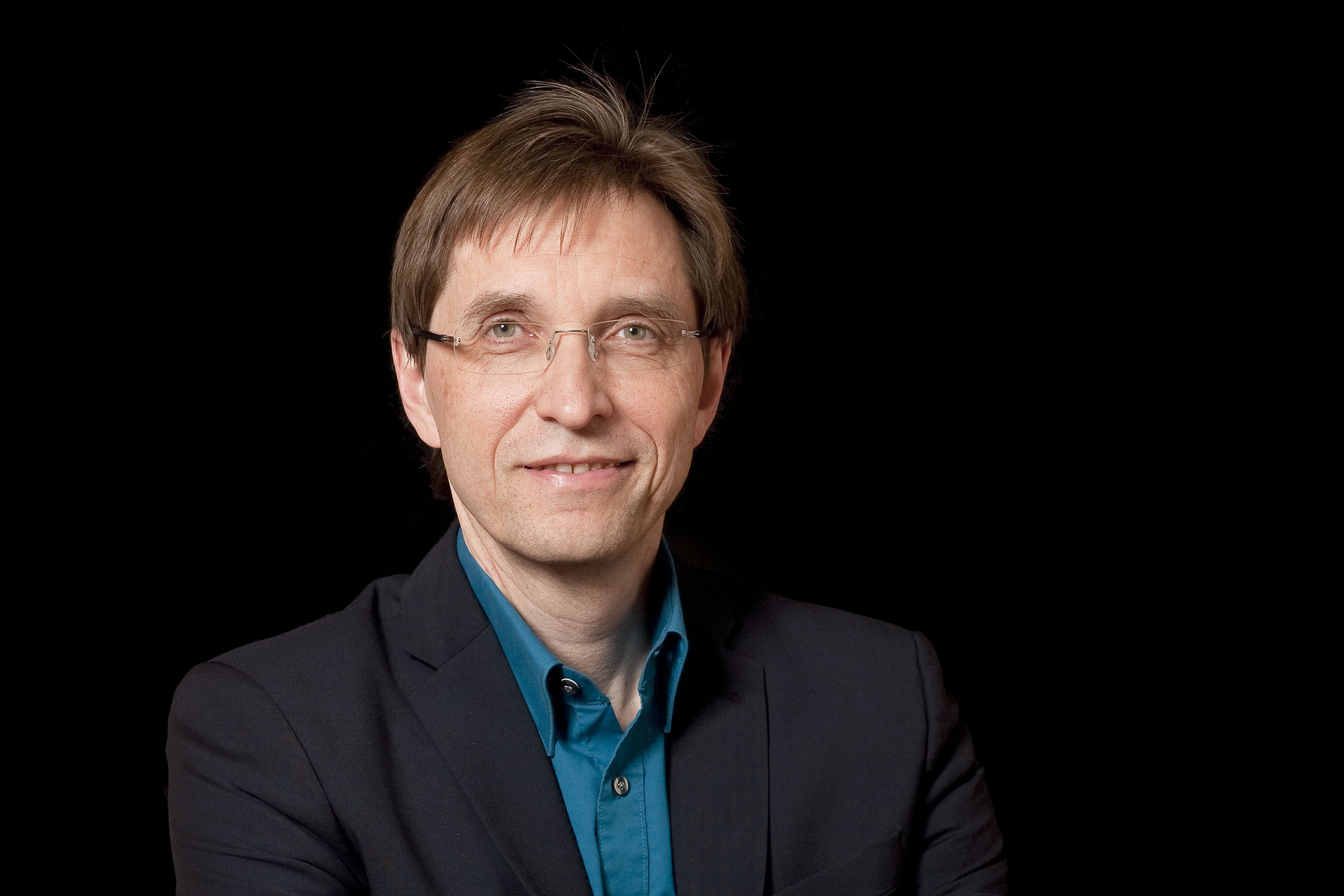 Stefan is Chess Grand Master and managing director of the Münchner Schachakademie. He, too, took part at Chess Olympics and even once qualified for the world championships. He works as a coach and psychological counsellor, as well as author of several books. Together with Professor Dr. Robert K. Freiherr von Weizsäcker and Dijana, Stefan developed the Master Plan. He coaches leaders in seminars and workshops in this discipline.
And this here is also about the Master Plan. Because it transfers the strategies of chess into real life. And it helps you to make “decisions” by a prudent change of perspective towards an advantageous combination of ratio and intuition.
 I keep experiencing how what I learned when playing chess also helps me in real life (both in private and business life, but they cannot be separated, anyway). It helps me to evaluate situations a little better. I find it easier to determine whether I am in a good or poor position. Based on this evaluation, I manage to come up with the right decision, instead of the wrong one, a little more often.
And I believe a small advantage like this can contribute hugely towards feeling well and having the chance to become a content person.
Since you can learn so much by playing chess, I am assuming that you can learn even more from the masters of this discipline. Consequently, I will go to an open seminar day “Master Plan” on Saturday, May, 11. The seminar is from 9:30 to 17:00 and the location is in central Munich, at Zweibrückenstraße 8. That is directly next to the Deutsches Museum.

I look forward to the seminar and, of course, also to all the people who will share the Mater Plan experience with me.
RMD
(Translated by EG)
P.S.
There is another seminar even earlier: on Friday, April, 26, 2013, at the same place. It costs € 580, including VAT. Meals for the day and a signed copy of the “Königsweg” are also included. For information on the Master Plan, click here Website. Registration: here.
Roland DürreThursday March 14th, 2013
Presentation by “(Fe)Male Students for (Fe)Male Students”
Since it is our upcoming event, here is the poster announcing the next IF Academy presentations. I am always happy to remind you of “upcoming events”:
Johannes Schmidt (TUM, IF-Lab/InterFace AG, Glassbox Games) will speak on Thursday, March, 21st, 2013, starting at 6 p.m. at the InterFace building in Unterhaching. His Topic
Get Under Way!
How video games and movement control want to get us away from being couch potatoes!

Of course, this invitation is not exclusively for f(e)male students. The event is free for all who want to come. After the event, we will again have a little “happy hour”.
For more information on the series of presentations by “(Fe)Male Computer Scientists for (Fe)Male Computer Scientists” click here. If you want to print the poster in high quality, just send an email to me – I will gladly send you the print PDF version.
RMD
Roland Dürre
Tweets on Twittering and Blogging #158
Here are my tweets of last week on:
Blogging and Twittering, Wisdoms and Rules:
130328 The combination of brains and beauty is scarce – also true for twitterers and bloggers? #Twitter #Blogging #Wisdom
130329 Trust is a good thing, but don’t overdo it – also when twittering and blogging! #Twitter #Blogging #Wisdom
130330 Trust breeds trust – especially true for blogging and twittering! #Twitter #Blogging #Wisdom
130331 Easier lost than gained – also good advice for twitterers and bloggers! #Twitter #Blogging #Wisdom
130401 A desperate dog will bark the loudest – is that especially true for twittering and blogging? #Twitter #Blogging #Wisdom
130402 Forgiving is the best revenge – for the cynical twitterer and blogger. Twitter #Blogging #Wisdom
130403 Many small rivulets will also become a big stream – especially true for twittering and blogging! #Twitter #Blogging #Wisdom
There is a new tweet each day. See twitter.com and “follow” RolandDuerre!
Enjoy!
RMD
(Translated by EG)
P.S.
I took the proverbs from Alle deutsche Sprichwörter.


