
Roland DürreSunday April 7th, 2013
Cough Syrup and “No Waste” …
 At winter’s end (?), I finally caught it myself: the nose started running, the neck hurt, I started coughing. To be sure, I was not totally incapacitated, but still, I felt rather handicapped. It was not a nice phase, and as of now, it is not yet quite over, either.
Of course, I tried to alleviate my ailments. On the whole, I consumed two boxes of cough sweets and a small bottle of “Spitzwegerich”.
The cough syrup came in glass bottles that held 150 ml. The glass bottle had a powerful plastic screw cap and was packed into a cardboard box. It also included a long product description and a measuring container! The measuring container had markings for 5, 10, 15 and 20 ml (millilitres).
 What a ridiculous amount of effort for just a little sugared “Spitzwegerich” and some alcohol!
Firstly, I tried to follow the manual and pour the appropriate amount into the plastic measuring container, before consuming it. No easy task. To be sure, the measuring container made it possible to give precisely the right amount of fluid, but it was impossible to get all of this sticky substance into my mouth in one go.
Even my otherwise rather agile tongue capitulated before the task. Afterwards, I had to carefully rinse the measuring container, which was all but easy. And then I had to put it back onto the bottle to avoid losing it. It was a really sticky affair.
 In my childhood, things were done differently. They did not produce plastic waste. The proper amount was listed in “teaspoons”. Every household had a teaspoon.
A spoon is a highly developed and refined tool. Mouth and tongue can easily and completely take up what is in it. It is a tool you can easily clean. During the remaining days of my medication time, I decided in favour of this traditional method.
Why do they even produce nonsense like measuring containers? It is unconceivable that these measuring containers make it possible to actually get the amount absolutely correct, because you never get it all out of the container.
No! It all happens because some fraudulent product designers want to persuade the customer that there is allegedly some advantage to the new method. Isn’t this product designed in ever such a practical and innovative way? The measuring container is a fire signal for the great fake they use to make a fool of the stupid consumer on all levels.
And then I think of all the many millions of stupid plastic measuring containers for cough syrup and similar medication being let loose on our planet in this way.
I chose this example very deliberately, because the plastic container for cough syrup shows on a very small scale how irrational and stupid we act when dealing with our resources. Of course, weighing only three grams (I weighed it), the measuring container is a negligible entity and as such totally “irrelevant”.
But whenever I think of all the masses of plastic containers that are a lot bigger and serve as package material for all kinds of products, it gives me pause. This madness starts with small things and will beat us with big things. Thus, the cough syrup is a good symbol of useless waste, where small waste is justified because it is nothing compared with the big waste. And we are stupid animals for slaughter, who agree with every stupidity. Take the buttermilk out of plastic containers or the Coffee2Go we carry around.
Even if it seems maniacally small-minded to me, I have started to avoid products with too much packaging wherever I can. No more food in plastic containers or tetra-pack, no cosmetics in plastic bottles or pressurized dispenser, no tins and deep-freeze food. These are all things I no longer buy for my personal use.
And you know what – it works quite well! And it does not mean the least bit of impediment for me. On the contrary, it improves my joy in life. Just like, ever since I stopped driving a car, I feel even better than before. Except that the common thoughtlessness I see in many of my contemporaries now hurts even more. Because, after all, I know how I, myself, used to let myself fall victim to all those charms.
Why don’t we just put a stop to this stupidity and combine our forces to fight this industrial mania?
RMD
(Translated by EG)
Roland DürreFriday April 5th, 2013
First 2013 IF FORUM: “J.P. – The Entrepreneur” – April, 11th, 2013
About entrepreneurship exemplified by Jean Paul!
Every year, the InterFace AG investigates a special person who celebrates an exceptional jubilee and whom we find exciting. This year, the face-of-the-year at InterFace AG is Jean Paul. He would have been 250 on March, 21st. Consequently, the three presentations of the 2013 IF Forum are associated with Jean Paul.
Our first speaker is Bernhard Echte.
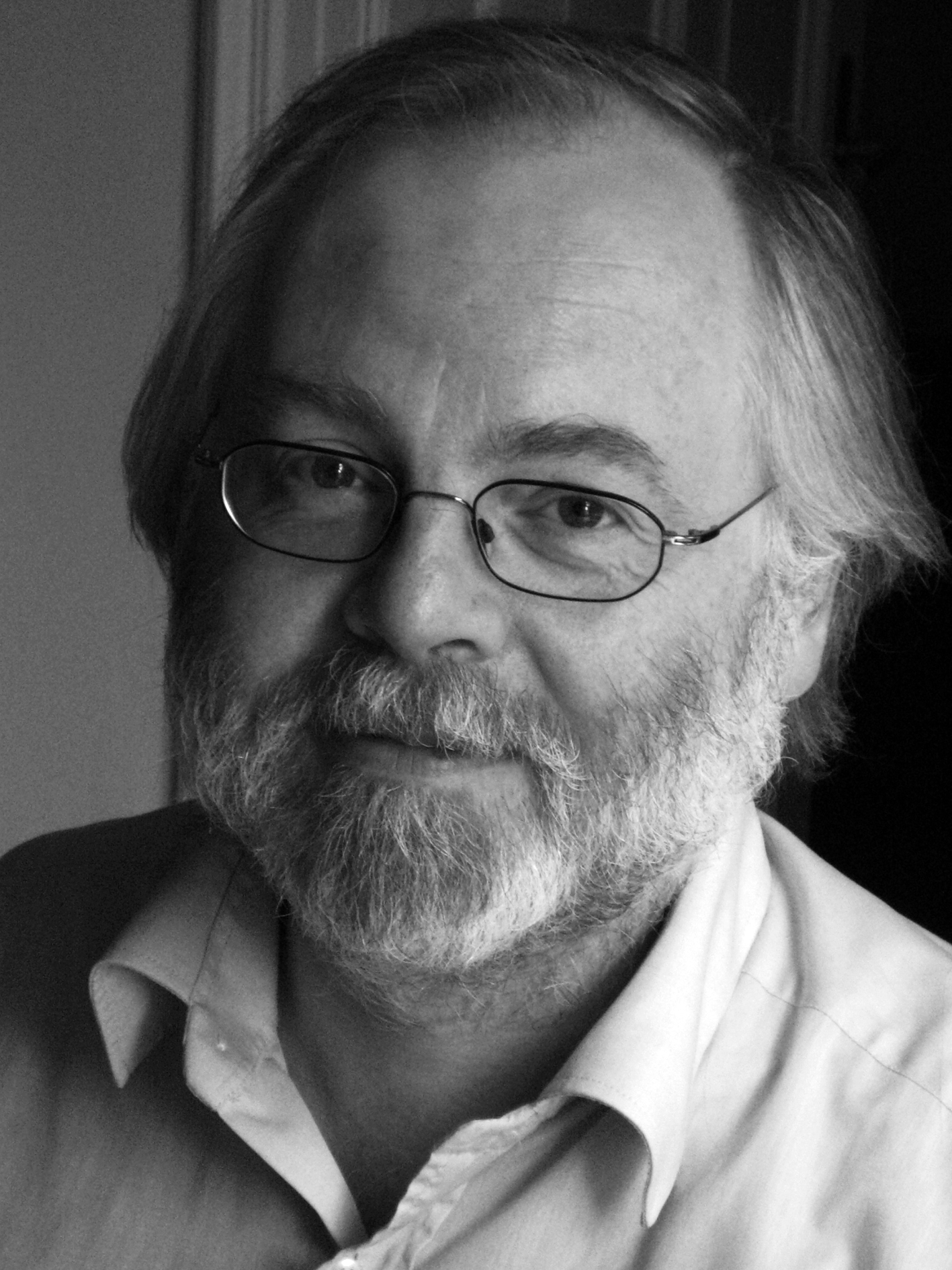 Unser erster Referent ist Bernhard Echte. Herr Echte is a linguist, organizer of exhibitions and publicist. For many years, the Zurich Robert Walser-Archive was directed by him. Today, he is an entrepreneur, managing the publishing company “Nimbus, Kunst und Bücher”.
His presentation will be on Thursday, April, 11th, 2013 at the Unterhaching InterFace AG building. As usual, the event will start at 6 p.m. – we asked the speaker to start at 6.30 p.m. After the presentation, you can exchange ideas and sit together enjoying the evening.
There are still a few vacancies. If you would like to register for the IF Forum with Herrn Bernhard Echte, send us an e-mail!
Herr Echte is not just entrepreneur with all his heart. He is also someone who can tell an exciting story. He knows how to make his audience fascinated by alien worlds. Naturally, his favourite topics are enterprises and entrepreneurship.
In his scientific role, he knows Jean Paul and his work particularly well. Consequently, he is the ideal person to draw parallels between the small-scale entrepreneur Jean Paul and today’s entrepreneurs. And that is exactly what he will do next Thursday. Come and let yourself be carried away to the world of entrepreneurship as it looked more than 200 years ago.
I look forward to seeing you!
RMD
(Translated by EG)
 A Visit to Modern Times

JJean Paul presentations at the IF Forum
In 2013, the IF Forum will deal with the modern parallels to Jean Paul’s topics and ideas.
With presentations about entrepreneurship, hypertext, wit and new media, we wish to show new perspectives and questions with respect to the here and now.
Come and watch!
Jean Paul the Entrepreneur
Jean Paul was among the first German authors who actually could make a living from their art. Mind you, this was regardless of him having started under hard circumstances. He went to the intellectual centres of his time: Leipzig, Weimar, Berlin – and his books were a success to make Goethe envious. When Jean Paul married, even the Prussian Queen invited him to have tea with her and gave him a silver dinner set.
Jean Paul’s ascent and success was not due to accident. Instead, it was because of prudence and entrepreneurial instinct. Even when times were hard and the Napoleonic Wars devastated huge parts of Europe, he was still able to maintain his position. The way Jean Paul combined sustainability with success is still remarkably modern today.
Our speaker Bernhard Echte, linguist, organizer of exhibitions and publicist, used to be the managing director of the Zurich Robert Walser-Archive for many years. Today, he is the director of the publishing company “Nimbus, Kunst und Bücher”.
Time: April, 11th, 2013 (Thursday) | Starting at 18.00 hours | Location InterFace AG, Unterhaching
Jean Paul and Hypertext
Even before he took the name Jean Paul, the young Johann Richter read everything he could lay hands on. Hardly any of the books he read belonged to him. He wrote down summaries of everything he read in his notebooks. In the same notebooks, you would also find comments on ideas currently cursing through his brains. Jean Paul added catch phrases to all his ideas, now called Tags. In doing so, he created a huge private encyclopedia. It was structured like a modern database. Said encyclopedia was to be the basis for his literary works. Without this database, Jean Paul would never have been able to put into practice his unique style – a style which is volatile and exact at the same time. He managed to make a virtue out of the financial misery of his youth the result of which still surprises us today.
Our speaker Annina Klappert is an assistant teacher at the seminar of general and comparative literature at Erfurt University. Her dissertational thesis was a structural comparison between the texts and hypertexts of Jean Paul. She specializes in media, referencing and virtual reality.
Time: July, 11th, 2013 (Thursday) | Starting at 18.00 hours | Location InterFace AG, Unterhaching
Jean Paul, Wit, Postmodernism and the New Media
He was a “Non-Believer in God”, a “witty decomposer” and an ardent cosmopolitan, sceptic and joke-teller. His pedagogical doctrine Levana is highly praised. It advised to use wit and irony as the basis for a healthy personality, rather than the grim sternness known from Fichte’s oratory to the German nation. In his policy of the “third position between the Germanics and the Bonapartists” you can anticipate the post-modern irresoluteness between opposing poles of “truth”. With his esthetical deviation, he already practices the typical interruptions and jumps common in the hypertexts of the internet. Who was this man who hardly ever left his home and yet was mentally so far travelled that he surpassed many of his contemporaries?
Our guest Roberto Simanowski is professor for media sciences at Basel University. He investigates the changes in writing caused by the digital age and publishes the online magazine dichtung-digital – a journal for digital aesthetics.
Time: November, 7th, 2013 (Thursday) | Starting 18.00 hours | Location InterFace AG, Unterhaching
Roland DürreThursday April 4th, 2013
Tweets on Twittering and Blogging #161
Here are my tweets of last week on:
Blogging and Twittering, Wisdoms and Rules:
130418 Not all advice is good advice – also true for twittering and blogging! #Twitter #Blogging #Wisdom
130419 Many strokes will fell the oaks – also true for twittering and blogging! #Twitter #Blogging #Wisdom
130420 Plenty of straw means little corn – especially true for blogging and twittering! #Twitter #Blogging #Wisdom
130421 The more brains, the less luck – also potentially true for twittering and blogging! #Twitter #Blogging #Wisdom
130422 More battles mean more glory – is that also true for twittering and blogging? #Twitter #Blogging #Wisdom
130423 Too much knowledge will give you a headache – not to forget, twitterers and bloggers. #Twitter #Blogging #Wisdom
130424 Much science means little conscience – something I do not appreciate when twittering and blogging! #Twitter #Blogging #Wisdom
There is a new tweet each day. See twitter.com and “follow” RolandDuerre!
Enjoy!
RMD
(Translated by EG)
P.S.
I took the proverbs from Alle deutsche Sprichwörter.
Roland DürreWednesday April 3rd, 2013
INDEPENDENT MINDS!
Again, I found a nice article in Eberhard Huber’s projekt (B)LOG “about projects and people”:
It is not easy to have an independent mind (Mitdenken ist nicht einfach).
Eberhard isolates four reasons for “the lack of an independent mind”:
- Solutions are not clear;
- Information is not complete;
- There is no freedom of ideas;
- Fear
He might well be correct. But what a pity! Because if everyone in a team, project, enterprise were willing and capable of “having an independent mind”, everything would work a lot better.
So what exactly is the meaning of having an independent mind?
For me, having an independent mind means that you are willing and capable of contributing towards a shared future concept with your own competence. If everybody in a team, project, enterprise did it on the right topics, at the right time and at the right place in the appropriate way, we would probably no longer need any “project managers”. And everything would run smoothly, anyway.
One of the cornerstones of success is the culture lived inside a team, project, enterprise. A second cornerstone is the social network of the team, project and enterprise.
In order for the culture to work well, such elements as communication at eye-level and transparency must basically be a matter of course. Values, such as civil courage and constructive disobedience must be accepted and lived. In fact, it is quite simple: the social system team, project, enterprise must create a fear-free and transparent setting for knowledge and creativity as a basis for cooperation.
Networking is easily organized and the rest can also be practiced together. You will soon see huge improvements.
RMD
(Translated by EG)
Roland DürreTuesday April 2nd, 2013
My Proposed Paper on Knowledge Management
I no longer like the “huge events” where you talk through microphones and loudspeakers from the front end of the lecture room. My preference is towards the free formats where you can exchange knowledge at eye-level. Consequently, I – along with friends – initiated the PM-Camp. By now, it has turned into a beautiful success story. In June alone, we will organize three local PM Camps in Stuttgart, Vienna and Bad Homburg near Frankfurt. You can expect news from those events pretty soon.
Regardless, I decided to write and send a proposal paper for an old-style event a short time ago. The event I am talking about is the 9th Stuttgart Management Days “Knowledge Will Bring Us Together”. It will be from November, 12th to November, 13th, at the Stuttgart Liederhalle. The event is organized by “wissensmanagement – Das Magazin für Führungskräfte”. I know Neusaß (near Augsburg), where the publishing company is situated, quite well from my youth.
I designed the presentation because I think we absolutely should share knowledge and we need transparency and clarity. That is why knowledge must not be locked up in some kinds of systems. It must be set free to reach social areas of humans in enterprises, institutions and society. This is the only way for us to give our knowledge a chance to be applied and achieve something.
If you want to practice “good” knowledge management, it does not really matter what technology you use. Instead, the important thing is a “good” entrepreneurial culture. With this in mind, I wanted to give a presentation before an audience of “knowledge management experts”.
So I booted my last remaining MS computer, accessed the “form to be filled in by applicants” on the website of the “wissensmanagement”, downloaded a terrible word form and spent a nice Saturday afternoon formulating my ideas for the presentation in word (!).
Firstly, I read the deadlines to be met:
April, 30th, 2013 – deadline for submitting papers
October, 11th, 2013 – deadline for final documentation/slides
November, 12th – 13th, 2013 – congress
😉 And here is the first problem already: How am I supposed to know all the things that will move me between now and November? Even today, I already feel a lot like changing some things in the paper I submitted on March, 23rd. Here are the data I entered on the form to be filled in by prospective speakers:
Speaker
Name: Dürre First Name: Roland. M.
Academic Title: Dipl. Math. Univ.
Position: Managing Director Enterprise: InterFace AG
Postal Address of Enterprise: Leipziger Str. 16, 82008 Unterhaching (www.interface-ag.de)
Telephone Number: 089 – 61049-0 Fax: 089 – 61049-85 Mobile Phone: 0171 48 50 115
E-Mail: roland.duerre@interface-ag.de
Biography
Short CV outlining your professional career – will be published on the internet (max. 500 symbols)
Pioneer of the third computer science and communications technology generation. 1969: studied mathematics and computer science with F.L. Bauer (TUM). Worked at Siemens UB D as a student until 1979 (developed IT basic technologies) and later as a regular employee (operating systems for big “special projects”). After two years at Softlab: founded InterFace Connection GmbH, today InterFace AG with Geldmacher in 1983.
Sideline: blogger and network activist (if-blog.de, duerre.de, pm-camp.org …)
Title of Presentation
”Our Enterprises Need New Knowledge“
Sub-Title
How values and culture can help us to accept and utilize change.
Focal Points
4-6 points that outline the focal issues of your presentation
Humans will be successful if they have education and knowledge, along with courage – and if they enjoy their work. The success of an enterprise is based on values and trust. The huge challenge in an enterprise is strategic clarity and communication at eye-level! The knowledge of an enterprise must not be locked away. Instead, it must be set free! ”Social Media“ can help with more than just change.
Abstract
(max. 500 symbols)
The world changes all the time. Innovation becomes “creative destruction”. Transparency and sharing are demanded. How does leadership in the 3.0 Enterprise meet this challenge? What does a competitive entrepreneurial culture of “today” look like? How can we make sure to make “the right decision” more often, instead of “the wrong decision”? How to know the difference between “good” and bad”?
What role do “Social Media” play?
Content
Extended description of content (250 to 500 words)
Change is a logical conclusion of evolution and to be lived and supported by all in our enterprise. The always necessary process of continued improvement will be worked on together. … … The people working in our enterprise collaborate closely. Change is nourished by ideas from everyone. The basis for our future is empowering of people“. (Citation from our entrepreneurial principles):
Problem or chance?
More knowledge will generate change, change will generate new knowledge. This development seems to gain speed. The requirements our “world” confront us with change quickly. The entrepreneurial knowledge and competence must remain dynamic – it must not become dogmatic.
More and more enterprises will fail because of their “individualistic hierarchies”. On today’s markets, they can only survive with “new ways of thinking”: concepts developed from insights that were gained through the entity of the enterprise. Popular and important catch-phrases are crowd and swarm. There will be a merging and morphing of individual knowledge into shared knowledge.
Why is that so?
Humans live in “social systems”. Social systems can be NGOs, unions, associations, churches or enterprises.
Enterprises explicitly have an economic goal. It is to provide products and services for the market and thus feed their employees. They are subjected to the permanent change of their environment and must react flexibly.
Where something is deficient, we must find and improve on it. Where you have a special strength, you must identify and utilize it. You must remain aware of risks and chances at all times. Events that seem neutral or outside of potential evaluation might quickly become relevant.
It only makes sense to think about solutions after you have identified the important (correct) questions. “Future management” must become part of your daily routine.
How to achieve it?
Sharing experiences and learning of the “world inside and outside the enterprise” is the basis. Information must be collected by all parties concerned and made available to all parties concerned. Everyone may comment, add to, evaluate and weigh… The “enterprise crowd” will evaluate the relevance, develop the strategy and eventually decide upon operative measures.
What do we need?
Especially in distributed worlds, these kinds of processes can only be managed with supporting IT systems. They have to be designed like “games” (”Gamification“). The game must guarantee the gain of both the enterprise and the individual employee. Credits gained during the game must become part of a bonus in real “Euros”. Success will increase your reputation inside the enterprise and will become an asset for your future career.
Naturally, this is something you will only be able to do in an open, transparent and free entrepreneurial culture. The enterprise must realize fear-free areas. “Sharing knowledge” must be perceived by all as something advantageous.
Please include a digital picture (Portrait) (JPEG/GIF, 300 dpi)!
Thank you very much.
So far the form I filled in. I immediately processed it via email and photo to the given address.
I did not have to wait long for the reply. It was an invitation to sponsor the Stuttgart Knowledge Management Days.
Well, I am almost tempted. Because if I act as a sponsor, my application might well be taken more seriously. You can hardly refuse a sponsor’s presentation, can you?.
Now I am no longer surprised that the presentations on these kinds of events often sound so much like adverts and self-display. And why, consequently, so many people prefer barcamps.
Well, I decided not to sponsor the event. I am almost sorry I sent my paper. If the presentation will be accepted, I will still go and speak. And I will give my best. I will try not to speak as a front-end orator, but instead, as far as the surrounding will make it possible at all, I will invite the audience to participate.
And if my paper is not accepted, I will present it elsewhere. And I will then have a good warming-up-story.
During this activity of mine, I also discovered the Deutsche Gesellschaft für Wissensmanagement (GfWM). It cooperates with the publishing company of “knowledge management”. I am not yet familiar with the association and lobbyist structure of knowledge management. However, I am assuming that it is quite similar to other associations in the sphere of project and quality management. It is mainly about power and “that funny stuff”.
So now I have the idea of founding a barcamp for “sharing knowledge” (WI-Camp). It would enable us to meet just as nicely for knowledge management and to exchange ideas on knowledge as we are now doing it at the PM camps on topics around project management. If you are interested, just contact me.
RMD
(Translated by EG)
Roland DürreMonday April 1st, 2013
BREAKING NEWS
Once in a while, you will learn remarkable news from hacker circles:
President Giorgio Napolitano did it – Italy has a new Prime Minister!
And – hard to believe, but true:
The man to lead Italy out of the crisis is Franciscus! With a heavy heart, the Catholic Church consented to give Franciscus free licence for a period of – for the time being – three months to try and save the Catholic Church. Fortunately, the former Pope, Benedikts XVI. is still alive. So he immediately agreed to return to his old office for this period of time. Another example of German solidarity with Italy!
As early as tomorrow, he will introduce his “cabinet of experts” and absolve Mario Monti from all his sins.
I think we Germans really should bow before our Italian friends. Once again, they managed to squeeze out of a tight spot with a charming solution. I am sure this new turn of events will have the short-time effect of catapulting Italy back into the top EU ranks.
The aforementioned sources also told me who was the architect of this solution: our great Federal Chancellor Angela. She used her very first short visit to remind the pope how important it is to save Italy, not just for Europe, but for the Catholic Church, as well. Because, as we certainly agree: “without Italy, there would be no Rome and without Rome there would be no Catholic Church”. And she also told him that he is “precisely the right man for the job, as well as for saving the EURO”.
I think today’s decision is more than just a liberation of Italy. The first of April will also become a European Holiday. Consequently, I demand to introduce it as an EU-wide spring holiday!
RMD
(Translated by EG)
Roland DürreSunday March 31st, 2013
Easter Holidays on the Internet
Tonight, I woke up twice from the ringing of church bells. It was during the time frame that actually did not exist: between two and three in the morning. In Germany, this is possible, because it is Easter time and due to a very old tradition, you are permitted to make noises for everybody to hear in the middle of the night.
This morning, I browse through the internet and find in Google+ a citation published by Marcus Raitner which he found in the blog die ennomane:
“Freedom of faith is the freedom to even believe in absurdities. Freedom of opinion is the freedom to call precisely those things absurd. In this spirit: Happy Easter to You!”
There is nothing Marcus wants to add to this sentence and I, too, can only agree.
Here is the rest of the story:
In her blog, “die Ennomane” informed us about a sarcastically written text on the Christian Easter Cult. Said text had appeared on Good Friday in Der Postillon. It seems that the author was reprimanded for what she wrote in the article and felt she had to justify her words. This also led to a few comments. In my eyes, the comments were quite interesting, because they revealed a few patterns of thought that are typical for “believers”.
I copied some short phrases from the comments and will then relate my own ideas on those words I marked “bold”:
- Antje Schrupp
Comment by Antje Schruppp | March, 30, 2013 at 22:55:28
I started associating the sarcastic, anti-religious jokes currently published all over the place with… a long time ago…
…
However, the manner in which it is exposed to ridicule adds up to being a mere power struggle, that is: to the question who will finally win against whom. Of course, being a Good Christian, I could decide to remain totally untouched and just turn the other cheek. With respect to the global perspectives, however, I dare to predict that “you” (that is: those who consider religion “gaga per se”) will be the losers in this power struggle. And that is something that gives me a little pause, because there actually are quite a few things about religions, especially their institutionalized forms, which badly need criticism and reform. - Enno
Comment by Enno | March, 30, 2013 at 23:06:19
…
Hmm… well, threatening that we are going to be the losers in a global power struggle is really a great argument, isn’t it?
… - Antje Schrupp
Comment by Antje Schrupppp | March, 30, 2013 at 23:23:25
You do not really believe that I was threatening you with anything, do you? - ….
Of course, the entire stream of comments can be read here: 
So here are my comments:
Personally, I found the article in Der Postillon rather negligible. All it did was re-kindle some well-known facts that had already been better formulated in a sarcastic and humorous but original way. The only novelty (and perhaps this was actually worth criticism) about the article was that he called religious rituals mostly “gaga”.
I am sure one could argue about when or under what conditions something is “gaga” or simply appears to be so. But then, who is to decide what is “gaga” today and what is not? To me, plenty of what I experience today seems “gaga”.
But what I find particularly noticeable is the choice of words in the arguments of the commentator Antje. Apparently, she represents the position of a Good Christian.
The first term I find worth noting is “Good Christian”. That is what Antje calls herself.
Basically, I can only excuse the “Good Christian” as a manner of speech, or else as some “thoughtlessly spoken flowery phrase”. As soon as I take a closer look at the term, questions come up:
What exactly does it mean to be a “Good Christian”? Does it mean you have to have given up your autonomy and willingly submitted to rules set by someone else? Is it even possible for a human to give up his or her autonomy autonomously? Or is a Good Christian someone who just adheres strictly to the Christian rules while having kept his or her autonomy? But then, is that possible?
Or is a “Good Christian” just meant as the opposite of a “Bad Christian”? And then, what makes a Bad Christian – from whom Antje distances herself?
Linguistically spoken I find the “Good Christian” at least better than the “Believing Christian”. That is a term I often hear: I am a Believing Christian. So what would an “Unbelieving Christian” be?
And secondly, I am always personally concerned when I hear someone mention that a power struggle will be lost or won. It is what I hear quasi automatically from people who admit to a religious belief.
Incidentally, tolerance means that “everyone may believe in what he chooses to believe”. Why do the “believers” – who need this tolerance and claim it for themselves – keep talking about a power struggle that will have to be “lost” or “won”?
Incidentally, I would include all those in my definition of “believer” who think they know the truth, including the atheists. And how can mammals, even though basically capable of reason, but otherwise equipped with rather limited characteristics, think they know all the truth? What is God except a special metaphor for a special higher meaning, a term invented by humans?
And finally, it annoys me to read that believers who talk about winning or losing a power struggle show complete incomprehension when their words are perceived as threatening.
But here are a few personal thoughts:
When I was a small child, Easter was just great. We were allowed to seek Easter Eggs. Our joy was immense when we found some. The Easter Bunny symbolized the coming spring. I must have been five years old when I was given a second-hand children’s bike. The joy about this was of a very long duration.
Once I remember from my childhood that Easter was cold and snowy. We had no Easter-Eggs-Seeking in the garden. But we made the best of it: we carried the snow into or house with bowls, poured hot chocolate into moulds and let the figures get hard in the cold snow bowls. That was nice.
Then school started and that was the end of my joy. Easter became similar to pain, a symbol of human cruelty, of guilt and atonement. You had to fast in order to become clean. We learned about the Holy Grave. And that we are bad and someone else had atoned for all of it.
Today, we have another white and cold Easter. And since it is no fun to go out and there is no Easter-Eggs-Seeking either, I browse through the internet. Where I am confronted with enlightenment that never happened.
On the radio, I hear about the religious super festival as it is celebrated with a huge amount of ego-centrism. Including great patter. Except: that is not what reality is like. Yesterday, the agreement on weapons transfer failed, the environmental facts get more depressing each day and today they again talk about love and humility.
RMD
(Translated by EG)
Roland DürreFriday March 29th, 2013
Zarah Leander – Life is Full of Surprises!
A short time ago, Andreas sent me the following email:
Hello Roland,
today, I write about a totally different event. I occasionally manage my girl-friend’s affairs and therefore sometimes organize a concert for her. Being an “opera singer poaching in diverse genres”, she also – along with opera pieces and classical concerts – has an evening about Zarah Leander in her program. Knowing that you are rather interested in art, I thought maybe I should not leave you in the dark about the evening on April, 13th, in the Gasteig “kleiner Konzertsaal”. I would be truly glad if you found the time and inclination to go and see the performance!
Andreas
Andreas Lehmann is an old acquaintance of mine. Time and again, our paths met. Decades ago, it happened at IXOS – that was during the “wild times” of the “new economy”. IXOS was a very special DAX- and NASDAQ enterprise. The last time chance brought us together was during the “ISARNETZ – die Münchner Webwoche” in 2012. All of a sudden, we sat facing each other on the board for deciding who was to get the “Isarnetz Award”.
Of course, I will follow his invitation. Here is the text informing about the event. I find it truly exciting!
 Zarah Leander returns to Munich!
To be sure, it is not the Diva – whose Munich performances probably were more than 70 – herself. Standing in for her, the ”Duo InterMezzo!“, starring singer and author of the work Tatjana Conrad, are preparing to back-trace the great star under the German heavens of the 1930ies.
On Saturday, April, 13th, 2013, Tatjana, whose adopted home is Berlin, will present her theatrical jewel „If you want to see a star, look at me! The light and shadowy sides of Zarah Leander“, directed by Philip Lüsebrink in the Gasteig Kleiner Konzertsaal. The role of Arne Hülphers, who was the third and last husband of the great chanteuse, will be played by David Grant.
Who was Zarah Leander? Mythos. Diva. Well, that much is certain. Culprit? Victim?
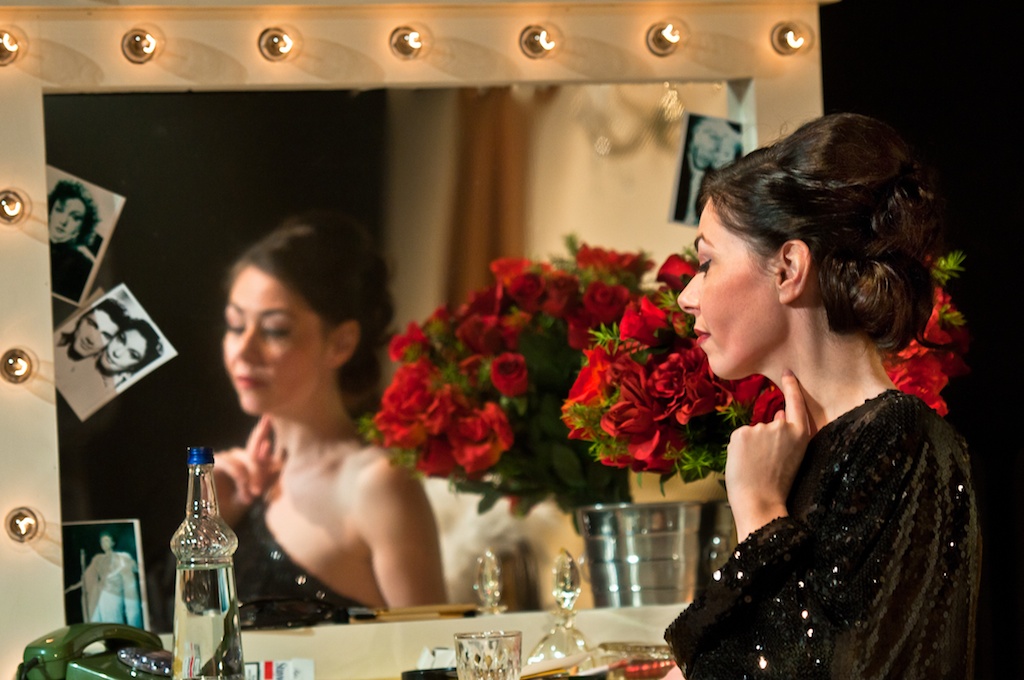 <The two artists invite you to investigate those questions together with them and finally, perhaps, not really come up with an answer, but a little more understanding for the star who graced the heavens of the “Third Reich”. You will not have any reason for sadness – on the contrary: Conrad and Grant want to tell you in words and sounds how this woman captured her audience and they wish for her humour, charm and wisdom to also spread a little shadow and light over the evening.
Besides musical surprises, earworms such as ”Eine Frau wird erst schön durch die Liebe“ and ”Yes, Sir!“ will contribute towards ”Ufa Nostalgia“ in the same manner as ”Waldemar mit dem schwarzen Haar“ and evergreens like ”Ich weiß, es wird einmal ein Wunder geschehen“ and ”Sag’ mir nicht Adieu“.
This and some more “hurly-burly” will await you on our concert evening. We want it to be a musical- historical “red carpet” that might reach the audience via memories of the great Zarah Leander.
Consequently, I will be at the Gasteig Kleiner Konzertsaal on April, 13th, and I look forward to a very special evening. It would be doubly nice if I were to meet a few friends, as well! So why don’t you come – I am sure it will be a great evening.
RMD
(Translated by EG)
Roland DürreThursday March 28th, 2013
Tweets on Twittering and Blogging #160
Here are my tweets of last week on:
Blogging and Twittering, Wisdoms and Rules:
130411 Too many dogs will kill the rabbit – also true for twittering and blogging? #Twitter #Blogging #Wisdom
130412 Plenty of rain is a downpour – that is true for twittering and blogging! #Twitter #Blogging #Wisdom
130413 Many individual grains will make up a heap – especially true for blogging and twittering! #Twitter #Blogging #Wisdom
130414 Plenty of art means plenty of folly – also true for twittering and blogging! #Twitter #Blogging #Wisdom
130415 Mach ado about nothing – also occasionally a phenomenon when twittering and blogging. #Twitter #Blogging #Wisdom
130416 Too many sermons will give you a headache – not to forget, twitterers and bloggers. #Twitter #Blogging #Wisdom
130417 Many preachers do not live by their own sermons – be careful when twittering and blogging! #Twitter #Blogging #Wisdom
There is a new tweet each day. See twitter.com and “follow” RolandDuerre!
Enjoy!
RMD
(Translated by EG)
P.S.
I took the proverbs from Alle deutsche Sprichwörter.
Roland DürreWednesday March 27th, 2013
… or How Poor the Rich Are?
In my last article, I wrote about the “average wealth of a German household. According to the Deutsche Bundesbank, it is around 51,400 Euros net value and surprisingly low when compared with other European countries”.
The issue kept haunting me. Consequently, I informed myself about our total federal debt. According to Zeit , the country, states and communities were indebted to the tune of more than two billion Euros in 2011. That is 24,711 Euros per citizen. During the last year, the number increased again. Neither does it take into consideration the probable liability caused by the gigantic guarantees of the “Euro Rescue Fund”.
The assumption that every German citizen has to stand up for 25,000 Euros of federal debt is definitely on the low side. Moreover, the number might very well increase dramatically in the near future. Getting back to the “average” household fortune of the Germans at a net sum of 51,400 Euros and assuming that every household has an average of more than two persons, then the “average” household debt is already considerably higher than 50,000 Euros.
In a nutshell:
Statistically spoken, the German households are ”publicly” higher indebted than what their private net fortune amounts to.
Poor, rich Germany?
As I said earlier: I am glad I never studied economy!
RMD
(Translated by EG)


