
Roland DürreThursday April 30th, 2015
Entrepreneur’s Diary #108 – Morals of Metric
A value-based enterprise culture is an essential requirement for its sustainable success. And what is more – if all the performers in an enterprise are well-educated and work on shared projects with courage and joy, then you are on the home run already.
 This was and is my belief. Except how are persons in leading positions (according to my definition, those with the normative responsibility for the enterprise) supposed to manage that? Perhaps they could be role models to some extent? But then, can you really generate entrepreneurial culture from top to bottom?
I experienced myself that it cannot be done. On a small scale, it happened in my own enterprise – on a larger scale, for instance at SNI (may it rest in peace). At this company, I met for instance Gerhard Schulmeyer. He started out with great expectations and introduced many creative measures that seemed very prudent to me – and finally he failed regardless. He was unable to change or break the system.
Basically, building a “good enterprise culture” is nowhere near as easy as it sounds. You cannot grow enterprise culture “like in the test-tube” by adding the right ingredients and creating the optimal temperature. Either it will develop by itself or it will not develop at all.
Perhaps the contribution by and skill of the ”leader” – possibly acting a little like the jester – lies in again and again forcing the people to deviate from their daily routines. He constantly has to find and activate new impulses all stakeholders in the enterprise enjoy and draw motivation from. Thus, he has to try and push the enterprise towards ambitious and – above all – exciting projects and challenges at all times.
In the context of these topics, I experienced a nice philosophy seminar a short time ago. It was about morals. Also about enterprise morals as part of enterprise culture. Morals are a dangerous thing, not just for and in enterprises. Values can easily become hardened or turn independent. Or else, they might often cause a less than optimal “This is how you want to do it” or “This is not how you can do it”, thus preventing change.
More often than not, these “basic rules” are then made to become part of a strict system of processes which – well-meant but poorly executed – has been developed from “best practice experience”, but which again seals the system. And thus, it takes away the air to breath for the internal stakeholders. Just take a look at one of those ISO 9001-certifications behind its façade.
However, the “new” enterprise (anti) culture, especially in big enterprises, seems to spring from a totally different source. A few years ago, the entire entrepreneurial world was absolutely keen on the “Balance Score Card“- system. The underlying idea was that everything can be measured and thus evaluated with numbers and digits.
Even the knowledge of an enterprise was to be summarized in a “knowledge balance sheet” (Wissensbilanz). Human resources – note the term -, too, were to be processed by profiling your colleagues in order to find underperformers. And there are still places where this belief is adhered to even today.
This metrication of enterprises causes a totally new form of enterprise morals. Decisions are no longer based on: “This is how you want to do it”, but on the question: “What do we gain by this?”. And the answer to that question should preferably be backed by numbers.
However, numbers as such make no sense. As all metrical measures, they need a unit. And, of course, the unit of entrepreneurial metrics is money (EUROS) – which then quite logically leads to the maxim “shareholder value”. ..
P.S.
For more articles of my entrepreneurial diary, click here: Drehscheibe!
Roland DürreMonday April 27th, 2015
Project & Product – #PMCampSTR
 The Stuttgart PM-Camp (Hashtag #PMCampSTR) will take place from May, 7th through May, 9th, 2015 at the Stuttgart “Hochschule der Medien” – and I already look forward to being part of it. I bought both the admission and train ticket and made my reservation for the room at the Commundo.
The team in charge of organising the event chose “Project and Product” as their title. This is how the Stuttgart Organizational Team wants to open its PM-Camp for interested persons outside the classical field of project management, for example for IKT (information and communication technologies), as well. Using the term “product”, for instance, they aim at engineers who build high-end products.
What is a project?
Let me cite Wikipedia:
A project is a goal-oriented, one-time proposition consisting of a number of coordinated and controlled activities. It has both a clearly defined beginning and an end and will be realized taking into consideration all necessary restrictions with respect to time, resources (such as money/cost, production and work conditions, employees) and quality in order to attain a goal .[1]
This definition, which in my opinion is a rather simplified view, of “project” means:
- Every project has a beginning (project start).
- Every project has an end (deadline for completion).
- The desired results have been defined as project goals.
- All resources to be used are pre-defined.
- The project goal must be attained on time.
- The planned resources must not be exceeded.
- There is a plan: the project plan.
- The milestones defined in the planning are to be adhered to.
As I see it, projects only deserve the name if they cause a considerable change or if they create something really innovative or new. And that tells you at first glance that something is obviously wrong with the above definition.
Regardless of excellent planning, we witness massive deviations from the goal with the resources often being enormously exceeded, even with simple engineering projects. The reason is probably that even tasks that sound simple have a surprising complexity.
Innovative Change!
The situation gets worse if we are talking projects that are supposed to creatively influence all kinds of social systems and the evolution that happens anyway. If you look at the way a project is described, you will realize that the motto “close your eyes and do is hands-on” is something you are basically forced to apply. In the process, you will not be able to integrate new and better findings into the developing project path at all times.
Even in retrospect, it will be hard to judge the causal connections between measures and their effect (usefulness?). So how is anybody supposed to do so in advance? Basically, innovative change is not something you can just plan linearly. Instead, you have to find a soft and agile way to reconcile change and permanent developments.
Consequently, projects are a contradiction to innovation. Innovation is creative destruction. Which is something that will additionally make the enemies of change interested, especially if they are parties concerned with the intended change. That will make it even harder.
Projects as a part of change?
Hence, I find a definition of project more appealing if it considers a project as one of many integrated parts of a continuing process of change and improvement. Controlled change is supposed to generate useful results. Basically, I consider all well-thought-through activities designed to change or influence developments projects. To me, it does not matter if the project is actually “tangible” or if it renders abstract “virtual” results.
What is a product?
The planning, development, and production of a product, as well as its marketing, sales, support and service are the result of many small and bigger projects. They are all multi-dimensionally linked and thus connected to form a multi-dimensional “mega project”. You will want to remember phrases such as network, dynamics, learning, trial and error, innovation… But then, this is not only true for the tangible product, but also for services.
Box product or service?
So a product might be a tangible object – meaning something you can “touch” – which has been developed by an organisation with engineering competence and in huge quantities. It is also “sold” to either many customers or produced individually and “on demand” in small numbers. As a general rule, such products need to be complemented by a support service if they are supposed to be a market success and generate a “sustainable business”.
However, a product may also be a service rendered at the customer’s place or for the customer by persons who acquired special qualifications and “best practice” with their organisation. Those qualifications are usually the result of decades of personal and collective learning.
Creating a “tangible” product might actually necessitate more projects than creating a “virtual” product.
The difference it makes for an entrepreneur.
Sometimes there is a huge difference for the entrepreneur between designing a “true” product enterprise and an enterprise the product of which is offering a special service.
For instance, whenever selling a “true” product, the entrepreneur should keep in mind that feedback from the customers and from the market usually takes a lot longer than if he offers a service. More often than not, you will invest long-term into a “true” product that still has to prove its value on the market. In that sense, such a product is easier to scale in case of success than a service. But then, it also involves a higher risk.
If you sell a service, you will have your feedback rather quickly, which also means that you can learn from mistakes and perhaps change your strategy.
Well, that is about all I can think of when it comes to product and project. Except that projects, basically, are the small modules of our lives. All conscious decisions for behaviour that makes a relevant difference – for yourself or for the market – are in some way projects.
RMD
(Translated by EG)
Roland DürreWednesday April 22nd, 2015
Entrepreneur’s Diary #107 – Twenty Hours of Continuing Education During your Leisure Time?
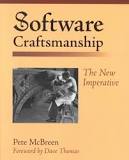 In 2013,we at InterFace AG had a beautiful “Technological IF Forum”. It was about “Software Craftsmanship”. We had great guests and competent speakers. The discussions were about questions such as: So how do you become a champion? How to get the necessary experience? How can you get motivated towards perfection? How to best achieve optimality and quality in a team?
One comment in this workshop, in particular, remains unforgotten: at the time, Bernhard Findeiss related (perhaps he also meant it a little provocatively) that a good “craftsman” who wants to become a real champion in his field will have to invest up to 20 hours for his continuing education. And that usually this will not be possible during working hours. Instead, a significant part of your leisure time will have to be sacrificed for it.
Initially, I was surprised to hear the number. I had to think of how many people strictly divide their time between leisure and work. And I remembered quite a few discussions I had with my colleagues. For instance about how much of the time you spend on your continuing education program can be considered official work time. Consequently, I did a lot of thinking on the topic during the last two years. On the one hand, you certainly need twenty hours each week for practicing and learning if you strive towards championship.
I totally agree. On the other hand, you still need plenty of time in order to work towards success. And then, you also want enough time for your family and private affairs. And I think it can be done. Many of my friends – experts, managers and entrepreneurs, both male and female – live and love their jobs. They are true “champions” and basically spend all their time tackling topics they consider important. And still they are good spouses and mothers/fathers.
I am now a “retiree”. And still, I learn and practice twenty hours each week. Except, I doubt if I am a champion. But I will continue practicing …
RMD
(Translated by EG)
P.S.
For video recordings of the IF Forum, click here: “Craftsmanship“.
P.S.1
For all articles of my entrepreneurial diary, click here: Drehscheibe!
Roland DürreMonday April 20th, 2015
The Mediterranean.
Preamble: I wrote this article in a very emotional state of mind and wanted to publish it quickly. Consequently, I would like to ask your forgiveness for typos and less-than-perfect formulations. I will try to improve them during the next few days.
Yesterday, I watched “Jauch” and I was truly appalled. With the show. With the moderation. With the selection of candidates. With the high degree of inhuman comments you could hear all the time.
I was shocked to see how much room was given to small-minded philistines’ fear. The un-thought-through comments of many candidates truly gave me pause. Christian Haase, probably a self-elected speaker of the Bautzen “Citizens’ Initiative Greenpark” (!) was permitted to publicly talk what was objectively nonsense. The ignorance of German politics was formulated in textbook manner by the far-from-realistic rubbish voiced by the politician and functionary Hans-Peter Friedrich. The riskiness and arrogance of the right-wing Swiss policy and perhaps also society represented by Roger Köppel, member of the “right-wing conservative” Swiss SVP, was given a public platform. And neither was I very happy to see how Maya Alkhechen, who was allegedly a victim and towards whom I certainly felt sympathetic, seemed a little indoctrinated.
To me, it seemed unbelievable that, in the face of such tragedies, people are actually permitted to talk so much rubbish in such a frivolous and superficial way in a central German public TV program. The respect for all the many dead alone would have compelled me to forbid such a thing.
I was happy to see that Heribert Prantl – a lone fighter – held up the values of a humane and enlightened society. And that Harald Höppner, who in today’s FAZ was called “a well-meaning amateur”, at least provided us with a strong symbol.
The rest is gruesome and unfathomable for me.
Here are a few additional ideas about the background of the situation.
As I see it, history is made up of highly complex and causal mechanisms. Even in retrospect, those mechanisms are not easy to understand and explain. Just read a book like “Verwandlung der Welt” by Osterhammel and you will understand what I mean.
This means that everything, also the Africa problem and all others in our current world-wide situation, has its causes. And it would be the duty of politics to steer us wisely through this difficult situation.
About Africa: the ruin of Africa caused by the idiotic politics of the “West” is not something that started just a few decades ago. Our prosperity, which we live in and which seems so important to us that we wish to preserve it by all means, originated somewhere. Among other things, it also originated with our industriousness. As well as with our climate, which basically makes it possible to really work hard. But when all is said and done, our prosperity was achieved at the cost of the poor countries all over the world. What I am saying is: if you think it through logically, it is actually based on exploitation.
Africa burns because it has been exploited for more than three hundred years. Why don’t you just read the history textbooks? Formerly, Africa was basically exploited by the “Western World” – today, it is exploited by all the rest of the world. And then there comes a day when the “rich” need to pay for such behaviour. It is not something you can quickly repair with some “Marshall Plan” or through an administrative process including the notice of rejection. Even saying such a thing is stupid and naïve and borders on impudence.
That is why we cannot just lean back and let people drown, no matter how many reasonable or unreasonable arguments can be voiced in the context.
Let me contribute with a few more ideas in order to open your mind:
- Do any of you remember the refugee catastrophe on the Baltic Ocean in 1945? People in misery fled into “Rest-Germany”. Nobody could distinguish between solders, war refugees, political refugees (because they were national socialists), economic refugees (because they had nothing to eat) or those just fleeing from the Russians. Would it have been a reason to reject them if they had fled because they were afraid of the Russians? And if you can believe history, then even the inhuman and already instable “Third Reich” saved a higher percentage of refugees from drowning than the European Union now does in the Mediterranean.
- What would have happened in Germany, if the MS Europa, the German five-star ship with around 350 persons on board had capsized in the Mediterranean with almost nothing left? I chose this ship as an example because I know it well and I also know what sorts of people usually travel on it. The memorial service for the crashed GermanWings airplane is not long behind us. The dead, too, have their class society.
Let me close this article by telling you that I am currently in a difficult phase of life. In my private life, I am very satisfied and happy. As a social being, however, I suffer more and more under what happens in our society. The behaviour of “my Europe” hurts.
At the same time, I am horror-stricken to see how the same politicians who document their inhumanness on a daily basis without even being ashamed of it want to quickly pass laws and regulations that violate our constitution (VDS, TTIP), neglecting democratic rules and the desire of the people they govern in the process.
Also, I hear more and more lies. I see people acting without responsibility and conscience. There is much more I could write about this. Yet what is worst is my feeling of helplessness. I have no idea what I could do against it and get the impression that all I can do is stand aside as a helpless spectator. And that is something that really annoys me!
RMD
(Translated by EG)
Roland DürreSaturday April 18th, 2015
Changes All Over the Place – Today: Music.
 I do not really know a lot about music and musical instruments (Musikinstrumenten) – in fact, I am not even halfway an expert. You could call me a total layman.
Yet this is no reason for me to not write about them.
First and foremost, I think experiencing music before the age of technology and the “industrial revolution” must have been something very rare and exceptional for most people. And it was probably restricted to very special occasions in life.
For instance, what opportunity did people have 150 years ago when they wanted to listen to music? You probably had to sing yourself or play a basic instrument. Or you had to listen to others playing or singing. I am sure only very few privileged persons could afford their own piano.
Of course, there was no radio and no supermarket background music. The phonograph (Grammophon) was invented as late as 1887. Consequently, listening to music was probably a rare experience, for instance when you went to church, where you could listen to the organ and, once in a while, the church choir. The musical experience was probably exceptionally intense because it happened so rarely. And thus, it made the religious experience possible, perhaps even reinforced it.
Outside the church, you could probably hear the occasional brass band. Or else, if soldiers marched through the streets, you could delight in the sound of the military band – or maybe instead of delighting in it, you got terrorised by it. Admittance for musical events was probably rather expensive. Who could afford to go and listen to a concert or an opera performance? You probably had to be very rich for this sort of luxury.
This is how I imagine the musical world not too long ago. People were probably very moved when they heard those unusual sounds.
Matters are different today. The background music at all times and places immunised us. Music is used everywhere. Even where the theatre wants to be modern, you often get background music during monologues and dialogues. Not to mention the permanent background music in films and on TV.
All this makes me thoughtful. Because something very special and beautiful might have been lost through commercialization.
There is, however, another aspect I find exciting about music. The (professional) music as it originated in the Middle Ages was probably a very formal affair. There were strict rules telling you how music had to be composed. An opera was an opera and an orchestra had a conductor. There were many formats and standards the groups of musicians had to obey. Every kind of music had its name and could be assigned to a higher category. Musicology – so it seems to me – took hold of music and clearly defined what was music and what wa not.
Then Jazz and such came along. A new way of playing music became legitimate. It brought freedom. The term “jam session” was born. Improvisation was again permitted. Musical elements from old times were again considered presentable. And I knew quite a few adults in Germany who snidely called this music “nigger music”.
Vocal musicians such as the “Comedian Harmonists” met as soloists, experimented with their voices and imitated instruments. The beat groups appeared, making quite a few rules obsolete. Today, you will even find huge orchestras without a conductor that still play quite good music.
A chorister I know quite well related a special experience that was innovative for her:
Incidentally, we had a very special concert experience. For the requiem, we stood totally mixed (for instance some tenor next to some basso or soprano or alto), because during the last rehearsal our conductor decided that this made the sound far more homogeneous.
If nobody is near someone who sings the same voice, nobody will be tempted to sing louder than the neighbour. Naturally, the potential downside is that you have nobody standing next to you who sings the same as you, and consequently you really have to know your music quite well if you want to sing what you should sing.
In my imagination, this is how it used to be: for centuries, the voices in a choir stood together in segments. And still, someone will always try something new. And lo: it works. Times change – perhaps also in the “world of music”. There, too, a trend away from “hierarchical music” towards innovative, self-organized “making music” might establish itself. The same might be true for our social life in other areas.
And, being a musical layman, I hope I am not too far off the mark with this article. And I assume that I will never again write about music.
RMD
P.S.
I took the “quaver” from Wikipedia– drawn by F l a n k e r.
Roland DürreSunday April 12th, 2015
School, Education, Future.
On the Facebook page “Alphabet – der Film“, Bernice Zieba advertised the book “Children Do Not Need a School”. She also pointed out that and where you can order the book. The book is about “Homeschooling und Unschooling”. I have not (yet) read the book – consequently, I cannot evaluate it. However, I know the film Alphabet quite well and I strongly recommend watching it.
On Facebook, this entry caused an intense discussion among those in favour and those against compulsory school attendance. The discussion excited me quite a lot, especially because my own experiences with school, both as a student and father of several pupils were anything but positive. Consequently, movements such as “Sudbury – Free at Last” (Sudbury – endlich frei) sound rather attractive to me, at least as a beautiful utopia.
Hence, I could not suppress my desire to write my own comment on the situation of education and school. My comment contained the following ideas:
 Schools all over the world teach, instead of instructing. They do not motivate students to ask questions and think. Instead, they only teach knowledge without knowing. Consequently, the usual rule is that we get knowledge bulimia.
Attempts of the pupils to be autonomous are considered troublesome, the same is true for critical positions. Enlightenment is not encouraged in schools and has become an anti-word. Because it seems to be the major and exclusive pedagogic goal of the educational systems to shape persons in such a way that they will function as frictionless as possible in the final system. It seems that the teachers actually are told to take all creativity from the students and to make them adaptable. This is how we produce system-conform consumers who fit perfectly and without protest into the non-humane performance society.
There is one thing the modern schools and educational systems of this world are extremely good at: indoctrination! Only the degree of indoctrination still varies between schools and cultures.
But indoctrination is the enemy of life in freedom and dignity. This is not how a reasonable change can be accomplished. In fact, we will not even find the “social consensus” which is a requirement for a constructive, humane and enlightened development of our society if we continue in this way.
Here is an example: an honest discourse might be helpful – yet this cannot be realized if we never learned to use the necessary tools!
It seems clear that making sure the next generation has a good education is a central task of all societies (also of ours). This should probably have the highest priority. Yet in actual fact we witness a total failure of our educational system. The deficits found in our schools increase all the time. For many social groups, the situation gets worse and worse.
Regardless of all this, I personally tend to scepticism towards concepts like “Homeschooling und Unschooling”. And I would only find them reasonable in very special cases as a last resort or “ultima ratio”.
Well, so far my comment. But let me say one more thing: I am glad that there are still teachers out there who fight against this – probably world-wide – development by refusing to bend their knees to the pressure of systemic forces. Some of them are known to me personally – and I appreciate them. But unfortunately, I get the impression that they are more and more lone fighters, getting fewer and fewer.
RMD
(Translated by EG)
P.S.
Incidentally, I do not really understand why we always have to use those hideous US phrases, such as “Homeschooling or Unschooling”?
Roland DürreSaturday April 11th, 2015
The Arcis-Vocalisten – on Saturday, May, 16th, 2015, in the Himmelfahrtskirche of Munich-Sendling
After the concert is before the concert! 🙂
… that is what Evelyn wrote to me. After all, she has now been singing with the Arcis-Vocalisten with great enthusiasm and fascination for two years. Among the non-professional Munich choirs, they are something like a league of their own – and in 2015, they celebrate their 10th anniversary. To give this special occasion a suitable setting, they sing the “Vesperae Beatae Viginae” by Claudio Monteverdi in der Munich Sendling Himmelfahrtskirche.
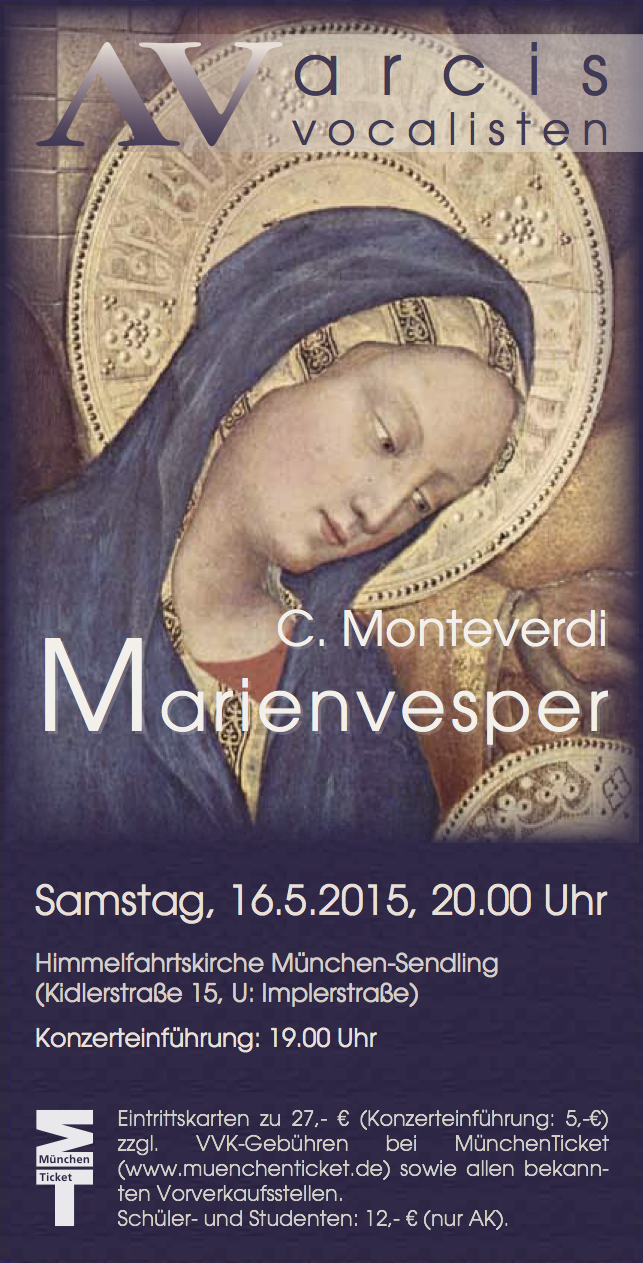
For IF Blog readers who wish to listen to the concert, there is again a special discount. Please contact me!
RMD
(Translated by EG)
Roland DürreFriday April 10th, 2015
What is Existence? What is a Human Being, What Am I?
And what about when I am dead?
🙂 ”To be – or not to be!“
That is not only a basic philosophical question, but also a wonderful song byPigor, in which he really goes on in Heidegger fashion.
Pigor is one of my favourite cabaret performers. In an inimitable way, he makes topics of everyday life and even of philosophy into very special songs. Those songs may be sweet-and-sour or bitter, but they are always humorous.
The question asked by the philosophers about the human existence is one thing. But I am not a philosopher. Yet I actually think about the question: “What is a human being?” and in particular “What am I?”, or, even more to the point: “What remains after my death?”. So what will happen when, in the sense of our civil law, the “natural person” of Roland Dürre will cease to exist?
And over the decades, I found an answer (for myself). Currently, it would read like this:
If you simplify it, I consist of four modules. You could actually make a beautiful axis of coordinates out of them. The four quadrants are my body, my soul, my property and the things I experienced and accomplished.
In this axis of coordinates, my body and my property are material, clearly defined items. After my death, they will initially be what is left of me. My soul, on the other hand, is the sum of all the things I experienced, lived through, learned, as well as my “accomplishments” in life and perhaps even after my death. Those are the immaterial things I cannot easily define.
And, of course, more questions arise. So let us start and analyse the four modules!
My body.
Let me start with my mortal shell – my body. Actually, I am pretty sure that, by now, I do not care what happens with my body after I am dead. Basically, it does not matter if it (me?) is cremated, inhumed, frozen or used for scientific purposes. I would probably advise my heirs to bury me anonymously, because then they will not have unnecessary stress (grave maintenance, etc.) with me.
When I was young, I would have said I wish my ashes to be sprinkled somewhere where I used to be happy (like on a soccer field, in a forest or in some other nice area I rode through on my bike). Today, this is no longer so important for me.
My property.
During all my life, I was rather lucky. Among other things, I managed to accumulate some riches. If you define property according to common regulations, I own shares (of InterFace AG), some realty and a little money. To be more precise: a small virtual fortune at a “bank”. That is a true delight for me. But then, there are two sides to everything in life. Consequently, there is now some kind of morals or super-ego that thinks I should draw up a will. But I hate planning and forcing others to do what I want. After all, it is hard enough to think for myself, so why should I think for others, as well?
Consequently, my only recommendation for my heirs is that they should, first and foremost, enjoy the addition to their own property due to my demise and then they should agree upon how to further distribute my small fortune peacefully. And I am quite confident, because that is exactly what I trust my wife and children will be able to do quite well.
So the question of my property is also solved. Now it starts getting more complicated. Let us start with my soul.
My soul.
This is where my – rather natural – incompetence starts: I do not even know if I have a soul! In fact, I cannot even say if such a thing as a soul exists. What is worse: even if I knew that I have a soul, I would not know how to define it! On the other hand, I cannot deny that in some superior context – which, according to my concept, I will never understand – something like a soul might exist. Fortunately, my friend Klaus-Jürgen Grün taught me that fear is something that only happens between the ears. Consequently, I am not afraid that my soul might someday end up rotting in hell.
For me, the topic “soul” is simply unfathomable. So I will put it aside. But then, what about the fourth quadrant? The one with my experiences and adventures, my knowledge and in particular my achievements or the effect I have had on others?
What I accomplished and experienced.
I am sure this is, again, something immaterial. During my long life, I met many persons. Some of them were nearer to me, others more remote. With some of them, I shared only a short segment of my life, with others, I went a long distance. Sometimes the time was intense, sometimes less so. There are quite a few people with whom I feel closely connected.
On the whole, all I can hope for is that I was more constructive than destructive and that there will therefore be a positive balance. That would be nice and I would find it quite sufficient.
Yet, there is also something quasi-material about all of this. That is what I wrote. And when I wrote, the same was true as in other dimensions of my life: I was rather the “expansive” type. For instance, I wrote down many of my emotions here in the IF Blog.
Which brings me to the last exciting question of this article:
What is to happen with the IF Blog?
Naturally, when I am dead, I cannot do anything for the blog. But I could give my heirs a recommendation. Should they terminate the IF Blog? Or should they continue with it?
🙂
RMD
(Translated by EG)
Roland DürreTuesday March 31st, 2015
Our Civil Law and its Time of Payment for Services
 In March 2012, I wrote about how it annoyed me that huge concerns insist on the long times of payment for the suppliers of services. After all, our civil law says that services are to be paid directly after they have been rendered.
With good reason:
A supplier who delivered a product can – at least to some extent – have protection through still maintaining ownership. If things go wrong, he can take hold of his product, because as long as it has not been paid, he is still legally the owner.
Of course, someone who delivers a service does not have this option, because as soon as the service has been rendered, there is nothing to take hold of. I learned that as early as during my school days at the Business Grammar School Jakob Fugger in Augsburg in the subject Economic Studies. But it seems that the law is only taken seriously where violations of same are severely punished. Otherwise they are often ignored, as described in my last article.
What “good old times” were the years around 1984 – when we founded InterFace. Siemens was our first customer. And, of course, being a newly installed entrepreneur and managing director, I told the very nice Siemens salesperson all I knew from school. In those days, the time of payment for services was four weeks (!) at Siemens and the salesperson sounded quite convincing to me when he told me how he needs those four weeks for processing and also that Siemens was the most reliable payer in all of Germany.
A short time ago, in a supervisory board meeting, we again discussed that huge customers often have extremely long times of payment. Our business consultant then told us about the law in Poland. If a rendered and approved service is not paid within a short time, the tax benefit is no longer available. And he said that this simple regulation actually works wonders as far as paying morals are concerned.
However, if the competition from Poland delivers to Germany, then this is not much help. He will still have to wait for his money. At least that is what I assume.
RMD
(Translated by EG)
P.S.
I took the picture from Wikipedia (common property; upload by Blackfish) (common propertyupload by Blackfish)
Roland DürreMonday March 30th, 2015
Laws. Sports. Meaning.
“The FC Bayern is one of the world’s most successful soccer clubs.”
What a beautiful superlative.
But if you look really closely, then this statement is rather imprecise, isn’t it? FC Bayern München is a registered club with many members. Additionally, there is an enterprise in the entertainment business also named FC Bayern München AG. As an incorporated company, the FC Bayern München AG is a subsidiary of the soccer club.
Other shareholders are the concerns Audi, Adidas and Allianz SE. So, basically, the FC Bayern München AG is first and foremost a very normal business enterprise with turnover and profit and consequently it has to do a balance sheet at the end of each year. And for this enterprise, the same legal rules apply as for all others.

Andreas Voglsammer during the 2012 match against Chemnitz
And like all enterprises, the FC Bayern AG also has and needs employees with varieties of tasks in varieties of roles. Among others, the FCB needs persons who kick a ball – the soccer players.
If an enterprise is looking to employ new people, German law gives them only limited freedom for shaping the contract. Either their new recruits are salaried, then they are employees (long-term or temporary) or they are paid a fee, quasi as service providers. Then they would be freelancers.
Due to our laws, the freelancer concept is an absolute no-go. Even if you would interpret the respective legislation very broad-mindedly, you would have to assume that the soccer players employed as freelancers would be fake self-employed (taking orders, being dependent, etc.).
Consequently, the only alternative is to make the same sort of salaried contract with the soccer players as with all other employees. Actually, the FC Bayern does the same as all other soccer clubs. Consequently, the professional soccer players are employed like all other employees. For many decades, the soccer clubs have been drawing up temporary contracts with their soccer players. Those contracts will then be extended according to need and situation, sometimes to cover more time, sometimes less.
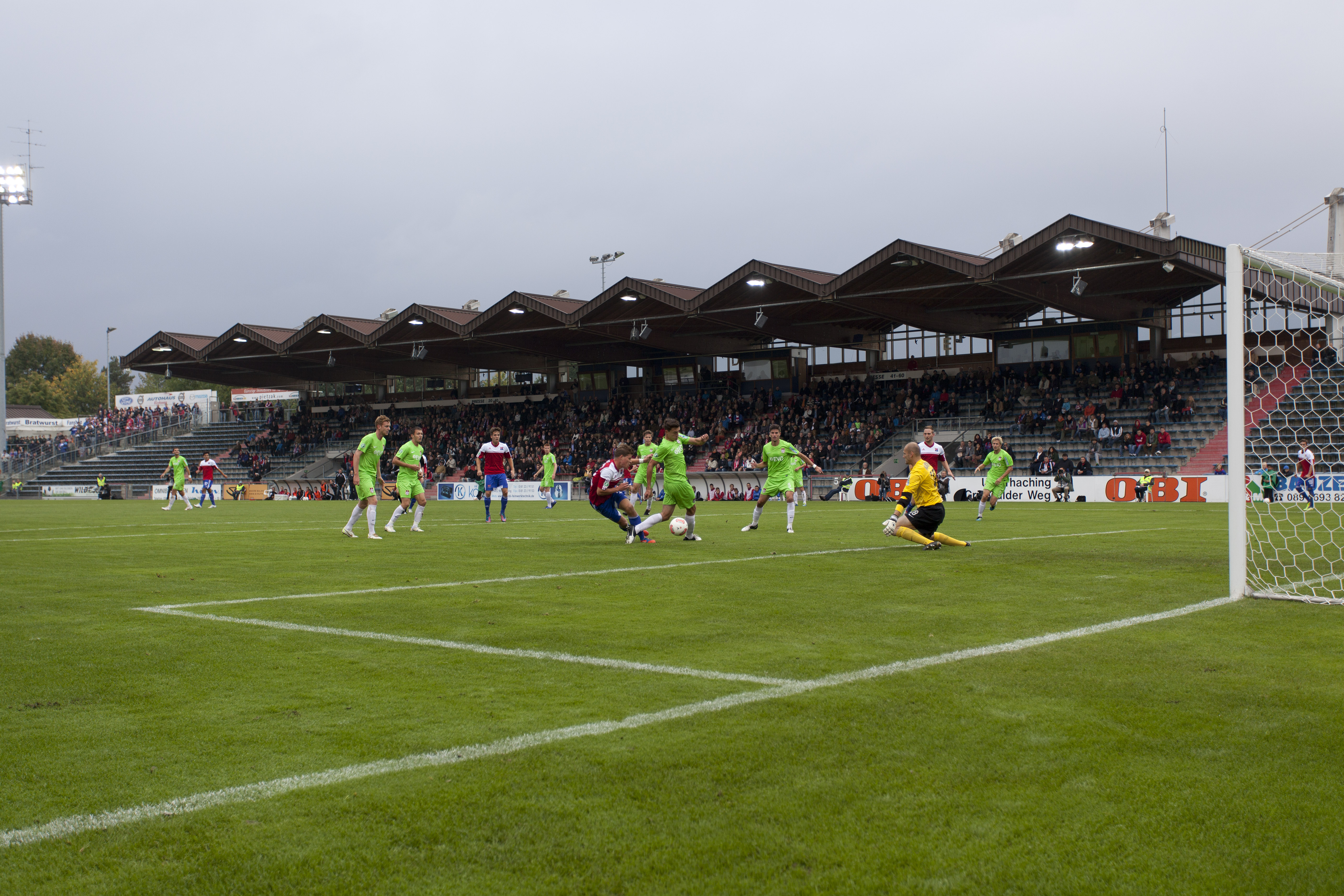
View of the grandstand – from where I watch all home matches.
And this is where the problem lies. Because temporary contracts are employee’s contracts with a fixed end! And those underlie strict legal rules as written down in the “part-time and temporary employment act”. It covers all employees, be it craftsmen, engineers, programmers or soccer players. Consequently, the law could not care less about the actual income or the kind of work involved. For temporary contracts, you have laws and those have to be adhered to. NO TWO WAYS ABOUT IT! Those rules used to be a lot more restricting than they are today, which means that violations of the law were rather more obvious than they are now!
In fact, this concept in sports contracts already stroke me as illegal and unjust when I founded the InterFace Connection GmbH in 1983. I never understood why something that is forbidden for normal enterprises should be fine in professional sports. Just like one of the reasons why Wolf and yours truly, when we founded the company in 1984, chose to develop a product because we were not sure how long the system would continue to tolerate the practice of “body leasing”, which clearly violates the AÜG law (fake self-employment).
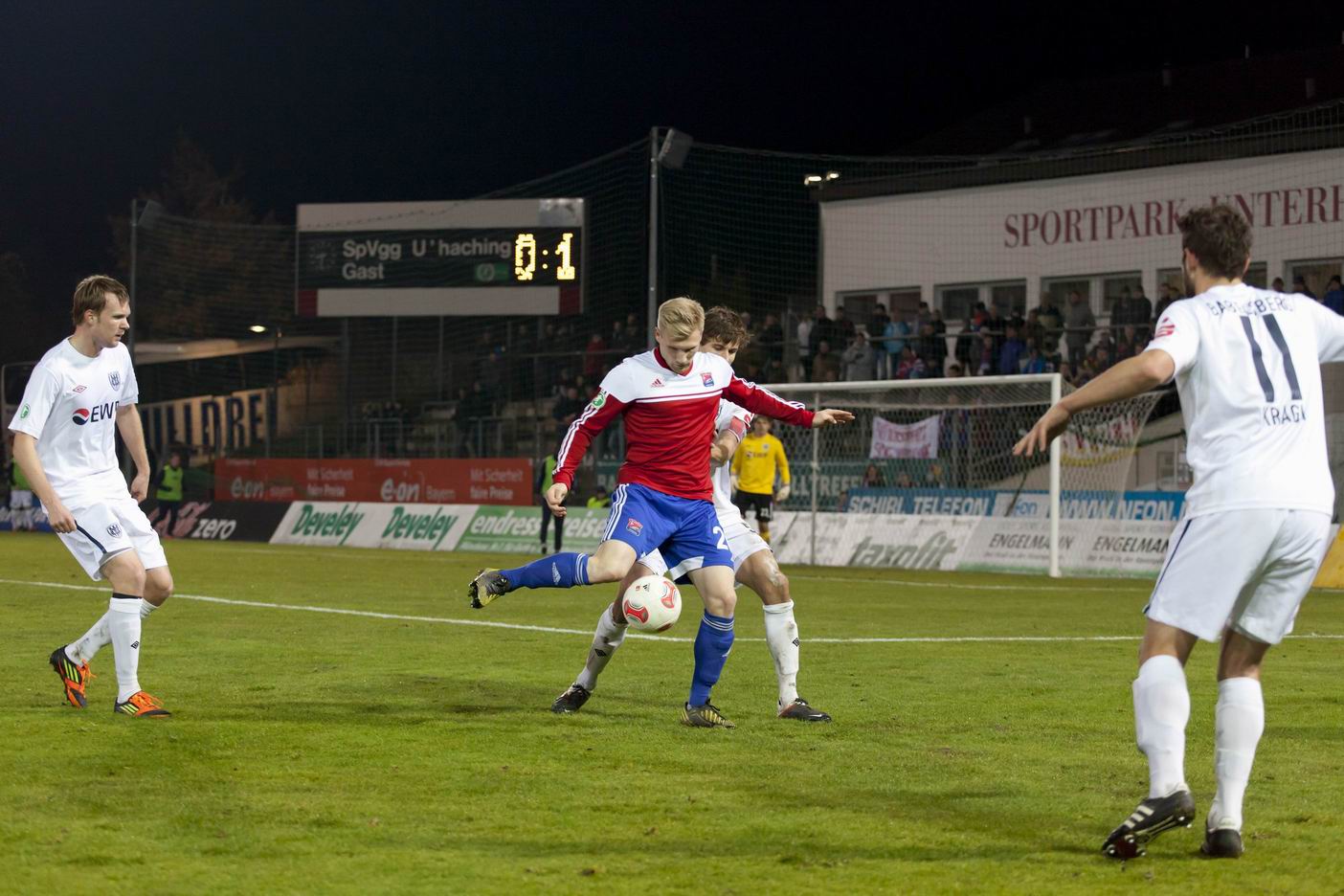
And again Andreas, who is now playing for the FC Heidenheim.
Now we are more than 30 years down the road – and suddenly something happens in the area of “fake self-employment”. Because now, the legal service departments of the huge DAX enterprises (as we know, some of them are shareholders at the FC Bayern AG) have found out that what has been common practice over decades was not always in accordance with the law of employee rental. Now they are looking to protect themselves.
And now, a soccer player actually found out that the contracts of employed soccer players often violate the “part-time and temporary employment act”. It is true that this law is mostly ignored in professional sports. The former major league goal-keeper Heinz Müller – or perhaps some of his cunning counsellors – now had the idea to sue the club at the Mainz Labour Court. The Mainz Labour Court – simply following the clearly written law – allowed the procedure and came down with a favourable judgement. This judgement rules that the prevalent practice of temporary contracts in professional soccer is clearly a violation of the law.
Because the goal-keeper had had a three-year-contract with Mainz between 2009 and 2012. The contract was prolonged by two more years in summer 2012. And that is clearly against the law. After the first contract, Heinz Müller sued for “stating that the temporary contract is now automatically a non-temporary contract” and, naturally, the judgement was in his favour.
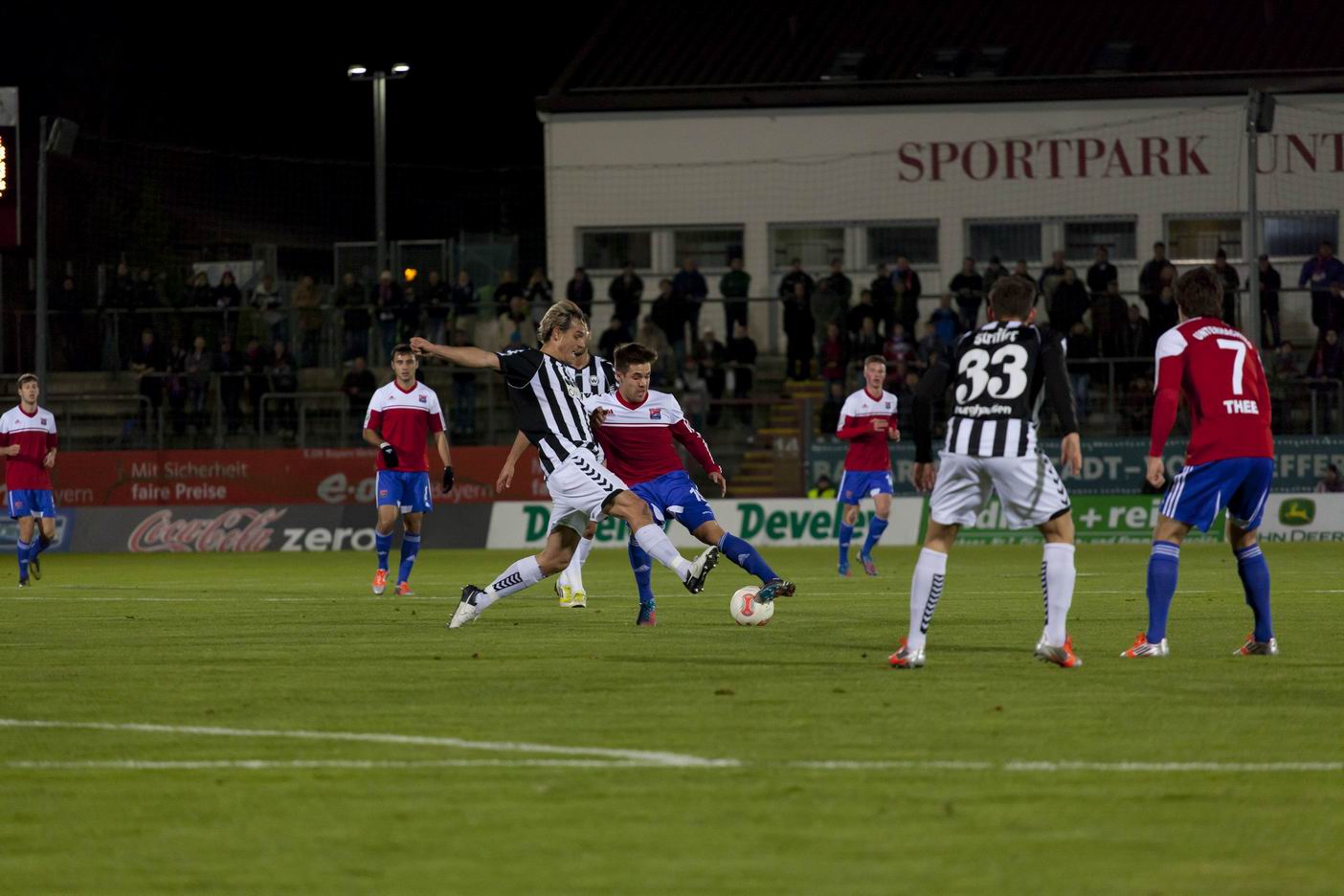
Fighting for the ball in the Sportpark
Mind you, with this article, I do not wish to annoy professional soccer playing or even the great FC Bayern München. Basically, we all know that such an unimportant person as Roland Dürre cannot do so, anyway. But I would like to show what nonsense some laws are. Because they simply no longer meet social reality.
These kinds of laws are then ignored and circumvented by “reasonable contract parties” (like here professional clubs and professional soccer players). Until someone like here Herr Müller violates the secret codes by suing for what is legally possible. And those are situations that, naturally, you do not only get in professional sports, but also in many other sectors.
Being a cunny entrepreneur, I am offering three different ways how to solve the problem. In applying them, you can both meet and circumvent the current legal requirements.
Leased Labour:
In order to satisfy German law, you could solve the problem by calling the phenomenon leased labour. The soccer players would have to be employed as regular employees by an enterprise, for instance the FCB, the German Soccer League (for example BFV). And then they could be leased by the clubs following the leased labour rules.
Legally, this would be a very simple procedure – however, the dismissal protection might cause a future problem for the DFB.
A special labour agreement:
Just like in normal business, they could come up with a special labour agreement between an employees’ organization and an employers’ organization, both of which would have to be created.
If something like this would be practicable in a system reigned by the FIFA, UEFA and DFB is another question.
Soccer players become managing directors:
If the employer, such as the FC Bayern AG, is an incorporated company, then the problem can be avoided elegantly. All you have to do is make the players managing directors. For them, temporary contracts up to five years are permitted. And on top of this, you would avoid having to pay the social insurance for the placers. This might not be what the law actually intended, but it would be perfectly legal.
After all, Thomas Müller is certainly qualified to become managing director, isn’t he?
The last three proposals are correct; however, they are not really meant seriously. Yet you can see what absurd ideas a sub-optimal legal situation can give you.
There will be another new law which will affect professional sports – the minimum wages. If you measure the working time correctly, quite a few youngsters among the professionals will end up working more than fifty hours each week (with all the practice, matches, travel times, additional training, coaching, homework).
Incidentally, I know quite a few pupils and students who spend a lot more than fifty hours each week working for their education and future. Yet for them, the minimum wages and working time legislations is not relevant.
But only fifty hours per week makes more than 200 hours each month. That would mean an income of 200 times 8.50 €, which is at least 1,700 €. And I assume that quite a few clubs cannot or do not wish to spend this kind of money. But then, the education of young soccer players or other athletes is already a profound violation of various laws, anyway.
RMD
(Translated by EG)
P.S.
The first picture was taken during a home match of SpVgg Unterhaching against Chemnitz on November, 23th, 2013. The picture was taken by Stefan Kukral in the Sportpark. The other pictures, too, were taken by Stefan. The SpVgg gave permission to publish them in the IF Blog.
With these pictures, I want to remind you that the SpVgg is my club. I also wish to ask as many friends and readers as possible to come and watch the last three home matches of this third-league season in the Sportpark. We need to support the team in its struggle against relegation.


