
Roland DürreFriday July 15th, 2016
Project PEACE. Two Possible Scenarios.
Project PEACE is under way. Consequently, I will now write down a few ideas on it. They are meant as impulse and inspiration – just for contemplating and joining in the thinking process. Perhaps even for joining us in the activities.

There are many ways to start joining the PEACE project. Let me describe two very different scenarios that show how you might wish to approach the topic PEACE.
SCENARIO 1 – Hands On.
One way could be to, as a first step, just do it the conservative way and found a start-up that collects money. This is how they usually do it in the “common-good sector”.
A series of very commercially oriented companies persuades people to donate money for common-good oriented companies, mostly by sending begging letters, calling people on the telephone, appealing on TV, talking to them personally or similar methods. Those who raise the money get a certain percentage of the collected money from their customers – and this is not really a low percentage.
In the same way, we could found a start-up enterprise that is responsible exclusively for collecting money for the project PEACE on the internet. There are enough ideas how to go about it. Of course, one requirement for applying such a strategy is absolute transparency with a complete disclosure of all moneys.
“Project Peace” could then spend the money for advertising and activities. However, such a strategy would quickly turn the project PEACE into a capital-oriented and thus vulnerable “enterprise”. Basically, that is not what I want. Which is why I would prefer organising the project PEACE without money (see: #nocapital). Consequently, I prefer another concept.
Concept 2 – Soft, Quiet and Prudent.
A second approach is that we look for persons who “think like we think” in a very unobtrusive way and make them enthusiastic about our project, thus creating a “quiet and nice” snow-ball system. Naturally, we are also looking for people who have a “multiplying power”. But that is not a necessary requirement. On the contrary: all persons are equally appreciated and we need them all.
What I like is that, especially for the goal PEACE, you need values such as mindfulness, humility, neutrality and consideration to an extremely huge extent. Adversely, capitalisation will basically always promote the interests of individual persons or collective systems.
I rather like soft, quiet and prudent.
Consequently, I prefer the second scenario, because it is the more honest and perhaps in the long run the more successful one. Another reason is that the very kind of idea I described in the first scenario can basically be seen as part of the problem. And to say it with a metaphor: you do not want to and probably cannot “exorcise Beelzebub with the Devil”.
But even for “soft, quiet and prudent”, you will probably need a few requirements, such as a nice logo and a manifesto for PEACE. Along with a “value and culture paper” and perhaps a few simple and basic rules. And this is where professional assistance would be very welcome.
A possible way.
We could start a “snow-ball system” for PEACE using the “principle friends of friends”. If this got under way, it might be a way towards reaching the great goal!
RMD
(Translated by EG)
Roland DürreFriday July 8th, 2016
Can We Reduce Complexity?!
A short time ago, I integrated a knowledge proposal (Wissensangebot) by Thomas Kleiner into IF-AGORA. The message was:
“How to reasonably reduce
complexity
without making it trivial!“
Thomas offers seminars to managers that enable them to come to better terms with our complex world. And basically, he is always sold out.
I also twittered his new proposal. I gave it the title “How to reasonably reduce complexity!“ In no time, received feedback came in, for example “this statement is a complete #fail“ or “well, I look forward to seeing how that is supposed to functionl“.

Our tom Kater Lenin, aka Wladi. His brother Stalin, aka Joschi, moved out. A very complex animal, not just biologically speaking.
Owner:
Barbara Dürre (cat)
Maresa Dürre (photo)
Well, you need to know that, on the internet, there is an intense discussion about the difference between “complicated” and “complex”. There was even a PM-Camp about project management in Berlin that tried to define the two terms.
Project managers had quite heated discussions about how to differentiate between complex projects and complicated projects. Also about how to solve those problems.
Personally, I can only speculate that dominant logics will not help either in a complex world. But then, where is the surprise? After all, it even often fails in very simple worlds and with merely complicated projects.
Incidentally, I very much appreciate one of the protagonists involved in the discussion about “complex versus complicated”: Niels Pflaeging. Although I always doubt if his analyses are correct, I certainly wholeheartedly believe in his conclusions.
Back to the knowledge proposal. You need to know that Thomas Kleiner is a wise philosopher. His diploma thesis is about “The Concept of Humanity in the Work of Rupert Lay“. It was not the only reason why he studied “constructivism” – and, as I see it, he actually understood it.
The theory of “constructivism” made me even more convinced that the categorization of a system or project as complex or complicated only happens in the cognitive awareness of the listener.
I also think the complexity and complicatedness cannot be understood or measured with scientific methods or metrics. It is a philosophical topic, or, as they used to say, one of “metaphysics”.
For us, “complex” is just as hard to understand as “endless”. Complex is something you cannot rationally define. I only know metaphors that are supposed to express complexity, but not a single one of them can serve as a valid, comprehensible and objective definition.
Consequently, I think the “reasonable reduction” of “complexity” is absolutely goal-oriented and possible. After all, it concerns the subjective perception of what seems to be reality and the way we deal with it. And, of course, I also think that you should never ever trivialize complexity.
No. Complexity is something you should enjoy and relish!
Here is an example:
I need our tom-cat to illustrate what I mean. Officially, his name is Lenin. However, the family calls him Wladi because they do not like the name Lenin. Unfortunately, his brother Stalin (the family called him Joschi) moved out. He no longer got along with Lenin .
Tom-cat “Wladi“ Lenin is certainly a very complex system, just like all mammals. I will reduce his complexity by just referring to him as cat or pet. In this way, I can make use of a lot of experience humanity has gained in dealing with cats without trivializing the animal. In fact, I might even like him and be able to find his activities conclusive. Regardless of the fact that I will never understand the complexity of a cat.
Persons who think you (HUMANS) could know and realize anything you set your mind to actually scare me. They try to change “complex” system with great speed and harsh measures. My fear increases when these measures are about our environment (nature) or our health (also nature).
I witnessed the tragic fate of quite a few elderly persons. Medicine made their last years absolutely miserable because it tried to heal them with scientific rationality. It would have been so much more helpful if they had just applied the rules of reason and reduced and simplified many processes.
To me, it seems like something similar is currently happening to our planet.
Far too many persons believe you can categorize the world into complex and complicated and thus change it for the better through rationality. As I see it, this is some kind of “omnipotent mental decease”. And I fear that, as often, “the chickens are counted before they hatch”. Except that it will take a lot longer for us to realize this.
RMD
(Translated by EG)
Roland DürreWednesday July 6th, 2016
Project PEACE.
I am frequently asked what our project PEACE is all about. My answer is always the following (or similar)
White dove on blue background, one variation of the dove of peace: since the 1980ies, it has been the commonly used symbol for the Western-European, especially the German Peace Movement. Originally designed in the context of resistance against the NATO double track decision.
Thank you for asking!
For me, PEACE is the most important commodity, because PEACE is the requirement for everything else. Consequently, I want to give the project PEACE the highest priority during the time that remains of my life.
It is simply about, at long last, creating PEACE. Because it is about time.
Humans have managed to do so much already, why should we not succeed with this, too?
And: if you are in favour of PEACE,
you need no justification!
Project PEACE aims at
making more and more persons
willing and able to live in HARMONY
with themselves, with the environment
and the world that belongs to all of us and with each other.
It is a necessary and probably even a sufficient requirement for happiness. We want to work towards our goal without becoming dogmatic or moralizing, and we also want to remain totally neutral.
We will not imitate Greenpeace or Amnesty International and use propaganda and activities we finance with money we collected.
We will recruit friends and “friends of friends” who also want PEACE in a totally independent and free way, relying on inspiration and impulses alone, acting in a very soft way and with respect towards others. We want to reach many equal-minded persons, quasi through a snowball-system, thus contributing a little more towards PEACE.
Here are a few articles (Artikel) about the project PEACE. There is also a link to two videos with Jolly and myself. I particularly recommend Jolly. It is really worth watching. You want spend an hour with friends – or with your children and partners – and enjoy a glass of wine while watching it.
Best wishes!
Roland
Let us start and create peace! Thanks!
RMD
(Translated by EG)
Roland DürreMonday July 4th, 2016
Island Hopping – here is my report!
And it was wonderful!
Between May, 28th and June, 8th, we (Barbara and yours truly) went to the Cyclades on the Aegean Sea (Kykladen im Ägäischen Meer) for the first time in our lives. We did some kind of “island hopping”. We had no bicycles with us and very little luggage. Greece is a country we often visited in the past, in recent years on the Peloponnese, but we had never seen those wonderful islands. Sometimes in the past, we went to Crete, either with the entire family or just the two of us, riding our bikes. That was about 30 years ago.
One reason why we took this trip was that our children had told us about their adventures. They had done some island hopping more than once and always been rather enthusiastic with their reports. So now we also wanted to make the same experience. Thus, early this summer was the first time we visited the Cyclades.
Barbara had prepared well for the journey: she gathered information on the history, geography and much more about the Cyclades. She had also found ferry connections, places to stay and such. The actual booking was only for the way out to Athens and back in and the first overnight stay in a Piraeus hotel. Everything else was done in an agile manner when we were there – for me, this is the best way to “travel freely”.
The journey lasted eleven nights with little luggage. Here is my report on these twelve wonderful days. As always when I write for my IF blog, I wrote it down for myself – but maybe some of you will also wish to do some island hopping. In that case, you are going to get a lot of information and motivation. And if you want to know more, feel free to contact me.

Descent to Chora in Serifos the last day.
Saturday, May, 28th, – Flying to Athens
Our flight is Lufthansa LH1750. It is scheduled to depart from Munich at 8:55 hours. That is a rather convenient time. We can take the S-Bahn train from Neubiberg at 6:31 hours. That means we leave home at 6.15 hours and walk to the station. If I get some island hopping, I will gladly rise early. The partner ticket to the airport is 23 EURO. In theory, you could use it for the entire day… But this is not possible because we fly away.
The S7 arrives in Neubiberg on time, but by the time we reach Munich-East, we are a little late (unfortunately, delays on our service line are more the rule than the exception). Due to the short time for changing trains, we do not catch our S8 to the airport. But this is ok: knowing that optimism is something you should not have when it comes to S-Bahn trains, we had expected this and started earlier than strictly necessary.
We had checked-in via internet on the previous day from home and printed our boarding passes. Since we go “economy light”, there is no luggage to check in, so we can go directly to the security counter and on to the gate. The entire flight – two persons return – was 236.02 Euro, all fees and taxes included, with the actual price for the flight relatively cheap (22 € per person, i.e. 88 € of the entire price). Frankly, I do not understand why it is so cheap to go by plane. One reason is probably that airlines are subsidized and that there is no tax on Kerosene.
The call for boarding is on time, so is the departure. Travelling time is 02h 20min. In Athens, all clocks are one hour ahead of Germany, expected arrival time is 12:15 (local time). We arrive a little ahead of time at Athens Eleftherios Venizelo … airport.
First, we go to our Piraeus Hotel. We go by Metro. The airport service is the “red” line, the Piraeus service the green line. That means we have to change trains after more than 10 stops. On the whole, the Metro travelling time was a little more than an hour, the cost was low – 15 € for both of us together– a single trip from the airport is 10 €, but I pay less because I am more than 65 years old, so for me it is only 5 €. A partner ticket for normal persons would have been 18 €. However, the “normal” Athens Metro tickets (not for airport trips) are a lot less expensive.
Barbara chose the hotel because it is both close to the Metro station and close to the harbour. It is the Anita Hotel. I can recommend it. We had booked and paid through booking.com and one night for both of us without breakfast was 35 € . Breakfast is an additional 6 € per person and includes the transfer to the harbour. The Anita is a clean hotel, the people are friendly and the rooms are ok. It is very close to the centre of Piraeus and near the great harbour.
We arrive at the hotel early in the afternoon and consequently have enough time left for Piraeus. We enjoyed that time. Before we started enjoying our time, we decided upon our next leg: We were going to Santorin! So we went to the harbour to buy our tickets. And then the joy began. Near the yacht harbour, we eat a small Greek meal (with wine), walk through the old city centre, and then it is evening already.
Sunday, May, 29th – To Santorin by Ferry
The Delos of Blue Star Ferries starts its journey with us on board at 7:25 hours. The trip to Santorin is rather long. It is well over six hours, because Santorin is situated at the southern end of the Cyclades. Like all other ships we used, the Delos is not a high-speed ship. The ticket is 39.50 € per person, which is actually a rather steep price. The “high speeds” are a lot more expensive and faster, but they are also louder and not very comfortable. On these fast ships, there is hardly any room to sit under the open sky and it is not enjoyable to remain outside.
On board the Delos, we enjoy the sun, the wind blowing through our hair, the view of the Mediterranean Sea and of the islands we pass. Whenever there is a stop on the way, sailing into a harbour is an adventure that gives us special impressions. We arrive at the harbour of Thira on the island of Santorin around 3 p.m.. This is the “new” ferry harbour.
From the harbour, the street goes up to Santorin. The place is rather crowded, even though we are out of season. Many coaches, among them quite a few “local buses” wait for the stream of travellers from the ships onto the island. The bus ticket for the local bus is 2.30 € per person, it is a steep ascent and takes around 20 minutes. At the top of the hill, in the city, there is a “coach station” where we exit. And this is where all the activity is.
First and foremost, we look for a hotel and find the picturesque Lepa. We can choose between a simple room with a balcony and one that is a little more luxurious without balcony/patio – and we take the one with the balcony. The view is of the enchanting hotel area with a small swimming pool. In fact, it is a view as you could easily find it in one of those (older) Greek tourist leaflets. The hotel is cheap, our room is 60 € for two persons and two night. It is situated very conveniently, close to the city centre and not far from the “coach station”.
From our balcony, we have a view of the ocean to the north-east. To be sure, it is not quite as pompous and exciting as the famous west view, but then, it is a rather quiet beauty. Ours is the experience of the pre-season, because during the full season, the rooms cost three times as much – if you find cheap ones at all. Even now, room rates in Santorin only know one direction: up. During the high season, agile travelling is probably not possible this easily and with such a low budget.
We have enough time left for nice strolls. Back at the hotel, we make friends with our landlady. She recommends a restaurant. The evening stroll is along the Caldera. Regardless of this not being the high season, it is quite crowded. To me, it seems like half of the people come from Asia. We hardly hear any German. After the Asians, most of the travellers are French, Italian or English. As we continue our journey, we will not see many more Asians, but then, there will not be many Germans either.
The evening sun makes the panorama even better. Far below, you see the old harbour (where we did not arrive). Two crusaders lie there, their tenders commuting between the ships and the harbour. We can see the steep path that winds its way to the boat dock. We also see tourist boats as they arrive and depart.
When it gets dark, we go to the restaurant our landlady had recommended. It was certainly good advice and we are happy and well-nourished when we go back to the hotel Lepa. When our landlady discovers we are back, she serves us two glasses of cool white wine on the balcony. She also gives us advice for the next day. We choose the least expensive boat trip (20 € per person for around 3.5 hours) and book it instantly. Then we enjoy the evening on our balcony in Santorin and look forward to tomorrow!
Monday, May, 30th – A Day on Santorin
We start the day with a cup of coffee on the hotel roof. And we enjoy the wonderful view. It is a truly nice morning, warm and comfortable with a fresh breeze. We take our time as we go to the harbour where our boat trip is to start at 11:00 hours. As we pass a bakery, we buy some “provisions”. We walk down to the harbour. Alternatively, we could have ridden a donkey or taken the cable car.
The ship arrives on time at 11 a.m. It looks a little touristy. Many Asians board with us and in no time, we start talking friendly with a few nice young ladies from Hongkong. The program includes a stop for submerging in the warm sulfuric water near the ocean and a hike around the crater.
We return to the old harbour around 14:30 h. Now we have to go back up the narrow path. Well, it is rather hot and we are lazy. After all, there is the cable car and the donkey. Barbara takes the donkey and I take the cable car, both are 5 €. And then we can recuperate.
Later in the afternoon, we again meet our landlady. We ask her advice, because we are looking for an island that is a little less noisy. With not so many tourists. Do not misunderstand me: as far as tourism is concerned, Santorin is nowhere near as bad as what I saw in North African countries, like Egypt, Morocco, or Tunisia, or even in India and China. It is a lot more moderate and on a high level – perhaps a little “chic”. With many discotheques, none of which we went to. You really want to have seen it all.
Our landlady recommends Folégandros. As it will turn out, this was extremely good advice. We discover that a ship will depart from Thira with the destination Folégandros very early tomorrow morning. It will leave at 7:00 hours. You should be at the bus station one hour before the ferry departs. That means we want to rise early.
Tuesday, May, 31st – Continuing to Folégandros
When we bought our tickets, they told us we have to take the bus that leaves for the harbour at 6 a.m. However, there is no bus at the central bus station. Instead, there is a hand-written piece of paper on the board telling us that the bus has been cancelled. Well, what a fortunate coincidence that the taxis are leaving just next to it. Consequently, this is my first journey by taxi in a long time. The fixed price to the harbour is 15 €. The driver overtakes whatever is in his way, which means that we go down the snaky slope quite quickly.
The ferry is called ADAM. KORAIS and belongs to ZANTE FERRIES. As all ferries in Greece, it produces a big black plume of smoke that follows the ship and will turn yellow after having travelled a certain distance. This is something that could easily be avoided, but that would cost money. And for this kind of improvement, there seems to be no money left, not only in Greece.
We enter and soon the Korais, with us on board, leaves Thira and “steams“towards Folégandros. The trip is never boring and lasts three hours. The tickets are 25 € per person. On the way, we have short stops on two more islands. Shortly before 10 a.m., we arrive in Folégandros and the KORAIS continues her way to other islands – among them Milos.
In Folégandros everything is, indeed, totally different from Santorin, even at the harbour. We wonder if we should spend the night in the Chora and look for a local bus. The local bus is a wonderful old-timer, an old Mercedes minibus with less than 20 seats. It seems to have been made more like in the 1970ies than in the 1980ies.
The nice driver – we will see him again during the next few days – recommends to stay in the Chora and check into the hotel MELTEMI. With open windows, the bus climbs up to the Chora. Chora basically means “central place”. It is the name for all the small towns on the Cyclades that seem to cling to the steep precipices in such a picturesque fashion.
The recommended hotel is close to the bus station and not far from the centre of the Chora. We truly like it. We have a very nice room with a beautiful bathroom, this time we also have a patio. We book two nights (60 € for both of us) and discover that the bus will continue to Agali at 11 a.m..Agali is on a beach that is described in the brochure as the most beautiful island.
Consequently, we quickly pick up our bathing costumes and go back to the old-timer bus. It takes us to Agali. The beach looks southwards. Everything is quiet and peaceful. Not much grows on this island with its water shortage. In particular, there are no trees. Consequently, there is nothing on the beach to protect you against the sun. However, since there are all these small taverns in Agali, one can easily manage. At 4.45 p.m., the local bus returns and takes us back to the Meltemi.
We close the wonderful day by planning ahead. We find a very cheap ferry that leaves for Milos in three days and costs only. 8 € (eight EURO) per person. We really like Folégandros. It is a very quiet island, without “tourist exploitation”. It is a place where you can really let your soul go free. Consequently, we extend our stay at the hotel Meltemi by another night and stroll through the Chora. Before dinner, we buy the tickets for the ARTEMIS (HELLENIC SEAWAYS) to Milos on June, 3rd, in a travel agency.
And in the travel agency, we find another attractive advertisement. There is a ship tour on the next day. For 30 EURO, you can go around the entire island, it is all day and the meals are included. There are many stops if you want to submerge in the water or just enjoy the view. We book it. After our duty is done, we now focus on the physical joy. For dinner, we find a tavern that is truly fascinating. After a last stroll through the Chora another wonderful day is over.
Wednesday, June, 1st – All Around the Island
Today, we are circling the island by ship, we depart from Chora-Port at 11 a.m. After a leisurely morning, we take “our” bus to the harbour at 10.30 a.m. – it is always the same driver. The cruise is really enjoyable. The ship offers plenty of space, we are a small and rather international group. The two of us are the only Germans.
The tour is really worth its money, the beaches for swimming beat vie with each other for beauty. There are also a few sights to see. There is a special appeal to diving directly into deep water from the boat. Aegean waters are rather warm even this early in the season, the food on board the ship is excellent, the people on the ship are all very nice. So what else could we desire? We are making the acquaintance of the island from a totally new perspective. On the Cyclades, it absolutely makes sense to circle the islands by boat for a better understanding.
After a great day with many impressions, we return to the Chora harbour around 5 p.m., the bus is already waiting for us and takes us back up to our hotel. Before going to the Chora for dinner, we walk up to the church that looks down on the Chora from a mountain. The small church is one of the very few architectural sights on the island. Then we walk back down the snaky slope to have dinner.
Today, we test another restaurant. The food tastes delicious, but the landlord seems a little arrogant. At least that is our impression. This is something we only experienced once on the entire trip. Consequently, we will not allow this to put a damper on our high spirits. Instead, we happily look back upon another wonderful day on Folégandros.
Thursday, June, 2nd – Hiking and Swimming
We have become familiar with the island through our boat round trip. On the map, we find a beautiful hiking path to Agalis, which is on the beach we had visited on our first day on Folégandros. We start our journey. The path is well marked with signs. First, it is an incline. Everything is so beautiful: the ocean, the mountains, the sky – everything has this colourful glamour you always seem to find in Mediterranean regions.
Shortly before Agali, we find another beach: Fira. We want to do some swimming – and we are all by ourselves. Neither did we meet anyone when we were hiking. So why wear a bathing trunk? Well – we undress and jump into the water. It is a dream. After our swim, we continue to our original destination: Agali. It is a true pleasure to hike. The path continues towards Agios Nikolaus. Since it is such a nice hike, we decide to walk there, too.
After a few kilometres, we come to a tavern that is just being opened. We rest for a late lunch. This tavern can only be reached on foot or by ship. There is a freight elevator from the landing stage on the ocean. The landlord is delighted. We are actually his first customers this season. Consequently, there is not too much to choose from on the menu. But it is certainly absolutely adequate. Wine, grilled squid, a wonderful Greek salad, patates… Again, all we can say is: What more can you desire?
After a long rest with a beautiful view, we start on our way back to the hotel. Of course, there is another break for swimming. On our way back we even get a few raindrops, which is perhaps a rare thing. After a small tour through the Chora, we return to the tavern where we had been eating so well on our first day. Again, it tastes just as delicious.
Friday, June, 3rd – Milos is calling
Departure for Milos is in the evening: at 19:10. We can remain in our room in Meltemi until we depart. Consequently, we treat ourselves to a cosy morning in the Chora with a wonderful late breakfast. Among other things, we eat a rare treat – white Taramas, a local specialty that tastes absolutely delicious.
Later, we decide we want another swim. From the Chora, you first hike a few kilometres uphill until you come to three old windmills. Then you go down to the Vorina beach. It is another wonderful hike. Quasi as a reward, we get another special place where we can swim. We are totally at leisure and enter the water several times. Then we go back up the hill.
Uphill means back to the hotel. We take our showers to be fresh for the journey, pay our 90 € for the three nights we stayed, pack our luggage and are at the bus station on time. Our driver picks us up at 18:30 with his small Mercedes and takes us down to the harbour.
The ARTEMIS is a little more than 20 minutes late when is starts its sea voyage at 19:30 hours. First, it visits another island close by, then the course is set for Milos. It is going to be an impressive journey as dusk falls. The skies have a red gleam, the clouds are even more picturesque than they had been during the
Since our arrival in Milos will be rather late, we log into the internet on the ship and try to find a hotel near Milos harbour through booking.com. We find the Hotel Rigas. They have a luxury apartment including breakfast for two that costs 90 € for two nights. We book it. The hotel boss personally picks us up, regardless of the fact that the hotel is less than one kilometre from the bus station. That is just how it is done in this region. This time around, we do not sleep in the Chora. Instead, we stay lower than the Chora at the Papikinos Beach, which is opposite the harbour. Around midnight, we check into the hotel – and we are now
At the harbour, we find a small pita stand that is just closing down. But for us, they have something left. We are now in Milos – a little exhausted, but very happy.
Saturday, June, 4th – Kleftiko
In the morning, after a tasty breakfast, we walk to Rigas harbour. We learned that it is probably not a bad idea to first circle an island by ship. There are many day-trip boats in Milos. They are in competition with each other for potential passengers strolling along the harbour. We choose Marco’s yacht. Marco is the skipper, the catamaran is his. He was born in Milos. His seaman is called Happy and comes from Crete. The trip is not a round trip covering the entire island. It is only to Kleftiko and back. It costs 50 € per person, including all food and drinks (soft drinks, wine, beer). Some other trips are less expensive, some more expensive. We are 12 guests on board, the maximum number on this ship would be 24. Everything is very relaxed and we have lots of fun.
Marco was born on Milos and knows it well. He tells us a lot about the pirates who used to live in Kleftiko. Since we want to hike, I ask him if there are poisonous snakes on Milos. He says yes and tells us about the extremely poisonous “red viper”, the “Cyclades” snake. Allegedly, being bitten by one of them will cause death within 20 minutes. And there is no anti-venom. Luckily though, it is a very rare snake and a very reclusive one. Reading about the snake in Wikipedia later in the day makes me a little less fearful and we decide to go hiking, after all.
Happy, the seaman – that is really his name – cooks a delicious meal for lunch. We enjoy spaghetti in tuna sauce, drink cold white wine and enjoy sun, water and wind. Around 18:00, the ship is back in the harbour. We are content, well-fed and a little tired when we exit the ship and go back to the hotel.
The hotel Rigas is directly behind the mining museum. So we visit it on our way back. Milos used to be a mining island. Many metallic ores and minerals, as well as kaolin, were mined here. During the second world-war, it was occupied by the Germans, because there was something precious to take. Visiting the museum was a really good idea. There are some well-made video presentations. They inform us about the hardships people who worked in mining had to endure. And there is also a good exhibition of the minerals they mined and tools they used, etc.
In the ante-room, maps of official hiking paths on Milos are pinned to the wall. Unfortunately, there is not too much left for us to hike, because we are going to Serifos tomorrow afternoon. Now we first want to relax a little bit. We are still well-fed. Later in the evening, hunger returns. We go shopping: tomatoes, onions and a glass of olives. We use the kitchen of our apartment to make a huge tomato salad with oil and vinegar provided by the hotel. On our big patio, we then eat one of the best tomato salads ever. And again, we had a dream day on the Aegean Islands.
Sunday, June, 5th – Next: to Serifos
From Milos, we continue to Serifos. We take the ARTEMIS for the second time. Again, the ticket is only 8 €. She is supposed to depart at 14:05 hours. Seeing the maps in the museum motivated us to do some hiking. There is still plenty of time until 14:00. Consequently, we make good use of the time for walking up to Plaka and “ancient“ Milos. It is a nice path. At noon, we eat in a restaurant up on the hill with a wonderful view. And then we are back at the hotel on time, where we take showers and freshen up. Again our landlord wants to drive us to the harbour. We gladly take him up on the offer.
It is not very far to Serifos. We arrive late in the afternoon. Since we had been so lucky on Milos, we again use booking.com for making a reservation. And again, we find a really great hotel. As before, the landlady picks us up. It is a delight to see the sign saying Barbara Dürre as you step down from the ship. We are again welcomed extremely warmly and the understanding between us is instantly great. It is not really far to the hotel, perhaps around 800 metres. Immediately after having unpacked in the hotel, we go swimming – the beach is directly in front of the hotel. It is a wonderful swim. In the evening, we stroll through the harbour. We are looking for a restaurant our son Martin had recommended. Unfortunately, it is closed. We get a recommendation for a “meat restaurant”. We find it – the meal is healthy and tasty. We are now ready for the day ahead.
Monday, June, 6th – Beautiful Serifos.
We sleep in long and start the day leisurely. In the morning, the first thing we do is walk the small tour 1a up to the Chora, which seems to be rather high. It takes us a little more than one hour to get there. First we climb up to the “castel”, then we go back down to Chora. Here, too, there is no “tourist exploitation centre”, just a few small shops and bars. We drink a cup of coffee in one of them and eat some delicious cake. Then we climb back down.
The hike gave us appetite for more. Consequently, we walk another tour in the afternoon. We drive to Kalisto with the “local bus“. Tour number 1 starts there: from Kalisto to Chora. First, it goes uphill on narrow and rather overgrown paths. We remember what Marco told us about the “red viper”. When we arrive on top of the hill, we can see the Chora and, still further down, the harbour. Again, this is a dream. The view is enough reward for the hard work – and it also soothes our fear of the red viper. As we continue on our way, the undergrowth gets less and the feeling of happiness increases. At one time, we actually miss the path; somehow or other, it seems hard to make out. But we went only slightly astray. Again, it is wonderful – we reach the bus in Chora and it takes us back down. We now have quite a few public transportation tickets of Serifos, but, depending on the distance, they all cost between 1.30 € and a little more than 2 €.
There is also some time left for swimming, which we can do directly in front of the hotel. In the evening, we again go where someone recommended us to go and are pampered in a tavern directly on the sea beach.
Tuesday, June, 7th – back to Athens!
We rise early, because the bus leaves for Panagia at 6.30 a.m. We can hike two more routes: route number 4 from Panagia to Glyfada (where they also have the helipad) and, combining with it, number 2 to Chora. And then we take the bus back down to the harbour. After all, we want to be back at the harbour by 15:30 h in order to board the ADAM. KORAIS that will take us back to Piräus. It is the last boat trip of our island hopping. Incidentally, the ticket to Athens is 30.50 € per person.
The hike is another sensational experience. We are back early – it paid to rise early this morning. There is still time for a swim and a late lunch. Again, we eat in last night’s tavern. Then we go back to the harbour. Our landlady would gladly have driven us, but it is so near that this is simply not worth the effort. We arrive at the harbour on time, but the ADAM. KORAIS is rather late.
Consequently, we have to wait quite some time before it comes into view. Now we go to Piräus and the end of the journey is nearing. On arrival in Piräus, we get another Pita on the harbour, then we take the metro for the very few stations to Athens City Centre. The hotel Euripides is very close to the Acropolis – and the way from the metro station to the hotel is not far, either. Due to the delay of the KORAIS, I am late for a hangout that was important for me. At least the most important part is not yet over when I join. Now I am almost back to everyday life.
Wednesday, June, 8th – Flying back to Munich
The day starts with a wonderful breakfast on the 8th floor of the Euripides (65 € for one night including breakfast for two people). Athens and the Acropolis lie at our feet, it is a breath-taking view over the houses of Athens. We see that there is a vista patio with reclining chairs one floor up in the Euripides hotel. We know immediately how to spend the last remaining hours in Athens. First, we log into our computer and check in for the flight back, also printing out our boarding passes. Then we go to the old city of Athens, because we need to know what is generally up. After all, we want to take the metro in order to get to the airport. We discover that there is a metro strike. However, on this day the strike is only between 12:00 and 16:00. This is not a problem for us, because our flight departs as late as 19.15.
So here is what we do: stroll through Athens, drink some coffee, buy a few souvenirs. Afterwards, we find the Euripides patio, lazily lie in our reclining chairs, drink a bottle of beer and look down on the big city. At 16:00 on the dot, the doors of the station Monastiraki, that is the metro station close to the Euripides, open again and we are on our way. It is going to be a nice flight back. Arrival time in Munich is 22:50. We even manage the long way from terminal 3 via terminal 2 to the exit. The S-Bahn train takes us home. This time around, all trains are on time, so the change of train at Munich East went well. We are back in our own kitchen around 23:30. We had twelve wonderful days – and we really and truly enjoyed them. And we decided that there will be another island hopping vacation on the Cyclades next year.
Note
🙂 Fair WLAN everywhere, Always friendly people, excellent food. And the best impressions in the world.
RMD
(Translated by EG)
Roland DürreWednesday June 29th, 2016
A slightly different presentation: at the Berchtesgaden “Lederstubn” on July, 13th, 2016!
Digital Transformation and New Mobility – Paradise or Hell?
Or:
Our Brave New World seen with the eyes of the entrepreneur, IT pioneer, blogger, father and biker Roland Dürre.
When he still worked at the GLS bank, Carsten Schmitz often invited me to attend nice events. I met urgewald and Katrin Frische when she was “telling stories”, and many more people of interest. Now a board member of the HOHENFRIED e.V., Carsten is responsible, among other things, for networking, fundraising and financing.
One of the things he initiated is a loose series of presentations in Berchtesgaden:
“Civil Society Initiative with Current Topics at the Lederstubn“
And he asked me if I would be interested in supporting his project by giving a presentation. Which, of course, I will gladly do. After all, this is an excellent opportunity to thank him for all his hospitality and at the same time do something beneficial for a good cause.

Since I assume that the audience will be quite diverse, the first thing I plan to do is ask them about their interests and then sort the input. And then the resulting list will be discussed in good order, a little like an OpenSpeech.
Consequently, I expect it to become a really open and interactive event that will be great fun for all participants – and that will also make people thoughtful.
I will go there by train and use the Bayern-Ticket.
Currently, I plan to take the S-Bahn train S7 from Neubibert on July, 13th at 14.31 hours and then change at Ostbhanhof and in Freilassing, arriving in Berchtesgaden at 17:30 hours. I plan to return on the same day, starting from Berchtesgaden at 20:31 hours, which means I will be back in my bed around midnight.
Of course, I would be delighted to welcome friends among the audience. I will gladly take you if you wish to use part of my Bayern-Ticket.
RMD
(Translated by EG)
Roland DürreTuesday June 28th, 2016
BREXIT
 Well, here is some personal comment of mine on the, as I see it, disgraceful BREXIT discussion.
- The persons who went to give their opinion in GB decided. They probably do not like the EU and, to them, the disadvantages for their country seem more obvious than the advantages. It is something you cannot rationally discuss anyway, because there are too many pro and con arguments on too many different levels. You cannot weigh them or put them into metric systems, either. When all is said and done, this is about emotions, which means the decisions are gut decisions.
- The outcome of the vote, however, should be accepted by all, both the extra-wise ones in the EU and those who voted in favour of GB staying in the EU. And in particular those who could have voted but did not. If now the entire world starts feeling morally superior to the Brits, then this is, in my opinion, the opposite of appropriate.
- Also, you should not forget that neither the British Government nor the British Parliament are strictly obliged to act according to this referendum. In other words: so far, nothing happened. And, as so often in politics, nothing will happen. The only thing that will probably happen is that the money flow comes to a standstill – or perhaps it will be camouflaged differently Now they do a bit of cheating – and with every single day that goes by, the topic #brexit will become more and more remote. Only a few thousand EU functionaries will try to find a solution that makes it possible for the British Government to not lose face before their voters and at the same time for the EU not to take serious damage. It will all happen as was shown to us when they discussed the TTIP behind closed doors.
- Personally, I do not believe the EU is an important or even critical factor for Europe’s future. Well, it is simply an extra administrative office. I am far more concerned about the NATO and the numerous national and nationalistic tendencies. They keep extending the NATO, not taking into consideration the worries and fears of our neighbours. I sadly miss a discussion on this issue. And it is quite possible that national interests will be promoted, rather than minimized, due to the current state of affairs.
- Looking at the EU as an economic unity, I am disappointed.
- As an economic unity, the EU, and in particular the EURO, perhaps had a positive impact only for Germany (as the leading nation) and a few small countries like Luxembourg (as financial centre of Europe’s concerns and banks) or Estonia (as the gateway to Russia). All others are more or less on the loser’s side.
- Even in privileged Germany, we have huge problems, such as the pronounced polarisation between the poor and the rich (more and more poverty, making up for more and more extremely rich persons) or when it comes to education. This, too, is probably one of the developments the EU is responsible for. And that, for instance, Spaniards have to go to Germany if they want to survive economically is just bizarre. In other cases, they talk of economic refugees who must under no circumstances be given asylum. We all agree that humans must not be discriminated against because of the colour of their skin, their gender or their religious beliefs. But they may easily be discriminated against because of where their passport has been issued – systematically and in a very differentiated way.
- I think a region has the right to contest central attacks by concerns or ruthless dumping prices. Whenever in history they tried to balance the powerlessness of those who suffered injustice by subsidies, they usually failed or achieved the opposite of what they had intended. And in the end, it always led to unjustified personal gain.
- For me, it seems particularly sad that the power of the lobbyists seems to have grown at all levels in Europe. They are now in a position to control all of Europe.
- Looking upon the EU as a shared living space gives me a sense of failure. I witness no end of regulations. Today, small enterprises, especially in the crafts, are threatened in a way that was hardly ever so drastic, at least as far as West Germany is concerned. Many things have become worse, rather than better: for instance the mobility concept in the public transportation sector. To make up for it, they now started an unbelievable charm offense in favour of individualized traffic with the combustion motor, probably on the instigation of Germany. The EU was not even able to standardize network mobility over the last few years. Your simple smartphone user will notice this whenever leaving his home region. There is no doubt that politics look at the advantages for the capital, the concerns and the banks. They totally forget that they should be serving the people. And the EU functionaries are basically system agents who are, first and foremost, concerned about their own well-being and money – often even more so than most of those on the national levels.
- Looking upon the EU as a political unity, I am disappointed. Just look at the example we just witnessed with the impossible behaviour and the completely non-existent solidarity when it came to refugees. Besides, who is responsible for our state policy when it comes to Russia, etc.? All I see is dangerous deficits. Here is another provocative note: As globalization continues, the only confederation that should prevail is the UNO. Because problems will be more and more global, rather than regional.
- The political structures and the arrogance of the EU functionaries absolutely remind me of such grey systems as the Comecon. We are all well aware of what they brought us. Allegedly, there was a time when there was only one brand of bread produced in the entire USSR and most of its vassals…
- Is it really such bad news if GB will become a number of smaller systems? Isn’t that the logical consequence of a development they already initiated in soccer a long time ago?
- History as I personally experienced it teaches me that, basically, after a big system collapsed, all parties concerned were happier than they had been before. I cannot talk about the Roman Empire, because I do not know about it. But I know not a single Slovene, Croatian or other person from the formerly big Yugoslavia who mourns its demise. I went to Yugoslavia in the early 1970ies and can easily sympathise. During my bike trip to the Black Sea, I met a Serbian who said that some persons in Serbia will now have to kiss their dream of a Great-Serbian Empire good-bye. . The situation is similar in Czech Republic and Slovakia – I never met anyone in Prague or Bratislava who wanted the ČSR back. And there are precious few who actually lament the fact that the aforementioned Comecon and the USSR no longer exist. I know quite a few ex-GDR citizens who could not be less enthusiastic about having the old systems back. Permit me to be a little polemic. If the FRG were to disintegrate in a reasonable way, the Bavarians probably would not be totally unhappy, either. But then, even those counties that are, at least financially, totally ruined – such as Berlin-Brandenburg – would probably stand a chance at getting a little healthier, instead of sitting down and collecting alms from other counties for eternity. Speaking of which: eternity might actually be a short time, because regardless of what most politicians assure us of, the situation in the communities and counties all over Germany keeps deteriorating (basic needs, infra structure, education, incomes,…).
- On free movement: I hear all the time that free movement for EU citizens is a huge advantage when it comes to choosing your place of work and residence. And that the Brits destroyed the future of the “young generation” because now they cannot work in the other European countries as easily. I am not sure if a social system with the dimensions and diversity of Europe can function at all. I am sure some control is necessary. Here is an example: In China, most of the people would like to live in Peking. Of course, that is not possible. Consequently, people who want to live in Peking have to meet certain requirements. For instance, they have to have graduated from university or document ample riches.
- Another advantage often stated in favour of the EU is that we have no border controls. I would gladly accept border controls if that meant we do not need the total digital control state. Intelligent border controls (see railroad or airports) will not cause queues, either.
- Last not least: I do not like a Europe of nations all of which are prepared to sacrifice freedom for security and where quite a few look more like dictatorships and corrupt systems with fascist tendencies than functioning democracies.
Final remarks:
I am for diversity and against stupidity. I am worried that huge systems might promote stupidity. Consequently, I am in favour of a EUROPE of connected and linked regions who will gladly and voluntarily integrate themselves into the federation. Meaning: a EUROPE that follows the rules of subsidiarity.
I dislike a EUROPE that dances at the puppet stings of concerns and business interests. I dislike a EUROPE that is reigned by party oligarchy and first and foremost follows lobbyist interests. All of whom use fear as the main motivator for business transactions.
I want my EUROPE to be administered in an agile, open and slim way. It should respect human rights and individual/private affairs, decide in an ethically responsible way and, where necessary, be prepared to give up property.
My dream is of a social, humane Europe that fights radically for peace and will not export weapons to any place in the world. Of a Europe that seriously lives like it understood the message that our planet has already been destroyed to a huge extent. And that we cannot continue to destroy our environment and nature, which also goes for our microcosm. I mean a Europe that will not subsidy environmental sins (kerosene), that will do without irrational, gigantic projects (S21) and that will promote quality on a broad range. I mean a Europe that, at long last, forgets its ideologies and dogmata, like that “all problems can be solved by growth”, that “life is basically a fight of all against all” or that “children need to be educated and people need to be punished for their sins”.
Consequently, I am glad that the Brits courageously voted for the BREXIT. Regardless of the fact that I found the prejudices and what was called self-evident – both of the BREXIT supporters and their opponents – often rather stupid and incredibly hypothetical (speculative). Both sides claimed the right to predict the future and justified their assumptions with arguments that I found simply ridiculous and criminal.
We will probably have to get used to the fact that the scale that measures dishonesty in political agenda is open at the top. Still, the vote for BREXIT is a strong signal. It sends the message that we cannot continue as before. Perhaps it will bring movement into politics and make the ladies and gentlemen a little more thoughtful. But then, I am rather sceptical. The citizens will probably have to do it themselves.
But I think the first reaction of the EU partner governments is also quite wrong. They said the exit has to happen quickly and it must be guaranteed for all times (!?) that they can never re-enter. That strongly reminds me of a family where one child wishes to move out and parents who do not like the idea threatening the child with the information that he or she can never return. Fifty years ago, such behaviour was absolutely normal, I experienced it more than once.
RMD
(Translated by EG)
Roland DürreFriday June 24th, 2016
The Birthday Address I Never Delivered.
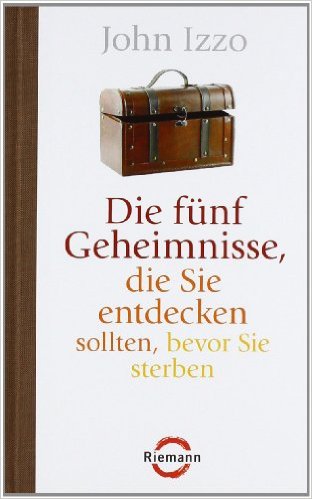
Well, perhaps reading this book will help?
My birthday was a few days ago. Now I am 66 years old. I very much appreciated all those many good wishes I received and would like to thank you here and now. It felt nice to know that so many people remembered me.
Unlike so often in my life, we did not invite anybody to celebrate a huge party with us. Regardless of 66 years being a nice number for a celebration, I somehow did not feel like celebrating.
Maybe there will be a party next year. Basically, there is the rule: “no party, no address”. But still, as is my habit whenever I celebrate a birthday, I prepared a short speech. Because I enjoyed doing so.
🙂 Here is my “virtual birthday address” for all my virtual guests:
It took 66 years for me to really learn how to be absolutely happy with my lot. I learned to really enjoy my life. Now I have felt truly happy for more than one year. Even happier than I used to, although I certainly had a wonderful life and everything was basically very nice, indeed.
To be sure, I still get annoyed when something irrelevant, where it is totally useless to get upset, happens. Besides, I sometimes still feel aggression growing inside me where it is absolutely inadequate. And I also often despair because of something that should not really be a reason for despair.
But other than that, I am happy. There are two exceptions.
The first is the fact that I really hate to realise that my life will inevitably move towards its end. And I still fear death and at times really am extremely anxious about it. But then, death and dying is part of all life. You cannot change this and that is why I simply try to accept it and not make a huge affair out of it. Even if this is hard, I manage to cope more and more often.
The second is actually worse. I understand less and less what happens around me. Both on a small and huge scale.
A short time ago, a friend I had been able to recruit for my “project peace” wrote to me. We had been talking “tolerance” and “neutrality”. Those are certainly basic requirements for peace. However, he asked if maybe the fight for resources was not the biggest threat for peace. He also gave a few examples.
- Water shortage in the Near East.
- They accuse the USA of having fought the Iraq War because of crude oil (regardless of the fact that, according to the BR, no US enterprise is oil drilling in Iraq. All the drilling is done by the French, Canadians and Chinese).
- The Neue Zürcher Zeitung visited displaced Jesides in their camps and asked them some questions. The answers were that, no matter what happens, they cannot return home, because both the terrorists and their Sunnite neighbours had knocked them out. Due to high birth rates, the Sunnites needed the extra space.
- Gentrification shows that the fight for resources (a place to live) also concerns the social freedom in cities like Munich.
You could add to the list without ever stopping. Both on a small and a large scale.
For me, it is always painful to see that good food is simply thrown away while somewhere else in the world people go hungry. Or when I see the dead hedgehogs and toads on the peaceful streets where I live. Or when people die on the motorway because someone absolutely needed to drive 200 km/h. Or when I see what in general happens to our planet.
I just read that a functionary of the IHK umbrella organization said environmental protection was the opposite of quality of life. He asked if we really wanted to go back to the times when we went over the Brenner with 34 PS.
Or how about the Polish minister who found words in favour of a policy that does not want the Polish people to become a nation of vegetarians and cyclists.
These are all things that make me sad. We live in a society where waste is made a behavioural maxim. And where wars and violence are the consequences of the fight for resources. Can this really be true? And I am truly devastated. I would really like to do something to change this state of affairs. Because then my heart, too, would feel (even) better. But I have no idea about the What and How.
This is more or less what I would have said if there had been a party.
RMD
(Translated by EG)
Roland DürreWednesday June 22nd, 2016
Agile and Flexible – ARCIS VOCALISTEN – now à cappella – June, 24th, 016
On Friday,
the arcis-vocalisten
will sing in the Himmelfahrtskirche in Munich Sendling,
I am last-minute advertising this unique concert, but not only because tickets are still available. Above all, I point you towards this concert because it is going to be n absolutely unique experience. One that you will not wish to miss!
One specialty about it is that it is sung a-cappella, which means there are no instruments, let alone an entire orchestra to accompany the singers. Naturally, this is much more demanding for the singers, since nobody plays along with what they are supposed to sing.
Another specialty is that there will be a world premiere:
Markus Fritz is himself a member of the choir. He is also the composer of the work
„De Tranquilitate Animi“
after words by Seneca!!!
You will also hear the “Missa in F Major” by J. G. Rheinberger and the motet Opus 74 No. 1 by Brahms, as well as a few Kaminski songs.
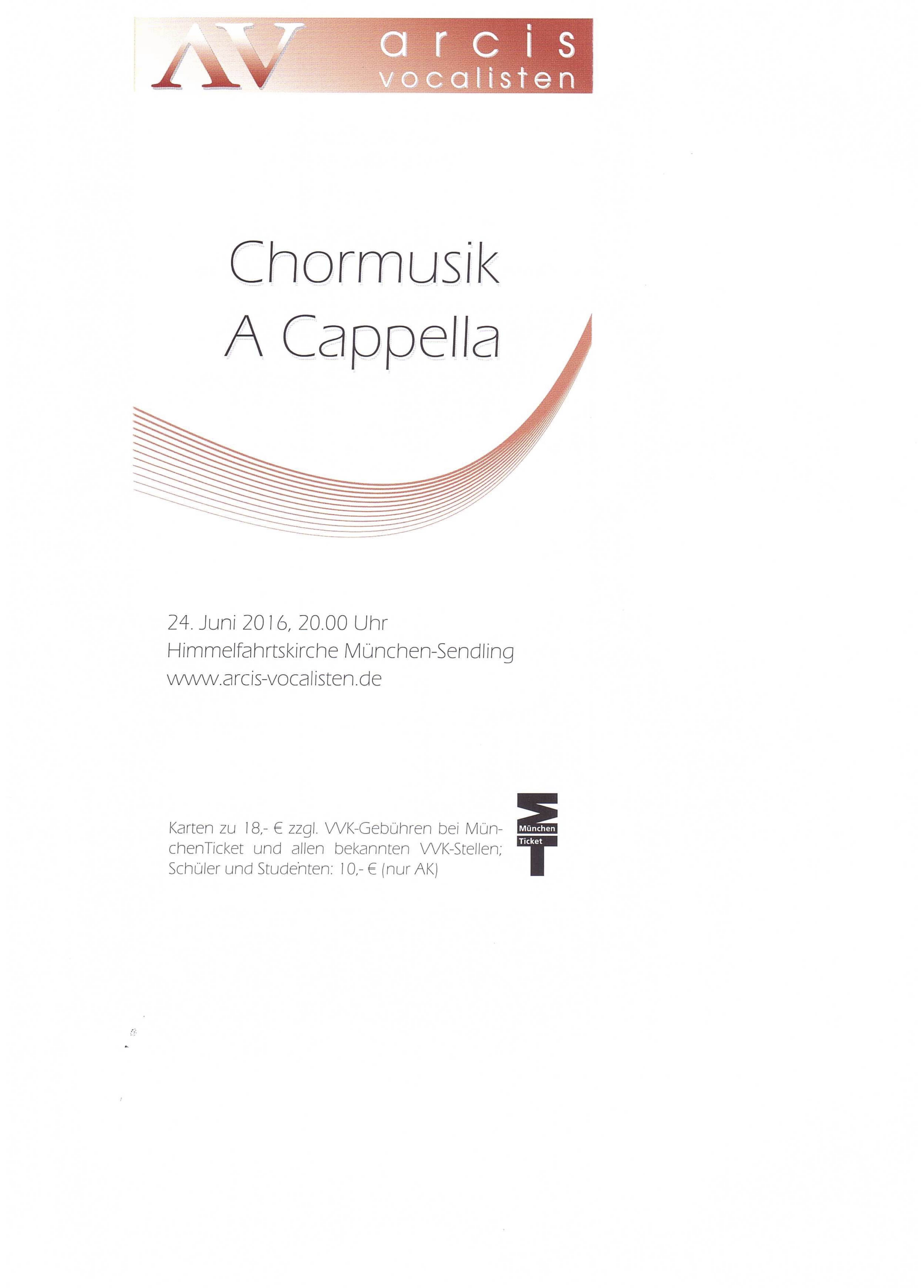
If if would not be staying in France this Friday, I would definitely be among the audience.
Not only, but also because Evelyn (EG) sings in the choir.
RMD
(Translated by EG)
Roland DürreTuesday June 14th, 2016
Microsoft Buys Linkedin – spontaneous contemplations.
Just a few ideas about the deal …

Contemporary Ganesha statue
Well, this news came as a surprise to me, regardless of everything else:
Microsoft buys Linkedin for 26 billion dollars.
The reason for my surprise, among others, was that, basically, this looks like a fairly low price. After all, a “German” enterprise allegedly offers more than 60 billion for an enterprise that some emotionally consider a “criminal rat shop”.
There might be good reasons (Gründe) for Microsoft to make the deal. I, too, estimated that Linkedin was a little of an underestimated outsider among the really big internet players.
And I also thought the buying strategies of Linkedin, for instance when taking over video2brain and other great enterprises such as slideshare were rather conclusive.
Now, it looks to me like all these activities were just meant to make the bride look a little prettier and thus make more money.
My first question when I heard about the deal was
Why do the customers of Linkedin (an enterprise) not get a vote when it comes to selling Linkedin (that same enterprise)?
And I immediately had to correct myself
Well, the customers do have a vote – all they have to do is remove their account!
If all the customers were to do just that, the whole affair would soon come to an end. Except that, if radically realized, such behaviour would mean leaving all these systems. From A to Z. In other words: you would personally have to disappear from the virtual world. And that is not an option for me.
When all is said and done, you come to the conclusion that it is not just the virtual reality and not only the internet enterprises. Instead, this is all also about my real life: how I live, what I eat, my mobility, my clothes, my energy level.
Consequently, I will reduce my ideas to one question:
What economic system are we in if, according to Prof. Otte, a threshold value of more than 6.1 billion US dollars was moved over the last year through “merging and acquisition” (M &A) world-wide, which is a record number?
And my question gets more precise:
How is it possible and legal that an enterprise can accumulate or get this kind of money and that it can happen at such speed?
I know a book by Georg Zoche, with the title World Power: Money (Weltmacht Geld). Of course, money is power. Consequently, it makes me very thoughtful how concerns can become so rich (=powerful). Mind you, this is happening at a time when our planet slowly but certainly dies and humans kill and torture each other. Because they are poor and consequently become victims of war entrepreneurs.
I am sure you all remember scene 4 of the first act in Shakespeare’s drama »Hamlet« (written around 1600):
“Something is rotten in the State of Denmark.“
RMD
(Translated by EG)
Roland DürreMonday June 13th, 2016
Project Peace – Roland!
This year, I started the project PEACE. I already told you before mentioning the great contribution made by Jolly why I think the project PEACE is so important any why I want to focus on this project in the future.
There are so many things this project needs:
A unique logo and the best of all manifestos. A lot of money with the potential to reach a billion persons (which is google’s criterion for its applications). A great “community”. The best partners from all sectors (film, photography, art, marketing, media, music,…), ideas for the coolest activities for peace. And the right kinds of activists!
I am currently thinking about what to put into the manifesto. Here are a few pieces of the mosaic I am experimenting with:
In a very basic way
Peace is the only way!
Peace is the basic requirement for everything else!
Peace has no need to justify itself!
A little longer
YES!
Peace is possible!
We badly need PEACE!
We live in PEACE with ourselves!
We live in PEACE with the world around us!
We work hard towards PEACE!
There are many of us!
It can be done!
AND
If you want PEACE, you need no justification!
Or
Peace beats war!
Humanity beats inhumanity.
Love will always conquer hatred!
Tolerance will always beat intolerance.
Which means
No tolerance for tolerance!
War against war!
Hate hatred!
But these are only ideas and proposals of mine. I look forward to your ideas. Thanks a lot!
RMD


