
Roland DürreThursday September 8th, 2016
HELLO WORLD – An Open Letter – #PEACE

Symbol of west european peace movement.
A short time ago, I had a great conversation with someone I hold in very high esteem and learned to love. I want to recruit him for our project PEACE. A day after our conversation, I sent him a letter – here is what I wrote.
My dear friend!
Now that one night has passed since we met, I would like to thank you again for yesterday’s conversation.
You asked the right and important questions. That is of high value. Because you will only find solutions if you have asked the right questions.
Here is my attempt at giving a short answer to your wise questions about the project PEACE (why and how):
For me, PEACE is the general metaphor for the opposite of what, in my opinion, is wrong in our society.
All over the world (with very few, rather dubious exceptions), an economic system that manipulates people is pre-dominant. It puts “shareholder value” and the increase of wealth for the acting agents over all else in unprecedented consistency. War, too, serves as a means to this end.
This system could not care less about the well-being, the physical and emotional health of the humans and also about our planet. I can prove this for many sectors, also due to the special insights I have gained through my network.
Among my sources – just to give an example – are discussions with managing directors of a very relevant pharmaceutical concern I cooperate with in a research project. And if I then take a look at the current evaluation of the newest pharmaceutical projects (one out of 23 is labelled green, few orange and more than half of them are labelled red), I know exactly why that is so (see yesterday’s SZ).
Unfortunately, this is true for many (perhaps even all) sectors, be it healthcare in general, food, energy, finances (banks and insurances), raw materials, merchandize, cars, communication, technology … Of course, it goes without saying that the weapons industry is also among them.
And (unfortunately) this is no conspiracy theory but can be proved by facts.
The EU, too, unfortunately, is (now?) a very undemocratic organization. It is dominated by the concern interests and, when all is said and done, you can even say that they were the ones who founded it. Just like the EURO is not a political product but one that was demanded by “business”. Yesterday, an EuGH decision, again, proved this (see yesterday’s ZEIT).
However, I do not wish to start a discussion about all these wrongs. I would rather talk about terms such as reform, revolution, change, modification, innovation, evolution, transformation. Those are also the terms my presentations are based on, no matter if they are about digitalization, leadership or entrepreneurship.
These are all difficult terms: in my book innovation means “creative destruction”. Reform is violence-free change. Everyone calls for reforms – yet nobody wants change. And change always means violence.
For the project PEACE, I use the term: transformation. Perhaps it is my goal to create a communicative concept to counterbalance the “non-peaceful” concepts. And I definitely do not want it on a religious level. In other words, I am not a missionary.
Instead, I want to give emotional and rational incentives for thinking. My intention is to inspire people. I would like to plant the idea of contemplation and activity. I am thinking of a snowball system that allows people to find autonomy without dogmata and drugs – that would be nice.
I kindly ask your forgiveness for my heart brimming over and consequently my goals being rather high. It is partly because – at least that is how I perceive it – I already managed to do quite surprising things in my life. Things I myself would never have believed possible.
On the other hand, I see myself as a rather humble person who can also live quite well with small success. After all, first and foremost, the journey is the reward!
But: not noticing and doing nothing is out of the question.
In my role as a mentor, I only support people in “homeopathic” doses. And I am happy whenever I can make others a little happier and more successful. And then I am very content and happy myself. The same is true for “my start-ups”..
My main personal goal is to live in gratitude.
Many heartfelt greetings and let us remain in contact!
RMD
(Translated by EG)
Roland DürreTuesday September 6th, 2016
What Kind of World Will We Have in 2036? #FutureVision2036 – Blog Parade
 Through my friend Thomas Michl, the call for a blog parade on #FutureVision2036
by Yasemin Akdemir came to my attention.
I do not wish to speculate about what the world might be like in twenty years.
Because since Hans Ulrich of St. Gallen wrote his theories about “Change in Management”, we know that “the future cannot be predicted”!
And it is not at all my style to come up with courageous outlooks.
But I will gladly relate to you what I would the world to be like in 2036!
First and foremost, it would be important for me to see most people being wiser and more peace-loving all over the world.
When I say wiser, I mean that humanity should increase both in its mental concepts and behaviour and that it should push the ever-present enmity into the background, both externally and internally.
Peace in my definition means that more and more persons manage to live in harmony with their own existence, also by appreciating their own value. The only way external peace can grow and prevail is if people like and appreciate themselves and thus find their own inner peace. It is the only way to make the many beloved enemy concepts disappear and also the only way towards successfully living in peace with nature, other people and other social systems.
Apart from this, I would wish for more neutrality and less moralism, for example also when it comes to sexual prudery. On the whole, the importance of religion should dwindle. How can anybody claim something to be the absolute truth that has been constructed by humans? For example, I also would not wish that children are still injured and maimed in 2036 for “religious reasons”.
There is a great sentence by Frederick II. Of Prussia: “Let all people become happy in their own chosen fashion” and it would be nice if this sentence were still true in 2036. But not the “violation of religious feelings” should be illegal. Instead, the social discrimination of “infidels” by “believers” and the attempt of those believers to “religiously reform” those infidels should be against the law.
In 2036, we should no longer misinterpret peace as a state of affairs where all that is possible is permitted. The meaning of the word must be replaced by an understanding of peace in the sense of “being able and willing to live your life responsibly”.
It would make me very happy if, over the next twenty years, people learned how to become independent of marketing and external control. And maybe they could understand that their most valuable commodity is time. And that we can enjoy our life at the moment in joy – without having to think about it too much. How about a little more sub-consciousness and, to make up for it, less cerebellum?
In 2036, we would like to live in a “fear-free” space. Fear grows between your ears and has nothing to do with really threatening situations and a healthy respect of dangers. It would be nice if, by then, we no longer think we have to define ourselves by our looks, property, success, money….
There is actually one concern of mine for 2036: can we live our lives in harmony with our environment? I would like to be able to breathe the air in the cities even if I am a pedestrian or ride a bike. In order to achieve this, we would have to understand that “individual mobility” it not a concept of the future if it is based on heavy vehicles. Nor does it matter if said vehicles are powered by a combustion motor or an electric motor.
And, in 2036, I would like to live in a society that accepts that I am a human being of flesh and blood who has the right to enjoy his body with lust, which would mean that I am entitled to enough physical exercise in everyday life. And I mean in a way that does not just make me a means to an end. I want to be able to rollick and romp even when I am grown up.
In 2016, I no longer wish to be manipulated by marketing and ruled by lobbyism. Instead, I would like to be what we were created to be: agreeable mammals equipped with a little bit of ratio who can live their lives autonomously.
Another prevalent principle of our economic activity should be “sustainability”. This means the economic cycles would have to be organized and practiced in such a way that the principle #nowaste has highest priority. This is also true for energy – just like with everything else, this has to be done by using “smart technologies”, but also by every one of us limiting ourselves to the necessities.
We humans are not here to serve the economy – instead, the economy should serve us. Instead of a global “predator capitalism”, we need a functioning regional “common-good economy” in 2036. Even if said common-good economy might be a little less efficient – which, incidentally, I do not believe it would be.
Many of our habits have to – and, as I believe, will – change drastically. This will be true both for mobility and the production of goods. One possible solution might be the increase of „shared economy“, individually promoted by “less vanity and egoism”. The success recipe of the future will be “less is more”. “Growth as the solution to all problems” was yesterday (and even then, it was utter nonsense).
Consideration will also have to prevail whenever we actually do something. And we will permanently have to ask ourselves if we really need all the things we buy.
So what I wish for 2036 is an enlightenment 2.0 that we take seriously and develop diligently. It should also be the formative factor of all our lives. And I am and will remain optimistic that, with courage and joy, we will get there. Among other things because we support the new “digital world” and nice blog parades.
RMD
(Translated by EG)
Roland DürreMonday August 29th, 2016
Jolly on Stage – September, 17th, in Munich!
Jolly believes in peace. So do I.
Jolly Kunjappu is a philosopher and artist, enterprise counsellor, coach and orator. Above all, he is a human being – and a musician.
At long last, you can again see him on stage. Along with Roykey Creo and iother friends of his!

For tickets, see:München-Ticket. And here is more information on the concert.
Naturally, Jolly will also play a special song for PEACE.
I look forward to seeing many of you at Jolly’s very special concert!
RMD
Roland DürreWednesday August 17th, 2016
Gratitude
Currently, you do not get to read much in the IF Blog. That is because I am taking a time out at the world’s best location. Along with Barbara and accompanied by Anna (daughter #2), Sophie (daughter #3), Caroline (granddaughter #1) Nicolas (grandson #2) and Patrick (son-in-law #1).
🙂 What is written in brackets tells you the sequence in which they all arrived in my life.
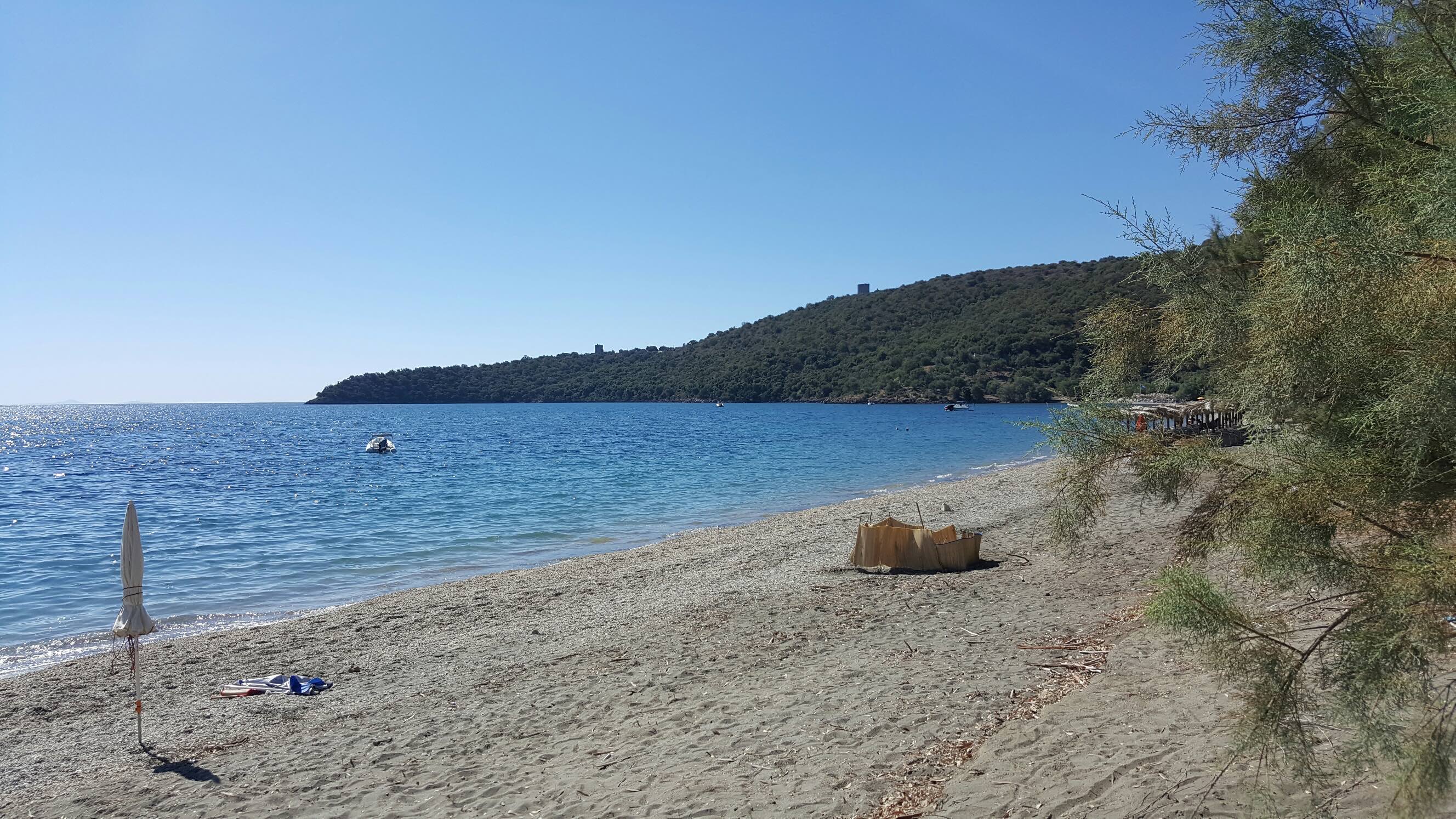
Looking south from the tent.
Four nights and days ago, we arrived at Porto Ageranos on the Peloponnese, around ten kilometres south of the old harbour of Sparta at Gythio. We sleep in our tent, directly on the beach of the Aegean ocean, less than 25 metres away from the water. We live in the wilderness. The ocean whooshes, singing us its song. At night, the full moon allows the stars to celebrate her. The campsite is not very crowded, and getting less so each day.
I have now found my personal rhythm. In the morning, I first and foremost swim to the other end of the bay, sometimes half an hour, sometimes an hour, just as I desire. I hike the way back along the beach. Then I get a wonderful breakfast: fresh white bread with homemade marmalade, Greek cheese and eggs prepared in various ways. I particularly like scrambled eggs with fresh tomatoes and paprika.
The morning is soon over as we are just enjoying our leisure time. Our two small ones keep us busy.- We are going on some short trips along the beach with our kayak and on some bike tours through the mountains of Mani that are sometimes a little longer and sometimes very long. Once in a while, we go to Gythio, where the local life takes possession of us. There is hardly a trip to Ghythio during which we do not take a break in the Touristik – the biggest coffee shop with a view of the harbour.
For lunch, we have tomato salad and fruit. Once in a while, this gets supplemented by fresh egg fruits, fried with plenty of garlic and olive oil, or else with roasted garlic bread. And in the evening, there are so many taverns to choose from that it is really hard to decide where to have dinner.
The world is far removed from me. To be sure, I regularly load the Süddeutsche onto my cell-phone and follow the Haching live ticker. I also connect with all my chats. But that is about it. In other words: I am currently a little out of touch and focused on myself.
On the way from Ancona to Patria, I read the small book “Gratitude” by Oliver Sacks. It was handed over to me by Rolf after I had given the presentation at the “Lion’s Club Opera” in Munich. Rolf Hüttmann does many great things and, among other things, he holds the presidency of the club. He gave the year of his presidency the motto “consideration” and invited me to give a presentation on digital transformation.
I have only known Rolf for a few weeks. He is a very prudent and wise person, which means that, even given the few meetings we had so far, I could learn an awful lot from him. First he introduced the work of Oliver Sacks to me and then he wrote a wonderful dedication, telling me how much lies behind us to be grateful for and how much lies before us to potentially make that feeling even more profound.
It is only due to Rolf that I understand what a high degree of gratitude I feel and how happy this makes me.
RMD
(Translated by EG)
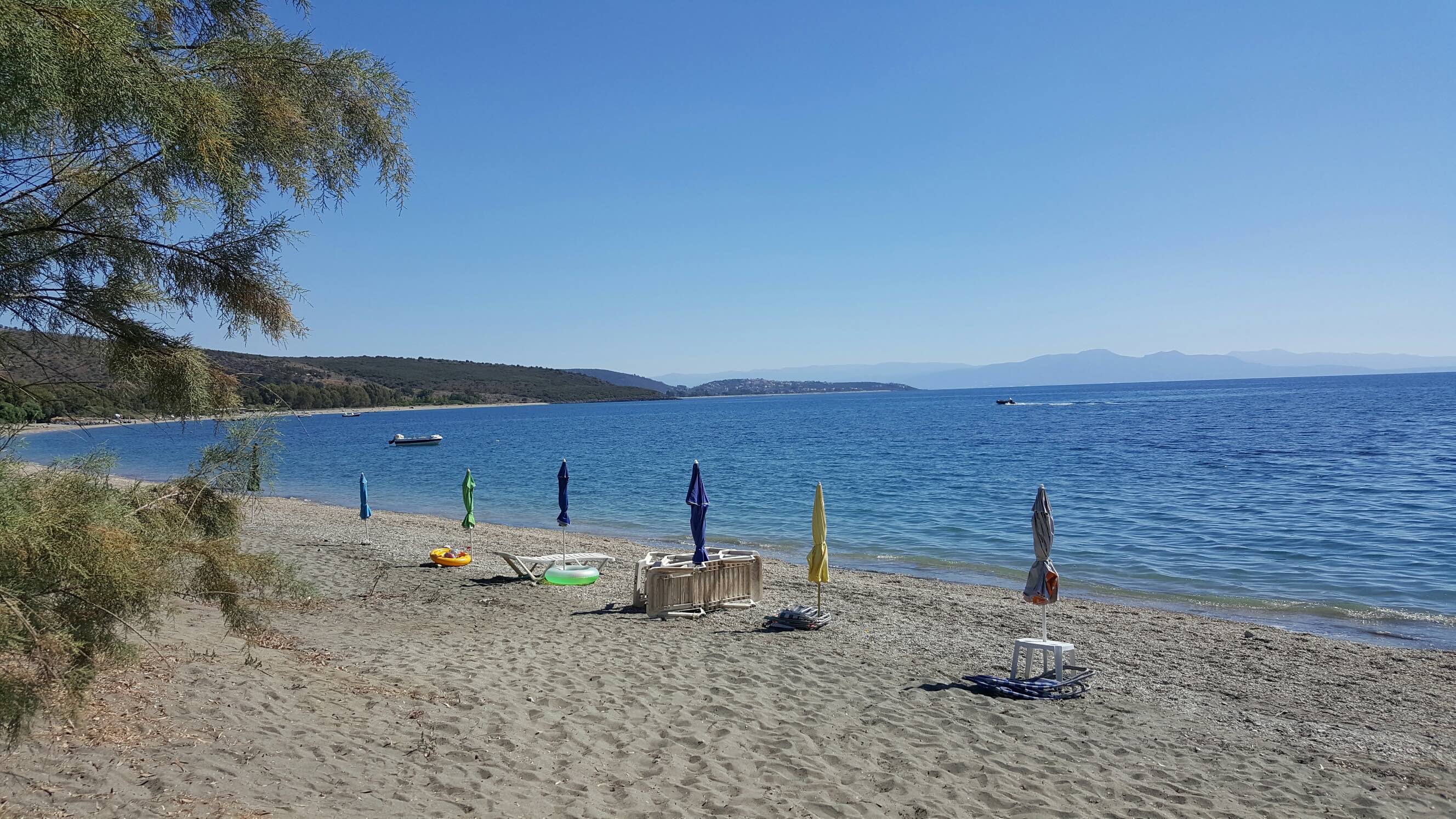
Looking north from the tent in direction of Gythio.
Roland DürreWednesday August 10th, 2016
Bavarian Constitution, Common-Good Economy…
… Eye-Level, Intrinsify.me, Democratic Enterprise in Management, Holocracy – and Buddhism in Management .. These are all Things I Like. - but, please, no CSR!
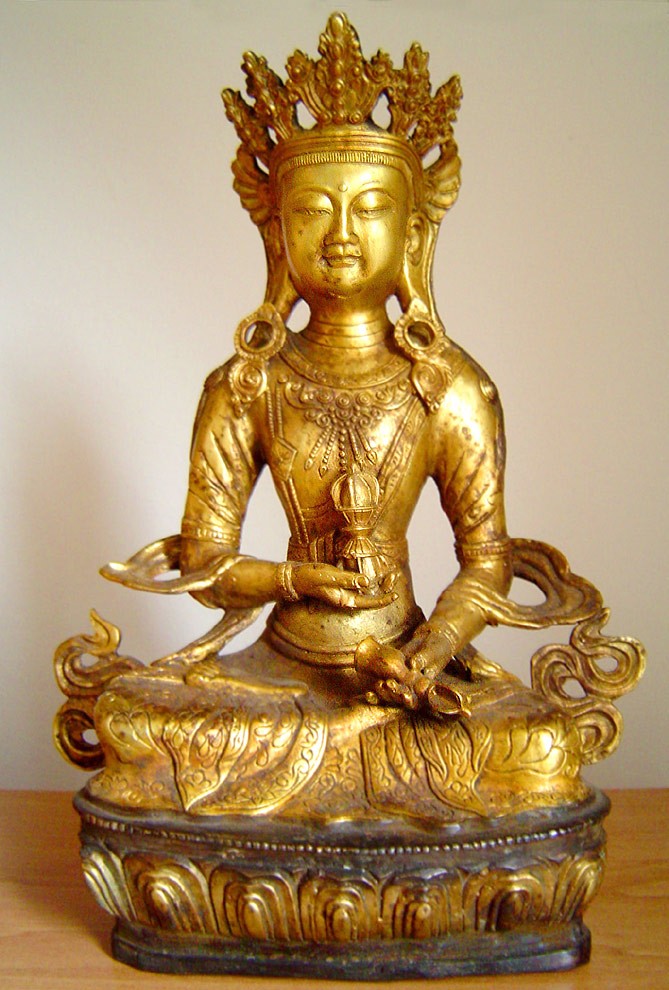
Vajrasattva (Tibet)
Most of us want the same thing: an economy that serves humans. As opposed to humans serving the economy.
That is why I love the Bavarian Constitution (Bayerische Verfassung), where one article explicitly states that it is a huge privilege granted in Bavaria to do business in a community – and how this right is an obligation for the enterprises and entrepreneurs, making it a must for the goods and services they provide to first and foremost be useful for the people.
And in another article of this wonderful constitution, the entire thing is repeated and emphasized again for the finance sector! However, said finance sector could not care less, instead mostly doing things that would be unconstitutional – at least in Bavaria.
I am talking about Articles 151: business is linked to the common good; principle of contract freedom and 157: amassing capital; money and credit. But those are far from the only articles truly worth reading; there are quite a few more of them in the Bavarian Constitution…
I equally appreciate the Common Good Economy around its protagonist Christian Felber. They came up with a common good matrix that makes it possible to check what contribution the enterprise you work in or even perhaps “manage/own” makes for the social life. And it is worth the effort of informing yourself about it.
The project eye-level, along with the film is something I admired because it showed that there are actually enterprises practicing eye.-level successfully.
The brave ideas of the people at intrinsify.me, too, are very close to my heart, as are the clear concepts introduced by Andreas Zeuch who was the inspiration for entrepreneur democrats (Unternehmens-Demokraten). They show that democratic enterprises work better. And they also came up with the wonderful slogan:
ALL POWER TO NOBODY!
Even the friends of holocracy make a huge impression on me, even though I see the danger of a tiring democracy that might easily lead to “holocrazy”.
A short time ago, however, I met a young entrepreneur. His name is Julian Sametinger and he wrote a Bachelor Thesis (Bachelor-Arbeit, click here to read it, it is really very much worth reading) on “Buddhism in Management“. It is a wonderful piece of work and more exciting than some criminal stories. And, basically, it covers all you need to know. It is also the reason why I write this post.
I have a huge amount of respect for all these ideas. Their very existence makes me enormously grateful.
But, please, to not offer me CSR (Corporate Social Responsity). It is hypocritical, produced by university ethics-talkers and rehearsed with ethics commissions appointed by the state. I mostly find it pompous gibberish as we know it from politicians and lobbyists. Except that it has been graphically beautified with federally financed high-gloss transparencies and posters of the important associations.
If you want names, I will gladly provide the details about some evil and not quite so evil professors, along with their often absurd concepts and more or less ridiculous activities. Since, however, this blog is supposed to be more about the positive ideas than the negative, I will end this article here.
Thank you for reading it and goodnight to you all!
RMD
(Translated by EG)
Roland DürreThursday July 28th, 2016
Make Distinctions without Causing Separation! #PMCampDOR 2016
 After the PM Camp is before the PM Camp. That is also true for the original #PMCampDOR team. They will again open their doors on November, 18th and 19th, 2016. In 2015, the Dornbirn topic was “Breaking Patterns”. Perhaps we simply wanted to counteract the growing complexity and dynamics that we find so confusing.
Today, it is easier for us to see how many options we have. We develop at high speed on a daily basis, the speed of learning increases. Thanks to the information society, we can see far beyond the horizon and can extend our limited image of the “world”. This fills our hearts and brains more than ever.
We also no longer refuse to accept the simple understanding that the future cannot be predicted. Just like we see more and more clearly that humans are basically not the crown of creation but just a small part thereof and that our microcosm, which is so very important to us, is basically just an illusion we constructed ourselves and totally subconsciously.
We now accept that, for many centuries, we made the mistake of believing our cerebellum could understand everything and that we could decide rationally based on our knowledge. And we notice that the huge majority of our knowledge and experiences is basically not simply retrievable at our convenience. Instead, it will turn up in an almost sinister way.
In particular, we notice that our decisions are not based on ratio. Instead, our ratio will provide us with reasons and justifications afterwards. Slowly, we leave the path that led us astray and made us believe that we are the masters of our behaviour and thus can be held responsible. We will then use the new technologies to start going towards the true dimension of social inter-dependence.
In order to survive in this new life, we will probably have to discover and make use of differences and contradictions. It will not help us to simplify or trivialize if we want to live in peace with ourselves and thus be content. This is the requirement for learning to do without enemy images and for having social peace with nature and other persons. What we need to do is accept matters as they are and stop differentiating and classifying.
RMD
(Translated by EG)
Roland DürreWednesday July 27th, 2016
Project PEACE. Meeting in Ulm.
We met directly beneath the venerable Ulm Cathedral. There were six of us: all mature men, meeting early on a sunny afternoon in order to work towards peace. Unfortunately, there was no woman amongst us, but then: maybe there will be in the future.
Here is an attempt at writing the minutes of the first meeting.

The Ulm Cathedral in 1887
July, 19th, on a nice summer afternoon in front of the coffee house beneath the Ulm Cathedral. Parties meeting:
Daniel, Eberhard, Guido, Jolly, Roland, Wolf.
After a round of introductions where everyone said what motivated him personally, we started developing and discussing first ideas on how we would like to and actually could approach the problem.
Idea of active involvement
We want to reach many persons and encourage them to openly work for peace. For us, this is more important than missionary work towards convincing non-peaceful persons.
We want to use the network-based media.
Based on the works of Wolf, we want to make a certain amount of interaction possible. We want the contributions of people to influence each other and yet we want them to have their own individual value. Participation is open and has a low access threshold. Yet the participation should be more than just a simple “like” or similar phrase.
 Applying the snow-ball principle, we want to reach VERY many people. Our final goal would be to, perhaps, some day, have created the critical mass that can change society.
Our idea is based on views and convictions each of us finally put into short words once more:
I want peace through neutrality and respect for all living creatures.
Hatred and enemy images should disappear.
I have no enemies. Humans have no enemies. We create our own enemy images.
Appreciation. Peace has a value.
Peace is a precious commodity, no more enemy images!
More empathy!
An open society is a pre-requirement for peace.
Awake peacefully, let peace grow.
Next steps:
Find more like-minded persons -> this process has already started.
Fill ideas with actual behavioural patterns.
Design a logo.
Work on a manifesto – see a few fragments below.
Manifesto Fragments
Peace is valuable and needs no justification.
Peace is based on appreciation and respect.
Only those who appreciate their own self can appreciate others.
The peaceful solution of a conflict is always the better solution.
Humans have no enemies, they only have enemy images.
You can overcome enemy images.
Just like that – #throw_away_your_arms WNH 2016 – Wolf Nkole Helzle Social Media Art
Join us! Let us break the “pattern of war”!
RMD
(Translated by EG)
P.S.
Since we want to make the “project PEACE” absolutely transparent, I am simply publishing the Ulm minutes. Thank you Eberhard for the nice summary.
Roland DürreThursday July 21st, 2016
Again in Munich: The Arcis-Vocalisten: HAYDN!
After the concert is before the concert!
This is apparently the motto of the Arcis-Vocalisten! As early as August, 6th, they and their partners will, again, present a work of music:
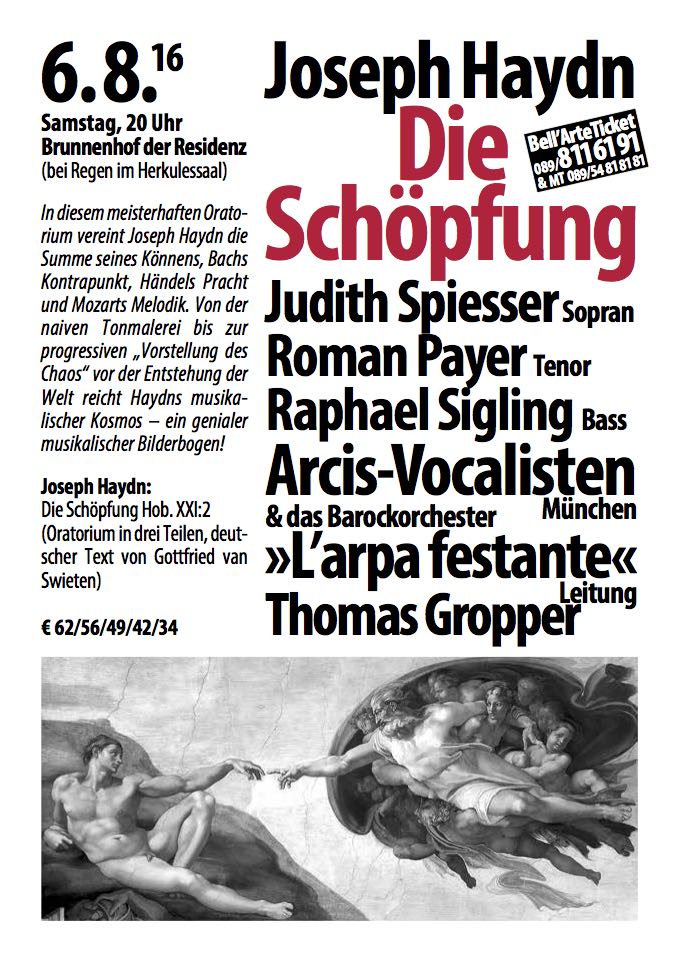
In this brilliant oratorio, Haydn combines the sum of his own competence with Bach’s counterpoint, Händel’s magnificence and Mozart’s melodiousness. Haydn’s musical cosmos stretches from naïve tone painting to a progressive “Introduction of the Chaos” before the world was created – an ingenious musical sheet of pictures.
Again, I cannot go there. Because two very cherished friends of mine celebrate their 60ieth birthday. But perhaps you can go? I am sure you will not regret it!
RMD
(Translated by EG)
P.S.
For IF Blog readers who are interested, there is a special discount …
Just send me an E-Mail titled: Haydn.
Roland DürreMonday July 18th, 2016
Reformation, Revolution, Transformation, Future – All is Fine – Provided it is Digital.
Everyone talks digitalization. So do I.
I even give presentations about it. Because I get the impression that there is a lot of confusion around. Although the topic is not really news.
For me, even the very term “digitalisation” is not a good choice. Here are the terms I consider relevant: communication, networks and information.
Information exchange means you generate information by thinking and then you exchange the information through saying out loud what you thought. There is an analogy with language. You can put language into written words – then it is “digital”. That is trivial. The relevant factor is how fast and how intense the spreading and exchange of information takes place. And this is where technology and its development start playing a role.
Let us just look at the latest development of humans:
After several attempts, the “humanoids” managed to walk upright about two million years ago. That was the requirement for the “humanoids” turning into “homines sapientes” around 200,000 years ago. Still being hunters and gatherers, the humans had their creative phase and started to leave Africa around 125,000 years ago. 60,000 years ago, homo sapiens really got under way and developed language until 10,000 years ago.
The spoken word is volatile. Whatever someone said could be heard only once. Consequently, they invented stories and handed them on by word of mouth. They included redundancies in order to reduce errors during the transmission process. There were attempts at drawing pictures along with the messages, but that was only a partial success. Consequently, it was only logical that, a few thousand years after the spoken word, the written word came. And this is how, about 7,000 years ago, they invented script.
In old Egypt, they told stories in temples using a symbol language that strongly reminds me of images. They were carved into sand stone and coloured out. Later, lighter materials, such as papyrus and paper, came. Along with technologies such as the printing press and the forcing set. And later, the information technology, like all technologies – was made electronic. Initially, they used copper (cables) and wireless technology.
Coding was also improved, for instance with the use to simple alphabets and digits. “Algorithms” and “technologies” for processing language and all sorts of information into the digital form were developed all the time. It is quite simple to show that all symbols can be represented digitally. This fact was an important requirement for computer developers, because, basically, the easiest way for them to work is using zeroes and ones. But that was a totally normal technological development.
Incidentally, written symbols and thus written language for transporting information was initially used for “business purposes”. Consequently, it seems to me that business is the “mother of all things and inventions”, rather than “father war”. War is just a special kind of “business” – and a very despicable one at that.
Written language makes knowledge available over time and space and creates networks. The rare books of Galileo Galilei travelled Europe and met the ideas of Kepler. Progress and technology was developed in cities. Because that is where the various disciplines met. Later, the cities started building networks and progress gathered momentum. And then the entire world became a network. Initially through letters, books and magazines. Later, newspapers and books were replaced by IT technology, just like oil lamps and the tallow candle were replaced by electricity and the light bulb.
Information networks brought us the so-called “industrial revolution”. And “digitalization” is only the continuation of this development. Both the speed of networks and the amount of knowledge have increased and continue to increase, which means that the process gets faster and faster. It is all part of the Anthrozopän (the era of humans – Anthrozopän). They do not really know when to define its beginning, neither can anybody tell where it will end and what will come after.
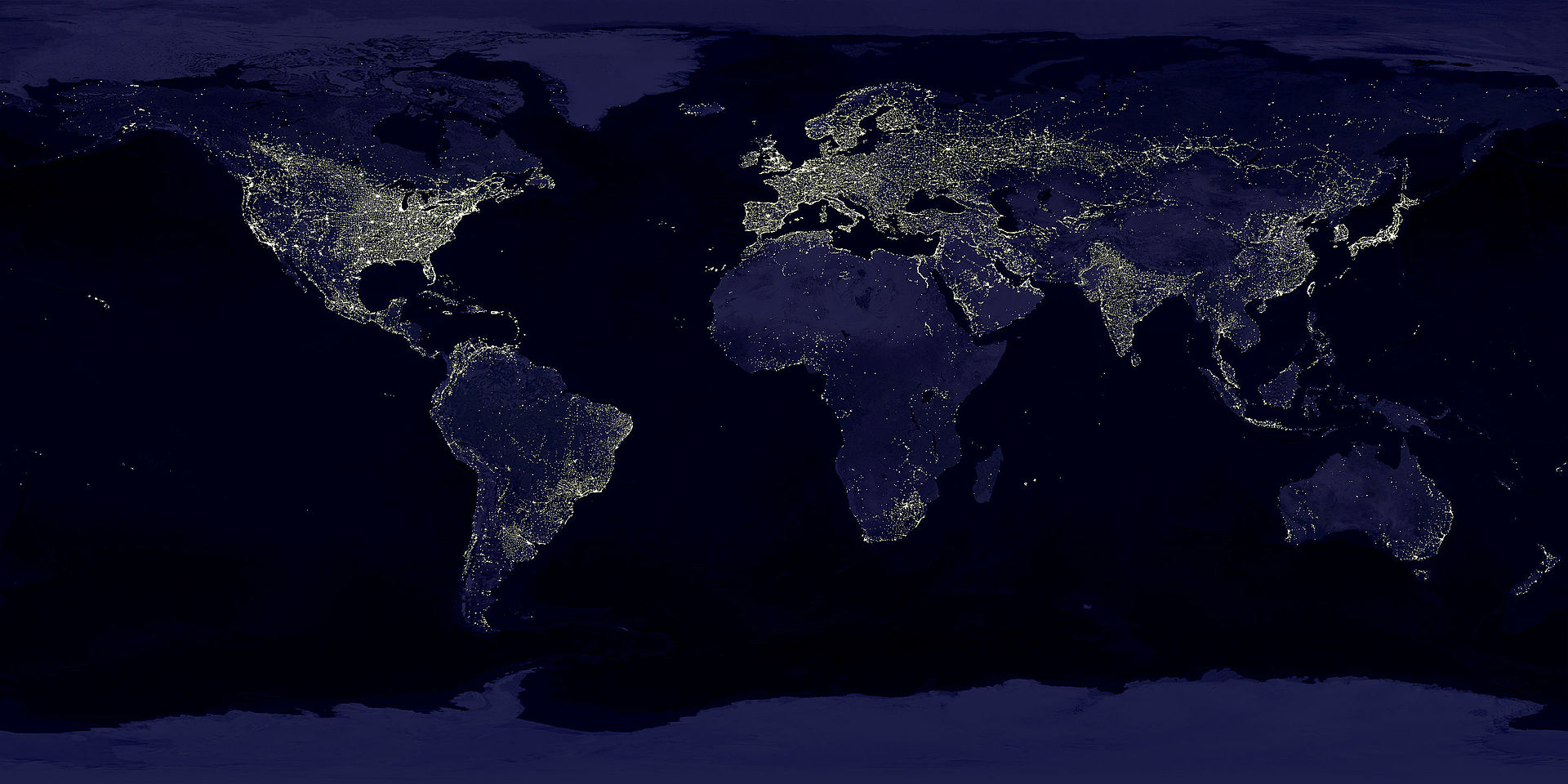
Satellitenaufnahme der Erde mit sichtbar gemachter Lichtverschmutzung.
Satellite image of the earth with light pollution made visible. You can see what a huge influence humans have on our planet (picture taken from Wikipedia).
I would prefer if we characterized the current phase of humanity using terms such as networks and information. Digitalization is a weak metaphor for what is currently developing. But “digitalization” is “in” and terms such as “information era” are “out”.
And everybody wants to be a front-runner in order not to be left behind. In Bavaria, for instance, we have a Zentrum-Digitalisierung.Bayern (ZD.B), other German states already start introducing similar institutions.
And you can read endless numbers of pamphlets on digitalization (mostly with nonsense written in them) and attend many events. As a general rule, neither is any use to you. A short time ago, I attended the TechDays in the Munich Tonhalle. It was truly a festival of speculations and I am sure that, if anything, it increased the prevailing degree of confusion..
In the German Wikipedia version, I can recommend the article on Digitale Transformation (Digitale Transformation). It gives a concise summary of the current state of affairs. There are also some contributions, such as Computerisierung, Informationszeitalter or even Digitale Revolution (Computerisierung, Informationszeitalter, Digitale Revolution), all of which are “nice to have”, but basically you do not need them. There is also an “English” „digital business transformation“ article – I hope they will soon change it to become a feasible “digitalization in public offices and in business” article or something similar.
Let us just consider “digitalization” as the continuation of “industrialization” and as part of the evolution on our planet in the time of Anthrozopän. Incidentally, there is now a Special Exhibition (Sonderausstellung) in the Deutsches Museum with a few things absolutely worth seeing. But you should be careful about getting a guide who will not punish the group by telling them half-truths and voicing personal opinions.
RMD
(Translated by EG)
Roland DürreSaturday July 16th, 2016
Another Travel Report … Through the Alsace and the Vosges from Freiburg to Saarbrücken.
I like riding the Utopia Velo bicycles. Utopia Velo is a “small” bicycle manufacturer in Saarbrücken. Utopia bikes always have a very special frame. It is hand-made in the Netherlands (at Rainbow in Aalten/Nederland) in small quantities. Incidentally, “small quantities” is a relative term, because Roadster (with a cross-frame just like London) managed to sell more than 5,000 times in only a few years. One specimen of each of those models can also be found in my bicycle shed. Taken both together, you get more than 30,000 kilometres I rode on them over the last few years.
Every year, the Utopia company has a summer party. On the day before, they have some kind of “investor meeting”. This year, it was on June, 25th and 26th. Since I, too, invested some money at Utopia, I naturally wanted to be part of the event. But then, I would not go from Neubiberg to Saarbrücken just for two days. That would not be worth the effort.
Consequently, Barbara and yours truly decided to start on Wednesday, June, 22nd and combine the trip with a small bike tour. We went to Freiburg (the secret capital for cyclists and solar fans?) by train to continue the trip by bike through France to Saarbrücken, where we were going to attend the Utopia event.

There were also numerous sluices we had to pass. They remind us of all those nice houseboat journeys with everybody on board.
Here is a short travel report. One of the reasons is that we had a very significant highlight on our journey – we visited the Völklinger Hütte, a venerable world culture heritage. I strongly recommend visiting it.
Wednesday, June, 22nd, 2016: Going to Freiburg by Train
First, we went from Neubiberg to Munich East at 9.11 a.m. Then we continued to Heidelberg using the EC that had started in Salzburg and the final destination of which was Frankfurt. Our plan had been to go from Heidelberg to Karlsruhe using the S-Bahn train. Since our train was late, we missed the S-Bahn. However, we were lucky and another S-Bahn train took us to Mannheim, where we managed to catch the – also late – EC to Basel via Freiburg.
We arrived in Freiburg at 4 p.m. and first made our way to the river Rhine. This Wednesday was the first of three particularly nice summer days that made Germany extremely sunny and very hot late in June.
In the evening, after around 60 kilometres around the river Rhine, we start asking questions in Diebolsheim around 7 p.m. We were worried about our accommodations, because, surprisingly enough, the area is not full of advertisements. But we were lucky. As soon as we arrived in Diebolsheim, we found a sign: GÎTES d’ÉTAPE. We rang the bell and a nice lady opened the door. And already we had a nice room for the night. Since there was no restaurant in the vicinity, we acquired a Baguette and two bottles of red wine from our landlady (total price, including room for the night was 50 €). And with that, we had the first wonderful evening.
Thursday, June, 23rd: From Dieboldsheim to Graufthal.

Quite frequently, we go parallel to the Alsace channels.
We rise early. Soon we are at the Rhone-Rhine channel. It is wonderful on the bikes on a wonderful summer morning. In Strasbourg, we eat breakfast at a small bakery and then have a second pause at a bar. It is just like a fairy tale or the cinema.
After Strasbourg, we are never bored. We cross the country, follow channels and, after a few inclines, arrive in Graufthal. It is a village in an environmentally protected area. To be sure, it is a little touristy, but still: it is a very agreeable place.
We find a wonderful hotel. The Au vieux moulin fits perfectly with the scenery and the picturesque place, the room is great and the price is modest. There is tasty food in the evening; it is not easy to choose from the menu. We enjoy it all and again I understand why they say: living like God in France.
Our bed-time is rather early, because tomorrow morning, the Vosges inclines are waiting. And since they say it is going to be another hot day, we prefer to do the hard work in the cool morning hours.
Friday, June, 24th: To Saarbrücken via the Vosges.
We start before eight, forgoing a breakfast at the “old mill” that would certainly have been delicious. The soft inclines of the Vosges are of the kind even I delight in. Regardless, there is quite a total altitude to climb. We finally get our breakfast in a wonderful bakery as we arrive in a small town about half-way to Saarbrücken later that morning. We sit close to the bakery ovens where the delicacies originated and can watch the baker at work.
Then we continue on our way, riding our bikes across the width and length of a gentle landscape. Later, the way is again down and we reach the river Saar. Our route is as snaky as the course of the river on quiet bank paths to Saarbrücken. We discover remainders of the Maginot line, signs on the streets tell us about this monstrosity and the tragic events associated with it. We also came across soldiers’ cemeteries on our trip quite frequently.
At noon, we are still in France. We find a great restaurant. It is directly on the river Saar and a very typical Alsace restaurant. We enjoy the day’s special with three courses that taste delicious and a bottle of wine. As I already wrote: it is like God in France.
Then we continue on our way. After a short ride on the bikes along the river Saar, we arrive in Saarbrücken early in the afternoon. Only 48 hours ago, we had arrived in Freiburg. In theory, we could now go to the railway station and be back in Munich by tonight. However, since we have plans in and around Saarbrücken, we again look for a place to stay. The first few hotels we see are not really to our liking. Then we find La Résidence in the middle of the city. The price is ok, so we book for two nights. In the afternoon, we stroll through Saarbrücken – in our perception, the capital of the Saarland is a very active metropolitan city.
In the evening, we enjoy the Saar promenade. It really feels like a metropolitan city to me. There are great restaurants. There is some wind, it seems like the summer is over. But we are lucky, because the weather remains stable and we close three very warm summer days on our bikes with a really good meal. To be sure, this was only a small bike tour with about 200 kilometres, but it is really surprising how many nice things you can see in three days, even if travelling there from Munich was no small distance. Then the great rain comes – and we flee into the near hotel.
Saturday, June, 25th, 2016 – The Highlight – A Morning at the Völklinger Hütte.

The hot blast stove at the Völklinger Hütte. (Wikipedia – Owner LoKiLeCh)
After a huge breakfast at the La Résidence, we start the day. It is a little more than 10 kilometres to the Völklinger Hütte by bike. We enjoy it, because it has stopped raining. The cottage is a huge industrial museum and World Cultural Heritage. We were already going to visit it during our Saarland trip, but then the time frame was not right.
This morning, we finally do it. We are extremely lucky, because this is the very day that the “Bhudda Expedition“ (“Bhudda-Ausstellung“) opens in the world cultural heritage. The sensational photo exhibition by Steve McCurry: “Buddhism – Photos taken between 1985 and 2013” has been installed in the cottage on May, 1st. The price of 15 € covers everything. Most of the visitors only pay 13 €, because you get a discount of two Euros for many things, for instance if you are an ADFC member or the owner of a BahnCard. …
The exhibition combines many messages and opportunities. You can experience the brutal side of the industrial era, media shows illustrate how the people worked. The integration of the Buddhas and pictures into the “old” technology fits perfectly. Someone gives excellent explanations on the Buddha statues. There is a fantastic contrast between the pictures and the environment. It is a truly great installation.
And the cottages also offer all kinds of things. Technology, history, but alo adventures and physical exertion. There is a long circular course that is never boring. And there is an outdoor high-elevation path where even well-trained climbers might easily get dizzy.
Even without taking the bike trip, visiting these “three exhibitions in one” is definitely worth going to the Saarland.
Late in the afternoon, there is more rain. So we flee into the interior of the world cultural heritage. Then it continues to rain. Still, we are on our way and arrive at Utopia relatively dry. There is a friendly welcome and we watch exciting presentations. In the evening, we are again lucky with the weather. We arrive safely and do another stroll on the Saar promenade. However, dinner is “in-house”, because it has become quite cold, if not downright frosty. On the other side of the window, you can get a glimpse of the sun, but that does not bother us when we eat.
Sunday, June, 26th, 2016 – Utopia Summer Party.
We check out of the “Residence” and ride our Roadster and Silver Dove (Barbara’s bike) to the summer party, taking all our luggage with us. We hear many interesting discussions, learn much that was new to us and get a few trial rides on “normal” bikes and “pedelecs“. We are surprised to hear that a modern bicycle frame, either of steel or aluminium, is less heavy than a good bike chain designed to resist a thief. We also learn how to best oil a bike chain (after having cleaned it with a brush) and many other tricks. There is definitely a strong temptation to buy a new bike. Especially the pedelecs with their low weight are very tempting. Well, we can just about resist.
In the afternoon, we go directly to Saarbrücken Central Railway Station. The train trip is rather unproblematic, with just a small glitch: the only toilet on the regional train from Neustadt (Weinstr) is defunct and closed. Regardless, we are back at our “home, sweet home” shortly before 10 p.m. after five wonderful days.
RMD
(Translated by EG)


