
Roland DürreThursday July 9th, 2009
Yellow Ribbons Stretching the Atlantic Ocean – The Opposite Side of the Coin.
 Quite early on in our cruise through Norway’s fjords, we noticed the yellow ribbon we carry behind us. It marks the path of our ship. On the second day, it was even more drastic. The ship’s route curved, and the ribbon stood horizontally at the horizon.
Then we discovered several more yellow ribbons. Those were the exhausts of other ships we saw during our journey.
Our ship, too, uses up enormous amounts of heavy oil. The chimneys continue to emit huge amounts of smoke in different and fearful colours. But you have to see it before the background of the pure oceanic air in order to understand what is actually happening. mehr »
Bernhard FindeissWednesday July 8th, 2009
Scrum vs. Kanban (2/2)
In my last article, I began a little comparison between Scrum and Kanban: What are the key similarities and differences between the two methods?
This time, I’d like to talk a little bit more about the distribution of boards to teams, and how to work on different products at the same time.
This blog post is based on the previous one. If you haven’t read it until now, I suggest doing so before going on with the rest of this article.
As mentioned in part 1, a Scrum Board always shows the state of the current sprint for a certain team. At the end of each sprint, a new “potentially shippable product increment” is created, the items on the board are “reset”, and the next sprint begins. As a consequence, requirements to be implemented by a Scrum team mustn’t be more than one sprint in length. Bigger chunks must be split into smaller ones until they fit.
In Kanban, this is handled differently. As sprints do not exist, items can be of arbitrary length. Also a result of lacking sprints, a Kanban board doesn’t undergo the same cycle as a Scrum board, and is not reset after each sprint. But there are some similarities, however: The rows contain the various requirements, and the columns represent the states of the workflow. Requirements are “done” as soon as all tasks associated with it have moved to the right-most workflow state.
<———————————>
This is not the only difference between the two panels: In Scrum, the table exactly the work of a team again. While it may all see the blackboard, but the team may also change. The team is cross-functional occupied. I.e. all the capabilities needed to the current sprint to a successful conclusion, are included in the team.
In KANBAN are here from the outset, no such limits. Cross-functional teams are optional. Even the restriction to a single team is not required. Instead, it refers to a Kanban board to a specific workflow. A workflow can, in principle, but also include several teams. A Kanban table may be purchased by several teams changed.
To say it is better to be able to imagine, the whole thing again here graphically:
A Scrum-table is always in possession of a single team
Figure 1: A Scrum-table is always in possession of a single team
Figure 1 shows a typical Scrum board. She is always in possession of a single team. All columns of the table will only be changed by this team.
Figure 2: A Kanban board of several teams can be managed simultaneously
Figure 2: A Kanban board of several teams can be managed simultaneously
Figure 2 shows a Kanban board. It is not only not in possession of a single team. Instead, it reflects a workflow again (in this case simply “Todo -> Processing -> Done). The individual steps of the workflow may be arbitrarily divided in teams.
In this example, here is example the column “Todo” by only one person managed (which could, for example a kind of project manager or his Product Owner). For the remaining columns, however, is another team responsible. In reality, the board would be from Figure 2, probably a bit expanded to really useful to be able to work. Links of column 2 “Todo” could be a column about “backlog” to introduce a kind of disordered wishlist without prioritization, as the pool for all future requirements serves. Should any of the requirements to be realized, it will be easy for “Todo” postponed.
Of course you can have the workflow to many other types of distributed teams. With a high number of items it might be useful to some, that two or more teams share a column. But the Scrum used in case (a team manages the entire table) is possible.
A Scrum-table is really nothing other than the special case of a Kanban board.
Behaves similarly to the case also with the estimate of items, or their lead on the table:
In Scrum, use the length of an iteration as a frame of reference. This means that the team appreciates all the new incoming requests and selects them exactly as many as it is in this iteration (sprint) can be implemented. If one adds the estimated values of all the requirements of a sprint, so you get the “total value” of a sprint (in Function Points). We call this number also “Velocity”. This value can then several sprints continued to write and compare. He serves the team as a clue in the sprint planning when it comes to requirements for the next sprint to select.
Figure 3: Calculation of the Velocity
Figure 3: Calculation of the Velocity
In KANBAN, however, this is a bit different. Since it is of no house of iterations, and also the new requirements Beschätzung is not absolutely necessary, there is no fixed reference frame, one to calculate the velocity would use. Instead, we need to manage differently here. Some teams such requirements are grouped into so-called “MMF” (Minimum Marketable Features). Then they measure the time it takes all the requirements to implement this group. On this basis, can then also service level agreements (SLAs) are working. “We provide a MMF always at max. 10 days would be an example of this.
Other teams break requirements (without explicitly beschätzen) in approximately equal-sized pieces and then measure the throughput. Based on a fixed (arbitrarily chosen) time can be once again a “Velocity” calculate ( “10 requests per month).
The possibilities are almost limitless. One can of course always a fixed frame of reference to introduce, with estimates and / or re-iterations of a Scrum-like method come. The best way is to try different looks, and then take the one that is for the current case, the most appropriate.
Together, the two methods, however, the same team several products simultaneously work for you. In Scrum, you often feel that this does not work (as a Product Backlog is always based on just one product). However, one could indeed be a team on several product backlog at the same time to work. The order of execution (in a row, alternating each sprint, at the same time, etc.) will be given jointly by the team reached with the Product Owner (s) specified.
With KANBAN, the whole thing much easier: A blackboard always belongs to a workflow, rather than a product. It is therefore readily possible to use several products at the same time using the same workflow to drive. For better distinction, one could still take different cards, or you carry more than one line (one line per product). But otherwise, no further changes to the process necessary.
Where at first the comparison between Kanban and Scrum. Here are the results again in a table briefly summarized:
Scrum Kanban
Iterations with a fixed duration. Iterations are purely optional. Fixed length is not mandatory, also control event possible.
3 rolls firmly planned (Product Owner, Scrum Master and Team). Initial no prescribed roles.
Team selects a set of requirements for a sprint, and undertakes to implement this. None of iterations, therefore, no solid commitments necessary. But there is the possibility to introduce SLAs.
Velocity (work done per sprint) as the primary parameters for planning and improvement. Throughput as the primary parameter.
Product Backlog is (descending) sorted by business value. Prioritization optional.
Entries must be in the Product Backlog in a max. a sprint feasible. Scrum tasks on the board are <= 1 day. Requirements may be arbitrarily large.
No changes to the requirements during a sprint possible. New requirements will be the earliest with the next sprint planning. New requirements can in principle be brought at any time (if a slot is free).
A Scrum-table after each sprint will be reset. A Kanban board is continuously updated.
A Sprint Backlog (and thus also a Scrum-table) is always exactly one team. A Kanban table can have any teams to be divided.
Cross-functional teams required (and also necessary, as a Sprint Backlog only by one team is being processed). Cross-functional teams optional. Even more (special) teams per workflow possible.
If you look at this table so committed, then you can see quite well how Scrum and Kanban actually related: Kanban and Scrum are not mutually exclusive. Quite the contrary: Since every rule in Scrum is a special case of a rule is Kanban, Scrum is really nothing more than a special case of Kanban.
Scrum is one of (probably infinitely) many ways to make Kanban …
BFI mehr »
Last Sunday, there was a picture of our Federal Chancellor, Frau Dr. Merkel, in the onboard newspaper of MeinSchiff. The corresponding article contained some of what Frau Merkel had written for the “Tagesspiegel am Sonntag” of July, 5th, 2009.
I had to read no further than the first sentence to start getting thoughtful:
she will stand up for “getting the federal expenses back to a sustainable path after the crisis”.
mehr »
Roland DürreTuesday July 7th, 2009
Absurdities in the On-Board Newspaper – Are Hybrid Cars Making too Little Noise!?
On board MeinSchiff, there is actually a four-page daily newspaper. Every day, some absurd news is printed therein. Here comes a splitter of Saturday, July, 4th, 2009:
In Japan, hybrid cars must be made to be noisier!!!
As a cyclist, I have been thinking for some time that, in the future, I will have to rely more on what I see than on what I hear, because some few less noisy hybrid cars appear on the streets. On the other hand, so far, I always heard those hybrid cars quite well, too, because it is only the motor that makes no noise. The sound of the tyres rolling on the asphalt is still the same.
But now, at long last, the cars begin to get less noisy. And there is the risk that in the future cars will no longer have rollers. Instead they will have thin tyres made for going slower. Those will really be silent.
And what is it the Japanese now want: cars have to make more noise. The best would be to generate noise with a separate device!
By the way, a good bicycle is quite soundless and you can go pretty fast on it. But most of the cyclists (with the exception of some few rowdies) pay attention to people crossing their path and avoid them. And if necessary they use their bell or give a yell.
Or will cyclists also have to have a permanently noisy tyre bell in the future?
RMD
(Evelyn Gemkow)
Roland Dürre
Fish Farms!
 Travelling is education. Now I know where all our salmon originates. After all, even though the oceans have been exploited to their full extent, the price of salmon still plummets.
On my cruise through Norway’s fjords was the first time in my life that I saw huge fish farms. We kept seeing more and more of them from the ship. One of them is what you see to backboard on the picture I took during a Norwegian foggy sunrise.
It seems so easy. The oceans are empty, so all we have to do is domesticate fish and produce it by way of agrarian industry. The lector on our ship assured me that today the industrially grown salmon is no longer distinguishable by its taste from wild salmon. He said the reason for this is that the salmon is fed with fresh Krill, which is “harvested” from the southern hemisphere, near the Antarctic.
On hearing this, I get really desperate. So now even the last reserves on this world are emptied out.
RMD
(Translated by EG)
My Norwegian trip is still making me thoughtful. I will write a few articles in order to mentally close it down. Here comes the first.
On the ship, I was one of the very slim people, which is amazing for someone weighing 95 kilograms and all the time trying to get back to his one-time weight of 85.
I found the following data on eating and overweight in Brandeins (copy of Mai 2009, page 85 “Gegessen wird immer”).
Per centage of overweight females in Germany:
66
Per centage of overweight males in Germany:
51
Per centage of German women who think they are too fat: 59
Per centage of German men who think they are too fat: 75
I am among both the 51 and 75.
Roland DürreMonday July 6th, 2009
UTB #51 – A Day in Copenhagen
 Yesterday evening, the sun appeared for a few hours, after all. Sunset is a little earlier around here. We are going east, so the sun’s good-bye is a soft one on the stern. And we have a wonderfully long night ahead of us, because arrival time in Copenhagen is as late as 10 a.m.!
Incidentally, on arrival in Copenhagen, the sun is again shining all around the place. It is 3 p.m. before the first dark clouds and the first raindrops make their appearance.
By that time, however, a four-hour stroll through Copenhagen is behind us. First, we went through the pedestrians’ zones in the old part of the city, and then we went to see the mermaid. We took an excursion boat from the mermaid to the Amalien-harbour and did a tour of the castle Amalienburg.
For us visitors, Copenhagen is a dream of a city. There are beautiful buildings, and there is much life on the canals and at the shores. Copenhagen seems to be the world’s general meeting place. mehr »
Roland DürreSunday July 5th, 2009
UTB #50 – The Day in Oslo, A Rainy Day = A Day for Visiting Museums!
Yesterday, we were lazy all the afternoon and evening. We went through Stavanger by ship. That is possible, because Stavanger is divided into many islands.
Stavanger is the fourth biggest city of Norway and profited particularly much from the oil and gas boom. We get a lot of interesting information about the building of and waste management on oil platforms.
Also, it is always one degree warmer around here than elsewhere in Norway. The reason for this is the Gulf Stream coming from England and really giving all it has in this area. That is also why even tomatoes grow here. And many Norwegians spend their summer holidays here in Stavanger.
Besides, it is not so long ago that Stavanger, along with Liverpool, was the Cultural Capitol of Europe.
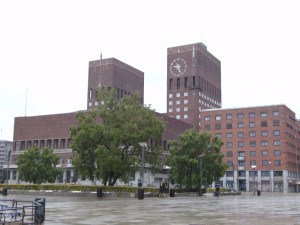 And then we turn back to the sea towards Oslo. The sun is shining brightly and we enjoy a digestif at the stern.
GRÜNSIX
Radio Philosophy #031 – BILLY.
Now imagine: Your brains be a tailor-made shelf. On entire row is reserved for Greek philosophers. With this, you are well equipped For surviving the nonsense of a “Will” talk-show. A row for Rousseau would serve the same purpose. It would help you to get – mentally – back into the trees. For the Englishmen, you have a separate row for Charles Darwin. Now religious nuts have no chance In a discussion with you. If all this is too metaphysical for you, A row for the Germany might help. You can change the world using Hegel and Marx. You would not look too bad with this kind of shelf - After all: Aren’t we all a little Billy? KJG/SIX (translated by EG)


