
Roland DürreMonday October 27th, 2014
Tolerance & Religion
Currently, I am thinking a lot about morals and ethics. One of the reasons is that I discovered how, for almost all persons, moral rules dominate almost all their decisions. This is especially true for all my wrong decisions.
Until recently, I believed that decisions are usually based on either rationality and common sense (brains, ratio) or intuition and heuristics (gut feeling). I thought this was also true for my own decisions.
And now I discover that I was profoundly wrong in many cases (and had to suffer consequences). Simply because I believed: “this is how I had to decide, because this is what you do”. Or in other words: I was incapable of resisting (too cowardly to resist?) the “this is how you do it” or the “this is not what you want to do”. Because my decisions (especially the bad ones) were influenced by morals and moralizing.
Besides morals and ethics, you will also find some ingredients in the “Hotpot“ of philosophy which are hard to digest, such as “religion” or the virtue “tolerance”.
Because:
“For us, religion is sacred!”
and
“You have to be tolerant!”
I, too, believe tolerance is a precious value. The ethical person will say:
You should always be tolerant!
Tolerance beats morals!
The only thing you should be intolerant about is intolerance!
Well, one might counter that intolerance against intolerance is again intolerance, isn’t it?
Let us take a look at tolerance in practice using the example of religion. Both our Federal Constitution and the Bavarian Constitution give the “Freedom of Religious Practices” very special protection. It is almost conspicuous. And the law drawn up in accordance with the constitutional regulation strictly prohibits the violation of “religious sentiments”.
Instead of just demanding tolerance and respect, it actually means you have to subjugate yourself before the religious sentiments of others if you really strictly want to abide by it.
For me, this requirement is too much. Who is to decide what is a religion and what is not? A mass takes upon itself an absolute obligation towards theories and rules they basically themselves invented. In doing so, they cite a special, higher, external non-explainable instance. And then they systematically hand this “belief” on from generation to generation – which eventually leads to the creation of such systems as churches with all their advantages, but also with very significant disadvantages.
But how to decide which kind of belief that has become a system is a religion? And who is fit to decide? If I carefully read the chapter about religion on the Bavarian Constitution, then I get the impression that the fathers of the constitution mostly meant the Christian religions. And among those only the “better” variant.
So is this absolute tolerance demand for “religious sentiments” really acceptable? Especially if people who are victims of their religion believe themselves to be in possession of the absolute truth and consequently demand things which in the worst but frequent case violate humanity?
Perhaps this is why the beautiful term tolerance has now deteriorated to become a “buzzword” – just like, unfortunately, did the words freedom, common welfare and sustainability.
A short time ago, I demanded tolerance in my commentary on a blog. I also called it a basic “primary virtue”. And the reactions told me that there are actually some moralists who already seriously demand a “tolerance police”.
RMD
(Translated by EG)
P.S.
For the time being, this is my last post on morals and the like. After all, opposing morals and moralization is already some kind of morals and moralization.
😉 Starting tomorrow, I will again write about whatever comes to mind from everyday life.
Roland DürreSaturday October 18th, 2014
Summertime – A Question of Morals?
As you can easily see in the IF blog, these days I like discussing morals.
Today, I was wondering about summertime. Or rather: about the switching from summertime to wintertime. It is also meant to be a “use case” for my topic “Deciding under Morals”.
Next Sunday will again be the time to do it: all of a sudden, the light of day will come earlier and, of course, darkness will fall earlier, as well. And as always twice each year, I will again feel a little dizzy for a few days because of a mini Jetlag. Unfortunately, however, this will not have been caused by a move from one place to another.
And I asked myself why everybody seems to have such a huge problem with abolishing something that is apparently nonsense, both for me and many others.
Let us remember:
The introduction of the summertime was again initialized in Germany in 1978. Yet it took until 1980 before it was reality. I said “again” because summertime is a legacy from the war and post-war days, both of WW-1 and WW-2. As always, you will find good informations on the topic in Wikipedia.
In the late 1970ies, we had “what felt like an energy crisis”. There was the general belief that changing to summertime would save energy. And since “saving energy” is such a good thing and morally so very correct, they decided to introduce the summertime.
Now it seems clear that the statement “summertime will save energy” can be neither proved nor disproved. Now “they” could decide to abolish the summertime.
Rationally, the entire affair would be easy – because the yearly change causes extra work and damage. For example because there are more traffic accidents. The same is true intuitively (emotionally). After all, who wants all this stress caused by the change of time zones.
But we also have morals. As you all know, I believe they often the main reason for decisions. And this is where I see poor chances for abolishing the summertime:
- “After all, nobody can decide this single-handedly”.
(Like evil Putin, who – as we all know, – abolished the summertime)! - “How to justify such a step in the eyes of other European countries?”
(Well, we no longer want to be part of this nonsense.) - Maybe such a decision would have disadvantages we have not yet thought about?”
(Maybe it will save energy after all?) - We had the summertime for such a long time! Why change it now?
Lacking the courage to change things, doubts and fear are all about morals. More often than not, they will slow down decision processes and prevent reforms and change.
In the “theory of decision making”, it says that it no longer makes a lot of sense to judge all other rather minor and non-relevant reasons if you have two major reasons why to decide in favour of something. I presume this is also true for collective decisions like this one.
Incidentally, I would continue with the summertime, because it simply is the best match for the geographic length we live in .And if the “old” wintertime returns, I will simply reset my rhythm of life to start one hour earlier.
RMD
(Translated by EG)
Roland DürreFriday October 17th, 2014
Morals & Ethics over Values & Virtue ???
There are many people in my limited world who I appreciate and like a lot. Some of them think the meaning of morals is “behave in such a way that you always follow the shared values and virtues as a good person”. Personally, I do not really see morals as something all that positive. Consequently, here is what I reply when I hear them talk:
So what exactly are morals and ethics? What exactly are values and virtues?
And then I come up with examples and ask them what is “morally” the correct thing to do:
- “Being in favour of order and peace” or “openly demonstrating for freedom by marching on the streets”?
- “Progress and change are a good thing and come at a price” or “Progress or change must never be an end upon itself”?
- “You have to go and vote!” or “You can refuse to vote if this is how you voice your protest”?
- “It is a human right to drive your car as a matter of course!” or “It is a basic human obligation to do without a car altogether, because too many resources have been destroyed already.”?
- “Let everybody feel free to fly as much as they desire!” or “Going by plane can only be the Ultima Ratio.”?
- “In sexuality, freedom need have no limits” or “You only should do it with one partner and your sexual practices should be limited”?
- “Women have the right to dress loosely” or “Women have to cover everything that is not supposed to be seen in public”?
- “Prostitution must be forbidden” or “Demanding fairness for those who prostitute themselves.”?
- “Women must have long hair, men must have short hair” or “Everybody may wear their hair as they wish to!”?
- “Removing body hair is hygienic and beautiful” or “Removing body hair is amoral(!)”?
- “Shorts are a normal thing to wear, even in business” or “Wearing a suit and tie is obligatory in business!”?
- “Strike is a NOGO when public interest is violated” or “Going on strike is a social obligation.”?
- “You have to have a fence around your property” or “You should not fence in your property.”?
- “Everybody must be willing to die for his fatherland” or “You have to become a deserter when war is threatening!”??
I could easily come up with many more examples.
But then: WHO can, should, must, may decide what is wrong and right?
Ethics try. They want to find a compromise between various positions by seeking a consensus that matches both the society and the times and try to legitimize said consensus. But ethics, too, always fail.
There are even “ethics commissions” which want to and are supposed to answer the difficult questions of life. Instead of consensus, however, all they ever come up with is compromises – which are just as flat as their attempts at justification. Yet those compromises are then heightened to become “new” morals.
Morals almost always will turn out to be (either consciously or subconsciously) “know-it-all” behaviour driven by interests.
“You” simply know what is right and wrong. “You” basically own the “truth” and can tell others what they should do. “You” can therefore assume you are better than your fellow citizens.
As I see it, “morals” will mainly generate enemies and frustration – and it will also cause defiance. All too often, the “moral rules” are nourished by questionable sources, such as religion and its equivalences. The collective constructs of systems that put themselves beyond and above human beings with their dogmata decide what is “morally correct” and what is not.
The consequences are hatred, arguments, conflicts, fear, intolerance – and war! Both on a small and a large scale.
Well, those are my arguments against the firm belief in morals by some people. Yet I can well understand those who are in favour of morals. Because if you no longer believe in morals, then this is like someone took away the carpet of life you have been walking on. After all, we all have been “morally educated” and have become more or less victims of our own moralism.
As soon as we leave the protective gear of morals, we must go and look for a meaning in our personal lives and behaviour. And it is not always easy to find a balance between what you found and what you perceive as social reality (and its morals).
RMD
P.S.
I wrote this article for the community “Strategische Moral” in Google+.
Roland DürreTuesday October 7th, 2014
Ethics and Morals: Two Evil Sisters…
I used the last long weekend – it started with the German Re-Unification Day – for philosophising: along with a not very small group of very young students and experienced entrepreneurs and leaders, I went to the Grashof – a small conference hotel about 25 kilometres west of Fulda. My friend Klaus-Jürgen Grün held a “philosophical colloquium” supported by the “Ethikverband der Deutschen Wirtschaft e. V. (EVW)”.
For me, those three days were extremely important. Let me give you a short account of what I learned.
Morals and Ethics
I understand more and more clearly that morals and ethics are two evil sisters. To be sure, the younger of them, “ethics”, tries to dampen the detrimental effect of her older sister “morals”. Yet far too often, all she does is make matters even worse.
What I am saying is that morals are the cause of much that is evil and the concept of ethics doing better does not work.
Morals and Decisions
Up to now, my view of the world made me see decisions basically as the solution of the conflict between ratio (facts, evaluation, consequence, brain) and intuition (emotions, sensation, gut feeling). During this colloquium, however, I suddenly understood that there is a third – often extremely powerful – factor: morals!
The more I listen as persons find a consensus, the more I discover that the arguments they exchange are of a moral nature, rather than rational (common sense) or intuitive (heuristics). I find this a terrible thing.
Morals and Regularisation
Thirdly, I am now aware of how often we moralize even in simple speeches or when we talk, think and discuss things, and how much we are determined by morals. The systems we live in build massive collective constructs which further influence us morally.
The consequence of unimpeded morals is over-regulation. This is something we secretly demand (in order to have the others at long last do the right things), yet we do not really want it. Such a process will be detrimental for freedom: in the extreme case, we will lose said freedom. That is a scenario I do not like.
I would like to live in freedom in a developed and enlightened society. There is nothing wrong with reasonable rules. More and more often, however, I get the impression that, especially in our hemisphere, this development does no longer take place. What is worse: we are regressing and unnecessarily relinquishing our hard-earned freedom step by step. And this is something that must not happen.
RMD
(Translated by EG)
Roland DürreThursday July 10th, 2014
Roger Dannenhauer – Mind-Set
Here is another presentation of our technological IF Forum series:
“Self-Organization as a Formative Model for Enterprises”
It was held on June, 27th, 2014 and is now available as video recording (creative commons).
Enjoy!
Many thanks to Roger of the Team-Turnaround!
Now almost all the presentations are available – only one more to do. It will come soon, too.
Thanks a lot, Friedrich (Friedrich Lehn).
RMD
(Translated by EG)
Roland DürreThursday June 5th, 2014
Moral and Ethics – A Very Short Comment! ♫
There is a song by John Lennon – the title is “instant Karma“.
🙂 The “Instant Karma” always reminded me of “instant coffee”. Or “instant meditation” – for instance for managers who have no time.
Today, I will try “instant philosophy” (on moral and ethics).
Moral wants to regulate everything by rules.
and it determines what you have to do and what you should not do.
Ethics will appease moral.
Ethical behaviour expects you to have determined your “moral rules” through social consensus. However, your behaviour must follow an ethically responsible balance of values where the moral aspects should certainly be part of the considerations. Yet the decision can be made freely and responsibly by all individuals.
If you actually want to apply this rule, you will often find it too complicated and cannot practically realize the procedure.
The solution might be negation. What matters is no longer what you do, but what you refrain from doing!
For instance, if you take sustainability as an example: everybody wants sustainability. Consequently, sustainability became an anti-word. Since the term sustainability is not suitable for defining moral behaviour, it soon burnt up. Because you cannot define what exactly “sustainable behaviour” means.
Consequently, if you want to live your life in a sustainable way, you will not find “sustainable activities”. All you can do is refrain from doing what is not in accordance with your intent. In other words: the only way to live in a sustainable way is not to do things which are not sustainable. And you will have no problem finding what is not sustainable.
Very easy!
As a reward, listen to the song by Big John!
RMD
(Translated by EG)
Roland DürreWednesday May 7th, 2014
The Philosophical Legacy of Rupert Lay
On March, 29th, 2014, Rupert Lay spoke about “Constructivism and Society” at a Ronneburger Kreis event in Frankfurt. The presentation was about the development and effect of social constructs.
On June, 14th, Rupert Lay will be 85 years old. He says this was his last public presentation. He calls this presentation – along with the two others about “Constructivism and Belief” of September, 7th, 2013 and “God – New Concepts of Thought” of September, 8th, 2012, his philosophical legacy.
The Ronneburger Kreis recorded all the three presentations and is very happy to present this legacy to a broad public.
„Konstruktivismus und Gesellschaft”
„Konstruktivismus und Glauben – Teil 1″
„Konstruktivismus und Glauben – Teil 2″
„Gott – neu denken”
RMD
(Translated by EG)
Roland DürreSaturday March 8th, 2014
The Usual Splitters
Every day, many items of news reach me – and only few of them remain in my memory.
One of those I remember this week is the information that one in every three women in EUROPE has suffered from violence and/or sexual abuse in her life.
According to a survey, one out of every three women in the European Union has been the victim of physical or sexual violence since their youth (TAGESSCHAU).
I am well aware of the fact that violence is a sad topic in our society. And I find it absolutely abominable. What a nice utopian idea the concept of a violence-free society is! How I wish we had it!
But!
Why does this deserve a headline?
Is it because it concerns only females?
Would “violence against humans” not deserve a headline?
Why do they lump together rape – which certainly is a male-specific crime – and physical violence?
What do they mean with “since their youth”?
Does it mean that childhood is not considered, because during your childhood, violence is common?
Is there not just as much violence against men?
I find this headline absolutely abominable!
More often than not, violence is directed against children, both formerly and today. That is the catastrophe. And there are countries in the EU, such as France, where the majority of parents still consider violence as an educational method quite a good thing.
In my generation, probably around 90 % of the youngsters became victims of violence. And not just once.
There are male and female children. And I fear that boys suffer even more beatings than girls. I can also think of surprisingly many instances where grown-up men have been victims of violence. So why not talk violence against humans?
Rape might be an exception. It is certainly a topic to be discussed around the gender issues.
But in all other cases, I wonder if an honestly equal treatment of the sexes would not necessitate that especially topics such as physical violence are discussed with no distinction between men and women? Because violence is certainly something that concerns us all. The victims are children and humans, men and women. It is a topic that concerns our entire society.
Consequently, violence is something that should not be boiled high for a headline, accompanied by a few “oh-dear”-s and then quickly be forgotten. In fact, all the violence happening in our society should remind us that we are still light years away from a violence-free society and that we need a social consensus for change.
So, dear media, why don’t you write about us men, too? Even if we do not deserve a headline? Why don’t you just oppose to violence in general?
RMD
(Translated by EG)
P.S.
I would recommend “Fefes Blog” as a “good example” for modern media.
Roland DürreThursday February 20th, 2014
BRAIN SET
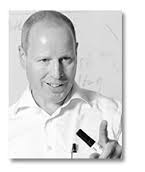 I first met Roger Dannenhauer at the Dornbirn PM Camp. However, his name was not new to me, because he had significantly contributed towards a great literary project (Buchprojekt) on project management with the Turnaround-Team.
In Dornbirn, he inspired all the participants with a fascinating session. For me, this was reason enough to arrange a four-eye meeting with him one afternoon where we exchanged opinions at length and with great intensity.
Roger Dannenhauer is also the author of GEISTESHALTUNG. As I see it, this is a very important book with an absolutely future-oriented message. Even if the sub-title “WIRTSCHAFTLICHER ERFOLG IN EINER NEUEN ZEIT” (business success in our new time) sounds almost conservative, the content is definitely revolutionary.
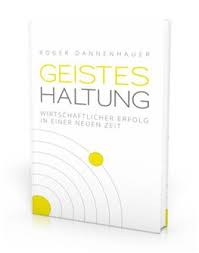
And even the very first message of the book is quite clear: there is no alternative to reality!
When attending podium discussions or other similar events, I am often surprised to meet people who consider growth the solution to all problems. They deny that using up fossil energy is actually a problem, regardless of the oil peak and climate change.
We are talking people living in our times who still consider humans as functional parts of a mechanistic system. People who cannot understand terms such as “lean”, “agile” and “open” – and neither do they wish to understand them.
And I am surprised that there are people who actually still believe we could continue to daydream through the decades with “business as usual” and who forget that generations who will not be amused about this behaviour at all will probably come sooner than we like.
And in the book itself, you will also find topics such as
Ignorance – Manipulation – Waste of Resources.
The book fascinated me, because it is a document emanating wisdom, competence and civil courage! It motivates to start thinking about the future and gives suggestions for a possible approach towards solving the problem. I am not going to tell you more at this time.
RMD
(Translated by EG)
P.S. Here is “affiliate Link” if you want to buy quickly.
Roland DürreSunday February 9th, 2014
Rotary, Lions, FCB, ADAC, Church and Fire Brigade …
Occasionally, I give presentations for Rotary or Lions. These events are always nice, because I am permitted to speak in front of people who understand me and from whose feedback and discussion I learn a lot.
For instance, I once heard that these clubs expect their members to definitely attend their events. To the extent that members who miss events several times without a good excuse will be removed from the membership list.
Initially, I found this rather over the top. After some consideration, however, I now think it is rather consistent. If you want to be a member of any club, maybe you should also feel obliged to take part in the club’s activities. Especially if the functionaries of the club are so industrious and organize such nice events.
Now I read that the big FC Bayern plans similar steps. The lucky owners of all-year-round-tickets will allegedly no longer get an extension if they have not actually attended a minimum of matches!
In other words: now they not only want the money, but also the presence of the owners of seasonal tickets. Simply because it is desired that the non-owners of such tickets also get a chance to see Bayern matches. In my opinion, this is a prudent thing to do, especially with respect to positive image marketing.
Thinking about clubs and image, another club currently ever-present in the media comes to mind: the ADAC. As we all know, the ADAC has made it their objective to increase safety on the roads. Basically, this is not something we seem to be too good at; after all, there are still more than three thousand fatal accidents each year in Germany – and even more seriously and not so seriously wounded persons. And the tendency is upwards!
Since the ADAC has really many members, many of them will also be among the fatalities and injured. Well, would it not make sense for the club to come up with the idea of not just helping with the “yellow angels” (which, incidentally, is a rather commercialized affair), but also to perhaps do something about what is probably the worst possible damage our individualized traffic causes among its own, too? How about trying to drastically reduce the number of traffic victims, no matter if fatal or only seriously injured?
Consequently, one would have to organize regular club evenings in order not to risk the consequences of the bloodshed caused by “individualized mobility”. These club evenings would have to aim at reducing the many casualties and the daily misery inflicted on so many persons and their families. For instance by really hard arguments. Followed by a corresponding lobbyism that advertises actions for fewer traffic accidents.
A beautifully utopian idea, isn’t it? But the only way this can work is if all the people actually take part in these events. Consequently, the solution is self-evident: those members who refuse to cooperate with the club when it comes to safety on the road will be excluded from the ADAC! Or even better: all those who are not willing to actively cooperate towards the goal of drastically reducing the number of traffic victims will be excluded from road traffic!
I can think of other clubs that might be well-advised to follow the examples of Lions, Rotary or now also of FC Bayern. One of them is the Catholic Church. Would it not be logical and consistent with church law if all those members who keep missing such important church rituals as the mass with its “holy sacraments”, who ignore the central club dogmata and consequently commit multiple and enduring “deathly sins” and who, in the religious sense, basically do nothing for the salvation of their souls were to be excluded from the club!?
But no, they do not exclude anybody. Instead, they ignore such behaviour and still charge church tax. Nevertheless, all the people living near a church, no matter if they are members or not, will regularly be called to “Service in the name of God” by the loud ringing of bells – which is like unwelcome spam. This happens regardless of the fact that the few members who actually attend the shared club activities do not go to church because of the bells ringing, but because they have been trained to do so for years.
Those members who do not attend are not really concerned by the ringing of all those bells. They do not feel obliged to do their duty just because the bells ring. Once in a while, they will even be bold enough to grumble about all this noise that is bad for the housing estate (regardless of the fact that said noise is created by the very club they belong to in a rather egomaniac manner). And they remain members of the club, because they wish to take advantage of what the club offers a few times in their lives – as a decoration for special events such as marriage, etc.
Nobody in this country wants to know that the noise is annoying for some non-church-members who cannot really come to terms with this “Holy-Club-Droning”. To make up for it, the question asked by a non-church-member if the call to a club event still needs to be done through extra-loud acoustic signals in the twenty-first century is taken as a violation of the “freedom of worship” or even of “religious feelings”.
Here is my idea: the church, too, could exclude those of its members who are passive or act against the club doctrine. And the remaining members might be called to their club meetings through a “quiet alarm” in the future. Just like the firefighters – a club the activities of which are extremely highly regarded by me – when they have important operations.
RMD
(Translated by EG)
P.S.
You can easily see that the author has slept poorly because he has been reading too many newspaper articles and because he was woken by loud Sunday bells ringing when he finally had fallen asleep.


