
Roland DürreSunday January 12th, 2014
Uniting Personal and Collective Usefulness?
A short time ago, a group of us discussed India, the social situation in that country and values, along with and in particular the ever-present and noticeable differences between “extremely rich” and “extremely poor” on the Google+ Community “Strategic Morals“.
One of us reported about his last trip to India and also told us about a skyscraper in Mumbai which an Indian billionaire built for his family of four. Allegedly, one family (parents and three children) live there with 400 employees serving them.
I know the skyscraper. Some friends of mine told me that especially the health of the children of the family are in a catastrophic state. They also said that there is a complete, high-standard surgical department in this private skyscraper and that there is even a medical on-call service for this family.
I do not know if my information is correct. But regardless of whether or not it is correct, I would not wish to change places with this property owner.
However, I do not understand why even we here in our country tolerate and even promote a society with social rules that make it possible to get immensely rich in one short life. In my opinion, the question how these riches have been gained is irrelevant.
The prosperity of the “new” Russians or Chinamen, called oligarchs, is something I deeply distrust. The same is true for the money a “Michi Schumacher” (with whom I would not wish to change places either, even though he is considerably younger than I) who became a billionaire through “sports”. I also have my doubts about the “method” of a Steve Jobs (another person I would not wish to change places with), who managed to quasi become immensely rich as an entrepreneur.
The same is true for the million-dollar incomes of some DAX enterprise board members, especially if their salary is then added to by huge bonuses. Because I actually doubt that they are totally socially justifiable.
To be sure, I, too, know how hard it is to find a healthy social consensus. Where is the correct line or border for “tolerable riches”?
What might be a possible solution of the “social question”?
A short time ago, I read about the idea that, basically, it should be enough if we managed to “unite” individual and collective usefulness. The only thing that would be necessary for this idea to work is the development or establishment of a common awareness: only if something is collectively useful will it also be useful for an individual. And the same is true vice versa: only if something is useful for an individual will it be useful for the entire society.
How about making this the basis for an ethical “criterion” which might be used as a relevant maxim for “ethical behaviour”, just like the “golden rule” or the “law of behaving in a biophile manner”?
For instance:
“Always behave in such a way that the consequences of your behaviour will equally be beneficial for yourself and the collective social systems you are integrated in. And vice versa!”
RMD
(Translated by EG)
P.S.
I took the picture from Wikipedi. It is by Krupasindhu Muduli and under Creative Commons Attribution-Share Alike 3.0 Unported.
Roland DürreWednesday December 25th, 2013
Quo Vadis, Europe?
Europe was supposed to be united. In order to become a strong continent that speaks with one voice. It was supposed to be powerful in order not to have to bend to the pressure of other nations (USA, Russia, India, China,…), be it economically or socially.
It was supposed to be a Europe based on a consensus of values, where human rights, enlightenment and democracy were the corner stones. A united federation of nations single-minded and clearly positioned, with a stable foreign-policy agenda. And with a strong EURO that makes the European economy independent of currency speculations.
Well, this was the European dream, the theory. But what about reality? We could not be farther away from united foreign-policy agenda than we are. If a third country violates the rights of a European citizen, this is either tolerated or ignored. When world-trade agreements are signed, Europe yields to the interests of other nations and international concerns, keeping it secret from her citizens. We witnessed all these things again last week.
But the value consensus, too, is no longer intact. Here, too, the European countries drift apart. Two current examples show evil symptoms: the planned ban on prostitution in France and the tightening of the abortion law in Spain. Both of these planned legislations look imprudent and hypocritical to me.
In France, they want to ban prostitution. They do not take into consideration that there is a reason why this business is called the world’s oldest. Even former feminists like Alice Schwarzer are cited when arguments for the ban are formulated. This time around, in order not to do damage to the women, they want to punish only the customers. And in doing so, they still make women criminals.
This law will not have any effect. Perhaps a few less congresses will be held in France. Perhaps even Germany and Bavaria will benefit, because some concern bases will again move from France to Berlin or Munich. However, the sexual activities of the French men will not change.…
The current development in Spain also means a huge step in the wrong direction. Mind you, I am not very much in favour of abortions. I like children. I know that the time we have in life passes quickly and that especially the simple decisions in life will often look like wrong decisions in retrospect. But I also know how an undesired pregnancy can be an extreme disaster for a woman. And no matter how difficult the topic abortion is, to me the regulation commonly practiced in Germany sounds rather responsible.
Spain, however, now wants to go another way. What will be the consequences? The poor women – and I think the number of those is not small in Spain – will go back to the “angel creator”. And the prosperous ladies will just go on a short vacation with full service in the neighbouring country. Is that what you call a reasonable solution to the problem?
In the context of the Great Coalition Agreement on minimum wages, the CSU party head and Bavarian President Horst Seehofer said: “We have to make laws based on the reality of life”. Well, this is doubtless true. Neither the ban on prostitution, nor the stricter abortion legislation are based on the reality of life. All they do is moralise.
As I see it, reasonable laws should have a chance to actually be realized by the executive. It seems to me that neither of these legislations meet that requirement. The French would have to increase their moral police significantly. But how to do that? The same is true for Spain. Or does the legislation hope for denunciation?
It would be really sad if the French and Spaniards were to claim the title of: Europe’s Moral Model Citizens. And if the lobbyists, such as the church, were to feel encouraged and increase their influence by such rules. For a moral “lapse back to the Middle Ages”.
But I am truly sorry for Europe. If the European countries drift apart where such questionable legislation is introduced on topics that are so important for human life, then how is Europe ever supposed to reach a social consensus and become a relevant value authority for the entire world?
RMD
(Translated by EG)
Roland DürreTuesday December 24th, 2013
Enmity and Distrust
The older I get and the more I learn, the more I realize that enmity is the major reason for failure and grumpiness. Unfortunately, enmity keeps creeping up from even the smallest cracks of human life. And mostly it is totally unnecessary.
Like hatred, enmity is a parodoxon (Parodoxon). One person hates another person and wants to destroy him. Yet, the hated person remains unscathed, while the person who hates is destroyed. This means that a person who hates someone will always first and foremost destroy himself. And the person who was hated can laugh. …
The same is true for enmity. You are annoyed about something or someone. And you want to find a way of showing this to your environment. Perhaps it happens totally subconsciously – you just want to tell someone about what annoys you. This is how you grow enmity towards others and yet the one person you harm most is yourself.
Fear is the mother of enmity. It nourishes enmity and its siblings. The big sister of enmity is distrust, the small brother is sadness. Sadness, like grief, sorrow, balefulness and heartaches are the opposite of joy. They will destroy joy and lead towards frustration. Which is the enemy of success and contentedness. Thus, fear destroys courage and without courage there is no joy.
The opposite of enmity is philanthropy. You will succeed best if you learn to distinguish between good and evil and if you do the right thing more often than the wrong thing.
To be sure, you must avoid looking at others and succumbing to “but this is how everybody does it”. You have to question your own prejudices and your decisions have to follow your goals in life. This also means that you must not act because of some unimportant context or for reasons of wrongly interpreted considerateness.
And above all: trust must be your “default value”. This is the only way to overcome your own lack of courage and the fear that will always linger in the back of your mind. Fear, distrust and enmity will kill us. But we should kill what kills us. Consequently, we have to make anti-fear, anti-distrust and anti-enmity our tools and practice courage, trust and joy. Because those are the simplest keys to success …
Incidentally, this has nothing to do with “being a good person”. No: “being good” is egotistical. After all, this is about making yourself a success. Only if you are a success yourself, you can also make others a success. Only if we feel well, we can do well by others. And we should only safe the world if we think of ourselves. After all, we are a part of the world that is not insignificant to us.
RMD
(Translated by EG)
Roland DürreMonday December 9th, 2013
Pro Amiability/Philantropy, Contra Hostility
Christmas 2013
Over the last thirty years, I always gave a speech at the annual InterFace AG Christmas Party. In 2012, I talked about a good education being an excellent preparation but also a necessary requirement for designing both your own future and that of your neighbours more attractively and more successfully through courage in life and joyful behaviour.
Today, I know that “life-long learning” is necessary for “a good education”. However, what I mean is not “life-long” immersion in books. This is not about being a student all the time. Instead, it is about “opening up” towards the world and people. You have to leave your own snail shell and face life. This is how you collect life’s experience, which you might perhaps also call experience – and which is so important for a content and successful life.
Consequently, I started my small speech on this year’s Christmas Party with this idea and tried to describe more factors, all of which can make us all successful. In my book those factors are philanthropy and tolerance.
I also mentioned the opposites that, almost unavoidably, cause failure: fear and, in particular, hostility. Both terms were topics of “philosophical seminars” I attended several years ago (“fear” with Baldur Kirchner, “hostility” with Klaus-Jürgen Grün), which affected me very much.
So what is the origin of hostility?
Even brain research seems to prove that hostility is not something inborn. Instead, it appears that our brains reward “doing well” with an outpouring of “happiness hormones”, which makes us quasi construction-based social creatures.
Regardless, I witness small and also big attacks of hostility from almost all people and all social systems on a daily basis.
Like weeds, hostility creeps up out of even the smallest crack. And it happens for all varieties of reasons. More often than not, it is fear that governs humans and makes them hostile. Both carelessness and the urge to know things better, or also the tendency to grumble, can be the reasons. All these and much more of the same kinds of things might be sources of hostility. You are overworked, you are “fed up”, new ideas are refused and intolerance towards all that is alien or different is nurtured.
This is how frustration and dissatisfaction accumulate, before going off in the form of more or less superficial or intense hostility. I often perceive “moralizing” as hostile and do not feel well at all if, for instance, someone says “this is how it is done” or “we always did it this way” as a reason for behaviour that looks strange to me.
What does hostility trigger in me?
Whenever I am at the receiving end of hostility, I first and foremost feel small and uncertain. I ask myself if and how I am the reason for the other person’s hostility? Did I do something evil that might have caused it? However, this sentiment soon turns into something else. I get defiant and will turn away. Until my attitude becomes one of “kiss my a…”. Being confronted with personal hostility makes me insecure. If the hostility seems systemic to me, I retreat into inner resignation and refuse to cooperate.
Hostility is often perceived as an accusation. It will create fear and is detrimental for building up trust. And my problem is that I will answer hostility with hostility (of my own). Now isn’t that a stupid vicious circle?
How to reduce your own hostility?
The only thing that works with me is: minimizing my own fear. But this is certainly one of those things that are easier said than done. Also, I try to minimize the personal distance between myself and those that are important to me. I try to accept and give empathy. And I make myself develop more serenity as days go by – and always to find my inner freedom.
Only with philanthropy can I be a success.
Wherever I am met with kindliness, I feel well. Which gives me a good feeling and makes me bigger and stronger. My fear will vanish. I like the sender of friendliness, I receive it with pleasure and am prepared to invest in it. I am surrounded by people who also feel the same. If I am “philanthropic”, I will quickly have many friends and allies. People will take me seriously, believe me and will also be prepared to do something for me. My environment is no longer against me; instead, it is for me. I am no longer surrounded by enemies, but by friends.
Basically, it is quite simple, isn’t it? Hostility is detrimental for your success, friendliness will make you a success. Consequently, it is stupid to be hostile and prudent to be philanthropic.
Well, this is roughly what my InterFace-Christmas-2013-speech should be.
RMD
(Translated by EG)
Roland DürreSaturday November 9th, 2013
My Presentation “Change in Management” Now Available as a Video
On October, 24th, I spoke at the University of the Armed Forces. Since what I talked about is extremely important to me, I had the presentation video-taped and published in Youtube. Here it is:
Enjoy!
RMD
(Translated by EG)
Roland DürreSaturday October 26th, 2013
Another Absurd Type of Morals – Sexual Morals
Currently, I think a lot about morals and ethics. And it seems to me that “sexual morals” are an example that deserves particular attention.
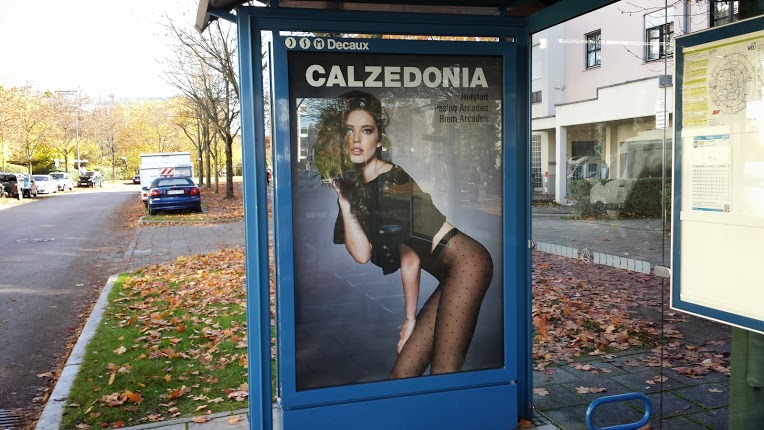
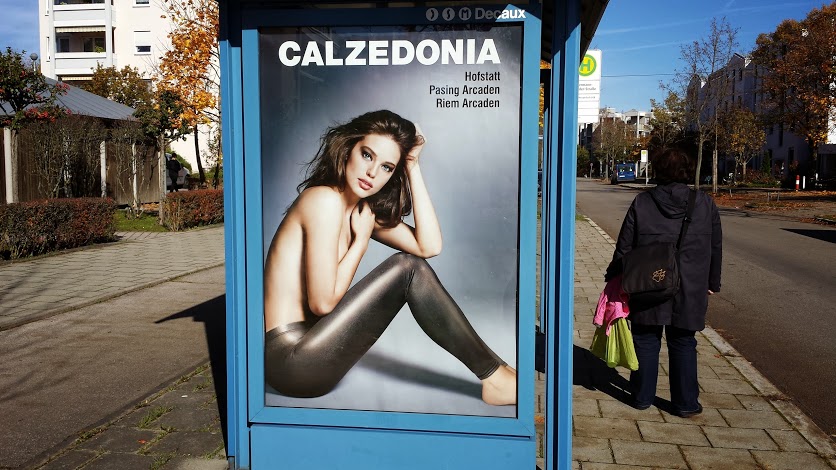 On a daily basis, we see totally opposing morals when it comes to sexuality. At the bus stop, I notice the poster of a lady in the nude wearing a lascivious pair of tights. On the bank, an Islamic lady is sitting, totally veiled. And not far away, there used to be a huge poster wall until recently with the invitation to carry on as colourfully and as often as possible, but only using “rubbers”. The motto was “do not give Aids a chance”. It was probably sponsored by the association of condom producers.
 In Germany, too, the sexual morals changed significantly during the last 50 years (and, of course, before that, as well). What a scandal it caused in the 1960ies if a high-school student became pregnant! I still remember quite well how we students at Jakob-Fugger-Gymnasium organized a demonstration for a girl at Maria-Theresia-Gymnasium who was to be evicted from school because she was pregnant – and I also remember the rather unpleasant consequences said demonstration had for us.
There is a good example for diverging moral standards in France and Germany that happened only recently. Probably a little more than a hundred years ago, a young woman who, for instance, got pregnant in France where she was serving a family, was most strictly forbidden to tell anybody the name of the father! After all, it was the woman who was to blame, because she had seduced the man. And the man was the victim in need of protection. If, in her desperation, she told the father’s name, the understanding knew no borders and there was a total outrage! First she seduced the father of the family, then she got pregnant and, to top it all, she had the impudence to name the father! That was how people thought at the time.
At the same time, there was a totally different rule in the probably a little more modern Germany on the other side of the river Rhine. Young women in this situation had an obligation to tell the father’s name! One of the reasons was that the authorities wanted to make him responsible for the care of the child.
Perhaps these “differences in moral standards” were also one of the reasons why the two countries were still natural enemies at the time. Another example for the problem with morals is the topic “homosexuality”. How much were people with a heightened homophile tendency socially ostracized? How much unhappiness were they suffering?
All these things happened because of morals that simply took for granted that the hetero-sexual tendency is the only acceptable one! Because everything else is against nature or worse? How people lied and cheated, suffered and, of course, also reacted perversely. Not to mention instances where this kind of situation was made worse by applying allegedly particularly honourable principles, such as the celibate?
Or think of abortion. The range of moral judgements is still between the extremes of calling abortion a crime to the contraceptive almost taken for granted, similar to the “pill after”. In the 1960ies and 1970ies, German women were part of an unappetizing abortion tourism to England, Holland and Yugoslavia, supported by the differences in moral standards throughout Europe.
Prostitution, too, is viewed very diversely world-wide, regardless of the fact that it exists everywhere. You can find all varieties, from criminal and secret business to the socially accepted variant of another kind of service.
In China, for instance, prostitution is officially strictly prohibited. The legislation puts it under draconian penalty. However, if I am standing around on any highly frequented place in one of the big Chinese cities waiting for someone, I do not have to wait long before getting rather explicit offers (“do you want a baby?”). In Wikipedia, you can read that, regardless of the prohibition, prostitution in China is a mass phenomenon. Communal and state organizations even support it in order to fill the national coffers.
Mind you, I do not wish to judge or moralize! All I want is to point out that morals as such are a very difficult topic. The famous “we do not do this”… depends very much on time and place and can differ or even be at opposing ends. And that “we do not do this” will again and again seem very random and can actually be questioned. Which is also why we can voices our doubts.
RMD
(Translated by EG)
P.S.
As to the pictures: they are all snapshots by smart phone S4.
Roland DürreSunday October 20th, 2013
Morals as Education or The Emptiness of Morals
While preparing for my next presentations, I keep thinking about morals, both in theory and practice.
For me, interesting examples of the species morals can be found amongst the traffic morals and the sexual morals. And there are other variants of morals currently very highly thought of, such as tax morals or the morals of compliance-conform behaviour.
Today, I would like to take a closer look at traffic morals. Many rules were created for road traffic. In fact, it would actually make sense to stick by them. After all, a recent survey showed that the average human might easily suffer 40% less accidents if he or she stuck by the traffic rules. The people tested throughout the experiment only agreed to doing so because they were given a small tracker from their insurance companies where all their driving data were registered. In return, the insurance companies offered a considerable discount.
40% fewer accidents! In Germany, that would mean no less than 2,000 traffic casualties less each year! And the number for fewer injured would be even higher. Strong morals could actually prevent a lot of death and misery. At long last, here we found a “We do not do this!” that makes sense. After all, with most other laws it is often hard to find any really valuable usefulness, isn’t it?
Except nobody is interested. On our streets, you will find “permanent illegal behaviour”. All the time. Incessantly. At intervals of seconds. The reason for this might be that some kind of overlay morals have been superimposed over the “normal” traffic morals. They suggest that the traffic rules are only for “the others”, but not for yourself. Because we think of ourselves as invulnerable in a very special way.
These “overlay morals” make the secret speed look amoral. Because it is “treacherous” or unfair. Driving too fast is no longer dangerous.
A short while ago, they practiced a nationwide “radar marathon”. It was supposed to monitor more intensely than usual how the rules are adhered to. Yet, paradoxically, they also published the locations and times of the actual radar controls on all sorts of communication channels.
Even the public radio was enthusiastic about announcing them, regardless of the fact that they are financed by compulsory fees.
Basically, this is like the police publicly announcing all controls for whatever and whoever they have them for. And this is something that definitely should not happen.
Consequently, you have to be really unlucky if you are caught speeding. Or else you have to belong to the most stupid of all. Still, nothing changes about our traffic behaviour.
This was it from my side on the absurdity of our traffic morals.
RMD
(Translated by EG)
Roland DürreSunday October 13th, 2013
Remembering the Philosophical Colloquium with Klaus-Jürgen Grün
Ideas by Cordian Riener
After our shared experience of the seminar under Klaus-Jürgen Grün on “Business Ethics” between October, 4th and 7th, I received the following letter from Dr. Cordian Riener.
Dear Roland,
many thanks for your diverse ideas during the seminar. During the train trip back, with my mind on the seminar, I came up with a number of comments I would not wish to forget – so I am making notes on my iPad and sharing them with you.
Firstly, here is how I feel about his definition of sustainability as “no waste“: a short while ago, I had heard about “cradle to cradle” as a new concept of production planning. Apparently, it is quite possible to really reduce the waste to a minimum by prudently defined product cycles and to make used articles the raw material for other articles with a minimum of energy. Especially in architecture, this is getting more and more attention – probably mostly in Holland. This kind of thing would, indeed, be sustainable according to your beautiful definition.
Note by me: I took the definition from Dr. Klaus Töpfer.
If and how these kinds of product cycles can actually be realized purely with market mechanisms without outward control, however, will certainly be an exciting question. During the discussion, you also very correctly remarked that we currently have a lack of responsibility: on the one hand, profits are privatized, on the other hand, the risks and losses are socialized. I liked your argument very much and it also made me thoughtful.
In fact, I actually do have the impression that people (whoever exactly we mean with “people”) try to get rid of responsibility. On the one hand, this might be one of the reasons why institutions telling you which is “the right way” were so successful for such a long time when it came to telling people what they should do. On the other hand, it is certainly also one of the reasons why parts of our society have been marketized: where formerly you said “what God wants is good” has become “what the market wants is the right thing to do” and where formerly the will of the Gods was spoken to us through the mouth of the priests, modern prophets now use quantitative expressions and mathematical formula, along with an army of business priests who will then interpret them for us.
Initially, this might sound like a more or less beautiful analogy, but when it comes to responsibility, you unfortunately discover even more things they have in common: in former times, priests had power over the monarchs, because they were also in a position to take over their responsibility: for instance, if a king caused famine through poor planning, he was on the safe side if there was also an easy way to get out of the responsibility; to be sure, there might be some polemics included here.
I got exactly the same impression while I was doing my practical training at a bank: there was the market; quantitative models discovered the will of this metaphysical entity and the portfolio managers acted according to what the model told them. If things went wrong – and there were quite some times when it did go wrong – the customer (i.e. the bank director) was told that the market had changed its opinion – which was exactly what the models had foretold. I hope this makes some sense at all.
Basically, I suspect that what I experienced quite often (not only as described in the above example) is a very common phenomenon: people are not sure yet have to make decisions. Instead of trusting their “instincts” which – if they have been trained by long years of experience – will come up with the right (best possible) decision, you prefer to rely on things that look more “solid”.
That gives you the advantage that, afterwards, you are not the one who can be held responsible. Instead, you can say there was something like market failure – the market God changed his opinion on short notice. With these considerations, I suspect that your statement was correct when you said that there is a lack of responsibility. And I also suspect that this lack is heightened by our marketized society. As far as this is concerned, I am sure it would be very exciting to take a closer look at our social development on next year’s seminar, wouldn’t it?
With kind regards, Cordian
Well, that was the text by Cordian. Many thanks!
I have now had several more exchanges of ideas with Cordian and am happy to tell you that, in the future, he will also be an IF blog author. This is great – and I will introduce him shortly in the IF blog as a new comrade-in-arms. I already look forward to reading his articles.
RMD
(Translated by EG)
Roland DürreFriday October 11th, 2013
“The Wise Animals in the Zoo” or “Academia”
 Once in a while, I also meet professors of the faculties business and philosophy. On those occasions, we talk, for instance, about business ethics and business morals. And I get the impression that academia is a nice zoo. Many quite fascinating animals live therein.
They are well tended and fed. Their health is exemplary, because the medical attention they receive is excellent. How their smooth coats shine! When they show their teeth, you see a faultless set. You will immediately notice that they have excellent knowledge and a precise understanding of things. Mostly, they have very agreeable personalities.
 These animals have plenty to think about. Yet, there is but one glitch: more often than not, their knowledge is very abstract and theoretical. Because these animals sit in the zoo. Mostly, that is where they were born, too. Unfortunately, they never lived in the wilderness.
And in the zoo, they try to find out what life in the wilderness might be like. Of course, they can only make a guess. After all, they live in the zoo.
More often than not, their ideas are right on the mark. Once in a while, their wild guesses cause strange outpourings. And that is when many things start just going wrong.
 Regardless, the animals in the zoo do an important job. They teach us animals living in the wilderness many beautiful theories. We can play with these theories and come up with our own opinions: are they useful or not?
However, we, too, do not really live in the wilderness. Perhaps once in a while you could say we live in a biotope. The cultural world prevails. The natural world is something that no longer exists.
Thinking of the animals in the zoo brings something else to mind, totally associatively:
Die süßesten Früchte fressen nur die großen Tiere (The sweetest fruits are for the big animals only).
Somehow or other, it seems to fit, doesn’t it? Or maybe this is the reason why all the big mammals are usually vegetarian? Perhaps that should be a reason for us to start thinking?
RMD
(Translated by EG)
P.S.
The picture of the giraffe was taken by John Walker (Images of Africa), the elephants by Ikiwaner and the African Buffalo by Stefan Ehrbar.
And since it is so beautiful: Here is Peter Alexander in the year 1952:
Roland DürreThursday October 10th, 2013
Rupert Lay, Ethics and Constructivism
After a time out, Rupert now gave another long presentation. It was on September, 7th, 2013 in Frankfurt. He had prepared it for his friends and the “Ronneburger Kreis”. I was truly happy to be part of it.
Eilika Emmerlich organized the recording of the presentation. She also realized the production, along with Studio Pieper.
Consequently, I now proudly present two brand-new videos with this Rupert Lay presentation. Due to the total length of the presentation, we have two videos, because on this day, Rupert squeezed a lot of insights from his life into one presentation.
Here we go:
Part 1
and
Part 2
Enjoy as you watch!
RMD
(Translated by EG)
P.S.
And on March, 29th, 2014, Rupert Lay again plans to talk to us.


