
Roland DürreTuesday April 27th, 2010
Oil
 Well, now it happened. An oil rig sunk after an explosion in the Gulf of Mexico. It was another one of those typical accidents that, in theory, cannot happen. And following the laws of statistics, it did happen.
Nonetheless, these days even the most remote regions of this planet are cleared for exploration if there is a chance of finding oil. Nobody thinks about the risk and cost. From the economical point of view, it will probably be profitable.
We do this regardless of us knowing that all we can do is move the end of the oil age a little bit further into the future. In Exchange, we are pumping more and more poisonous gasses into the atmosphere.
That hurts.
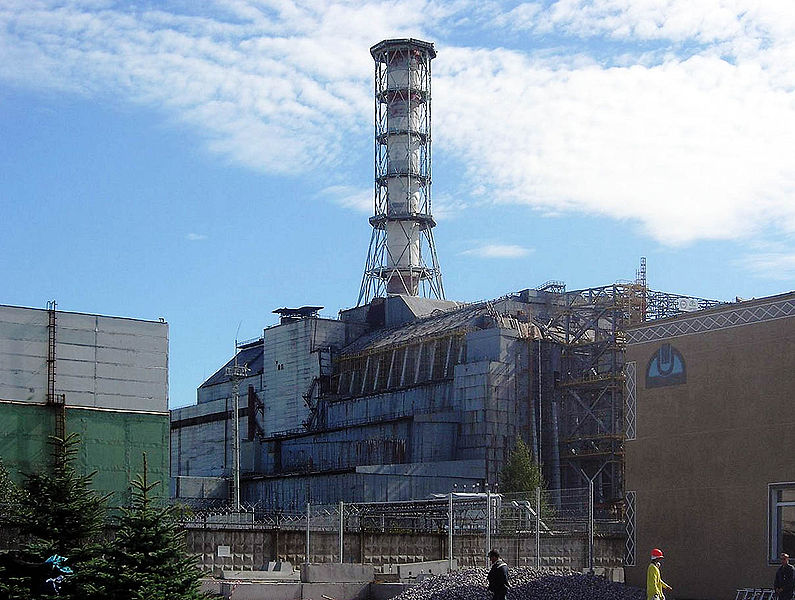 What hurts even more, however, is that the next catastrophe in a nuclear plant will certainly come. We cannot say if it will happen in one year, in five years, or in ten years. It might even take 20 or, if we are very lucky, 50 years. Yet there is no doubt that it is going to happen.
Unimpressed by the risk, we continue to produce nuclear power, thereby creating more and more radioactive waste. The radioactivity will even outlive the pyramids.
The alternative would be a new way of thinking, a little more modesty and a little less comfort. But that seems to be impossible. Consequently, we give up the struggle against our ignorance, our sluggishness and our lack of courage to change things.
All that remains for us is the cynical hope that the next “GIA” (greatest imaginable accident) in a nuclear plant will not happen close to home (Isar1/Ohu). Instead, we want it to happen far away, like in the Gulf of Mexico.
RMD
(Translated by EG)
P.S.
The picture of the oil platform is a public domain in the United States, because it was taken by an employee of the federal government while on duty. Consequently, it is the property of the US Government (Werk der Regierung der Vereinigten Staaten).
The second picture showing Chernobyl is also from Wikipedia. You can find it in the central media archive Wikimedia Commons. The copyright is held by Carl Montgomery.
1 Kommentar zu “Oil”
Kommentar verfassen


Moin moin,
Ich habe mich im Studium gerade mit dem sozial optimalen Zinssatz beschäftigt, also mit dem Zinssatz, mit dem zukünftige Schäden und Gewinne in die heutige Zeit heruntergerechnet (diskontiert) werden sollten, um festzustellen, welche Investitionsprojekte/Einsparprojekte durchgeführt werden sollten.
Dabei bin ich über eine Studie gestolpert, die den Gegenwartswert neuer Atomkraftwerke mit neuen Kohlekraftwerken verglich, und dabei den CO2-Vorteil der Atomkraftwerke einfließen ließ. Das Ergebnis: Atomkraftwerke sollten bevorzugt werden. Der Fehler: Es wurden 60 Jahre Kosten für Endlagerung und Sicherung berechnet, nicht mehr. Ich hoffe, dass auf Grund solcher Studien KEINE Politikentscheidungen getroffen werden.
Allerdings gibt es im Moment in Hinblick auf CO2-Ausstöße keine effizienteren Energietechnologien als Atomkraft und “herkömmliche Methoden”.
Die Vermeidungskosten einer zusätzlichen Tonne CO2 liegen bei unter 40€ – zu erkennen an der Zahlungsbereitschaft der Unternehmen für die entsprechenden Zertifikate. Eine Tonne CO2 mit Hilfe von Windkraft einzusparen kostet in Deutschland 100€, mit Solarkraft 1000€ (Daten von 2007). Demnach sind die “herkömmlichen Methoden” noch am effizientesten, während die Windkraft ab einem Zinssatz von unter 1,4% anfängt, interessant zu werden, und Solarenergie meilenweit davon entfernt ist, umweltschonend zu arbeiten. Leider hat sich da eine Industrie komplett grün angestrichen und kassiert damit.
Bleibt zu hoffen, dass sich unter “herkömmliche Methoden” insbesondere Einsparprojekte, Wasserkraft etc. befinden und nicht die “regulatorische Arbitrage”, also das Verlagern der Verschmutzung ins Ausland, um nicht zahlen zu müssen.
Enno