
Roland DürreWednesday August 21st, 2013
barcamps and PM Camp (3) – “Session Typology”
After having described in my last article why barcamps and PM Camps are such a great success, I will now introduce three exemplary model sessions in my barcamp and PM Camp series:
Type 1 – Sharing Knowledge!
The initiator of this kind of session believes he knows something that is important for him and wishes to share it!
Maybe someone had an extraordinary experience, learned something totally new or came to a basic understanding …
And he is assuming that, maybe, others also could be interested. Consequently, he will announce a session, telling people in advance what he will be talking about. Naturally, he will not want to bore his audience with a long presentation. Perhaps all he is going to do is come up with a few theses and then describe shortly what he experienced. And then the debate and discussion will start.
Type 2 – Make Use of Other People’s Experience!
The initiator finds himself in a new situation and is looking for help!
Perhaps someone would like to ask a question he has spent a lot of time thinking about already. Or maybe something happened in his life and he does not really know how to cope with it. He might even be facing a huge problem, wishing to talk about it with friends.
And then he will announce a session and see who is coming.
Of course, with this type of session, we need particularly “good” listeners. I mean listeners who try to first listen as carefully as possible and are then capable of mirroring what they understood with as little distortion as possible.
Most importantly, the participants should be capable of empathy and be persons who do not immediately wish to “know everything better”, wanting to make a good impression with “uncalled-for advice”.
If you get this kind of group, this type of session will often result in something really great. And I am surprised at how great the “participants” of these kinds of sessions behave.
Type 3 – New Experiences!
The initiator wants to do something active, play or try something out!
There is an unlimited number of possibilities for these kinds of sessions to be a success. Every PM Camp will give you a surprise. It can have something to do with movement or make people thoughtful. New experiences are actively made and relevant things are experienced playfully. Novelties and well-tried strategies are tested. More often than not, we discover “new frontiers” together. And if you try something new in one of these sessions and find out it is not a good concept, then it is not a problem if you just tried it during a PM Camp.
All you need is the courage to take part and also be prepared to leave your own shadow behind. And before you even notice it, something extraordinary will happen. There can be a regression and many creative and wise concepts are suddenly set free.
More Types …
Of course, these three types are just examples out of many. They are only three patterns for sessions you will often remember for a long time!
In my next article, I will write about PM Camp rules.
RMD
(Translated by EG)
Roland DürreTuesday August 20th, 2013
Living in Paradise !
 In fact, I was going to write:
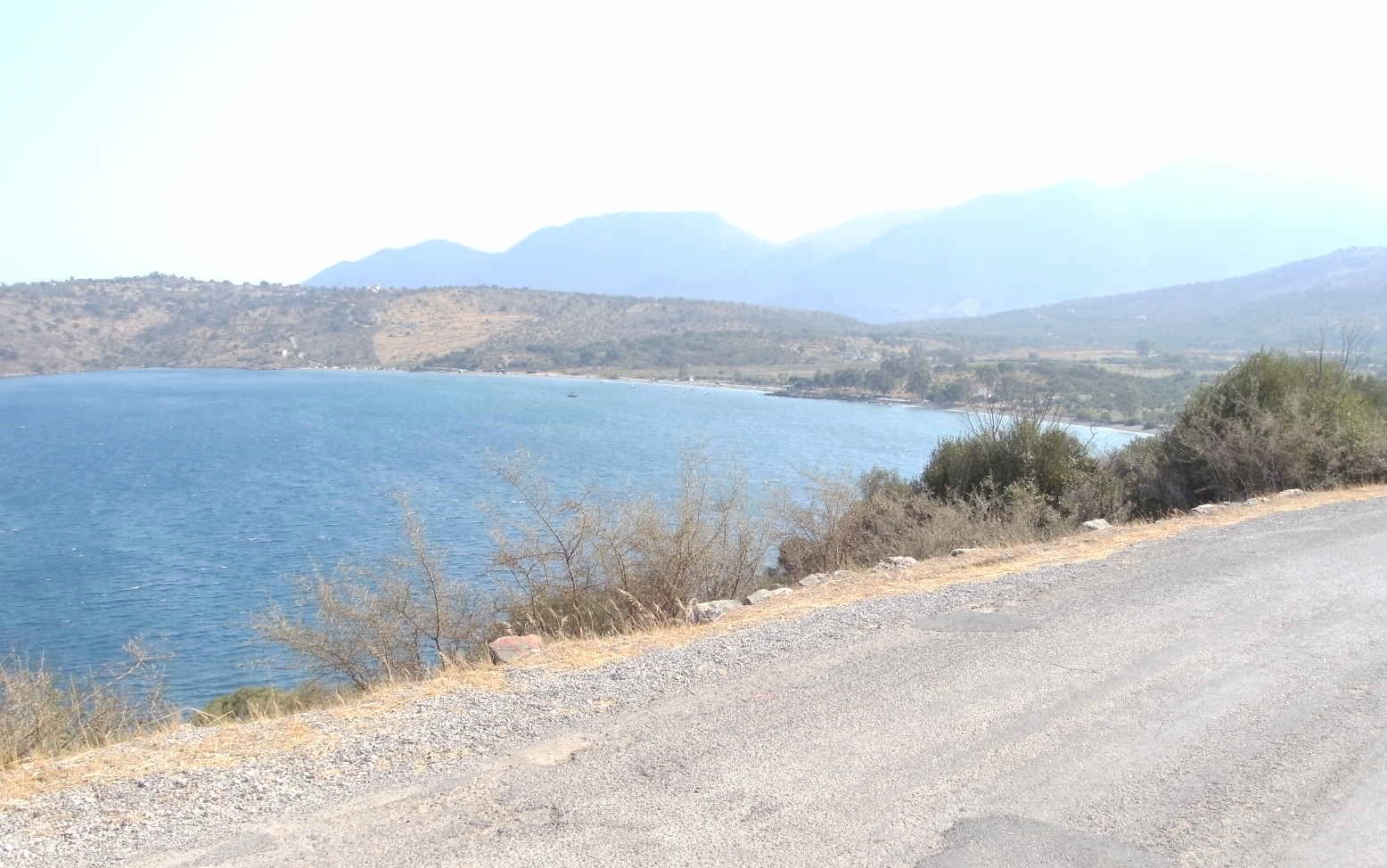
In our small paradise near the Porto Ageranos in Vathi, Mani in the south of the Peloponnes, on the middle finger, everything is as it always was.
Well, it is true for the food, for the ocean and the weather and for how we feel really comfortable. It is also true for the people we meet and the quiet atmosphere we enjoy.
But actually, many things have changed.
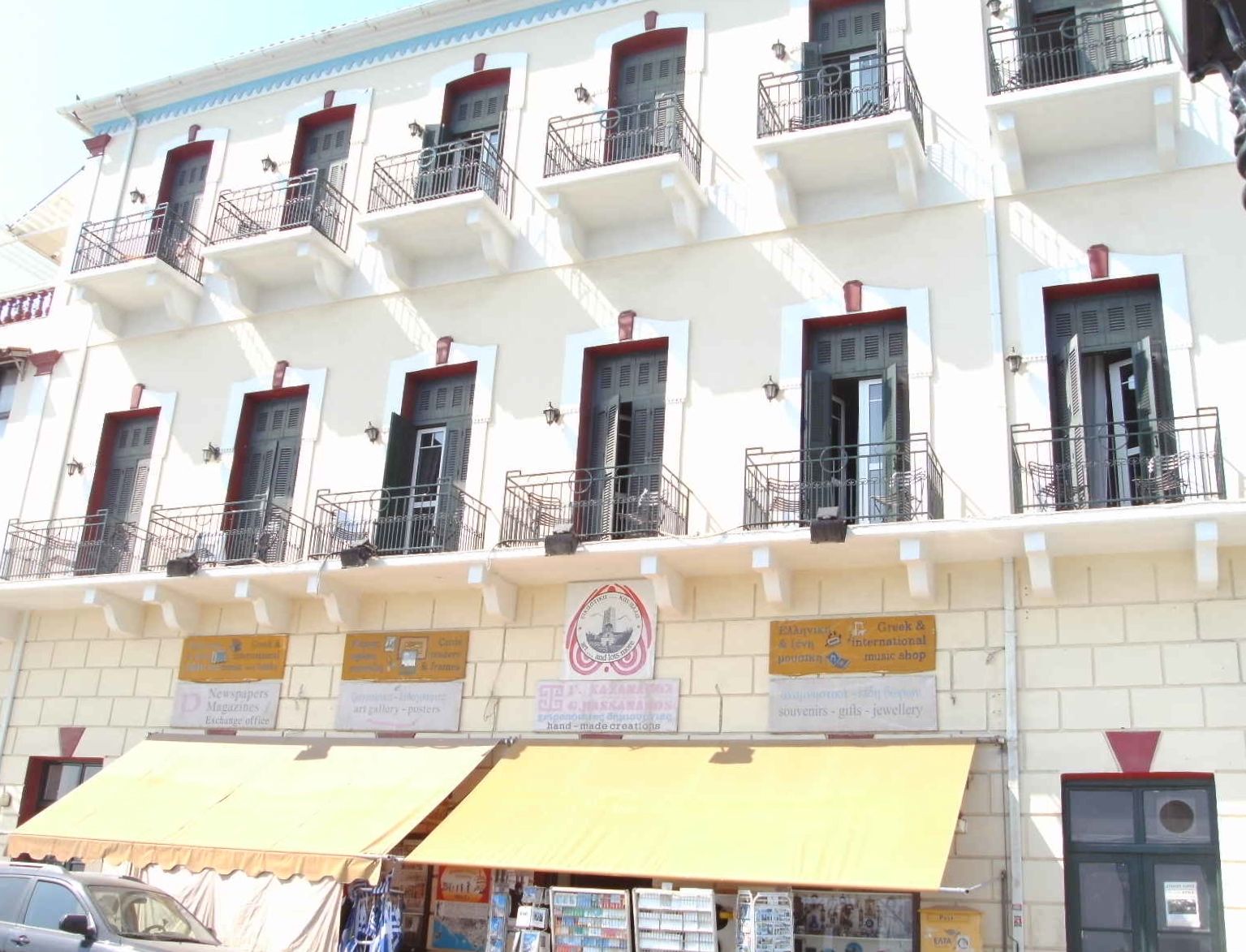 My “Morning-Swim” is now longer than it used to be. And also, in these last four days, I rode my bike to Gythio every morning.
In Gythio, I bought a Süddeutsche Zeitung for the “kids” every morning, drank a cup of Greek medium sweet in a coffee shop on the harbour, read a little and then went online with my Nexus. Because they also have a free WLAN “touristiko”.
And then I was on my leisurely way riding back those 14 kilometres to the campground under the hot Greek midday sun.
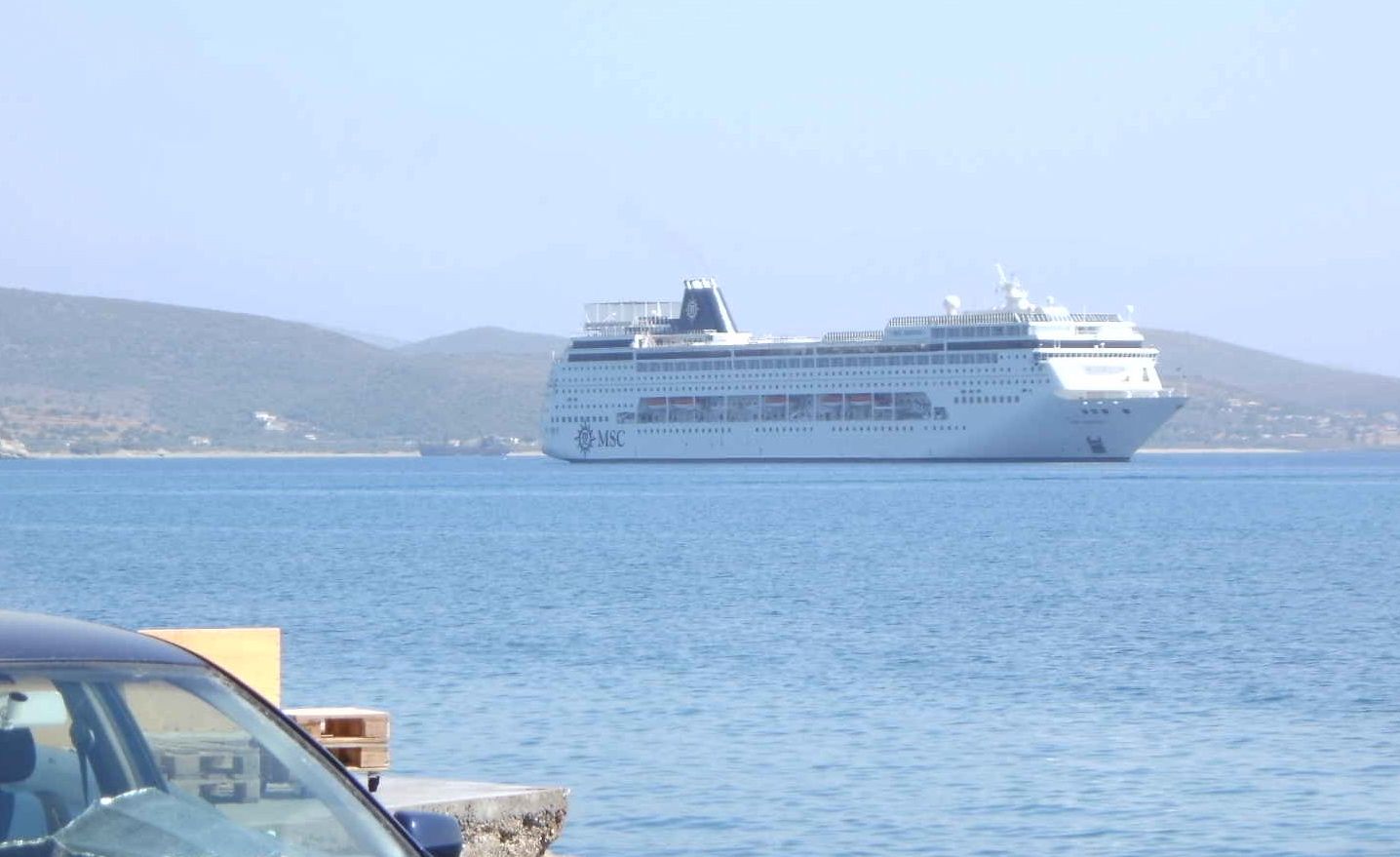 Sitting in the coffee shop, I saw an MSC cruiser in Gythio harbour. It seems like the cruisers, too, have re-discovered Gythio. Also, the ferry from Gythio again has a stopover at Crete. That means time will probably get better for Gythio. This beautiful little harbour town certainly deserves it.
It is also a surprise that none of our children starts an argument about who (with one small exception) has to do the dishwashing. On the contrary: the volunteers seem to be competing for the job! Naturally, for us parents, this is a little unusual.
And yesterday night, the children all of a sudden wanted to go to bed earlier than the oldies. This is a totally new and sensational experience.
This is how the world changes for parents when the children become adults.
RMD
(Translated by EG)
Elwood P. DowdMonday August 19th, 2013
Dissocial
 The poor not only deserve our sympathy; we should also be prepared to help them. If you refuse to do that, you are an anti-social philistine.
One might be tempted to conclude that anti-social philistinism only happens in the middle and upper classes. Well, here is news for you: this social mildew is also common among the lower classes. In their case, poverty becomes a privilege, because it produces no obligations, only rights.
Hartz IV dynasties flourish on the fertile soil of moneys paid by a public hand that is both a caricature and charitable. Food and accommodations are provided for. The only requirement is that you have to use every trick in the book in order to “qualify” as poor – and tax money will flow your way. You are never expected to do anything in return.
Children as “the capital of the poor man” are not a workforce in the classical sense; instead, they trigger additional subsidies. Their education is delegated to the provider of public education – at zero cost.
As soon as there is the slightest pain when you relieve yourself, you go and see the doctor. After all, it is free!
This is how you can flee the embarrassing rat race of daily similarities in this ruthless achievement-oriented society of give and take. Welcome to the paradise of demands.
Relief organizations and hard-working volunteers add to the display of goodies.
Clever marketing brains discovered the potential of those “poor ones” a long time ago. See: the “Mäc Geiz” chain.
Well, it had to be said by one who is socially very active.
My Friend Harvey Says:
Dowd, you are a fool
You lost control of your perspective management.
You accuse the poor of desires they do not have at all.
These are your own concepts, which you project to the poor.
You are offended, because the banner carried by the middle classes: Achievement=Income is not carried by the poor, as well.
Incidentally, the rich do not carry it either, their riches come from capital.
The truly dissocial are the poor and the rich.
Both are provided for by the state.
By you, true middle-class hard-working man, who, each year, works exclusively for them until the end of July.
Your taxes protect the money of the rich after their best assistants, the banks, have blown it.
Your tax money enables caritas and other charities to care for the poor with one million employees.
Do you really believe your words will make a difference?
You fool.
Who other than you yourself would be interested?
The poor enjoy remaining poor, because then they need not do anything for others, instead of having done something to them.
Which is exactly how the rich see it.
And the same is true for the assisting economy and the financial business.
My dear Harvey, I might have known that you know what the snag is.
The dissocial are provided for by the state. The same is true for the retired persons and civil servants. Consequently, the dissocial are catapulted from the margin existence into the majority and to normalcy.
Society is anti-social.
Who would have thought so (Elwood P. Dowd).
Being one of the initiators of PM Camp, I will start by writing a series of articles with information and advice on barcamps and PM Camps. Simply because PM Camps are such a great thing and such a huge success. And because I will be truly happy if their number continues to grow!
I already told you how everything started for me with respect to barcamps. Today, I will tell you why I enjoy them so much.
Why are barcamps such a huge succes?
During a barcamp, everything depends on the people attending it. The realization and the success of the barcamp, the joy and delight, the quality of discussions and of the results, the degree of knowledge increase, the development of consensus, the experience of meeting new persons and the building up of new contacts – all of these things and much more cause people who attend to share their experience and knowledge.
All participants together take responsibility for the success of the “Camp”.
The same is true for the PM Camp. That is how we call our barcamp for Project Management (PM). “Project Management” is metaphorical for leadership, management and entrepreneurship. Actually, PM Camp wants to reach out to people who are prepared to take responsibility and to shape our social future together with other persons.
We have now come to the stage where PM Camps already take place in many locations. This September, there will be one Berlin #pmcamp13ber. The November PM at Dornbirn of 2013 will already be the third of its kind after 2012 and 2011. And this year we also already had PM Camps in Stuttgart #pmcamp13str, Vienna #pmcam13vie (this was the second time there) and in Bad Homburg #pmcamp13rm. And there will probably also soon be one in Hamburg.
Each PM Camp is organized by a local “organization team”, usually consisting of between three and five persons acting as honorary hosts. Together with the PM Camp protagonists and friends of openPM, they plan, communicate and prepare the event and try to organize everything as best they can.
The ideal number of participants is said to be between fifty and a hundred. You have to look for suitable locations, which is not always an easy task. In order to avoid collisions, the date must be coordinated with the other PM Camps. You have to find sponsors who pay part of the cost, yet do not wish to dominate the entire event. Thanks to these sponsors, the price for the participants can be kept low and still the PM Camps remain independent.
Where it makes sense, the organization team will also invite the rare impulse speaker, keeping in mind that the major part of a PM Camp must remain free of speakers. After all, the participants are supposed to shape “their” conference.
Organization teams also like giving their PM Camp a “motto”, thus communicating their “mind-set”. In Stuttgart, the message was “Humans Are Not Resources” and in Bad Homburg it was “Enterprises, Responsibility, Knowledge“. In my opinion, these are all very beautiful statements.
Once a year, the representatives of all organization teams meet with the PM Camp core team protagonists. These are the persons who organized the first PM Camp at Dornbirn in 2011, thereby initiating the PM Camps. Currently, the core team members are Eileen Hörtreiter, Dr. Eberhard Huber, Dr. Marcus Raitner, Roland Dürre and Dr. Stefan Hagen.
The Dornbirn PM Camp of 2011 was planned for DACH (Germany, Austria, Switzerland). It turned out to be a very nice experience, thus motivating many friends – as well as ourselves – to repeat the event on a yearly basis and transport it to as many regions as possible. We never dreamed that this one PM Camp might have so many other PM Camps following in its wake in so many more locations.
On the whole, PM Camp wants to be a face2face movement supplementing openPM. Besides the virtual platform #openPM, we also organize meetings “where you see each other”.
Usually, a PM Camp will be two days. During the day, you work hard, in the evening of the first day, you party hard. Some participants meet as early as the evening before the PM Camp starts for a walk&talk or cosy chat – simply in order to meet old friends and get into the mood for the PM Camp.
Then the day comes – and the PM Camp actually takes place. You meet at the agreed time and place, perhaps do a little “ice-breaking”, remind everybody of the central barcamp rules (“what happens is right”, “over is over”, “law of steps”, “freedom”,…) – even though most of the participants already know them. And then we start! “Consumers become producers” and in no time, you have a wonderful session schedule.
Here is another summary note: PM Camp and barcamps are such a success because they actually are self-organized and self-determined, both with respect to content and timing!
These sessions are the central piece of all PM Camps. For the participants, it may well be beneficial if they prepare in advance by thinking about topics important for them. That would enable them to have their own session as early as their first PM Camp. In order to give you a little help, my next article will describe what happens in a session.
RMD
(Translated by EG)
Roland DürreSunday August 18th, 2013
Written in Paradize ?
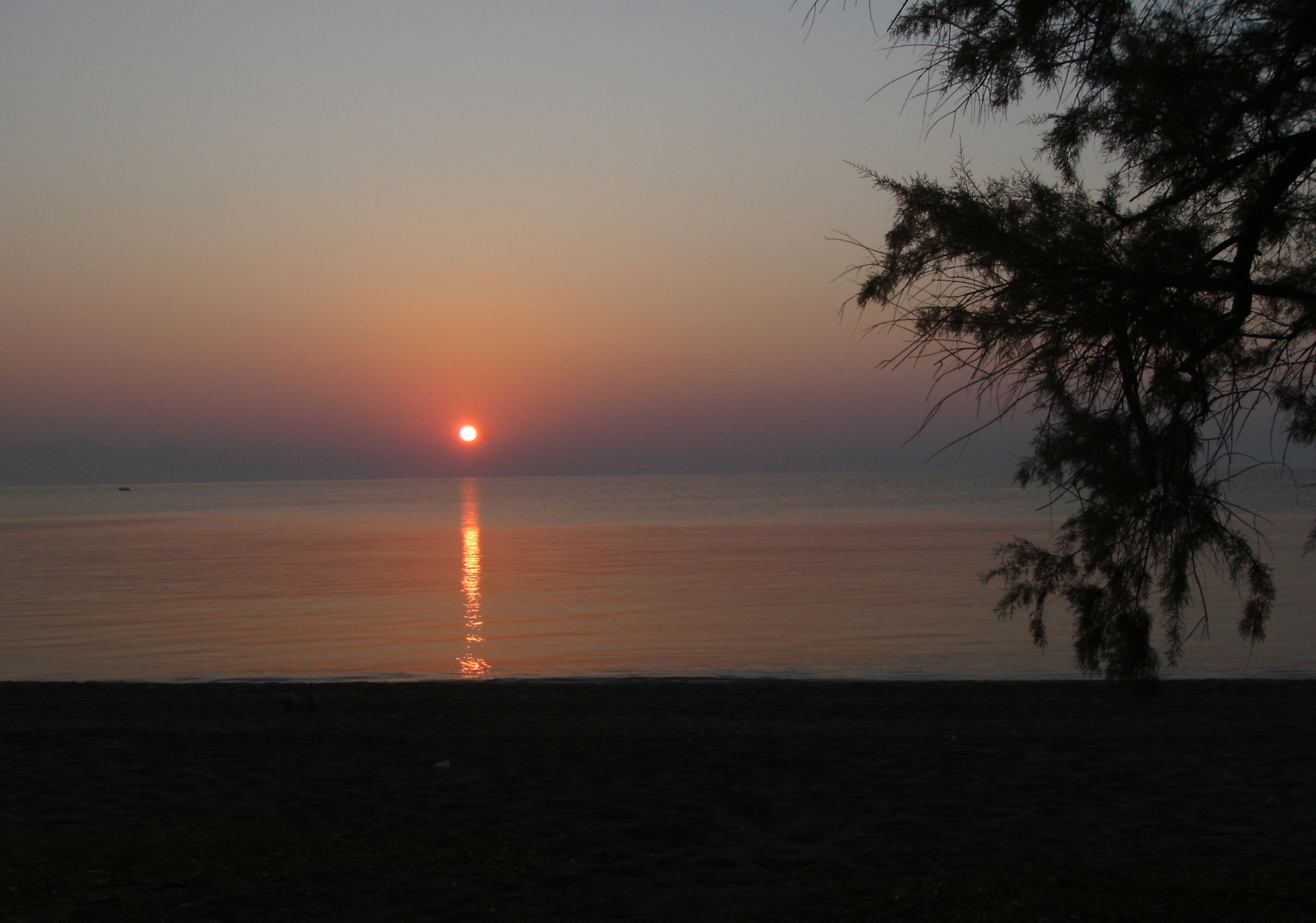 I am currently living in paradise. Already, the tent directly near the ocean has become my cherished home. Everything is fine and makes me feel fine.
The journey was comfortable, the Krti2 was only 30 minutes late (which is almost record time). There is no longer a stop at Korfu – and landing at Patras, too, did not take long, perhaps because at the time the ship was already rather empty. After all, most of the vehicles left the ship when we stopped at Igoumenitsa, which is where the motorway to Istanbul begins and where all the traffic is headed.
When we started entering Patras harbour, the first forest fire on two summits above the town already welcomed us. And when we continued our journey towards Corinth in the dark, the fire-fighting helicopters we are already so familiar with kept flying over us. Until later the sun rose in the east.
Now we have made ourselves comfortable. Again, it feels like home. Our thoughts go in all directions and our discussions are about things that move us. Two weeks from now, we will go back home. Then there are elections in Germany. But who to give your vote? And is it a good idea to vote at all?
Both in politics and with all political parties, the discourse about all the relevant problems of our society is sadly missing. There is no attempt at finding a social consensus in our political world. The party programs are full of empty phrases, there is no concept of shared values. Our problems are those of the 21st century, yet the parties – depending on their colour – want to solve them with solutions from the 18th, 19th and 20th centuries. That cannot work. Consequently, the citizens get more and more fed up, because they certainly do hear politicians paying lip service, yet constantly have to experience and see the opposite happening.
For me, the people are what is most important. And as I see it, we have grown to be a society with no solidarity left. We just let it happen that far too many people no longer find a social home. They are excluded from education. And even the children of the privileged classes no longer learn what is really important in life. Instead, they fall victim to a knowledge bulimia. Values, the balance between individual and collective lives and true knowledge of life are pushed to the corner in the daily school day. The basics of democracy and rule of the law are no longer taught.
The teachers I know frequently tell stories from their common workday that give me pause. Because education, like work, health and most of the other areas of our lives, have been “economized”. That hurts. As soon as everything we do serves nothing but the dictatorship of economy, it particularly hurts in all those fields where humans are concerned.
This is also true, for example, when it comes to children living in children’s nursing homes. We are talking children who sometimes even have living parents, yet those parents are not capable of providing for their children emotionally and financially. Sometimes the right to bring up their children is taken away from them by the state. What sad human dramas can be witnessed here! This is bad enough per se. But it is even worse that the state actually increases the misery.
Our society produces more and more losers and victims. We ignore this and try to prevent the worst with social repair companies. But we never even think of prevention through true education and emotional and emphatic care. Just take a closer look at how medicine and hospitals are disintegrating to become mere mechanical and economical repair shops.
This economization process now happening in all our structures and fields of life makes me sad. If I were to vote at all, then only a party which actually discloses this and seriously wants to do something about it. With top priority.
Except we spend our money other kinds of things. And most of these things seem grotesque to me. At one time, I rode my bike through Berlin. I passed the Federal News Agency building. It is the biggest governmental building ever in Germany. Basically, you can see it as a gigantic cenotaph telling you that this is precisely how it cannot work! It is just as monstrous as many other federal buildings showing off in the “new” Federal Capital and former Capital of the Deutsches Reich.
Mind you, it all happens where, basically, we could well do without this national in-between. For me, a country of Bavaria in the middle of a free and united Europe of regions would be totally sufficient. But I certainly do not need some “Show-Off-Germany” in its current version which aspires at being a model for all Europe.
And a few weeks from now, I am supposed to vote. Regardless of the fact that all has been decided already, anyway. The best we can get is a stalemate situation – which would then quickly solve itself in a big coalition.
Those are the moments when I think perhaps I should not go to the elections. Instead, I will continue my political activities by writing articles like this one. Also, I can continue focussing on the values of a free and enlightened democratic society in my – always totally a-political – presentations.
RMD
(Translated by EG)
Roland DürreSaturday August 17th, 2013
Holidays in Paradise ?
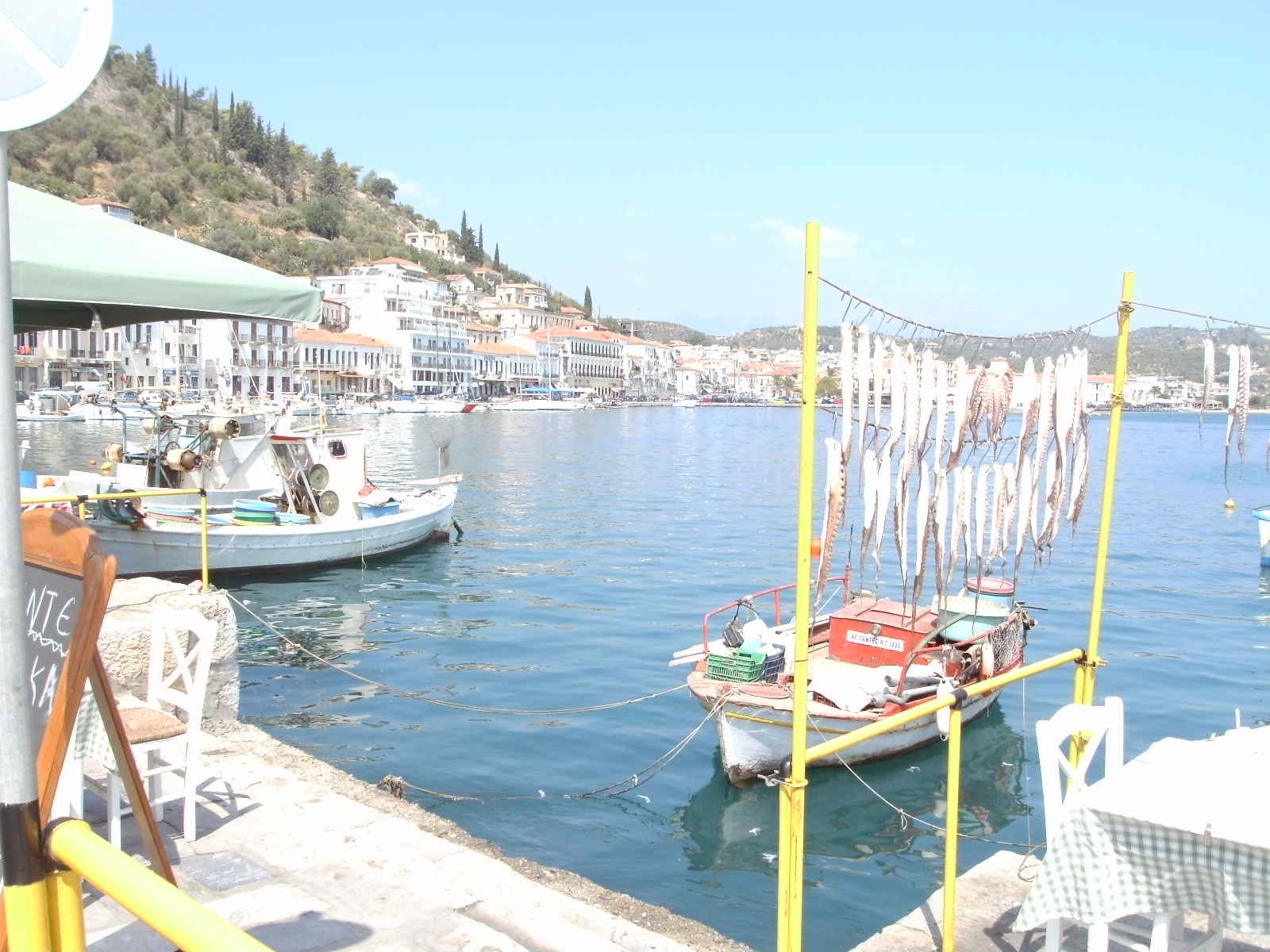 I am now in Gythio. And I am happy, Even though Haching just lost the soccer game. But apart from that, everything is again fine.
The pleasant weather, the scenery, the campground, the constantly blowing soft breeze. In the mornings, I go for a wonderful swim on the beach directly in front of our tent. The bike rides into the mountains with the wonderful view from above.
The friendliness of the Greeks and the delicious meals every night. As well as breakfast and the tasty grapes and melons you get with lunch. Coming here, too, was quite peaceful and unproblematic – I managed to write my articles on barcamps and PM Camp.
Three of my children are already again staying with us. And another daughter, along with her husband, will come later. Everything is like a dream and just wonderful.
However, a few things I saw on the way here made me thoughtful and a little sad. Small drops of sadness in the cup of happiness. Because something is just not quite as it should be.
T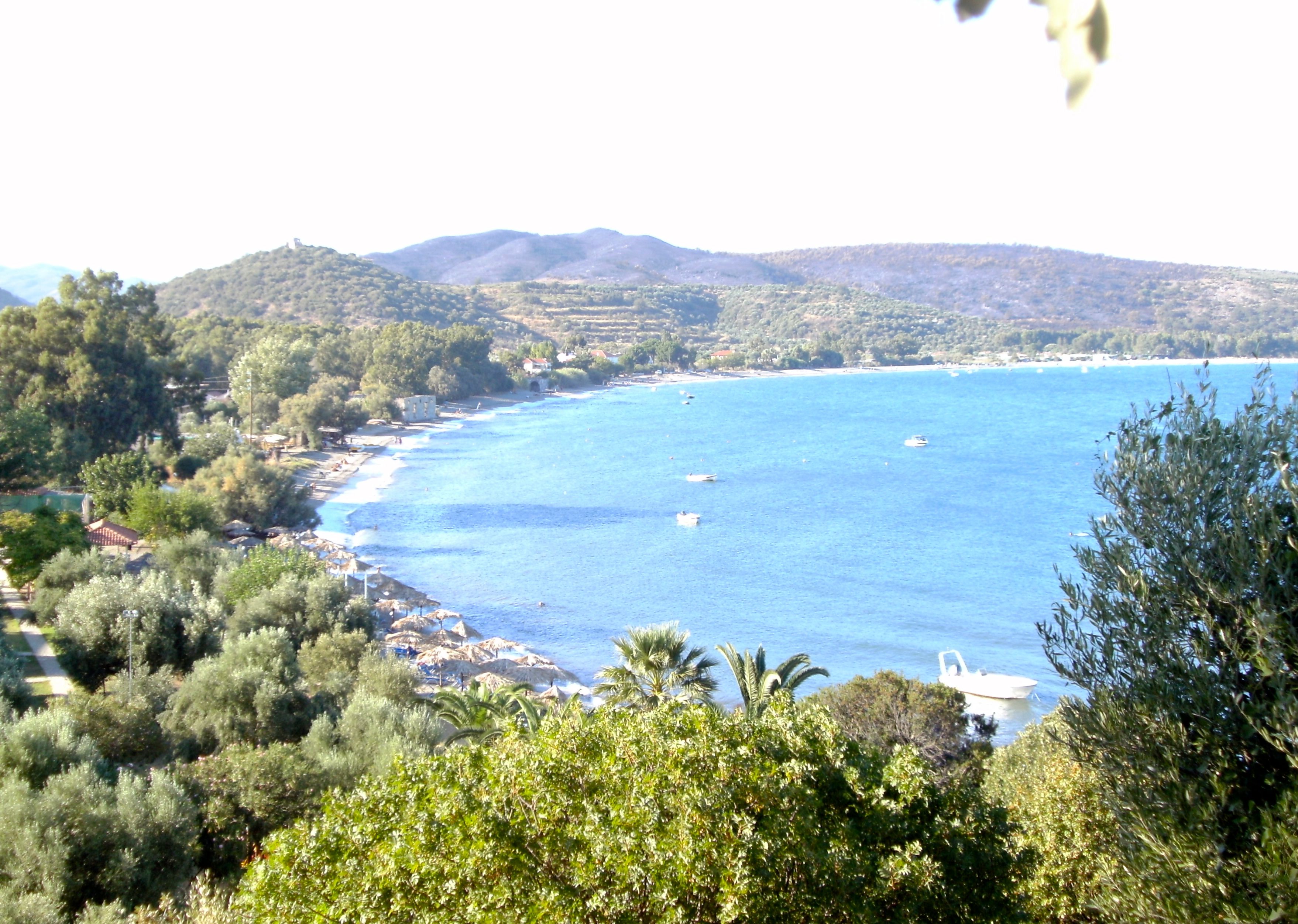 he first thing that struck me is rather a small affair. You could call it “Good-Bye Europe”. On the ferry trip from Italy to Greece there were hardly ever any changes since we started coming here 25 years ago. In those days, the long queues you had to stand in on departure where a little bit of a nuisance. That is where the border police of the destination country always controlled your documents. Sometimes they were less thorough, sometimes more so. Consequently, it sometimes happened that you had to spend quite some time waiting in the queue on the hot ship before you were finally released. It was inconvenient, but you got used to it.
Then came the blessings of the EU – and the queues disappeared. You could travel freely – that was nice. Now they are back to controls. And I mean real controls. On departure from Venice, first and foremost all accompanying passengers – but not the drivers and their cars – had to pass a security scan, similar to those on airports. All luggage was scanned with one detector. And there is a single passport control cabin. Mind you, we are talking a ship full of passengers mostly spending the night on deck – so naturally, they carry quite a bit of luggage. Basically, I believe this is a rather unreasonable procedure.
When the queue got longer and no more than 10 % of the passengers had passed, an officer who was probably senior came to end the nightmare. A second cabin was opened and all that they checked was whether the name on the ticket matched the name on the passport. The scanner was just sitting there to make everything look official.
Now you should not come up with the idea of asking what sense the initially strict control ever made. Here is what my impression was: they probably did exactly what one of those EU rules says – and after they had proved that it just cannot be done, they changed tactics. And probably the same game is played with every ship going to Greece.
To be sure, the process was now faster, but still I spent almost three quarters of an hour standing in the queue in Venice, before I was allowed to board the ship. And whenever I looked at the other passengers’ faces, I got the impression that none of them actually understands what is going on and why. We have a shared Europe – so now we feel we are being treated badly quite pointlessly. Well, I really cannot believe this.
The second issue was the ship. We used the Krti 2 of Anek Lines. It is an old ship, but at first sight it gives you the impression of being in quite good shape. But you really notice and feel that ships like this one are terrible polluters. They ruthlessly frequent the Mediterranean Sea, leaving their coal tar and waste all over the place. And you actually start wondering if, perhaps, this way of travelling is, after all, even worse than flying.
We all know that, from the technological point of view, there are endless possibilities to organize these kinds of transports in a totally different way, don’t we? Also, the question should be allowed if all these trucks and cars really need to go from Italy to Greece. Maybe one could find more intelligent alternatives? And if travelling with alternative technology made travelling a little slower, maybe people on vacation, like me, will be just as happy.
Also, the gigantic half-finished street-building projects between Patras and Corinth gave me pause. To me, they seemed to have been planned with total disregard to what was actually needed. The same is true for the luxury motorway heading to Sparta from Corinth. Some of the tunnels on the way are totally unnecessary. Empty and luxurious, they look like some kind of misconceived future (or past?) megalomania.
What world are we talking when we plan these kinds of streets? For me, this is abhorrent.
But now I will stop voicing critical ideas. Instead, I will enjoy our vacation with all my heart. Here are my greetings from Porto Ageranos in Mani, on the southernmost end of Europe. In terms of latitude I am currently living on the same level as North Africa. And I intend to do a lot of swimming, bike riding, enjoying myself and sleeping. And “in between”, I want to publish a few PM Camp articles. …
RMD
(Translated by EG)
Roland DürreThursday August 15th, 2013
Tweets on Twittering and Blogging #180
Here are my tweets of last week on:
Blogging and Twittering, Wisdoms and Rules:
130822 Doing little will do little harm – also true for twittering and blogging?#Twitter #Blogging #Wisdom
130823 Small portions but good portions – a fine motto for twittering and blogging? #Twitter #Blogging #Wisdom
130824 Small portions frequently applied will eventually make big portions – also true for blogging and twittering? #Twitter #Blogging #Wisdom
130825 If you add too much, everything will be ruined – also true for blogging and twittering.#Twitter #Blogging #Wisdom
130826 If eagerness will not give way to reluctance, then it was a good eagerness – something I also know from twittering and blogging. #Twitter #Blogging #Wisdom
130827 You should use the iron when it is glowing hot – also true for twittering and blogging? #Twitter #Blogging #Wisdom
130828 If luck knocks at your door, let it in – also when twittering and blogging! #Twitter #Blogging #Wisdom
There is a new tweet each day. See twitter.com and “follow” RolandDuerre!
Enjoy!
RMD
(Translated by EG)
P.S.
I took the proverbs from Alle deutsche Sprichwörter.
Roland DürreMonday August 12th, 2013
Technological IF Forum – Mailserver and Mailclient –September, 19th, 2013
On September, 19th, 2013, at 18.00 hours, we of the InterFace AG invite you for another interesting presentation in our “IF Academy” series:
Mailserver & Mail-Client
“History, Basics, Spam&Virusses” or “Concepts for a Private Secure and Reliable Mail Server”.
(Hans Bonfigt / Marc Haber – redoxSystems)
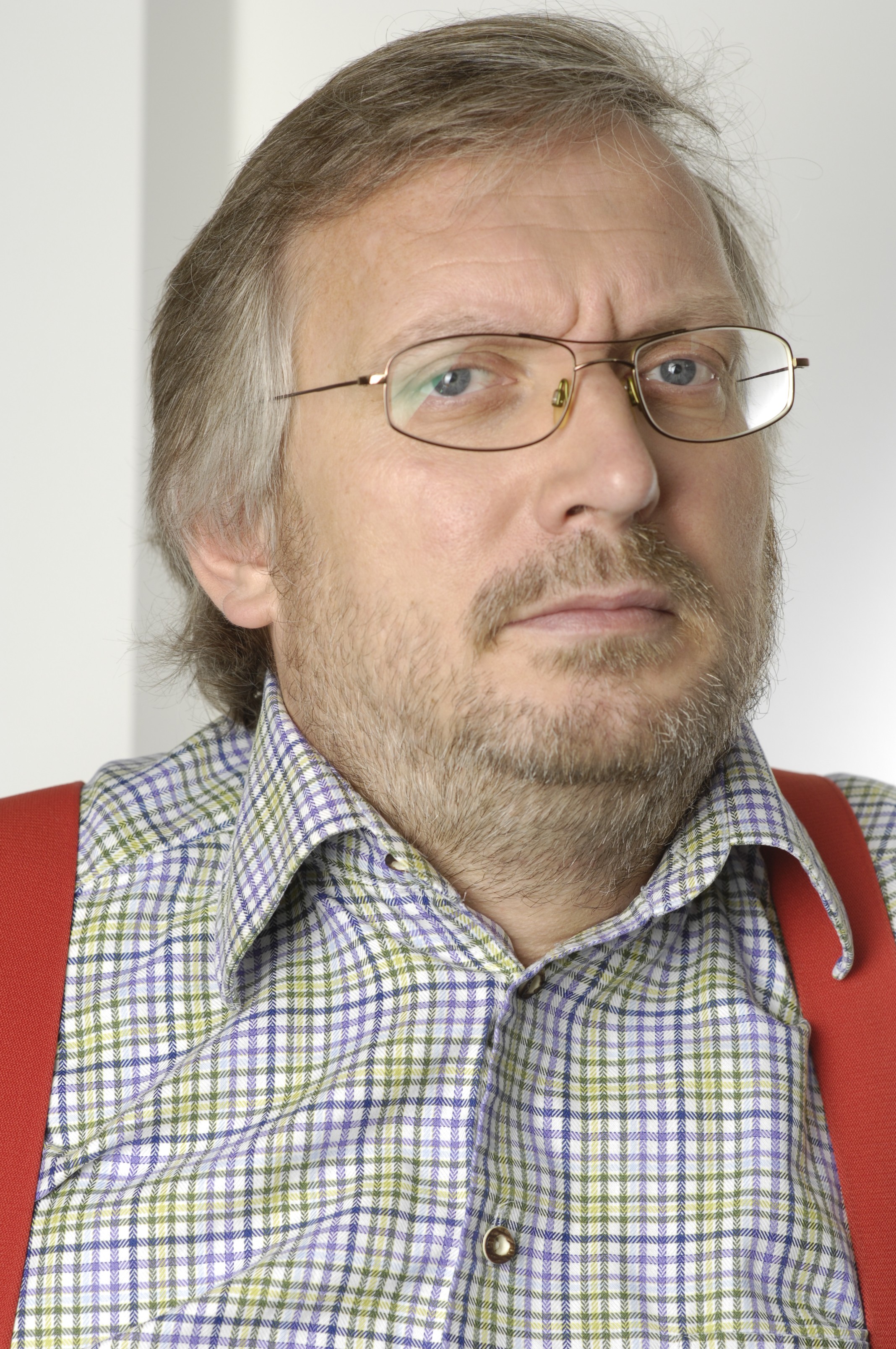 Hans Bonfigt will be our speaker. We are optimistic that his co-author Marc Haber can also come. After the current events and in times of PRISM and Tempora, the timing for this presentation about email and mail in general is just ideal. Consequently, and because we have two of the best experts in the field with us with Hans Bonfigt and Marc, we decided to make a technological IF Forum of this IF Academy event and invite the extended circle.
Every day, we send and receive many emails. It is our totally normal routine and we might very well often be quite thoughtless about it. The underlying technology seems to be a matter of course, even though, more often than not, it is nowhere near as easy as it looks. Hans Bonfigt will introduce the deep secrets and abysses of email traffic and the underlying technology. Here is his summary:
I will give you a historical introduction to the topic “mail”. You will get to see the roots where rats like spammers, viruses and other parasites feast. Also, I will give a clear differentiation between the terms mail server and mail client. This distinction is important, because a mail client is also among those devices you can host centrally. Eventually, I will show you two operating concepts.
My presentation will be structured as follows: warming-up, basics, introduction (around 20 minutes), actual operating concepts (less than 30 minutes) and live demonstration (10 minutes). This should leave enough time for a discussion.
As always in our IF Forum, we will have our “happy hour” after the discussion. I am quite certain that there will be plenty of exciting material to discuss, especially after this kind of presentation.
About the Speaker:
I first met Hans Bonfigt through the IF blog. Hans is a passionate programmer and IT technologist. He actually learned his craft from scratch and consequently also knows all the “camouflaged” levels of many systems. You will find various articles and comments written by him in the IF blog. They are always straight to the point. He ruthlessly criticizes where the development goes astray and where technology is poorly executed. Also, he points directly towards mistakes frequently made. His outstanding ability is to put things in a nutshell.
Registration:
As always, the presentation will be held in the seminar zone under the roof of our Unterhaching headquarter building, starting at 18.00 hours. We look forward to welcoming our guests! For registration to this IF Forum, send an E-Mail.
RMD
(Translated by EG)
Roland DürreSunday August 11th, 2013
My Advice for Hackers – Why Don’t You Try Church Bells!
Yesterday evening, I was invited to celebrate with Manfred in Schierling. Manfred is an entrepreneur. With his small but exquisite enterprise MS-Duroplast, he dominates parts of the world market – regardless of the fact that the company – quite deliberately – does not have a webpage (!). Once each year, he organizes an in-door festival. We were invited. It started on Saturday afternoon. Consequently, we went to Eggmühl by train, then on to Schierling by bike.
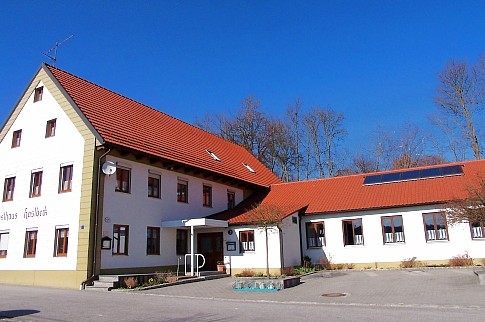 Manfred had booked a room for us at the Gasthaus Haslbeck. We spent an excellent night there after a beautiful midnight-bike trip of a little less than 10 kilometres from Schierling to Semerskirchen.
The night was over at 6 a.m. – then the church bells right opposite the restaurant started making a tremendous noise. On the picture, you cannot see the church. It is to the right of the restaurant – which you cannot see on the picture, either. It sounded like the church bells were aimed directly at us with full power. And I literally stood in my bed. To be sure, it was my own fault – why had I not gone to sleep earlier? But mind you, I was not the last to leave the party.
And here is what came to mind: if you were to control this church bell through a computer that is connected with the internet (after all, we are talking the object internet, aren’t we?) and if I were a hacker who can do this kind of thing, I would hack into these personal computers and switch off those bells whenever in the vicinity.
Incidentally, the same wish of mine came up whenever I rode my bike in North Africa and had to spend the night close to a mosque the tower of which was equipped with those colourful and blinking electric lights. At night, the metallic recorded voice of the Muzzein would be heard through powerful loud speakers.
After thus shortened sleeping time, I rode on to Moosburg today. Driving through the beautiful but not totally comfortable “Lower-Bavarian Hills”, I made my peace with the bells.
As a matter of facts, I can only recommend the Haslbeck Guest House. It is a family enterprise where we were welcomed really warmly. The internet worked perfectly, the rooms and breakfast were just great. And it lies close to a small lake, totally idyllic. Except… the church bells…
RMD
(Translated by EG)
Roland DürreSaturday August 10th, 2013
My Continuing Education Program – Personality Enhancement, Seminars, Worskhops, barcamps
I am now working on a series of articles to inform you about barcamps and in particular about the PM-Camp. Also, I wish to do a little advertising for the next PM-Camp in Berlin between September, 13 and September, 15, 2013. In my introduction, I am going to tell you what exactly I did in my life in terms of continuing education and why I ended up at the barcamp. Because continuing education and development is important for everybody and barcamps – in addition to self-studies and working next to a master of your art (in the sense of craftsmanship) – are the best opportunity to advance your own learning curve through the experience of others.
First and foremost, let me tell you my personal educational history. After graduating from high school at the Augsburg Jakob Fugger Grammar School, I went to study at Munich Technical University. The time at the grammar school was a good investment for my personal development. We smelled the spirit of freedom. To be sure, we learned a lot that was totally unimportant, but we also learned a few things “for life”. Even afterwards – against my wishes – when I did my compulsory service with the German armed forces, I gained a lot of experience.
Then I went to study at the Technical University (in those days still called “Hochschule”) of Munich. For me, studying was not something pleasant. We had to “learn from books”. The lectures were not really great and they also cost (too) much time. Time we did not have, because, after all, we had to earn our livings “in our spare time”. Consequently, I taught two tutorials every semester, learning more in the process than during actual lectures. And – considering the times we were living in – the money was not too bad, either.
I learned my craft, however, when I was a student and free-lance worker at Siemens AG. Consequently, studying was more or less a necessary duty and consisted in learning for exams. Because my super ego thought I had to have an academic diploma. In retrospective, I am not sure that my title “Mathematics Diploma (univ)” was all that beneficial for me. But it probably did no harm, either.
After finishing my studies at university, I went to the really huge Siemens AG as a regular employee. I had very interesting tasks and was permitted to develop a totally new technology. However, the time spent there was not one that gave me immense impulses for “personality growth”. For example, I initially programmed in the laboratory and later in special projects. We were all working with a lot of dedication, but there was no room for luxury seminars and besides, there was nothing on offer for a small regular-wage employee like me.
After four years at Siemens AG, I changed to Softlab. In this company, attending “personality enhancing seminars” was a requirement for your professional career. With little enthusiasm – after all, there was plenty of work waiting to be done and I was absolutely prone to prejudices against “personality growth” – I went to one of those seminars held by a company called TPM at Starnberg (Training Psychological Management, one of the two trainers was a Herr Uhlenbrock). I went there full of scepticism, but returned absolutely enthusiastic. Those were the days when my continuing education actually took off.
A short time later, Dr. Peter Schnupp (one of the Softlab founders and very much a freethinker) caused my meeting with Rupert Lay. Totally out of the blue, I was to replace someone who had registered for a coaching session with him. For me and my life, this turned out a huge stroke of luck. At the time, Rupert Lay was probably one of the most renowned coaches. He also was allegedly the Nestor for “ethics and entrepreneurship” of German Business. Through this channel, I also met a few other really great coaches, for instance Baldur Kirchner.
Starting with this visit of a seminar that had been rather accidental, a constant cooperation developed between me and Rupert Lay. In fact, it eventually became a beautiful friendship. Throughout many years, Rupert was my mentor. Between the years 1985 and 1995, many other friends working alongside me at the then still “InterFace Connection GmbH” (that is what InterFace AG used to be called) were also regular attendants of Rupert Lay seminars. It is quite possible that those were the days when the cornerstones of our – hopefully a little different – entrepreneurial culture were built. At the time, I myself regularly spent a week with “my group” at Rupert’s seminars. During those times, I tried to reassign my own lodestar.
Rupert controlled and directed the workshops, improving on them with many small bits of advice. But the experience and the knowledge I collected during those seminars came to an ever higher degree from the group members (they were all persons with special experience in life, also because of their roles as managers and entrepreneurs). Initially, probably 90% of what I learned was from the “teacher” and 10 % from other group members. And this relation continually changed in favour of the group members. In the last seminars, I would actually call it more like a 30 : 70 relation, or even more than that.
As Rupert grew older and held fewer seminars, I found a new “continuing education home”: the regular St. Gallen RISE workshops. The RISE workshops were initially realized by Dr. Simon Grand and then carried out by professors of the Swiss universities (HSG, ETH), entrepreneurs owning medium-sized companies from the IT and fashion sectors, as well as directors of big Swiss enterprises. My experience and development continued during these seminars. All of a sudden, 90 % of all the knowledge and competence came from the other seminarians.
Both in the Rupert Lay seminars and RISE workshops, I always felt very much at the right place and each time, I returned home with something totally new. Then the RISE workshops, too, were over and, yet again, I fell into a deep “continuing education pit”.
And that was exactly the time when I made a sensational new experience during a barcamp. I met people who opened up and shared their experiences, adventures and knowledge. “Open Source”, face-to-face, on a free event. I experienced communication at eye-level based on emphaty with persons I had only just met. Trust grew basically from scratch. And I learned a lot, both technologically and with respect to “personality growth”.
This experience had such an impact on me that I started looking for a barcamp where project managers, entrepreneurs, leaders and managers – that is: people who feel responsible for our future – meet. And where those people are willing to share their precious knowledge and experience.
However, I looked in vain. Consequently, the only option that remained for me was to start a barcamp myself. Stefan Hagen and some more friends, too, felt that the time was ripe for this kind of thing. So we initiated PM Camp in 2011. On these camps, 100 % of the people I learn from are other seminarians.
The first PM Camp took place in Dornbirn in November 2011. It did not take long before one became two in 2012, one of them held in Vienna and the other in Dornbirn. This year, we already had three: in Vienna, Stuttgart and Bad Homburg (Rhein/Main). And two more are to follow – one in Berlin and the other one again in Dornbirn!
SO I found a new home for continuing education – in fact, I even initiated it myself!
RMD
(Translated by EG)
P.S.
The next articles in this series will describe how barcamps function, what types of sessions we do and how you can prepare for them. Basically, it is a guide towards attending a PM Camp.


