
Roland DürreSaturday October 26th, 2013
A History of and Manual for PM Camp
(and barcamps in general)
Life-long learning and development are important for everybody. As an addition to “auto-didactical studies” and working alongside a master (in the sense of craftsmanship), barcamps are the best opportunity to enrich your own learning curve through the experience of third parties.
In traditional teaching-learning situations, you probably learn 90 % from the “teacher” and 10 % from members of the group. As the situation progresses, this proportion changes in favour of the other group members. In the best seminars, you can get a ratio of up to 30:70%. On barcamps, 90% and more of the learning happens through the knowledge and experience of other participants! Persons open up and share what they experienced, saw and learned.
This is face-to-face lived “Open Source” on an open event. Communication is experienced at eye-level, based on the empathy of persons you have either known for a long time or just met for the first time. Trust is built up from scratch. You learn a lot, not just in the technological sense, but also in the “personality promotion” department.
In 2011, Kornelia Hietmann, Eberhard Huber, Jens Hofmann, Dr. Marcus Raitner, Dr. Stefan Hagen and yours truly (Roland Dürre) thought that it was about time to introduce a barcamp for project managers, entrepreneurs, leaders and managers. The first PM Camp was at Dornbirn in 2011. This year, we already had four of them – in Vienna, Stuttgart, Bad Homburg (Rhein/Main) and Berlin. And now we will see each other at the third Dornbirn PM Camp.
Why are barcamps such a success?
A barcamp depends on the persons who attend it. The actual realization and the success, the joy and delight, the quality of discussions and results, the degree of added knowledge, agreeing upon a consensus, the experience of meeting and the development of new contacts and relationships: all those and much more is caused by the people who participate, bring their experience and share their knowledge.
This is how all participants take responsibility for the “camp” becoming a success.
The same is true for the PM-Camp. We call our barcamp for Project Management (PM) PM Camp. “Project Management” is meant as a metaphor for leadership, management and entrepreneurship. PM Camp wants to reach persons who are prepared to take responsibility and shape our future together and in social harmony with other persons.
Each PM Camp is organized by a local “Orga-Team”, usually 3 to 5 people doing it on an honorary basis. They plan, communicate and prepare the event, at the same time trying to organize everything in the best possible way together with the PM protagonists and the friends of openPM .
Ideally, there should be between fifty and a hundred participants, otherwise the Camp would probably no longer have its human character. In order to avoid collisions, the date is coordinated with other PM Camps. Thanks to sponsors, the participants pay a rather low attendance fee. Still, we are careful to not violate the independence of PM Camps. As a general rule, the organization team will only invite a very limited number of impulse speakers.
PM Camp is the supplement Face2Face movement accompanying openPM. Besides the virtual platform openPM, PM Camp deals with the organization of “face-to-face” meetings.
As a general rule, a PM Camp will last two days. During the day, the motto is “work hard” and in the evening of the first day, the motto is “party hard”. More often than not, some participants already meet for a comfortable get-together or walk&talk on the preceding evening – simply in order to meet old friends and prepare mentally a little bit for the coming PM Camp.
Then the time comes – and the actual PM Camp starts. The participants meet at the appointed time and place. There might be a little “ice-breaking”, the organization team reminds everybody of the central barcamp rules (“whatever will happen is the right thing to happen”, “what is over is over”, “the law of feet”, “freedom”,…). And then we start! Consumers become producers and a wonderful session plan will be drawn up in no time.
In a nutshell:
PM Camps and barcamps are such a success because they actually function on the basis of self-organization and self-determination, not only with respect to content!
barcamps and PM Camp (3) – “Typology of Sessions”
The sessions are the core of every PM Camp. It might be a good idea for the participants to prepare mentally and think about what topics are important to them in advance. If you do that, you might be able to head your own session as early as during your first PM Camp.
Basically, there are three models for sessions:
Type 1 – Sharing Knowledge!
The initiator of such a session thinks he knows something important and wishes to share it!
Let us assume someone made a very special experience, was introduced to something totally new, understood some basic concept… And he assumes that others, too, might be interested. Consequently, he announces a session and tells people in advance what he would like to speak about. Of course, he will not bore his audience with a lengthy oratory. He might only come up with a few theses or give a short description of what he experienced. And then everybody starts debating and discussing.
Type 2 – Make use of other persons’ experience!
The initiator finds himself in a new situation and needs assistance!
Someone might have a question he has been labouring on for quite some time already. Or perhaps something happened to him and he does not know how to deal with it. He might even have a huge problem and need people to talk to.
And then he will also announce a session and look and see who arrives and wants to help him.
With this type of session, of course, you need particularly “good” listeners. You need listeners who try to listen extra carefully and who can mirror what they understood with the least possible degree of distortion.
The important thing is that the participants are capable of empathy, instead of being persons who immediately “want to know better” and shine with “unwanted advice”.
If you can get this, then the result of this type of session will often be truly great. And, again and again, I am surprised to see what excellent “participants” you usually get with these PM Camp sessions. And how many problems we were already able to solve, at least rudimentarily!
Type 3 – New experiences!
The initiator wants to actively do, play or try something!
In this area, there is countless potential for successful sessions! Every PM Camp will give you a surprise. It might be something about physical activity or something that made people thoughtful. New experience is collected actively and relevant things are playfully acted out. You try new things and test them against the standard of established strategies. More often than not, you get a shared experience of “frontier exploration”. And if during this kind of session you try something new and it does not work out as planned, then this is no problem on a PM Camp.
All you need is the courage to take part and also to jump over your own shadow. And something surprising will immediately happen. There might be a regression which will suddenly trigger a lot of creative and wise things.
More session types…
Of course, these three types are far from all. They are merely three “patterns” for sessions you will often remember in detail and with pleasure!
social web
During a PM Camp, you are not only permitted to, but actually encouraged (forced) to twitter. Basically, playing on your mobile telephone is just as much allowed (and even encouraged) as leaving the room and attending another session.
As a general rule, you will find a “twitter wall” on a PM Camp. Tweets written in twitter and marked with the event tag (for instance #pmcamp13ber for the PM-Camp in Berlin) will run through it in real time. In this way, you will get a thread which might already serve as a first documentation of and comment on the event. You will know what is currently happening on the PM Camp, what other persons experience or feel and how they think.
Naturally, every participant can also look at the twitter wall with his or her own device. When doing so, you will often notice that many persons participate in “real time”, even though they are not actually physically present. All the tweets taken together are a beautiful retro-perspective of the event. You will enjoy looking through them and mentally re-living the Camp later.
There is no “official” documentation of a PM Camp, such as proceedings or the like. This is absolutely intentional! Because the documentation, too, is voluntary. It, too, is organized and determined by the participants. As a matter of facts, the model works well and consequently you get a thorough, and – above all – well-balanced multi-media documentation in no time at all which contains texts, pictures and videos. All the important things are included and everything is centrally available on openPM and beautifully connected.
To be sure, in this article, I only mentioned “twittering”. But, of course, Facebook or google+ are also potential tools for you to use during a Camp. Or you might wish to initiate a community. Basically, you should choose a medium where as many people as possible can participate.
Culture and values
What is true in real life is also true during a barcamp: nobody should be made to feel inadequate or even hurt. Personal attacks are to be avoided at all costs, even if you might be hugely disappointed. And if you really misbehaved, you have to apologize.
The only thing you cannot tolerate on a PM Camp is intolerance. But intolerance is the one thing you should always approach directly and in person, rather than circumspectly.
Where special care is needed
It is not much. To be sure, good manners will not do any harm at a barcamp. In fact, it is usually a matter of course during a PC Camp. The rule you know from the old meta plan: “Everybody is everybody’s butler” is also one you can never go wrong with. Other than that, barcamps, as well as the PM Camp, are free events. Nobody has to do anything they do not feel comfortable with.
As always in life, helpful behaviour is more helpful than buddying. Every participant determines by himself to what degree he wants to integrate himself. There is no obligation to have your own session. Many participants remain rather passive and quiet during their first PM Camp – until the spell breaks and they suddenly make the transition “from consuming to producing”.
If you are a first-timer or someone who likes remaining in the periphery, I would recommend that you try your first own session as early as possible, even if, by your own estimation, the topic is still half-baked. Usually, being courageous early on is rewarded. And I would ask the “oldies” to wait as long as possible when it comes to volunteering for session chairperson, before they finally fill the last empty spaces. Some participants need a little more time before they get courageous enough. And it is always a pity if new contributions will not happen because someone else was needlessly impatient.
Communication is all
As a general rule, the organization team of a PM Camp will recommend to the participants to “thou and thee” each other. Thou-ing and thee-ing each other will bring you closer together and facilitates the communication. It makes sense in a community where everybody has the same goal and everybody is prepared to share their most precious commodity – experience and knowledge – openly and fairly.
If a participant prefers to be addressed formally, this is, of course, accepted. But no matter how you address each other, the central issue to always keep in mind is that you have to respect each other. Even in the middle of a battle, violation of honour must not happen. And if it does, it has to be corrected immediately.
PM Camp demands from and promotes in the visitors a little empathy and “altero-centrism”. It means that you put your own ego to the background and open yourself up for the values, expectations, interests and needs, as well as emotions of “the others”.
So here is what I recommend:
Participate! Be courageous! Bring joy! Accept delight, maximize all these things and hand them on! No need to “wear a mask”! It is not necessary on a PM Camp!
Respect and appreciate others as much as yourself. Give and take knowledge and experience. And then nothing can go wrong at all!
RMD
(Translated by EG)
P.S.
Many thanks to Eileen who helped a lot with this summary.
Roland Dürre
Another Absurd Type of Morals – Sexual Morals
Currently, I think a lot about morals and ethics. And it seems to me that “sexual morals” are an example that deserves particular attention.
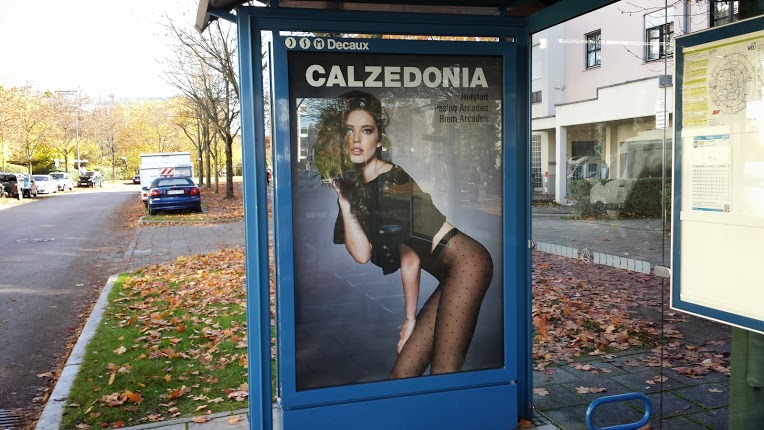
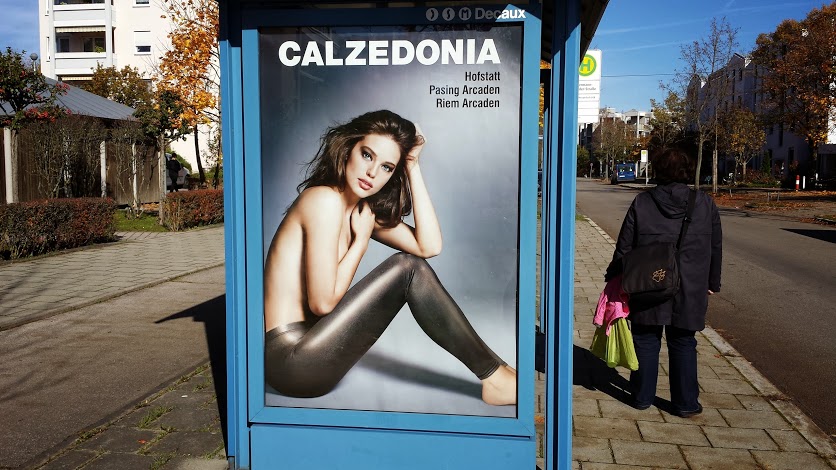 On a daily basis, we see totally opposing morals when it comes to sexuality. At the bus stop, I notice the poster of a lady in the nude wearing a lascivious pair of tights. On the bank, an Islamic lady is sitting, totally veiled. And not far away, there used to be a huge poster wall until recently with the invitation to carry on as colourfully and as often as possible, but only using “rubbers”. The motto was “do not give Aids a chance”. It was probably sponsored by the association of condom producers.
 In Germany, too, the sexual morals changed significantly during the last 50 years (and, of course, before that, as well). What a scandal it caused in the 1960ies if a high-school student became pregnant! I still remember quite well how we students at Jakob-Fugger-Gymnasium organized a demonstration for a girl at Maria-Theresia-Gymnasium who was to be evicted from school because she was pregnant – and I also remember the rather unpleasant consequences said demonstration had for us.
There is a good example for diverging moral standards in France and Germany that happened only recently. Probably a little more than a hundred years ago, a young woman who, for instance, got pregnant in France where she was serving a family, was most strictly forbidden to tell anybody the name of the father! After all, it was the woman who was to blame, because she had seduced the man. And the man was the victim in need of protection. If, in her desperation, she told the father’s name, the understanding knew no borders and there was a total outrage! First she seduced the father of the family, then she got pregnant and, to top it all, she had the impudence to name the father! That was how people thought at the time.
At the same time, there was a totally different rule in the probably a little more modern Germany on the other side of the river Rhine. Young women in this situation had an obligation to tell the father’s name! One of the reasons was that the authorities wanted to make him responsible for the care of the child.
Perhaps these “differences in moral standards” were also one of the reasons why the two countries were still natural enemies at the time. Another example for the problem with morals is the topic “homosexuality”. How much were people with a heightened homophile tendency socially ostracized? How much unhappiness were they suffering?
All these things happened because of morals that simply took for granted that the hetero-sexual tendency is the only acceptable one! Because everything else is against nature or worse? How people lied and cheated, suffered and, of course, also reacted perversely. Not to mention instances where this kind of situation was made worse by applying allegedly particularly honourable principles, such as the celibate?
Or think of abortion. The range of moral judgements is still between the extremes of calling abortion a crime to the contraceptive almost taken for granted, similar to the “pill after”. In the 1960ies and 1970ies, German women were part of an unappetizing abortion tourism to England, Holland and Yugoslavia, supported by the differences in moral standards throughout Europe.
Prostitution, too, is viewed very diversely world-wide, regardless of the fact that it exists everywhere. You can find all varieties, from criminal and secret business to the socially accepted variant of another kind of service.
In China, for instance, prostitution is officially strictly prohibited. The legislation puts it under draconian penalty. However, if I am standing around on any highly frequented place in one of the big Chinese cities waiting for someone, I do not have to wait long before getting rather explicit offers (“do you want a baby?”). In Wikipedia, you can read that, regardless of the prohibition, prostitution in China is a mass phenomenon. Communal and state organizations even support it in order to fill the national coffers.
Mind you, I do not wish to judge or moralize! All I want is to point out that morals as such are a very difficult topic. The famous “we do not do this”… depends very much on time and place and can differ or even be at opposing ends. And that “we do not do this” will again and again seem very random and can actually be questioned. Which is also why we can voices our doubts.
RMD
(Translated by EG)
P.S.
As to the pictures: they are all snapshots by smart phone S4.
Roland DürreThursday October 24th, 2013
Tweets on Twittering and Blogging #190
Here are my tweets of last week on:
Blogging and Twittering, Wisdoms and Rules:
131031 Those who blacken others are not white themselves – careful – twitterers and bloggers. #Twitter #Blogging #Wisdom
131101 If you want to sit on two chairs simultaneously, you are likely to fall through the middle – also true for twittering and blogging? #Twitter #Blogging #Wisdom
131102 Shooting out of many canons will rarely hit the target – also true for blogging and twittering? #Twitter #Blogging #Wisdom
131103 Those who spend will also have to earn – also true for blogging and twittering. #Twitter #Blogging #Wisdom
131104 If you want fire, you have to accept smoke – also true for twittering and blogging. #Twitter #Blogging #Wisdom
131105 If you fear adversity, you have to stay at home – also true for twittering and blogging. #Twitter #Blogging #Wisdom
131106 Following the masses means you will have plenty of comrades – also true for twittering and blogging? #Twitter #Blogging #Wisdom
There is a new tweet each day. See twitter.com and “follow” RolandDuerre!
Enjoy!
RMD
(Translated by EG)
P.S.
I took the proverbs from Alle deutsche Sprichwörter.
Roland DürreSunday October 20th, 2013
Morals as Education or The Emptiness of Morals
While preparing for my next presentations, I keep thinking about morals, both in theory and practice.
For me, interesting examples of the species morals can be found amongst the traffic morals and the sexual morals. And there are other variants of morals currently very highly thought of, such as tax morals or the morals of compliance-conform behaviour.
Today, I would like to take a closer look at traffic morals. Many rules were created for road traffic. In fact, it would actually make sense to stick by them. After all, a recent survey showed that the average human might easily suffer 40% less accidents if he or she stuck by the traffic rules. The people tested throughout the experiment only agreed to doing so because they were given a small tracker from their insurance companies where all their driving data were registered. In return, the insurance companies offered a considerable discount.
40% fewer accidents! In Germany, that would mean no less than 2,000 traffic casualties less each year! And the number for fewer injured would be even higher. Strong morals could actually prevent a lot of death and misery. At long last, here we found a “We do not do this!” that makes sense. After all, with most other laws it is often hard to find any really valuable usefulness, isn’t it?
Except nobody is interested. On our streets, you will find “permanent illegal behaviour”. All the time. Incessantly. At intervals of seconds. The reason for this might be that some kind of overlay morals have been superimposed over the “normal” traffic morals. They suggest that the traffic rules are only for “the others”, but not for yourself. Because we think of ourselves as invulnerable in a very special way.
These “overlay morals” make the secret speed look amoral. Because it is “treacherous” or unfair. Driving too fast is no longer dangerous.
A short while ago, they practiced a nationwide “radar marathon”. It was supposed to monitor more intensely than usual how the rules are adhered to. Yet, paradoxically, they also published the locations and times of the actual radar controls on all sorts of communication channels.
Even the public radio was enthusiastic about announcing them, regardless of the fact that they are financed by compulsory fees.
Basically, this is like the police publicly announcing all controls for whatever and whoever they have them for. And this is something that definitely should not happen.
Consequently, you have to be really unlucky if you are caught speeding. Or else you have to belong to the most stupid of all. Still, nothing changes about our traffic behaviour.
This was it from my side on the absurdity of our traffic morals.
RMD
(Translated by EG)
Roland DürreFriday October 18th, 2013
SUPERB! – This is True Project Management!

WHEN PROJECTS TURN TOPSY-TURVY AND
CLASSICAL PROJECT MANAGEMENT FAILS
What you just read are the title and sub-title of a book I received today. I open it – and I am fascinated.
All is being said! All that is modern and important in project management. And everything fits, adds up and enlarges my “mental concept”!
Formerly, you would have called it a “bible” – probably a “project bible” or “universe of project management”. Or some such. Because it is truly a great piece, a collection of wise stories. They all complement each other, describing in a fantastic way how project management can be done “just right”.
It is a book where every story introduces something individual. With much of it, the “agile manager” will be quite familiar. For the “dogmatic manager”, it will not be news, either. However, it might hit him surprisingly (but healthily) like a cold shower.
The important issues are described in very simple and clear images. And in order to prevent misunderstandings, you get excellent illustrations along with them.
It is actually a non-fiction text the reading of which is delightful and brings real joy. Well, it is basically not a non-fiction book where the author and his helpers force the reader through hundreds of pages, always wanting to convey the same message and wishing to prove with ever more examples what actually was clear after the first fifty pages.
No, there is no obligation for you to read the “Turn/around” book from the first through the last page. In fact, you can jump through the book. The way it is usually done today. And you will always find the next “Highlight”.
It has been written “collaboratively”. The entire project was initialized and controlled by Roger Dannenhauer, Torsten J. Koerting and Michael Merkwitza. Together with more than 40 co-authors, they made up the developing team.
Some of them are well-known to me. For instance the motor (and super-marathon-racer) Torsten. And all the authors more or less speak directly from my heart.
In fact, they offered me a co-authorship. Unfortunately, however, I felt there was not enough time for me. Now I regret it. It would make me so proud if I were now part of the team of authors.
But it is too late. If there is a second volume, I will definitely be part of it.
As to the book itself, I will occasionally describe one or two of the chapters particularly important to me. That gives me the opportunity to share with my readers the joy of seeing how there are simple approaches to problems that seem to be unsolvable.
It is definitely about time I complimented all the authors on their work!
RMD
(Translated by EG)
Roland DürreThursday October 17th, 2013
The American MCA (Maximum Credible Accident) …
… was once again prevented. Apparently, it was a last-minute rescue. And, basically, nobody was impressed by the threat. Neither the stock market, nor the citizens. Let alone the economy. Everybody continued doing “business as usual”. Regardless of the fact that we should have put a stop to all of this a long time ago.
And everybody is happy, because it certainly would have been worse than the crisis of 2008. Now I can still remember 2008. Yet I felt nothing of the crisis at the time. The InterFace numbers were just as good (or as bad – after all, everything is relative) as in the years before and after. I was doing fine and so were most of my German fellow humans. If this is what you call crisis, then I would wish for a permanent crisis.
However, the “maximum credible accident” has only been postponed. Perhaps until February 2014. The red ink will continue to grow and reach a new border. And since I am a cynic leaning towards the morbid, I already look forward to that day. After all, how should anything change until then? How are the US of A supposed to manage the necessary “turnaround” in four months?
But then, perhaps everything is nowhere near as bad as we think? Perhaps because we are talking a very virtual reality. For instance, if the USA had intervened in Syria, it would have become very expensive. Regardless of the fact that the entire military outfit is partly something you “have to pay, anyway”. However, it would not have made a difference for today’s (almost) bankruptcy.
And also because the one reason for the MCA that sounds still most plausible to me still seems rather clinical in my view. I read the following: All kinds of funds for all kinds of purposes were spent by investing a lot of money into receivables against the US. A US bankruptcy would have the effect of a downgrading of the credit rating by all rating agencies from AAA. But then, the diverse funds are not permitted to have non-AAA shares in their portfolio – which means they would have to sell them.
Is this really true? Why can’t the funds simply change their rules and keep the shares? After all, the “scientific field” of economic studies assumes that a country cannot be bankrupt.
In any case, I already look forward to next February. And I intend to go skiing when the next day of bankruptcy arrives. I hope to have sunny weather and then I will lie in my deck chair and look upon the financial MCA or the prevention of such while enjoying the glass of beer sitting on the table next to me.
RMD
(Translated by EG)
Roland Dürre
Tweets on Twittering and Blogging #189
Here are my tweets of last week on:
Blogging and Twittering, Wisdoms and Rules:
131024 Those who want everything end up with nothing – careful, twitterers and bloggers. #Twitter #Blogging #Wisdom
131025 Wanting to know all usually equals knowing nothing – also true for twittering and blogging? #Twitter #Blogging #Wisdom
131026 If you stack, you will never lack – also true for blogging and twittering? #Twitter #Blogging #Wisdom
131027 A useless friend can be a harmful enemy – also true for blogging and twittering. #Twitter #Blogging #Wisdom
131028 If you wish to banter others, you have to accept bantering directed against yourself – also true for twittering and blogging. #Twitter #Blogging #Wisdom
131029 Feeding other people’s fire means neglecting your own fire – also true for twittering and blogging? #Twitter #Blogging #Wisdom
131030 Harm set, harm get – also true for twittering and blogging. #Twitter #Blogging #Wisdom
There is a new tweet each day. See twitter.com and “follow” Roland
Duerre!
Enjoy!
RMD
(Translated by EG)
P.S.
I took the proverbs from Alle deutsche Sprichwörter.
Roland DürreTuesday October 15th, 2013
It Makes Me Happy To Bring Promote Friendships.
On this picture, you can see Jolly Kunjappu and Stefan Hagen. They are both friends of mine, yet did not know each other. Then I heard that Jolly is going to speak in Dornbirn. Dornbirn, however, is Stefan’s domain. Consequently, I had to get active – and bring these two together.
Regardless of his totally full calendar, Stefan was able to watch the presentation by Jolly. Afterwards, they met.
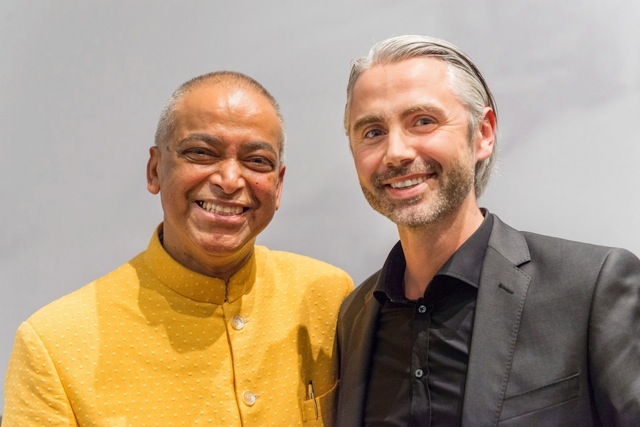 And they both radiate happiness.
🙂 And it makes me truly happy to see two friends of mine enjoying the fact that they were introduced to each other.
RMD
(Translated by EG)
P.S.
Of course, writing about Dr. Stefan Hagen makes me think of the PM Camp. So do not forget::
Between November 14th and 18th, 2013, we will have our next fabulous barcamp for project management in Dornbirn. There are still some vacancies, also on the list of sponsors.
Roland DürreMonday October 14th, 2013
New IF Blog Author: Dr. Cordian Riener
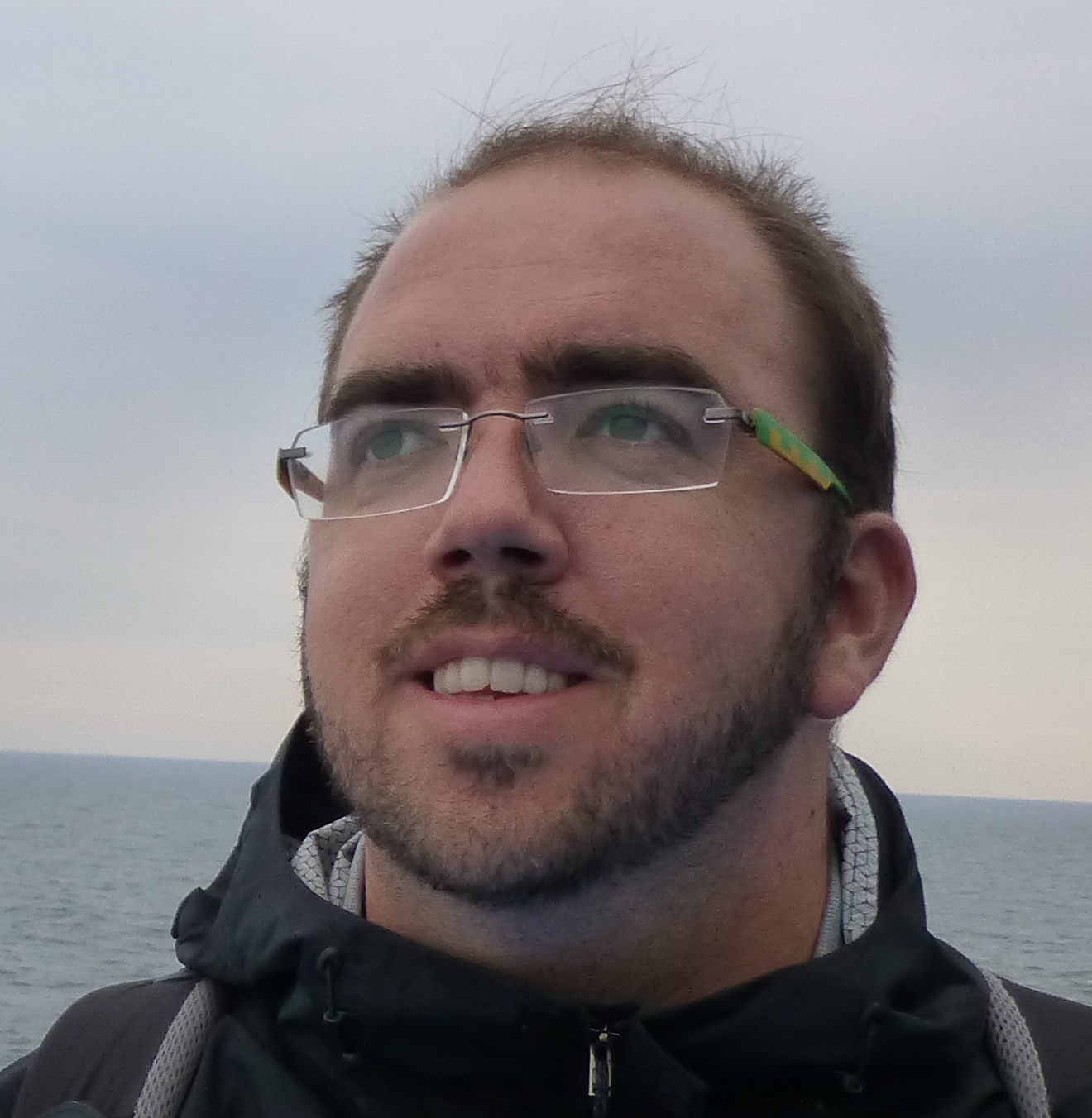 Just a short time ago, I heard another presentation by Dr. Cordian Riener that made me very thoughtful.
Cordian is first and foremost a human being and then a friend of simple and clear statements.
He manages to need few words in order to get to the point.
Which is exactly how Cordian describes himself:
Born in Swabia.
Studied mathematics and philosophy in Ulm and Bordeaux, subsequently earned his mathematics Ph.D. in Frankfurt.
Now living up north in Helsinki for some time to come.
I like spending time riding my bike, hiking, reading about world history and good discussions – preferably accompanied by a nice cup of coffee.
During my stay in Finland, I try to find out what the Fins are better with than we, what we could learn from then and why, even here, not everything is always perfect.
🙂 I also know about Cordian that he likes apple cake – not to mention strawberry tart, which he likes even better.
I already look forward to reading Cordian’s articles! Perhaps there will be regular news from Finland for us?
RMD
(Translated by EG)
Roland DürreSunday October 13th, 2013
Remembering the Philosophical Colloquium with Klaus-Jürgen Grün
Ideas by Cordian Riener
After our shared experience of the seminar under Klaus-Jürgen Grün on “Business Ethics” between October, 4th and 7th, I received the following letter from Dr. Cordian Riener.
Dear Roland,
many thanks for your diverse ideas during the seminar. During the train trip back, with my mind on the seminar, I came up with a number of comments I would not wish to forget – so I am making notes on my iPad and sharing them with you.
Firstly, here is how I feel about his definition of sustainability as “no waste“: a short while ago, I had heard about “cradle to cradle” as a new concept of production planning. Apparently, it is quite possible to really reduce the waste to a minimum by prudently defined product cycles and to make used articles the raw material for other articles with a minimum of energy. Especially in architecture, this is getting more and more attention – probably mostly in Holland. This kind of thing would, indeed, be sustainable according to your beautiful definition.
Note by me: I took the definition from Dr. Klaus Töpfer.
If and how these kinds of product cycles can actually be realized purely with market mechanisms without outward control, however, will certainly be an exciting question. During the discussion, you also very correctly remarked that we currently have a lack of responsibility: on the one hand, profits are privatized, on the other hand, the risks and losses are socialized. I liked your argument very much and it also made me thoughtful.
In fact, I actually do have the impression that people (whoever exactly we mean with “people”) try to get rid of responsibility. On the one hand, this might be one of the reasons why institutions telling you which is “the right way” were so successful for such a long time when it came to telling people what they should do. On the other hand, it is certainly also one of the reasons why parts of our society have been marketized: where formerly you said “what God wants is good” has become “what the market wants is the right thing to do” and where formerly the will of the Gods was spoken to us through the mouth of the priests, modern prophets now use quantitative expressions and mathematical formula, along with an army of business priests who will then interpret them for us.
Initially, this might sound like a more or less beautiful analogy, but when it comes to responsibility, you unfortunately discover even more things they have in common: in former times, priests had power over the monarchs, because they were also in a position to take over their responsibility: for instance, if a king caused famine through poor planning, he was on the safe side if there was also an easy way to get out of the responsibility; to be sure, there might be some polemics included here.
I got exactly the same impression while I was doing my practical training at a bank: there was the market; quantitative models discovered the will of this metaphysical entity and the portfolio managers acted according to what the model told them. If things went wrong – and there were quite some times when it did go wrong – the customer (i.e. the bank director) was told that the market had changed its opinion – which was exactly what the models had foretold. I hope this makes some sense at all.
Basically, I suspect that what I experienced quite often (not only as described in the above example) is a very common phenomenon: people are not sure yet have to make decisions. Instead of trusting their “instincts” which – if they have been trained by long years of experience – will come up with the right (best possible) decision, you prefer to rely on things that look more “solid”.
That gives you the advantage that, afterwards, you are not the one who can be held responsible. Instead, you can say there was something like market failure – the market God changed his opinion on short notice. With these considerations, I suspect that your statement was correct when you said that there is a lack of responsibility. And I also suspect that this lack is heightened by our marketized society. As far as this is concerned, I am sure it would be very exciting to take a closer look at our social development on next year’s seminar, wouldn’t it?
With kind regards, Cordian
Well, that was the text by Cordian. Many thanks!
I have now had several more exchanges of ideas with Cordian and am happy to tell you that, in the future, he will also be an IF blog author. This is great – and I will introduce him shortly in the IF blog as a new comrade-in-arms. I already look forward to reading his articles.
RMD
(Translated by EG)


