
Bernhard FindeissTuesday February 25th, 2014
(Deutsch) Clean Code: Wie der Apple SSL-Bug mit einfachen Mitteln zu verhindern gewesen wäre
Roland DürreThursday February 20th, 2014
BRAIN SET
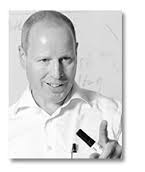 I first met Roger Dannenhauer at the Dornbirn PM Camp. However, his name was not new to me, because he had significantly contributed towards a great literary project (Buchprojekt) on project management with the Turnaround-Team.
In Dornbirn, he inspired all the participants with a fascinating session. For me, this was reason enough to arrange a four-eye meeting with him one afternoon where we exchanged opinions at length and with great intensity.
Roger Dannenhauer is also the author of GEISTESHALTUNG. As I see it, this is a very important book with an absolutely future-oriented message. Even if the sub-title “WIRTSCHAFTLICHER ERFOLG IN EINER NEUEN ZEIT” (business success in our new time) sounds almost conservative, the content is definitely revolutionary.

And even the very first message of the book is quite clear: there is no alternative to reality!
When attending podium discussions or other similar events, I am often surprised to meet people who consider growth the solution to all problems. They deny that using up fossil energy is actually a problem, regardless of the oil peak and climate change.
We are talking people living in our times who still consider humans as functional parts of a mechanistic system. People who cannot understand terms such as “lean”, “agile” and “open” – and neither do they wish to understand them.
And I am surprised that there are people who actually still believe we could continue to daydream through the decades with “business as usual” and who forget that generations who will not be amused about this behaviour at all will probably come sooner than we like.
And in the book itself, you will also find topics such as
Ignorance – Manipulation – Waste of Resources.
The book fascinated me, because it is a document emanating wisdom, competence and civil courage! It motivates to start thinking about the future and gives suggestions for a possible approach towards solving the problem. I am not going to tell you more at this time.
RMD
(Translated by EG)
P.S. Here is “affiliate Link” if you want to buy quickly.
Roland Dürre
Tweets on Twittering and Blogging #207
Here are my tweets of last week on:
Blogging and Twittering, Wisdoms and Rules
140227 If you behave mousy, the cats will eat you – also true for twittering and blogging? #Twitter #Blogging #Wisdom
140228 Those who fear nothing will never hesitate to do evil – also true for twittering and blogging? #Twitter #Blogging #Wisdom
140301 If you tickle yourself, you will laugh whenever you wish to – also when twittering and blogging? #Twitter #Blogging #Wisdom
140302 Those who praise themselves will be hated by many – also when blogging and twittering?! #Twitter #Blogging #Wisdom
140303 If you feel inadequate, others will also consider you inadequate – also true for blogging and twittering. #Twitter #Blogging #Wisdom
140304 Those who share other people’s happiness will find their own happiness – also true for twittering and blogging. #Twitter #Blogging #Wisdom
140305 If you blow your nose too often, you will eventually bleed – also true for twittering and blogging. #Twitter #Blogging #Wisdom
There is a new tweet each day. See twitter.com and “follow” RolandDuerre! Enjoy!
RMD
(Translated by EG)
P.S.
I took the proverbs from Alle deutsche Sprichwörter.
Gastautor(en) Wednesday February 19th, 2014
Planning Substitutes Error for Coincidence
The stock market depends on good news and the hope that even more can be earned, which means that the stock-oriented enterprises have to show better results all the time in order to live up to the expectations of the investors and to the promises of the fund managers. What you need for this are transparent strategies and an optimistic planning of results.
In order to increase the market share, you have to provide a constant push: be it in terms of turnover, profit, or buying out the competition. As opposed to this, deviations from the plan (warnings about potential profit) will make poor news and consequences will not be long in coming. The entrepreneur or manager must “pull a new parrot out of his hat” at all times, otherwise the investment experts will lose patience.
In the ’New Economy’, the importance of planning increased drastically and the vocabulary of the neo-liberal business concept introduced the respective terms as a fixed part of news and leadership methods: ”Business Plan, Strategy Planning, Performance, Shareholder Value, Profits, Annual Growth, Controlling“ and „Win-Win – Situation“.
While the long-term result planning and planning control mechanisms were basically restricted to huge enterprises, this concept now spreads more and more to the medium-sized enterprises.
For me as managing director of one branch of a medium-sized company, this was reason enough to critically investigate planning and its accompanying concepts: error and coincidence. I will shed a little light on the relationship between and the consequence of planning in small and medium-sized industrial firms and the increasing collection of data.
Planning
On Wikipedia, you can find about planning: ”Planning describes the human ability to mentally anticipate behavioural steps that seem necessary for achieving a goal. You get a plan, mostly in the form of a set of data structured according to time.“
Coincidence
On coincidence, Wikipedia can be cited as follows: ”If an individual event or the convergence of several events cannot be explained causally, then this is called coincidence. Potential causal explanations for events are mostly general rules or the desires of active persons. This means that the explanation of coincidence is the very absence of a (causal) explanation“.
Error
For error, someone wrote in Wikipedia: “Basically, error is a wrong assumption, statement, opinion or belief – with the party concerned being absolutely convinced that his or her statement(s) are/is correct.“
In Planning, you replace coincidence by error.
Planning in the course of history
The first groups of humans or hordes roamed the country looking for food, followed the herds of animals or explored the rest of the world seeking new sources of food. These migrations were triggered by lack of food and followed no strategy. Nothing is known or handed down about a long-term life planning.
Conversely, agriculture necessitates order and organization, i.e. planning.
After the first step towards founding settlements came the building of towns and countries, which is what we generally call civilization. Civilization will not be possible without planning.
The people in Mesopotamia and China were masters of early civilizations. We still admire their competence, for instance the Mesopotamian system of aqueducts and the Chinese Wall(s). Planning genius was displayed by the Romans, who gave us countless and sustainable proof of their strategic settlement policy. It is justifiable to say that the planned realization of a population census in the Roman Empire still influences the world today.
Planning became the cornerstone of our modern world.
Basically, planning is supposed to see to it that coincidences no longer happen.
You can have different opinions about when planning became part of business life. We know that the Sumerians wrote down business transactions on clay tablets. The Phoenicians, the merchants of antiquity, developed a simple alphabet and wrote it on papyrus, which was the determining progress for business planning. In my personal opinion, the double entry bookkeeping is the basis of modern management. In bookkeeping, there is no room for discrepancies, errors, coincidences or mistakes. A business transaction must be transparent and the balance must be precise if you want it to be the basis for a reliable planning process.
But any coincidence can change the plans.
A reliable bookkeeping is necessary, but outside influences, such as natural catastrophes, economic crises or the intensions of other parties can change or even destroy plans. It is the nightmare of every businessman that non-causal influences will make it impossible to reach the goals. But on the other hand, coincidence is also a motivation to plan anew or to correct the direction of your planning.
If you exaggerate, beneficence will become a menace.
Order controls rights and duties for group members and planning is the mental anticipation of future behaviour in order to reach a goal.
If you exaggerate order or discipline, then the unconditioned obedience will quickly become will-free dependence on others.
If you exaggerate planning, you will also get dependent and subordinate in order to reach a goal.
It is clear that the anticipation of future behaviour, planning and the secondary virtue of order, along with exaggeration, can easily cause an unpleasant controlling mechanism in our lives. To put it provocatively: the exaggeration, going over the top, is the menace coupled with planning.
Planned Economy
Thinking planned economy or centralized administration will automatically make you remember the times of the USSR and COMECON, where all decisions on work, capital, property ownership, production of goods and services were planned by a central office for a fixed time of five years.
However, the first ideas for the business concept of planned economy go back to ancient times. Plato himself summarized the planned economy of a state in his “state designs”. Jean Jacques Rousseau also dealt with planned economy in his “social contract”, before it was realized as a fixed part of Marxism.
During the cold war era, where ideologies clashed, the Western States foulmouthed the planned economy as an economy of shortages. They kept pointing out the plan derivations and shortages “in the East” and considered the social or free market economy superior. It is little known that Charles de Gaulle, too, introduced five-year plans in France after the end of the war. They ended in 1992. Well, the French central planning survived the end of the social planning economy by one year.
In this article, I do not wish to discuss how much sense state-controlled planning makes for the economy. It is a fact that we in our complex state structures and connections cannot really do without plans and business regulations, unless we are willing to accept a one-sided distribution of goods, capital and property. The argument about what the ideal planning of our global economy would be, however, is not yet resolved.
Planning in the New Economy
After the strategy comes the business plan, which is accompanied by reporting and controlling. This is what the successful multi-millionaires show us.
Can we transfer this model to smaller industrial units 1 : 1?
- The answer might be yes if we are talking the production of serial parts the amount of which has been budgeted in advance with the customer and when precision, quality and a deadline are the relevant factors. A typical example is the automobile industry, which depends on component suppliers of various sizes.
- You can also agree if we are talking consumable supplies, such as screws and tools.
For both instances, planning and control is absolutely necessary.
Plant engineering, where special solutions are required, is a totally different issue. After all, industrial engineering plants – unlike automobiles or canned goods – are not produced in a series. The sub-contractor, who is often a medium-sized enterprise, will have to adapt with his solutions.
Planning CANNOT replace the following qualities: communication, spontaneity, creativity and flexibility. These functions are demanded every day.
The setting of the course towards error: exaggeration.
Whenever a universal program for managing a company is introduced, grown and harmonious teams are destroyed, because they will not fit into the logic of the program. In sales and technological leadership, which formerly were often held by one person, communication, spontaneity, creativity and flexibility might be considerably impeded.
A deep-rooted structuring and re-distribution of tasks into units that can be planned will slow down the work because overlapping functions are hard to unite in the program.
This is how the way towards error is opened even wider, because structuring and strict adherence to tasks according to a master plan are exaggerated.
With the best of intents, errors are committed if adaptations are not possible, even though everything has been arranged according to the book and planning logic. Coincidence as a possible approach to solve the problem has never been taken into consideration.
Or, returning to the original topic: coincidence is replaced by error.
Examples
In this article, I will only take small and medium-sized industrial enterprises into consideration. More often than not, the processes in these companies from the sales contract to the production and distribution are organized in few departments. Sales and contracts were realized in one department, in close cooperation with construction. Acquisition was often separate, which was also true for preparation and production.
If these processes are realized by some software or system which takes care of all internal processes, then the overlapping tasks are cut down into individual steps as the logic of the software requires. The old departments have to be dissolved and new departments have to be created. Orders are cut up into many small steps. It is not unheard of for an order to first have to pass seven or eight stations before it can be approved. This is how three to four weeks can pass before a deadline can be approved. Said approval might well be far from the originally planned goal. This will cost the salespersons nerves. They will constantly have to execute time-consuming research in order to find out where exactly in the system the order is at a given time. Unfortunately, precise information will not be returned with pressing a button – as in view of the central data base you should assume.
Criticism
Time and again, I see company counsellors or new holders of leadership positions trying to change structures in specialized companies of small or medium size according to the model of the ’Big Ones’. Demolishing these old structures causes enormous friction. The planning costs a lot of energy and time if finally you want to present a modern and planned entrepreneurial structure on paper.
Systems generated for entrepreneurial leaders strictly demand data input which in old times was only available after the project had started and which was then entered flexibly. Overlapping competence is amputated, because the planning phase has to follow a structure determined by the software program and strictly distinguishing between the tasks. The individual tasks pass this structure as emails or program codes and not through personal communication.
During these planning games, it is not at all assured that the desired success, the slimming down of the process and the quicker processing, will be achieved. More often than not, the opposite is true. Caused by additional costs because of extra jobs created in planning, the total cost increases, which generated financial pressure. In order to cover the cost, you would have to increase the marginal return at the same ratio. This means you would soon need new products with a higher marge, but the planning process has its own rhythm and will hinder spontaneity – so this is a truly vicious circle.
It is an error to believe that planning can replace the knowledge in the technological or distribution sectors. Especially medium-sized companies need personalities versed technologically who are appreciated both by the customers and in the firm because of their competence and long years of experience. They need the support of a routine staff. You cannot replace such characteristics with the planning of structures, neither are those persons simply replaceable. I get the impression that the “new economy” planning staff has a different opinion on this. In fact, they seem to consider those ideas highly suspect, preferring the “renovator” with planning technology software. Expertise is not something that necessarily matters.
Claiming that software contaiining all business processes for small and medium-sized companies is an exaggeration is provocative.
So what can we do?
Medium-sized companies in plant engineering must remain flexible. Planning certainly has its place. There is no doubt that production must be efficient. The machines must work properly, but there must still be room for flexibility in exceptional cases.
It goes without saying that costs and results must be written down instantly, but who says this needs to be done by a huge number of control reports, monthly balance sheets, three-month balance sheets, sales input planning, controlling, three-year plans, distinguishing between products and numerous other tables for every individual problem.
Data control and tables are back-oriented, but the real challenge lies in the future. There must be time to philosophize about the future and to give coincidence a chance, instead of remaining erroneous.
I know our guest author well. For good reasons, he will not publish his name (RMD)
(Translated by EG)
Roland DürreMonday February 17th, 2014
Tomorrow: A Small Discussion in Neubiberg.
I have now been a Neubiberg citizen for half a year – which means that I am still fairly new to the community. And already I have been invited to a local SPD-event as an expert on Februar, 18th, 2014. It is to be a sort of “podium discussion” which takes place as part of the “Neubiberg Business Dialogue”.
It is about “Community Marketing & Entrepreneur Settlement”. The event takes place at the restaurant MINOA in the Zwergerstr. 28 at Neubiberg and will start at 19:30 hours.
The invitation was issued by the SPD candidate for mayor Tobias Heberlein. Consequently, we can assume that it is also an event meant to promote the electoral campaign. However, this is not something I am worried about, because the question:
“What can a community do in order to motivate enterprises to settle”
is one I find extremely exciting. And I also have quite a few ideas on the topic!
And as always, I would be delighted to recognize a few persons in the audience. Maybe we can go for a beer afterwards!
RMD
(Translated by EG)
Roland DürreFriday February 14th, 2014
Ultimative Software Quality!
The awareness for the relevance of “software” as a critical factor towards the success of an enterprise has increased. In Germany, too, the big concerns focus more and more on the IT-based applications and evaluate the quality of same in order to improve it.
For me – totally unstructured – the following questions come to mind:
- Why are there still such big software projects with a hundred and more programmers?
- Why do they still believe high specialization (requirement engineering, architecture, quality, implementation, configuration or project management, …) and division of labour in global development triangles such as India-USA-Europe is a way towards success and minimal costs?
- Why does management never seem to learn anything from all the numerous failures and crises with so many IT projects?
Here are a few answers and theses for improvement:
- Focus on the future!
In order to create quality and thus gain truly precious software, I would recommend to first focus on the new software projects in the enterprises. Basically, this is a huge challenge per se. I would only touch the “old” applications where it is absolutely necessary (except if I have too many resources and too much money). Because, as a general rule, the organizational, systemic and inter-human problems are just too huge, which means that the improvement you get comes at a high price. With new projects, I can at least start on the green field when it comes to project and methodical issues. I can be strict about false structures and developments not getting a chance to develop. - The competence of the employees makes all the difference!
I can now look back on more than 30 years of experience in the s-w development sector and time and again I found out that only a fourth or, if you are lucky, a third of the persons working in projects as programmers – no matter what titles or certificates they can show you – can actually deliver top quality. With the remaining two thirds, there might be the potential for some improvement through intense additional education and training programs with half of them. The remainder would have been better advised if they had never chosen to become programmers. In my perception, this relation grew worse, rather than better, during the last few years. That means that many not very well-educated and/or less talented programmers get carried along with the flow in extremely huge projects. Mind you, this is not because I want to foul-mouth an entire profession. However, what I need in software development are a hundred per cent “top quality” results. And that is something actually only a very small number of programmers working in projects can deliver. When it comes to “architects” or “requirement engineers”, the ratio of truly qualified experts is probably even smaller than with the “implementers” – which makes software development even more doubtful. Incidentally, it seems to me that other sectors do not differ too much with respect to those numbers.
For instance, I also noticed that among “craftsmen”, as a general rule, only one third actually are qualified enough in their job to deliver truly top quality products. And this is also an area where roughly one third would have been better advised to choose another career.
This means that if you constitute a new team, you should only recruit colleagues into the project who actually really know what they are doing. That is true for all roles within the project – and this selection is anything but easy. It is a lot easier said than done – because you have to say “NO” just too often. Regardless of the fact that you really badly need people to work for you. But a compromise in this particular respect will, as a general rule, blow right into your face when it comes to the quality of the results. And if you only take the “good” ones, you will need far fewer … - Communication
The communication within the development team and between all parties concerned with the project must function! How is that supposed to work if in many projects we do not even have a common language? Or if all of the team speak English but every one of them brought his or her “private English version”, which the other party finds hard to understand? It is important to strictly limit the number of meetings. There must be put a stop to the meeting overflow. Because the actual benefit of meetings will decrease with the number of persons attending and the time they take. To the same extent, the damage will increase. A solution of this dilemma is the organization of communication through a reasonable “peer2peer” mechanism. - “Requirement Engineering”
So far, the attempt at describing application software precisely and completely before its implementation has never rendered optimal results. This procedure will always end up showing that many unnecessary items have been built and, to make up for it, some really necessary items are missing. As a consequence, you get costly change requests that often conflict with the functions to be implemented. In other words: the success of every project depends on the quality of the person or persons who constitute the “product owner”. High quality product owners will never know everything in advance. Instead, they constantly learn during the development process. An iterative and agile process of “requirement engineering” is an absolute necessity. For new projects, it is advisable to think in terms of “user stories” and then (to a limited extent) describe the corresponding “use cases”. However, this can only work out if the architecture is flexible. - “Flexible Architecture”
Due to the product owners’ learning process and the iteratively changing functionality, an open and resilient architecture becomes a central requirement for the success of the project. This causes higher expectations for the architectures, but also for the communication between the “product owner” and the “architect” and ultimately also the entire team. Incidentally, as I see it, the two last mentioned factors are true for projects in general, not just software projects. - Mind-set
The mind-set has an impact in many dimensions. For instance, all project participants have to pledge themselves towards an ultimate quality requirement from day one. They must understand that, first and foremost, they create quality for themselves. There must be a shared project vision. Cooperation has to take place at eye-level and with everybody respecting everybody else. Politics in the project is a NO-GO! Quality control factors, such as peer2peer reviews will be a matter of course, meetings must be extremely short and far between and if they take place, they absolutely have to be restricted to discussing necessary coordination processes. To make up for it, there is no reason why you should not once in a while celebrate your success. Unnecessary bureaucracy is another NO-GO, a “good” project culture will make bureaucracy obsolete. The project and its current state are transparent for all parties concerned at all times, “insider knowledge” and “esoteric knowledge” are the exception. Wherever possible, you will dispense with unnecessary efforts for “estimates” and “planning”! - Responsibility
The project participants will never just reduce their own role to one of responsibility. Every one of them must be prepared to work “hands on”. The responsibility for everything – if only for a small fraction of it – is with every individual participant: requirement engineering, project control, architecture, quality, configuration and implementation. Everyone must help reduce unnecessary obstacles against free communication between all the others. This is true for everyone, because every one of them is responsible for the success of the project. Of course, due to the individual qualification, the way how the responsibility is distributed differs. - Craftsmanship
And all parties concerned have to practice their craft all the time. They must be prepared to “learn from the master craftsman” and to “”hand on their special master craftsman competence”, that is to share their knowledge.
If these requirements are met, even small teams can achieve unbelievable things, both with respect to quality and functional quantity. The often unnecessary overhead of big teams does not happen. And eventually, the management will be surprised how a ten-person team could have accomplished something where a team of a hundred failed.
RMD
(Translated by EG)
Roland DürreThursday February 13th, 2014
Tweets on Twittering and Blogging #206
Here are my tweets of last week on:
Blogging and Twittering, Wisdoms and Rules:
140220 If you do not identify your mistakes, you cannot correct them – also true for twittering and blogging. #Twitter #Blogging #Wisdom
140221 If you manage to overcome your anger, you will have won over a mighty enemy – also true for twittering and blogging. #Twitter #Blogging #Wisdom
140222 Rubbing against old cauldrons will likely give you spoiled milk – also true for twittering and blogging. #Twitter #Blogging #Wisdom
140223 If you want something done, you better do it yourself – also true for blogging and twittering? #Twitter #Blogging #Wisdom
140224 Those who are proud of disgrace do not deserve honour – also true for blogging and twittering. #Twitter #Blogging #Wisdom
140225 Having burned your tongue once will teach you to let the soup cool next time – also true for twittering and blogging. #Twitter #Blogging #Wisdom
140226 Welcoming danger is fatally dangerous – also true for twittering and blogging? #Twitter #Blogging #Wisdom
There is a new tweet each day. See twitter.com and “follow” RolandDuerre!
Enjoy!
RMD
(Translated by EG)
P.S.
I took the proverbs from Alle deutsche Sprichwörter.
Roland DürreTuesday February 11th, 2014
What Annoys Me #33 – Again Someone “Taking Responsibility” Afterwards
Now, yet again, someone “took total and political responsibility” – and then he resigned, before his club excluded him.
Politicians, too, like to “take responsibility” after something has gone awry. Or if something was made public knowledge that was basically “strictly confidential” and not at all meant for publication. Except that, today, politicians no longer resign. That was in former times. Today, if they have become truly unacceptable, they will wait for a lucrative offer to change careers.
The term “taking responsibility”, more and more often also “full” or “political” responsibility, has become mere lip service. Not much will happen afterwards. The best you can hope for is a few new compliance rules to be sanctioned and publicly sworn to. And then they will instantly be secretly circumnavigated.
We all have already done something stupid in our lives. I know the feeling well. But then I admit to what happened and try to control the damage or see if things can be put right again. It would not be appropriate for me to lament about the consequences or to come up with excuses, or else to point towards the “true culprit”.
And then I would be well advised to keep quiet, because nobody needs a public “taking the responsibility”. Nor does it help anybody.
RMD
(Translated by EG)
Roland DürreSunday February 9th, 2014
Rotary, Lions, FCB, ADAC, Church and Fire Brigade …
Occasionally, I give presentations for Rotary or Lions. These events are always nice, because I am permitted to speak in front of people who understand me and from whose feedback and discussion I learn a lot.
For instance, I once heard that these clubs expect their members to definitely attend their events. To the extent that members who miss events several times without a good excuse will be removed from the membership list.
Initially, I found this rather over the top. After some consideration, however, I now think it is rather consistent. If you want to be a member of any club, maybe you should also feel obliged to take part in the club’s activities. Especially if the functionaries of the club are so industrious and organize such nice events.
Now I read that the big FC Bayern plans similar steps. The lucky owners of all-year-round-tickets will allegedly no longer get an extension if they have not actually attended a minimum of matches!
In other words: now they not only want the money, but also the presence of the owners of seasonal tickets. Simply because it is desired that the non-owners of such tickets also get a chance to see Bayern matches. In my opinion, this is a prudent thing to do, especially with respect to positive image marketing.
Thinking about clubs and image, another club currently ever-present in the media comes to mind: the ADAC. As we all know, the ADAC has made it their objective to increase safety on the roads. Basically, this is not something we seem to be too good at; after all, there are still more than three thousand fatal accidents each year in Germany – and even more seriously and not so seriously wounded persons. And the tendency is upwards!
Since the ADAC has really many members, many of them will also be among the fatalities and injured. Well, would it not make sense for the club to come up with the idea of not just helping with the “yellow angels” (which, incidentally, is a rather commercialized affair), but also to perhaps do something about what is probably the worst possible damage our individualized traffic causes among its own, too? How about trying to drastically reduce the number of traffic victims, no matter if fatal or only seriously injured?
Consequently, one would have to organize regular club evenings in order not to risk the consequences of the bloodshed caused by “individualized mobility”. These club evenings would have to aim at reducing the many casualties and the daily misery inflicted on so many persons and their families. For instance by really hard arguments. Followed by a corresponding lobbyism that advertises actions for fewer traffic accidents.
A beautifully utopian idea, isn’t it? But the only way this can work is if all the people actually take part in these events. Consequently, the solution is self-evident: those members who refuse to cooperate with the club when it comes to safety on the road will be excluded from the ADAC! Or even better: all those who are not willing to actively cooperate towards the goal of drastically reducing the number of traffic victims will be excluded from road traffic!
I can think of other clubs that might be well-advised to follow the examples of Lions, Rotary or now also of FC Bayern. One of them is the Catholic Church. Would it not be logical and consistent with church law if all those members who keep missing such important church rituals as the mass with its “holy sacraments”, who ignore the central club dogmata and consequently commit multiple and enduring “deathly sins” and who, in the religious sense, basically do nothing for the salvation of their souls were to be excluded from the club!?
But no, they do not exclude anybody. Instead, they ignore such behaviour and still charge church tax. Nevertheless, all the people living near a church, no matter if they are members or not, will regularly be called to “Service in the name of God” by the loud ringing of bells – which is like unwelcome spam. This happens regardless of the fact that the few members who actually attend the shared club activities do not go to church because of the bells ringing, but because they have been trained to do so for years.
Those members who do not attend are not really concerned by the ringing of all those bells. They do not feel obliged to do their duty just because the bells ring. Once in a while, they will even be bold enough to grumble about all this noise that is bad for the housing estate (regardless of the fact that said noise is created by the very club they belong to in a rather egomaniac manner). And they remain members of the club, because they wish to take advantage of what the club offers a few times in their lives – as a decoration for special events such as marriage, etc.
Nobody in this country wants to know that the noise is annoying for some non-church-members who cannot really come to terms with this “Holy-Club-Droning”. To make up for it, the question asked by a non-church-member if the call to a club event still needs to be done through extra-loud acoustic signals in the twenty-first century is taken as a violation of the “freedom of worship” or even of “religious feelings”.
Here is my idea: the church, too, could exclude those of its members who are passive or act against the club doctrine. And the remaining members might be called to their club meetings through a “quiet alarm” in the future. Just like the firefighters – a club the activities of which are extremely highly regarded by me – when they have important operations.
RMD
(Translated by EG)
P.S.
You can easily see that the author has slept poorly because he has been reading too many newspaper articles and because he was woken by loud Sunday bells ringing when he finally had fallen asleep.
Roland DürreThursday February 6th, 2014
Tweets on Twittering and Blogging #205
Here are my tweets of last week on:
Blogging and Twittering, Wisdoms and Rules:
140213 If you are clean, there is no need to wash – also true for twittering and blogging? #Twitter #Blogging #Wisdom
140214 If you cause damage, you have to repair it – also when twittering and blogging? #Twitter #Blogging #Wisdom
140215 Working hard will prevent boredom – also good advice when twittering and blogging. #Twitter #Blogging #Wisdom
140216 Grumbling means losing – also true for blogging and twittering? #Twitter #Blogging #Wisdom
140217 Keeping quiet means agreeing – another reason to start blogging and twittering. #Twitter #Blogging #Wisdom
140218 If you do not seek your happiness, you will miss it – also true for twittering and blogging! #Twitter #Blogging #Wisdom
140219 If you can be your own master, do not serve any other – a good motto for twitterers and bloggers? #Twitter #Blogging #Wisdom
There is a new tweet each day. See twitter.com and “follow” RolandDuerre!
Enjoy!
RMD
(Translated by EG)
P.S.
I took the proverbs from Alle deutsche Sprichwörter.


