
Roland DürreWednesday August 5th, 2015
Broadening Your Horizon – Changing Habits – Riding Your Bike.
 On January, 4th and 5th, 2016, we will host the first
Active Mobility in Everyday Life
Barcamp in Unterhaching. The hashtag will be #AktMobCmp. For me, this topic is extremely important, because I believe that, by now, we have definitely reached the stage where motorized individual traffic has turned into a huge meander.
Not only does this kind of mobility cause 1.3 million traffic deaths each year world-wide, along with several times as many more seriously and lightly wounded.
In addition, this lifestyle, along with (useless?) transport of products and an excessive air travel, probably contributes hugely to the emissions that cause the rise in temperature and thus the climate catastrophe. Which means that they are a massive threat to at least human life on this planet.
In other words: it causes huge environmental damage and also generates no end of noise. Especially in the cities, the car avalanches permanently travelling the streets minimize the quality of life considerably. But the car is also detrimental to the physical and psychological well-being of the driver. It makes you dependent, obese and lazy, at the same time generating social isolation and a foul mood.
Consequently, I am now writing down a few personal theses on the topic of “motorized individualized traffic”.
“I no longer have enough time to go by car.“
This statement surprises many people. Yet it is true. I can easily prove it. And being an elderly person, time is my most precious commodity.
“Most people do not really need their cars.“
Your dependency on your car is just an imagined one. If you analyse critically, there are only very few cases. And even in those cases, a change in habits and situation that would make the car obsolete would be beneficial for the person concerned.
“How is anybody who cannot even manage his or her own mobility supposed to manage his or her entire life?“
A similar sentence might be: “How is anybody supposed to get a grip on their life if they cannot even manage to get a grip on their TV-watching habits”. In our society, the danger of living a second-hand life is too great. You easily miss real life. That is also what happens to drivers of a car.
“Cars will make you immobile and unfree!“
This is the sensational experience of all those who do not use a car. You will feel more independent and free, as well as a lot more mobile than before. Because cars fail to make us mobile, just as cigarettes do not make us free. As soon as you do without a car, your mobility and freedom will increase considerably and you will gain time for what is truly important in life.
“Driving a car is a threat to your character.“
Sitting behind the wheel of a car gives you the feeling of omnipotence. With the least bit of strength, you overcome physically almost insurmountable obstacles and distances in the shortest possible time and quite easily. At the same time, you get lazy and comfortable, the social isolation and the permanent (conscious and unconscious) effort without the physical balance often also makes you aggressive.
“Driving a car is detrimental for your health.“
A burnout, for instance, usually happens for various reasons. Taken together, they also cause some sort of special depression. A strong feeling of dissatisfaction in your private or work-life might be a reason. Everyday life lived in the wrong way, inappropriate life rituals and much more can be another reason. One of those inappropriate life rituals that promote dissatisfaction is driving a car. I can easily imagine that your foul mood as you are stuck in the traffic jam, as well as being incarcerated inside the tin box, will increase your frustration with everyday life.
“Your new car is not the joy you should be looking for.“
I know many people whose biggest joy is looking forward to getting a new car. You look forward to owning a new luxury gadget and status symbol. And as soon as you own it, as always with such commodities, you will slide into the next depression – because now you have nothing left to look forward to.
I think I could find many more theses like the ones stated above. But for the time being, I will abstain.
RMD
(Translated by EG)
Roland DürreSunday August 2nd, 2015
#Unschooling: Presentation “Learning in Innovation” by Bruno Gantenbein now available as video.
I am glad to announce that now the video recording of the great presentation by Bruno Gantenbein at the St. Gallen IF Forum of July, 23rd, 2015, is available on youtube and can be watched by all of you:
The presentation ”Learning in Innovation“ held by Bruno Gantenbein at the IF Forum left me deeply impressed. Many of the audience felt the same. But some who also were very impressed by Bruno’s theses came back with the important reply that what he spoke about was not something “normal people” can live in a “normal life” in the “real world”. Because your normal Jim and Jack cannot really manage it. And it simply cannot be done. Once in a while, it sounded really like people were despairing.
To me, it seems the reason is that
“most people cannot really imagine living in another world than the one we are living in“
and that
“we are no longer capable of distinguishing between what is important and what is not important. Consequently, what is unimportant is dominant in our lives.“
To me, this seems to be the major problem both for us and our society. A degree of external control through marketing and lobbyism as we never had it manipulates us in a totally new way. It is totally different from, but certainly no less dangerous than, for instance, religious indoctrination of persons in the Middle Ages or, if we are unlucky, the manipulation as practiced by the Nazis.
The formatting of our lives through a super-powerful but not tangible system took away our autonomy. Now we get nervous and start talking change. Yet we lack all desire to start another life outside our comfort zone. In fact, more often than not, we are not even capable of imagining such a life. For instance, the strength to develop utopias for the future seems to have left us. Looking for values and visions no longer plays a role in our society. In fact, if we do look for visions, it is actually something others are belittling us for. The attempt to re-create a new “social consensus” is smothered in the very first stages. Consequently, we assume that the status quo is true and there is no alternative.
We no longer have the courage for change. We accept our dependence and are happy to be “enslaved”. Be it by technology or as our social concepts of life (our lies of life) determine it. We believe you cannot live without a car, a TV set and electricity all over the place. We believe in the omnipotence of medicine. That the federal administration must and has to guarantee our security and safety. And that the planet will certainly find a way to survive it all.
Except that so many of the things we take for granted can be easily disproved. There is no absolute security. We experience it all the time. The sudden death of an important partner or a surprise illness totally throw us off balance. We can easily fall victim to some mishap.
But then, there are also harmless examples. The stamp collection we inherited
from our grandfather that was so precious, but for which now not even the wastepaper trader is prepared to pay, shows us how difficult it is with security. Many things that used to cost a lot are totally valueless today. I made the same experience when pay day came for my direct insurance. What a discrepancy between the money I received from what I had expected when, decades ago, I first signed the insurance contract. Instead of the imagined free-hold apartment, the only thing I got for it was a medium-size car…
Regardless of all this, the (alleged) security of our modern financial world suggest for some that we actually are in total control of the risk of our material life through retirement money and savings. Except where will the Euro be ten years from now? Will we be able to solve future problems with it? What will money be worth? Have we not learned a long time ago that “you cannot eat” money? Especially if it is just virtual money and perhaps out of the blue will have to be shortened by the occasional digit.
To make up for it, we capitulate for fear of terrorism. And we are prepared to sacrifice our present freedom for these kinds of mind games. Sacrificing freedom for what we believe is an investment in increased future safety! And we are even prepared to start a modern (crusade) war for it.
This is how we follow the stupid and brazen battle cries of politicians and economic leaders who, more often than not, are no longer sane. We swallow pointless laws they serve us with, regardless of the fact that we know those will do more harm than good. And we surrender before the stupidity of our “representatives”. In fact, I actually yearn for a German or European Spring. But I do not mean one triggered by hunger or poverty like the one in Northern Africa – which inevitably dooms it.
Why do we believe them when our politicians tell us that “without the Euro, there would be no Europe” and that the so-called “Grexit” would ruin us all? Why do the politicians tell us such fairy tales? We know as well as the politicians that the Euro is good for those who stand in the light. And it is detrimental for those standing in the shadow. Just as we all know that the exploitation structures, both globally and within Europe and Germany, must fail or cause conflicts, either in the near or not-so-near future.
But we get the impression that we cannot do anything about it and perhaps that is really what happens. Also, we no longer have the courage to oppose the structures of the administrative and economical systems that rule over us. And we no longer stand up against this, even though we know that human beings – which is we! –, and not system interests that have de-personalized and de-humanized themselves, should be the centre of the society, politics and economics. First and foremost, the economy and the state must serve the interests of the people. Just like it is written in the Bavarian Constitution.
The system of the oligarchy of the parties (Oligarchie der Parteien ) – see Jaspers -rules over us and the morals of mercantile metric in economy sharpens the boundary conditions of our behaviour. Thus, the systemic mills will continue to grind, making the restrictive nets of bondage tighter and tighter. It happens in small portions, which means that we often do not even notice it and almost consider it normal.
Consequently, here is what we need to do:
Let us also get back to remembering that we, as “natural beings” are also part of the “natural world”. To be sure, the “cultural world” we created makes some things easier for us, but it also took a lot from us. It made us lazy. And we forgot that the price we are paying is rather high.
As I see it, we should return – and radically so – to thinking about whether, perhaps, we could also live in other worlds and probably even be happier living in other worlds. As you all know, my favourite example is the “away from the car” and turning towards active freedom through “active mobility”. Yet it is just as important to take a close look at the working and living conditions we subjugate ourselves under, be it in social systems such as families or otherwise. We need to question all that seems self-evident and draw conclusions from the answers. Formerly, one would have said: Destroy what destroys you.
Part of this is also to live a “life in harmony with nature” as Seneca formulated it. And he meant more than just the biological nutrition process and the preservation of the environment. He also meant we need to listen to our inner voice.
After all, Seneca was a great teacher who wanted to help his pupils on their way to become successful and happy persons. So let me finish this article with another sentence by Seneca that might perhaps make it a little easier for us to start travelling towards other worlds:
“It is not because things are difficult that we dare not venture. It is because we dare not venture that they are difficult”.
Yet – there is hope. What is currently happening on the internet is actually something I rather delight in.
RMD
(Translated by EG)
Werner LorbeerSaturday August 1st, 2015
Energy Transition is Germany’s Hobbyhorse
 Well, I admit the headline is a little polemic. I also admit that it is high time for us to “start”. In my definition, however, it involves more than just enjoying windmills and photovoltaic modules or swarm power stations.
Taking your pencil and doing the calculations with the unobtrusive FAZ article of July, 30th, will show you that the renewable energy production in Germany amounts to less, 00002 % (2 times 10 to the power of -5 per cent) of the world-wide coal-based energy consumption.
Compared to the global energy level, our energy transition is a technological children’s playground, some kind of lucrative hobbyhorse the progress of which is far too slow and that is far too expensive for broader use.
India, China, Africa, America, Australia will not forgo their rights to use coal. It depends fundamentally on implementing processes of civilization and technology in order to separate the standard of living from the carbon dioxide output. What we need globally is an economical, cost-efficient solution. Because the very bad news was written in the same FAZ issue:
 The world population continues to grow – and faster than we had anticipated.
Personal Opinion:
Once again, it will pay to think about the relation between investments and carbon-dioxide reduction. There is no doubt that there are better processes with respect to the carbon dioxide efficiency quotient than the ways favoured by us through the EEG. Just remember the filters for dust, NOx, SOx and also CO2? Quick, efficient, cheap! Or the possible green-linking of CO2 through suitable agricultural and forestry-related measures – which would at the same time be beneficial for Africa and South America.
Personally, I would rather pay an EEG extra fee that finally ends the abuse of our atmosphere as the rubbish heap of human civilization and that is internationally available as a development aid than continue to feed German wind and solar barons.
wl
(Translated by EG)
Roland DürreTuesday July 28th, 2015
(Deutsch) Radtour von Bayerisch Eisenstein nach Prag (“Moldau”)
Roland DürreMonday July 27th, 2015
Entrepreneur’s Diary #111 – What to do if a rupture goes through the leadership team?
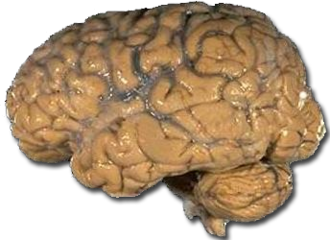
Human Brain
A short time ago, a very good friend of mine who, like myself, is the founder of an enterprise, told me something that gave me pause. He informed me that in his enterprise – actually quite a successful enterprise, which is way beyond being a start-up – the following scenario can be observed:
“The four active founders no longer see each other as often as they used to and whenever they do see each other, they talk about the few negative things, instead of the many positive things that happen.”
This information, which actually was meant only at an aside, fell on very fertile ground with me, because it reminded me of my own experiences. After all, this rather considerate founder has a huge amount of sensitivity and awareness – which I probably had a lack of in a similar situation.
It is exactly those aside noises you often only perceive “subconsciously” that may sometimes be extremely important. Noticing this kind of thing and then proceeding to actually act in the right and in a most determined way is what makes a wise and successful entrepreneur.
Discoveries such as these must not be ignored, even if they seem to be harmless enough. Actually, they must initiate a high degree of watchfulness and mindfulness. After all, we have to nip things in the bud.
It is never an easy task to keep a team together, even if we are only talking four persons who (allegedly?) work “at eye level” and seem to treat each other with respect. Because as soon as humility loses priority over what (for me) is the almost “never-ending” task of leading an enterprise – or rather leading people -, the downward spiral will quickly start its work.
In such difficult situations – even if you only see the very first forebodings – you probably need very prudently designed measures. Yet even those measures might not necessarily be a success. Because with these solution approaches, success is the one thing you can never guarantee.
Human beings are full of mystery, and even those mystery factors change over time. Frustration and anger are elemental emotions nobody can actually switch off. They influence both your own and the other person’s way of thinking. And, when all is said and done, everything happening in the brain is a series of mind games leading to the most diverse and often incomprehensible constructs. And probably nobody can really understand them rationally.
Consequently, it is an illusion to assume you can understand it all and therefore act prudently. This means that, as the years go by, a huge amount of contentedness can turn into discontentedness for some persons. Said discontentedness might actually not be rationally traceable, yet it can have dire consequences. And even the best knowledge of disciplines such as philosophy and psychology, but also neurology, cannot really help.
Because, after all, those “life sciences” cannot describe the complex inside of every person, either. They teach us to think about how you should live. But that is all they do.
Consequently, the only thing that can help is attentiveness and openness. You need to remain alert in life, let love prevail and remain true to yourself. And you need the courage to try new things. Along with being prepared to give more than you take. All of which is, indeed, quite difficult.
RMD
(Translated by EG)
P.S.
For more articles of my entrepreneur’s diary, click here:Drehscheibe!
P.S.1
I took the picture from Wikpedia:
„Frontal lobe animation“ by Polygon data were generated by Life Science Databases(LSDB). – Polygon data are from BodyParts3D.[11]. Licenced under CC BY-SA 2.1 jp through Wikimedia Commons –
Roland DürreThursday July 23rd, 2015
Ada Lovelace and Unschooling?
Here is my introduction to the presentation “Learning in Innovation” by Bruno Gantenbein “Learning in Innovation” as I would like to see it tonight. What I am going to say is meant to connect the person ADA LOVELACE both with the term “unschooling” and with “project management”.
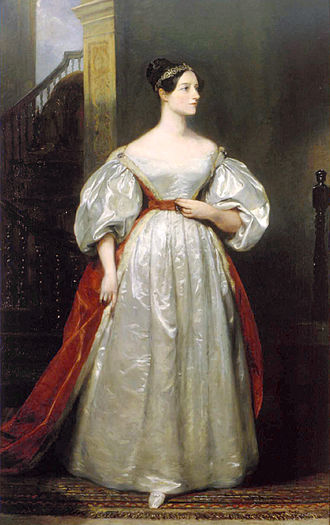
Ada Lovelace 1836,
Painting by Margaret Sarah Carpenter (1793–1872)
ADA LOVELACE was a very controversial lady. As I see it, she must have had a very exciting – both successful and desperate – life. Even reading about her in Wikipedia gave me the following ideas.
If we want to become masters of our profession, we have to exercise the “best practice” of great masters and make use of humanity’s experiences condensed in “design patterns”. Until we reach a dead end – where we have to say good-bye to what we learned. Now you have to rebel and question “things” like “but that is how we always did it”.
Consequently, learning means familiarizing yourself with patterns and sticking by them.
Learning in innovation, however, calls for breaking with patterns. Breaking old patterns and developing new patterns will lead to creative destruction. Thus, living in a social community means you have to not only accept but even use the compromise between your individual needs and the collective rules for your own unfolding.
We love the formatted life, because it is secure and comfortable. We are prepared to subjugate ourselves under morals, because we want to be good.
On the other hand, we crave for freedom and novelty. Because we know that a moralising society will take away our freedom and confine us, at the same time making us look small.
This is the case both in private life and in our work life (if the distinction is still permitted at all). In the social communities of our private lives, we permanently manoeuvre between often paradox positions. And the same is true for our professional lives.
Because the enterprise where we work is also a social system, albeit with an economic purpose. Leadership is communication and communication is, again, a balancing act – between listening and speaking.
I do not know many biographies more laden with the conflict between autonomous self-determination and external control than those of the great mathematicians and Mrs. Ada Lovelace. Spontaneously, the only other person who comes to mind is Nietzsche, who was born a little less than 30 years after ADA LOVELACE.
I think we can only be “good” project leaders, managers and leading personalities if our important projects are a success. To me, it seems like the most important project for all persons are their own lives. If we want to meddle in other people’s lives, the first thing we have to do is make our own life a success.
However, our own life can only be a success if we focus on the really important things and if we change habits detrimental to life. Consequently, I have to be prepared to unfold my own life autonomously and bring order into it. In my personal life, I chose my mobility. I try to avoid unhealthy mobility as far as possible. It is very simple, isn’t it? –
How am I supposed to live a self-determined life if, for example, I cannot even manage to do it with respect to my own mobility? Consequently, I have to change and practice. Instead of letting myself be externally controlled.
Well, this is what I associate with the disrupted life of ADA LOVELACE.
During the presentation by Bruno Gantenbein, I would recommend that you look for parallels with your own life.
RMD
(Translated by EG)
Roland DürreWednesday July 22nd, 2015
What does Ada Lovelace have in common with Galileo Galilei and what is their connection to Unschooling?
Tomorrow’s (July, 23rd, 2015, at 6 p.m.)IF-Forum (guests are still welcome, here is the invitation) in our Unterhaching office building will be about “Learning in Innovation”. Taking the metaphor of “Unschooling”, Bruno Gantenbein will show how children can and want to learn. He will also show parallels between this concept and the experiences made by famous project managers and grown-up leaders.
At InterFace, the year 2015 is dedicated to Ada Lovelace. Consequently, Florian Specht asked me to give an introduction and answer the question:
What is the connection between Ada Lovelace and “unschooling“?
🙂 Here is an introduction I will not present tomorrow. Still, I can publish it here, can’t I? The proper introduction is for you all to hear live tomorrow.
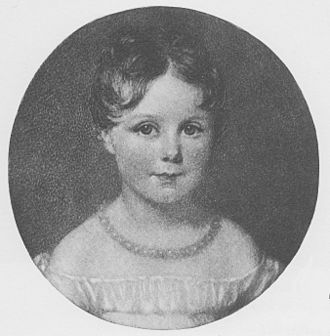
Ada at the age of four
What is the connection between Ada Lovelace and other persons, such as for instance Galileo Galilei (the InterFace face of 2014), Blaise Pascal, Leonardo da Vinci or “the Ancient Greeks”, such as Archimedes or Socrates – as well as other outstanding personalities in science and “unschooling”?
When preparing for this presentation, the first thing I did was read the Wikipedia article on compulsory school education. We learn that
- There was a time when it was not compulsory.
- It was introduced rather late and put to practice even a lot later.
- There were places where only part of the population was affected, and often only the male part
- But the learning process was always associated with life and persons, rather than schools.
Then I took a closer look at the life of Ada Lovelace. In Wikipedia, the first sentence you find on “Ada Lovelace“ (article) is:
“Augusta Ada Byron King, Countess of Lovelace, commonly known as Ada Lovelace (nee Augusta Ada Byron;[1] * 10th of December 1815 in London; † 27th of November 1852 also in London), was a British Mathematician.”
The article is well worth reading. There is no doubt that she was a genius.
However, all the other persons I named never really seem to have attended any school:
Blaise Pascal (* 19th of June 1623 in Clermont-Ferrand; † 19th of August 1662 in Paris) was a French Mathematician, Physicist and Literary person, as well as a christian Philosopher.
Galileo Galilei (* 15th of February 1564 in Pisa; † 29th of December 1641jul./8th of January 1642greg. in Arcetri near Florence) was an Italian philosopher, mathematician and astronomer whose discoveries in several fields of natural science were breakthroughs.
Well, this is hardly a surprise, because when the last two lived, such a thing as schools in the modern sense did not exist.
When I was a child, I used to adore the “ancient Greeks”. Imagine what enormous and revolutionary discoveries they made with the most primitive means and a little calculation. Some of them were due only to observation, thinking and simple experiments. And, surprise, surprise: in those days, they did not have a formal school system as we have it today.
Consequently, the suspicion inside me grows that quite a few innovations would not have been possible during the history of mankind if humans in those days had been indoctrinated from early on as it is common in a normal school today.
But the light inside me was really turned on when I saw the film “Alphabet”.ALPHABET, the film was produced by Erwin Wagenhofer in 2013. After WE FEED THE WORLD and LETS MAKE MONEY, ALPHABET was the last and final part of his famous trilogy. ALPHABET is a film that describes in a very soft way what situation the children world-wide are in during their education.
I particularly liked one citation in the film. It seems to be the result of scientific research:
98 % of all babies are born as a genius. After their education, the ratio is 2 %.
The only question that remains is how Mrs. Lovelace could preserve her genius. After all, 200 years ago we already had the first stages of compulsory school education. Maybe it was because in those days there were some regions where only boys went to school? Boys who always had to be brave and never were allowed to cry?
RMD
(Translated by EG)
P.S.
Now I need to do a little more work on my introduction (version 2.0). Incidentally, I took the picture from Wikipedia.
Klaus HnilicaWednesday July 15th, 2015
Trapped on the Balcony
Carl and Gerlinde (XLIV)
Oh God – what a heat! Absolutely beyond endurance! And today of all days, Hannelore and Kurt had planned to invite them, because, at long last, they had managed to finish the renovation work on their house. It had taken them two never-ending years during which everybody had been sure that there was never going to be a happy ending!
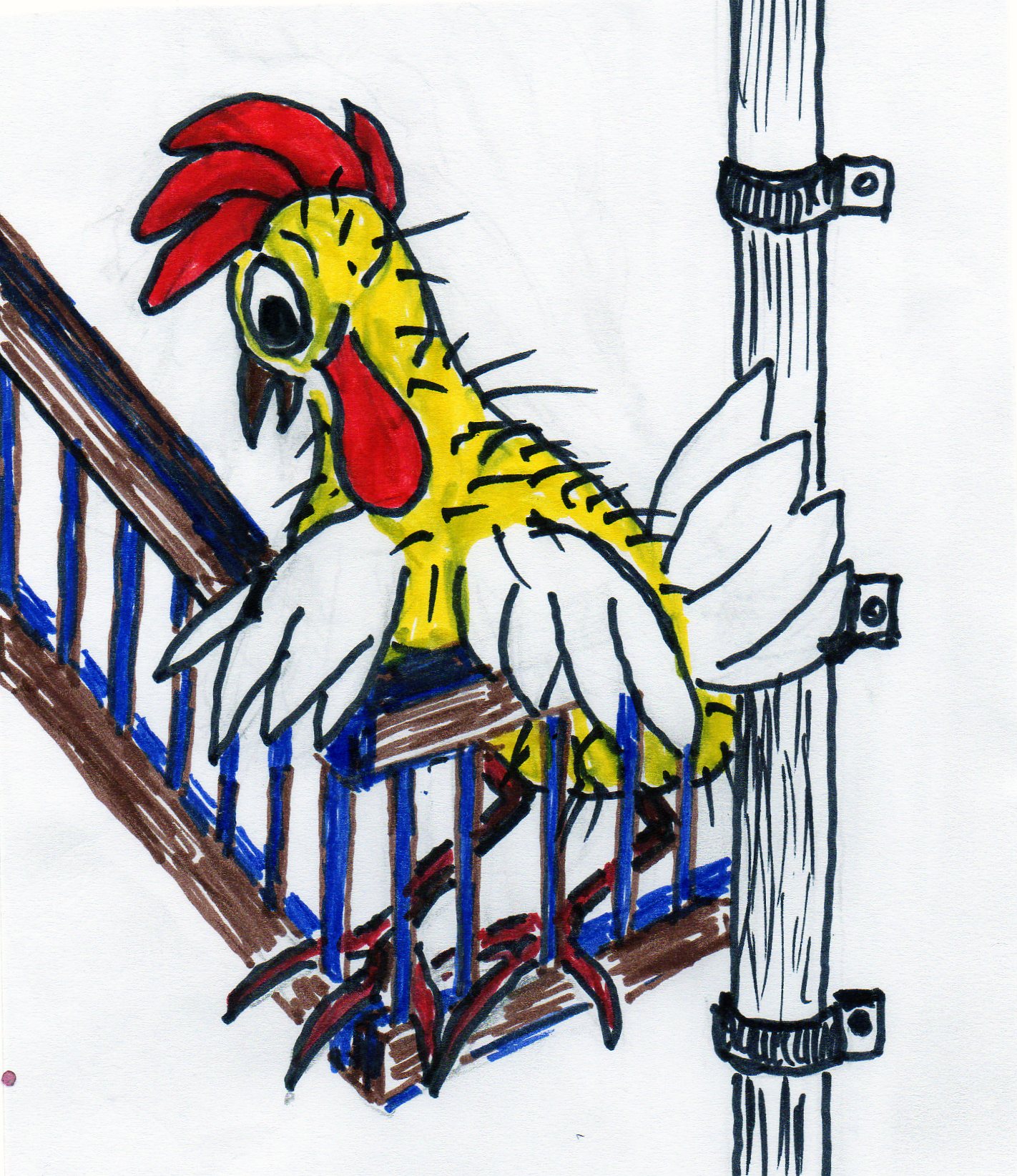 After all, when Carl had read about the sixty documented façade fires in the City of Frankfurt mentioned in the ’Frankfurter Allgemeine’ where the insulation had been quite an effective fire accelerator and shown this analysis with all due superiority to Kurt, the latter had lost all enthusiasm about minimizing heating costs. But then, his persistent ’climate preservation activist Hannelore’ eventually prevailed and forced him to install said insulation anyway! And since she had already gathered steam nagging him, she made him renovate the rolling shutters, too: ever since last Tuesday, all the fifteen rolling shutters on the windows and doors of their one-storey semi-detached house now moved up and down without the slightest sound, sun-sensor controlled and fully automated.…
And this is what he and Hannelore wanted to toast with their friends today, Kurt had stammered. Mind you, the families Renner and Gutmann had to send in a last-minute cancellation, because Kerstin had suffered from a heatstroke, Anne had been stung by a bee yesterday and reacted allergic and her husband was still busy dancing around his office without being able to say when he would be back.
But then, sitting on the north-facing balcony of the first floor, Kurt continued after having yet once again related the entire renovation adventure and while still gripping his Aperol Spritz – now minus the ice cubes – one could just about tolerate even temperatures of 32 degrees Celsius! This wonderfully refreshing breeze coming from all sides was also what had eventually made Hannelore agree to serve her delicious buffet on the balcony, after all. …
”Kurt, if you continue your monologue holding this full glass in your hand”, Hannelore suddenly aggressively interrupted him, “the only guests remaining with us will have died from thirst and turned skeletons before having so much as smelled all those delicacies we prepared for them. Please let us, at long last, push the now tepid Aperol Spritz through our throats and then turn to the cold beer sitting in the ice buckets! And my appetizers would also definitely appreciate being devoured and pushed into our empty stomachs as fast as possible, before the basil is totally dry and the wasps have eaten your savoury sardine bread spread…“!
“God be praised”, Carl moaned with relief, touching Hannelore’s naked arm while Gerlinde tried to console the so harshly interrupted Kurt with a few whispered niceties.
Carl was also the first to, after the short and embarrassing pause, grab his small bottle of beer from the ice-bucket and, without a single break, use it for removing the lukewarm Aperol Spritz taste from his throat!
All the others followed suit, and since they actually did enjoy the nice breeze on the balcony, their chewing mouths soon started resuming their lively gossip.
It took this bone-shattering “NO! Damned!” for another interruption of their chattering to happen: all three of them gazed at Kurt who, highly excited, stood in front of the closed balcony door with an ice-bucket full of empty beer bottles: nobody had noticed anything, because it had all happened so noiselessly.
And now they were closed! The balcony door shutters!
And, of course, the control device was inside and nobody had their cell-phone with them. Well, where should anybody have kept it, wearing their light summer outfits; even Carl had no suitable pocket in his Pumpkin Shorts!
“So what now, my golden programming genius?”, Hannelore attacked her totally flabbergasted Kurt. “If I remember correctly, you told me more than twenty times last week that this is something that absolutely can never happen, because you programmed the shutters for all the balcony doors to always remain half open. Or am I mistaken, my super-wise Kurti?”.
“Dear Hannelore, you are not mistaken. You see me facing a mystery …“
”My dear Kurt, this is not just a mystery, but a totally closed balcony door”, Carl added with a grin.
“So – and what now, my dear folks?”, Gerlinde had turned a little acidic.
“I do not know – I truly and really do not know …!” Kurt stammered.
“Maybe we should yell!”, Hannelore suddenly shouted, “yes, let us all together give such a loud yell that is sounds like cowbells ringing; somebody is bound to hear us …“
“Ha, ha – who would hear us?”, Kurt moaned. “The neighbour on the right is hard of hearing and sitting in front of the TV set and the neighbours on the left are on vacation…“
“And the ones back there are having a garden party, so they will not hear anything because of all the noise they make themselves”, Gerlinde added with frustration.
“But Hilde, on the opposite side, still has her lights on! Look at the upper storey!”
“And all the windows are also open”, Kurt suddenly sounded quite triumphant…
And he immediately started yelling loudly for his beloved – who, incidentally, at the age of 82, also was only of limited hearing. This was not something Kurt let himself be deterred by: he yelled “Hilde” until – well, until he no longer had any breath left!
Of course, the occasional car also drove by! But they took no notice at all of the ’incarcerated four on the balcony’. And even if they had noticed, they would surely have thought those guys up there well equipped, since they were so strangely yelling and full of joy, also waving all the time…
And, of course, Blanka, Hilde’s Polish nurse, was also not available – but then, she would not have understood anything, anyway, because the ’Deitsche Language’ was not precisely her strong suit!
When finally Carl had managed to tune his powerful organ in harmony with the ’help ’- cries by Kurt, the one who had been so much wanted actually appeared in one of the illuminated windows, enthusiastically waving towards the merry balcony round. …
She also noticed how hot it was and how she was totally in the nude underneath her light shirt!
Kurt’s desperate yell, however, that he absolutely needed the house keys deposited with her again only brought the reply:
“I am in the nude …“!
And when asked where Blanka could be found, the answer, of course, was again “I am in the nude… “!
But since, regardless of Hilde’s fortuitous nudity, the time approached midnight and not only the Aperol bottle, but also the three bottles of champagne were empty, Carl manfully took the initiative: powered by quite a bit of alcohol, he suddenly – without any advance warning – catapulted himself over the balcony railing like Tarzan for all to see, awkwardly gripped the downward leading rain pipe and – even before Gerlinde could give an anxious outcry – landed on the ground with some kind of primal yell!
At least that was what it seemed to be, considering the muffled sound of his impact and this animal-like “Ouch – Shit!“.
And after fearful questions from above and tension-laden silence from below, finally came an all-salving moan and the spooky comment:
“Now, I, too, am in the nude …!“
Which was when everybody gave a yell of liberation, noticing that Carl’s beautiful new summer outfit hung from the rain pipe in tatters and he, Tarzan himself, apparently had survived the entire episode without breaking any bones; he was still wearing his undamaged TRIGA boxer shorts…
Since the automatic movement lights on the patio had turned themselves on, he even stood in the limelight, looking very spectacular with blood smeared all over him! So it was hardly a surprise that Hilde enthusiastically joined in with the applauding audience, constantly saying that Kurt was not in the nude, after all…
However, since it was not Kurt but Carl – whom she took for Kurt – who knocked at her door, it only took a few minutes before the sought-after spare keys were in his hands. …
What a triumph for the ever so robust TRIGA boxer shorts! Because without them, Carl could never have run to Hilde’s so quickly …
KH
(Translated by EG)
Roland DürreTuesday July 14th, 2015
From PM Camp via BGM to John Izzo…
In my life, one of the nice things is that, more and more often, I meet persons I rather like. I make new friends all the time and I always learn important things from them.
Here is an example: in 2011, we had the first PM Camp in Dornbirn. It was a huge event – both for me and, so I believe, for all the other participants. According to the feedback we received, (almost) everybody went home happy and content. Including myself. After all, I had met many persons who take a serious interest in project management, leadership, entrepreneurship and much more. And, basically, they all want to live a meaningful and successful life.
Then we really got under way with the PM-Camps. In Vienna, Zurich, and many more German cities, they have now become a regular event. And their number increases all the time. People and communities build networks. And, again and again, some of them became my friends.
This was also how I first met, learned to appreciate and now have come to love Dr. Marius Poersch. He takes his job as a doctor rather seriously. In a famous hospital, he helps people who burnt themselves out dealing with “modern work-life stress factors”, people who have more and more stress or even suffer from a psychosis already.
By now, he has come to the conclusion that, indeed, it is an honourable task to help people and support the healing process. Yet he is also driven by the awareness that, for many people, it need never have come to what it came to. If only – well, if the living and working environment were just a little different and the potential of suitably adapting were a little better.
And since Marius wants to be more than just part of a “repair shop”, one thing he did was establish an institute (www.erwerbscoaching.de) where he does research with equal-minded persons, examining how people might be enthusiastic and work through their entire work-life without sacrificing their own balance and starting to get psychotic. In short: he is looking for a work and life environment where a sustainable and full life is possible.
However, he also does research on the other side of the coin – namely what sort of individual concept in the sense of life goals and life style you should have in order to live a positive life that enhances your existence.
In order to promote this goal, he developed a method rather similar to the one described by John Izzo in his book “Five Secrets”. He interviewed senior citizens who worked an entire life long and who now, being retirees and pensioners, still and again involve themselves in various ways with civic affairs. His reason for taking that group of persons as interviewees is that one can assume they know a health recipe that, for example, will also prevent burn-out.
A good friend of mine – Dr. Andreas Zeuch, known way beyond the PM Camp environment as an author and entrepreneurial consultant – introduced me to Marius.
I was chosen as one of his interview candidates. So, on a nice and sunny afternoon, we met in Stuttgart and talked. Conveniently, it was just before the Stuttgart PM Camp started.
I was curious and also a little excited about what I was going to experience. The afternoon turned into a beautiful evening and later a wonderful shared breakfast. Even as we talked, many things out of my own life became suddenly clear. Later, Marius explained the technological background of his method, as well as his procedure. And that gave me even more insight into myself.
A few days ago, I received mail from Marius. Inside the envelope, I found the aforementioned book. I was truly delighted – after all, I believe I found a true friend in Marius, and gifts sent by true friends are always a special delight for me.
I finished the book quite quickly. Even though there is no doubt that it is a little American and extra detailed, it is exciting to read – and it is an important piece of literature for persons prepared to think about their own lives. For me, all the ideas, conclusions and demands formulated in the book by John Izzo make complete sense.
The title of the book is:
“The Five Secrets You Should Have Discovered Before You Die”
As I see it, the title says it all. And I also gave a short overview in my last IF blog article. I truly recommend that you read it.
RMD
(Translated by EG)
P.S.
I know that Dr. Marius Poersch is still looking for more interview partners for his project – and I would certainly like to support his work. So if you know any senior citizens who, after all their work life, remained healthy and enthusiastic, why don’t you inform me? I will gladly forwards the contact data.
Roland DürreMonday July 13th, 2015
Experiences I Would Wish Everybody Could Make!
The five secrets of John Izzo
 Soon, I will tell you about the work of Dr. Marius Poersch and his friends.
Marius interviewed me in the course of his studies. As a “thank-you” present, he gave me the book “The Five Secrets You Should Discover Before you Die” written by John Izzo.
Today, I would like to recommend this book to you.
In order to whet your appetite, I will describe the five secrets mentioned in this book and comment them on a personal level.
I will relate them as I myself understood them, but also as I experienced them as a road to success in my own life.
And be not afraid:
I will not tell too much. Reading the book will still be a very exciting experience.
First Secret
Remain true to yourself!
Of course, with this I mean that you want to remain authentic and follow your own star with whatever you do. To be sure, first you have to find it. And then you have to define it anew all the time. Yet the author goes farther than that. For him, the term “Destina” is also important. It comes from South America and describes the destiny of every person. However, destiny in this sense does not mean Kismet or that your path of life is pre-determined from outside without any chance of escape. Instead, it means the freedom to find and determine and follow your path.
Second Secret
Live your life in such a way that there is nothing to regret later!
For me, this is a huge appeal to also try something new once in a while. Time and again, you should be courageous enough to do something that seems rather unusual at first glance. However, this recommendation might also be of actual assistance if you need to make a decision. Whenever I do not know whether to take “the left or the right path”, I might consider which path not to have gone I would later regret more.
Third Secret
Let love live inside you!
As I see it, this means first and foremost that you have to love yourself. Because only if you love yourself, you can also love others. Yet it is also part of love to live with courage and joy, both at home and at work. And above all, you should never do anything just to spite others. Instead, you should choose humanity as your basic principle of life wherever this is possible at all. Which means you should accept facts of life with a positive attitude and make your partners look better, instead of smaller, whenever you interact with other persons.
Fourth Secret
Live for the moment!
Just enjoy, instead of thinking of too many things. Remove “yes, but” from your active vocabulary and replace it by “yes”. Do not always fear and foresee why something might not work, and do not always see nothing but all the problems of this world. And above all, do not capitulate before the moral “that is not what you want to do”.
Fifth Secret
Give more than you take!
As I see it, you probably only have to give. You will automatically receive a lot more in return than you ever gave. It starts with trust. I meet a stranger. In order to create trust, it is helpful to open up yourself and let him see something of yourself. And as a general rule, the other party will respond by also opening up, which is how trust is built. Which, I am sure, is a valuable asset in all relationships.
I rather like those five secrets.
Does that whet your appetite a bit?
RMD
(Translated by EG)


