
Roland DürreFriday March 15th, 2013
Chess & Management
When you have reached old age in the form of being more than 60, you will look back on your own life more and more often. And since I am rather happy with what I achieved and accomplished, I also once in a while think about the persons who helped me in life. Well, there are quite a few. Studying mathematics and computer science was certainly a good choice at the time. I learned a lot when I worked at Siemens. All through life, I kept meeting people who accompanied me for some of the way, thereby being a huge help. And it also seems that I married the right woman.
But some other things also helped a lot. For instance the fact that I learned accounting and business very early in life when attending the business-oriented Jacob Fugger Grammar School.
And something else, too, had a very beneficial effect on me: playing chess. It all started on those Sunday afternoons with my father. Even then, I had a lot of joy playing chess. But during the first few years of grammar school, when I started really getting into playing chess as a competitive sports in the club, my grades at school also quickly improved. Simply because chess had told me how to really concentrate.

But chess gave me a lot more than that. I would even go so far as to say I learned for life through playing chess. Difficult situations, both in private and business life, certainly have a lot of similarities with problems you face on the chess board. The problem solving strategies I learned while playing chess were useful for me in real life. Chess will help you to solve difficult problems “with intuition and strategy”.
 I also made many new friends while playing and competing in chess. Dijana Dengler and Stefan Kindermann are two examples for like-minded people. Both of them are also chess players, although considerably better than I. Dijana holds a diploma degree in economy and is FIDE champion. She already took part in many Olympic Games. She made chess her mission and is chief coach of the Münchner Schachstiftung. The Münchner Schachstiftung is very successful when it comes to re-socialization of extremely disadvantaged children. An experience Street Worker of Landeshauptstadt München confirmed that chess is often the only means by which these children and adolescents can be reached.
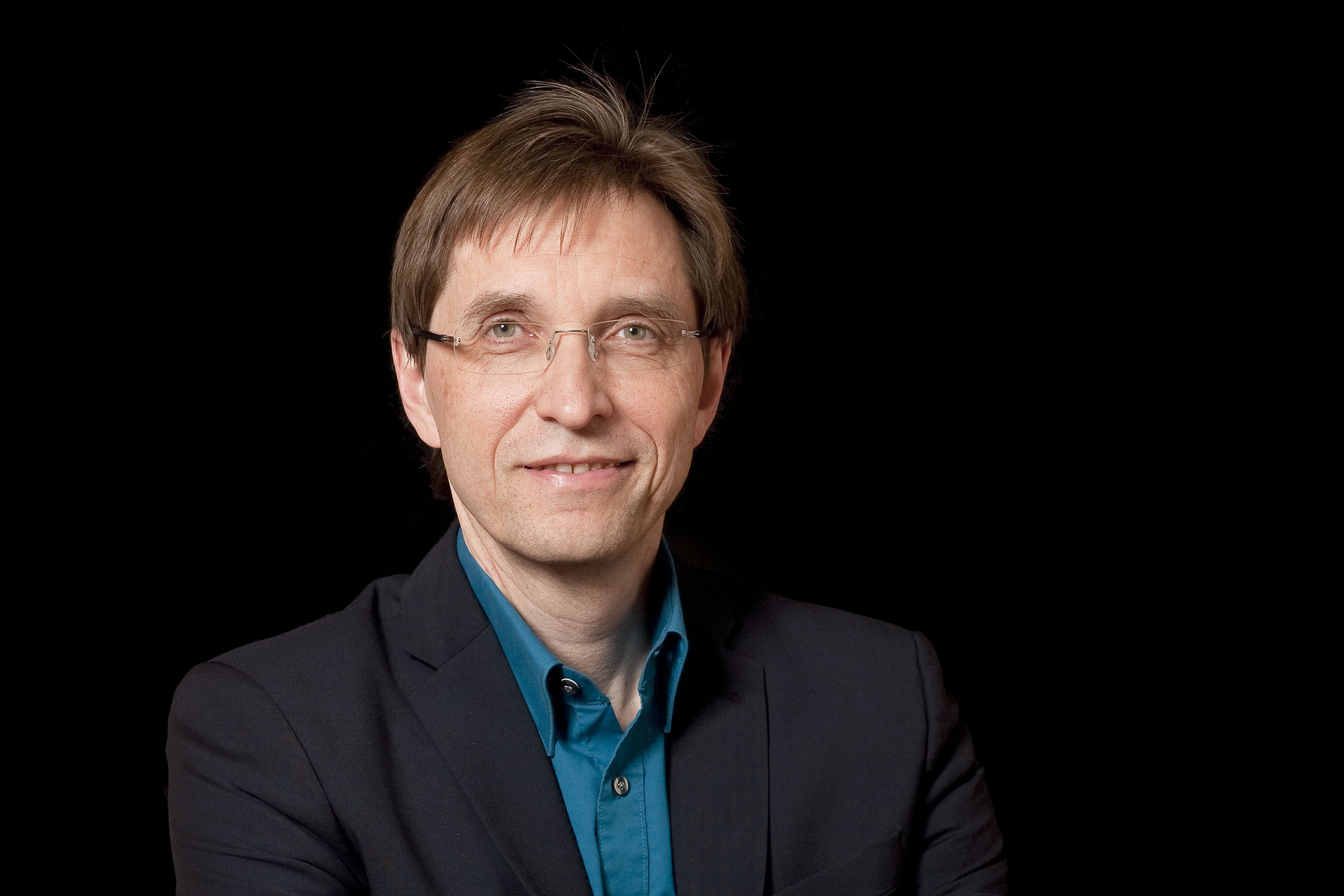 Stefan is Chess Grand Master and managing director of the Münchner Schachakademie. He, too, took part at Chess Olympics and even once qualified for the world championships. He works as a coach and psychological counsellor, as well as author of several books. Together with Professor Dr. Robert K. Freiherr von Weizsäcker and Dijana, Stefan developed the Master Plan. He coaches leaders in seminars and workshops in this discipline.
And this here is also about the Master Plan. Because it transfers the strategies of chess into real life. And it helps you to make “decisions” by a prudent change of perspective towards an advantageous combination of ratio and intuition.
 I keep experiencing how what I learned when playing chess also helps me in real life (both in private and business life, but they cannot be separated, anyway). It helps me to evaluate situations a little better. I find it easier to determine whether I am in a good or poor position. Based on this evaluation, I manage to come up with the right decision, instead of the wrong one, a little more often.
And I believe a small advantage like this can contribute hugely towards feeling well and having the chance to become a content person.
Since you can learn so much by playing chess, I am assuming that you can learn even more from the masters of this discipline. Consequently, I will go to an open seminar day “Master Plan” on Saturday, May, 11. The seminar is from 9:30 to 17:00 and the location is in central Munich, at Zweibrückenstraße 8. That is directly next to the Deutsches Museum.

I look forward to the seminar and, of course, also to all the people who will share the Mater Plan experience with me.
RMD
(Translated by EG)
P.S.
There is another seminar even earlier: on Friday, April, 26, 2013, at the same place. It costs € 580, including VAT. Meals for the day and a signed copy of the “Königsweg” are also included. For information on the Master Plan, click here Website. Registration: here.
Roland DürreThursday March 14th, 2013
Presentation by “(Fe)Male Students for (Fe)Male Students”
Since it is our upcoming event, here is the poster announcing the next IF Academy presentations. I am always happy to remind you of “upcoming events”:
Johannes Schmidt (TUM, IF-Lab/InterFace AG, Glassbox Games) will speak on Thursday, March, 21st, 2013, starting at 6 p.m. at the InterFace building in Unterhaching. His Topic
Get Under Way!
How video games and movement control want to get us away from being couch potatoes!

Of course, this invitation is not exclusively for f(e)male students. The event is free for all who want to come. After the event, we will again have a little “happy hour”.
For more information on the series of presentations by “(Fe)Male Computer Scientists for (Fe)Male Computer Scientists” click here. If you want to print the poster in high quality, just send an email to me – I will gladly send you the print PDF version.
RMD
Roland Dürre
Tweets on Twittering and Blogging #158
Here are my tweets of last week on:
Blogging and Twittering, Wisdoms and Rules:
130328 The combination of brains and beauty is scarce – also true for twitterers and bloggers? #Twitter #Blogging #Wisdom
130329 Trust is a good thing, but don’t overdo it – also when twittering and blogging! #Twitter #Blogging #Wisdom
130330 Trust breeds trust – especially true for blogging and twittering! #Twitter #Blogging #Wisdom
130331 Easier lost than gained – also good advice for twitterers and bloggers! #Twitter #Blogging #Wisdom
130401 A desperate dog will bark the loudest – is that especially true for twittering and blogging? #Twitter #Blogging #Wisdom
130402 Forgiving is the best revenge – for the cynical twitterer and blogger. Twitter #Blogging #Wisdom
130403 Many small rivulets will also become a big stream – especially true for twittering and blogging! #Twitter #Blogging #Wisdom
There is a new tweet each day. See twitter.com and “follow” RolandDuerre!
Enjoy!
RMD
(Translated by EG)
P.S.
I took the proverbs from Alle deutsche Sprichwörter.
Roland DürreWednesday March 13th, 2013
Hotspot & WLAN and the Future
I often travel and meet many people. Hardly ever, I fly through the air, but I enjoy wireless world-wide communication via “air”. This is especially true when I go places by public transportation, when I sit in rooms, at universities or enterprises, in coffee shops or restaurants, at institutions or associations, or wherever.
Just like my travels and meetings promote “networking”, so I wish to be linked to the rest of the world through networks. Consequently, I always find it rather nice to find a WLAN I can actually access. Since I seem to be a demanding network user, I am not content with UTMS & CO. Personally, I do not have any experience with LTE (Long Term Evolution), because I do not own an LTE –capable device.
But I already looked over the shoulder of people who used LTE. The speed was really amazing. I got the impression that the LTE will, again, trigger a small revolution – after which the mobile world will be even more on the way up than it already is.
Who knows: perhaps soon we will only have LTE and all the many WLAN networks will be removed. That would, again, be progress in the direction of “less waste” if we no longer need all those parallel WLANs many places have.
But we are not yet at that stage. For me, using LTE would mean that I have, yet again, to buy new technology. Well, I prefer to wait a little. When travelling, I use various devices (Smartphone, Pad, Notebooks with Stick). None of them is capable of LTE, and still I am quite content using them. But since I do not wish to buy everything new now, I will wait for a truly new generation of hardware – one which, of course, will be capable of using LTE.
Consequently, I am often on the lookout for free WLANs. And as we all know, WLANs are almost everywhere. For me, however, they are not accessible. I often have a two-digit number of networks showing on my display, but they are all password-protected. Only if I am an invited guest at modern enterprises, institutions, hotels or other locations, I usually have no problem. Because especially “good” companies with a reasonable and modern (entrepreneurial) culture also have WLAN with which they can easily offer their guests access to the internet. It is basically part of their definition of hospitality.
The Telekom and older enterprises, such as the railway in its lounges in some trains – unfortunately only on few of their routes – are doing quite a good job with their internet supply. But there are numerous institutions and enterprises where it is still hard or even impossible to access WLAN. More often than not, these companies are huge and a little complex. Whenever I see this, I am surprised and hope that we may soon get area-wide LTE.
When accessing WLAN as a guest, I am overjoyed if the password is still valid after my last visit. In that case, I get immediate access to the internet. As a guest, I also find it nice if the WLAN password is written on a note and clearly visible for guests somewhere in the guest rooms.
I am just as happy not having to use a password for WLAN access and instead having to fill in a start screen where they want me to put my cross at the question: will you promise to adhere to the business conditions? I am more than willing to do both: put my cross there and adhere to the business conditions. Basically, I believe the latter alternative is the more reasonable way of doing it, because open networks help us to reduce the gigantic waste caused by all those many parallel WLANs all over the world. Isn’t it also about time for “shared economics”?
I would therefore here and now like to explicitly thank all these excellent hosts.
But now I am switching roles. Now I am no longer the guest but the host.
At home, I yielded to the fears of the rest of my family and encoded our WLAN. Mind you, all probabilities of real risk scenarios for our physical well-being and property is many, many times higher than the risk that someone might do damage to us through open WLAN.
Since, however, everything is possible und you want to protect against really everything, we bowed to the public super ego and set a password before our WLAN. But it remained the same ever since we first installed said WLAN. And the “modern segment” of our many guests is happy about this. To be sure, they forgot our password a long time ago, but their devices remember. Consequently, they are instantly back in the network when visiting us and hopefully feel at home.
At the enterprise, this seems to be more difficult. We have the explicit intent of adhering to the law. We therefore take the topics security and data protection just as seriously as quite a few other things our legislation came up with. Even if, more often than not, this does not make life any easier for us.
Consequently, we provide our guests with their own open WLAN called IF-OPEN at InterFace AG, both in the Unterhaching headquarter building and our branch offices. To be sure, said open WLAN is also password protected. But we chose a “promotionally effective” password. It alludes to the capital “F” in “InterFace” and indicates that we are already almost 30 years old.
We give our guests the password in order to make sure they feel at home in our building. In the common rooms, such as the seminar zone and meeting room, a note is pinned to the wall. Our IF-Open is also something I and several other employees like to use, since it gives you direct and proxy-free internet access.
A short time ago, someone raised the question: should we change our guest network password? And if, at what regular intervals should we change it?
If it were up to me, once in fifty years would be enough.
Let me try to explain: a stable, reliable and, above all, easily remembered password for a WLAN which is intended and referred to as open and still protected by a password is a true blessing. If you change it often, this will cause some – if only little, but constantly recurring – extra work for many people. Just because (probably only in theory) there might be someone in or near our building who “pinches” our internet access and even “abuses” it.
I have no idea how realistic this kind of fear is. However, in my estimation, it is rather negligible, considering what “real” risks we might have to face (breaking and entering, theft, …) .
But a few years from now, we will have area-wide LTE, anyway. By then, you will no longer need WLANs and all these considerations will be obsolete
RMD
(Translated by EG)
Roland DürreFriday March 8th, 2013
Why Some Decisions Were Made
The big German energy suppliers are doing poorly. But there is a story behind it.
First, they privatized healthy state-owned enterprises. In retrospect, the price you had to pay for them was bordering on the ridiculous. Then the powerful energy giants paid record dividends on the stock market. Later, the tide turned. The irrational energy market demanded its tribute. To be sure, the EEG (Renewable Energy Law) / EEG (Erneuerbare-Energien-Gesetz) was based on the best of intentions, but it was poorly executed. The same was true for the first reduction of running times for nuclear power stations. Both did nothing to help the situation of energy enterprises.
The write-offs were not the only things that moved up dramatically. On the operative front, there were also suddenly more and more losses. To be sure, good lobbyism gained longer running times. But that was only a temporary improvement of the situation. Because then there was the Fukushima accident – which made everything a lot worse for the energy suppliers.
Now the big energy suppliers will sue the State. Mind you, this is not because the managers of these enterprises believe in nuclear energy. Instead, they think (probably correctly) that this is the only thing they can do. After all, it is their job to avoid damage to the enterprise. And if they do not go to court for something like the energy about-face, then they have to fear they will themselves be taken to court.
Consequently, the managing directors file suit, even though they know even better than we that nuclear energy is by far the most expensive and irrational way to generate electricity.
This is what we have come to. Managing directors have to file suit against the Federal Government and against their own convictions, just because otherwise they would have to stand trial. It is always about money, accountability and security.
At the same time, parliament decides that the barrels stored at Schachtanlage Asse have to be retrieved under all circumstances. Ethically, this is totally understandable. It is also absolutely justified in terms of worrying about the future. But then, after recovery, we will be just as much at a loss as before when it comes to the question: where to store it?
This pathetic voting, too, happened against better judgement of the engineers. They say that even the construction of machines necessary for such a project will take ten years. And they are sure that in the meantime quite a few things will happen at Asse. Also, the recovery will only be possible if you build a new mine into the old one.
All of which is going to cost gigantic sums.
ore than a couple of S21 and Brandenburg airports taken together. And regardless of it being unaffordable, they decide to do it with plenty of talk and with strong rhetoric. There is no information about how to finance this mega project. Another example for the typical lack of truthfulness in politics.
The original causers – incidentally, they have been forced into the nuclear business by the government with huge subsidies (of course, not totally unwilling) – can no longer pay the price, because they are bankrupt themselves. Quite apart from the fact that they already paid for the “disposal” – that is dumping the waste into the chute.
If we were serious about retrieving those barrels, we would have to announce some sort of financial State Emergency. And we would also have to think about where to deposit the retrieved waste.
At least now we have one example for a situation where there are truly no alternatives. It is hopeless, because there is no good solution. After all, you cannot leave the waste where it is, can you? Since, on the other hand, it is extremely hard to get it out, this might still be the most likely end. Regardless of all the nice words and strong slogans.
RMD
(Translated by EG)
Roland DürreThursday March 7th, 2013
Tweets on Twittering and Blogging #157
Here are my tweets of last week on:
Blogging and Twittering, Wisdoms and Rules:
130321 Do not disclose your intensions, if you want nobody to spoil them – also good advice for twitterers and bloggers? #Twitter #Blogging #Wisdom
130322 It pays to keep a secret or two – also when twittering and blogging?#Twitter #Blogging #Wisdom
130323 Blundering will yield the same result as losing – especially true for blogging and twittering! #Twitter #Blogging #Wisdom
130324 Do not trust former enemies, even if you have made peace with them – also good advice for twitterers and bloggers! #Twitter #Blogging #Wisdom
130325 A whole world lies between promises and kept promises – also true for twittering and blogging? #Twitter #Blogging #Wisdom
130326 Promises make debts – also when twittering and blogging. #Twitter #Blogging #Wisdom
130327 Sometimes the brains are blown out – also among twitterers and bloggers! #Twitter #Blogging #Wisdom
There is a new tweet each day. See twitter.com and “follow” RolandDuerre!
Enjoy!
RMD
(Translated by EG)
P.S.
I took the proverbs from Alle deutsche Sprichwörter
Roland DürreWednesday March 6th, 2013
S21
This morning, the radio news is again full of reports about S21. The project continues, they want to sue the state of Baden-Württemberg and force it to continue paying part of the cost. At the same time, I hear opinions like: “you have to continue, even if, with today’s knowledge, the project would never start”.
This gives me pause. Because there is a golden business rule:
“Never throw good money after bad”.
It is especially true of you need “good money“ elsewhere as badly as the Deutsche Bundesbahn for infra-structure projects all over the place.
Except that sticking to this rule calls for courage and the readiness to make decisions!
RMD
(Translated by EG)
Roland Dürre
brand eins in March
 Last week, exactly one week ago, I again noticed that a month is over. The latest “brand eins“ copy was sitting in my letter box. While I enter the house, I already start reading:
Why don’t you move there!
That gives me pause. After all, during the 1960ies and later, I heard the following sentence more than often enough: “If you do not like it here, why don’t you move there”. Parents, teachers and other “persons who meant well but were not nice” spoke the words. It meant you were invited to go and live in the so-called SU zone, also known as “GDR in quotes”.
Just because we wanted to have a few things changed in our system…
And during the last fifty years, there was fundamental change, both politically and socially. Actually, I am not sure that all changes were what we had intended and also not all changes were good changes. But still, we should be happy about quite a lot that happened, even if we know that change will continue and there are still many things that need to change in the FRG.
As I approach our front door, my eyes fall on the
“Focal Point: Borders“
And again, I “rest restlessly“. Basically, crossing borders is not such a bad idea, is it? This is true both for the physical borders – meaning space and time – and the psychological ones. So here we go.
Well, this time around we are dealing with a somewhat philosophically minded “brand eins” edition. It is all about a boundlessness that (of course) has nothing to do with freedom. Note the sentence by Frau Firscher that “a fallen border does not automatically mean you have free space for your thoughts“ (an insight gained from the GDR).
Here are a few more recommendations for the reader: I particularly liked “the power of the old gentlemen” starting at page 54. Some of what is written there reminded me of my trip to China in the autumn of 2012. And it is definitely not a bad idea to really know what the Federal Cartel Office actually does, (starting with page 82) is it? Of course, I found the “foul money“ (business history) particularly hilarious. Mind you, this is not only because I have been annoyed with the “Euro-Cent” coppery change for a long time now. Why don’t we just abolish it? They are another example for useless waste.
On the other hand, the “world of numbers” is not just such a good joke this time around. But it also gives us a little courage. The same is true for “Golden Times” (series: the future of the banks – part 2) on page 24.
It is nice to know that a good economy can afford to be so philosophical. After all, it proves a little that I may be right with my own belief that philosophy is an important thing to add to the characteristics of modern management.
RMD
(Translated by EG)
P.S.
Incidentally, this is edition number 150 of “brand eins”. I am sure this is a number the “brand eins” team will be proud of!
Werner LorbeerTuesday March 5th, 2013
John von Neumann – Elegant but Overcharged?
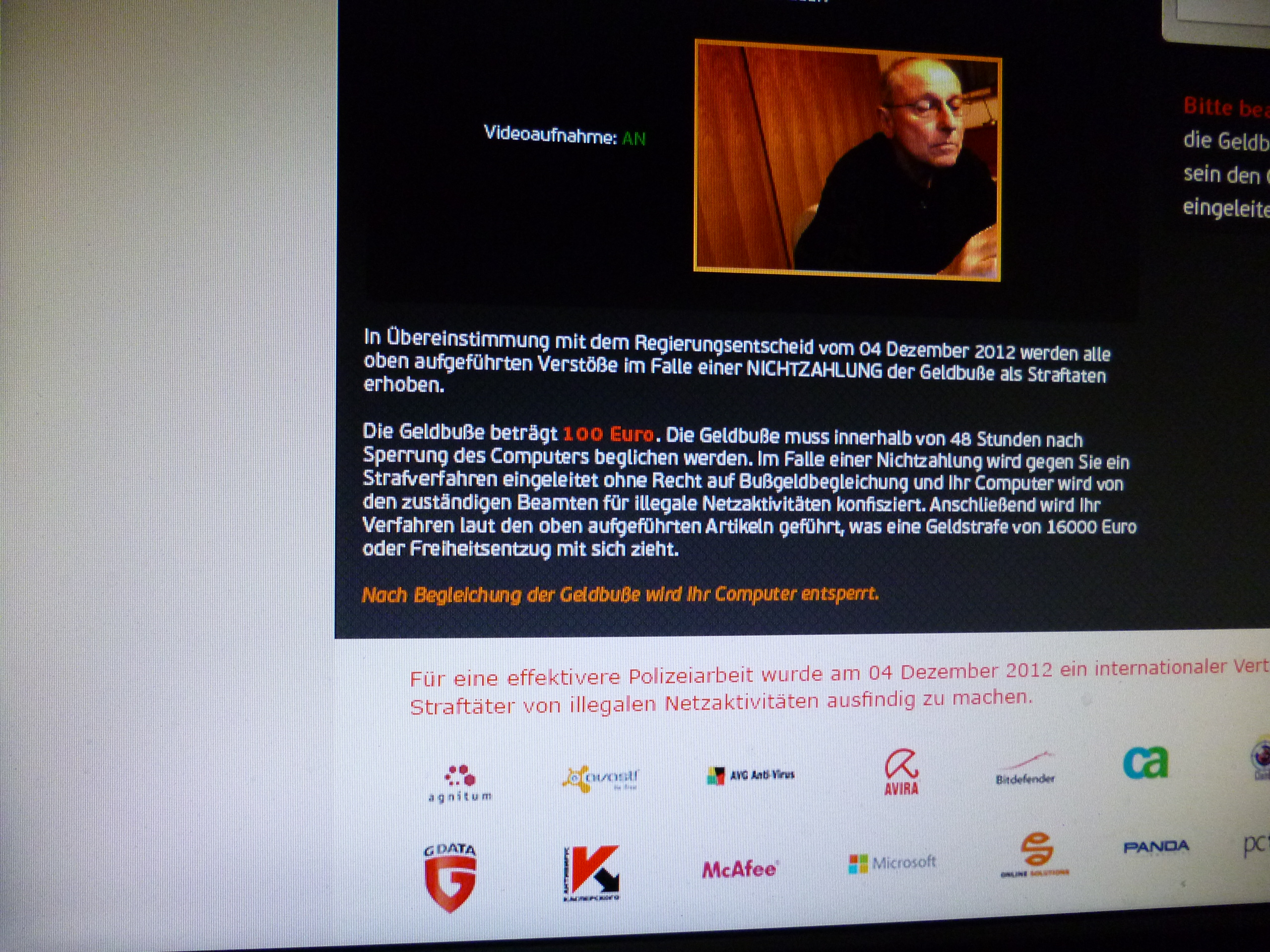
BKA Virus took over. Property has been confiscated.
The data are the program? Really ingenious, truly dangerous.
Here is my experience in a nutshell: while AVIRA professional was running, the BKA virus took command. I experienced live how the windows registry was overwritten and then there was the usual command by the virus… 100 € – or else no more access.
How is that possible?
What is the requirement for a chain of symbols, called virus, to gain the status “executable” on my PC? I will go so far as to come up with the following theory: program and data cannot be distinguished, because they have the same status. I go back and arrive at the Turing links which then became the pattern for the von-Neumann principles for computer construction.
I presume that this is where the errors originated. If every string can be advanced to program code by an interpreter, all doors are open for everything. In particular, the owner will be robbed of the right to property by some network criminals who were given the executive right by some crazy interpreter.
If you take a look at the technology of patches and patchworkers over the last few years, then you have to note they put civilization at risk. But they cannot avoid this, because the machines they have to work with do not permit other solutions – due to their flat data logic.
Assuming I had a free wish, I would wish for Post-Neumann machines that can guarantee the user the ownership of his rights on the PC. These machine principles probably already exist. If not: I have some blue—prints.
wl
(Translated by EG)
Roland Dürre
Wilhelm-Tell Policy
 Last weekend, a new type of decision making process amongst politicians has been established. Here is how it works: a small country has a plebiscite. To be sure, the result is not totally understood by anybody and partly misunderstood by more than just the “Europeans“, but so what?
The entire world, above all the EU, is surprised to hear about this totally new idea and suddenly everybody finds it great that managerial income should be limited and lower. In Germany, the politicians of (almost) all parties vie with each other to say what a good idea it would be to follow the results of the Swiss plebiscite. Even the FDP, who always used to be against it when these kinds of topics came up, find the Swiss Model very acceptable.
Wouldn’t that be a totally new way of uniting the world politically: the Swiss continue with their plebiscites. But as of now, their votes are binding for the entire world. Let the administrations world-wide take up the results and apply them everywhere. That would certainly be a future-oriented model of “lean politics”. It would also save a lot of money spent on elections and electoral campaigns. Lobbyism would be restricted to Switzerland – where it would not do any harm, because in that country, the people are wise enough not to fall victim to lobbyists.
All over the rest of the world, we could abolish parliaments and reduce governmental functions. The word globalization would get a totally new meaning for politics. In terms of business savings, this would have an enormous effect. The costs would be minimalized, resources would no longer be uselessly wasted and the output would certainly be no worse than it is now. Basically, we are talking revolutionary progress.
RMD
(Translated by EG)
P.S.
But here is my – probably better – idea when it comes to income of managers. Why not just determine a factor (for instance between 20 and 30) and multiply this factor with the yearly income of the person earning the least at the entire enterprise. The result could be taken as the absolute maximum for what a manager should earn. It might also be a good way to avoid regulations for minimum wages and the like.
Now I am just waiting for someone in Switzerland to come up with the idea of a maximum income for stars, soccer players, race drivers….
Or, even better: how about the Swiss population deciding that lobbyism should be totally banned from political life. …
So, here we go, my dear Swiss people!


