
Roland DürreFriday July 13th, 2012
IF Forum 2012 – Advance Notice – Wilfried Bommert – Catching Up On Good Soil!
By now, we have also agreed on the day for the 3rd 2012 IF Forum of our series “Living (and Surviving) Sustainably”.
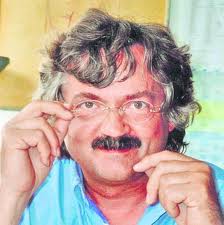 Herr Wilfried Bommert will speak on Tuesday, November, 13th, 2012.
His presentation will be about “How to Feed the World“. For a title, he selected:
Catching Up On Good Soil!
How we might avoid the world food crisis.
Here are a few preliminary ideas by Herrn Bommert:
Ever since 2008, the price for food world-wide only knows one direction: up. The global financial crisis and the dwindling oil reserves further push the price spiral up. Concerns selling energy, raw materials and money reach for the fields of the world. They buy or rent huge areas in Africa, Asia, Eastern Europe and South America, thereby again causing massive price increases for food. Consequently, we get famines, revolts in more and more countries that cause political instability and a collapse of world food affairs.
This vicious wheel would not turn if we did not actively contribute by our consumption habits. Our longing for biological fuel and our hunger for products from industrial farming, our money invested in farm and soil stock, they all support the global hunt for the fields of this world. It is up to us to put a stop to this mania currently prevalent in food and soil markets.
Dr. Wilfried Bommert has been working as a WDR journalist since 1979. He is head of the environmental sector at the WDR-radio station and also wrote the book: “Kein Brot für die Welt – Die Zukunft der Welternährung”, 352 pages on paper, first edition published on October, 5th, 2009 at Riemann Verlag (QUERDENKEN) .
RMD
(Translated by EG)
Werner LorbeerWednesday July 11th, 2012
DIW Proposes Wealth Fee – War Bonds in _Exchange for 67 Years of Peace in Europe
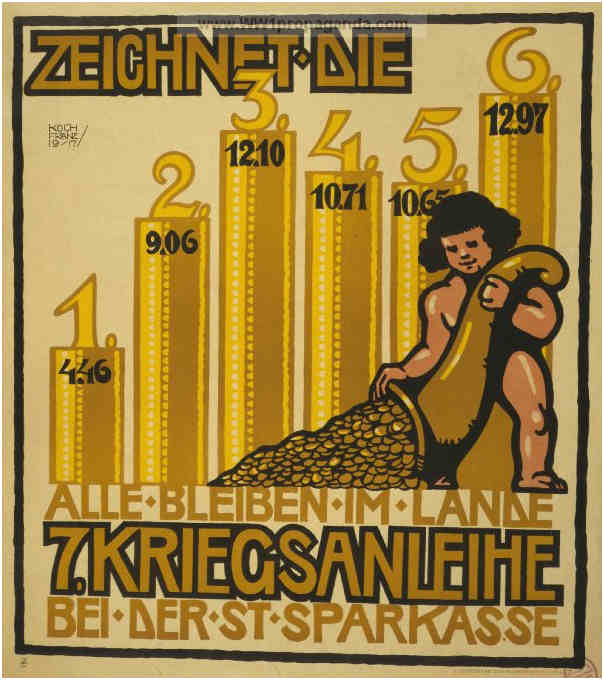 In its latest press release (Pressemitteilung), the DIW remains significantly unemotional when it says “wealth fee, a contribution towards Europe’s state finances“:
Private wealth is higher than the federal debt!
So what is new about that? Do we need an institution to tell us about it? Or do you know anybody who invests his money exclusively in state bonds?
Quite apart from the fact that the DIW keeps demolishing itself intellectually all the time, here is my comment:
The stamp collectors still possess them all. All those now worthless promises by Napoleon, the guarantees on war bonds, the VW savings certificates…
Granny died hoping for the day when the concept of burden sharing was to come true.
Before the court of history, we have a state debt crisis, not a currency crisis. During peace times, which we now have been enjoying in Europe for 67 years, we consumed too much. And now said peace must be paid for through cuts on both sides of the balance sheet: private wealth versus state debt.
It is a lot easier than telling people the truth: that our European societies have been living far beyond their means. “… because nobody is going to believe the truth, anyway” (Frisch, Biedermann und die Brandstifter). We live in a bubble of wealth that will burst. Europe is no longer capable of financing itself. Regling (the new ESM boss Klaus Regling) is in a hurry to visit China and the Third World Countries, because even Germany is not a “welcome debtor”. 2.1 billion Euros of debt tell their own story.
There is a sentence by the economic scientist List:
“So far, no country ever paid back its debt.”
As a consequence, you have to say:
Sign up for peace bonds!
And then deposit the piece of paper where the stamp collection is waiting for the next generation to be admired and studied.
And for you, dear children, I have some consolation – you will always have your education:
“Travaillez jeunes gens, il n’y a qu’une force, c’est le travail!” (Émil Zola)
wl
(Translated by EG)
Roland DürreFriday July 6th, 2012
An Interview with Rupert Lay
I found this interview by Thomas Pfister and Madeleine Stäubli-Roduner with Rupert Lay in the “Denkpausen Edition No. 11″.
Denkpausen (pauses for reflection) is a brochure edited by the Management School St. Gallen (BETTER BUSINESS). It provides “Inspiration on Management and Leadership”.
I remember well how Rupert called the top-managers the “poorest of the poor”. Mostly, he said, they are the loneliest persons in the world. And he felt he had to “help those poor creatures“.
Consequently, the initial question asked in the interview was:
“Are managers poor creatures?”
For me, this interview is a wonderful summary of many ideas we shared with Rupert. Ideas still as important today as they were then.
Here is the original text taken from the “Denkpausen”:
——————————————————————————————————————————
Are managers poor creatures?
The principle «posting, premium, prostitution» still works today. What is ignored is entrepreneurial culture. This is a conversation with Rupert Lay, a famous German business ethics teacher. We will talk about leadership personalities, overcharged managers, an ethics that has gone down the drain in many enterprises and disheartened executive boards.
Herr Lay, do you despise managers?
What an idea! I despise no person at all.
Well, after all, you write that you know «no more miserable people» than the managers when you look at the people attending your courses!
I even said that quite a few managers are poor, miserable creatures. And there is nothing more ridiculous than poor, miserable creatures in a permanent state of erection. But that is no reason for me to despise them. It is more that I pity them, because so many people own so much, yet have lost themselves.
Now that sounds quite arrogant. Is this how you treat your customers?
Yes, certainly, if it helps them to find themselves. I am sure you want to know what made me say this? Well: meeting managers. This sentence of mine is the essence of my experience from hundreds of seminars where I met thousands of managers. But, please, not to mistake me: that is how they were before they attended my seminars…
At least you say that managers have potential for learning…
Yes, I tried to convert managers who were pure leaders into true leadership personalities. Because many of them did not know ethics as a social necessity. A considerable number of them, however, learned new patterns of behavior in my seminars.
Are you telling us that your positive influence made good leaders out of managers who before had been poor creatures? Isn’t that a little arrogant?
At least, the managers had the equipment for this mutation. Quite frequently, I did cause some development. And we always continued to meet regularly in order to see whether or not some social and psychological maturing had taken place.
What, by your definition, is a good boss?
He must be a personality who will not be governed by systemic forces and who will not bend to any dictatorship. To be sure, leadership is also a question of skills. But it will often be very tedious and ineffective if you just let it degenerate into commanding. You also have to lead people in an atmosphere of goodwill. A good boss also wants to be loved.
A good boss does not pay. Or do you disagree?
In fact, he pays considerably better than a bad boss. All investment factors are smaller: the social, emotional, psychological and the financial investment. You could easily prove this if those factors were taken into consideration at the time of business evaluation. Charisma is something you either have or don’t have. Or can you learn to develop a personality? There are certainly some social and psychological requirements. And every person can develop them through striving and a strong will.
Every person? 90 per cent of all managers are said to be overtaxed by the age of 50 …
Yes, they are not only said to be overtaxed, they actually are overtaxed! Often rationally, but also socially and emotionally.
So how are those overtaxed managers supposed to become better persons?
Practice, practice, practice!
Is that enough? There are certainly many leaders, but only few of them have true leadership qualities.
As a matter of facts, there are too many leaders. Quite a few of them are unnecessary. They should immediately be made redundant, because they create unnecessary costs. But, as you say quite correctly, we have too few leadership personalities.
What – in your opinion – is the difference?
A leader is purely a system agent full of restraints. A leadership personality, on the other hand, is free inside. I know some who developed into leadership personalities, but later were made redundant by administrative boards because they were useless as system agents.
«We have too many leaders. Quite a few of them are unnecessary. They should be made redundant. »
In other words: if you behave ethically correct, you will disrupt the system?
Exactly. Because the system agents will be made insecure as soon as they meet ethically oriented persons. System agents are those who slowly grew accustomed to this forced world and all they now do is execute the systemic morals. In business and politics, you will find many of them. In order to be one of them, you also need a certain psychological and social disposition.
«A leader is a system agent full of forced mechanisms. A leadership personality, on the other hand, is free inside.»
How do ethics and economy contradict each other?
Basically, there can be no contradiction, because ethically responsible business practice will have a sustainable positive economic effect. But economic forces may call for moral behaviour that is contrary to ethical compulsions. More often than not, however, these compulsions only seem to be necessary.
You say only a personality with a humane education has leadership qualities. That would mean what we need is education.
To be sure, during professional education, we will have to watch carefully and look for a person’s natural aptitude towards becoming a leadership personality. But it is especially important before you actually give someone a job. That is why I am in favour of the trainee system. A trainee will get acquainted with various departments and functions of his enterprise during his test phase. The trainee work should always be supervised by a board member. If he is a leadership personality, his style will automatically have some influence on the trainee, because education does not happen through words. It happens through models. This trainee time should be two to three years. The trainee must learn to identify and accept the entrepreneurial culture with its moral, economical, personal and structural values. It seems that this way of selecting future employees is definitely superiour to assessment centres.
«Neglecting entrepreneurial culture is economically very short-sighted.»
Why?
Because it is the best education you can give anybody. It guarantees that leadership personalities will grow inside the enterprise without intervention from outside.
This is remarkable. What you are saying is that ethical education is not something people should learn at university or from their parents …
Exactly. This is definitely something a university should not be asked to teach. When it comes to education in the family, the parents will, apparently, play a significant role, but in the enterprise, the leaders are responsible.
And where do the board members get their norms and values?
Those among the board members who are best suited should be educated at an external seminar.
In order to enable personalities to change the system, you have to support them …
Most certainly. This is where the administrative board is responsible. When Alex Krauer was still president of the board at Ciba-Geigy, I was permitted to do a lot of work there and also introduce my principles But after they merged with Sandoz and became Novartis, it was no longer nice. Regardless of the financial success, a precious entrepreneurial culture suffered its demise. In the long run, the entrepreneurial success is not something you can measure exclusively by financial success.
In many enterprises, it was financial success that brought higher incomes, rather than better entrepreneurial culture. Is that supposed to replace missing values?
Quite possibly. Disregarding entrepreneurial culture is economically a rather short-sighted attitude. Well-paid managers should also take the worst case into consideration when organizing their lives and think about what they would need in such a case, instead of always itching for the best possible future scenario and wanting more and more. At least, they are models. Or that is what they should be.
«Many men lack the experience that you can gain more through care than through using your elbows.»
Words spoken by the priest. More success will also give you more power. And power can be abused, as, for instance, shown by Dominique Strauss-Kahn, Silvio Berlusconi or Sepp Blatter of the Fifa.
Unfortunately, power and abuse of power are close associates. Many people kiss moral norms good-bye the moment the acquire power. They see themselves as standing above the rules, all the others are just norm executors. It is a sign of omnipotence if the common codes no longer apply to me.
It is mostly men who act in this way. Would it be different if more women were at the forefront?
I do not know. The female heads of state in Great Britain, India, Israel and Turkey also all waged wars. But I certainly think more women should sit on administrative boards, if they are qualified. Women do not become system agents quite so fast, which is probably why they more often develop true leadership personalities.
Which are the better qualities in women?
During their education, women were not subjected to quite such strict codes. They were brought up in a more biophile way. In other words, they do not quite as easily follow those norms that were made exclusively for serving the system. Instead, they ask what is useful for life…
… which is why they do not get a career quite so often in this system.
Exactly. They resist being drawn too deeply into the systems. Women are also more prepared to fight power abuse than men.
Men need elbows, is that a stereotype?
Many men move to the top using pure force, because they lack the experience that you can make easier progress with love than with your elbows.
Small wonder that they then feel lonely when they have reached the top!
Only bad leaders will be lonely when they have reached the top. A good leader will do his job in the way as it is partly common in Japan: from bottom to top, according to the principle of subsidiarity. That would be the ideal scenario – an ideal leadership model.
Maybe for some managers, the concept of power is so attractive because it enables them to control everything single-handedly?
Yes, powerless power persons cannot bear to have anything happen they do not know about. They want to be omniscient. This is where quite a few Western enterprises make a huge mistake, since they think from top to bottom. Many enterprises are controlled like fiefdoms. Nothing can happen against the wishes of the top leaders.
And the bigger the organization, the stronger the hierarchical concept …
At one time, there was a tendency in business towards re-establishing small cells and divide huge enterprises into small units. That was in the 1970ies. As globalization advanced, these ideas died.
Formerly, everything was smaller. Above all, there were strict hierarchies with stern patrons. Is that supposedly the ideal?
The patron felt responsible for the entire enterprise. He had personal connections, he knew the families of his employees. His company was a huge family association with codes totally different from a large company. You will not easily be released from a family association. In a huge enterprise, the administrative boards would have to take up the role of patron. Mostly, this does not happen.
You are telling us that the administrative boards do not live up to their duties?
Mostly not. An administrative board should also be courageous enough to make the managers redundant if they abuse their power. But what administrative board member will ever do such a thing? More often than not, they are more concerned with business success than with a responsible entrepreneurial culture.
They also should prevent excessive incomes.
For me, it is a mystery how system agents who hinder the optimization of the company success can remain on their posts. Unfortunately, the principle of the three “p’s” still works: posting, premium, prostitution – even though it is both economically and socially far from the optimum. Sleaze is still at the forefront, you must not underestimate its role. The augurs will smile at each other, because each one of them knows what a villain the other is.
«Power and power abuse are in close proximity.»
Is that the reason why hardly ever anybody is punished for what he did?
Correct. Purely in terms of the system, there is a defect. Those whose work is detrimental for the company cannot be punished. More often than not, system agents are a structural element of the system and thus taboo. They will only be punished if they commit fraud, perfidy, or some such crime.
After the financial crisis, everybody talked new values. Today, nobody says anything of the sort.
That is something I am also truly worried about. The political and economic society seems to have become valueless in the truest sense of the word.
Did we understand correctly: you said if there were ethical codes in an enterprise, the business results would look better. If you do not do this, you will inevitably harm the firm.
That is indeed what I am saying. Stupidity or not being a success, however, are not punishable. Some managers actually know no better. Stupidity and not being a success are pre-destined. In those firms where I presided over the administrative board, I tried to divert the focus from the purely economic business success to more indirect aspects.
For example?
One category of being a business success is also the reputation you have, both internal and external. The positive ones are: I give people a job, I pay taxes, I provide service, etc. The negative ones are: I make people jobless, I pollute the environment, etc. These external factors can be represented in terms of money, just like the ecological factors. Every enterprise should make a balance sheet of these external factors…
«Business success can certainly not be measured exclusively by financial success.»
… and publish it.
Naturally. If you compare well with the competition, this will be quite attractive for the enterprise. It improves your external reputation. But it also improves the internal reputation, because an employee will prefer working in an enterprise that has a good external reputation. And this will also have an impact on the advertising power of a company. Many have now realized that the reputation of an enterprise is actually worth money. But if the internal reputation is not a match for the external reputation, you have a problem. Your credibility will suffer. A good external reputation combined with a bad internal reputation will not work. As a general rule, an employee will leave the enterprise if it is poorly governed. And an enterprise is poorly governed if it lacks leadership personalities.
That is if the bosses remain poor, miserable creatures!
Rupert Lay is a German philosopher, theologian, entrepreneur’s counsellor and psycho-therapist. He is also concerned with ethics and communication. In 1967, Rupert Lay established a psycho-therapeutic practice. Since the 1970ies, he has spent more and more time as a coach in management seminars, where he helped numerous persons from business and politics by providing advice. Among his customers are Federal Ministers and board chairpersons of huge concerns. In 1988, Lay also started coaching enterprises and sitting on administrative boards of enterprises himself. In 2004, Lay, who is also known under the titles «Manager‘ Pope» or «Ethics Guru», was awarded the Fairness Prize by the Fairness Foundation for his life’s work.
—————————————————————————————————————————–
Rupert Lay was my mentor and became an important friend.
Thank you, Rupert!
RMD
(Translated by EG)
Detlev SixThursday July 5th, 2012
Dictionary of Term Accuracy: Growth Politician
 There is no such thing as a politician in general.
There is just one sort of politician.
The growth politician.
The only thing he ever learned is how to distribute growth. It is the easiest way of doing the job, because being a growth politician, you will not have to hurt anybody by taking something from them. Everybody gets something. Of the growth. One politician shows generosity towards his voters, so does the next. If there is no growth, you create growth: by debt.
The debt is distributed and becomes part of the total economical product. Its increase each year is about 1 to 2 per cent. If you have a 3% rate of new debt each year, you basically get the result that you have no growth, but since nobody comes and actually puts the two numbers next to each other, what you get is: growth.
In theory, there should also be such a thing as a politician of shortage. But there is no place where you can train to be one. Consequently, he does not exist. He would certainly not be very popular. Even in Germany. The only politician in this country who ever took something away from the people since WW-II was Gerhard Schröder.
He did not last long, did he? Angela Merkel, who orders other countries to be more thrifty, does nothing of the sort in this country. As before, our national debt increases all the time. But, as I said, you cannot hold that against a growth politician, because there is no place where the other sort of politician is trained. The only institution that trains politicians of shortage is life. Only a catastrophe will drastically change your curriculum.
Politicians of shortage learn to do their own thinking, instead of chasing their voter’s carrots. Even growth politicians do not always fall for what their voters say. (At the moment, they actually tell us it is good to be thrifty. But as soon as it is all about their own standards, they cannot bark loud enough while pointing their fingers towards the others.
Experienced growth politicians ignore these kinds of polls). Since old, satiated societies with high standards stand against young, hungry societies with low standards, waiting for the catastrophe will not get boring for us. Perhaps those who are a little older today will even see a new generation of politicians of shortage. To be sure, they will not bring us prosperity, but perhaps, with a little luck, the way down to the bottom can be slowed a little.
Politically correct, we might call this hyper growth brake (haven’t we seen a good example of the beneficial effect of phrases with debt brake? Because whenever we talk about it, what we mean is not at all minimizing old debts. All it means is that the new debt will not increase quite as fast as the old one did). Besides, all catastrophes also proved to bring something good in their wake: afterwards, the societies that were affected had a little more equality.
SIX
(Translated by EG)
Roland DürreTuesday July 3rd, 2012
brand eins in July
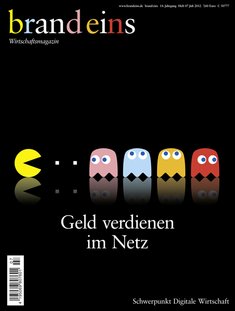 The newest “brand eins” is titled
Earning Money On The Internet
Now, isn’t that to my taste?
It is definitely something yours truly and all “digital natives“ have been dreaming of for a long time. The sub-title is hard to find, even for me.
This seems to be a “brand eins” without any sub-title – a novelty. At the bottom right-hand corner, I finally discover something that hints at the focal point:
Digital Economy.
Yet, before opening the cellophane wrapping, I do my usual act and ask myself:
What comes to mind when I read this title?
Well, it is quite simple, isn’t it? It is certainly nice to earn money on the internet. All I have to do is find the right method – and suddenly everything is very easy. In fact, it reminds me a little of the lottery except that “filling in the lottery ticket“ is easier and less expensive – and also less hopeless than “earning money on the internet” – at least for the likes of us.
But maybe the magazine will now teach me how to do it properly! And then I will end up truly wealthy. I get impatient and dispose of the wrapping…
The first thing I discover is that there is a second magazine, as well. Oh God, I think, all this advertising. But the second magazine looks a little like the brand eins. Yet it is no brand eins. Instead, it says:
Help! Between illness, provision and business.
And underneath:
A magazine about the pharmaceutical industry.
I take a closer look at the legal notice. The magazine is edited by the Federal Pharmaceutical Association (BPI) e.V., but it seems like it was designed by the brand eins editorial staff. So is this some sales lobby? Fine by me. I will also take a closer look at this additional magazine.
But back to brand eins.
This time, many articles are about “rights” to intellectual property. These rights are controversial, perhaps antiquated. It is about cultures where these kinds of rights do not even exist. It is about sectors where people lament on an extremely high level and about sectors that have actually learned to handle intellectual property.
After having browsed through some of the articles, I think this brand eins mostly shows problems that accompany our current right to intellectual property. Unfortunately, however, it offers no solution to the problem. Still, one can see that the current legal situation is far from adequate for mirroring life in our society and that it is high time for some changes.
Otherwise – and this is now again my own personal opinion – we are heading towards a discrepancy between the nation and its citizens. In the end, the citizen would have to basically ignore the laws – just in order not to end up feeling stupid all the time. Such a situation will undermine the legal situation even more, before – absurdly – creating even more regulations. Because the more laws you have, the less people will abide by them. Which is why you need even more laws. And so on.
But what will happen if the citizens see the state and its laws as just some inconvenient antiquity more and more often? And if they then – perhaps even justifiably – ignore the inflationary multitude of stupid laws – by doing what they intuitively feel to be the right thing? We would tend more towards anarchy, instead of democracy or a constitutional state. But perhaps that is our future?
On the other hand, if laws are no longer taken seriously, the situation might be rather dangerous for a democracy. I frankly do not know what to say to this.
But back to the magazine. It wakes you up and contains radical truths and ingenious articles.
My special recommendation for you to read are pages 26 and following: “as time goes by”. It is a diary of national bankruptcy written in a way that truly makes you smile. Absolutely fantastic!
I also find the information on pages 74 and following quite interesting: the turnover of the pornographic industry. Somehow or other, the numbers seem rather low to me. They look almost like InterFace could get similar results.
So good-bye till the next brand eins. Your faithful “brand eins” reader, Roland Dürre.
RMD
(Translated by EG)
Roland DürreSaturday June 30th, 2012
What Annoys Me #29 Once Again the IHK
Yesterday evening, as I return late from the company outing, I look into my post box. And what do I find?
An IHK newspaper (Zeitung).
So far, I only knew the magazine (Magazin) by the same institution that has the same name. It, too, reaches me as undesired high-gloss waste at regular intervals – and sometimes several copies of it (see my artikcle on the last edition).
This time, it is the Wirtschaft 02 |2012. It is about “handing over the enterprise early enough” – and it says so in huge letters right in the middle of the title page. What a truly current topic! To be sure, it is certainly an interesting issue, but, hey, we have been hearing about this old shit for quite some time now from banks and advisors.
And at the bottom of page one, I also have to read:
IHK is sorry to hear how they voted with respect to the third runway.
😉 Well, this makes me angry.
It makes me even more angry that, again, I get a paper in my post-box that I do not want. Basically, I have cancelled almost all subscriptions that meant paper in my house. On my letter-box and newspaper slid, you can find the stickers: “Please No Ads“. But still, the IHK keeps sending me this paper.
And then I see that it is not addressed to me. It is actually for my daughter Sophie. She is a student of mathematics at LMU, so you can bet she is not an “owner of a small firm” (according to the IHK website, the paper is especially designed for representing the interests of and being useful to that group). Neither did she order the newspaper or fill in a subscription form.
That makes me even more angry. We are forced to be IHK members – and the IHK sends newspapers without any added value but with a strong lobbyist tendency to our daughters.
It would be interesting to find out where the IHK found the address of my daughter (with the correct spelling of both first and second names). Since we are talking data security in this country all the time…
Why don’t we organize some sort of opposition to the self-portrayal of a system as totally remote from actual economic needs and as antiquated as the Chamber of Industry and Commerce? Maybe we should no longer finance them?
RMD
(Translated by EG)
Werner LorbeerFriday June 29th, 2012
Interest Lament and Historical Facts
“8% interest is too much for the Southern European nations“. – “If the Euro fails, Europe fails“. What pitiful sentences!
Yet the historical truth is so near. Firstly, the ratings of the Southern countries (and of others, too) were certainly wrong. The agencies gave their readers the wrong impression of security and should be admonished for it. But they certainly should not be admonished for now slowly approaching the truth.
As to the market: now, as they took off the blindfold, the players on the market want to get rewarded for the risk they took. Well, to be sure, this is now the only way to wake the political classes from their dreamy fantasies: I do not believe in < self-imposed moderation as Germany propagates it. But considering the moderation effect of interest rates, I would be quite optimistic.
 A consequence of this would be that the gentlemen JunkerHollandeMontiundCo would not get interest assistance. But, ladies and gentlemen, feel free to put all your – certainly considerable – wealth into southern state government bonds.
Wouldn’t it be nice to be a mouse and listen? Which government bonds do Roth and Steinbrück buy? Do they really, out of sympathy, only buy those from Greece, Portugal and Spain? And then, when finally the entire mountain collapses, we will dance Sirtaki with Anthony Quinn: “Don’t be sad, dear boss, life is too short”.
In order to show the truth about what nations can stomach and what they actually did stomach in the past, you can look at the figure below. It shows 10 years of government bonds and I took it from Markt-Daten.de.
 In the past, many nations successfully coped with higher interest rates, for instance the FRG when we had to finance the re-unification. I remember well the malice at the financial centre of London when they saw our high interest rates – did any of them volunteer to help us finance them? No. All over the financial centre of London they were quite happy with the high German interest rates.
But now let us enjoy the life of this summer, all the Junkers, Roths, Steinbrücks, Trittins and the other good people! This is the end of investment, the end of the film, Anthony Quinn and the duped financier. There is no alternative. Here we have life without old age, without civilization, living now and ignoring tomorrow… how thoroughly nice and absent-minded.
wl
(Translated by EG)
Roland DürreSunday June 17th, 2012
IF Forum Live on the Internet
Second If Forum of 2012 – live (and survive) sustainably – June, 21st, 2012
Frau Susanne Hofmann of the Tölzer Kasladen will talk about
Quality Beats Quantity (Qualität vor Quantität).
How high-quality food should be made!
Of course, we will again broadcast “live” into the Internet!
Particularly for those among our “regulars” who had to call off, we gladly provide this service. Unfortunately, however, we cannot “teleport” the delicious cheese that will be served after the presentation.
The “broadcast” will start shortly after 6 p.m. Call up this URL: http://www.ustream.tv/channel/IF-Forum (link) for the video stream of the presentation. You can easily test if your browser is compatible with the video stream. Just click onto the following Website.
In addition to our live broadcast, we will record everything on video tape and later publish it on youtube (channel: rolandduerre).
I already look forward to many spectators on the internet!
RMD
P.S.
And since this is another soccer summer, we still have some vacancies. Dear friends, do not hesitate any longer – register here via email!
Roland DürreSaturday June 16th, 2012
What Annoys Me #28 IHK & Third Runway
On Sunday (tomorrow) the citizens of Munich will cast their votes for or against one of the biggest traffic projects of the Bavarian Capital City: it is all about whether or not a third runway should be built at the airport. The outcome of the plebiscite is open. (see: Focus citation)
 In the latest edition (6/2012) of its IHK magazine for Munich and Upper Bavaria “WIRTSCHAFT” – incidentally, the magazine is another one of those totally unnecessary regulars and a waste of paper – the IHK tells us why the “Franz-Josef-Strauß Airport” needs a third runway. On high-gloss paper, the reader is charmingly invited to vote in favour of the third runway at all costs.
Unfortunately, the project means lots of expenses that I, personally, cannot really appreciate. Besides, all the many important arguments I can think of against the third runway have not been mentioned at all.
And the entire campaign is accompanied by extremely stupid headlines, such as “Plebiscite Third Runway – Champions League or Relegation?”. Mind you, you will find this right next to the dinner talk (?) “Encourage Ecology“.
On the IHK website, you can also read:
The alliance “Third Runway, Yes!” mobilizes forces to support the plebiscite on June, 17th. Among others, the IHK is on board trying to achieve a positive outcome of the plebiscite for the third Munich airport runway. Our Upper Bavarian export-intensive economy needs the third runway in order to remain competitive.
Well, this is when I start feeling someone is making fun of me.
We have an association which to me, even after intense research, makes no sense at all. I have no choice but to be a member. Said association drowns me in high-gloss paper. Again and again, I notice that its comments are not very well-researched and the speakers on all varieties of events are rather long-winded. Once in a while, they tell you that the Upper Bavarian export-intense economy has an export rate that is too high…
This association, which is financed by public money and by involuntary contributions from our enterprises is bold enough to assume the role of lobbyist. For an investment that is ecologically and probably even economically totally stupid to the tune of considerably more than a billion Euros.
Well, in a way I am actually almost glad our “father of the state” said he was not going to let himself be influenced by whatever the result the plebiscite will be.
RMD
(Translated by EG)
Werner LorbeerMonday June 11th, 2012
Producing Energy Has Nothing To Do With Being Permitted to Provide Energy: Desert Tec #17
Now it seems that the fairy tales will soon end. Solar energy at 48 cents for the producer can provide the entire republic with electricity. It happened on Whit Monday, 2012!
But:
That is not the price I wish to pay for my electricity. Consequently, I prefer becoming energy autonomous! 
Just like we used to have a butter mountain and a milk ocean, we are not producing an energy ocean. The high subsidies and the guarantee that the producer can sell are the Agens (Agens – in philosophy, it means the power that causes something).
Consequently:
If you can produce, it does not necessarily mean you will be permitted to sell.
Instead of following the meritocratic model (those who can provide at the best price will deliver), we have guaranteed subsidies to the tune of 100 billion € (over 20 years) for energy that needs shadow power stations in order to run. Of course, they will not pay, because they would be cheap but not allowed to deliver. Consequently, EON is now reducing non-profit power station capacity.
Then the planning economists come and say you have to forbid the owners to reduce their power station capacity. This is how the distance from the market as created in the EEG (Erneuerbare-Energien-Gesetz) gives birth to bureaucratic monster after bureaucratic monster: you get hundreds of new prices, several new administrative offices and no end to all of it.
Planned economy – this is no longer a scenario anybody is scared of, regardless of the fact that, so far, we have not even paid the debt we owe for the East-German adventure in planned economy.
Now salvation is on its way:
Brüderle (FDP) proposed to replace the EEG with a quantity model. That is not a stupid idea: the most economically run wind energy power stations would deliver, but not all of them. At long last, there would be competition between all the providers of alternative energy.
Federal president Gauck, too, warns:
”Neither will we be a success if we rely totally on planned economy. Certainly not with all this profusion of subsidies“, said Gauck last Tuesday in the park of Bellevue castle as he opened the Environmental Week. According to him, there is no better foundation for problem solutions than a society with open markets and free competition.
Personally, I prefer Brecht to those who constantly want to read new master plans in their glass ball but really only want to travel at the cost of others: “Yes, go ahead and plan. Be a bright light. Make a second plan. But neither of them will work”.
Well done, Herr Präsident!
wl
(Translated by EG)


