
Roland DürreSunday December 7th, 2014
My Last Christmas Speech as InterFace AG DirectorMy Last Christmas Speech as InterFace AG Director
Yesterday, we had our Christmas party. The house was packed and the music was great. Since there was so much turmoil, I did not want to present the entire speech I had prepared. Instead, I only told the audience about how InterFace started in 1984. Here is the speech as I had prepared it:

“?? My life after InterFace??”
2014 is/was my last year as managing director of InterFace AG. Consequently, this here is the last time I am speaking to this audience.
I enjoy looking back over all the InterFace years – that includes the last year. Regardless of the fact that it was probably not the easiest year in our history.
It all started in the early 1980ies. Wolf Geldmacher and I had found each other and were planning to establish an enterprise in 1983. After a lengthy preparation phase, we finally started in April 1984.
It was the “InterFace connection company with limited liability for communication software and data processing”.
We knew that the success of the enterprise depended on three factors:
“Creating Usefulness”
Our products and services should be something the market needs.
“Satisfying Needs”
The people in the enterprise should work with courage and joy.
“Meaning”
All parties concerned must be able to give meaning to their work.
More than thirty years ago, we started in the UNIX environment with the development of the text system HIT-CLOU! And it was really on the mark! Everybody in the enterprise followed our star. This was the only way for us to work a huge miracle with our small team. The way up was fast and steep. At this time, I would like to welcome especially the colleagues of the first hours.
After Wolf quit, we continued following our star. It was not easy. Stars sometimes disappear behind clouds or a mountain. Once in a while, you enter a forest and have to continue without seeing the sky. Or the straight path is blocked and you have to go a detour.
As the decades went by, the InterFace grew. People came and went. Tasks and business models changed. The environment also had a huge impact on the enterprise. The InterFace as a(n eco-)social system is shaped by humans. Wherever humans interact, you get “the human touch”. Also, systems have a tendency towards developing their own lives. It was not always easy, but we always brought the “system InterFace” back on track.
Almost exactly 15 years after the InterFace was founded, we already had a similar situation. That was fifteen years ago. It seems like we get a crisis every fifteen years and have to overcome said crisis. Consequently, my wish would be that the next crisis will not come before another fifteen years have gone by . It seems that neither the lives of humans nor the lives of enterprises can function totally without crises.
A few years ago, the InterFace steered off-course. It was only a little bit and almost unnoticeable. Then a little more. Against the wishes of the managing directors. We were like the employee in his office working with concentration and not noticing that it gets dark outside. And who then, all of a sudden, notices that he has to switch on the light.
This is how our ship, slowly and bit by bit, drifted into an undesired direction. The reasons were not really easy to make out. In retrospective, you can find quite a few different explanations, none of which I now wish to expand on.
We were no longer capable of action, among the directors and in their immediate vicinity, discontent grew. Discordance made us unable to act, which might actually have ended quite dangerously for the enterprise. This is how, this summer, the board of directors was broken up. The board of supervisors had to step in and we all know the consequences.
Now, we are steering back on course. This is important for all the people working for the enterprise – and, of course, also for the enterprise itself. Personally, I love the InterFace if it is an enterprise more or less meeting the following requirements.
- All the people working there can fill their place with courage and joy.
- It offers a fear-free space and promotes the flourishing of life.
- It remains simple with respect to its structures and avoids over-regulation.
- There is a culture of togetherness at eye-level.
- The teams cooperate in a mutual understanding of success.
- Every employee can give meaning to his or her work.
- Self-organization is a daily principle.
- No hierarchical tree overshadows the organization as such.
- It is primarily concerned with satisfying the needs of the customers and employees, rather than its own affairs.
- It finds the right compromise between “bureaucracy” and “holy-cracy” (of the two, I would rather have too much “holy-cracy” than too much “bureaucracy”).
- Common sense is always paramount.
- The leading persons see themselves in the role of providers of a service, rather than sun-Gods and knights.
- Mental concepts and mind-sets are as they should be.
- It works in the sense of welfare economy (as demanded by the Bavarian constitution).
- The individual panels of the enterprise work for the enterprise (rather than being used for personal purposes).
- It serves the people, rather than itself.
I know quite a few enterprises on the IT market and consequently, it seems to me that we are not doing too poorly, indeed – even if, at times, we show some weakness or other. This is only possible because we trust each other. Trust, however, will not come through seeking the counsel of an attorney or through writing contracts. It happens through “honest behaviour”, “trust-based cooperation” and “open communication”. Trust is the best weapon against concepts of the enemy and stupid allegations.
InterFace, too, will find its enemies where you will find “internal politics”, “bureaucracy” and “dogmata”. Matters will be particularly dreary when the shared interest is violated for individual interests. It does not matter if this happens voluntarily or just frivolously. All these escapades are something I clearly counter with the outcry: NO!
This is my good-bye to the InterFace board of directors. YOU remain and you are the enterprise! You can shape the future. Will you, please, see to it that we remain the successful “champions in connection”? If you do that, I will gladly remain close to the enterprise and support you from the distance of a supervisory board member with all my strength.
And, please, for those (few) among you who have not yet understood what this is all about: remember that you do not want to bite the hand that feeds you.
My interests in the board of supervisors will be:
- To support a constructive mental concept.
- To see to it that the “customer” remains the focus of attention.
- To make it possible for all our colleagues to have a meaningful life and work.
- To utilize my network for the future of the InterFace AG.
- Being a share-holder, I will demand sustainable business practices.
In the future, the IF needs less “institution & constitution”. Instead, we need more intuition, common sense and a clear commitment of all parties concerned to a modern, agile, slim and transparent entrepreneurial culture. On these factors, you get a clear outcry from me: GO!
The board of directors now consists of the following persons: Dr. Christof Stierlen, Maximilian Buchberger and Paul Schuster. I totally trust these three colleagues. My wishes for them is that they may have right touch as often as possible and for us all this certain amount of luck you always have good use for in life.
Above all, I now wish you all – dear colleagues, dear families, dear friends and dear guests – and the InterFace only the best. And now I wish us all a nice party, a Happy Christmas and a successful New Year 2015.
🙂 Well – such is life. I organized 31 Christmas parties for IF and gave 31 speeches – and now it is all over!
RMD
(Translated by EG)
Roland DürreTuesday November 25th, 2014
Leadership – Values & Principles
“The Three Truths of Management and What the Internet Says About It”
Last Wednesday, I delievered a presentation with this title and sub-title on the DOAG 2014 – Konferenz + Ausstellung in Nuremberg. Here are my abstract and manuscript. During my session, I used parts of the manuscript and added current ideas.
🙂 There were quite many people listening to my presentation and it was my delight to receive a lot of nice feedback.
Abstract:
In the second half of the 19th century, the beginning of industrialization changes our world. We now need trained labourers. However, they are not available. Consequently, the caste of engineers feels they have to act and they invent the method “Taylorism”. The new disciplines “management” and “organization” are created. As a consequence of the industrial revolution, they get more and more powerful. Humans are trained to obey. It works.
Today, perfecting the art of organization and having all the competence in management is no longer enough. Entrepreneurial culture and values, terms such as self-organisation and self-determination get more and more important. The basic beliefs and collective constructs, the definition of people’s own lives and the socialization of humans change civilization and culture. They invented the term: “Generation Y”. Even the “purpose” of an enterprise is not beyond questioning.
Managers and entrepreneurial leaders, in particular, often do not find it easy to follow this change. How to measure these “soft factors”? How to evaluate the quality of “leadership”? Why don’t you ask yourself about the three most important leadership qualities? In my presentation, I will introduce a potpourri of answers given by the important management protagonists and tell you about the change in management.
Manuscript:
In the second half of the 19th century, the beginning industrialization changes our world at huge speed. All of a sudden, an enormous number of labourers is needed. The available persons all grew up in the country. They are poorly educated, if at all -and not used to working by the clock.
This problem is a challenge to the caste of engineers. They invent the method of “Taylorism”. The disciplines “management” and “organization” are developed and get more and more important as the industrial revolution progresses. It works quite well, because the people are trained for obedience.
Now, the industrial era comes to its end. The art of organization and competence in management are no longer sufficient. A new term develops: “leadership”. According to modern understanding, “good leadership” is essential for the success of an enterprise.
Everybody talks self-organization and self-determination, as well as entrepreneurial culture and entrepreneurial values. One question is the purpose of an enterprise.
The engineers get nervous. After all, how is anybody supposed to measure these “soft factors”? Yet, the development continues. The basic beliefs and the collective constructs, along with everyone’s own definition of life and the socialization of humans in civilization and culture continue to change drastically. All of a sudden, the term “Generation Y” is created.
Many people, not just managers and entrepreneurial leaders, find it hard to keep pace with this change. The consequences are massive and often very detrimental situations in the economy and society. But how do the managers and leaders cope with this change?
None of this is precisely news. As early as the 1980ies, there was a remarkable development at the St. Gallen Hochschule. A new “management model” was created. It makes the HSG famous around the world. The culmination of said model are the eight theses by Hans Ulrich – “Management – Essays Part II from 1981 to 1998 – On Change in Management”:
- Accept uncertainty and the unpredictability of the future as the normal state of affairs: strategy means thinking about the future and you accept that decisions will always have to be made under uncertainty.
- Extend your imagination! Oppose “buts” and leave room for ideas. And share knowledge!
- Always think in the categories “both of them/as well as”, rather than “instead of”: black-and-white is out, colourful is in.
- Think multi-dimensionally: always keep in mind that human beings basically cannot handle more than three ideas simultaneously. And: always base the decision between these dimensions on an ethically responsible judgement of properties.
- Use self-organization and self-determination as a formative model for your enterprise: distribute responsibility, demand subsidiarity.
- Consider management a meaningful and instrumental function! Now isn’t that a new concept of management?
- Concentrate on what is really important: this is basically a law of work economy.
- Utilize group dynamics! Just remember all the cultures with their symbols, rites, rituals and heroes.
I discovered the essay early in 2005. It literally struck me like lightning. You have to remember that it was written more than thirty years ago…
Today, everyting is about gaining knowledge quickly in order to shape our common future. Consequently, we need creativity in order to find the right questions for solving our problems (first creative duty). As soon as we have found these, we have to use knowledge in order to generate solutions.
“Taylorisms” and “mechanisms” will no longer work in the social systems of post-modernism. Of necessity, we have to use new communication formats in enterprises and institutions, as well in order to generate additional knowledge from the wisdom of the masses. The motto must be “diversity instead of single-mindedness”.
Today, this happens through the internet.
Here is an example:
Bernd Geropp (he is an entrepreneurial counsellor whose leadership seminars are highly regarded by many persons) is a famous blogger on the topic: management. By now, his medium is the “podcast”, his blog “more leadership, less management” already received a horrendous amount of clicks. He is also doing interviews and at the end of an interview, he likes to ask the question “What are your three relevant leadership principles?”
Since the replies impressed him, he invited other bloggers to participate in a blog parade. In other words, he asked them to write an article on “my three most important leadership principles and/or values” and link those articles to his blog. The result was an exciting series of articles on “the concept of leadership and leadership principles”. Let me present some of the answers in a “potpourri”.
I will start with the principles of the blog parade initiator, Bernd Geropp. He says:
Bernd Geropp
Clear goals, the right values, serenity!
Let me continue with a few ladies who also participated in the blog parade:
Barbara Simonsen
Create meaning, handle complexity, provide learning space!
Franziska Köppe (Madiko)
Think systemic, identify, act together!
Gudrun Happich
Excellent bosses will lead excellent teams, others are permitted to be different, potential will make you successful.
Maria Jaehne
Values, create shared interests, flat hierarchies
Sabine Pfleger
Leadership = motivating people? Leadership ≠ orders and control, leadership = knowledge
And now a few men are permitted to have their say…
Dr. Andreas Zeuch
Self-organization and participation, space for potential, tolerance with mistakes.
Dr. Eberhard Huber
Serenity as the basic concept, the willingness to make decisions, accepting
responsibility
Conny Dethloff
Wisdom, sober-mindedness, courage or brains, gut feeling, heart (after Plato).
Gebhard Borck (Affenmärchen)
Leadership is a temporary state of affairs! Only lead persons who actually wish to be led! Make nomadic leadership possible!
Dr. Heinz Peter Wallner, CMC
Polarity, resonance, structural patterns.
David Kadiri
Unfolding, trust, friendliness
Ivan Blatter
Create clarity, generate optimal surroundings, do not reward busybodies
Dr. Marcus Raitner
Attitude, trust, serenity
Olaf Hinz
Decide what is undecidable, counter uncertainty with serenity, practical prudence.
Dr. Stefan Hagen
Leadership with heart, brains and hand – a sense of belonging, consideration and structure.
I want to leave it at that, although there are many more very nice articles. These fifteen authors have been selected by me from a total of very recommendable 44 relatively randomly. It strikes me that the ladies actually replied a little differently from the men. I find that exciting. But:
Are those all not nice principles?
And you get them for free on the internet – in fact you can even have them as a free e-book. This exchange of ideas happens on a very high level – and I liked it very much, indeed. St. Gallen happened more than thirty years ago. This is where the “scientific” groundwork was laid. However, today, the exchange of experience and the addition of quick knowledge no longer happen primarily at universities. Instead, they happen in practical life and on the internet.
There are hybrid (virtual and physical) activities in and around the “network” – for many, they are often still unknown. For instance, I would recommend openPM as an open and independent platform for project managers, leaders and entrepreneurs.
openPM is linked with PM-Camp (pm-camp.org), the “face2face” movement in project management. PM-Camp is a “grass-root-movement” which developed as a self-organized cooperation with open PM and organizes wonderful barcamps for project managers, leaders and entrepreneurs. It is a meeting point for experienced and young people, women and men, young and old persons who share their experience and knowledge. The movement grows rapidly and already has yearly events held in many towns of Germany, Austria and Switzerland.
I took a stroll through our enterprise and asked our leaders about their leadership principles. And some of the answers were, again, truly innovative! For instance, an answer I liked was:
Paul Schuster
Promote individuality, connect people to a network, isolate the important issues in team-work.
I was surprised to see how few replies actually said the same. And how well almost all of them supplemented each other, regardless of the differences. However, the diversity of ideas also shows that such a thing as exactly three truths on “leadership” does not exist!
Incidentally, I also found some references in literature. In his book
“Nicht mit uns” – Das Leben von Leonie und Walter Frankenstein (Not with Us – The Lives of Leonie and Walter Frankenstein), Walter Frankenstein gives three reasons for himself and his wife and two small children surviving the Holocaust during the last war days:
Walter Frankenstein
Fearless, boldness and good friends
Indeed, this might definitely also qualify as a leader principle for a successful manager.
I was also invited to attend Bernd Beropps blog parade. That is when I asked myself what my own three “leadership principles” are.
🙂 After only a short time for consideration, it was quite clear to me – I am an ALO man – my principles are:
Roland Dürre
Agile, lean, open!
In a nutshell: Managers, too, are only human!
Successful managers are a little better when it comes to judging what is good or bad for the enterprise. Consequently, their decisions are more often the right decisions for the enterprise than not.
I believe that basically all persons who work more constructively than others and whose destructive element is rather an undefined quantity are good managers – both in business and in private areas.
This is especially true when we are also talking persons who not just strive towards (often seemingly) some advantage, but who instead trust that a good decision can also create a significant “collateral benefit”. And if these persons also have a good measure of humanity mixed with an abhorrence of enmity, then everything is just fine.
It might also be a good idea for change in management if enmity could be transformed into humanity!
RMD
About my presentation:
There is a free e-book with the aforementioned blog parade “Sustainable Leadership” by von Bernd Geropp. It was edited by Gudrun Happich. She created the e-book by collecting the blog parade and other sources, separating it following “best practice principle” values and then commenting on it. (www.mehr-fuehren.de/nachhaltige-fuehrung-e-book/)
Roland DürreFriday July 25th, 2014
IF Forum – Dr. Stefan Gillessen – Big, Bigger, Sharpest!
On July, 17th, we at InterFace AG in Unterhaching hosted a very special IF Forum. As part of the series “Galilei Galileo – A Visit of the Present”,
Dr. Stefan Gillessen gave us a View into the cosmos.
Dr. Stefan Gillessen is a physicist at Max-Planck-Institute for extra-terrestrial physics (MPE), where he is an exceptionally successful scientist..
Here is his exciting presentation!
Enjoy!
RMD
(Translated by EG)
Roland DürreFriday July 11th, 2014
Roland Dürre – Hierarchy or Networking
Here is my own presentation given in our technological IF Forum series:
“Self-Organization as a Formative Model for Enterprises”
It was held on June, 27th, 2014 and is now available as video recording (creative commons).
Enjoy!
Now the only presentation still missing is the introduction to the topic by Wolfgang Menauer. You will get it tomorrow.
Thanks a lot, Friedrich (Friedrich Lehn).
RMD
Roland DürreTuesday July 8th, 2014
Bernhard Findeiss – Kanban or Scrum
Here is a second presentation of our technological IF Forum series
“Self-organization as a Formative Model for Enterprises”
Of June, 27th, 2014. It is now accessible for everybody (creative commons).
Enjoy!
Many thanks to our speaker Bernhard Findeiss!
I am assuming more presentations will now be made available on a daily basis.
Thanks to: Friedrich (Friedrich Lehn).
RMD
(Translated by EG)
Roland DürreMonday July 7th, 2014
Eberhard Huber – “Resilience beats Efficiency”
Here is the first presentation of our IF Forum
“Self-organization as a formative model for enterprises”.
It was held on June, 27th, 2014 and is now available online (creative commons –
Enjoy!
Many thanks to our speaker (Dr. Eberhard Huber)!
I am assuming that all other presentations will now follow in quick succession. Many thanks for this to Friedrich (Friedrich Lehn).
RMD
(Translated by EG)
Roland DürreSunday June 29th, 2014
Networks versus Hierarchies
On the future of enterprises
The feedback on the technological IF Forum on June, 27th, 2014 at the Unterhaching Sportpark was wonderful. Many thanks to all who where there. I already look forward to watching the video recordings of all the presentations.
Here are the lecture notes for the presentation I held after the event.
The IF Forum was about:
“Self-organisation as a formative model for enterprises in the 21st century”
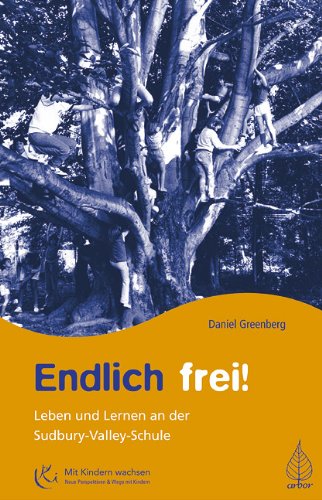 On one of his first days as our new (!) colleague in the board gave me the Sudbury-Book – a gesture I found both courageous and really great.
The book is about liberal schools. It is a very radical plea for liberal education. Compared to “Sudbury”, the good old “Summerhill” model we all appreciated so very much during our youth is truly authoritarian.
Incidentally, I believe a little more “Sudbury” would be good advice, and not just for our schools. It would also help our enterprises. Mind you, I am not just talking so-called “brain workers”.
Why?
Once upon a time, we had an “industrial revolution”. Many workers were needed in the factories. However, there were no skilled workers on the human market. To make up for it, there was a huge surplus of unskilled persons, some of whom had grown up on farms. Farms, in particular, were places where – due to new technology – masses of employees were made redundant. They had all worked in a rural environment. They were simple people, not used to time-oriented discipline and without any experience with technological work.
The first conveyor-belt production of Ford’s T Model is a nice example of this industrialization 2.0, which followed after the extended use of the steam engine as a power machine (industrialization 1.0). Suddenly, time and the clock became relevant factors. The “caste of engineers” took over production control and ruled over the unskilled labour. “Modern Times” as in Charlie Chaplin had begun.
In the 21st century, we have a totally different image of humans and the world – at least in our society:
”War is over!“
”Future is female!“
”We want freedom and peace!“
…
“because we no longer believe in a life after death!“
And the science of management, too, underwent change. For example, Hans Ulrich of the Hochschule St. Gallen founded the “Management Model” in the early 1980ies and wrote an article titled:
”Eight theses on the change in management“.
They are:
To accept the unpredictability of the future as a normal state of affairs;
To extend your personal borderline of thinking;
To let yourself be governed by “both”, instead of “either-or”;
To think multi-dimensionally;
To understand self-organization and self-control as formative models;
To consider management as a meaningful function;
To focus on what is really important;
To make use of group dynamics.
To me, this looks clear and rational.
Basically, with this list, Hans Ulrich said everything that needed to be said in the early 1980ies. But it seems that some “managers” have not heard any of it to this day.
25 years after the essay by Hans Ulrich, I met Simon Grand, who is also from St. Gallen. I cooperated with him during several workshops. And I learned from him that, when all is said and done, the one thing that makes a manager a good manager is that he knows a little more often than others which decision is good and which is bad for his enterprise. And this is how the good manager makes the right decision a little more often than your average person! According to other research done by the Hochschule St. Gallen, the ratio of wrong decisions is gigantically huge.
A short time ago, I tried to come to terms with the meaning of the words collateral damage (Kollateralnutzen). In Wikipedia, you will find it defined as fringe damage or accompanying damage, which is accepted even if not predictable. I would have defined it as secondary damage.
So far, Wikipedia does not give you any explanation for “collateral benefit”. I am sure this will soon be remedied. In google, you can find the term collateral benefit at the top of (today’s) list as fun opposite of »collateral damage«.
Isn’t it sad: whenever something “evil” happens, you have collateral damage, but there is no “collateral benefit” accompanying “good” things happening. At least not in Wikipedia. Incidentally, I am quite sure that all these things have been written about in philosophy. Except – in our omniscient internet, which certainly has a huge influence and educational value for us, the “collateral benefit” as fringe, accompanying or secondary benefit is not yet known. The philosophers really should do a better job.
I will just claim that a “good” manager will create mostly collateral benefit for (not just) his enterprise. His behaviour is “constructive”. Just like a “bad” manager will create collateral damage – which means he is “destructive”.
And you can see that the classic management doctrine reaches its limits in the times of “Generation Y”.
🙂 Surprise, surprise: all of a sudden you realize that good decisions cannot be made just by rationally deducing from collected facts. Instead, intuition of experience is quite important. And you notice that it can even be proved scientifically.
Consequently, what we get is a set of questions which do not just apply for creative intellectual jobs:
Is Taylorism still constructive?
Maybe regionalization should again be put before globalization?
Have we finally understood that the future cannot be predicted?
How do we cope with this truth?
Do we accept that
- planning things gets harder and harder, that we have to prudently learn as we try to find our way through these complex worlds and that human beings are more important than efficiency? – #agile in the sense of the “Agile Manifesto”,
- there will (or has to) come a time of participating and sharing – #open,
- we will have to go back to doing things the simple way and to always do better – #lean?
Will we manage to contribute with our own talents and competence as each individual situation requires?
Are we courageous enough for civil courage and constructive disobedience?
Maybe we should go back to giving intuition again a relevant role when it comes to making decisions?
Is efficiency still the prior goal? Or is it more about resiliency, the ability to adapt?
Should we not – first and foremost – try to adopt a constructive mind-set. After all, it is immensely important for what we decide and what we do.
Do we really still need persons to tell us what to do?
Why is nobody confident that we will learn together and then do the right thing? In the sense of the Common Interest.
We will not solve tomorrow’s problems by using yesterday’s solutions and we must limit the power of all kinds of hierarchical systems. This is the only chance we have to live (and survive) in freedom through shared and collaborative behaviour based on ratio and to shape the future in the interest of man and our creation.
RMD
(Translated by EG)
Roland DürreTuesday June 3rd, 2014
June, 20th, 21st, 22nd – PM Camp in Berlin #pmcamp14ber
”Cooperation in the 21st Century” and „Wisdom and Intuition of the Multitude“
Those are the two focal points of the Berlin PM Camp between June, 20th and June, 22nd, 2014 – which means from Friday evening until Sunday afternoon.
Doesn’t that sound exciting!
Consequently, late in the evening of my birthday, I will board the sleeping compartment of the night-train from Munich to Berlin and leave it to said train to bring me to my destination. And I already look forward to meeting many friends and in particular Heiko (Heiko Bartlog).
Heiko is a member of the organization team of Berlin PM Camp and put enormous energy into preparing for this event. He asked me if I would like to supervise a session about the two exciting topics of the Berlin PM Camp. Isn’t that nice of him?
Well, I would certainly always like to do just that. Consequently, I now start thinking about it. There are certainly a lot of topics. Here is a list of what comes to mind:
- Target Agreements
In 30 years as “The Boss” of InterFace AG (and even before that in my more passive role as employee at Siemens AG and Softlab GmbH) I made a lot of surprising experiences with goals and target agreements. I learned that target agreements are very problematic in many respects. Consequently, I believe it is quite possible that more and more of these “control mechanisms for humans by material rewards” will be abolished in the future.
For instance, I could tell my life story, including paying models and target agreement design as an entrepreneur and in projects.
- The Change in Management
In the early 1980ies, Hans Ulrich, perhaps the founder of the St. Gallen Management Model, wrote a wonderful essay on “8 Theses on Change” in management. By now, we already have the Version V4.0 of the St. Gallen Management Model. We did a review of this model with Professor Dr. Johannes Rüegg-Stürm and many Swiss enterprises. In the process, we discovered how unique and modern Hans Ulrich’s theses are still today.
- Leadership – Principles and Values
Being an active participant in a Blog Parade initiated by Bernd Geropp, I have recently been made aware of how diverse the answers to the simple question: “What are your three relevant leadership principles?” are. I took quite some time thinking about it, and then suddenly, it was very clear to me: I am an ALO man (agile, lean, open). But how does this translate into daily practice? Or why will this often not be possible? And what could we do in order to use this principle more frequently?
- Leadership is Communication!
Another topic is communication. Communication has always been a difficult issue. But here, too, humans and their values, expectations, interests and needs changed. And I mean radically. Similar to “basic beliefs” and “basic behaviour”. Except that some bosses, project managers, managing directors and superiors did not notice. And consequently, many of them communicate like in times long past – which is true in several respects. There is really a lot you could improve – and in fact, you have to improve on these things if you wish to make the “future” a success.
- “The Future Cannot be Predicted”
and all decisions will always have an “uncertainty factor”.Well, this is just how it is. And in managerial circles, the awareness that this is how it is now also is being heard. So this would be another exciting session topic.
I think a team cooperating at eye-level is better equipped to distinguish between “good” and “evil”, for instance when it comes to a project. And this is how, with a shared effort, more “right” than “wrong” decisions can be made than, for instance, if an isolated project manager has to make them.
- Discovering Collective Constructs!
Projects or enterprises are social systems, mostly with a decided goal. Social systems, however, tend to develop collective constructs which increase by themselves in a very special way, often also when those who are normatively and strategically responsible become system agents. Social systems can then easily make themselves independent and de-personalize.
The only way to prevent this phenomenon is to have a culture of civil courage lived by the majority in the enterprise or project, thus making it possible to fight back against a perversion of collective system constructs in constructive disobedience. In other words, an immunity guaranteed by a “Crowd” inhibits the social system.
These are all topics I find extremely fascinating. I also have lots of personal experience with these topics and learned much from my mentors. It is my pleasure to share my experiences. However, this kind of thing always has to be in harmony with the barcamp and consequently, with the PM Camp. That is why I always wish to decide at short notice what exactly I will talk about. For instance after having digested the impulse presentation and the feedback in the discussion. Or maybe after the first PM Camp day.
Besides, I am quite ready to let others do the speaking, only getting active when I notice that there seems to be a shortage of volunteers for session. Except if I find something really incentive :-).
So I look forward to being in Berlin. And as to the rest: let us wait and see. In other words: instead of planning, I just let things develop.
There is no doubt that the Berlin PM Camp will be a first-class event. I can promise!
RMD
(Translated by EG)
P.S.
At this time, I would also like to inform you about the next two PM Camps:
The PM Camp Rhein-Main is all about “project communication” It will be from the evening of June, 26th, until the afternoon of June, 28, in Bad Homburg #pmcamprm and #pmcamp14rm. Unfortunately, I cannot be there, because on June, 27th, we have our big 30-year-party – all PM Camp fans are invited.
In July, Munich will host an event between the 24th and the 26th (again Thursday evening through Saturday afternoon). The motto of the PM-Camp München is: “sharing knowledge – increasing knowledge”. And that certainly also sounds familiar: #pmcampmuc or #pmcamp14muc. Of course, I will again be one of the participants at the PM Camp in my home town!
Roland DürreTuesday May 13th, 2014
27. Juni bei InterFace AG: 30-Jahresfeier mit IF-Forum!
Am Tage unserer 30 Jahresfeier veranstalten wir auch unser viertes fachliches IF-Forum. Hans Ulrich (der “Erfinder” des St. Gallener Management Modells) hat Anfang der 80iger Jahre in einem Aufsatz “Acht Thesen zum Wandel im Management” genannt. Eine der Thesen war:
“Selbstorganisation als Gestaltungsmodell für Unternehmen”
Diese These wollen wir in unserem fachlichen IF-Forum 2014 debattieren.
Das IF-Forum startet am 27. Juni 2014 um 13:00 im Alpenbauer Sortpark in Unterhaching statt. Dort feiern wir anschließend unsere 30-Jahr-Feier. Das IF-Forum findet aber nicht im VIP-Bereich statt sondern im Seminarraum der SpVgg Unterhaching im 1. Stock über der Gaststätte im Sportpark noch außerhalb des Stadions.
Hier die vorläufige Agenda:
Ab 13:00 Unsere Gäste treffen ein …
Eintreffen / Welcome
13:15 Wolfgang Menauer, InterFace AG
Hinführung
13:45 Dr. Eberhard Huber, pentaeder
Resilienz vor Effizienz
14:15 Dominik Rose, InterFace AG
Agil, Lean und Open
Pause
15:00 Bernhard Findeiss, InterFace AG
Kanban und Scrum
15:30 Roger Dannenhauer, Turnaround
Geisteshaltung
16:00 Roland Dürre, InterFace AG
Hierarchie oder Netz
Um 17:00 geht es dann weiter zu unserer 30-Jahr-Feier in und um den VIP-Bereich des Alpenbauer Sportparks.
Wir freuen uns auf Ihr Kommen. Anmeldung ans IF-Forum bitte per E-Mail!
RMD
Roland DürreSunday March 2nd, 2014
IF Forum 2014 – Starting With Jörg Schindler – TURN OF AN ERA
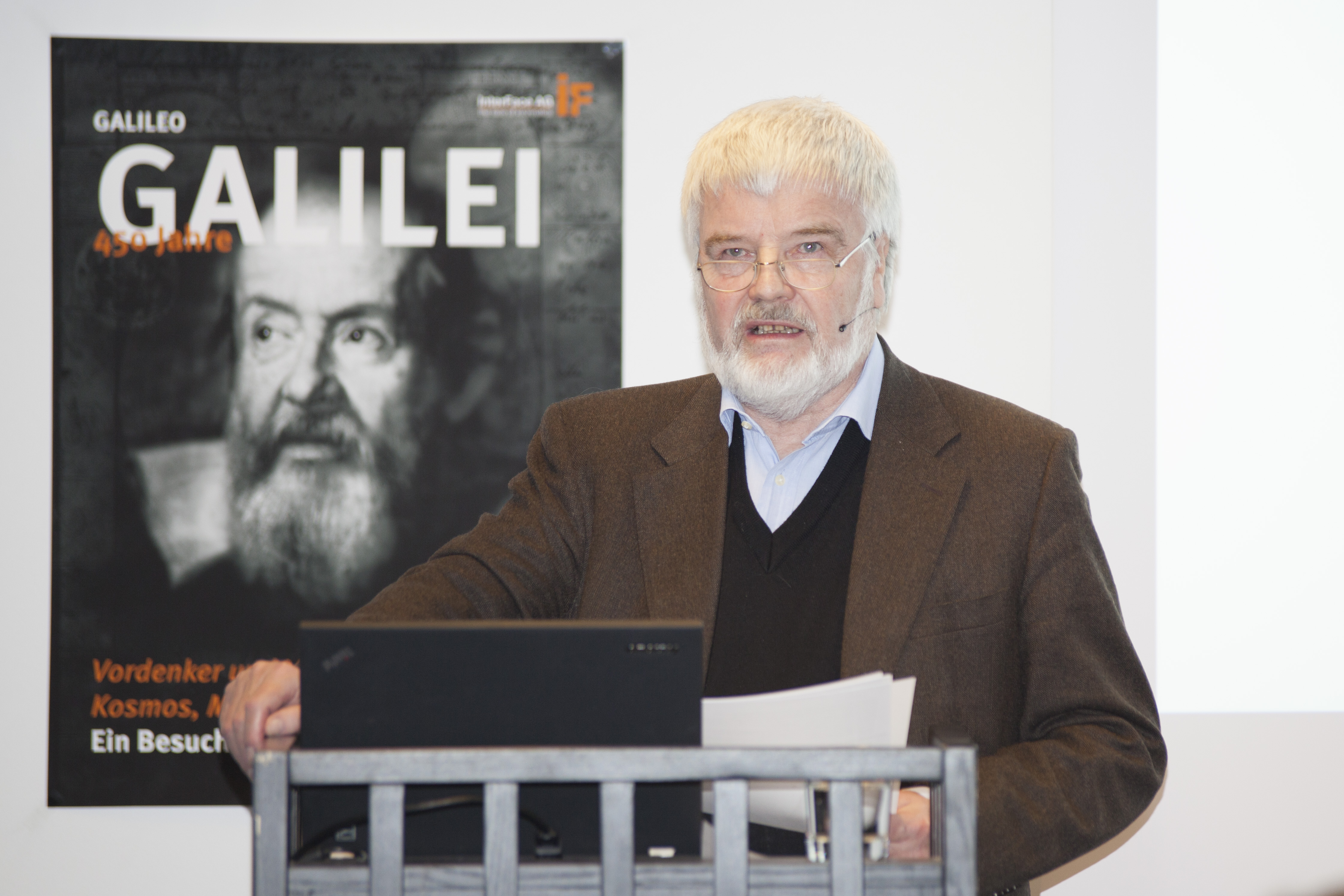 The start-up of the 2014 IF Forum “Galileo Galilei” at InterFace AG was a huge success. Under the heading TURN OF AN ERA, Jörg Schindler delivered a strong appeal in favour of “the future” on February, 27th, at Unterhaching.
With his facts about “The Beginning of the End of the Fossil Era” and the subsequent “Great Transformation of Our World”, he made is pretty clear that, even though we can perceive how the world changes, we actually cannot predict the exact consequences.
Because we are already in the middle of an absolute transformation. It will continue to take place, no matter if this is what we desire or not. Besides, we cannot come up with a master plan, because the transformation cannot be planned. All we can do is refrain from acting in ways that we perceive as non-sustainable.
As often before with other presentations, Friedrich Lehn recorded the presentation held by Jörg Schindler. I will publish the film soon on our YouTube Channel “RolandDuerre”.
There will be two more IF Forum presentations on Galilei Galileo in the 2014 IF Forum:
COSMOS
On Thursday, July, 17th, we will welcome Dr. Stefan Gillessen as our guest speaker. He will talk about:
Big, Bigger, Sharpest
Where is the development of telescopes headed? From Galilei (37 mm lens) to the European Extremely Large Telescope (39 m mirror). What could be more exciting than witnessing how material falls into a Black Hole? Insights into current research.
Stefan is one of the leading scientists at the Max-Planck-Institute for Extra-Terrestrial Physics (MPE)
HUMANS
On Thursday, October, 23rd, 2014, Thomas de Padova will give a presentation. He will talk about the
Secret of the World
400 years ago, two totally different scientists went beyond the limits of the known world. In Venice, Galileo Galilei looked through his telescope and discovered the Jupiter moons. An exciting expedition of human thinking begins – and along with it the turn of the era towards modernity.
Thomas de Padova is a physicist, journalist and historian of science.
RMD
(Translated by EG)


