
Roland DürreThursday December 13th, 2012
God
This morning, SPIEGEL ONLINE posted the following item of news at google+ (and probably in some other social media, as well):
Why not get a little melancholy in the pre-Christmas season? For example with a prayer – by Robert Gernhardt, who would have been 75 today:
“Dear God, why don’t you just accept that I am special. And how about admitting that I am wiser than you? In the future, praise my name, or else – Amen.”
So far the original SPIEGEL ONLINE message.
Initially, I liked it very much. Later I decided I did not like it, after all. In this small poem by Robert Gernhardt, the “normal roles“ of humans and God are switched in a humorous yet sobering way.
A short time ago, one of my friends said he would be more than delighted to finally meet a God. He would give God a nice time of day and try to get along with him in the same friendly way as with all his other contemporaries.
And he meant in neither in a cynical nor in a pompous manner. Actually, I like that a lot better than the nice Robert Gernhardtian irony.
RMD
(Translated by EG)
Roland DürreTuesday December 4th, 2012
Here is Another Video Recording Showing Rupert Lay on Youtube: “Responsibility and Trust”
Yesterday evening, I uploaded another recording of a presentation by Rupert Lay to Youtube. Rupert Lay gave this presentation on May, 4th, 2003 at Bad Boll. It was about:
Responsibility and Trust
When responsibility and trust in an enterprise dwindle – reasons, consequences, what to do?
I was there when the presentation was originally held and would be happy if as many of you as possible would watch it.
Both presentations were given by Rupert Lay for the Ronneburger Kreis . The video recording is by Bernd Sielaff and Friedrich Lehn did the editing.
RMD
(Translated by EG)
Roland DürreMonday November 26th, 2012
Now On Youtube: Video Recording of Our Latest IF Forum.
On Tuesday, November, 13th, starting at 6 p.m., we welcomed Wilfried Bommert of the WDR at our Unterhaching InterFace Building. He was the third and last speaker in our series “Living (and Surviving) in a Sustainable Way”:
Making Good on Arable Soil!
How we can avoid the crisis of deeding the world.
Here it is – the recording of Herrn Bommert’s presentation!
Enjoy!
RMD
(Translated by EG)
Werner LorbeerWednesday November 21st, 2012
Desert Tec #19: Solar Energy, Realty, Marriage – Riester Legislation
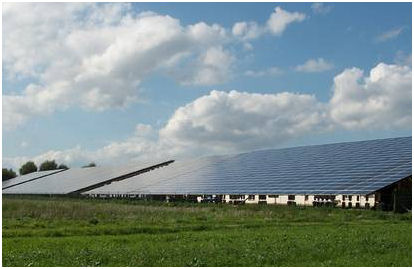 Today, I had another discussion with friends who feel desperate about the stability of our currency. One function of money is to transport values into the future – and by now, the future is “Greek”.
Wise people discovered this a long time ago and therefore came up with their own Solar Riester concept. In this case, the winner is the German Michael directly, instead of around the detour of political distribution. We are talking twenty years of secure retirement money for the capital you invested and no government can abolish its debt with just a stroke of the pen – as the Greeks already show us.
Mind you, I believe you should calculate with no more than ten years of uninhibited money flow and also with some cuts in contracts already valid. The social pressure will increase, which is in accordance with the concept of an Augsburg enterprise: “I cannot make money with my roof and let the people living under it pay the price, can I?”
Of course, you should buy realty without using the Riester legislation, because otherwise they are truly immobile and cannot even be exchanged for the flat you will need when you enter the third phase of your life, because it is more suitable for senior citizens.
 But the true winner is the marriage Riester concept. “Investments” into your shared future with children, hiking tours, evenings to play, shared visits to the cinema, taking responsibility for others and also letting others take responsibility for you – ethics, no gold in the safe because you were scared, no cat gold on the raw material market.
Time for your partner, time to ponder on your own development and to think about what others discovered about you.
I wrote a small book on meditation: “How to lengthen time“. I think this is the true meaning of the Riester legislation: to fill the time you have anyway with the sort of careful life that makes sense.
wl
(Translated by EG)
Roland DürreSaturday November 17th, 2012
Looking Back – Wilfried Bommert at the IF Forum
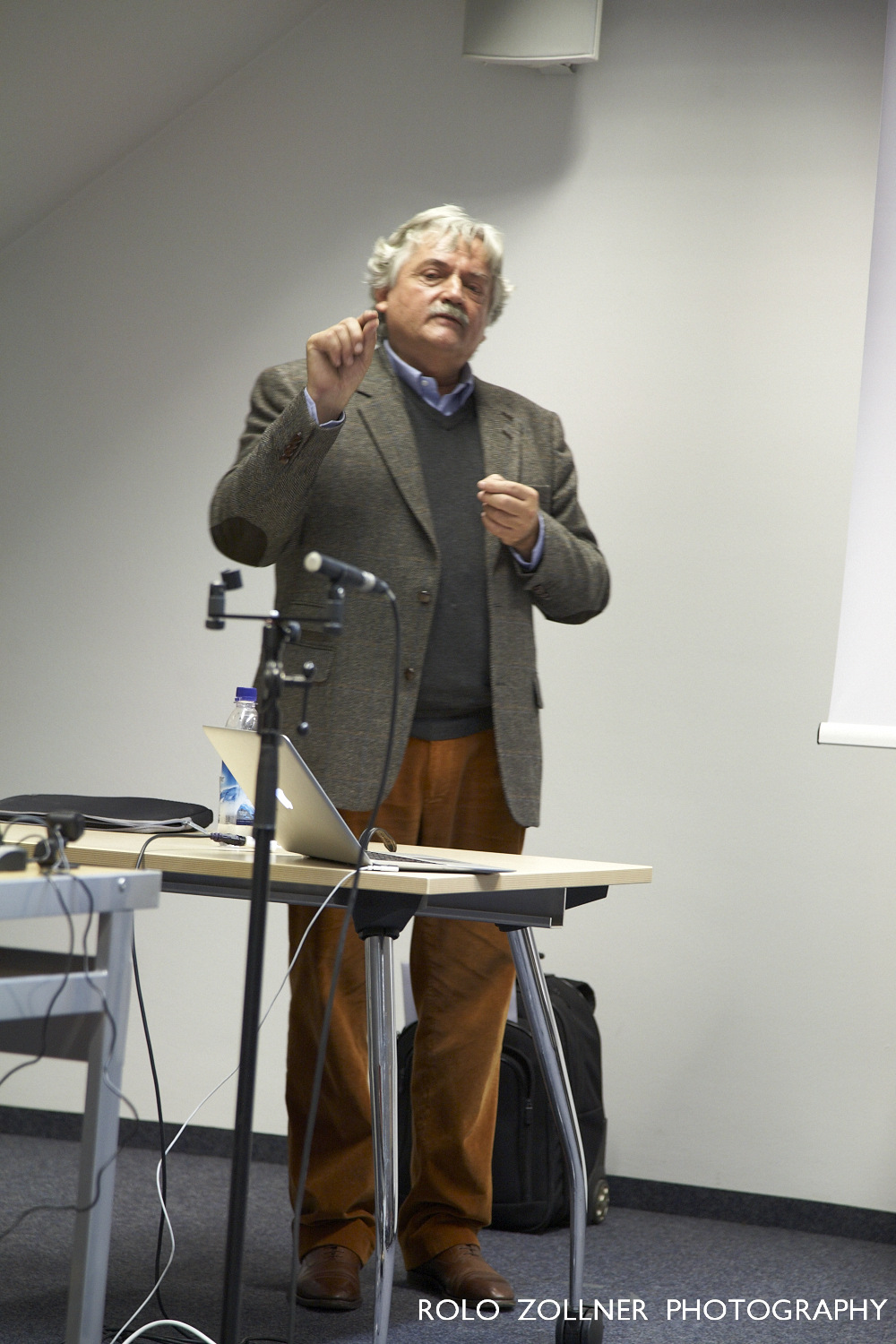 Last Tuesday, Wilfried Bommert of the WDR was our guest at Unterhaching. Wildfried Bommert is a well-known expert when it comes to “feeding the world”. He also published several books on the subject. Currently, he and a few partners are establishing the Berlin “Institut für Welternährung”.
Our last presentation in the series “living and surviving in a sustainable way” was yet again another highlight of the 2012 IF Forum. Herr Bommert deliberately kept his presentation very short and concise. We had planned this, because, after all, we wanted to produce an attractive video recording for Youtube as an extra value.
I think we succeeded. Every single sentence uttered by Herrn Bommert was right on target. Without employing unnecessary emotions and questionable judgements, he reported facts in a very objective way and came up with simple, logical conclusions.
Consequently, there was a long discussion after the presentation. It was extremely constructive and passionate. And we agreed: the messages sent by Herrn Bommert are important. He demonstrated in a very simple and rational way how feeding the world dangles on a thin string. And how easily this string could and perhaps will break.
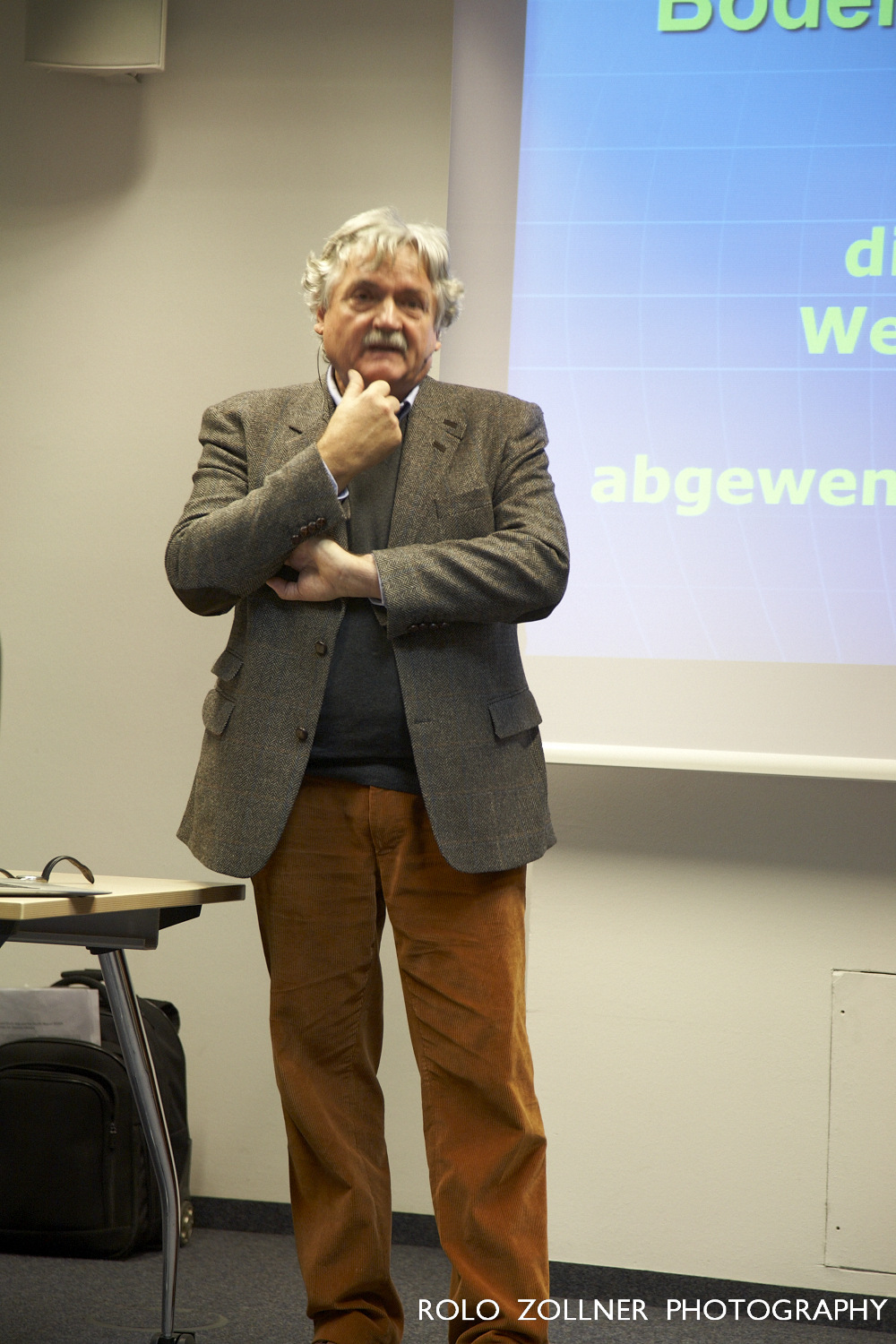 However, Herr Bommert also showed us ways to change matters. And he also showed us that it is, indeed, possible for us to prepare for the time after our stupid and eventually fatal economic habits will have caused a collapse. Consequently, his finishing lines after a very thought-inspiring list of facts and judgements were rather nice and optimistic.
With Vienna sausages and meatloaf (of course from the butcher Schlammerl of Ottobrunn), we spent quite some more time discussing things in small rounds. And finally, when the hot spiced wine and ginger bread were served – also from a local bakery: Götz of Taufkirchen – the general atmosphere was one of courage in view of a possible future and joy about all the interesting information and the culinary delicacies.
I already look forward to watching the video recording by Friedrich Lehn. As soon as it is finished, we will make it available for you on all our diverse Youtube channels.
RMD
Here are a few pictures to refresh your memory and maybe arouse your appetite for the video.
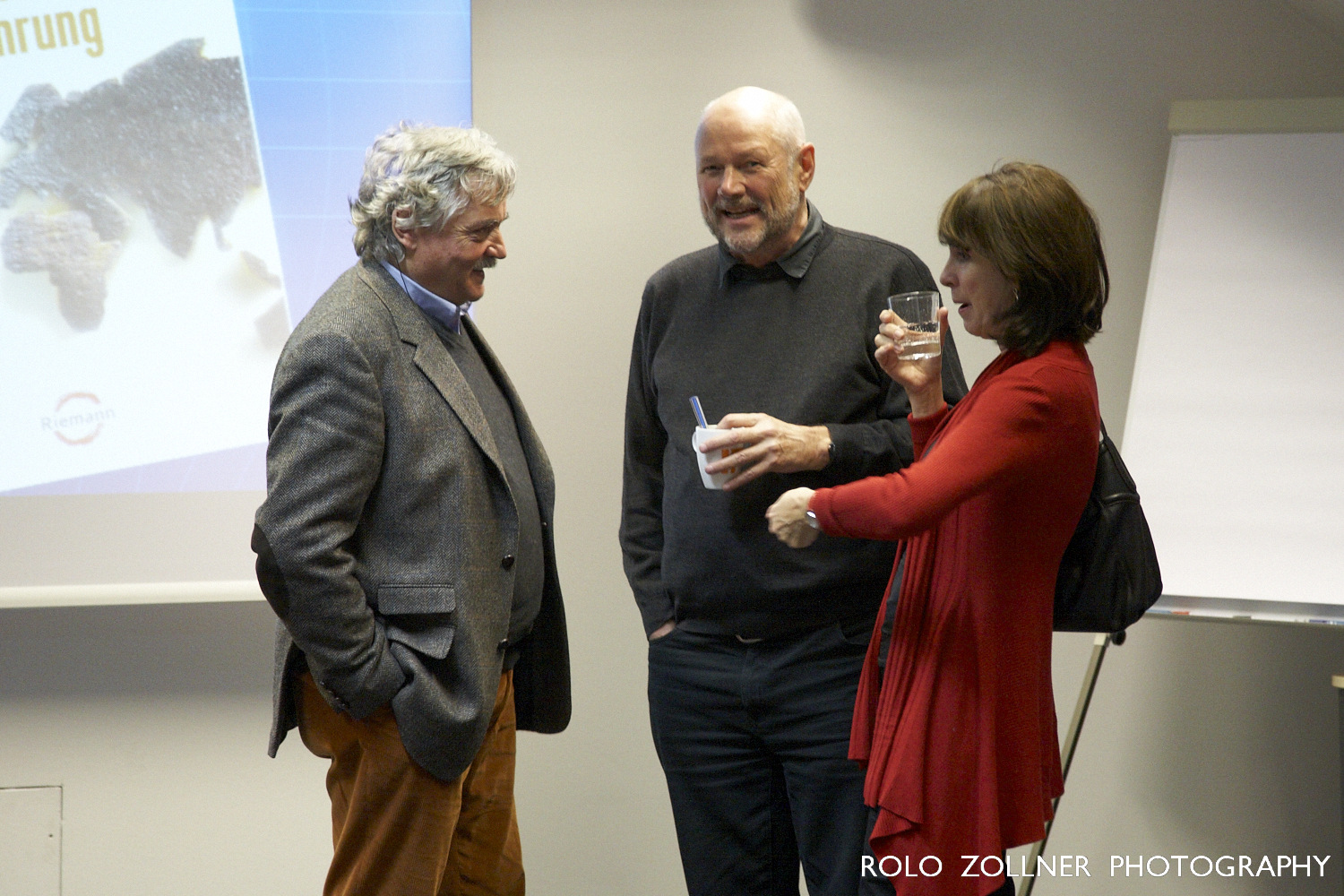
Wilfried Bommert talking to Mr. and Mrs. Gerlach. Thomas Gerlach works for the Bayerischer Rundfunk. He was the one who first introduced Herrn Bommert to me.
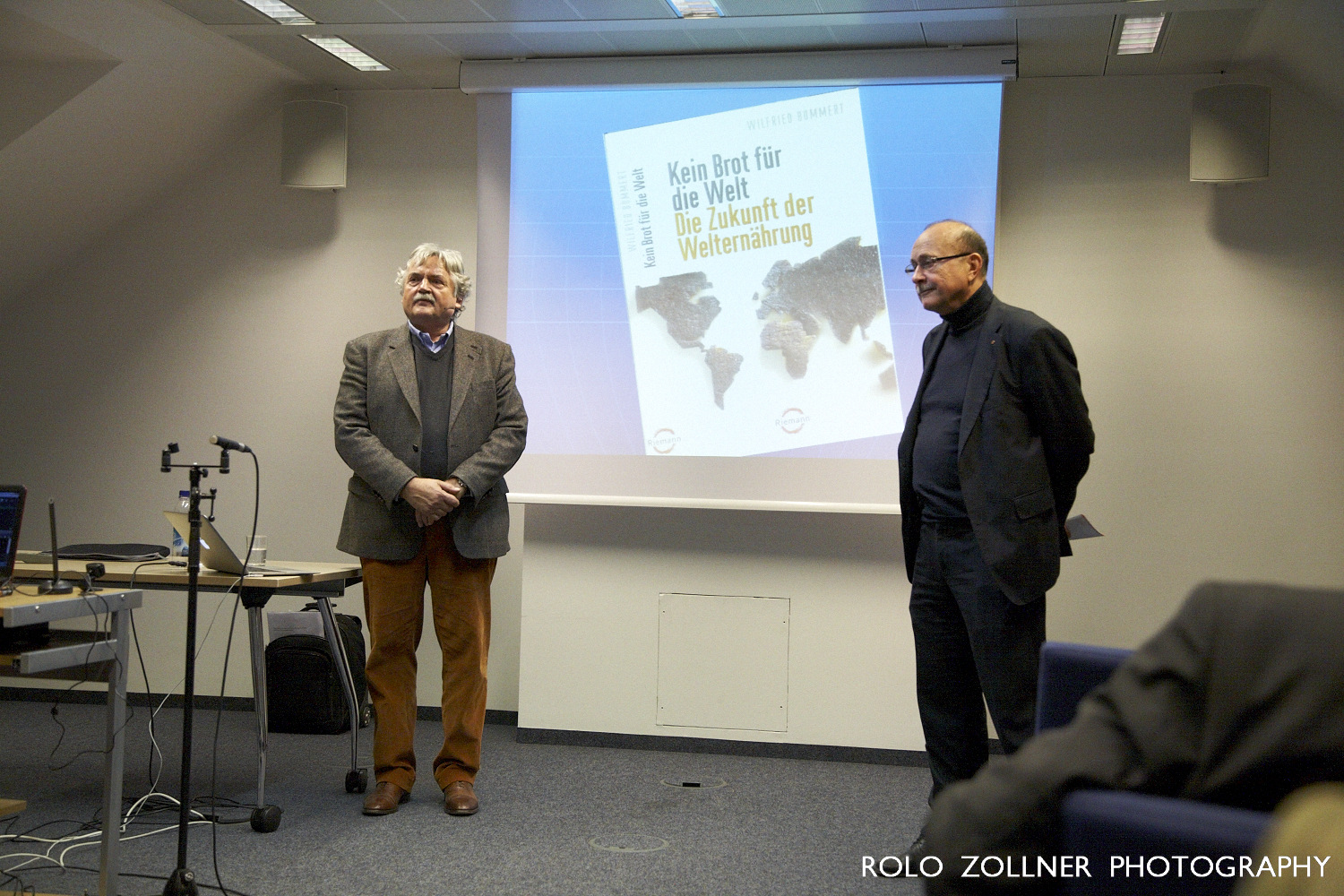
The introduction to the presentation. It will start right away …
As so often, all pictures were taken by our Rolo Zollner.
Roland DürreMonday November 5th, 2012
Next IF-Forum 2012 – November, 13th
By now, we have also agreed on the day for the 3rd 2012 IF Forum of our series “Living (and Surviving) Sustainably”.
 Herr Wilfried Bommert will speak on Tuesday, November, 13th, 2012.
His presentation will be about “How to Feed the World“. For a title, he selected:
Catching Up On Good Soil!
How we might avoid the world food crisis.
Here are a few preliminary ideas by Herrn Bommert:
Ever since 2008, the price for food world-wide only knows one direction: up. The global financial crisis and the dwindling oil reserves further push the price spiral up. Concerns selling energy, raw materials and money reach for the fields of the world. They buy or rent huge areas in Africa, Asia, Eastern Europe and South America, thereby again causing massive price increases for food. Consequently, we get famines, revolts in more and more countries that cause political instability and a collapse of world food affairs.
This vicious wheel would not turn if we did not actively contribute by our consumption habits. Our longing for biological fuel and our hunger for products from industrial farming, our money invested in farm and soil stock, they all support the global hunt for the fields of this world. It is up to us to put a stop to this mania currently prevalent in food and soil markets.
Dr. Wilfried Bommert has been working as a WDR journalist since 1979. He is head of the environmental sector at the WDR-radio station and also wrote the book: “Kein Brot für die Welt – Die Zukunft der Welternährung”, 352 pages on paper, first edition published on October, 5th, 2009 at Riemann Verlag (QUERDENKEN) .
RMD
(Translated by EG)
Roland DürreSaturday November 3rd, 2012
Seven Utopian Ideas – Seven Theses for the Future.
Since so much I do not understand is happening all the time, I will now write down a few utopian ideas I like very much, indeed. And I am determined to develop a few ideas on each of those utopian concepts that justify and explain why I, personally, do not consider them all that unrealistic.
- Penalty-Free Society
It would be nice if there were (almost) no jails. If we could organize living together without having to punish. If we refrained from revenge and instead were to try and prudently minimize the social damage. - Violence-Free Society
What about a society free of physical violence against each other, where regions and peoples can live side by side without wars? It would be nice to treat animals and nature in a reasonable way. It would be nice to have a community where opposing ideas could be dealt with at eye-level in a “domination-free and fair discourse”. - Democratic, Tolerant and Transparent Society without Fundamentalism, Dogmas and Taboos
Education and enlightenment will counter fundamentalism, dogmas and taboos. It is the only way to find and further develop a shared, humane concept of society. Transparency is the requirement for a common way of thinking and deciding, for achieving new insights through consensus. And tolerance is the Ultima Ratio. Intolerance should only be permitted against intolerance, and even there it should be used with extreme caution. - A Society of Sharing and Belonging
I would wish to have a free society. I society where ownership is reasonably distributed and private property is regulated in a responsible and differentiated way. Which includes a particularly sensitive view of “intellectual property”. As far as possible, it should be shared as general knowledge. - Humane Economy
I would wish to have an economy that is not powered by the great financial mechanisms and where all activities and behavior is not determined by profit. An economy that is free from lobbyism and the main purpose of which is to provide humans with products and services that make sense (like, for example, it says in the Bavarian Constitution). I would wish to see an economy where enterprises the goal of which is less profit optimization and more an increase of the common good are appreciated. - Media Free of Marketing
Why are the media always dominated by marketing? Why do I get two units of brainwashing along with one unit of information? Why do some elements think I am so incapable and take me for someone who cannot make up his own mind about his needs? Why does all the world want to manipulate me for their own advantage and my own disadvantage? - Soft and Rational Mobility
How nice would it be to have a mobility without constantly being in a rush and having to fight? Without evil smells and noise? A mobility that serves a purpose, instead of providing us with an emotional arena for ego-boost and self-portrayal? Without burning fossil raw materials? Slower and yet more efficient.
You will say I am a dreamer – but I counter with citing John Lennon in the last paragraph of his “Imagine”:
You may say I am a dreamer
But I’m not the only one
I hope someday you’ll join us
And the world will be as one
And let me remind you of all those utopian ideas that used to be considered totally unrealistic, yet today are a matter of course: women’s vote, violence-free education of children and much more.
RMD
(Translated by EG)
Roland DürreThursday November 1st, 2012
Human Dignity
An extremely difficult topic. Consequently, this is a rather difficult article.
The older I get, the more important human dignity gets for me. As I see it, it absolutely has to be protected. And in my opinion, the definition I am familiar with is not good enough:
No human being must be exclusively made a means to an end!
Unfortunately, I know no better definition.
I believe human dignity does have a common denominator, but I also think a differentiation according to culture and age is possible. Basically, I know little about the cultures of this world. Consequently, I would not wish to tell other cultural groups what their understanding of human dignity should be.
🙂 On the other hand, I already have quite some experience with various age groups. Fortunately, I have not yet covered all age groups – the elderly phase is still to come.
But I definitely think that babies, toddlers, children, adolescents, grown-ups in the first and second half of their lives, senior citizens and elderly people have rather diverse needs. And that the dignity of a human being also has something to do with fair treatment of needs.
So I believe the preservation of dignity is dependent on the time and situation in your life. Let me describe from the layman’s point of view how I imagine it might be. Mind you, this is all just to make you thoughtful. I am well aware that none of it can be considered strict facts:
Babies need basic trust.
They need the steady and reliable relationship to (at least) one person – their mother. I am assuming that this includes a lot of physical contact and human love. A baby’s dignity is probably guaranteed to a huge extent by the mother.
Children need a feeling of security and love.
They have to be protected against psychological and physical violence. The right impulses must be given in all varieties. You can find them both in nature and culture (civilization). Environmental elements that include a reduction will have a detrimental effect on the child’s dignity. Children need a chance to socialize and live values. Both families and institutions violate children’s dignity far too often.
An adolescent person has other needs.
The child’s wisdom will diminish. It will be replaced by insurrection and actions that have not been thought through in advance. Regardless, humans, especially in this phase of their lives, have a right to be taken seriously. They need the chance to rub others at the wrong end. To see a mirror image of themselves. It is part of the human dignity of adolescents that we promote their autonomy.
Grown-ups need to be respected.
Basically, they must never be considered just a means to an end. Neither other humans, nor institutions should ever subdue them. Their personal dignity also lives in their work and their partnership – these are probable the social values (systems) determining the lives of most of us.
Senior citizens need tolerance.
Being old might have its good and bad sides. The wisdom should be made use of, the stubbornness of old age should be ignored or, if possible, tolerated. Indulgance, too, will mean dignity.
Old persons must not be put under tutelage.
The circle is complete. You are again as helpless as you were as a baby. Some of you might need someone to accompany you until death comes. It is your human dignity to still be able to determine to some extent what you want to do with your life.
Everyone needs love, perhaps even those who are dead?
RMD
(Translated by EG)
P.S.
This was my contribution to All-Saints-Day. I wrote it to make up for not visiting graves. Because I do not like this All-Saints-Day cult. And now I did my duty and will ride my bike to the bake-shop (the real baker is closed today) and get a delicious Bavarian Veal Sausage for our guest from Riga. And then I will truly enjoy this free autumn day.
P.S.1
When on vacation, I like taking pictures of graves. This article, however, has been kept “picture-free” on purpose.
Roland DürreMonday October 8th, 2012
There is no True Life in Wrong Life.
A very simple sentence. Only eight words. A friend of mine heard it as the motto of an event. She considered this sentence important enough to use in one of her own presentations:
There is no True Life in Wrong Life.
That is how the sentence found its way to me. It seemed to be special to me. Consequently, I looked up where it originated. And, surprise, surprise, I found out it is from Jürgen Habermas. Well, I remember the “Non-Hierarchical Discourse” (“Herrschaftsfreie Diskurs“) and many more concepts I find important.
I spent quite some time thinking about this sentence. Both in a resigned and positive way. And I found numerous interpretations. And then I came up with a variation:
In False Life, Too, True Life is Possible!
Logically, this sounds like a contradiction. But that is not how I feel about it. Rather, I think my sentence might well complement the sentence by Habermas.
My sentence makes it clear what a huge challenge it is to lead a true life.
But: is that not also true to the same extent for freedom? Don’t you need a strong will and immense effort in order to “live in freedom”?
Consequently, I found a new definition of freedom for myself:
A person is free if he or she manages to live a true life even in a wrong life.
I will add this definition to my “Freedoms”.
RMD
(Translated by EG)
Roland DürreThursday October 4th, 2012
The Last 24 Hours…
 Nadja (in Twitter @lazyNadja) gave a wonderful presentation on “the meaning of life“ at the technological IF-Forum “Project Coaching”. Here is a nice short version (9) on six slides.
In her presentation, Nadja gave us a task. We were asked to imagine we had only 24 hours left to live.
And then we were to think about how we would make use of those last hours. The answer “say good-bye” was not permitted. No. We were supposed to find out what it was we really would like to do – and also ask ourselves why we are not already doing all those things.
The question was part of her plea to think of ourselves a little more, even if, as responsible project managers, we suffer from (often imagined) day-to-day stress. And to do more of the sort of things we really enjoy. Because only people who are happy, successful, content… can also contribute towards other people becoming happy, successful, content… And if we spend more time doing what we really want to do, we will be more successful with our tasks as project persons. Also, we will increase the probability that our life is a success and we can work towards a positive future for everybody.
For me, the answer to Nadja’s question was not at all easy. At least, I spontaneously could not come up with any elementary needs I do not let myself fulfill “in normal life”. Except maybe that I sometimes feel like punishing one or other of the persons around me with a punch for his or her evilness, impertinence or stupidity. But that is something that would not agree with my personal utopia of a penalty-free society. And since I am also well aware that this kind of vengeance or crime would neither satisfy me nor make me happy, I will not commit it.
Well, and how about the “enemy” hitting back? Luckily, these kinds of ideas rarely come to surface with me – and they disappear quickly, too.
So let us return to the initial question:
Assuming I had 24 hours left to live. What would I do?
Well, I tend to approach important questions systematically and strategically. Consequently, the first thing I think about is: would I wish to spend the remaining time by myself or along with others. Would I like to give away many things during those last hours, or would I prefer receiving things. Would I wish to just enjoy or would I wish to make one last impact? Should I shout my frustration – as “The Stranger“ does in the novel with the same title by the great Albert Camus? What is nicer (or more goal-oriented)? Being sober during the last hours on earth or drunk?
These and similar – in my opinion totally rational, almost scientific questions – come to my mind first. Then I think that it is all a lot easier.
In the morning of my last 24 hours, I would first ride my bike to the “real bakery”. Then I would enjoy a delicious breakfast with home-made jam, a three-minute egg (of the sort the EU is currently trying to talk Europe’s hotel owners out of) and salted (real) butter. As I otherwise only get on weekends.
But then how to continue? Go for a swim? Or meditate? Nadja’s question is really hard to answer for me. And I think this is a good sign. Because if I were now able to come up with the big wish I always used to dream of and never fulfill, it would mean that I made a mistake.
But no matter what: during the last 24 hours of my life, I would definitely write an IF Blog article.
RMD
(Translated by EG)


