
Gastautor(en) Monday April 19th, 2010
The End Does Not Justify All Means
From our guest author Alfred Doll:
 The purchase of pinched bank data causes a stir – it is a classic decision dilemma between law, morals and ethics.
Currently, politicians, lawyers, journalists and the German citizens are excited about the fierce discussion about whether or not stolen bank data of potential tax evaders should be bought. On the one hand, there is the argument of tax fairness, on the other hand, there is due process of law, political risk and the question of making crime attractive. It is a judgemental dilemma and an excellent example showing how responsible decision should be arrived at and how not.
Both lawyers and data protection specialists call the intended purchase of illegal data unlawful. The term “concealment of stolen goods” has also been frequently heard.
Our state should remember its constitutional principles and see to it that the law is adhered to, instead of breeding more injustice. We expect our constitutional government to keep laws decreed in parliament. If now we have to balance between two violations of law, namely between tax evasion and illegal data acquisition, then that means we have a true dilemma situation.
It can only be solved by either finding alternative solutions or by taking the higher good/value as an orientation. We are confronted with an ethical evaluation of goods that must be approached dialectically.
As an alternative, we have to find out if the unlawful purchase of illegal data is really the only way to prove that tax has been evaded. I am sure that is not the case. To be sure, it might well be the easiest and most obvious way in the current situation, but it is not the “Ultima Ratio”.
If we, nevertheless, assume that there is no alternative way for the state to prove the tax evasion, then the question of the higher good/value has to be asked. It is not a given that the decision is based on the actual worth in money, in this case the 2,5 million Euros for the data purchase as opposed to the up to 100 million Euros in back duties. What counts is the ethical value: is the principle of constitutional rights a higher value than a certain amount of money?
The considerations would certainly have to be different if we were, for instance, talking about stolen data of drug dealers. A new balance of goods between constitutional rights and the protection of our citizens would have to take place. Is the state allowed to buy something from criminals in order to protect the population? Which good/value has preference? The duty of the state to protect its citizens, or the principle of constitutional rights? As we see, there has to be an individual balancing of values in order to arrive at responsible decisions and behaviour. You cannot say: “we have been there before, let us do it again in the same way”.
The representatives, first and foremost among them Frau Dr. Merkel, came to their conclusions both as evaluators and models: if there is an economical profit, you can buy from criminals.
So what right do these politicians have to demand from entrepreneurs and managers that they follow constitutional and social principles when making decisions and deciding how to behave, instead of just following the economical advantage?
I hope that our readers will be more careful and responsible when faced with similar decision dilemmas. For all those who are not quite sure, atunis offers an extensive range of dialectical methods for decision finding.
ad
(Translated by EG)
Roland DürreFriday April 16th, 2010
Palm Oil
or the “Bloody Finger”:
A short time ago, I found the following tweet by talkabout:
#Nestlé board member Peter Brabeck says: the UK, Germany and Italy alone processed around 300,000 tons of palm oil for biodiesel in 2009.
You can find an interesting article on the same issue in http://bit.ly/c5dEhh.
For me, the most interesting thing about this is that we waste our vitally important reserves in a careless way for so-called comfort that in reality does more to minimize our personal well-being than to improve it.
RMD
(Translated by EG)
Markus SeidtThursday April 1st, 2010
Letters From Vietnam #9 – Official Statistics
 Hanoi, Easter 2010. Not long ago, the Ministry for Labour, War Invalids and Social Affairs at Hanoi published a report saying that the current number of handicapped people living in Vietnam is more than 5.1 million. That is 7% of the population.
The consequences of the war, frequent natural disasters and the often harsh living conditions are one reason why the number of handicapped people in Vietnam is particularly high.
Here are some details:
Roland DürreTuesday March 23rd, 2010
“Crisis of Huge Enterprises?” or “Crisis of Society!”
Preparing for my presentation on “dominant logics” (Dominanete Logik) was not the only reason why I made myself familiar with huge enterprises. Enterprises, their histories, their changes and their development are something that interests me. As a result, here is a list of some rather provocative theses:
Markus SeidtMonday March 22nd, 2010
Letters From (For) Vietnam #8 – Children Helping Children
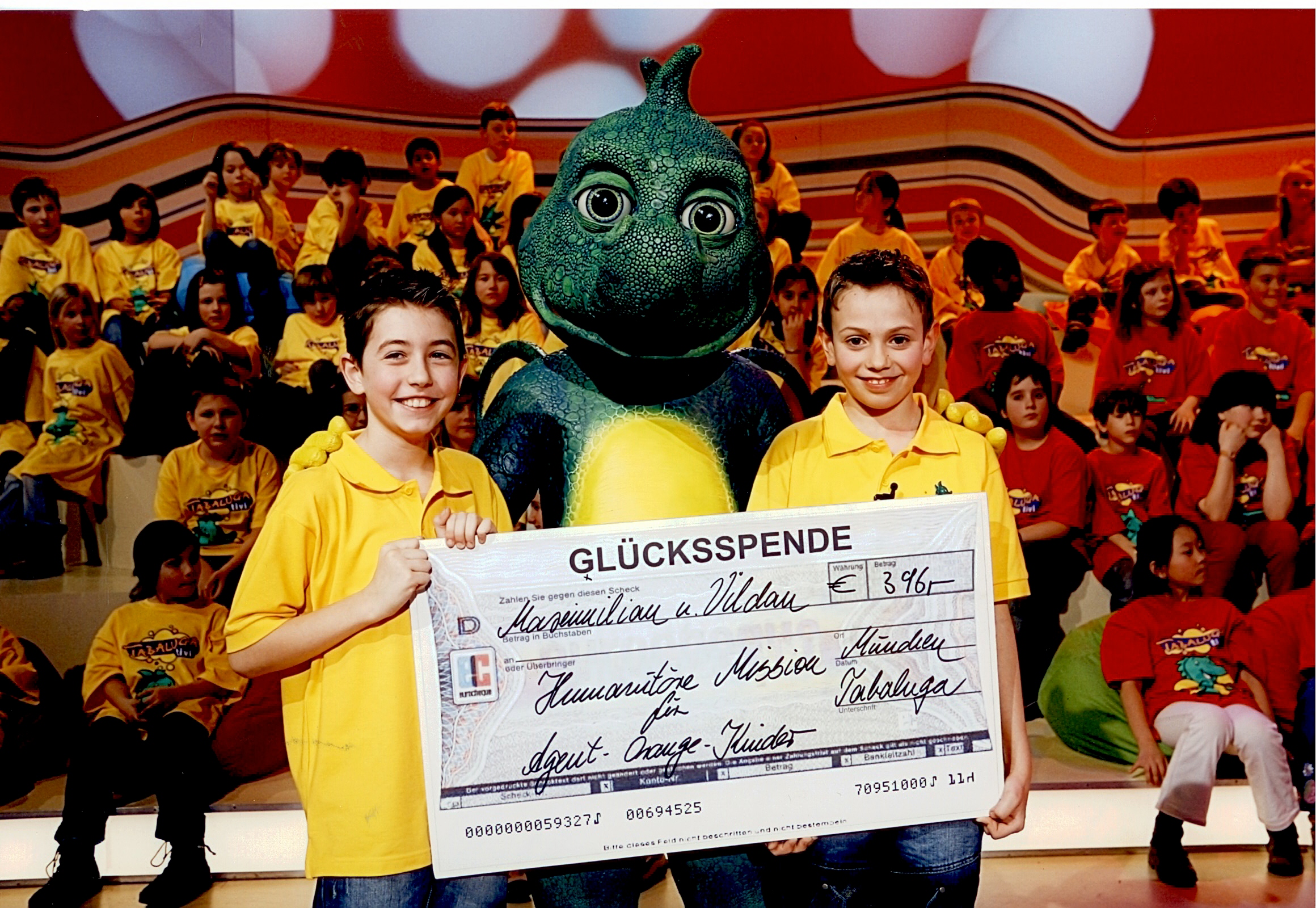 Max and Vildan proudly present the cheque showing the sum they won at Tabaluga for Francis Van Hoi’s project.
The program will be broadcast this weekend on ZDF and “Kinderkanal”.
For all interested parties and particularly their children, here are the exact times.
Again: many thanks!
Saturday, March, 27th, 7:15 hours on ZDF
Sunday, March, 28th, 11:45 hours on KIKA
MS
(Translated by EG)
Roland DürreSunday March 21st, 2010
Presentation of March, 16th, at RC Munich Airport (Report)
My presentation was about:
Sind Unternehmer “Dominante Logiker” oder “Evolutionäre Steuermänner”
Entrepreneurs: “Dominant Logicians!” or “Evolutionary Helmsmen?”
I was made aware of this topic through a doctorial thesis written in cooperation with InterFace. Our board member, Professor Dr. Manfred Broy (Informatics, TUM) forwarded a request from St. Gallen to us: a doctorial candidate was looking for a medium-size technology enterprise in order to research the dominance of logics for founding and establishing an enterprise. To us, this sounded exciting, so we volunteered.
The doctorial thesis was about KMU’s (small and medium-sized enterprises). For me, that was the determining factor.
Well, my report is a little on the lengthy side. Here we go:
Klaus-Jürgen GrünThursday March 18th, 2010
Catholic Ministration and Priestly Celibacy
The people expect the Pope to make a statement. He is supposed to use a public occasion and the strongest terms for declaring how abominable he finds the fact that Catholic priests have been using novices as lust objects for millennia. The general expectation shows how poorly the people understand the mechanisms and mode of operation for moral verdicts in general and the Catholic sexual teachings in particular.
Because if the Pope allows himself to be impressed at all by the moralizing pressure of the current times, he will only succumb to a certain degree: his assurances will have exactly the level of commitment that halfway pacifies the spirit of the time outwardly while leaving the option for him to internally get out of the tight spot in the eyes of public judgement at any time.
GRÜNSIX Wednesday March 17th, 2010
Special Edition: Radio Philosophy #070 – WORLD RESCUER DAY.
One day around this time of the year is called the world consumer day.
So what exactly is the meaning of “world consumer day”?
An immigration country, for example,
is a country an entire nation immigrates to.
If immigrants were to immigrate into a country
it would be called immigration country.
Well, that much is obvious.
So what is the meaning of world consumer day?
Is that the day to remember
all consumers world-wide?
Or is the world consumer day the day
to remember those
who consume the world?
Namely the world consumers.
Now that makes sense.
It describes the essence of capitalism.
If we all stopped consuming
it would cease to exist.
World consumer day is world rescuer day.
KJG/SIX
(Translated by EG)
Markus SeidtTuesday March 16th, 2010
Letters From Vietnam #7 – Notices of Cancellation
Dear Friends,
the Vietnamese celebrated their New Year Festival. They spent a lot of money, which is absolutely acceptable, because they have been working hard for an entire year. This is especially true for the farmers who work their small allotments and have to sell their products at such cheap prices that they cannot finance a proper school education for their children or, in case of illness, pay for suitable medical treatment.

During the festival, my cell-phone was constantly active. I was online almost all the time, because the children just wanted to talk to me. They felt lonesome and isolated; they just needed someone to listen …
Except, unfortunately, I am not trained to answer a crisis line. So I tried to give comfort to the best of my ability.
We received two notices of cancellation for flats in Ha Noi and now we must look for an emergency solution for the children. We are talking 32 children; most of them are girls working as seamstresses. They do not get a fixed salary, but get paid dependent on how much they produce. It has always been difficult for the girls to deliver on time, even if only because of their physical handicaps.
They earn an average of approximately 800.000 VND per month (approx. 31 Euros) and the children did not receive their commissions directly from the industry. Instead, there were two or three intermediary merchants. I am currently trying to get the commissions for the kids directly from the industry. Unfortunately, so far I have not been a success, because we lack various machines, storage room, transport vehicles … and electricity. Sudden electricity breakdowns are a common phenomenon. In order to solve the problem, I need a generating set.
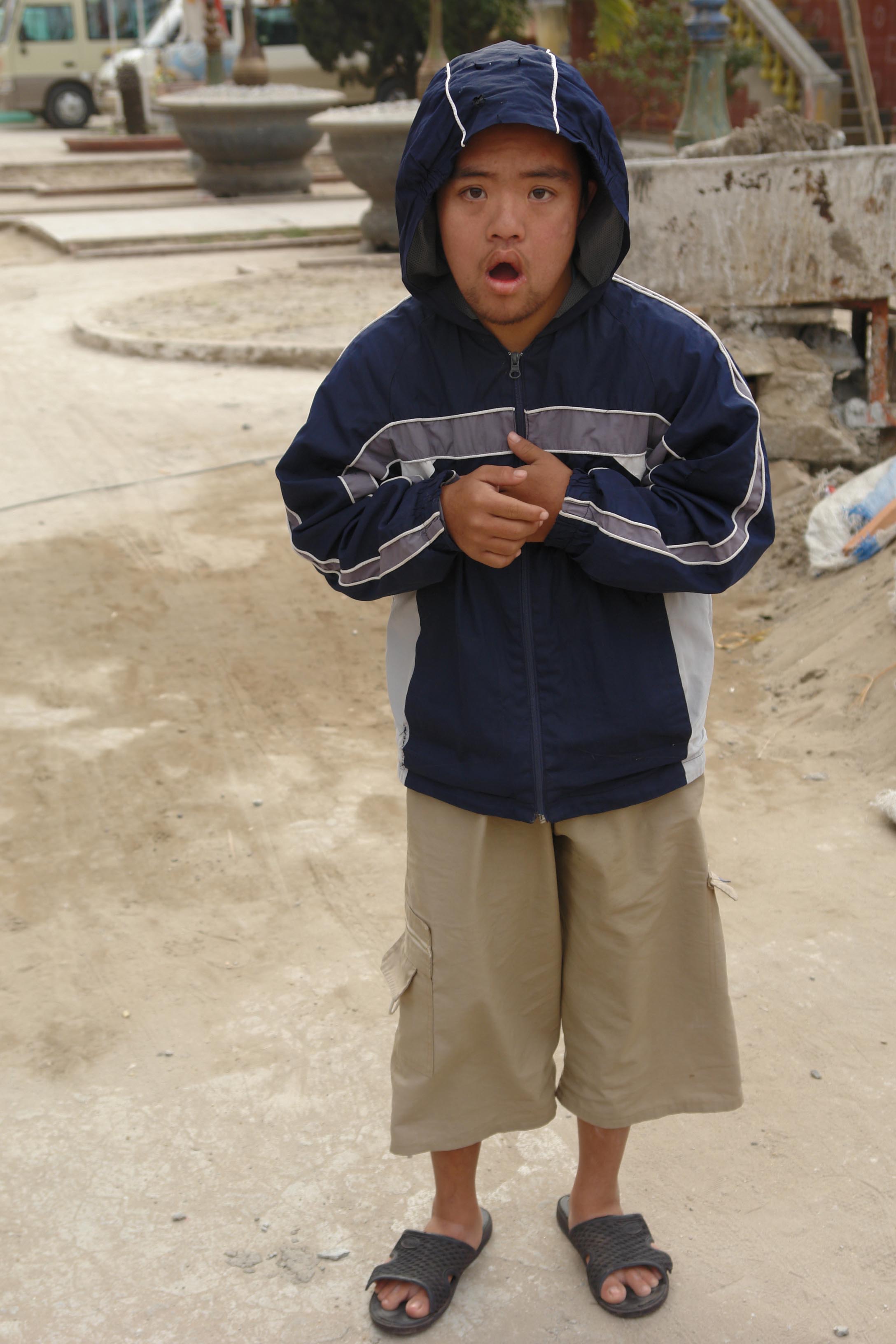 Starting this March, I will get an assistant. She used to be with the “Files de Marie-Auxiliatrice” (FMA – Sisters of the Salesians). I need her, because there is too much work for me alone with the administration of all the children’s names, addresses, illness… financial administration, organisation, flow of money.
Most of the children are girls in puberty, with the typical problems that even I, as experienced father, cannot always cope with. For my assistant, I need 110 € per month, a moped, and some office furniture. Again it will cost money, but I cannot manage all these many children all by myself. And Bishop Peter has more than enough on his hands with his diocese. Brother Peter Sang (SDB), who has been assigned to us by Don Bosco VN is seriously ill and I am often lonely, very lonely…
There is another unfortunate situation: entertainment and leisure time after work. 99% of the time, the children watch films on DVD. The titles of the films are not very desirable, sometimes even rubbish, and it makes children sick and passive to spend many hours in front of a TV set. On the other hand, even if they wished to do something else, there is no opportunity. All they do day-in, day-out is work, eat, and watch TV and sleep. Dear friends, please help me to find a solution for the children.
As you can see, there is plenty to do. I cannot do it all by myself, so I ask you to help the children (helfen Sie den Kindern).
Having been born in misery and then having to put up with the disadvantages of a poor country like Vietnam, their misfortune only gets more and more acute. Let us at least try to soften the misery of the children. I believe they have the right to expect some solidarity from us.
We will not be less happy if we forego a beer. On the contrary: it is a great joy to know that a small investment will render great happiness. We do not know why these children are born with a physical disability, but we know that the world belongs to them, too. We should intervene and share our happiness with these children. In doing so, we will become richer. Richer before God and ourselves-
Yours Fancis Van Hoi
MS (Modifications)
(Translated by EG) mehr »
Werner LorbeerSunday March 14th, 2010
Email “Knigge” Versus “Knigge”
 Knigge wrote a traditional code of etiquette for Germans in the time of enlightenment. His famous and influential description of society and literary works, as well as his role as leader among those who undermined the freemasons by following Weishaupt’s “Illuminati” are legendary.
I would wish to see an “Email Knigge” that works according to the laws of ethical correctness. After having studied “Knigge”, however, it gets clear that the name cannot be used any more. We must find another name for the 21st century.


