
Roland DürreFriday June 25th, 2010
Wikipedia #11 – “Ars Construendi Vexilla”
Dr. Klaus-Jürgen Grün (Philosopher, IF blog author and good friend) has experience with dialectical seminars. As a special highlight in his seminars, he offers knowledge gain on pre-defined problems by creating a “vexilla”.
I practiced the “ars construendi vexilla” a lot with my mentor Rupert Lay and appreciate the method very much. And I always gladly recommended it to others. But what is a modern manager supposed to do if he does not know the meaning of a word?
Roland DürreMonday June 14th, 2010
“You Can Eat But One Steak Each Day” or “Profit and Growth”
Earlier this year, I heard a presentation by a reputable German entrepreneur at Munich Technical University. Of course, I wrote about it at the time in the IF blog. Among other things, said speaker is a functionary in the employer association, where he also frequently gives presentations. His one-time family enterprise is now mostly in the hands of strangers. This was the only way for him to preserve it.
Some of the things he said during his presentation gave me pause. Among other things he said during his presentation on “Innovative Leadership – Strengths and Weaknesses of a Family Enterprise” was a warning against the habit of some family enterprises that are not sufficiently profit-oriented. Owners of medium-sized enterprises very often adhere to the detrimental motto: “You can eat but one steak each day”. In his opinion, this is “the wrong attitude and it ruined quite a few enterprises”.
This is a statement that made me thoughtful. In my opinion, it is too narrow-minded. I think that many more companies went bankrupt because they “were never satisfied”.
For my own life, I formulated the following maxims – and I presume they meet with the consensus of most owners of medium-sized companies:
Roland DürreThursday June 10th, 2010
Masses of People
When doing an OpenSpeech (see my presentation at Ottobrunn Grammar School on May, 20th, about “community – people – society”), I started by asking my audience to just think about the term community. I told them to take a moment and let the brain associate it with other terms and then to tell us all what terms might be grouped around it.
I was literally bombarded with replies. And one young man among the senior high school students simply said:
There can only be a community where there are “masses of people”!
Isn’t that a stroke of genius? Indeed, a feeling of belonging in social systems, a society and all it means can only grow where there is one or several masses of people. Do these masses of people constantly change and constitute themselves anew, too?
The term “masses of people” suggests that society can only work if there is such a thing as wisdom of the mass or swarm intelligence. Actually, the concept of “masses of people” explains why there must be social systems and why society can change all the time.
And we are only part of a mass of people. We love or hate our mass, and once in a while, we desert it and join a new one. The concept makes things a lot easier. I would like to thank the student I do not know and inventor of the term “masses of people”.
RMD
(Translated by EG)
Roland DürreMonday June 7th, 2010
Camper Grandfathers
During my last bike tour through Italy, I saw them again: elderly ladies and gentlemen in their campers (the more shrivelled the driver, the bigger the vehicle…)
The heroes of the highway are between 70 and 80 years old, some even older. Wearing their captain’s caps, they roar over passes and chug up and down the countryside. They bravely do the most dangerous of manoeuvres, turn round on small roads and park in small spaces with millimetre precision. I always relax when I see they have finished.
On the wall it says:
To the Preservation of the True, Beautiful and Good.
What you see inside is:
Lies – Betrayal – Intrigue.
Is the Frankfurt Opera schizophrenic?
Well, but aren’t we all!
What Spinoza called amor intellectualis dei
is what we would like to have.
What he called amor intellectualis diaboli
is what we have.
Or, to say it in plain English:
We would like to think like God,
but all we manage is think like the Devil.
KJG/SIX
(Translated by EG)
Roland DürreSaturday June 5th, 2010
Federal President
🙂 If I were the Federal President of Germany, here is what I would do:
- lots of twittering,
- write a post each day,
- give a presentation once in a while,
- mingle with the common people very often and
- once in a while do some representing.
All this would happen diligently, with an emphasis on subjects that concern the people and our world. It might probably happen a little more ethically and with more moral depth, along with a better factual basis than if you do it just as a sideline.
🙂 But, hey, to me this sounds like I am already a little bit Federal President, as probably many of us are.
But here is the professional part of the story:
Roland DürreFriday June 4th, 2010
My Main Concern
I do a lot of criticizing. Perhaps too much.
I do a lot of writing, Perhaps too much.
But, basically, there is only one thing I fail to understand:
How are people so sure of what they say?
or
Why do they insist that what they believe to be the truth is the absolute, objective truth?
My primary goal is to sow the seed of doubt with respect to this attitude. If, with the IF blog, I manage that, I will be perfectly happy.
RMD
(Translated by EG)
Werner LorbeerTuesday June 1st, 2010
Desert Tec #010 – The I-Car 5000km/l
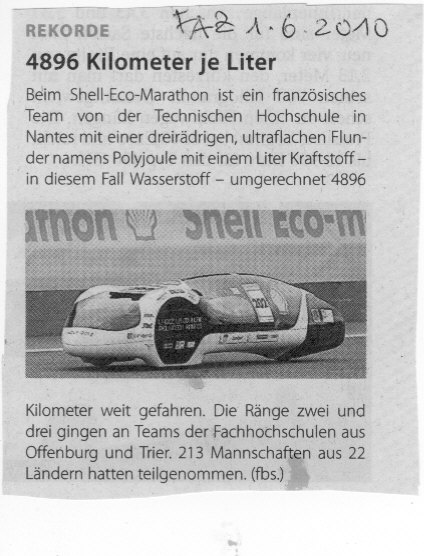
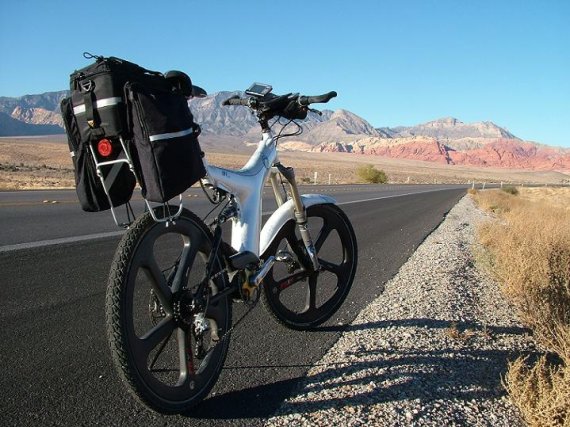 E-automobile, the new i-car! A vision is emerging from the conveyor belts of the hype industry, the Tesla is a star! It is a rolling box stuffed to the brim with batteries. It is actually the biggest CO2 footprint you can make.
Here are the facts in a nutshell: the energy density per kilogram of batteries is about 1/100 that of Diesel fuel. Consequently, the i-car will only stand a chance if its use will prove more sustainability than the b-car of today. The determining factors are weight, range of coverage and dynamics when active. Will these parameters suffice to turn an e-car into a happy i-car?
GRÜNSIX Monday May 31st, 2010
Special Edition: Radio Philosophy #073 – WORLD NEGATION DAY.
Humans never generate problems
they themselves cannot solve, says Marx.
And Friedrich Hölderlin thinks that
where there is danger, the potential for averting it grows.
Today is the annually recurring day
when smokers are saved.
It is the world non-smokers day.
Now we look forward to:
The world overpopulation prevention day.
The world anti religious fanaticism day.
The prevention-of-drowning-in-tax-and-dues day.
And we sincerely hope
that Marx and Hölderlin were correct.
KJG/SIX
(Translated by EG)
Roland DürreSunday May 30th, 2010
Oil
Why are we so horror-stricken after the environmental catastrophe at the Gulf of Mexico?
Because we can see the damage!
Yet there are things happening that are just as bad, except we cannot (and do not want to) see it. These things also happen a lot closer to home.
Here is a citation from the “Welt” (Science Section – Wissenschaftsteil):
“Looking for oil in the North Sea in 1990, the English oil company Mobil North Sea Limited did some drilling and accidentally hit a gas pocket that stood under huge pressure”. The pocket finally burst on November, 21st, 1990. Since, regardless of several attempts, the drilling hole could not be closed, it is still open after 16 years (that would be 20 today). On the international oceanic charts, it is marked as a zone of danger.”
Incidentally, the site of the accident is located about a third of the way between Scotland and Denmark.
You really should read this “Welt” article . It also informs you:


