
Roland DürreSunday August 5th, 2012
Walk Your Talk
Basically, this should be the special Sunday phrase. It is a beautiful sentence.
It sounds easy, doesn’t it? But it is quite hard to live up to. To me, this seems to be the main problem. We all know how it could be done and what we should do, don’t we?
Except that we do not do it.
I was again made aware of it yesterday during Manfred’s nice hall party at Schierling. What great conversations I had with wonderful people. They were all persons who know a lot, do a lot of thinking and (as I see it) have a rather reasonable idea about everything.
If only – it were not so difficult to actually live what you believe in. And that is different from talking. Although it would be quite possible to behave according to your words. And also, it would probably be better for everyone if they walked what they talked. Even if this is a little more strenuous.
That is probably what is most tragic about humans. Consequently, I would like to assure all those people who actually live up to what they talk about that they have my greatest respect. I know a few.
Hats Off!
Unfortunately, I, too, am one of those who do not manage to “walk their talk” as often as I would like to. However, since I am an optimist, I know it is quite good enough if I improve a little every day.
RMD
(Translated by EG)
Roland DürreFriday August 3rd, 2012
On Values and Such – Or: The Meaning and Purpose of My Life
Ever since I started thinking my own thoughts, I have always done a lot of pondering. I used to be the (too?) small, introverted boy. Today, I am the (too?) old, extroverted gentleman. But I still do as much thinking as ever. About this and that. And perhaps too much.
As each year of my life goes by, I also think more and more about how to use my time “meaningfully”. How I can make “successful” use of it. And what exactly it is I want from life.
With time, the ideas change. As do the priorities. And the formulations. Currently, the following things are important in my life. Or rather: currently, I would formulate what is most important for me as follows.
Knowledge
Knowledge is the basis for everything. I understand the term in the sense of enlightenment. You want to question things. You want to be critical. You want to break taboos. You want to prove dogmatism wrong. You want to see that what you know is in harmony with what you experienced yourself. You want to add to your own experience.
Courage
You have to apply your knowledge with courage. In former times, I liked calling it civil courage and/or constructive disobedience. Today, I prefer the word courage. It is a rather clear term.
Delight
In order to apply knowledge courageously, you need to delight in it. You will find pleasure if you meet others at eye-level and treat them fairly. If we take ourselves and others seriously and are taken seriously by others.
Honour and Respect
Only if we honour and accept other people can we respect them. Then we will also be respected by them. Respect, however, is not limited to humans. It should include the entire creation, or whatever this is where I live.
If I manage to become a little more knowledgeable all the time (both about myself and others) and then, based on this, to act courageously and thus experience as many happy hours as possible in delight; if, along with this, I honour my fellow humans and preserve respect of the world in all my behaviour, then I could imagine calling myself “successful” and “living life meaningfully”.
RMD
(Translated by EG)
Roland DürreSunday July 15th, 2012
Standardization And Certification For Power Preservation
Because today is Sunday …
🙂 As I advance in years, I start realizing what religion is all about.
Religion is supposed to standardize belief. With the aid of stories, rituals and symbols. Rituals have to be practiced. They serve such purposes as clearing you from sins. The processes describe how you can create mysticism and spirituality.
The “system church” uses religion systemically in order to preserve the “right”, or, even worse, the “only true” belief. In order to achieve this, said belief is standardized.
“Certified believers” are generated. They must submit to the system. This process gives and multiplies the power of the system. And, like all social systems that have de-personalized themselves, churches work towards one final goal: strengthening their own power and securing their own survival.
And, incidentally, they are quite successful, aren’t they? After all, some religions have a “life cycle” of several millennia. Enterprises seen as social systems with a business purpose and usefulness often only survive for a few decades, in rare cases centuries.
But the more such a system de-personalizes, the less it will be taken seriously by enlightened persons. The “system church” counters this by using elements designed to stir basic emotions in humans: beautiful ceremonies, mysticism, spirituality and, where necessary, magic.
Criticism from outside is met with the killer argument: tradition. And they also pull at your heartstrings: what we basically want is some respect for all those countless generations who lived and believed similarly. And who even died for their belief. What a sentimental wolf camouflaged as sheep!
It so happens that I think belief is something very personal. And that there are no two people in the world who actually believe exactly the same thing.
To be sure, there might be similar values, expectations, interests and needs between two individuals or in groups. Sometimes there are probably moments of immense shared empathy, during which people actually feel united. Which can cause happiness and give you a feeling of security and comfort. Perhaps such a thing as ecstasy through “being united in your belief” exists.
But still every human will have to answer the question of the meaning of his or her own life alone. Just like we all, in the end, have to walk the final path unto death alone.
After having written this article, I understand a little better why I am often not feeling very well when I think of our society trying to plan, standardize and certify EVERYTHING.
RMD
(Translated by EG)
Roland DürreFriday July 13th, 2012
IF Forum 2012 – Advance Notice – Wilfried Bommert – Catching Up On Good Soil!
By now, we have also agreed on the day for the 3rd 2012 IF Forum of our series “Living (and Surviving) Sustainably”.
 Herr Wilfried Bommert will speak on Tuesday, November, 13th, 2012.
His presentation will be about “How to Feed the World“. For a title, he selected:
Catching Up On Good Soil!
How we might avoid the world food crisis.
Here are a few preliminary ideas by Herrn Bommert:
Ever since 2008, the price for food world-wide only knows one direction: up. The global financial crisis and the dwindling oil reserves further push the price spiral up. Concerns selling energy, raw materials and money reach for the fields of the world. They buy or rent huge areas in Africa, Asia, Eastern Europe and South America, thereby again causing massive price increases for food. Consequently, we get famines, revolts in more and more countries that cause political instability and a collapse of world food affairs.
This vicious wheel would not turn if we did not actively contribute by our consumption habits. Our longing for biological fuel and our hunger for products from industrial farming, our money invested in farm and soil stock, they all support the global hunt for the fields of this world. It is up to us to put a stop to this mania currently prevalent in food and soil markets.
Dr. Wilfried Bommert has been working as a WDR journalist since 1979. He is head of the environmental sector at the WDR-radio station and also wrote the book: “Kein Brot für die Welt – Die Zukunft der Welternährung”, 352 pages on paper, first edition published on October, 5th, 2009 at Riemann Verlag (QUERDENKEN) .
RMD
(Translated by EG)
Werner LorbeerWednesday July 11th, 2012
DIW Proposes Wealth Fee – War Bonds in _Exchange for 67 Years of Peace in Europe
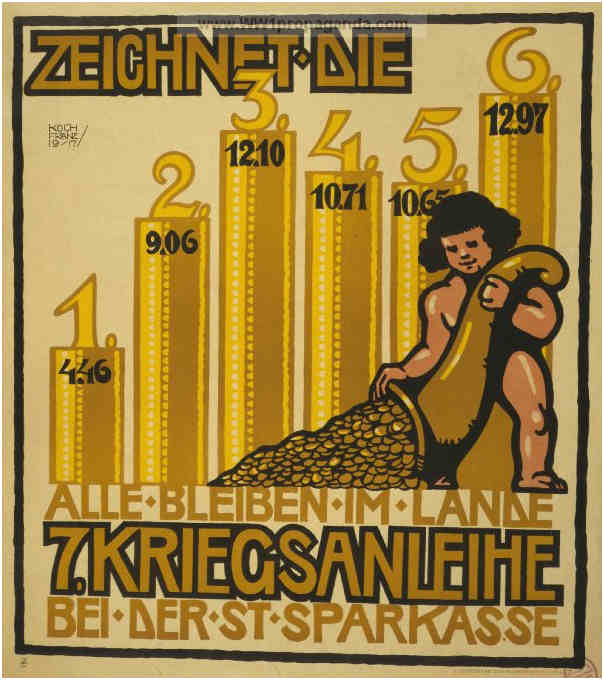 In its latest press release (Pressemitteilung), the DIW remains significantly unemotional when it says “wealth fee, a contribution towards Europe’s state finances“:
Private wealth is higher than the federal debt!
So what is new about that? Do we need an institution to tell us about it? Or do you know anybody who invests his money exclusively in state bonds?
Quite apart from the fact that the DIW keeps demolishing itself intellectually all the time, here is my comment:
The stamp collectors still possess them all. All those now worthless promises by Napoleon, the guarantees on war bonds, the VW savings certificates…
Granny died hoping for the day when the concept of burden sharing was to come true.
Before the court of history, we have a state debt crisis, not a currency crisis. During peace times, which we now have been enjoying in Europe for 67 years, we consumed too much. And now said peace must be paid for through cuts on both sides of the balance sheet: private wealth versus state debt.
It is a lot easier than telling people the truth: that our European societies have been living far beyond their means. “… because nobody is going to believe the truth, anyway” (Frisch, Biedermann und die Brandstifter). We live in a bubble of wealth that will burst. Europe is no longer capable of financing itself. Regling (the new ESM boss Klaus Regling) is in a hurry to visit China and the Third World Countries, because even Germany is not a “welcome debtor”. 2.1 billion Euros of debt tell their own story.
There is a sentence by the economic scientist List:
“So far, no country ever paid back its debt.”
As a consequence, you have to say:
Sign up for peace bonds!
And then deposit the piece of paper where the stamp collection is waiting for the next generation to be admired and studied.
And for you, dear children, I have some consolation – you will always have your education:
“Travaillez jeunes gens, il n’y a qu’une force, c’est le travail!” (Émil Zola)
wl
(Translated by EG)
Roland DürreFriday July 6th, 2012
An Interview with Rupert Lay
I found this interview by Thomas Pfister and Madeleine Stäubli-Roduner with Rupert Lay in the “Denkpausen Edition No. 11″.
Denkpausen (pauses for reflection) is a brochure edited by the Management School St. Gallen (BETTER BUSINESS). It provides “Inspiration on Management and Leadership”.
I remember well how Rupert called the top-managers the “poorest of the poor”. Mostly, he said, they are the loneliest persons in the world. And he felt he had to “help those poor creatures“.
Consequently, the initial question asked in the interview was:
“Are managers poor creatures?”
For me, this interview is a wonderful summary of many ideas we shared with Rupert. Ideas still as important today as they were then.
Here is the original text taken from the “Denkpausen”:
——————————————————————————————————————————
Are managers poor creatures?
The principle «posting, premium, prostitution» still works today. What is ignored is entrepreneurial culture. This is a conversation with Rupert Lay, a famous German business ethics teacher. We will talk about leadership personalities, overcharged managers, an ethics that has gone down the drain in many enterprises and disheartened executive boards.
Herr Lay, do you despise managers?
What an idea! I despise no person at all.
Well, after all, you write that you know «no more miserable people» than the managers when you look at the people attending your courses!
I even said that quite a few managers are poor, miserable creatures. And there is nothing more ridiculous than poor, miserable creatures in a permanent state of erection. But that is no reason for me to despise them. It is more that I pity them, because so many people own so much, yet have lost themselves.
Now that sounds quite arrogant. Is this how you treat your customers?
Yes, certainly, if it helps them to find themselves. I am sure you want to know what made me say this? Well: meeting managers. This sentence of mine is the essence of my experience from hundreds of seminars where I met thousands of managers. But, please, not to mistake me: that is how they were before they attended my seminars…
At least you say that managers have potential for learning…
Yes, I tried to convert managers who were pure leaders into true leadership personalities. Because many of them did not know ethics as a social necessity. A considerable number of them, however, learned new patterns of behavior in my seminars.
Are you telling us that your positive influence made good leaders out of managers who before had been poor creatures? Isn’t that a little arrogant?
At least, the managers had the equipment for this mutation. Quite frequently, I did cause some development. And we always continued to meet regularly in order to see whether or not some social and psychological maturing had taken place.
What, by your definition, is a good boss?
He must be a personality who will not be governed by systemic forces and who will not bend to any dictatorship. To be sure, leadership is also a question of skills. But it will often be very tedious and ineffective if you just let it degenerate into commanding. You also have to lead people in an atmosphere of goodwill. A good boss also wants to be loved.
A good boss does not pay. Or do you disagree?
In fact, he pays considerably better than a bad boss. All investment factors are smaller: the social, emotional, psychological and the financial investment. You could easily prove this if those factors were taken into consideration at the time of business evaluation. Charisma is something you either have or don’t have. Or can you learn to develop a personality? There are certainly some social and psychological requirements. And every person can develop them through striving and a strong will.
Every person? 90 per cent of all managers are said to be overtaxed by the age of 50 …
Yes, they are not only said to be overtaxed, they actually are overtaxed! Often rationally, but also socially and emotionally.
So how are those overtaxed managers supposed to become better persons?
Practice, practice, practice!
Is that enough? There are certainly many leaders, but only few of them have true leadership qualities.
As a matter of facts, there are too many leaders. Quite a few of them are unnecessary. They should immediately be made redundant, because they create unnecessary costs. But, as you say quite correctly, we have too few leadership personalities.
What – in your opinion – is the difference?
A leader is purely a system agent full of restraints. A leadership personality, on the other hand, is free inside. I know some who developed into leadership personalities, but later were made redundant by administrative boards because they were useless as system agents.
«We have too many leaders. Quite a few of them are unnecessary. They should be made redundant. »
In other words: if you behave ethically correct, you will disrupt the system?
Exactly. Because the system agents will be made insecure as soon as they meet ethically oriented persons. System agents are those who slowly grew accustomed to this forced world and all they now do is execute the systemic morals. In business and politics, you will find many of them. In order to be one of them, you also need a certain psychological and social disposition.
«A leader is a system agent full of forced mechanisms. A leadership personality, on the other hand, is free inside.»
How do ethics and economy contradict each other?
Basically, there can be no contradiction, because ethically responsible business practice will have a sustainable positive economic effect. But economic forces may call for moral behaviour that is contrary to ethical compulsions. More often than not, however, these compulsions only seem to be necessary.
You say only a personality with a humane education has leadership qualities. That would mean what we need is education.
To be sure, during professional education, we will have to watch carefully and look for a person’s natural aptitude towards becoming a leadership personality. But it is especially important before you actually give someone a job. That is why I am in favour of the trainee system. A trainee will get acquainted with various departments and functions of his enterprise during his test phase. The trainee work should always be supervised by a board member. If he is a leadership personality, his style will automatically have some influence on the trainee, because education does not happen through words. It happens through models. This trainee time should be two to three years. The trainee must learn to identify and accept the entrepreneurial culture with its moral, economical, personal and structural values. It seems that this way of selecting future employees is definitely superiour to assessment centres.
«Neglecting entrepreneurial culture is economically very short-sighted.»
Why?
Because it is the best education you can give anybody. It guarantees that leadership personalities will grow inside the enterprise without intervention from outside.
This is remarkable. What you are saying is that ethical education is not something people should learn at university or from their parents …
Exactly. This is definitely something a university should not be asked to teach. When it comes to education in the family, the parents will, apparently, play a significant role, but in the enterprise, the leaders are responsible.
And where do the board members get their norms and values?
Those among the board members who are best suited should be educated at an external seminar.
In order to enable personalities to change the system, you have to support them …
Most certainly. This is where the administrative board is responsible. When Alex Krauer was still president of the board at Ciba-Geigy, I was permitted to do a lot of work there and also introduce my principles But after they merged with Sandoz and became Novartis, it was no longer nice. Regardless of the financial success, a precious entrepreneurial culture suffered its demise. In the long run, the entrepreneurial success is not something you can measure exclusively by financial success.
In many enterprises, it was financial success that brought higher incomes, rather than better entrepreneurial culture. Is that supposed to replace missing values?
Quite possibly. Disregarding entrepreneurial culture is economically a rather short-sighted attitude. Well-paid managers should also take the worst case into consideration when organizing their lives and think about what they would need in such a case, instead of always itching for the best possible future scenario and wanting more and more. At least, they are models. Or that is what they should be.
«Many men lack the experience that you can gain more through care than through using your elbows.»
Words spoken by the priest. More success will also give you more power. And power can be abused, as, for instance, shown by Dominique Strauss-Kahn, Silvio Berlusconi or Sepp Blatter of the Fifa.
Unfortunately, power and abuse of power are close associates. Many people kiss moral norms good-bye the moment the acquire power. They see themselves as standing above the rules, all the others are just norm executors. It is a sign of omnipotence if the common codes no longer apply to me.
It is mostly men who act in this way. Would it be different if more women were at the forefront?
I do not know. The female heads of state in Great Britain, India, Israel and Turkey also all waged wars. But I certainly think more women should sit on administrative boards, if they are qualified. Women do not become system agents quite so fast, which is probably why they more often develop true leadership personalities.
Which are the better qualities in women?
During their education, women were not subjected to quite such strict codes. They were brought up in a more biophile way. In other words, they do not quite as easily follow those norms that were made exclusively for serving the system. Instead, they ask what is useful for life…
… which is why they do not get a career quite so often in this system.
Exactly. They resist being drawn too deeply into the systems. Women are also more prepared to fight power abuse than men.
Men need elbows, is that a stereotype?
Many men move to the top using pure force, because they lack the experience that you can make easier progress with love than with your elbows.
Small wonder that they then feel lonely when they have reached the top!
Only bad leaders will be lonely when they have reached the top. A good leader will do his job in the way as it is partly common in Japan: from bottom to top, according to the principle of subsidiarity. That would be the ideal scenario – an ideal leadership model.
Maybe for some managers, the concept of power is so attractive because it enables them to control everything single-handedly?
Yes, powerless power persons cannot bear to have anything happen they do not know about. They want to be omniscient. This is where quite a few Western enterprises make a huge mistake, since they think from top to bottom. Many enterprises are controlled like fiefdoms. Nothing can happen against the wishes of the top leaders.
And the bigger the organization, the stronger the hierarchical concept …
At one time, there was a tendency in business towards re-establishing small cells and divide huge enterprises into small units. That was in the 1970ies. As globalization advanced, these ideas died.
Formerly, everything was smaller. Above all, there were strict hierarchies with stern patrons. Is that supposedly the ideal?
The patron felt responsible for the entire enterprise. He had personal connections, he knew the families of his employees. His company was a huge family association with codes totally different from a large company. You will not easily be released from a family association. In a huge enterprise, the administrative boards would have to take up the role of patron. Mostly, this does not happen.
You are telling us that the administrative boards do not live up to their duties?
Mostly not. An administrative board should also be courageous enough to make the managers redundant if they abuse their power. But what administrative board member will ever do such a thing? More often than not, they are more concerned with business success than with a responsible entrepreneurial culture.
They also should prevent excessive incomes.
For me, it is a mystery how system agents who hinder the optimization of the company success can remain on their posts. Unfortunately, the principle of the three “p’s” still works: posting, premium, prostitution – even though it is both economically and socially far from the optimum. Sleaze is still at the forefront, you must not underestimate its role. The augurs will smile at each other, because each one of them knows what a villain the other is.
«Power and power abuse are in close proximity.»
Is that the reason why hardly ever anybody is punished for what he did?
Correct. Purely in terms of the system, there is a defect. Those whose work is detrimental for the company cannot be punished. More often than not, system agents are a structural element of the system and thus taboo. They will only be punished if they commit fraud, perfidy, or some such crime.
After the financial crisis, everybody talked new values. Today, nobody says anything of the sort.
That is something I am also truly worried about. The political and economic society seems to have become valueless in the truest sense of the word.
Did we understand correctly: you said if there were ethical codes in an enterprise, the business results would look better. If you do not do this, you will inevitably harm the firm.
That is indeed what I am saying. Stupidity or not being a success, however, are not punishable. Some managers actually know no better. Stupidity and not being a success are pre-destined. In those firms where I presided over the administrative board, I tried to divert the focus from the purely economic business success to more indirect aspects.
For example?
One category of being a business success is also the reputation you have, both internal and external. The positive ones are: I give people a job, I pay taxes, I provide service, etc. The negative ones are: I make people jobless, I pollute the environment, etc. These external factors can be represented in terms of money, just like the ecological factors. Every enterprise should make a balance sheet of these external factors…
«Business success can certainly not be measured exclusively by financial success.»
… and publish it.
Naturally. If you compare well with the competition, this will be quite attractive for the enterprise. It improves your external reputation. But it also improves the internal reputation, because an employee will prefer working in an enterprise that has a good external reputation. And this will also have an impact on the advertising power of a company. Many have now realized that the reputation of an enterprise is actually worth money. But if the internal reputation is not a match for the external reputation, you have a problem. Your credibility will suffer. A good external reputation combined with a bad internal reputation will not work. As a general rule, an employee will leave the enterprise if it is poorly governed. And an enterprise is poorly governed if it lacks leadership personalities.
That is if the bosses remain poor, miserable creatures!
Rupert Lay is a German philosopher, theologian, entrepreneur’s counsellor and psycho-therapist. He is also concerned with ethics and communication. In 1967, Rupert Lay established a psycho-therapeutic practice. Since the 1970ies, he has spent more and more time as a coach in management seminars, where he helped numerous persons from business and politics by providing advice. Among his customers are Federal Ministers and board chairpersons of huge concerns. In 1988, Lay also started coaching enterprises and sitting on administrative boards of enterprises himself. In 2004, Lay, who is also known under the titles «Manager‘ Pope» or «Ethics Guru», was awarded the Fairness Prize by the Fairness Foundation for his life’s work.
—————————————————————————————————————————–
Rupert Lay was my mentor and became an important friend.
Thank you, Rupert!
RMD
(Translated by EG)
Roland DürreSunday June 24th, 2012
PM Camp and Guidelines
If you do not know PM Camp, just search for #pmcamp! For the latest IF Blog article on #pmcamp click here.
The first PM Camp 2011 at Dornbirn resulted in a “movement”. At irregular intervals, I now write IF Blog reports on PM Camps. I also support #pmcamp as best I can.
*
This March, the “Core PM Camp Team”, again, worked on a vision. We would like to have many good PM Camps in D-A-CH, and later, perhaps, even world-wide. It was a very constructive meeting. In a concise and yet very thorough way, we decided upon our values, task and mission.
The meeting itself was just as fascinating as both the PM Camp 11 at Dornbirn (#pmcamp11) and the PM Camp 12 at Vienna (#pmcamp12vie) had been.
 Today, I am telling you about the guidelines we agreed to want to live up to:
“Humans are not resources!”
(This is all about humans, not resources)
”Treat others as you want to be treated by them!“
(Golden Rule)
“Let your own life unfold and help others to make their life unfold in as many dimensions as possible!”
(Biophilie)
“Future is female!”
(Women and men co-operate)
Well – so what can I say? I rather like all four of the guidelines!
So much the more I am happy about having met a friend in Zurich last week. He, too, wants to initiate a PM Camp in Switzerland. Perhaps in or around Zurich. Potential candidates for a location are Winterthur and St. Gallen. Consequently, I already look forward to #pmcamp2013ch (or something similar).
And next autumn, we also want to start something at InterFace. This year is still too early for a PM Camp in Munich. But preparatory to #pmcamp13muc, I will try to organize an event late in 2012:
“PM Camp meets Munich“
How about a motto like: “Best of PM Camp”. We can organize it all along with a technological IF Forum for our friends and partners.
And who knows – maybe I will actually find a few supporters for the Munich PM Camp 2013? What a nice idea!
RMD
(Translated by EG)
Roland DürreMonday June 18th, 2012
EURO + GREECE + BILLIONS + FUTURE
On Sunday evening, I watched “The News”. Incidentally, this is a stupid euphemism! How would you watch news?
I found it remarkable that they were talking about a “Fateful Hour for Europe”. Just because they had tiny general elections in a tiny European country. Incidentally, the same country will get a really serious beating next Friday in the soccer game. Because they misbehaved big time.
🙂 Or maybe they will cause a sensation. Well, when we are talking soccer, nothing is impossible.
But they call it a “Fateful Hour” – and for all of Europe, at that! Another one of those euphemisms. Are we looking at the next “European War”, or what?
So what is this all about?
For me, the Munich decision about the Third Runway is more important. Perhaps this is really the beginning of an about-face – away from the concrete-chromium-jet-set society? I am not yet courageous enough to be hopeful.
But let us get back to all those billions. In German, one billion means 1,000 times 1,000 million. Unlike the British convention!
Then I heard in the news how fortunate it is for us Germans, too, that Greece will now remain in the EURO zone (?). Otherwise, we Germans would have had to pay additional costs to the tune of more than 100 billion Euros.
Now that, too, is bullshit. But even if it were so: what is an extra 100 billion in this game? In this game, the public corporations of the FRG are already indebted by more than 2,000 billion Euros. Not too long ago, it was a little less than 2,000 billion. In view of this, 100 billion are less than 5 %. This is ridiculous.
And currently the national debt is increasing faster than ever before, regardless of the “debt brake” (another one of those linguistic stupidities) and “an overwhelming tax flow”. Neither the “obligation to economize“, nor the “fiscal package“ (again twice linguistic stupidity) can change anything about that fact. The system is no longer linked to a person. It just runs as it runs.
Besides, it is quite irrelevant whether we reach the 3,000 billion for our national debt sooner or later. Basically, it is quite simple:
This kind of national debt, no matter if we are talking Germany, Greece, Europe or the USA, can only be overcome by one means: inflation (or even better: collapse of the currency).
Let us discuss the friendlier version: inflation (I consider collapse rather unlikely, which is why I am not discussing it).
If we want to achieve a nominal reduction from 2 billion in real debt to 1 billion in a certain time interval (let us say, for instance, five years), then the value of the money must be reduced to half its worth. If we want a reduction from nominally three to one billion, then the money value must be reduced by the factor three. In terms of inflation, there is not that much difference, is there?
Firstly, it is not such a bad idea if the very rich, for a change, have to let go of some of their wealth. The determining factor whether or not someone is going to lose or actually even profit is his or her mixture of investments. And this is one area where the rich cannot be sure about the best strategy. Gold and real estates will not necessarily be the best choice. Which is why mostly the losers are in the majority. In the past, quite a few millionaires ended up paupers.
Unfortunately, the truly poor people who have nothing but their retirement money are the real losers. For instance “Grandma with her savings account” or the “Hartz 4″ recipient. And many more. But it will happen anyway. All we can hope for is that the pain will be eased a little.
Maybe the solution is actually some sort of “un-conditional basic income” – along with supplementary occupations in the typical low-income sector. There is enough work in our society – even for the so-called “social fringe groups“ and “persons with few qualifications“ (another one of those unfortunate phrases).
When we are talking inflation, we often forget that many basic necessities, such as food, are still relatively cheap in Germany, regardless of all the inflation we have. With many products, inflation was softened in the past through an “increase in productivity“ and a “readiness to forego top quality”.
The latter of the two aspects is something I cannot understand. But it can be explained by a (slow) adaption to the lower living standards based on the consumer being massively influenced towards poorer but more attractively labeled products – which, in actual fact reveal a tendency towards an abnormal living quality – through marketing.
The former of the two aspects, increased productivity, might well be a dying swan. After all, “increased productivity“ is only partly due to “real creativity“ and “innovative solutions“. In fact, it is mostly more the result of us treating nature and resources extremely lavishly. Along with a systematic exploitation of humans, both here and in other regions of the world. Using humans and nature in a “non-sustainable“ way might be another one of those euphemisms.
Well, the wealthy people, in particular, are now changing their consumer habits. More and more often, quality beats quantity. It gets more attractive to have “less” instead of “more”.
We face many problems – and they get more and more obvious. However, the only way to solve them will be through creativity, innovation and a different mental concept. “Everything is functioning quite well” and “this is what we always did” will get us nowhere!
So here we go – start NOW
RMD
(Translated by EG)
Roland DürreSaturday June 16th, 2012
What Annoys Me #28 IHK & Third Runway
On Sunday (tomorrow) the citizens of Munich will cast their votes for or against one of the biggest traffic projects of the Bavarian Capital City: it is all about whether or not a third runway should be built at the airport. The outcome of the plebiscite is open. (see: Focus citation)
 In the latest edition (6/2012) of its IHK magazine for Munich and Upper Bavaria “WIRTSCHAFT” – incidentally, the magazine is another one of those totally unnecessary regulars and a waste of paper – the IHK tells us why the “Franz-Josef-Strauß Airport” needs a third runway. On high-gloss paper, the reader is charmingly invited to vote in favour of the third runway at all costs.
Unfortunately, the project means lots of expenses that I, personally, cannot really appreciate. Besides, all the many important arguments I can think of against the third runway have not been mentioned at all.
And the entire campaign is accompanied by extremely stupid headlines, such as “Plebiscite Third Runway – Champions League or Relegation?”. Mind you, you will find this right next to the dinner talk (?) “Encourage Ecology“.
On the IHK website, you can also read:
The alliance “Third Runway, Yes!” mobilizes forces to support the plebiscite on June, 17th. Among others, the IHK is on board trying to achieve a positive outcome of the plebiscite for the third Munich airport runway. Our Upper Bavarian export-intensive economy needs the third runway in order to remain competitive.
Well, this is when I start feeling someone is making fun of me.
We have an association which to me, even after intense research, makes no sense at all. I have no choice but to be a member. Said association drowns me in high-gloss paper. Again and again, I notice that its comments are not very well-researched and the speakers on all varieties of events are rather long-winded. Once in a while, they tell you that the Upper Bavarian export-intense economy has an export rate that is too high…
This association, which is financed by public money and by involuntary contributions from our enterprises is bold enough to assume the role of lobbyist. For an investment that is ecologically and probably even economically totally stupid to the tune of considerably more than a billion Euros.
Well, in a way I am actually almost glad our “father of the state” said he was not going to let himself be influenced by whatever the result the plebiscite will be.
RMD
(Translated by EG)
Roland DürreSaturday June 9th, 2012
New Video with Rupert Lay: “What Managers Fear”
This weekend, I downloaded another of Rupert Lay’s videos to Youtube. It is about:
What Managers Fear
This presentation was given on April, 22nd, 2001 at the Ronneburg. It addresses managers in particular.
I would be happy to know that you watch it! To me, the minutes between 21 and 30 looked particularly important. But there is certainly more than one highlight in this video.
As most others, this presentation, too, was originally for the Ronneburger Kreis. It was filmed by Bernd Sielaff and revised by Friedrich Lehn.
RMD
(Translated by EG)
P.S.
Now I have four more presentations by Rupert I did not yet publish. Expect the next one in about six weeks.


