
Roland DürreSaturday October 26th, 2013
A History of and Manual for PM Camp
(and barcamps in general)
Life-long learning and development are important for everybody. As an addition to “auto-didactical studies” and working alongside a master (in the sense of craftsmanship), barcamps are the best opportunity to enrich your own learning curve through the experience of third parties.
In traditional teaching-learning situations, you probably learn 90 % from the “teacher” and 10 % from members of the group. As the situation progresses, this proportion changes in favour of the other group members. In the best seminars, you can get a ratio of up to 30:70%. On barcamps, 90% and more of the learning happens through the knowledge and experience of other participants! Persons open up and share what they experienced, saw and learned.
This is face-to-face lived “Open Source” on an open event. Communication is experienced at eye-level, based on the empathy of persons you have either known for a long time or just met for the first time. Trust is built up from scratch. You learn a lot, not just in the technological sense, but also in the “personality promotion” department.
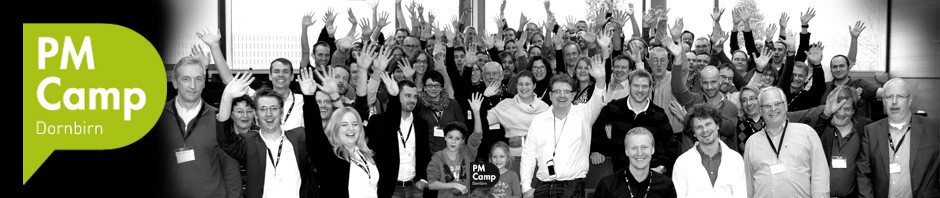
In 2011, Kornelia Hietmann, Eberhard Huber, Jens Hofmann, Dr. Marcus Raitner, Dr. Stefan Hagen and yours truly (Roland Dürre) thought that it was about time to introduce a barcamp for project managers, entrepreneurs, leaders and managers. The first PM Camp was at Dornbirn in 2011. This year, we already had four of them – in Vienna, Stuttgart, Bad Homburg (Rhein/Main) and Berlin. And now we will see each other at the third Dornbirn PM Camp.
Why are barcamps such a success?
A barcamp depends on the persons who attend it. The actual realization and the success, the joy and delight, the quality of discussions and results, the degree of added knowledge, agreeing upon a consensus, the experience of meeting and the development of new contacts and relationships: all those and much more is caused by the people who participate, bring their experience and share their knowledge.
This is how all participants take responsibility for the “camp” becoming a success.
The same is true for the PM-Camp. We call our barcamp for Project Management (PM) PM Camp. “Project Management” is meant as a metaphor for leadership, management and entrepreneurship. PM Camp wants to reach persons who are prepared to take responsibility and shape our future together and in social harmony with other persons.
Each PM Camp is organized by a local “Orga-Team”, usually 3 to 5 people doing it on an honorary basis. They plan, communicate and prepare the event, at the same time trying to organize everything in the best possible way together with the PM protagonists and the friends of openPM .
Ideally, there should be between fifty and a hundred participants, otherwise the Camp would probably no longer have its human character. In order to avoid collisions, the date is coordinated with other PM Camps. Thanks to sponsors, the participants pay a rather low attendance fee. Still, we are careful to not violate the independence of PM Camps. As a general rule, the organization team will only invite a very limited number of impulse speakers.
PM Camp is the supplement Face2Face movement accompanying openPM. Besides the virtual platform openPM, PM Camp deals with the organization of “face-to-face” meetings.
As a general rule, a PM Camp will last two days. During the day, the motto is “work hard” and in the evening of the first day, the motto is “party hard”. More often than not, some participants already meet for a comfortable get-together or walk&talk on the preceding evening – simply in order to meet old friends and prepare mentally a little bit for the coming PM Camp.
Then the time comes – and the actual PM Camp starts. The participants meet at the appointed time and place. There might be a little “ice-breaking”, the organization team reminds everybody of the central barcamp rules (“whatever will happen is the right thing to happen”, “what is over is over”, “the law of feet”, “freedom”,…). And then we start! Consumers become producers and a wonderful session plan will be drawn up in no time.
In a nutshell:
PM Camps and barcamps are such a success because they actually function on the basis of self-organization and self-determination, not only with respect to content!
barcamps and PM Camp (3) – “Typology of Sessions”
The sessions are the core of every PM Camp. It might be a good idea for the participants to prepare mentally and think about what topics are important to them in advance. If you do that, you might be able to head your own session as early as during your first PM Camp.
Basically, there are three models for sessions:
Type 1 – Sharing Knowledge!
The initiator of such a session thinks he knows something important and wishes to share it!
Let us assume someone made a very special experience, was introduced to something totally new, understood some basic concept… And he assumes that others, too, might be interested. Consequently, he announces a session and tells people in advance what he would like to speak about. Of course, he will not bore his audience with a lengthy oratory. He might only come up with a few theses or give a short description of what he experienced. And then everybody starts debating and discussing.
Type 2 – Make use of other persons’ experience!
The initiator finds himself in a new situation and needs assistance!
Someone might have a question he has been labouring on for quite some time already. Or perhaps something happened to him and he does not know how to deal with it. He might even have a huge problem and need people to talk to.
And then he will also announce a session and look and see who arrives and wants to help him.
With this type of session, of course, you need particularly “good” listeners. You need listeners who try to listen extra carefully and who can mirror what they understood with the least possible degree of distortion.
The important thing is that the participants are capable of empathy, instead of being persons who immediately “want to know better” and shine with “unwanted advice”.
If you can get this, then the result of this type of session will often be truly great. And, again and again, I am surprised to see what excellent “participants” you usually get with these PM Camp sessions. And how many problems we were already able to solve, at least rudimentarily!
Type 3 – New experiences!
The initiator wants to actively do, play or try something!
In this area, there is countless potential for successful sessions! Every PM Camp will give you a surprise. It might be something about physical activity or something that made people thoughtful. New experience is collected actively and relevant things are playfully acted out. You try new things and test them against the standard of established strategies. More often than not, you get a shared experience of “frontier exploration”. And if during this kind of session you try something new and it does not work out as planned, then this is no problem on a PM Camp.
All you need is the courage to take part and also to jump over your own shadow. And something surprising will immediately happen. There might be a regression which will suddenly trigger a lot of creative and wise things.
More session types…
Of course, these three types are far from all. They are merely three “patterns” for sessions you will often remember in detail and with pleasure!
social web
During a PM Camp, you are not only permitted to, but actually encouraged (forced) to twitter. Basically, playing on your mobile telephone is just as much allowed (and even encouraged) as leaving the room and attending another session.
As a general rule, you will find a “twitter wall” on a PM Camp. Tweets written in twitter and marked with the event tag (for instance #pmcamp13ber for the PM-Camp in Berlin) will run through it in real time. In this way, you will get a thread which might already serve as a first documentation of and comment on the event. You will know what is currently happening on the PM Camp, what other persons experience or feel and how they think.
Naturally, every participant can also look at the twitter wall with his or her own device. When doing so, you will often notice that many persons participate in “real time”, even though they are not actually physically present. All the tweets taken together are a beautiful retro-perspective of the event. You will enjoy looking through them and mentally re-living the Camp later.
There is no “official” documentation of a PM Camp, such as proceedings or the like. This is absolutely intentional! Because the documentation, too, is voluntary. It, too, is organized and determined by the participants. As a matter of facts, the model works well and consequently you get a thorough, and – above all – well-balanced multi-media documentation in no time at all which contains texts, pictures and videos. All the important things are included and everything is centrally available on openPM and beautifully connected.
To be sure, in this article, I only mentioned “twittering”. But, of course, Facebook or google+ are also potential tools for you to use during a Camp. Or you might wish to initiate a community. Basically, you should choose a medium where as many people as possible can participate.
Culture and values
What is true in real life is also true during a barcamp: nobody should be made to feel inadequate or even hurt. Personal attacks are to be avoided at all costs, even if you might be hugely disappointed. And if you really misbehaved, you have to apologize.
The only thing you cannot tolerate on a PM Camp is intolerance. But intolerance is the one thing you should always approach directly and in person, rather than circumspectly.
Where special care is needed
It is not much. To be sure, good manners will not do any harm at a barcamp. In fact, it is usually a matter of course during a PC Camp. The rule you know from the old meta plan: “Everybody is everybody’s butler” is also one you can never go wrong with. Other than that, barcamps, as well as the PM Camp, are free events. Nobody has to do anything they do not feel comfortable with.
As always in life, helpful behaviour is more helpful than buddying. Every participant determines by himself to what degree he wants to integrate himself. There is no obligation to have your own session. Many participants remain rather passive and quiet during their first PM Camp – until the spell breaks and they suddenly make the transition “from consuming to producing”.
If you are a first-timer or someone who likes remaining in the periphery, I would recommend that you try your first own session as early as possible, even if, by your own estimation, the topic is still half-baked. Usually, being courageous early on is rewarded. And I would ask the “oldies” to wait as long as possible when it comes to volunteering for session chairperson, before they finally fill the last empty spaces. Some participants need a little more time before they get courageous enough. And it is always a pity if new contributions will not happen because someone else was needlessly impatient.
Communication is all
As a general rule, the organization team of a PM Camp will recommend to the participants to “thou and thee” each other. Thou-ing and thee-ing each other will bring you closer together and facilitates the communication. It makes sense in a community where everybody has the same goal and everybody is prepared to share their most precious commodity – experience and knowledge – openly and fairly.
If a participant prefers to be addressed formally, this is, of course, accepted. But no matter how you address each other, the central issue to always keep in mind is that you have to respect each other. Even in the middle of a battle, violation of honour must not happen. And if it does, it has to be corrected immediately.
PM Camp demands from and promotes in the visitors a little empathy and “altero-centrism”. It means that you put your own ego to the background and open yourself up for the values, expectations, interests and needs, as well as emotions of “the others”.
So here is what I recommend:
Participate! Be courageous! Bring joy! Accept delight, maximize all these things and hand them on! No need to “wear a mask”! It is not necessary on a PM Camp!
Respect and appreciate others as much as yourself. Give and take knowledge and experience. And then nothing can go wrong at all!
RMD
(Translated by EG)
P.S.
Many thanks to Eileen who helped a lot with this summary.
Roland DürreFriday October 11th, 2013
“The Wise Animals in the Zoo” or “Academia”
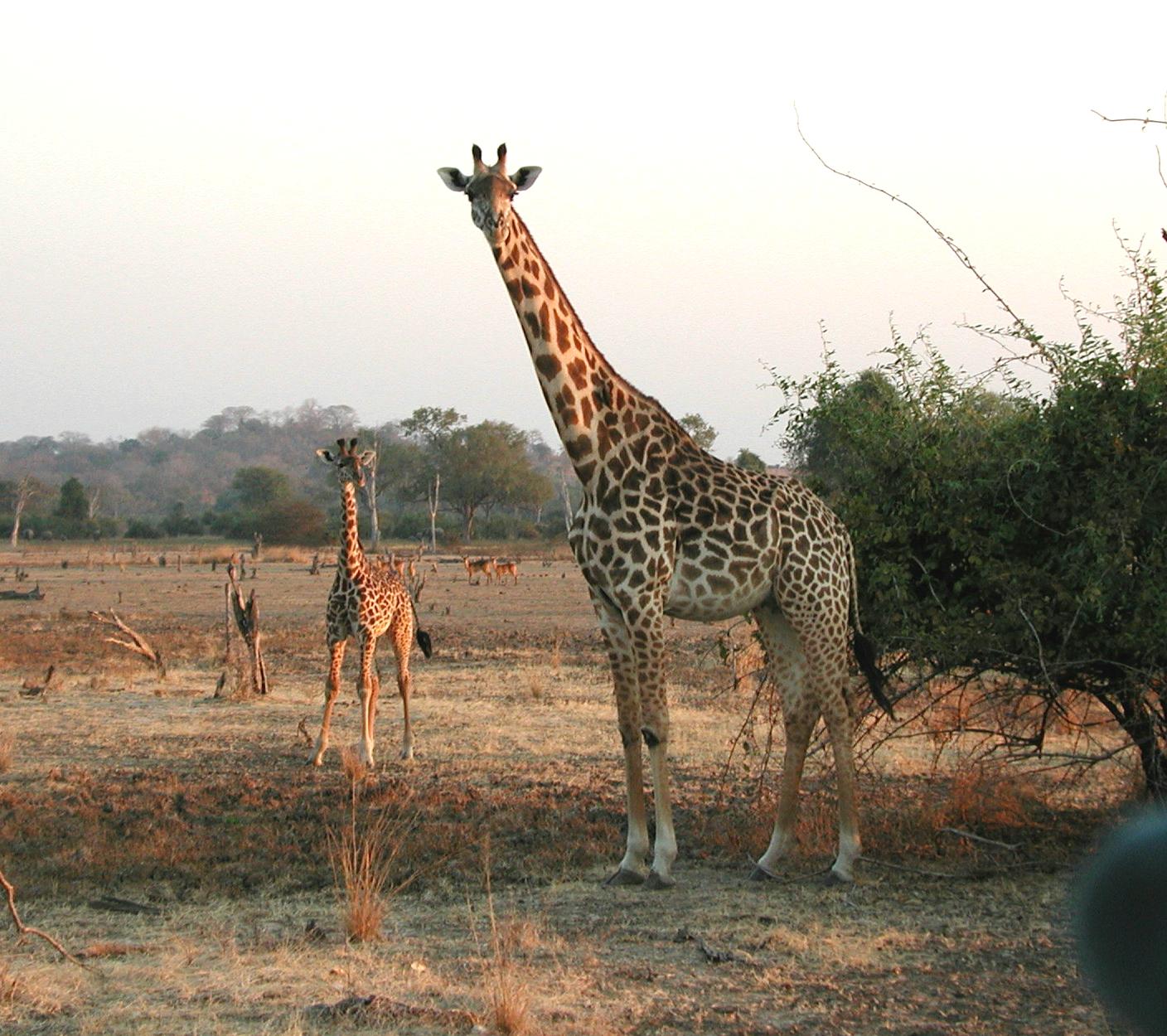 Once in a while, I also meet professors of the faculties business and philosophy. On those occasions, we talk, for instance, about business ethics and business morals. And I get the impression that academia is a nice zoo. Many quite fascinating animals live therein.
They are well tended and fed. Their health is exemplary, because the medical attention they receive is excellent. How their smooth coats shine! When they show their teeth, you see a faultless set. You will immediately notice that they have excellent knowledge and a precise understanding of things. Mostly, they have very agreeable personalities.
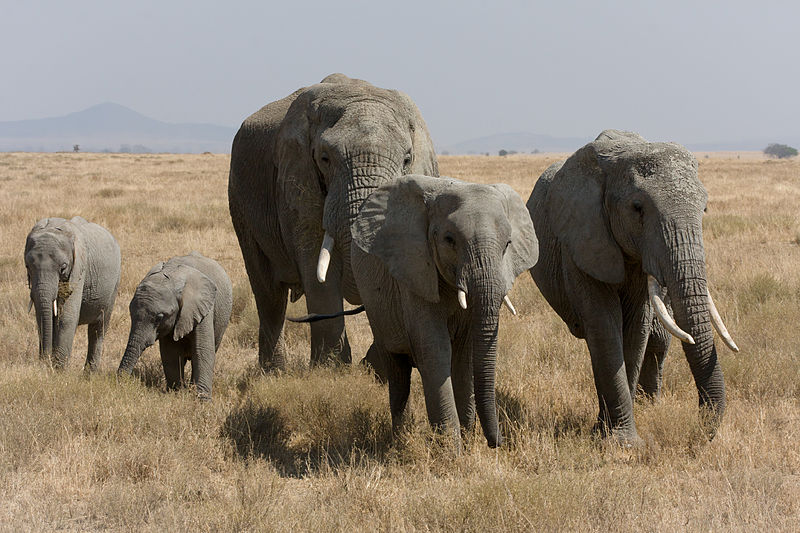 These animals have plenty to think about. Yet, there is but one glitch: more often than not, their knowledge is very abstract and theoretical. Because these animals sit in the zoo. Mostly, that is where they were born, too. Unfortunately, they never lived in the wilderness.
And in the zoo, they try to find out what life in the wilderness might be like. Of course, they can only make a guess. After all, they live in the zoo.
More often than not, their ideas are right on the mark. Once in a while, their wild guesses cause strange outpourings. And that is when many things start just going wrong.
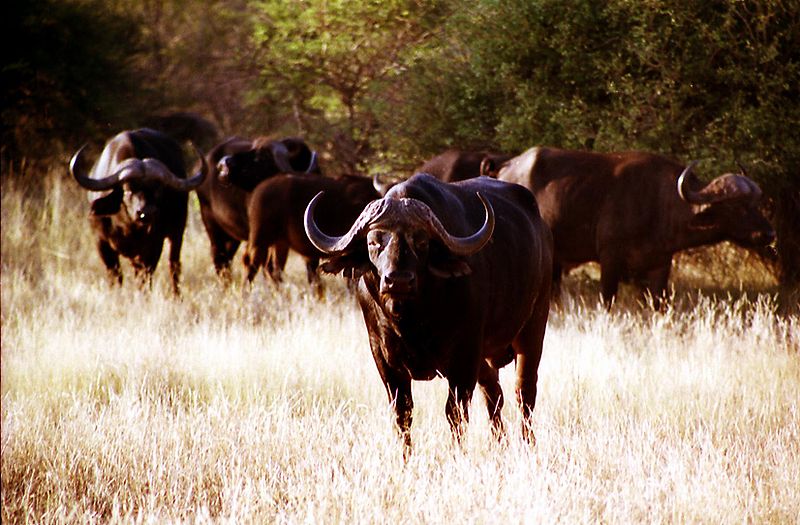 Regardless, the animals in the zoo do an important job. They teach us animals living in the wilderness many beautiful theories. We can play with these theories and come up with our own opinions: are they useful or not?
However, we, too, do not really live in the wilderness. Perhaps once in a while you could say we live in a biotope. The cultural world prevails. The natural world is something that no longer exists.
Thinking of the animals in the zoo brings something else to mind, totally associatively:
Die süßesten Früchte fressen nur die großen Tiere (The sweetest fruits are for the big animals only).
Somehow or other, it seems to fit, doesn’t it? Or maybe this is the reason why all the big mammals are usually vegetarian? Perhaps that should be a reason for us to start thinking?
RMD
(Translated by EG)
P.S.
The picture of the giraffe was taken by John Walker (Images of Africa), the elephants by Ikiwaner and the African Buffalo by Stefan Ehrbar.
And since it is so beautiful: Here is Peter Alexander in the year 1952:
Roland DürreWednesday October 2nd, 2013
Please Note: New Time!!! Third IF Forum in 2013 with Roberto Simanowski on October, 25th, 2013
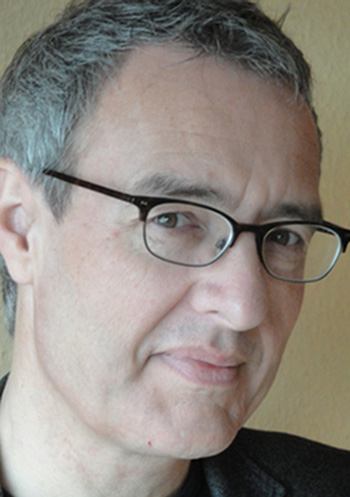 Our speaker of the third and last big IF Forum in 2013 is
Professor Dr. Roberto Simanowski!
He was going to give a presentation about:
Jean Paul, his witticism, the post-modern area and the new media.
The presentation was going to take place on November, 7th. For several reasons, we had to change the date. But be not afraid: the speaker will be the same.
On Friday, October, 25th, 2013 (please note – rescheduled!), Roberto Simanowski will tell us about a Jean Paul who, considering the times he lived in, was rather autonomous, revolutionary, in fact, almost anarchistic. Afterwards, he will give his opinion on the following current topic:
Big Data and Transparent Society: NSA, Self-Tracking and the Internet of Objects.
Here is what he will provide us with:
- Big Data being the “crude oil” of the 21st century also raises the questions of environmental pollution and of an informational sustainability concept.
- Both politicians and citizens refusing to talk about the NSA affair not only points towards non-existent problem awareness, but also to a camouflaged complicity.
- The “cold civil war” does not take place between the citizens and the secret service/surveillance society, neither does it happen between individual citizens. It actually happens inside every citizen. Databases replace stories as a form of understanding the world and yourself. The algorithm becomes the psycho therapist. It neither tells the patient what it found out, nor asks if it may use what it found out
About the speaker:
After having studied literature and history, Roberto Simanowski received his doctorial title in 1996 at the Friedrich-Schiller University of Jena with a work on the mass culture around 1800. Following his time as a scientist at Göttingen University, he was a visiting scholar at Harvard University (1998-2000) and the University of Washington (2001-2002), as well as representing the chairholder for media sciences and cultural theory of digital media at Jena University.
Between 2003 and 2010, Roberto Simanowski worked as an assistant professor at the Department of German Studies of Brown University in Providence (USA). He has now held a professorship at the seminar of media sciences of Basel University since 2010.
In 2011, he habilitated in media sciences at Siegen University with a work about digital media. He is the founder and editor of the online journal for art and culture of digital media dichtung-digital.org.
Here are some of his publications in the field of digital media:
- Text machines – kinetics poetry – interactive installation. On understanding art in the digital media (Transcript 2012)
- Digital Art and Meaning. Reading Kinetic Poetry, Text Machines, Mapping Art, and Interactive Installations (University of Minnesota Press 2011)
- Reading Moving Letters: Digital Literature in Research and Teaching. A Handbook (Mhg; Transcript 2010)
- Digital Media in our adventure society. Culture – Art – Utopia (Rowohlt 2008)
- Interfictions. About writing on the internet (Suhrkamp 2002)
- Digital literature: forms and ways of new literature (Hg., DTV 2002)
- Digital Literature (Hg., Text & Kritik Oktober 2001)
Note:
This IF Forum will be held in our headquarters building at Unterhaching, in the seminar zone under the roof. We start at 18.00 hours. We look forward to welcoming our guests! As always, you can register for the IF Forum via e-mail.
RMD
(Translated by EG)
Roland DürreSaturday September 28th, 2013
Still Wanted: Sponsor for PM Camp!
Three years ago, we had the first PM Camp in Dornbirn. It was initially intended for DACH (Germany, Austria, Switzerland). Many people liked it so much that this year more PM Camps have taken place in Vienna, Stuttgart, Bad Homburg (Rhein-Main) and Berlin.
However, this great development motivated some of the sponsors to support local Bar Camps close to their own home, rather than the far-off one on the lake Bodensee. Well, this is certainly an understandable development. Yet now its consequence is that we are still looking for some sponsors to support our Dornbirn PM Camp. After all, we want to maintain the high standards of this perhaps best-frequented PM Camp of all.
 Here is the invitation for potential sponsors by the Dornbirn organization team:
As all other PM Camps, the one in Dornbirn is also a non-profit event. The entry fees are kept low on purpose (99 Euros plus added value tax for two days including all meals). They do not cover the actual costs of the event.
Consequently, we need sponsors who share the PM Camp vision and are prepared to contribute. As a sponsor, you will leave no doubts about your own innovative and future-oriented position. You can introduce your own topics during the open space sessions and gain many new impulses. Last not least, you can meet interesting people, either as potential future customers or employees.
Be part of the PM Camp movement which started three years ago in Dornbirn and now has been extended to also reach to Vienna, Berlin, Stuttgart and Bad Homburg! Show your potential employees and customers that you are prepared to leave the antiquated paths of established conferences and to think in new terms of project management. You can actively support the most important and (in-)famous anti-conference on project management in the German-speaking area!
For details of our sponsoring arrangement, click here. Do not wait too long, because sponsor opportunities, too, are limited.
Incidentally, sponsors do not pay a very high sum. I look forward to your questions!
RMD
(Translated by EG)
Roland DürreTuesday September 17th, 2013
What Annoys Me #32 – Many Speakers’ Degenerateness …
I keep attending events sponsored by all sorts of organisations, where I hope to learn something new. Perhaps also because I wish to extend my social network. At these events, I listen to presentations.
More often than not, the speakers are glamorous personalities with impressive titles. In their visiting cards, you can read things like “author and key speaker”, “innovative constructor and instructor” or “trainer and speaker”. Naturally, they are all members of the GSA (German Speaker Association) or similar associations. And they pretend to have special expertise on some not very precisely defined topic.
And then they lay it on thick. Using too obviously trained rhetoric skills, they present slides like zillions of times before where the only things they modified are the place and the date. In their show, they link commonly known psycho tricks with banalities, interspersing caricatures that only seem funny at first sight. To make up for it, they keep mixing populist with allegedly provocative theses.
Each of their presentations is full of the same old flat jokes and they always laugh routinely at the same places. They make use of the prejudices of their audience for confirmation of many a thick theory. If you are lucky, they will at least give you a nice cabaret performance.
Then they take their money and disappear. We even celebrate them because, after all, we are used to far worse presentations. Presentations given by persons who have no talent at all but bought their speaker invitation with sponsoring or something similar.
To me, it seems like the number of these make-believe speakers increases all the time. A presentation should be humble and moderate. The speaker should relate what is important to him in an authentic and truthful way. He should talk about what moves him, share his knowledge and experience in life and do without all this knick-knack. Because, when all is said and done, you will otherwise only get distracted from what is really important. Well, getting distracted will also keep you from noticing mistakes.
In a nutshell:
I am fed up with this narcissistic mixture of cheap showmanship, claptrap, semi-truths, more or less hinted at conspiracy theories and the constant game with all kinds of effects used by this commercialized new world of speakers.
And I know from my personal experience as a speaker that it is not at all necessary.
RMD
(Translated by EG)
Roland DürreMonday September 16th, 2013
Bi-Weekly News #34: IF Akcademy / IF-Forum – Thursday, September, 19th, 2013 – Careful! – E-Mail!
This week, the time has again come: on September, 19th, 2913, at 18:00 hours, there will be another interesting IF Forum as part of our IF Academy. You can hear an exciting presentation about:
Mailserver & Mail-Client (Careful E-MAIL!)
“History, Spam&Virusses” or “concepts for the secure and reliable operation of a mail server”
(Hans Bonfigt / Marc Haber – redoxSystems)
And here is the good news:
 Marc Haber will also come.
By now, we can verify that, besides Hans Bonfigt, Marc Haber will also be there. The two of them are experts when it comes to the technology and the depths of our so often-used medium email. In fact, with these two persons we have a couple of “supremely knowledgeable” guests who are both extremely competent and radically critical, since they are “chips of the old block”. Both of them have the special talent of coming up with simple explanations even when the topic is complex. I know them both personally and they will give very interesting reports as co-speakers.
For instance, they will deduce logically that an enterprise basically cannot avoid having its own mail server. They will also show how easy it is to install said mail server and how cheaply it works if you use free software.
Simultaneously, they will give a quasi “first-hand account” about the rather “common” concept of “SINA-Boxes” potentially abusing your civil rights on a daily basis without your having even the slightest chance of so much as noticing it.
Since currently this topic is rather much-discussed, we promoted the IF Academy presentation to become a “special IF Forum”.
Consequently, this coming Thursday evening is another very good opportunity to introduce InterFace AG to our friends, partners, customers and all interested persons, as well as to new colleagues.
So here I am asking you all to support the IF Forum and make it a lively event. I will also be very happy to welcome participants who failed to register on time or decide to visit spontaneously.
For details and registration, click here: LINK !
I look forward to welcoming many visitors!
RMD
(Translated by EG)
Roland DürreSunday September 15th, 2013
Before the #pmcamp is after the #pmcamp … (1)
My Contribution to #pmcamp13ber
I am sitting in the Berlin DB lounge, waiting for my train to Munich. The PM camp and sessions I attended yesterday and today is still on my mind. And since I received so much positive criticism, here is a concise version of today’s presentation by yours truly.
It is a description of what a modern manager who wants to be both successful and ethically responsible might (or should?) look like. From other sessions before my own presentation, I got the impression that it might be a good idea to start with a definition of “moral conduct” and “ethics”. So this is how my presentation started:
Moral Conduct and Ethics
As I understand it, moral conduct is characterized by rules and laws. Some of them have been written down, some of them are valid without the written form. It is generally assumed that moral conduct is a requirement for the common good (bonum commune) in social systems, or at least that it will be very useful in this sense.
If you violate the rules of moral conduct, this will have consequences: you will suffer either punishment – if you broke the law – or social ostracism or something similar. The fact that moral conduct can also cause damage is accepted. And this kind of damage is often done because, basically, laws cannot foresee all “morally problematic” situations in life, no matter how you amend or add to them.
Ideally, the citizens agree to adhere to the rules, since they understand how beneficial this is for the entire society. Unfortunately, however, this is not what usually happens.
Problems with moral conduct:
If you insist on moral conduct as being normative for your behaviour, this will cause lots of problems. More often than not, the accepted damage is too much. The world changes, yet moral conduct is more or less static, which makes it a contradiction to new developments. Different groups of society (age, sex, socialization, religion, …) might well have totally different opinions on some relevant topics.
Ethics, give you a rule. Behaving ethically means you make this rule the maxim for your own decisions and behaviour in a responsible way. In order to do so, you have to be able to decide and act according to an ethical balance of values following the rule. Consequently, “ethical behaviour”, too, will usually be in the interest of the “bonum commune”. It is an important goal of ethical behaviour to minimize damage.
Examples for ethics:
- Happiness-Ethics (Eudämonismus) Its roots are in Greek philosophy. It aims at maximizing lust yet avoiding pain
- The Golden Rule It means “treat others the way you would like to be treated“
- Duty Ethics Duty ethics simply tell you to follow the law (and the orders of your boss).
- Conscience Ethics “follow your conscience”
- The principle of biophile behaviour.
I do not think the Happiness Ethics and the Golden Rule can be practiced. Management is not the only sector where it probably will not be very helpful. Moreover, these two ethics only seem to be applicable to humans. Today, however, there is a broad consensus that ethics far exceeds human affairs.
The duty ethics are something I mistrust as a matter of principle. Too many atrocities and crimes have been committed “just doing your duty”.
“Follow your conscience” is not really conceivable to me, because as a general rule, conscience will always come after the decision and the act.
My next two articles will discuss the image of the “new manager” and the “biophile principle”.
RMD
(Translated by EG)
Roland DürreWednesday August 28th, 2013
barcamps and PM Camp (5) – Rules
Here is the last of my articles on barcamp in general and PM Camp in particular. So far, I wrote how I first started with barcamps (1), why they – and in particular the PM Camps – are such a success (2), what typical types of sessions there are (3) and how social media such as twitter and barcamps go together (4).
Today’s article is about a few finishing comments.
What do I have to be careful about?
Well, there is not much. Of course, remembering the manners your parents taught you will not do any harm at a barcamp. At a PM Camp, this goes without saying. Also, it is always a good idea to stick by the rule you all know from Metaplan: “everybody is everybody’s butler”. Other than that, a barcamp, as well as the PM Camp, is an open event; nobody has to do anything they do not wish to do.
As always in life, cooperative behaviour is more helpful than trying for complicity. Every participant will decide by himself to what degree he wishes to integrate himself in the process. There is no obligation to chair a session. When attending their first PM Camp, many participants are totally silent, just listening – until the spell is broken and all of a sudden “consumers become producers”. Mostly, the time for this comes surprisingly fast.
There is also something I would like to say about planning a session:
If you are a first-timer or very shy, I would advise you to try your own session early on, even if you yourself see the topic as not yet well-enough thought-through. Mostly, showing courage early will be rewarded. On the other hand, I would ask the “old hands” to wait as long as possible before filling up the last slots. Some participants just take a little longer to find the courage. And it is always a pity if there is no room for new contributions, just because someone else was unnecessarily impatient.
Similar to twittering, there are a few things you should also keep in mind.
As a general rule, the organization team of a PM Camp will propose that the participants thou and thee each other. This creates closeness and facilitates the communication. It makes sense for a community where everybody wants the same and you all wish to share openly and honestly your most precious commodity: experience and knowledge. For me, a PM Camp is like a soccer match – and in sports, thou-ing and thee-ing each other comes quite natural. Most quick matches and co-working experiments will run smoother for it.
If one participant, however, prefers to be addressed in the formal way, this is, of course, accepted. But no matter how you address each other, you should always keep in mind that respecting the party at the opposite end is the central value. Violating someone’s honour cannot be tolerated, not even in the thick of things. And if it happens, you have to correct it immediately.
Thus, PM Camp will force its visitors to show a healthy degree of empathy and “altero-centrism”. With this, I mean that you should push your own person a little to the back while opening up for the values, expectations, interests and needs of others.
Consequently:
Participate and bring some courage. Accept the joy and humour, add to them and hand them on! There is no need to wear a “mask”, because on a PM Camp, this is not necessary. Respect and honour each other like yourself. Give and receive knowledge and experience. If all this happens, nothing can go wrong!
RMD
(Translated by EG)
Roland DürreSaturday August 24th, 2013
barcamps and PM Camp (4) – Twittern is a Necessary Part of It.
In my little series of articles on barcamp and PM Camp (#pmcamp), I described some models for three kinds of sessions in the last instalmnt. Today’s article is about twittering and some behavioural rules directly related to it!
Can you twitter during a barcamp in general and during sessions in particular?
During a PM Camp, you not only can, but actually should (must) twitter. In fact, twittering is a very important part of the Camp. Incidentally, you are also permitted to play on your mobile phone in the middle of a session and to leave the room in order to attend another session.
As a general rule, you have a minimum of one “Twitterwall” at a PM Camp. On it, all tweets written in twitter and marked with the tag of the event will run there in real-time (for example #pmcamp13ber for the next PM Camp in Berlin). Thus, you get a central theme which actually can be taken as first documentation and comments on the entire event. You will know what happens on the PM Camp, how other persons feel and what their experiences and thoughts are.
Naturally, all participants can also take a look at the twitterwall on their individual devices. And they will often see that many persons who are not physically present will actually take part in “real-time” in this way. For instance when I first went to the Dornbirn PM Camp in November 2011, I could not come before noon of the first day. Sitting in the train on my way out, I read the barcamp tweets (#pmcamp) and was absolutely enthusiastic – I was literally driven towards getting to Dornbirn as fast as possible.
Through your own tweets, you also can and should make your own evaluation known to others as soon as possible. In this way, becoming part of the whole is even better guaranteed and you can again inform others. Taken together, all tweets are a nice retrospective report of the event. Later, you will enjoy looking at them and mentally reviving the camp.
Incidentally, there is no “official” documentation of a PM Camp, such as proceedings or the like. This is absolutely intentional! Because the documentation, too, is voluntary. It is organized and determined quasi automatically by the participants. This works quite well and thus you get a thorough multi-media documentation which, above all, is also correctly weighted. It contains text, images and videos and covers everything important, on top of being available centrally on openPM and inter-linked.
Of course, in twitter and on barcamps in general, the same rules should apply as in normal life:
You cannot make others small or hurt them. Personal attacks must be avoided, even if there are times when you are very disappointed. And if it happens that you really did something inexcusable, you have to apologize.
When all is said and done, it is particularly true for the internet and open communities that all you do will reflect upon yourself.
So, please, do also accept weaknesses – and if there is something that annoys you very much, you will just have to leave.
The only thing you cannot tolerate on a PM Camp is intolerance. But intolerance, in particular, is something you should address personally, rather than talk about behind people’s backs.
In this article, I only referred to twittering. Of course, you may also write in facebook or in Google+ during the Camp. You might even wish to create a community there – ideally after coordinating it with the other parties concerned. Twittering is very open and my personal favourite medium, because it is very short and thus will not distract you for too long. And after deducting the day, you have 100 characters left with which you can formulate quite much and with quite a high precision.
RMD
(Translated by EG)
Roland DürreMonday August 19th, 2013
barcamps and PM Camp (2) – Why They Are Such A Success.
Being one of the initiators of PM Camp, I will start by writing a series of articles with information and advice on barcamps and PM Camps. Simply because PM Camps are such a great thing and such a huge success. And because I will be truly happy if their number continues to grow!
I already told you how everything started for me with respect to barcamps. Today, I will tell you why I enjoy them so much.
Why are barcamps such a huge succes?
During a barcamp, everything depends on the people attending it. The realization and the success of the barcamp, the joy and delight, the quality of discussions and of the results, the degree of knowledge increase, the development of consensus, the experience of meeting new persons and the building up of new contacts – all of these things and much more cause people who attend to share their experience and knowledge.
All participants together take responsibility for the success of the “Camp”.
The same is true for the PM Camp. That is how we call our barcamp for Project Management (PM). “Project Management” is metaphorical for leadership, management and entrepreneurship. Actually, PM Camp wants to reach out to people who are prepared to take responsibility and to shape our social future together with other persons.
We have now come to the stage where PM Camps already take place in many locations. This September, there will be one Berlin #pmcamp13ber. The November PM at Dornbirn of 2013 will already be the third of its kind after 2012 and 2011. And this year we also already had PM Camps in Stuttgart #pmcamp13str, Vienna #pmcam13vie (this was the second time there) and in Bad Homburg #pmcamp13rm. And there will probably also soon be one in Hamburg.
Each PM Camp is organized by a local “organization team”, usually consisting of between three and five persons acting as honorary hosts. Together with the PM Camp protagonists and friends of openPM, they plan, communicate and prepare the event and try to organize everything as best they can.
The ideal number of participants is said to be between fifty and a hundred. You have to look for suitable locations, which is not always an easy task. In order to avoid collisions, the date must be coordinated with the other PM Camps. You have to find sponsors who pay part of the cost, yet do not wish to dominate the entire event. Thanks to these sponsors, the price for the participants can be kept low and still the PM Camps remain independent.
Where it makes sense, the organization team will also invite the rare impulse speaker, keeping in mind that the major part of a PM Camp must remain free of speakers. After all, the participants are supposed to shape “their” conference.
Organization teams also like giving their PM Camp a “motto”, thus communicating their “mind-set”. In Stuttgart, the message was “Humans Are Not Resources” and in Bad Homburg it was “Enterprises, Responsibility, Knowledge“. In my opinion, these are all very beautiful statements.
Once a year, the representatives of all organization teams meet with the PM Camp core team protagonists. These are the persons who organized the first PM Camp at Dornbirn in 2011, thereby initiating the PM Camps. Currently, the core team members are Eileen Hörtreiter, Dr. Eberhard Huber, Dr. Marcus Raitner, Roland Dürre and Dr. Stefan Hagen.
The Dornbirn PM Camp of 2011 was planned for DACH (Germany, Austria, Switzerland). It turned out to be a very nice experience, thus motivating many friends – as well as ourselves – to repeat the event on a yearly basis and transport it to as many regions as possible. We never dreamed that this one PM Camp might have so many other PM Camps following in its wake in so many more locations.
On the whole, PM Camp wants to be a face2face movement supplementing openPM. Besides the virtual platform #openPM, we also organize meetings “where you see each other”.
Usually, a PM Camp will be two days. During the day, you work hard, in the evening of the first day, you party hard. Some participants meet as early as the evening before the PM Camp starts for a walk&talk or cosy chat – simply in order to meet old friends and get into the mood for the PM Camp.
Then the day comes – and the PM Camp actually takes place. You meet at the agreed time and place, perhaps do a little “ice-breaking”, remind everybody of the central barcamp rules (“what happens is right”, “over is over”, “law of steps”, “freedom”,…) – even though most of the participants already know them. And then we start! “Consumers become producers” and in no time, you have a wonderful session schedule.
Here is another summary note: PM Camp and barcamps are such a success because they actually are self-organized and self-determined, both with respect to content and timing!
These sessions are the central piece of all PM Camps. For the participants, it may well be beneficial if they prepare in advance by thinking about topics important for them. That would enable them to have their own session as early as their first PM Camp. In order to give you a little help, my next article will describe what happens in a session.
RMD
(Translated by EG)


