
Roland DürreMonday October 14th, 2013
New IF Blog Author: Dr. Cordian Riener
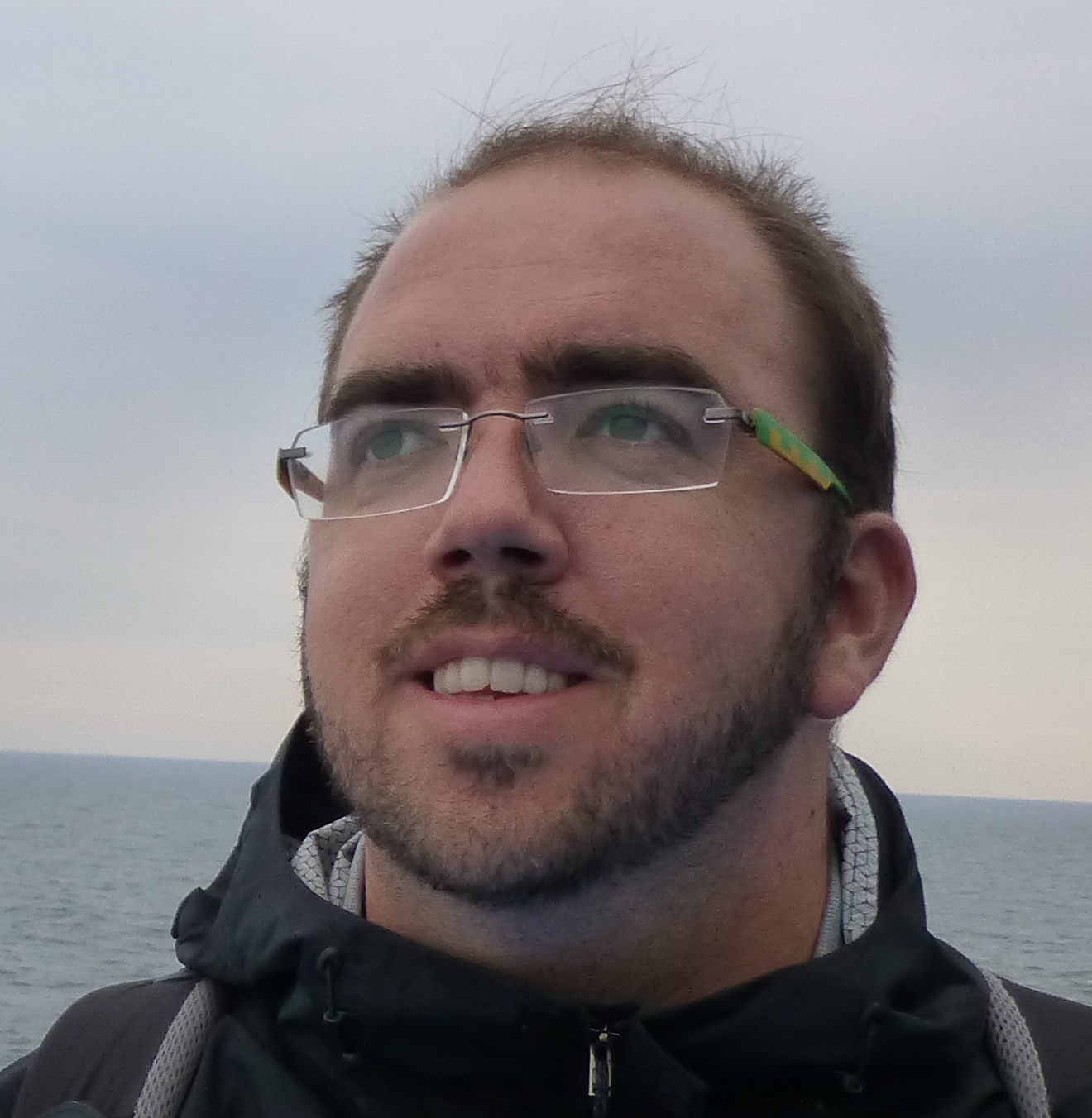 Just a short time ago, I heard another presentation by Dr. Cordian Riener that made me very thoughtful.
Cordian is first and foremost a human being and then a friend of simple and clear statements.
He manages to need few words in order to get to the point.
Which is exactly how Cordian describes himself:
Born in Swabia.
Studied mathematics and philosophy in Ulm and Bordeaux, subsequently earned his mathematics Ph.D. in Frankfurt.
Now living up north in Helsinki for some time to come.
I like spending time riding my bike, hiking, reading about world history and good discussions – preferably accompanied by a nice cup of coffee.
During my stay in Finland, I try to find out what the Fins are better with than we, what we could learn from then and why, even here, not everything is always perfect.
🙂 I also know about Cordian that he likes apple cake – not to mention strawberry tart, which he likes even better.
I already look forward to reading Cordian’s articles! Perhaps there will be regular news from Finland for us?
RMD
(Translated by EG)
Roland DürreSunday October 13th, 2013
Remembering the Philosophical Colloquium with Klaus-Jürgen Grün
Ideas by Cordian Riener
After our shared experience of the seminar under Klaus-Jürgen Grün on “Business Ethics” between October, 4th and 7th, I received the following letter from Dr. Cordian Riener.
Dear Roland,
many thanks for your diverse ideas during the seminar. During the train trip back, with my mind on the seminar, I came up with a number of comments I would not wish to forget – so I am making notes on my iPad and sharing them with you.
Firstly, here is how I feel about his definition of sustainability as “no waste“: a short while ago, I had heard about “cradle to cradle” as a new concept of production planning. Apparently, it is quite possible to really reduce the waste to a minimum by prudently defined product cycles and to make used articles the raw material for other articles with a minimum of energy. Especially in architecture, this is getting more and more attention – probably mostly in Holland. This kind of thing would, indeed, be sustainable according to your beautiful definition.
Note by me: I took the definition from Dr. Klaus Töpfer.
If and how these kinds of product cycles can actually be realized purely with market mechanisms without outward control, however, will certainly be an exciting question. During the discussion, you also very correctly remarked that we currently have a lack of responsibility: on the one hand, profits are privatized, on the other hand, the risks and losses are socialized. I liked your argument very much and it also made me thoughtful.
In fact, I actually do have the impression that people (whoever exactly we mean with “people”) try to get rid of responsibility. On the one hand, this might be one of the reasons why institutions telling you which is “the right way” were so successful for such a long time when it came to telling people what they should do. On the other hand, it is certainly also one of the reasons why parts of our society have been marketized: where formerly you said “what God wants is good” has become “what the market wants is the right thing to do” and where formerly the will of the Gods was spoken to us through the mouth of the priests, modern prophets now use quantitative expressions and mathematical formula, along with an army of business priests who will then interpret them for us.
Initially, this might sound like a more or less beautiful analogy, but when it comes to responsibility, you unfortunately discover even more things they have in common: in former times, priests had power over the monarchs, because they were also in a position to take over their responsibility: for instance, if a king caused famine through poor planning, he was on the safe side if there was also an easy way to get out of the responsibility; to be sure, there might be some polemics included here.
I got exactly the same impression while I was doing my practical training at a bank: there was the market; quantitative models discovered the will of this metaphysical entity and the portfolio managers acted according to what the model told them. If things went wrong – and there were quite some times when it did go wrong – the customer (i.e. the bank director) was told that the market had changed its opinion – which was exactly what the models had foretold. I hope this makes some sense at all.
Basically, I suspect that what I experienced quite often (not only as described in the above example) is a very common phenomenon: people are not sure yet have to make decisions. Instead of trusting their “instincts” which – if they have been trained by long years of experience – will come up with the right (best possible) decision, you prefer to rely on things that look more “solid”.
That gives you the advantage that, afterwards, you are not the one who can be held responsible. Instead, you can say there was something like market failure – the market God changed his opinion on short notice. With these considerations, I suspect that your statement was correct when you said that there is a lack of responsibility. And I also suspect that this lack is heightened by our marketized society. As far as this is concerned, I am sure it would be very exciting to take a closer look at our social development on next year’s seminar, wouldn’t it?
With kind regards, Cordian
Well, that was the text by Cordian. Many thanks!
I have now had several more exchanges of ideas with Cordian and am happy to tell you that, in the future, he will also be an IF blog author. This is great – and I will introduce him shortly in the IF blog as a new comrade-in-arms. I already look forward to reading his articles.
RMD
(Translated by EG)
Roland DürreSaturday October 12th, 2013
PM Camp DACH in Dornbirn, November, 14th to 16th #pmcamp13
SPONSOREN WANTED!
The picture was taken almost two years ago. Stefan Hagen and yours truly as co-founders of PM-Camp are absolutely delighted. During the evening party of the very first PM Camp in 2011, we realize that the event is a great success.
In a little more than four weeks, we will meet again. At the third Dornbirn PM CAMP. And much has happened in the time in between. We now have yearly PM Camps at Bad Homburg (Rhein-Main), Berlin, Stuttgart and Vienna. And we are positive that there will be even more of them in 2014.
The next Dornbirn PM Camp on November 14th to 16th has been well organized. The seminar rooms at Fachhochschule Vorarlberg are ideal for us. Again, the motto is “Work hard, party hard!”. There is no shortage of work. Fabulous participants with important topics already promised to come.
Just for the party, we could do with another sponsor or two. Because some of the sponsors who used to support Dornbirn do now support one of the many regional Barcamps. Consequently, there is an opening for new sponsors who wish to show by their contribution that they share a modern concept for the 21st century which I would formulate as follows:
 Share experience and knowledge openly and transparently, co-operate at eye-level and in respect with courage and joy and thus take care of a future in shared responsibility.
RMD
(Translated by)
Roland DürreFriday October 11th, 2013
“The Wise Animals in the Zoo” or “Academia”
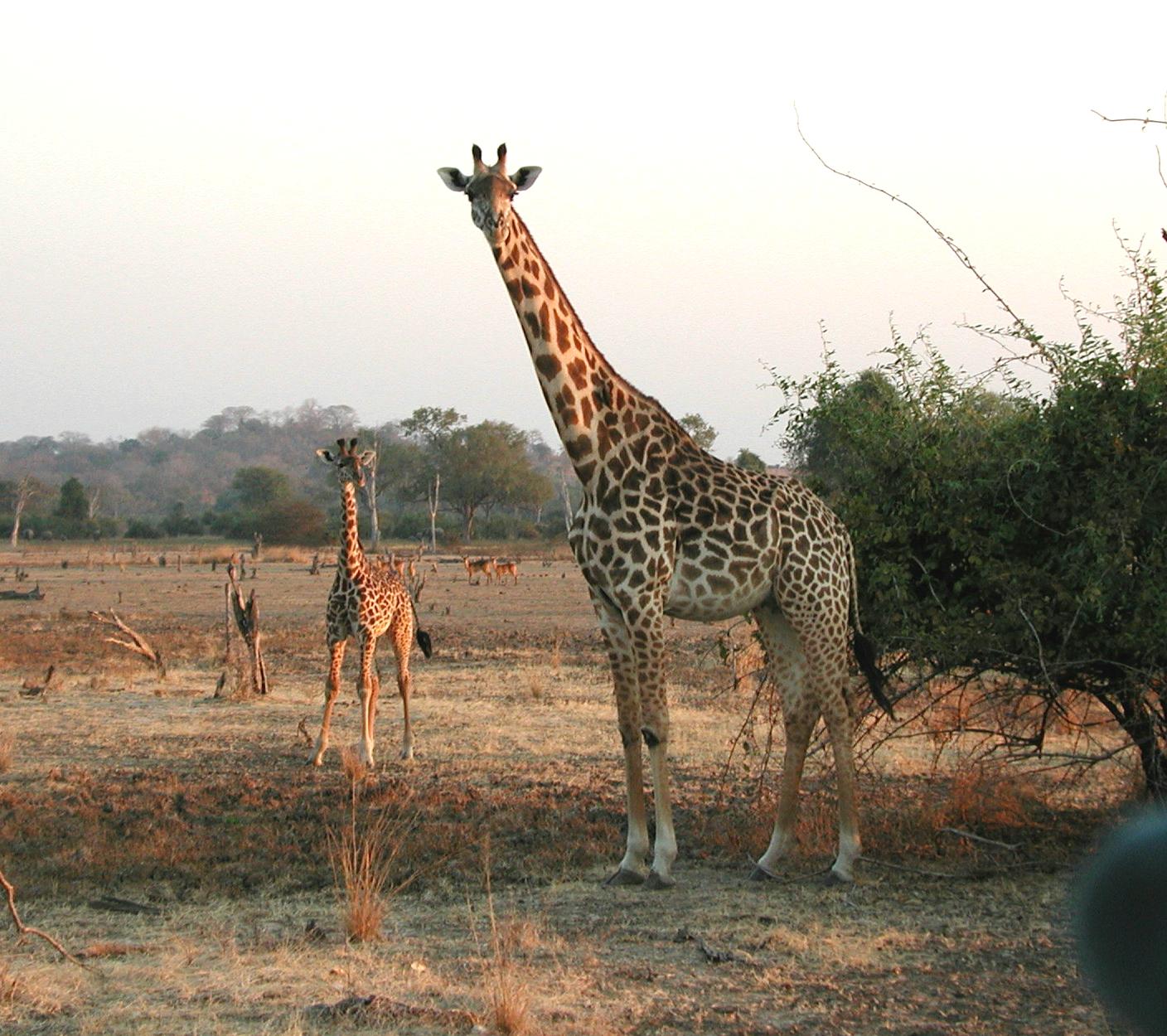 Once in a while, I also meet professors of the faculties business and philosophy. On those occasions, we talk, for instance, about business ethics and business morals. And I get the impression that academia is a nice zoo. Many quite fascinating animals live therein.
They are well tended and fed. Their health is exemplary, because the medical attention they receive is excellent. How their smooth coats shine! When they show their teeth, you see a faultless set. You will immediately notice that they have excellent knowledge and a precise understanding of things. Mostly, they have very agreeable personalities.
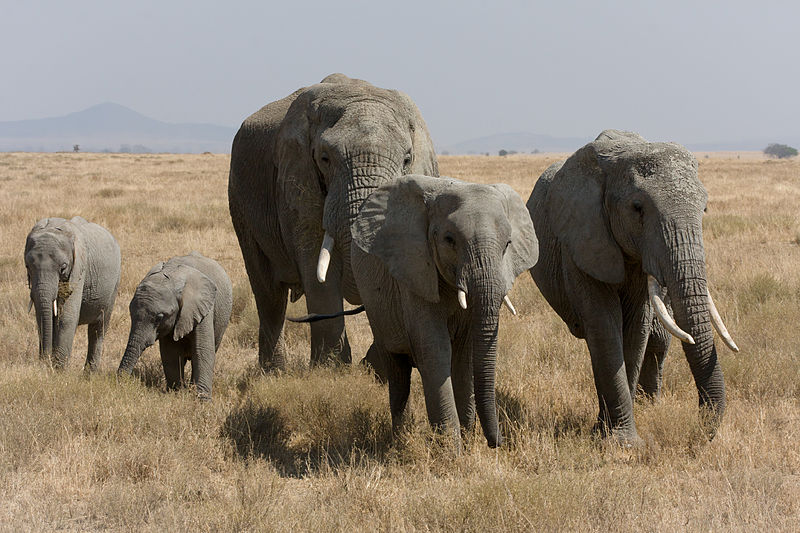 These animals have plenty to think about. Yet, there is but one glitch: more often than not, their knowledge is very abstract and theoretical. Because these animals sit in the zoo. Mostly, that is where they were born, too. Unfortunately, they never lived in the wilderness.
And in the zoo, they try to find out what life in the wilderness might be like. Of course, they can only make a guess. After all, they live in the zoo.
More often than not, their ideas are right on the mark. Once in a while, their wild guesses cause strange outpourings. And that is when many things start just going wrong.
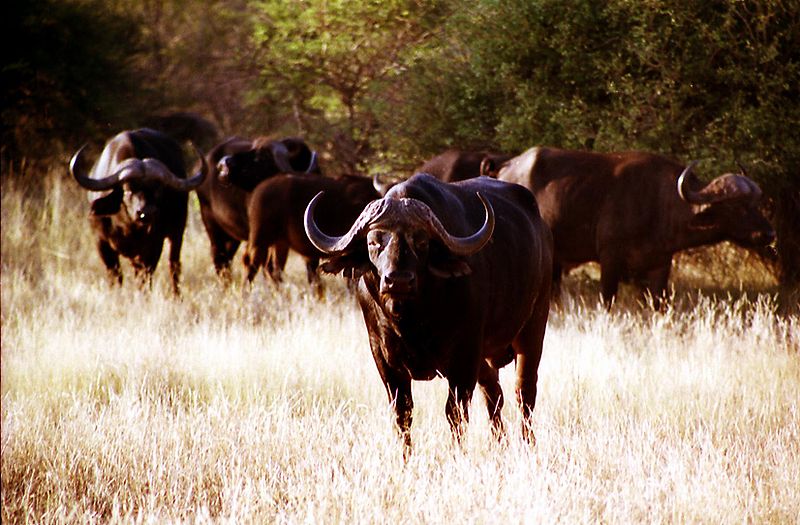 Regardless, the animals in the zoo do an important job. They teach us animals living in the wilderness many beautiful theories. We can play with these theories and come up with our own opinions: are they useful or not?
However, we, too, do not really live in the wilderness. Perhaps once in a while you could say we live in a biotope. The cultural world prevails. The natural world is something that no longer exists.
Thinking of the animals in the zoo brings something else to mind, totally associatively:
Die süßesten Früchte fressen nur die großen Tiere (The sweetest fruits are for the big animals only).
Somehow or other, it seems to fit, doesn’t it? Or maybe this is the reason why all the big mammals are usually vegetarian? Perhaps that should be a reason for us to start thinking?
RMD
(Translated by EG)
P.S.
The picture of the giraffe was taken by John Walker (Images of Africa), the elephants by Ikiwaner and the African Buffalo by Stefan Ehrbar.
And since it is so beautiful: Here is Peter Alexander in the year 1952:
Roland DürreThursday October 10th, 2013
Rupert Lay, Ethics and Constructivism
After a time out, Rupert now gave another long presentation. It was on September, 7th, 2013 in Frankfurt. He had prepared it for his friends and the “Ronneburger Kreis”. I was truly happy to be part of it.
Eilika Emmerlich organized the recording of the presentation. She also realized the production, along with Studio Pieper.
Consequently, I now proudly present two brand-new videos with this Rupert Lay presentation. Due to the total length of the presentation, we have two videos, because on this day, Rupert squeezed a lot of insights from his life into one presentation.
Here we go:
Part 1
and
Part 2
Enjoy as you watch!
RMD
(Translated by EG)
P.S.
And on March, 29th, 2014, Rupert Lay again plans to talk to us.
Roland Dürre
Tweets on Twittering and Blogging #188
Here are my tweets of last week on:
Blogging and Twittering, Wisdoms and Rules:
131017 If you accept, you have to pay – careful, twitterers and bloggers.#Twitter #Blogging #Wisdom
131018 Those who avoid all sorts of trees will seldom get firewood – also true for twittering and blogging? #Twitter #Blogging #Wisdom
131019 The person who knows all would soon be rich – also true for blogging and twittering? #Twitter #Blogging #Wisdom
131020 If you want to swallow the entire world, you will have to have a rather big mouth – also true for blogging and twittering. #Twitter #Blogging #Wisdom
131021 Serving all will end in no obligations against anybody – also true for twittering and blogging. #Twitter #Blogging #Wisdom
131022 If you gather all the firewood lying around, you will soon have a handful – also true for twittering and blogging. #Twitter #Blogging #Wisdom
131023 Wanting to fight against all injustice will give you a lot of work – also true for twittering and blogging. #Twitter #Blogging #Wisdom
There is a new tweet each day. See twitter.com and “follow” RolandDuerre!
Enjoy!
RMD
(Translated by EG)
P.S.
I took the proverbs from Alle deutsche Sprichwörter.
Roland DürreTuesday October 8th, 2013
“Careful: Email” – Second Video Recording Available – of IF Academy from September, 19th
On September, 19th, we welcomed Hans Bonfigt and Marc Haber of redoxSystems as guests of our IF Forum. The topic was Careful: EMAIL.
Now you can also watch the video with the presentation by Hans Bonfigt. Hans used the opportunity to drastically warn us about the dangers potentially following the loss of the privacy of correspondence.
The essential parts of his presentation are now also available on youtube:
Incidentally, this video, as well as the presentation by Hans Bonfigt, was recorded and processed by Lukas Ziegler.
I would like to use this opportunity to once more thank the two speakers, Hans Bonfigt and Marc Haber.
RMD
(Translated by EG)
Roland DürreMonday October 7th, 2013
Presentation – The Change in Management – October, 24th
 On October, 24th, I will give a presentation titled as you see above at the University of the German Armed Forces. The sub-title of my presentation is:
Why German enterprises, too, must become more agile!
Since what I am going to talk about is very dear to me, I would be particularly happy to see familiar faces among the audience. The presentation is open for all.
Here is what you can read in the invitation by the University of the German Armed Forces about the series of lectures. I can recommend all presentations of the series.
We would like to cordially invite you to our EAA colloquium on: ”Current Developments in Technology and Business“.
This is a series of lectures open for all and held during the coming autumn trimester (October through December) on Thursdays at 18.15 hours at lecture hall/building 33 / 0101 on the premises of the University of the German Armed Forces at Neubiberg. Registration is not necessary. You are welcome to bring colleagues, friends, family.
We attached a description of how to get to our institute to this invitation. From there, you will easily find the way to the lecture hall (and, please, do not forget to carry your passport)
As you can see, it is not altogether trivial to find the lecture hall. Consequently, I will be happy to assist when it comes to reaching the university campus and the way to the lecture room, for instance by sending you the description of how to get there.
Here is an overview of all the presentations of the EAA Colloquium “Current Developments in Technology and Business “ in the autumn trimester of 2013 at the University of the German Armed Forces in lecture room/building 33 / 0101
October, 10th, .2013 18:15 hours
Dirk Hornickel Volkswagen AG – Wolfsburg
From the 1-litre car to the 40-ton truck – driving motor concepts at Volkswagen concern
October, 17th, .2013 18:15 hours:
Dr. Jürgen Friedrich Daimler AG – Kirchheim-Nabern
Fuel-cell electronic cars at Mercedes-Benz – current state of affairs, development and experiences.
October, 24th, 2013 18:15 hours:
Roland Dürre InterFace AG – Unterhaching
The change in management – why German enterprises, too, must become more agile
November, 14th, .2013 18:15 hours:
Dr. Stefan Gillessen – Max-Planck-Institute for extra-terrestrial Physics – Garching
Astronomy and astrology: what is science?
November, 21st, 2013 18:15 hours
Dr. Franz-Josef Bierbrauer UBB Business Consulting Bierbrauer (formerly at Osram München) – Wörthsee
Technological change on the illumination market and its consequences.
November, 28th, .2013 18:15 hours:
Dr. Ralf Geßlein Siemens AG / Large Drives – Nürnberg
Driving motor systems and sales approach for the oil and gas sector
December, 12th, .2013 18:15 hours:
Dr. Werner Zittel LBST Ludwig-Bölkow-Systemtechnik GmbH – Ottobrunn
Peak Oil, Fracking and the energy about-face.
RMD
(Translated by EG)
Roland DürreSaturday October 5th, 2013
(My?) A Concept of Life
🙂 It seems that whenever I am on a philosophical colloquium with Klaus-Jürgen, I get sentimental. Consequently, you can now read my “philosophical insights” in a simplified model.
Life
We drive on the river.
Travelling with the current.
Sometimes faster, sometimes slower.
The river runs towards the ocean.
That is our final destination.
The journey will come to an end.
Nobody can tell how far he has to go to the mouth of the river.
And if there is something on the ocean.
So the journey is the reward.
The river has two banks.
On the left bank, the individual lives.
On the right bank, the collective reigns.
Sometimes the river is quite narrow.
Then again wide like a lake.
In between, it sometimes is a channel.
If we get too close to a bank, we will be smashed.
Sometimes we tend towards the left, sometimes toward the right.
It is difficult to remain in the middle.
We are not often alone in our boat.
Comrades come and go.
Some we like better, others not so much.
On our journey, the demon accompanies us.
Fear makes our life difficult.
Mind games torture us.
We sacrifice both courage and humility.
Along with joy and pain.
We invented religion and morals.
Yet we abhor them.
So we invent ethics.
To fight the evil spirits.
But we forget to live.
Pondering all the time.
Making life difficult unnecessarily .
Mind you: what we should do is enjoy every hour exclusively near the river. After all, time is definitely too precious to waste for anything else!
Formerly, I would have said: demolish what threatens to demolish you. Today, I do it (or at least I try to do it).
RMD
(Translated by EG)
Roland DürreFriday October 4th, 2013
“Careful: Email” – First Video Recording Available – of IF Academy from September, 19th
On September, 19th, we welcomed our guests Hans Bonfigt and Marc Haber of redoxSystems at the IF Forum. The topic was: Careful: EMAIL! Their two courageous and personal presentations, they not only informed us about the
“History, Basics, Spam&Virusses”, but also introduced “Concepts for Operating Your Own Secure and Reliable Mailservers”.
In particular, they also reminded us of the perhaps fundamental threats we all face these days.
After the presentations, we had an extremely lively and fruitful discussion. And our guests went back home with a sense of awareness and yet content..
As (almost) always, we made a video recording of the two presentations. You can view the basic parts of the presentation by Marc Haber on youtube.
Both this video and the one by Hans Bonfigt were made and produced by Lukas Ziegler. The part done by Hans Bonfigt will be put online shortly.
RMD
(Translated by EG)


