
Roland DürreThursday October 31st, 2019
(Deutsch) Der zweite große Fehler.
Roland DürreWednesday October 30th, 2019
(Deutsch) Sei anders, sei Du selbst!
Roland DürreWednesday October 23rd, 2019
Preach Water, Drink Wine.
There is an interesting article in Bayern24. The title is:
E-Scooter in Bavaria:
Far From Mobility Change Concept
In a nutshell, the article says that every kilometre you drove with an e-scooter creates roughly as much carbon dioxide and environmental damage as a kilometre you went by car.
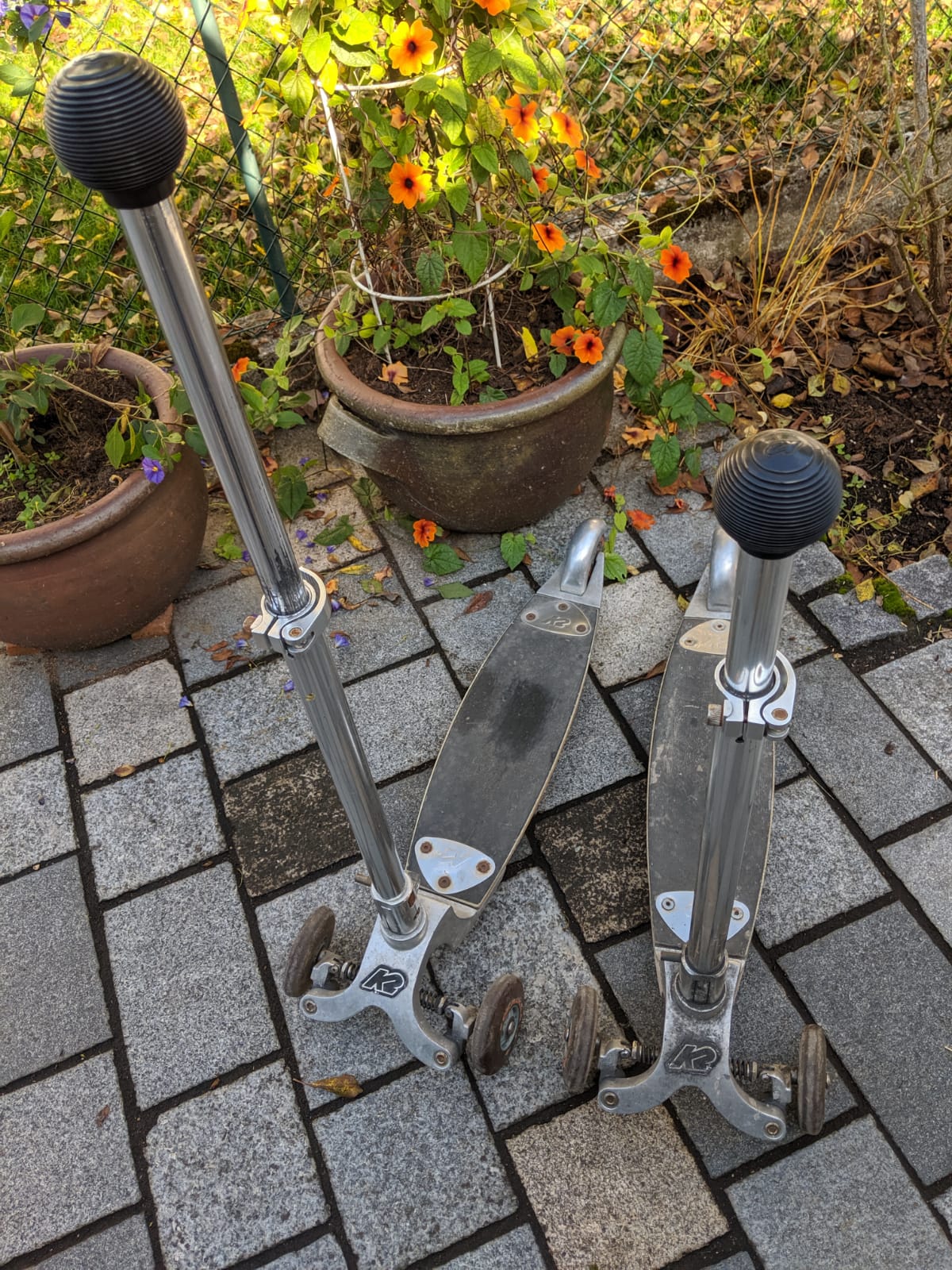
Two K2-scooters. We bought them soon after the turn of the millennia and they have now been used by all members of the family for almost twenty years. Now the grandchildren start enjoying them.
Here are some sentences from the article that summarize the e-scooter situation four months after they were first introduced:
… The e-scooter will definitely not become a part of the mobility change. Its climate balance is far too poor … according to a study by the mobility counsellor “civity“, the scooter is mostly used for distances under two kilometres. When they asked the users, it turned out that most of them would have walked the distance or taken the bike if this new option had not presented itself. … The scooters are mostly used in the evening and on weekends – which indicates that they are mostly used for tourist trips and fun rides … An option that could replace cars? Perhaps not … … climate sinner e-scooter? Perhaps yes … ”On the one hand, you can ask: what energy does the use of an e-scooter consume? It is less than a car. However, if you consider that the e-scooters need to be collected during the night, then you get the result that 100 kilometres by e-scooter consume about as much as if you had used a petrol-powered car.“ (Quelle Green City) … … According to the manufacturer, the rent-a-scooter has a life expectancy of around one year. That includes the battery which, unlike that of the e-bike, cannot be replaced. After this time, the battery needs to be re-cycled and the aluminium parts of the scooter become replacements for maintenance …
In my eyes, the comment of the Capital of Bavaria sounds almost cynical:
Regardless, the City of Munich is quite happy with the results after four months. We receive user data from the e-scooter distributors: active kilometres, average trip duration, extremely frequented areas. These are the data that might eventually make the cyclist’s paths broader and the streets narrower. Which would mean that the e-scooter will have contributed quite significantly towards the mobility change.
So now I, again, get my doubts about our politics. After all, these current e-scooters are something like a new product in Germany. And that means we could easily (see text marked in red ) have made sure that the product is repair-friendly before allowing it access to the German market.
Just like Ralf Klagges (the founder of my favourite bike manufacturing company Utopia) made sure that all batteries of his e-bikes have segments, control panels and GMS/GPS parts that can be replaced and repaired relatively easily. Incidentally, we are talking batteries built by the Dutch enterprise Van Raam after they were developed in cooperation with Utopia.
But these simple mental concepts are probably too complex for the ministers and their assistants in the Federal and County Ministries.
To make up for it, they reassure us that they, of course, want to protect the planet. But whenever new mobility is made legal, this is irrelevant.
Just like they say going by train will soon be less expensive and more diverse, but in reality the prices go up and the connections get fewer and worse.
And growth will continue to have TOP PRIORITY. This is totally stupid and luckily many people are no longer prepared to accept it.
RMD
Roland DürreTuesday October 22nd, 2019
(Deutsch) Ein Hauptfehler unserer Gesellschaft!?
Roland DürreFriday October 18th, 2019
(Deutsch) Leseproben.
Roland DürreTuesday October 15th, 2019
Melancholy in October .
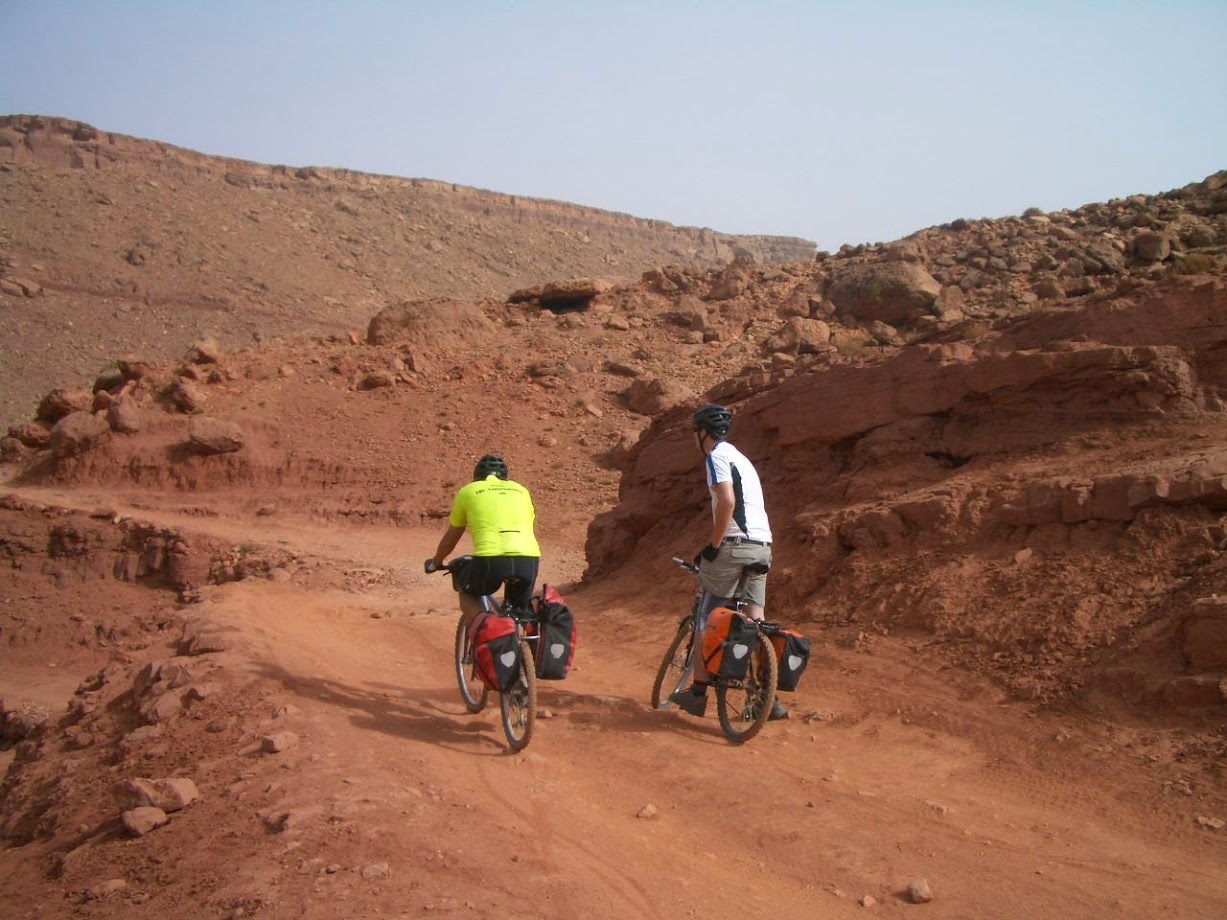
In the warm country!
On Thursday, I went to the Sommerhausen Torturmtheater. It was the opening night of “All you Want” by Mathieu Delaporte and Alexandre de la Patellière. It was a great night and we enjoyed it very much.
Afterwards, I had arranged to meet someone. He never showed. They tell me he fell sick and has to stay in bed.
On Friday, back in Neubiberg, I have a dinner appointment. It was cancelled. Due to sickness.
On Saturday, in the Neubiberg Cabaret “Platform Three“, my friend Lothar is acting as stage director because the professional who was supposed to do it has cancelled. He caught a cold.
On Sunday, I am scheduled to meet my daughter and her boyfriend. Her boyfriend is sick.
So now it has arrived – the evil autumn. And afterwards, the even more ruthless friend winter is waiting to take over. Against climate change.
And I know that, like every year, I, too, will be affected. I will catch cold and suffer from a sore throat more than once.
Why am I stupid enough to stay around? Allegedly, I have freedom to go where I want to go. Nobody forces me to stay. All I would have to do is buy a flight ticket – for instance to La Réunion. Where it is warm and I would still be staying in Europe, even in the EU. My flatrate would be valid and I could pay with Euros and enjoy life.
The French “savoir de vivre“ would really be to my liking. Since, through my taxes, I partly finance this French Paradize, I am actually even entitled to it. And I would not catch a cold. In exchange, my linguistic competence in French would retrieve its old splendour.
All I would have to do is board a flight and then stay in La Réunion for a few months. Until the sun returns to Europe. And then I could return to European Soil in a good mood in April after de-boarding a plane.
I am not going to do it because Barbara wishes to be in Munich for Christmas. With our children and grandchildren. There is no way she can be persuaded to miss it.
To be sure, I know some women who would be quite happy if their husbands were willing to spend the frosty part of their late life in warm climates with them. But those husbands would never come up with the idea.
But you cannot persuade my significant other to go abroad at Christmas. She prefers to suffer – as a just punishment – under my bad mood that was caused by a cold and a sore throat (and by the darkness and the poor weather). But she is quite willing to accept that. I have no chance. And thus, I stay at home.
Perhaps, instead of going to the airport, I should go and see a general practitioner? And maybe I should get a flu vaccination? Except that I do not really believe in such dubious methods.
I would wish to see a clean big data analysis that researches how many of those people who have been vaccinated actually catch the flu. And compare it to an analysis that finds out how many of those without a vaccination caught it. I have been looking for this kind of study intensely, but could not find it.
But probably, due to data security, such an honest study cannot even be considered. And if that is not a hindrance, then the producers of the vaccination material are opposed to it. They are more interested in the mercantile than in the medical results – and (at least so I heard), the former are quite good, thank you very much. I wonder if the same is true for the latter. Or are, perhaps, those results so bad that they would only minimize the sales?
I found a lot of online advertising for the vaccination. And they praised the fact that the new vaccine this year is against four instead of three (1) (1) pathogenes. What a gigantic progress! What a pity that the flu virus mutates with such speed and that there are so many variants.
Perhaps the flu vaccination is a little like the lottery: If, instead of processing three tables in summer, the enthusiastic lottery player will now process four tables in winter, his chances of hitting a jackpot are not really a lot better, are they? Well, those are sad ideas full of autumnal melancholy. Consequently, I am doing really poorly.
And then it gets even worse. Because I remember that the Golf Stream is weakening and might topple at any moment now. Is that good news or bad news? After all, it would mean that local winters get so uncomfortable that my dear wife will immediately be willing to migrate to La Réunion with me.
But then, this is not a hope of mine. Because if it comes to this, it will be too late. Everything at home would lie in ruins. My many wonderful Euros would not help me at all, nobody would be willing to take me in in a nice warm country. And I am not sure if I would wish to flee illegally. I would perhaps remain at home because I would prefer dying of the cold in Germany to drowning in the Mediterranean.
How bad. But now, instead of falling victim to a winter depression, I remain in my autumnal melancholy,
RMD
(Translated by EG)
Roland DürreThursday October 3rd, 2019
(Deutsch) RUPERT LAY LESEBUCH
Roland DürreFriday September 27th, 2019
(Deutsch) Buchneuerscheinung: »Das Auto im digitalen Kapitalismus«
Roland DürreWednesday September 18th, 2019
The Smart Mask of Digital Capitalism.
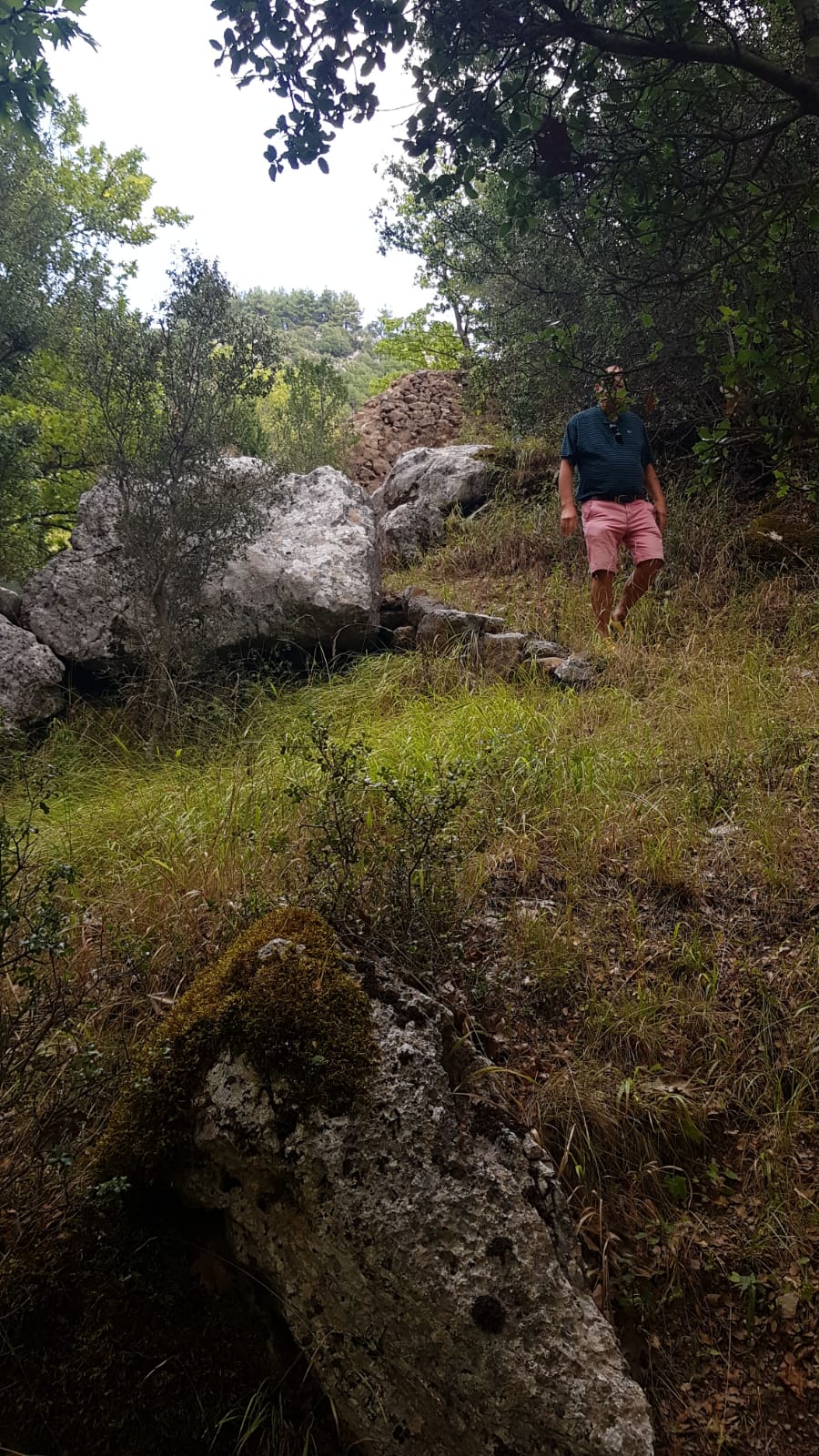
In the mountains of the Peloponnesus, on the way to Vatyna.
Earlier this week, I returned from three weeks in Italy and Greek. Two of those weeks were spent camping on the Peloponnesus. I had had many plans.
The first sector in my list of good intentions was that I wanted to swim, ride my bike or hike every day and enjoy life. In this, I succeeded as seldom before.
The second sector of my list was about writing a few articles. In particular, I wanted to write a recension about a book by Timo Daum, that is to be published on October, 7th, 2019 by the Oekom-Verlag.
Unfortunately, this did not happen. I was caught up in a comfortable lethargy. But at least, I read about two thirds of the book. I also collected material and am now very optimistic about finishing the recension before the book is on the market.
The book by Timo Daum is titled »The Car in the Era of Digital Capitalism. How Algorithms and Data Control Traffic « . It inspired me towards many new ideas. But I will write more about this in my recension.
When I found out that the same author had also written a »Criticism of the Digital Economy« (which I have not yet read), it dawned on me that there is a new digital capitalism. To me, it seems to be even more powerful and brutal than the one we know so well from the last century.
Among other things, the digital capitalism is such a success because it has replaced the “humane face“ with a »smart mask « , behind which it hides in an absolutely ingenious way.
The smart mask is supposed to make us believe that digitalization improves the world. It gives the mega predatory capitalism a humane face and promises us that we get a clean electronic world, a common-good economy, a shared economy, shared knowledge, a great design, products that are friendly towards people and the environment, and many more nice things. In other words, you get a smart life in a smart world and society. Smart life in a smart city.
Smart, smart, smart!!! In reality, however, it is more than ever all about money. This is true both for our old Europe and the new China.
I am reluctant about using a new term like smart. Consequently, I will first and foremost ask:
What exactly is the meaning of “smart”?
I heard a nice definition by a co-founder of NextHamburg. He said that smart solutions work towards a social goal with digitalization. The formula is:
Social + Digital = Smart !!!
That sounds nice, but it is a lie. My Chinese friends are much more pragmatic. In their view, every product that is linked with WLAN and has internet access is a smart product. It does not matter if it is a saucepan or a set of scales.
The probably most powerful and greedy concern of new economy gave itself the motto:
“Don’t be evil!”
We really liked that, didn’t we?
Then they gamified their products and turned the offices into fun parks where you have a world of fun, but where the people actually worked harder than ever. The mask is glamorous.
Microsoft, too, has nice toys. Very early on, they collected brownie points with wysiwyg and, above all, with solitaire. And they asked us:
Where do you want to go today?
And then Apple came and turned the cult into a religion.
We fell for it. As programmers, we really enjoyed what we did and were quite surprised when we saw how much we earned by doing it. Our hourly rates were considerably higher than those of the engineers. At least, they, too, enjoyed it.
We were intoxicated by Open Source and Agility. The Law of Moor (Mooresche Gesetz) looked like it was no longer following the laws of nature. Topics such as blockchain and AI generated hopes for the future that will not survive closer scrutiny.
After the drinking binge, you will always get the next morning. Even more potential will necessitate even more infra structure, more energy and raw materials, more (electric) cars, a world of more consumption and culture. It is easy to hide total digitalization behind the smart mask as part of the total technologic supremacy of our world.
And today, we learn that, even more than ever, the goal is the generation of cash. And that the promise of the new digital world that they will save the planet, is also an empty promise. And in the new smart madhouse, everything is about growth and the funny stuff.
Consequently, my definition of smart is that it is a strategy that earns you a lot of money in little time. It is a term that has absolutely nothing to do with sustainability.
RMD
(Translated by EG)
Roland DürreThursday August 22nd, 2019
Money.
Virtual and digital.
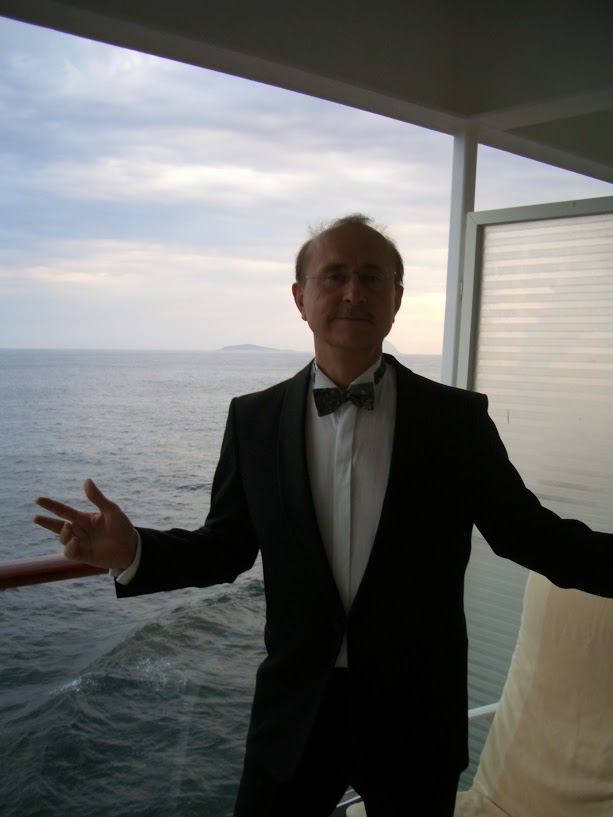
Im Smoking – es geht zur Gala.
Wearing my Smoking – on the way to the Gala.
Money has always fascinated me. Not only because you can buy everything with it, but also because it is something virtual with important functions and with immense strength and power.
Money is a virtual commodity. It needs belief and symbols If you want it to fulfil its purpose, you actually need an almost absurd belief in the value of money. Because nobody wants to spend anything he values without getting something real and secure in return.
Money will work as a currency if a huge collective unit accepts it as “valuable”. If you have no majority of people in a society who believe in it, then you can forget about it.
In terms of architecture and functionality, money has two functions.
First and foremost, money is a
I. means of payment
that simplifies the exchange of goods, perhaps even enables it. But it also has a second function that you want to strictly separate from the first. It is about money to be paid back in the future, generally also called “debts“, along with “providing“.
II. Financing the present and providing for the future
In this context, we now get the additional dimension of time. You can accumulate money in order to provide for your future. It is called saving.
You can also try to improve the present at the cost of a future. In other words, I can buy and get and use something today but pay for it (a lot) later or in instalments. For instance because I have no money today but assume to have money tomorrow. For whatever reasons.
This is how I can build a house with borrowed money. This is how you also generate income from capital or rights. All I have to do is find someone who believes me when I say that I will pay my debt back tomorrow, i.e. at a defined time in the future.
Both – saving and borrowing – precludes that the currency will remain stable as time goes by. But that is seldom happening. However, before we deal with the phenomenon inflation, let us talk about interest.
After all, this covering of time only became possible through interest. Now, if you owned more money than you needed (in other words, if you were rich), you could give the money you did not need to someone who needed it. This person (also called debtor) could buy what he needed and had to pay interest for being given money. And he could calculate how much more he had to pay for something he needs immediately.
If you talk interest, you immediately also need to talk inflation. If, for instance, the inflation is higher than the interest rate, then you can become rich by indebting yourself – totally without any work. And this is how “the devil will always shit on a huge pile of shit”. In other words: poor and rich automatically build opposing poles.
As I said earlier, money has always been a virtual commodity. It has often been represented by actual things (coins, paper notes). If you had these objects, you were able to take part in the property game.
Typically, the objects were special things, like coins or paper.
As civilization progressed, you could generate your own money. All you needed was the trust of your business partners. Laws and the debt tower improved your security. For instance, you could formulate debt contracts as bills of exchange and received goods against an unconditional pledge of payment for a certain time in the future.
Today, we have less and less objects that represent money. This is how money becomes an entry in a global book that describes who the money belongs to. The global book is realized and kept by a complex banking system. It is called technological advance that this book is now no longer written on paper but digitally administered.
With Blockchain technology, they now try to do this accounting in a digital, decentralized and global manner. In particular, they want to be independent from central service providers, mostly with camouflaged identities, which means the owners can register through their sw system and need not lay open their authenticity.
Mostly, however, these currencies are still linked to state systems. And the money is administered by private enterprises, the banks. That makes sense, because historically, it has been assumed that countries cannot become bankrupt. After all, everything belongs to them and they can always take the money from their citizens.
But in reality, it is the trust of the citizens in their country and its currency that carries the system. If this trust is no longer there, the currency can easily be dead. It happened several times in the past, and the consequences were always catastrophic.
So modern currencies like the dollar, the Euro or the Renminbi can easily die. Even if it sounds unimaginable to us, it can easily happen. Without the function of money, business life is not imaginable.
Mental experiment:
What would happen in such an event?
The answer seems simple.
New currencies would have to come. The necessary requirement is that the people trust in them. Such a trust can best be generated in groups that share mental concepts.
Nobody ever said these groups have to be state regulated. These communities should be huge. The biggest communities we find are those in the internet. Consequently, the idea that huge internet enterprises should carry these communities sounds logical.
This is why I see a facebook currency (for example) in a different light. And I believe it would be a good idea if we prepared for such a currency. Simply to have something on standby if the dollar, the Euro, or the Renminbi (or all of them) will collaps.
Let me be clear about this:
It might happen that, in our country, currencies that we have discriminated against and fought, like the LIBRA, will suddenly become saviours of the world-wide business life. If, for instance, the three currencies collaps, where are we supposed to take our money?
It might happen faster than we would like it to happen.
Here is another difference between Libra and similar currencies and Bitcoin:
When all is said and done, what facebook wants to do is organize a faith group currency. LIBRA will probably become a classical, purely digital antiquated currency. It has nothing to do with a crypto currency. Bitcoin is totally different – the distinctive criterion is that the owners are camouflaged behind their software and their registration and remain anonymous. However, it seems to me that anonymous property is not something we want in our society. And even with Bitcoin, you only get it in theory. If nobody else, then at least the miners prevent it.
nd here is a cynical question: I could easily imagine the catholic church as provider of an internet currency. There are still many people who trust in it – and there is a great argument in favour of such a provider – the enterprise has 2,000 years of success behind it.
RMD


