
Roland DürreMonday July 27th, 2015
Entrepreneur’s Diary #111 – What to do if a rupture goes through the leadership team?
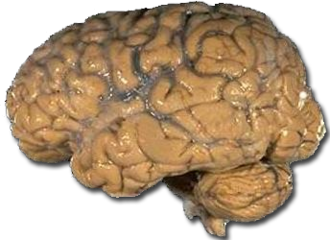
Human Brain
A short time ago, a very good friend of mine who, like myself, is the founder of an enterprise, told me something that gave me pause. He informed me that in his enterprise – actually quite a successful enterprise, which is way beyond being a start-up – the following scenario can be observed:
“The four active founders no longer see each other as often as they used to and whenever they do see each other, they talk about the few negative things, instead of the many positive things that happen.”
This information, which actually was meant only at an aside, fell on very fertile ground with me, because it reminded me of my own experiences. After all, this rather considerate founder has a huge amount of sensitivity and awareness – which I probably had a lack of in a similar situation.
It is exactly those aside noises you often only perceive “subconsciously” that may sometimes be extremely important. Noticing this kind of thing and then proceeding to actually act in the right and in a most determined way is what makes a wise and successful entrepreneur.
Discoveries such as these must not be ignored, even if they seem to be harmless enough. Actually, they must initiate a high degree of watchfulness and mindfulness. After all, we have to nip things in the bud.
It is never an easy task to keep a team together, even if we are only talking four persons who (allegedly?) work “at eye level” and seem to treat each other with respect. Because as soon as humility loses priority over what (for me) is the almost “never-ending” task of leading an enterprise – or rather leading people -, the downward spiral will quickly start its work.
In such difficult situations – even if you only see the very first forebodings – you probably need very prudently designed measures. Yet even those measures might not necessarily be a success. Because with these solution approaches, success is the one thing you can never guarantee.
Human beings are full of mystery, and even those mystery factors change over time. Frustration and anger are elemental emotions nobody can actually switch off. They influence both your own and the other person’s way of thinking. And, when all is said and done, everything happening in the brain is a series of mind games leading to the most diverse and often incomprehensible constructs. And probably nobody can really understand them rationally.
Consequently, it is an illusion to assume you can understand it all and therefore act prudently. This means that, as the years go by, a huge amount of contentedness can turn into discontentedness for some persons. Said discontentedness might actually not be rationally traceable, yet it can have dire consequences. And even the best knowledge of disciplines such as philosophy and psychology, but also neurology, cannot really help.
Because, after all, those “life sciences” cannot describe the complex inside of every person, either. They teach us to think about how you should live. But that is all they do.
Consequently, the only thing that can help is attentiveness and openness. You need to remain alert in life, let love prevail and remain true to yourself. And you need the courage to try new things. Along with being prepared to give more than you take. All of which is, indeed, quite difficult.
RMD
(Translated by EG)
P.S.
For more articles of my entrepreneur’s diary, click here:Drehscheibe!
P.S.1
I took the picture from Wikpedia:
„Frontal lobe animation“ by Polygon data were generated by Life Science Databases(LSDB). – Polygon data are from BodyParts3D.[11]. Licenced under CC BY-SA 2.1 jp through Wikimedia Commons –
Roland DürreThursday July 23rd, 2015
Ada Lovelace and Unschooling?
Here is my introduction to the presentation “Learning in Innovation” by Bruno Gantenbein “Learning in Innovation” as I would like to see it tonight. What I am going to say is meant to connect the person ADA LOVELACE both with the term “unschooling” and with “project management”.
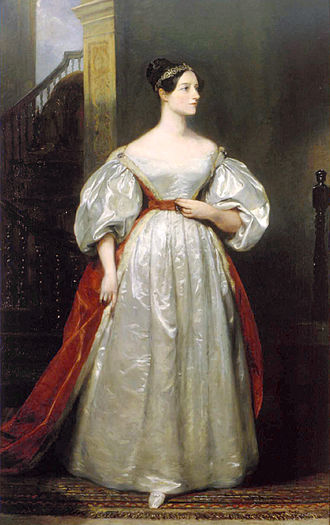
Ada Lovelace 1836,
Painting by Margaret Sarah Carpenter (1793–1872)
ADA LOVELACE was a very controversial lady. As I see it, she must have had a very exciting – both successful and desperate – life. Even reading about her in Wikipedia gave me the following ideas.
If we want to become masters of our profession, we have to exercise the “best practice” of great masters and make use of humanity’s experiences condensed in “design patterns”. Until we reach a dead end – where we have to say good-bye to what we learned. Now you have to rebel and question “things” like “but that is how we always did it”.
Consequently, learning means familiarizing yourself with patterns and sticking by them.
Learning in innovation, however, calls for breaking with patterns. Breaking old patterns and developing new patterns will lead to creative destruction. Thus, living in a social community means you have to not only accept but even use the compromise between your individual needs and the collective rules for your own unfolding.
We love the formatted life, because it is secure and comfortable. We are prepared to subjugate ourselves under morals, because we want to be good.
On the other hand, we crave for freedom and novelty. Because we know that a moralising society will take away our freedom and confine us, at the same time making us look small.
This is the case both in private life and in our work life (if the distinction is still permitted at all). In the social communities of our private lives, we permanently manoeuvre between often paradox positions. And the same is true for our professional lives.
Because the enterprise where we work is also a social system, albeit with an economic purpose. Leadership is communication and communication is, again, a balancing act – between listening and speaking.
I do not know many biographies more laden with the conflict between autonomous self-determination and external control than those of the great mathematicians and Mrs. Ada Lovelace. Spontaneously, the only other person who comes to mind is Nietzsche, who was born a little less than 30 years after ADA LOVELACE.
I think we can only be “good” project leaders, managers and leading personalities if our important projects are a success. To me, it seems like the most important project for all persons are their own lives. If we want to meddle in other people’s lives, the first thing we have to do is make our own life a success.
However, our own life can only be a success if we focus on the really important things and if we change habits detrimental to life. Consequently, I have to be prepared to unfold my own life autonomously and bring order into it. In my personal life, I chose my mobility. I try to avoid unhealthy mobility as far as possible. It is very simple, isn’t it? –
How am I supposed to live a self-determined life if, for example, I cannot even manage to do it with respect to my own mobility? Consequently, I have to change and practice. Instead of letting myself be externally controlled.
Well, this is what I associate with the disrupted life of ADA LOVELACE.
During the presentation by Bruno Gantenbein, I would recommend that you look for parallels with your own life.
RMD
(Translated by EG)
Roland DürreWednesday July 22nd, 2015
What does Ada Lovelace have in common with Galileo Galilei and what is their connection to Unschooling?
Tomorrow’s (July, 23rd, 2015, at 6 p.m.)IF-Forum (guests are still welcome, here is the invitation) in our Unterhaching office building will be about “Learning in Innovation”. Taking the metaphor of “Unschooling”, Bruno Gantenbein will show how children can and want to learn. He will also show parallels between this concept and the experiences made by famous project managers and grown-up leaders.
At InterFace, the year 2015 is dedicated to Ada Lovelace. Consequently, Florian Specht asked me to give an introduction and answer the question:
What is the connection between Ada Lovelace and “unschooling“?
🙂 Here is an introduction I will not present tomorrow. Still, I can publish it here, can’t I? The proper introduction is for you all to hear live tomorrow.
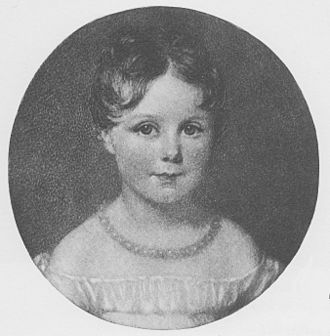
Ada at the age of four
What is the connection between Ada Lovelace and other persons, such as for instance Galileo Galilei (the InterFace face of 2014), Blaise Pascal, Leonardo da Vinci or “the Ancient Greeks”, such as Archimedes or Socrates – as well as other outstanding personalities in science and “unschooling”?
When preparing for this presentation, the first thing I did was read the Wikipedia article on compulsory school education. We learn that
- There was a time when it was not compulsory.
- It was introduced rather late and put to practice even a lot later.
- There were places where only part of the population was affected, and often only the male part
- But the learning process was always associated with life and persons, rather than schools.
Then I took a closer look at the life of Ada Lovelace. In Wikipedia, the first sentence you find on “Ada Lovelace“ (article) is:
“Augusta Ada Byron King, Countess of Lovelace, commonly known as Ada Lovelace (nee Augusta Ada Byron;[1] * 10th of December 1815 in London; † 27th of November 1852 also in London), was a British Mathematician.”
The article is well worth reading. There is no doubt that she was a genius.
However, all the other persons I named never really seem to have attended any school:
Blaise Pascal (* 19th of June 1623 in Clermont-Ferrand; † 19th of August 1662 in Paris) was a French Mathematician, Physicist and Literary person, as well as a christian Philosopher.
Galileo Galilei (* 15th of February 1564 in Pisa; † 29th of December 1641jul./8th of January 1642greg. in Arcetri near Florence) was an Italian philosopher, mathematician and astronomer whose discoveries in several fields of natural science were breakthroughs.
Well, this is hardly a surprise, because when the last two lived, such a thing as schools in the modern sense did not exist.
When I was a child, I used to adore the “ancient Greeks”. Imagine what enormous and revolutionary discoveries they made with the most primitive means and a little calculation. Some of them were due only to observation, thinking and simple experiments. And, surprise, surprise: in those days, they did not have a formal school system as we have it today.
Consequently, the suspicion inside me grows that quite a few innovations would not have been possible during the history of mankind if humans in those days had been indoctrinated from early on as it is common in a normal school today.
But the light inside me was really turned on when I saw the film “Alphabet”.ALPHABET, the film was produced by Erwin Wagenhofer in 2013. After WE FEED THE WORLD and LETS MAKE MONEY, ALPHABET was the last and final part of his famous trilogy. ALPHABET is a film that describes in a very soft way what situation the children world-wide are in during their education.
I particularly liked one citation in the film. It seems to be the result of scientific research:
98 % of all babies are born as a genius. After their education, the ratio is 2 %.
The only question that remains is how Mrs. Lovelace could preserve her genius. After all, 200 years ago we already had the first stages of compulsory school education. Maybe it was because in those days there were some regions where only boys went to school? Boys who always had to be brave and never were allowed to cry?
RMD
(Translated by EG)
P.S.
Now I need to do a little more work on my introduction (version 2.0). Incidentally, I took the picture from Wikipedia.
Roland DürreTuesday July 14th, 2015
From PM Camp via BGM to John Izzo…
In my life, one of the nice things is that, more and more often, I meet persons I rather like. I make new friends all the time and I always learn important things from them.
Here is an example: in 2011, we had the first PM Camp in Dornbirn. It was a huge event – both for me and, so I believe, for all the other participants. According to the feedback we received, (almost) everybody went home happy and content. Including myself. After all, I had met many persons who take a serious interest in project management, leadership, entrepreneurship and much more. And, basically, they all want to live a meaningful and successful life.
Then we really got under way with the PM-Camps. In Vienna, Zurich, and many more German cities, they have now become a regular event. And their number increases all the time. People and communities build networks. And, again and again, some of them became my friends.
This was also how I first met, learned to appreciate and now have come to love Dr. Marius Poersch. He takes his job as a doctor rather seriously. In a famous hospital, he helps people who burnt themselves out dealing with “modern work-life stress factors”, people who have more and more stress or even suffer from a psychosis already.
By now, he has come to the conclusion that, indeed, it is an honourable task to help people and support the healing process. Yet he is also driven by the awareness that, for many people, it need never have come to what it came to. If only – well, if the living and working environment were just a little different and the potential of suitably adapting were a little better.
And since Marius wants to be more than just part of a “repair shop”, one thing he did was establish an institute (www.erwerbscoaching.de) where he does research with equal-minded persons, examining how people might be enthusiastic and work through their entire work-life without sacrificing their own balance and starting to get psychotic. In short: he is looking for a work and life environment where a sustainable and full life is possible.
However, he also does research on the other side of the coin – namely what sort of individual concept in the sense of life goals and life style you should have in order to live a positive life that enhances your existence.
In order to promote this goal, he developed a method rather similar to the one described by John Izzo in his book “Five Secrets”. He interviewed senior citizens who worked an entire life long and who now, being retirees and pensioners, still and again involve themselves in various ways with civic affairs. His reason for taking that group of persons as interviewees is that one can assume they know a health recipe that, for example, will also prevent burn-out.
A good friend of mine – Dr. Andreas Zeuch, known way beyond the PM Camp environment as an author and entrepreneurial consultant – introduced me to Marius.
I was chosen as one of his interview candidates. So, on a nice and sunny afternoon, we met in Stuttgart and talked. Conveniently, it was just before the Stuttgart PM Camp started.
I was curious and also a little excited about what I was going to experience. The afternoon turned into a beautiful evening and later a wonderful shared breakfast. Even as we talked, many things out of my own life became suddenly clear. Later, Marius explained the technological background of his method, as well as his procedure. And that gave me even more insight into myself.
A few days ago, I received mail from Marius. Inside the envelope, I found the aforementioned book. I was truly delighted – after all, I believe I found a true friend in Marius, and gifts sent by true friends are always a special delight for me.
I finished the book quite quickly. Even though there is no doubt that it is a little American and extra detailed, it is exciting to read – and it is an important piece of literature for persons prepared to think about their own lives. For me, all the ideas, conclusions and demands formulated in the book by John Izzo make complete sense.
The title of the book is:
“The Five Secrets You Should Have Discovered Before You Die”
As I see it, the title says it all. And I also gave a short overview in my last IF blog article. I truly recommend that you read it.
RMD
(Translated by EG)
P.S.
I know that Dr. Marius Poersch is still looking for more interview partners for his project – and I would certainly like to support his work. So if you know any senior citizens who, after all their work life, remained healthy and enthusiastic, why don’t you inform me? I will gladly forwards the contact data.
Roland DürreMonday July 13th, 2015
Experiences I Would Wish Everybody Could Make!
The five secrets of John Izzo
 Soon, I will tell you about the work of Dr. Marius Poersch and his friends.
Marius interviewed me in the course of his studies. As a “thank-you” present, he gave me the book “The Five Secrets You Should Discover Before you Die” written by John Izzo.
Today, I would like to recommend this book to you.
In order to whet your appetite, I will describe the five secrets mentioned in this book and comment them on a personal level.
I will relate them as I myself understood them, but also as I experienced them as a road to success in my own life.
And be not afraid:
I will not tell too much. Reading the book will still be a very exciting experience.
First Secret
Remain true to yourself!
Of course, with this I mean that you want to remain authentic and follow your own star with whatever you do. To be sure, first you have to find it. And then you have to define it anew all the time. Yet the author goes farther than that. For him, the term “Destina” is also important. It comes from South America and describes the destiny of every person. However, destiny in this sense does not mean Kismet or that your path of life is pre-determined from outside without any chance of escape. Instead, it means the freedom to find and determine and follow your path.
Second Secret
Live your life in such a way that there is nothing to regret later!
For me, this is a huge appeal to also try something new once in a while. Time and again, you should be courageous enough to do something that seems rather unusual at first glance. However, this recommendation might also be of actual assistance if you need to make a decision. Whenever I do not know whether to take “the left or the right path”, I might consider which path not to have gone I would later regret more.
Third Secret
Let love live inside you!
As I see it, this means first and foremost that you have to love yourself. Because only if you love yourself, you can also love others. Yet it is also part of love to live with courage and joy, both at home and at work. And above all, you should never do anything just to spite others. Instead, you should choose humanity as your basic principle of life wherever this is possible at all. Which means you should accept facts of life with a positive attitude and make your partners look better, instead of smaller, whenever you interact with other persons.
Fourth Secret
Live for the moment!
Just enjoy, instead of thinking of too many things. Remove “yes, but” from your active vocabulary and replace it by “yes”. Do not always fear and foresee why something might not work, and do not always see nothing but all the problems of this world. And above all, do not capitulate before the moral “that is not what you want to do”.
Fifth Secret
Give more than you take!
As I see it, you probably only have to give. You will automatically receive a lot more in return than you ever gave. It starts with trust. I meet a stranger. In order to create trust, it is helpful to open up yourself and let him see something of yourself. And as a general rule, the other party will respond by also opening up, which is how trust is built. Which, I am sure, is a valuable asset in all relationships.
I rather like those five secrets.
Does that whet your appetite a bit?
RMD
(Translated by EG)
Roland DürreMonday July 6th, 2015
My “Destina”
🙂 From the South-Sea Island of Runit to Munich Rosenheimer Straße.
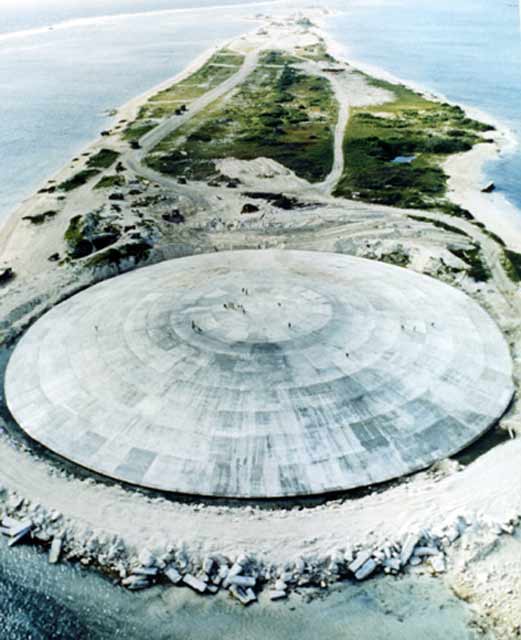
”Runit Dome 001“ by US Defense Special Weapons Agency
In the SZ weekend edition (July, 4th and 5th, 2015), I found two articles that horrified me. And I posted them as often as possible in Facebook, Google+ and Twitter.
The first article appeared in the “knowledge” sector and was titled: “Dome of Death”. It is about what the 67 nuclear bomb tests executed by the USA between 1946 and 1958 on the atolls Eniwetok and Bikini left behind.
The second artikele is titled “Extensive Human Tragedy” and tells us about a declaration by the Nobel Prize winners they published during a meeting in Lindau, demanding a fierce fight against the climate change (Klimawandel).
In the first report, the extent of the catastrophe happening in the South Sea truly horrifies me. It again brings back to my mind what a huge danger radioactive waste is. And how small-minded and futile the current attempts to find safe disposal zones in Germany are. Again, politics terminated a project that, de facto, is destined to fail.
I can well understand both the people and the counties opposing a disposal zone. After all, it seems to me that contaminating even more regions on this earth is the biggest possible mistake. Because, naturally, there can be no safety in this area.
Here is another note. The aforementioned article also again mentions that plutonium is one of the most poisonous of all radio-active materials and has a half-value period of up to 24,000 years. Well, in times when we are constantly confronted with billions, 24,000 years seem almost negligible, don’t they? Except – it has been only 2,400 years ago that the first human cultures invented writing – and that is one digit less.…
However, the second article made me almost more furious. In all fields of our lives, we trust science. When we eat food, we trust that science guarantees us healthy nutrients. When we fly, we are sure that, thanks to physics, we will not fall down. We get vaccinations and trust in science. When driving cars, we trust our airbags and even when we ride a bike we follow the laws of science.
But whenever said science provides us with matching results from different disciplines and sources, we do nothing if we do not like those results. My special fury is directed to our current government.
Regardless us of being bankrupt ourselves, they stage a “Western Community of Values” that costs hundreds of millions of Euros in Elmau. And all they can show for it in the end is a few “programmatic decisions” – all of which, even a few days after the declarations, turn out to have been nothing but lip-service.
Germany’s government actually celebrates itself for being the teacher and guardian of public virtue for all Europe and does not even hesitate to come up with slogans such as: “If the Euro dies, Europe will die”. Incidentally, this is a statement that, like many others from the same source, will not survive dialectical questioning.
For the Greeks, she has a program even the IWF finds totally counterproductive, demanding that they must reduce the retirement money they pay but that they cannot under any circumstances reduce their military budget.
And much more of the same.
Except that she is not doing her homework, for instance by introducing a general speed limit in Germany. She does not put a stop to the gigantic subsidies of company cars. Putting taxation on plane kerosene, too, is something she cannot even allow herself to think about.
And she bathes in self-praise, looking on as infra-structure and education in this country go south. How profits are privatized and losses are socialized and thus how the rich get ever richer while the number of the poor increases along with their dwindling property. To make up for it, she is number one in Europe when it comes to indoctrination and coming up with stupid dogmata.
That is when I occasionally start asking myself if my “destina” might not be to fight all this stupidity and counter-productivity. But that would mean I have to stop doing what I am currently doing, namely linking and mentoring persons and supporting start-ups. And I have not yet quite reached that stage.
RMD
(Translated by EG)
P.S.
Tonight will be the first time in many years that I will again be part of a demonstration. I will sit on my bike and ride it for a fair distribution of space on the Munich Rosenheimer Strasse: Radel-Demo Rosenheimer!
P.S.1
I took the picture “Runit Dome 001“ by US Defense Special Weapons Agency from Wikipedia:– http://sonicbomb.com/albums/album61/runit.jpg. It is licenced under “common property” through Wikimedia Commons –
Roland DürreThursday July 2nd, 2015
Entrepreneur’s Diary #110 – Manus Agere.
A short time ago, I had an experience that, again, showed me why I so dislike the terms “manager and managing”. Nor does it matter if they are combined with 2.0, 3.0 or 5.0. In fact, one of the reasons that made me me hesitant about ever using the term was that there are so many translations for “to manage” from English to German. Basically, you might well use it for “all and nothing”.
During the WebWeek, I attended an event by Techdivision in Munich that had been organized by my friend Sacha Storz (Sacha is not a typo ). The topic was 3.0 – as we all know, there is a lot of well-known, even famous, literature on the matter.
When we discussed it, Gerrit Mauch – whose contributions I very much appreciated – told us what the term “to manage” means to him. He said he thought that the original meaning of the word probably lies in the Latin: “manus agere” (’take by the hand’). It was mostly used when horses were trained.
That would mean that, as time went by, horse schools turned into “managing”.
Following this train of thought, you have to conclude that it was the ancient Roman’s BGM to care for the physical health of their horses. After all, they were important and ever so precious production animals.
And seeing humans under this light is simply the wrong concept in my eyes. Some way or other, it does not fit in our times at all. At least the developed societies should not be based on this kind of concept of humanity. And we all want to be a developed society, don’t we …
RMD
(Translated by EG)
P.S.
For more articles of my entrepreneur’s diary, click here: Drehscheibe!
Roland DürreWednesday July 1st, 2015
Bruno Gantenberg of Zurich PM Camp at InterFace AG!
A little late, but so much the more motivated, we at Interface AG open the year 2015 under the Ada Lovelace symbol, starting our much loved lecture series “IF-Forum” with a high profile speaker and a topic as controversial as it is exciting.
I would like to personally invite all my friends, in particular those from the PM Camp environment, to come and watch this presentation. You will not regret it. At the Zurich PM Camp, the speaker – Bruno Gantenberg – moved his audience in the truest sense of the word. As far as I am concerned, I already very much look forward to speaking the introductory words for the presentation.
Here is the original text taken from the InterFace AG corporate blog.
 On July, 23rd, Bruno Gantenbein, who is a senior counsellor and project leader at CSP AG, will speak about “learning, too, is evolution”. The Swiss unschooling pioneer will allow us a glimpse into the practice of this new way of learning, at the same time building a philosophical bridge towards project management. Taking his own family and the circumstances of same as an example, Bruno Gantenbein will describe the unschooling approach. He will also introduce the “Spirit-Hand-Heart-Head” Model, he himself developed, which the Gantenbein family has now been practicing successfully for ten years. Applying the results won in this context to project management shows a relevant technological connection with IT and the InterFace AG.
What is Unschooling?
Unschooling is a way of learning controlled by children in their normal everyday environment. It includes the cooperation of their parents or other nearest persons of contact without trying to imitate traditional schools or their curricula. Consequently, there is no planned teaching or certain times of the day when special school-like activities are obligatory. Topics are discussed whenever the child is interested. The parents – or other persons living in close proximity to the child – are less teachers than supporters or comrades-in-learning.
In his provocative book: “Drive, What Really Motivates You”, the best-selling author Daniel H. Pink writes about intrinsic motivation, giving the interesting advice: “Let un-schoolers teach you one lesson!”
Well, Mr. Gantenbein, that is exactly what we are going to do with great pleasure.
The presentation will be on Thursday, July, 23rd, 2015 at 18:30 hours in the InterFace AG offices at Unterhaching (Leipzigerstrasse 16). We welcome our guests from 18:00 h.
As always, you can easily register for this IF Forum via E-Mail. We already look forward to exciting discussions and an inspirational exchange of opinions!
RMD
(Translated by EG)
This morning, I heard an interview with our Bavarian Minister of the Interior, Mister Herrmann, on “Bayern 2”. The background was that it has been decided to use more and more policemen for camouflage manhunts! As a justification, they pointed out how the increased dragnet policing they had had so much success with during the otherwise allegedly also ever so successful Elmau G7 summit. At least, as we all know, our politicians were extremely happy with the results of the event.
 This is how it works: in the name of a European Vision, you abolish border controls. But not altogether! Because even during the Elmau event, there were border controls – I experienced this myself at the Austrian border sitting in the DB IC bus on my return journey from Zurich. However, I did not read anywhere what policing successes these measures are supposed to have rendered. Or if the success of said measures is already included in the aforementioned numbers. But I only mention this as a sideline.
And now camouflage manhunts are going to increase. First it is going to happen near the borders, then, because it is such a huge success, they will extend them further and further. Until finally they will also happen in the cities, because that is where they probably make most sense from the policing point of view. Provided we do not already have them.
Personally, I already almost wish we were back in the good old times with just normal border controls. Some way or other, those were the days when I knew what to expect. As opposed to this, a surprise control is always at least inconvenient and a nuisance. One of the reasons for which is that the controllers always have to expect the worst.
But this is how, unfortunately, the “European Unity” works. The EURO is heightened to become a sacred cow and inhuman behaviour is justified by claiming we need to defend our “community of shared values”. Our constitution is weakened by higher (European) regulations. Our freedom is reduced on many levels, an increased social injustice is sped up and we collectively subjugate ourselves under some obscure belief in eternal growth. And there is more and more “bureaucrazy.
And as a constant and mantra-like justification, it is said that all this is absolutely necessary. Any other behaviour would threaten the European Idea, our prosperity and, above all, our jobs. Mind you, in many “weak” European countries, a dire job situation is more than readily tolerated.
I am truly worried thinking about my beloved Europe.
RMD
(Translated by EG)
Roland DürreSaturday June 27th, 2015
Where Our Children Went to School – Experiences in Rich Bavaria (II).
An SZ – region Munich – article of June, 24th, 2015 by Stefan Galler shows yet again what state our schools are in these days. And it also shows our mental concept when talking the lives of small persons given into our care.
Why? Here is the background information!
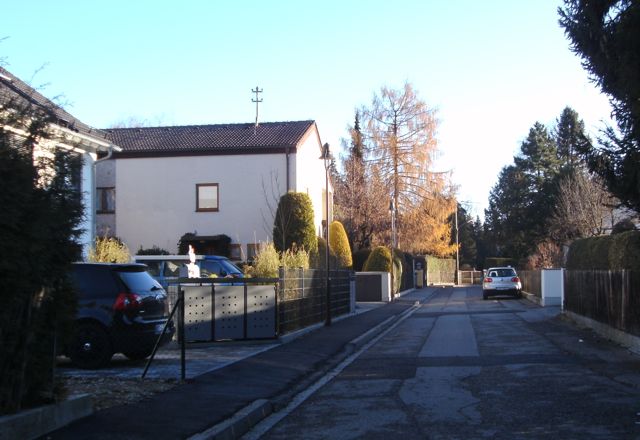
Riemerling – seemingly a harmonic idyll – but that is only how it seems – beware: school!
Even last year, space became a rare commodity in the Riemerling Primary School (which now also has an all-day sector). For instance, lunch was outsourced to the school building in Hohenbrunn on the Siegertsbrunner Straße.
Riemerling is situated directly in Ottobrunn, but it is part of the Höhenbrunn municipality, which is situated a little less than three kilometres out of Riemerling.
The two schools belong together. They use a bus for transporting the children from Riemerling to Hohenbrunn to have lunch (called: lunch-time supervision). The bus takes around 20 minutes for the drive, because it does some detours. The S-Bahn trains do the same distance in three minutes and you can easily ride your bike there in less than 15 minutes.
What sort of country is this, where young persons – who actually should still be permitted to be children and toy around – are forced to spend their entire days in schools and then transported by busses that take twenty minutes for one way to go and have lunch – with the quality of the meal being something I can only guess at?
Do we have a right to treat the time of our children with so little responsibility?
The parents’ council of Riemerling primary school now started an online petition. Under www.change.org, you can find the online petition for a referendum. The objective is: “We want a lunch-time supervision for our children that deserves the name, and we also want it back in Riemerling!”
I would gladly agree. Except – when I went to primary school, we all were out of school by midday and could recuperate from the maltreatment we had suffered in the morning in freedom and with fresh air. Consequently, I would recommend to parents: shun all-day schools. And if you believe they are absolutely necessary, then maybe you should take a closer look at your own lives. Perhaps something went wrong with it?!
RMD
(Translated by EG)
P.S.
Six of my seven children went to Riemerling Primary School. Initially, it was still a halfway humane school with a director who understood children and saw himself as a “mild father”. With a new director – a lady who sees herself as a manager – matters deteriorated. Now the motto became: “Nice exterior, evil interior”. Finally – for me nine years ago – the school has turned into a total catastrophe.


