
Roland DürreTuesday March 6th, 2012
brand eins in March
 On my return from the short (three days) skiing vacation at GAP, I already find it sitting on my “to read“ stack – the March “brand eins“. And this time it has a highly erotic title page. I must admit that the lipstick has an erotic effect on me. Only on me?
And the title:
Deciding What Is Important.
It is about the
“Main Focus Relevance”.
On reading the title, I am reminded of the interesting but still basically stupid question that is sometimes even asked during a job interview:
You have a long todo list. What will you do first – the important things or the urgent things?
The expected (and perhaps correct) answer is, as we all know:
“The important ones!”.
And the reason for this is that only important things can be really urgent.
When I hear relevance, the first thing that comes to mind is wikipedia. There you have relevance criteria (Relevanz-Kriterien), that determine which terms, facts, data, people, enterprises,… have enough relevance to be included in wikipedia. When I started my “carreer“ as a wikipedia writer, I tried a sort of self experiment (Selbstversuch): I wanted to enter myself.
🙂 And the next thing I knew was that I, as a person or entrepreneur, have not the slightest relevance.
Perhaps it would be different today for me as a blogger …
But let us be serious. For me, the question what is relevant or not is like a modern search for meaning …
And since I had a little time yesterday for really important things and brand eins is really relevant for me, I decided to do some browsing through brand eins.
Consequently, here I am, opening the magazine and reading the editorial by Frau Fischer:
Among people who make themselves important
Immediately, my pulse rate goes up. Yes, we will remain among those who make themselves important.
And then, here is the inside of the magazine … The good question:
Do enterprises hoard too much money?
Exciting. And there is more, such as:
Work without traffic jam • whose fault is the debt • main issues and asides • the man who advertises his life • empty calories • away with all the stuff • to have, but well …
An old acquaintance of ours, Gunter Dueck appears along with (the computer is not very original) the world of numbers. And as always, all is worth reading somehow. So, again, here is my recommendation: go and fetch the brand eins at the next news stand.
Indeed. Go and buy things at the news stand. Because I, being a MacbookAir and Kindle user, cancelled all newspaper and magazine subscriptions in paper form. With one exception. I am (naturally) talking about brand eins. After all, brand eins is the one paper that combines the attractiveness of magazines with a reasonable content.
And here I already hear some of my critical readers ask why I always sing the praises of brand eins.
Well, it is easy:
It happens quite frequently that I also browse through other magazines. Not only manager magazin and WirtschaftWoche, Brigitte and Bunte, Spiegel and Focus, but also Playboy or some Fitness-Magazines. Whatever you will find on the market. And then I always throw them away after a very short time. It is the “content“ that makes the difference.
The only thing where I sometimes remain (a little) longer is the Playboy humour page. Incidentally, it also no longer contains truly masculine jokes these days. Which brings us back to where this article started – erotic appeal.
RMD
(Translated by EG)
Roland DürreSunday March 4th, 2012
No Bread for the World
 When I asked him for a good speaker, one of my friends working at the „Bayerischer Rundfunk“ advised me to consider Herrn Wilfried Bommert of the WDR. After some initial emails to and fro, we had a nice chat on the telephone.
The result is that he will visit us and give a presentation at the IF Forum 2012 on the general idea of
“Sustainable Living (and Surviving)”.
His presentation will be titled „Feeding the World“.
In order to learn more about Herrn Bommert, I bought his book “Kein Brot für die Welt” (No Bread For The World). In it, he gives background information on the food crisis.
Incidentally, it is the first ebook I ever bought for the “normal“ price.
Now I read it on my Kindle. It tells you in a very informative and objective way how we humans treat our most important property. I was truly moved by what I read.
The current state of affairs is worse than I would have imagined. And it is hard for me to imagine that any upright person, after having read the book, can still be in favour of, for example, building a third runway for Munich Airport.
I very much recommend for you to read the book:
Roland DürreSaturday March 3rd, 2012
Entrepreneur’s Diary #75 – Meetings 2.0
After three years as a working student for Siemens, I (with a university degree in mathematics and computer science (TUM)) started as a “freelancer” with the same employer. In other words, I signed a tenure contract with them.
This situation was a more intimate connection with Siemens AG than I had had before. Consequently, I started getting more interested in my environment at the company. The first thing I noticed was how thick the telephone book was. Besides, among the leaders, the doctorial title and double-names were more common than with “ordinary ranks”.
But I also noticed in the organization chart that there were eight leadership levels above my own status. I was basically at the lowest of nine levels. As a proud post-graduate freshman, I found that a little strange.
In terms of mathematics, however, it made sense. Let us assume that the average number of teams, groups, departments, main departments, etc. a leader can control is five.
That is a rather high number. In those days, the lower teams had an average of five employees. Five elevated by the factor eight is 390,625. A main department, however, was only three departments. So it makes sense that you actually need many hierarchical levels in order to control 400,000 persons. In my memory, the Siemens of then was rather bigger than that.
Even in those days, we had many meetings. On my (the lowest) level, however, we worked. We had no time for meetings. My boss, who was in charge of all our groups, also did a lot of technical work. But he also had to attend diverse regular and sometimes also spontaneously arranged meetings.
The boss of my boss (a main group leader) was also available for technological work, but had to attend significantly more meetings than my boss. You saw the person above the main group leaders (I no longer remember their title) only once in a while, because mostly they had to attend some meeting or other.
Those working on the floor above us were known to us exclusively from pictures, because you only saw them in person on special occasions. Of course, the gentlemen (I cannot remember a single woman on the “higher echelons” in those days) were always travelling and attending meetings.
In other words: in former times, the higher your hierarchic position was, the more meetings you had to attend, and vice versa. In the lower echelons they were 0%, in the elevated echelons more than 100 % of your office hours.
The sum total was not bad. Because the huge majority of employees actually worked. Meetings were basically restricted to the so-called “overhead”. While the leaders hurried from meeting to meeting, they had excellent assistants, who, when I started, were still called secretaries. Basically, they were all women, and they represented their bosses quite adequately in the enterprise. Consequently, the system worked fairly well.
Of course, at the time we did not yet have all that nonsense with automatic calendars. And there were precise minutes of all meetings, distributed according to a very sophisticated system. In fact, some people actually read them!
Today, matters are different. Sharing the workload and Taylorism are disappearing among brain workers. In the enterprises, the work environment is more democratic. Hierarchies have become less pronounced. There are no longer any secretaries. The “overhead” is now shared by all in a “socialist” manner.
As a consequence, the brain workers now (have to) spend all their time in meetings and/or waste their time with administrative stuff. That is also why all the “important people” work 12 or more hours each day and will sooner or later fall victim to burnout.
And the overhead: I guess it is now considerably more than 30 years ago. Good new times. We run and run, but actually we tread on the mill.
Well, maybe “social media” will give us the opportunity to economise on many hours of meetings and yet to work towards one end more efficiently than in the old world. And then it might give us back more room for our own private lives and at least make more shared interests possible.
In my personal life, it happens. Using the most simple activities in facebook, I only take seconds for tasks that, in former times, would have required an intense dialogue, for example, on the telephone. And without “the new world” I would not even know many of my new friends.
RMd
(Translated by EG)
P.S.
Neither does the development stop in front of office doors. Just compare the situation at Siemens Hofmannstrasse or later at Neuperlach with the modern office buildings for brain workers (for instance at BMW). Even the increased number of meeting halls and the arrangement of team work-spaces in modules is remarkable.
Roland DürreFriday March 2nd, 2012
Entrepreneur’s Diary #74 – Competition-Free Shared Enterprises as Successors to State Monopolies?
A radical (utopian?) position!
What we experienced with state enterprises and so-called “companies owned by the people” (VEB) was rather bad. As a matter of principle, we hate monopolies (not only state-owned ones). Privatization and state-ownership also disappointed us. Consequently, here is what I think:
We need shared enterprises for the solution of the great problems and for shaping our future:
- These enterprises should be free of competition and organized as co-operative societies. Or else they should be owned publicly.
- They must subscribe to the values “fairness” and “transparency”. There must be a hundred per cent guarantee that these values are also realized.
- A modern and reasonably controlled (self) management must see to it that these enterprises remain lively, innovative and capable of change.
- These enterprises should no longer be restricted by job protection, strike laws, bidding laws when contracts are handed out or other legal super-regulations that make no sense at all.
Note:
An enterprise with guaranteed fairness needs no job protection and no strike law.
As a general rule, public bidding renders catastrophic results. In the days when public bidding still worked, the bidding process was a camouflaged type of cooperation between “state-ownership” and “industry”.
Absolute transparency makes corruption almost impossible and you can do without public bidding.
As to the rest of economy, they should allow and promote free enterprise. Mind you, they should give free enterprise exactly the rules written down in the Bavarian Constitution (Bayerischen Verfassung). Including competition and all the reglations appropriate in a social market economy. But, please, make them modern.
Incidentally, the factors 2 to 3 will be as crucial for cooperative enterprises as they are for private enterprises.
It is also interesting that, especially in German medium-sized enterprises, there are companies that almost enjoy monopolistic status, and still they are efficient and customer-oriented. And they have highly motivated employees and extremely satisfied customers. 😉
Dogmatic class struggle and protection of acquired possessions have no right to exist in a fair and transparent economy. And the same is true for the current regulation mania of several legal branches on several levels that have lost all sense of reality. And to top it: social justice is only possible (if at all) through an “unconditional basic income”. Everything else will swallow us whole, both in terms of bureaucracy and cost.
Just like many more things will have to change in this world. For instance the meaning of the word ownership.
Because in many cases, like mobility, ownership is a synonym for wastefulness.
RMD
(Translated by EG)
P.S.
I already wrote a little about this twice. Private Versus State-Owned (Privat- versus Staatsbetrieb) and Public Bidding (Ausschreibung). Many thanks to my readers for all the comments!
P.S.1
Click here Drehscheibe for all the articles of my entrepreneur’s diary!
P.S.2
🙁 I will no longer set “more”, because it eats up the English translations – problem with wordpress and foreign language plugin
Roland DürreThursday March 1st, 2012
Does it Make Sense to Have a Bidding for the Munich S-Bahn?
A short time ago, I supported the theory that state companies, and perhaps even monopolistic state companies, may not be a bad solution. If they meet certain requirements, they can even be more productive, efficient and customer-oriented than private enterprises. This article of mine instigated an exciting discussion.
Consequently, I will now discuss two items of news from the press on this same subject.
Firstly, I recently read that fewer and fewer interested parties can be found as bidders for regional railways. And that those who are in charge (state administration – it would be interesting to know who exactly that is and why) would be happy to hand the contract directly to an interested party without the bidding procedure. However, because of a Federal Court Decision, they are not allowed to do so.
I am not surprised. From personal experience, I know how much you have to invest if you want to bid in a public bidding process. As a general rule, the cost is nowhere near what you might eventually gain in turnover and result generation.
Especially since the final decision gets more and more uncertain and winning the bidding process gets less and less likely for decent companies. More and more bidders make an offer far below their actual cost, because they absolutely want or need the contract for some reason or other. At least that is the situation in the IT sector – for “strategic reasons” winning the bidding process is literally bought.
In the “Süddeutsche”, you could also read something interesting about the future bidding process for the “operator of the Munich S-Bahn”. If someone new wins the bidding, they will have to take over the rolling material of the old operator. Initially, this came as a surprise to me. After a little consideration, however, it sounds absolutely logical. Regardless of it basically being nonsense.
Let us assume a new bidder wins the operating rights to the Munich S-Bahn. If he has to take the old trains, he will have no chance of ingratiating himself with the users by using better and more modern vehicles. Maybe with structured first class. Or toilets in those trains that go longer distances (from Kreuzstrasse to Wolfratshausen, the train takes one hour and thirty minutes).
Nor can he shorten the intervals between trains. The same is true if he wants to change anything in the network (for instance more meeting points on one-track lanes or new two-track lanes). A future bidder also cannot come up with a new ticket price concept, since he will probably have to use the old ticket machines, cancelling machines and other logistics. Basically, he can offer the same as is offered now, with marginal changes or improvements. If he wants to make more profit, there is only one way to do it: charging the passengers less. And that is identical with less costly employees (or with fewer).
So what happens to all the employees who drove the trains for the old operator? Will they have to go to the new winner of the bidding? For less income? Presumably (and naturally) that will not be possible – due to labour legislation and job protection.
So where is the new operator supposed to recruit the people who are to drive the trains? We already saw what happened with regional coach lines. The new operator was less expensive because he managed to employ his coach drivers as sub-contractors and pay them less.
As I see it, there is a lot in this new concept of privatizing with operation and bidding that is less than thoroughly thought through. I would prefer a strong, integrated system. A shared venture that will not have to balance from bidding to bidding, but can instead make public transport more punctual and comfortable through a truly continuous improvement process, integrating the railroad network, transport and logistics. One that can also decide and realize the margin dimensions, such as reasonable prices and a simple paying system.
This, however, cannot be done with the current privatization model. What is worse: the bidding will not end with the best offer, but with the most cunning one. Which will not make public transport any more attractive. With negative consequences for our environment and our future.
And if they defend the concept, reasoning that the railway will be more efficient after privatization and consequently make a profit, instead of the loss the old “Deutsche Bundesbahn” made, then this, too, looks like thin ice to me. Today, the regional operators only start after they have been paid for by the communities. And I get the impression that what used to be called “loss” is now the active subsidies they get from the public administration.
But privatizing also caused something else: it seems to me that the new owners are even bolder with higher ticket prices than the former state companies were.
RMD
(Translated by EG)
Roland Dürre
Tweets on Twittering and Blogging #106
Here are my tweets of last week on
Blogging and Twitter, Wisdoms and Rules:
120315 Laziness is the downfall of virtue – especially for twitterers and bloggers. #Twitter #Blogging #Wisdom
120316 Virtue will beat wealth – a good motto for bloggers and twitterers. #Twitter #Bloggiung #Wisdom
120317 You should sow after a poor harvest – also a nice motto for twitterers and bloggers. #Twitter #Blogging #Wisdom
120318 After having received advice, you should act – something to keep in mind for twitterers and bloggers? #Twitter #Blogging #Wisdom
120319 First the leaves will fall, then the trees – not to forget when twittering and blogging! #Twitter #Blogging #Wisdom
120320 Laziness of followed by illness – also true for twitterers and bloggers! #Twitter #Blogging #Wisdom
120321 After happiness, you will know sadness – it often happens quite quickly, also when twittering and blogging? #Twitter #Blogging #Wisdom
There is a new tweet each day. See Twitter and “follow” RolandDuerre!
Enjoy!
RMD
(Translated by EG)
P.S.
I took the proverbs from Alle deutsche Sprichwörter.
Roland DürreWednesday February 29th, 2012
Georg Schramm & Celibacy
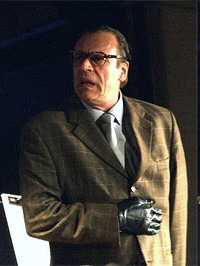 Yesterday, I saw him again: Georg Schramm. He was at the Lustspielhaus “Schlachthof”. Georg Schramm is my own generation, more than a year older than yours truly. Perhaps that is why I understand him so well.
He favoured us with a great and elaborate program. Very rigorous. With total dedication. A call for social resistance. With harsh comments against the financial world. In RAF times, they would have incarcerated him because of his call for murder.
And at the end of his show, he even explained to the people what a “flashmob” is. Not everybody likes that. I can understand that this is the kind of program you can no longer broadcast on TV at prime time.
There were also some interesting theories. Among other things, he talked about celibacy (Zölibat). A few people left the room …
Here is a short version of what he said:
In his cabaret, Georg Schramm assumes that the church representatives around the 12th century had a particularly strong sex drive. “And they took advantage of everything that could hot climb the trees fast enough”. Naturally, the consequence was that they had many children, who then were a threat to the prosperity of the church. And that is why the management of the Catholic Church introduced celibacy. Well, it does not sound illogical, does it?
In my opinion, however, there were probably some more (good) reasons for this management decision at the time.
In those days, the church was quite powerful and rich. They owned (I almost wrote occupied) most of the property and built impressive edifices. But in order to remain rich and become even richer, a system must take good care of its system agents.
Yet times were hard in medieval Europe. Hunger and misery were the normal state of affairs for a huge part of the population. Bishops and priests, however, probably did not belong to the majority of those who suffered.
Well, is it not human and totally normal that the “females” of our species preferred the “males” who “had enough to eat and live in luxury” – as Bert Brecht would perhaps have said it?
Is it not just as normal that the “males” –like today – were and are just weak creatures?
And will an organization not look non-credible if they preach water (chastity and monogamy) while its operative members – perhaps because such were the circumstances – live exactly the opposite? In the long run, this kind of thing will be detrimental for any organization.
If that was so, celibacy can be seen as a management order that is very easy to understand. It was necessary in order to preserve an image which was especially relevant for an enterprise that does business with values.
If you see it under this light, you must admit that the introduction of celibacy was a stroke of genius by the enterprise leaders, wasn’t it? And as a side effect, the costs were lowered, too!
As I said – this is pure speculation. But no matter in what dimension you want to see it, celibacy is certainly an anachronism.
RMD
P.S.
The right to the picture of Georg Schramm is with Hossa at de.wikipedia.
Roland DürreTuesday February 28th, 2012
About My Own Agenda … Beware – Advertisement!
I will now (as an exception from the rule) advertise my own activities.
On July, 22nd, 2011, I gave a presentation at BICCnight organized by BICCnet in Munich. The location was the Bayerischer Rundfunk building. It was a review of the history of IuK (information and communication technologies) and media, along with the many connections between the two.
For me, this presentation was very important. I tried to outline the important role the media and IuK played in the development of our society. Ever since man existed. And, above all, how important it is to have a free internet in a democratic and humane future.
Now several people told me that I actually managed to convey the message quite well. My presentation, however, had been titled
What’s new, pussycat?
Mind you, in my personal opinion, this title is a stroke of genius. If, however, you want to find my presentation in the “cyberspace” search machines, it turns out to be totally useless. Consequently, I take advantage of this opportunity to give another link to my “pussycats”.
The video recording is by Friedrich.
And here is another favour I would like to ask you. If you open an IF Blog article, you always find the note
Be Sociable, Share!
at its bottom. There are many buttons pointing towards all sorts of “social networks”. If you like an article, why don’t you just click on one of those buttons?
🙂 Then my article will also be visible in your network and I will get even more clicks. I would be truly delighted about that.
RMD
(Translated by EG)
Roland DürreMonday February 27th, 2012
My Heroes – Monsieur le Président ♫ ♫
With his “Kulturzwiebel”, Eberhard – Dr. Eberhard Huber, you can find more about him in projekt-(B)LOG – motivated me to look for my personal hero. I already wrote about it in an IF blog article.
This morning, as I listened to the radio (Sonntagsbeilage, Bayern2), I once more heard the anti-war song “Le déserteur – Mr. Le Président …”. And then I remembered one of the big heroes from the days of my youth.
Boris Vian.
Again not a German (see also Kulturzwiebel).
I instantly started looking for him in “Cyberspace”. First I wanted to find the original of the “Déserteur”. Of course at Youtube. Well, it wasn’t there. All you get is the much-loved “GEMA window“.
But then I found it after all. First I found Johan Galtung singing Le déserteur by the great Boris Vian.
Years later we had a German singer: Wolf Biermann: Monsieur le Presidente.
If you want to find out more about the song, you will have to consult the French Wikipedia version. For Boris Vian, there is also a very interesting article in German. Here is where you can find the texts: German und French.
For what it is worth, I will write a comment on the Gema and its Youtube locks. Sony, too, already complained.
🙂 Because it reduces the Sony turnover and thus is detrimental for business. Incidentally, the same is true for the business at Gema.
You see what this is: stubbornness and stupidity with a detrimental effect backfiring against the very institution that uses it.
But, cynically spoken, if you lock Boris Vian with Le déserteur, you might almost be considered in favour of war.
Woe to Germany and the German Gema.
Once again, I would like to bow before the civil courage displayed by Boris Vian!
RMD
(Translated by EG)
P.S.
The song is from the year 1954!
Roland DürreSunday February 26th, 2012
Getting Rid Of Plastic Waste!
Günther Bonin and OneEarth-OneOcean – against plastic waste
 I met him last Thursday on the F.R.E.E at Munich Fairground. My old friend Günther Bonin, with whom I have played soccer for easily 30 years now. He was on the fair with a booth, advertising “his” OneEarth-OneOcean.
Günter is also past fifty. And he decided that he wanted to do something that really gives purpose to his life. Consequently, he founded this non-profit club.
Together with friends, he wants to free the soil – and being a passionate sailor, in particular the oceans of this planet – from plastic waste and its terrible aftermath. He and his team developed ingenious ideas and designed great projects.
There is plenty of support. For instance, OneEarth-OneOcean already received a generous donation by a leading telecommunications firm. And the number of comrades in arms increases all the time.
I, too, support Günther and OneEarth-OneOcean.
As I see it, every one of us can – and must! – do something. Because we have to make nature free of all that plastic.
But just as important:
We should avoid for plastic waste to be created. Because we really do not need it. And as we all know: prevention is better than healing.
Consequently, there is something that no longer exists in my life:
Yoghurt that comes in plastic containers, drinks that come in plastic bottles and “over-packed” food. And other plastic nonsense.
And instead of shampoos, shaving foam, deodorants and men’s cosmetics, I only use soap from my soap dish. It produces just as much foam and smells just as nice. See also my articles Plastikmüll (plastic waste) and Ausgeschleckt (No More Schleck)!
RMD
(Translated by EG)
P.S.
As I was looking for OneEarth-OneOcean, I also found OneWorld-OneOcean. That does not sound bad, either.


