
Roland DürreThursday July 19th, 2012
Tweets on Twittering and Blogging #126
Here are my tweets of last week on:
blogging and twittering, wisdoms and rules:
120802 Flatterer, shammer – also true for bloggers and twitterers? #Twitter #Blogging #Wisdom
120803 Pain will stick to your heart – not to forget, twitterers and bloggers! #Twitter #Blogging #Wisdom
120804 Quick luck, quick misery – also true for twittering and blogging? #Twitter #Blogging #Wisdom
120805 Quick jumps will seldom be successful – also true for twittering and blogging! #Twitter #Blogging #Wisdom
120806 It is hard to prevent flies from attacking nice meat – warning for twitterers and bloggers! #Twitter #Blogging #Wisdom
120807 Pretty is what pretty does – not to forget, twitterers and bloggers! #Twitter #Blogging #Wisdom
120808 You will seldom find virtue where you find beauty – also true for twittering and blogging? #Twitter #Blogging #Wisdom
There is a new tweet each day. See twitter.com and “follow” RolandDuerre!
Enjoy!
RMD
(Translated by EG)
P.S.
I took the proverbs from Alle deutsche Sprichwörter.
Roland DürreWednesday July 18th, 2012
Entrepreneur’s Diary #82 – So What Exactly is the Meaning of the Word: Strategy?
Well, now I have been an “entrepreneur” for quite a few years, haven’t I? And during all this time, I was “at war with“ the term “strategy“ and what is usually expected from an entrepreneur in terms of “strategic thinking“.
During the numerous strategic meetings I attended (and partly initiated myself), we wanted and were supposed to get a firm grip on the future. Looking ahead, we wanted to find out what the market was going to demand in the future. Which technologies would establish themselves. For instance the internet, which totally surprised me. Incidentally, nobody ever predicted its future.
And all the time, we were looking for new ideas, even visions. In order to make the enterprise a success, even in the future. Mind you, we knew well enough that a vision is something not too far removed from an illusion or a hallucination.
My entrepreneur’s super ego kept expecting a “good strategy” from me. And I felt I had to do something I was not at all qualified to do:
Make assumptions with respect to the future and then come to the right conclusions based on these assumptions.
🙂 But, basically, the future is something that lies ahead, and it is rather difficult (impossible) to predict developments, especially if said developments are in the future. You will not even need disruptive events.
Assumptions about the future are more often wrong than correct. To be sure, I know from logics that it is quite possible to come to correct conclusions even if your assumptions have been wrong. In particular if both an assumption and the conclusion thereof are wrong, something correct can be the result. With luck, you might even win a bet on the future. Except that this is by no means a certainty and, to me, this procedure always seemed lacking in respectability.
Consequently, I always felt rather uncomfortable during strategic meetings. Regardless, we often had quite reasonable results. Those reasonable results, however, were not because we had achieved our goals and developed a vision. They rather happened because we had discovered problems during intense discussions. It actually helped that we solved them.
During the last Zürich RISE meeting, I was introduced to another, for me new, definition and interpretation of the word strategy by Dr. Simon Grand. I immediately listened:
“How an organization moves forward”.
It seems that this definition is by Richard Rumelt and was given a few decades ago.
I rather like this definition, because it contains three important elements:
- Organization:
Organization is something “collective”. - Moves:
Movement suggests processes that take place and can or even must undergo change. - Forward:
Forward shows that there are uncertainties, because it is about the future.
Following this definition, the word strategy acquires a totally new meaning. It is all about routines, rituals, symbols and behavioral patterns in an enterprise. We have to re-evaluate them. Are they still fitting? Or are they, perhaps, antiquated?
How can I change them without harming the enterprise? How can I change them and strengthen the enterprise?
Now this is all about changing the “entrepreneurial world“ and the tools and methods used therein. About behavioral patterns with respect to how things are done in the enterprise. About the success formulae our employees use internally and externally.
And here I am, discovering a method to “develop my own strategy”!
I look for problems that might linger inside the organization of the “social system enterprise“. That alone is already quite a creative challenge. And as soon as I found the real problems, I am well under way towards developing an “actual strategy“, deciding what I can try to change in my entrepreneurial world.
The definition, however, also implies that “leadership has to be collectively supported”. Now I understand young and bold entrepreneurs who are “proud to have no strategy”. Mind you, their enterprises are literally brimming with innovation. Innovation might well be invention plus realization – and do you really need a strategy for that?
Strategy is no witchcraft designed by lonely heroes in their quiet laboratories that afterwards has to be introduced to the world. Strategy is collective change in an enterprise that preserves and increases the chances of survival for said enterprise.
RMD
(Translated by EG)
P.S.
Click here for more articles of my entrepreneur’s diary Drehscheibe.
Roland DürreSunday July 15th, 2012
Standardization And Certification For Power Preservation
Because today is Sunday …
🙂 As I advance in years, I start realizing what religion is all about.
Religion is supposed to standardize belief. With the aid of stories, rituals and symbols. Rituals have to be practiced. They serve such purposes as clearing you from sins. The processes describe how you can create mysticism and spirituality.
The “system church” uses religion systemically in order to preserve the “right”, or, even worse, the “only true” belief. In order to achieve this, said belief is standardized.
“Certified believers” are generated. They must submit to the system. This process gives and multiplies the power of the system. And, like all social systems that have de-personalized themselves, churches work towards one final goal: strengthening their own power and securing their own survival.
And, incidentally, they are quite successful, aren’t they? After all, some religions have a “life cycle” of several millennia. Enterprises seen as social systems with a business purpose and usefulness often only survive for a few decades, in rare cases centuries.
But the more such a system de-personalizes, the less it will be taken seriously by enlightened persons. The “system church” counters this by using elements designed to stir basic emotions in humans: beautiful ceremonies, mysticism, spirituality and, where necessary, magic.
Criticism from outside is met with the killer argument: tradition. And they also pull at your heartstrings: what we basically want is some respect for all those countless generations who lived and believed similarly. And who even died for their belief. What a sentimental wolf camouflaged as sheep!
It so happens that I think belief is something very personal. And that there are no two people in the world who actually believe exactly the same thing.
To be sure, there might be similar values, expectations, interests and needs between two individuals or in groups. Sometimes there are probably moments of immense shared empathy, during which people actually feel united. Which can cause happiness and give you a feeling of security and comfort. Perhaps such a thing as ecstasy through “being united in your belief” exists.
But still every human will have to answer the question of the meaning of his or her own life alone. Just like we all, in the end, have to walk the final path unto death alone.
After having written this article, I understand a little better why I am often not feeling very well when I think of our society trying to plan, standardize and certify EVERYTHING.
RMD
(Translated by EG)
Roland DürreSaturday July 14th, 2012
Circumcision and Enlightenment
To me, it seems like – in the spirit of enlightenment – it was more than high time for the decree (Urteil) by the county court of Cologne on circumcision.
Men, too, suffer negative health consequences after circumcision. Sometimes you will get sore, sometimes you will feel unwelcome pressure and super-sensitive skin gets desensitized. It is trivial to understand this. Also, the same is true for circumcision that has been done for “medical reasons“ as in cases where it was “religiously motivated“. Mostly, the so-called “medical reasons” are not really all that strongly indicated.
As a general rule, “medical circumcision“ is ordered when the parents, in particular the mother, advise it. The motivation is more “hygienic” than “medical”. I myself witnessed quite absurd discussions with (incidentally, mostly single) mothers who have had their sons circumcised – not for religious reasons but because they thought it cleaner and more normal. Incidentally, I am talking quite intelligent women, for instance a grammar school teacher I know quite well.
It is easy to forget that circumcisions, apart from the probably only minimal physical inconveniences, also cause psycho-somatic damage. The child will experience being ostracized early in life – for instance when everybody is taking a shower at school. We are talking being ashamed of one’s nudity, suffering defamation by other students, sexual inferiority, etc. Puberty will not get any easier, either.
Nobody likes talking about these kinds of things, because, after all, circumcisions, like other topics, for instance sterilization and abortion, are still taboo and kept secret. Those who are concerned will just avoid the problem – for example by not taking a shower along with the other children after sports.
To be sure, the physical inconvenience and damage after a circumcision are certainly nowhere near as grave for a man as for a woman. Men will and can probably more or less put up with it. After all, the human body is pretty adaptable, isn’t it? Even when it comes to ignoring small chronic “pain”.
Because the consequences of thoughtlessly having a toddler undergo this operation will be felt all through life.
Dogmatists among you will now ignore this argument and shrug, giving you the counter-argument that “this is a tradition that has existed for millennia”. And “normal” men will not easily admit to having a problem, anyway, let alone a problem at this his most important member. Consequently, the matter was hushed up in the past. Which is why I am very happy we now have the Cologne decree.
But why should an enlightened and humane Germany not be permitted to forbid the deliberate mutilation of a perfectly healthy male toddler? Even if said mutilation is justified by “millennia of tradition“ and “religious feelings“?
Parents who want to mutilate their toddlers for religious reasons can feel free to do so in a country where it is permitted or even considered an obligation.
Incidentally, the age of enlightenment also gave us equality between men and women. And the same is true vice versa! Why should we tolerate something done to boys while we forbid it for girls? Is the procedure just fine for men, because it is not quite as detrimental for their health as with women? Because they will cut off a little less from the male sexual organ?
Or to put it more drastically: if you may not remove labia, even for reasons of religion or tradition, then, please, let the same apply for foreskins! That, too, is what I call equal rights – in this case applied to men.
What I find most outrageous is this: the very moment a court of law actually decreed in a courageous and consistent way, there is an outcry by our “democratic“ parties who want to abolish the decree through a new legislation (Gesetz). Are they scared of the powerful religious groups, the terror, or is this just about votes?
I fail to understand it.
But I recommend that at least those men among our representatives who are in favour of this new legislation should be the first to get the special circumcision treatment. How about starting with Steffen Seibert? Why not make it a nice ritual with public live broadcast?
RMD
(Translated by EG)
P.S.
Here is the original text of the government comment on the issue:
According to government spokesman Steffen Seibert, the Federal Government wants to re-establish law and order for circumcisions in Germany. Last Friday, Seibert stated that circumcisions executed on boys with responsibility must be allowed in Germany without breaking the law. “The Federal Government“, so Seibert “is aware of the huge importance of early circumcision, particularly in Jewish religions. – We want both Jewish and Muslim religious life in Germany“. The Federal Ministry of Justice said they are working hard on clarifying the legal details. “This is certainly one area where we cannot wait and see. For us, religious freedom ranges high as an object of legal protection“.
So here we go:
Mutilating humans is part of religious life. Guaranteeing religious life ranges high as an object of legal protection. Consequently, mutilating humans ranges high as an object of legal protection.
And all those German mothers who lay such store on hygiene may also hope again…
P.S.1
Perhaps one of the reasons for our often bizarre demands for strictest data security and our irrational fear of transparency is the fear that such small personal secrets might become public knowledge.
Roland DürreFriday July 13th, 2012
IF Forum 2012 – Advance Notice – Wilfried Bommert – Catching Up On Good Soil!
By now, we have also agreed on the day for the 3rd 2012 IF Forum of our series “Living (and Surviving) Sustainably”.
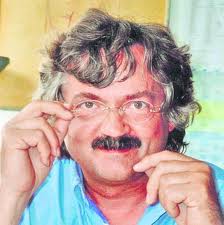 Herr Wilfried Bommert will speak on Tuesday, November, 13th, 2012.
His presentation will be about “How to Feed the World“. For a title, he selected:
Catching Up On Good Soil!
How we might avoid the world food crisis.
Here are a few preliminary ideas by Herrn Bommert:
Ever since 2008, the price for food world-wide only knows one direction: up. The global financial crisis and the dwindling oil reserves further push the price spiral up. Concerns selling energy, raw materials and money reach for the fields of the world. They buy or rent huge areas in Africa, Asia, Eastern Europe and South America, thereby again causing massive price increases for food. Consequently, we get famines, revolts in more and more countries that cause political instability and a collapse of world food affairs.
This vicious wheel would not turn if we did not actively contribute by our consumption habits. Our longing for biological fuel and our hunger for products from industrial farming, our money invested in farm and soil stock, they all support the global hunt for the fields of this world. It is up to us to put a stop to this mania currently prevalent in food and soil markets.
Dr. Wilfried Bommert has been working as a WDR journalist since 1979. He is head of the environmental sector at the WDR-radio station and also wrote the book: “Kein Brot für die Welt – Die Zukunft der Welternährung”, 352 pages on paper, first edition published on October, 5th, 2009 at Riemann Verlag (QUERDENKEN) .
RMD
(Translated by EG)
Roland DürreThursday July 12th, 2012
Tweets on Twittering and Blogging #125
Here are my tweets of last week on:
blogging and twittering, wisdoms and rules:
120726 Let sleeping dogs lie – good advice, not just for bloggers and twitterers? #Twitter #Blogging #Wisdom
120727 Beatings will make you wise – also true for twitterers and bloggers? #Twitter #Blogging #Wisdom
120728 Beating is forbidden, but responding in kind isn’t – also true for twitterers and bloggers? #Twitter #Blogging #Wisdom
120729 There is no place where nobody will try to sell low-quality products – even among twitterers and bloggers! #Twitter #Blogging #Wisdom
120730 The piper who only knows one tune is poorly off, indeed – also true for twitterers and bloggers! #Twitter #Blogging #Wisdom
120731 Bad leather will make bad shoes – not to forget, twitterers and bloggers? #Twitter #Bloggen #Weisheit
120801 Dishonour will look for vengeance – also true for twittering and blogging! #Twitter #Blogging #Wisdom
There is a new tweet each day. See twitter.com and “follow” RolandDuerre!
Enjoy!
RMD
P.S.
I took the proverbs from Alle deutsche Sprichwörter.
Roland DürreTuesday July 10th, 2012
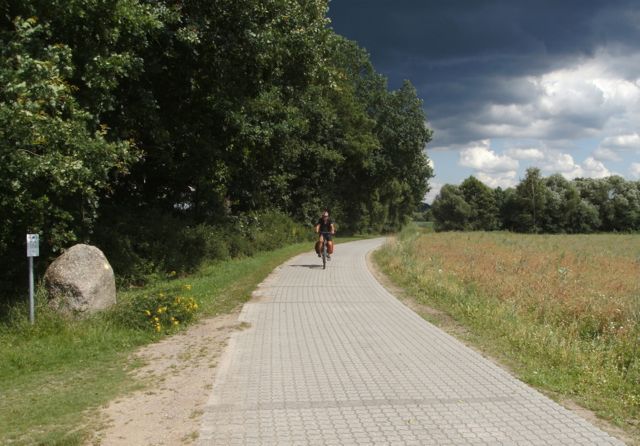
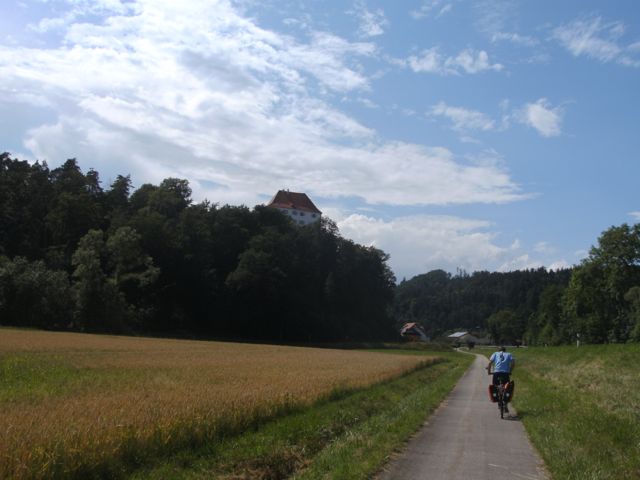
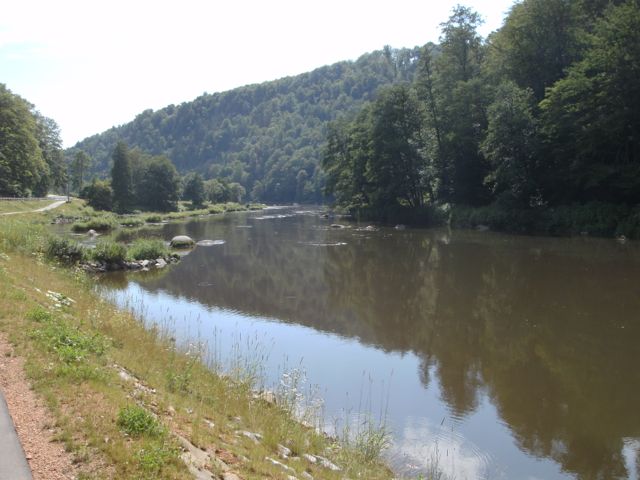
Utb #4 Prague – the Third Leg Between Domažlice and Regensburg
Again, just a few impressions.
From Domažlice, we rode towards Furth imWald via Babylon. We covered 120 comfortable kilometres. It was rather comfortable, because, after a few inclines in the Czech Republic, we came through the Chamb valley and then along the river Regen always down to Regensburg.
Truly a dream!
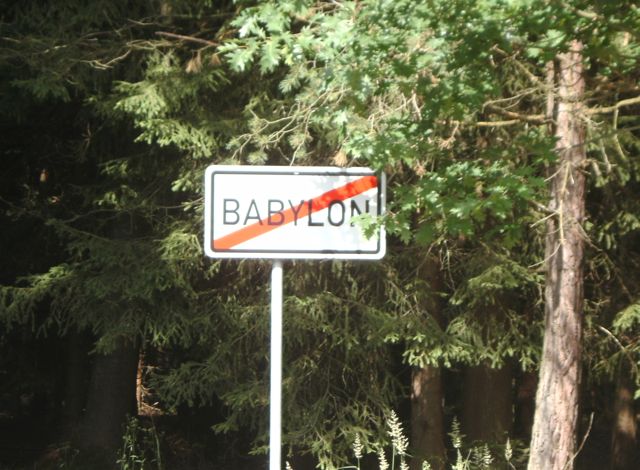
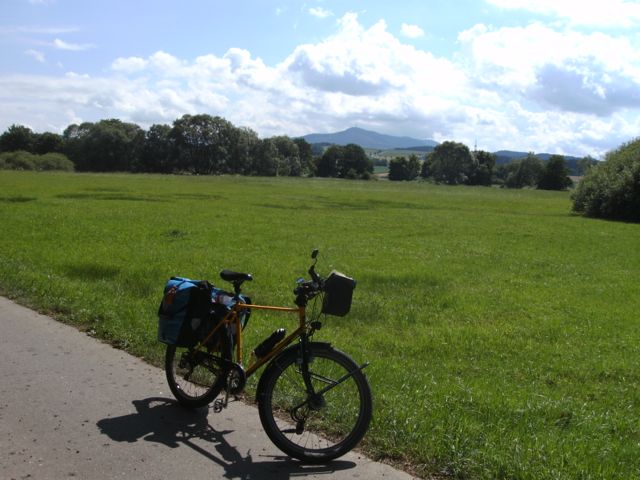
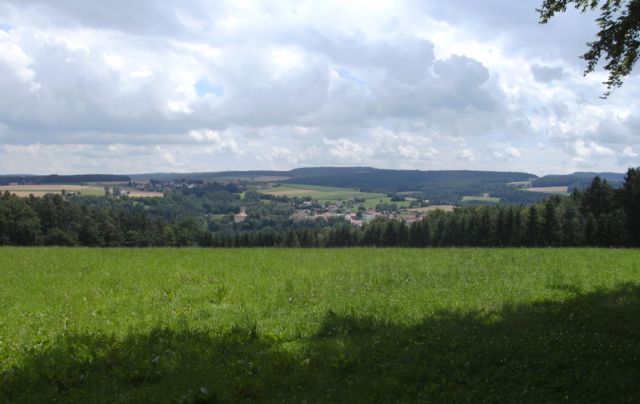
RMD
Roland DürreMonday July 9th, 2012
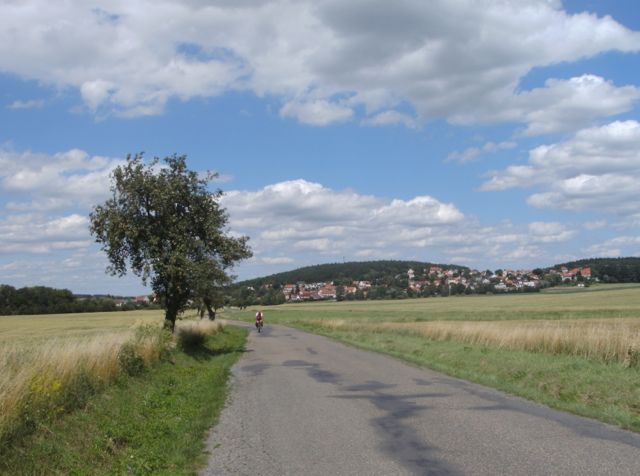
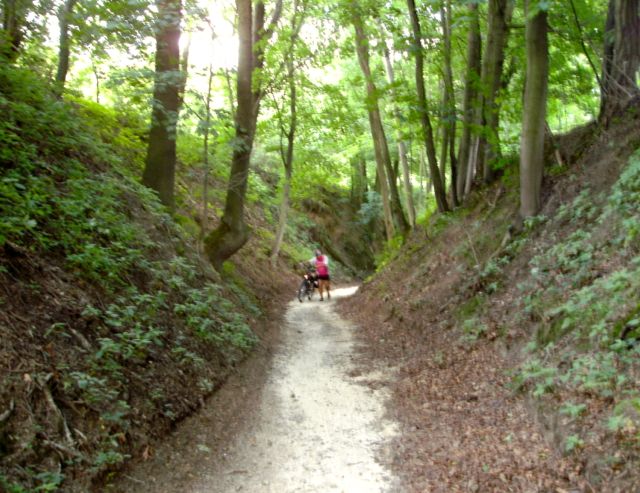
Utb #3 Prague – The 2nd Leg Between Rokycany and Domažlice
Since the model has been such a success: here is just a minimum of information and three pictures.
We rode 86 kilometres, more uphill than downhill – so it was actually quite strenuous. Again, however, it was a great day.
As before, the weather, and, above all, the scenery, were just beautiful. The same is true for the pension Athletic, where we stayed overnight.

RMD
Roland Dürre
Germany – Country of Associations
It is a constant source of wonder for me how many associations and institutions of all kinds we have in this our country – and also all over Europe. As often as not, said associations hardly have any more anything in common with what was historically their purpose. The same is true for their members. They now have their own expanding, flourishing and expensive structure. Lots of employees and managers are paid in order to see to it that the association continues to live, even if, basically, it has been out of reach for quite some time.
Most of these associations only exist in order to increase their own power.
The usefulness has degenerated and become an end in itself. Some associations survive on the fees of their members. Those members pay, because they expect something in return (mostly some sort of lobbyism), or because they think you just have to be a member (after all, this is how it has always been and you never know what dire consequences a cancellation might have), or – and this is the worst case – because they have to be members (forced membership, like IHK). Some associations also manage to get money from public authorities regularly.
But how did the associations originate?
In my opinion, both humans and companies always had and still have a basic need to belong and associate. This caused the establishment of federations. They organized themselves as associations, constituting some sort of community of similar-minded people, either at work or in business. It was often their way of advertising their special interests – be they justified or not – publicly and demand a certain degree of support from the state.
Most associations, however, no longer offer a sense of belonging or home today. More often than not, they mutated from a federation to a lobbyist group. As a general rule, the only thing they aim at is their own survival and the strengthening of their own system.
Are associations still necessary?
Today, you could probably do without most of the associations. You can meet similar-minded people at eye-level. The opportunities abound. Besides virtual platforms on the internet, you will also find real and local meetings for almost everything. All kinds of organizations, as well as universities, offer all sorts of things – perhaps far too much. And wherever you really cannot find an opportunity for a special need, you will find it quite easy to create one yourself.
Here is what I recommend:
Cancel your membership with all the associations you subscribed for. Never let yourself be recruited as a member. And, above all: establish your own association!
RMD
(Translated by EG)
Roland DürreSunday July 8th, 2012
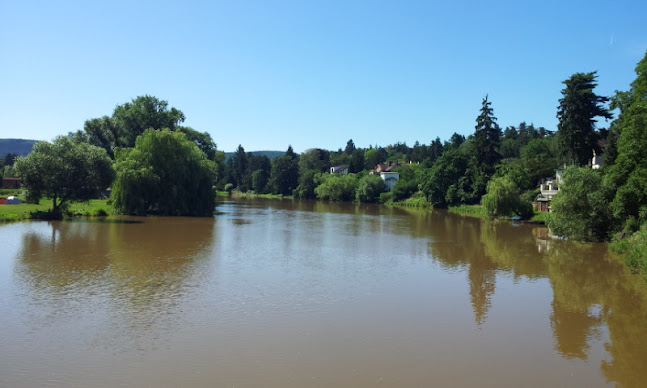
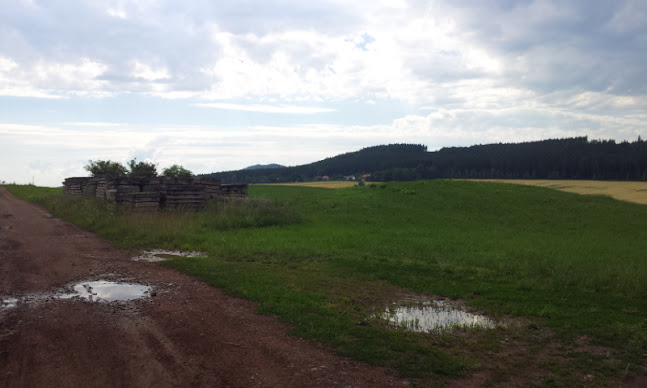
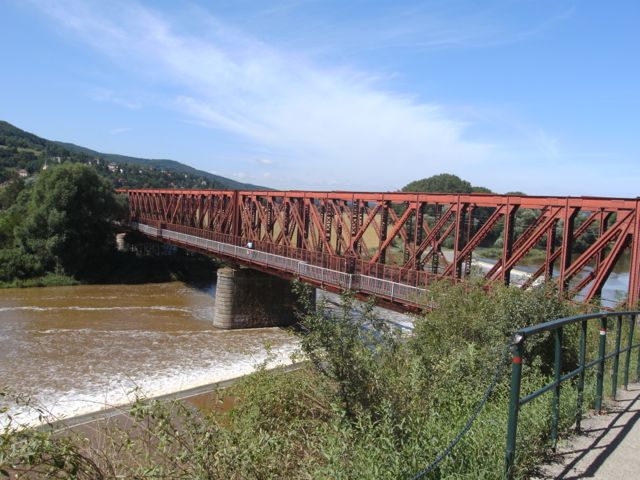
Utb #2 Prague – The First Leg to Rokycany
It was a beautiful 96 kilometres! But they also made me tired. And then the tasty dinner.
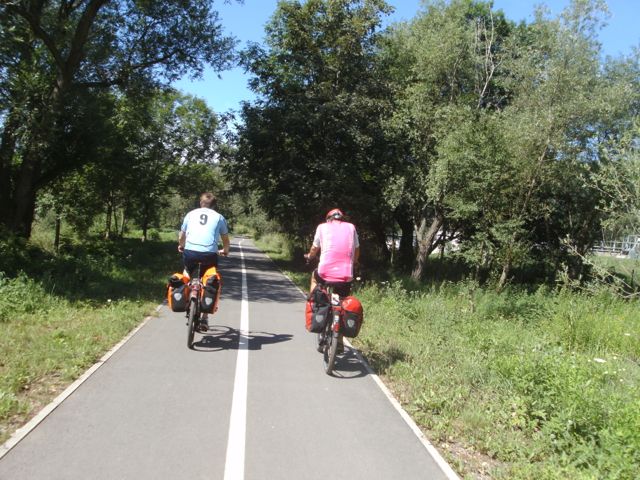
Consequently, all you get today is a few pictures taken on the way:

RMD


