
Roland DürreThursday September 13th, 2012
Going South and “China and the Internet”
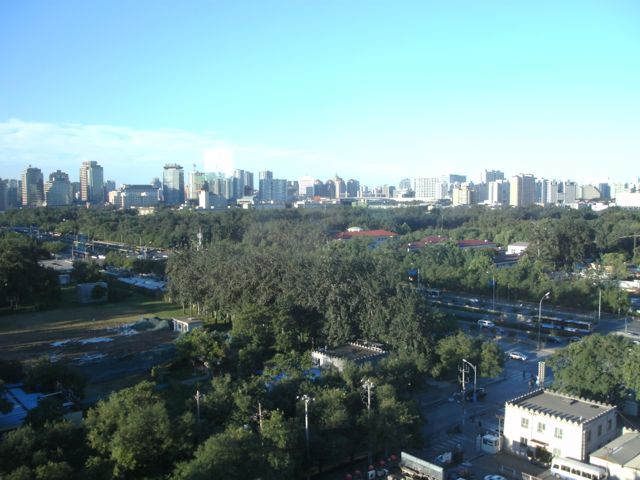 On this Wednesday morning, which is the day of our departure for GUILIN, I open the curtains.
And behold: all of a sudden, the sun shines over Peking! It seems like the air is clear. The view from the hotel Sheraton “THE BIG WALL” bedroom is totally different from the last days. As a farewell to me, there is sun and clear skies.
Today is a day of travels. In the morning, we will go to the airport, Terminal 3. It goes without saying that this airport is very impressive.
Flying Air China, we arrive at GUILIN – which is situated 1,500 kilometres to the south – after about three hours of flight at roughly 15:30 h. Our final destination is YANGSHUO.
It is a dream of a destination. I can see many high cone-shaped mountains, sitting in a huge, flat area, looking like someone told them to form a line. You get the impression that a dragon might be hidden behind every one of those mountains. Since we are in the country of dragons, this is hardly a surprise, is it? …
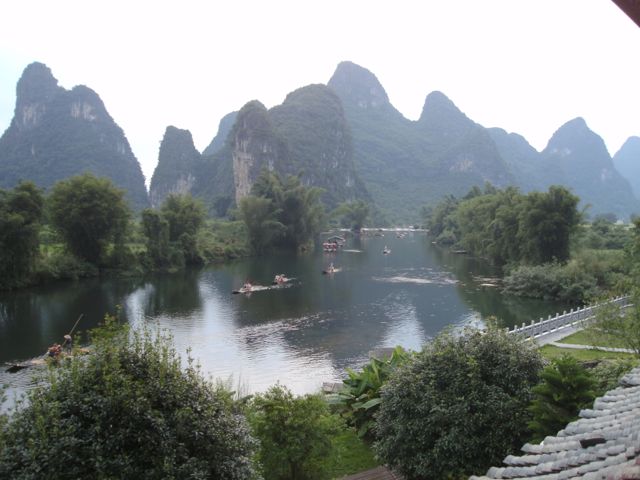 And the climate is warm and agreeably tropical – the only other place I know where it is like this is Africa. This is the ideal region to recuperate. A great contrast to Peking – and still part of a “very well-tended China”.
Recuperation is the word: consequently we decide to call it a leisurely day today. Instead of a travel report, you just get a few comments on the internet in China.
Basically, you get access to the internet everywhere – and at a very low cost at that. The supply of the email client with Imap and/or Exchange on my Airbook is also excellent. The same is true for the access to most WEB addresses. My VPN access, too, functions most of the time – except some times. I have no idea why.
The search engines are also ok.
Social media pages, such as Twitter and FB, however, are among the most prominent pages I cannot directly access. The same is true for Youtube. VPN is the only thing that helps here. Strangely enough, this is also true for some very harmless pages, such as “alle deutschen Sprichworte”.
Now I came up with the following solution to the problem: I keep switching between “normal“ internet access (for my email client and the IF blog pages I can access) and VPN (for Social Media and inaccessible pages).
 To this end, I collect all WEB pages I can directly access on a browser (Mozilla). On Chrome, I have all pages I can only access through VPN. In this manner, I can manage quite well.
But the real problem is not technology. The real problem is time. We are very busy, the days are full of important and often beautiful encounters Returning to the hotel late at night, I no longer feel like logging into the internet. And on the next morning, we also always get up early, preparing for our next adventure…
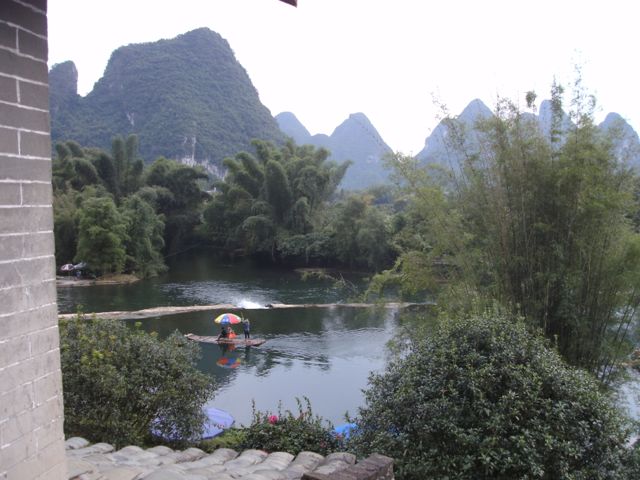
For instance tomorrow – we will go on a riverboat on the “Li-River” at 8 o’clock.
Consequently, there is no time to really process all these many impressions and stimulations, let alone report them.
RMD
(Translated by EG)
Roland DürreWednesday September 12th, 2012
Peking on Tuesday – THE GREAT WALL
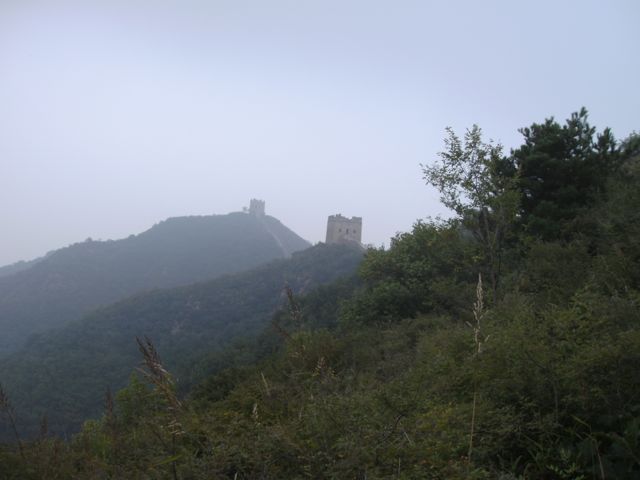 This is our last day in Peking. It is time for the Chinese Wall!
Consequently, we take the journey to JINSHANKING. The distance is about 150 km. We rented a car and driver. He will take us to a starting point and later pick us up from where we are hiking to.
Departure time is 6:30 a.m. – at home, it would now be shortly after midnight. We leave Peking, drive through the mountains on an Autostrada. It has been built in the Italian fashion, except it is in far better condition than most Italian motorways,
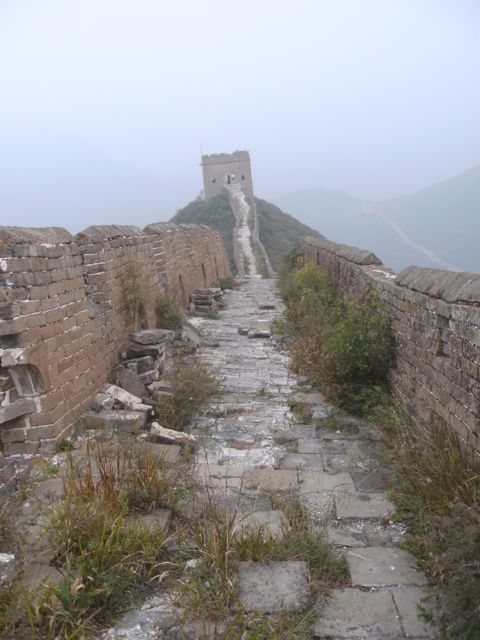 We learn that this motorway has been built for the Peking Olympics in order to take the guests to “THE BIG WALL”. This morning, the motorway is empty and has lots of tunnels and long bridges. After a little more than 90 minutes on the road, our driver drops as at JINSHANKING around 9.00 hours.
The weather is quite agreeable. So far, there is not much going on at the Big Wall. The way up is steep. We hike around four kilometres of the official path – and then, based on insider information, continue for some time through a stretch that is not officially open to the public.
It is a rather impressive experience – between peaks, you will sometimes go more and sometimes less steeply down and then up again. Of course, there are places where the wall looks a little rustic.
I get the impression that I have never before covered so many metres of altitude in such a short time, especially when I go up or down the extremely steep stretches. As I said before: it is always up and down – with long views into the valleys.
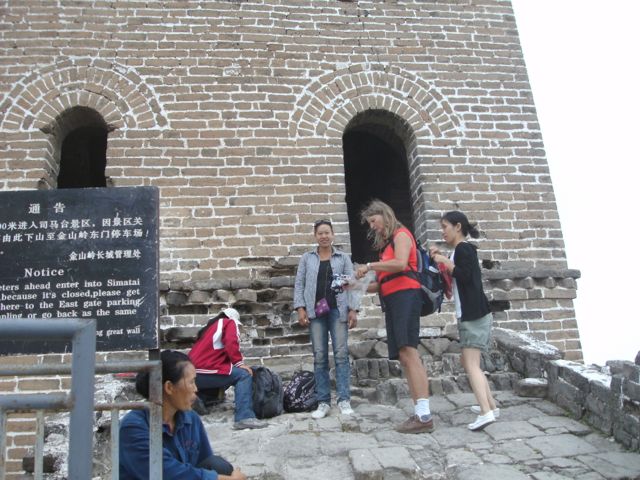 We frequently see peddlers. They carry their heavy bags and noisily (too obtrusively) offer their products – water, Coca&Cola, lemonade, coffee (in cans), small bottles and t-shirts that identify the wearer as a climber of the “GREAT WALL”.
Since all is still quiet around the place, we are occasionally the only victims of those traders. We bravely decline all offers – until we arrive at the highest building of the wall where we give in and buy four new t-shirts. All of them together cost 80 Yuan, including the transportation up – that equals around 10 €.
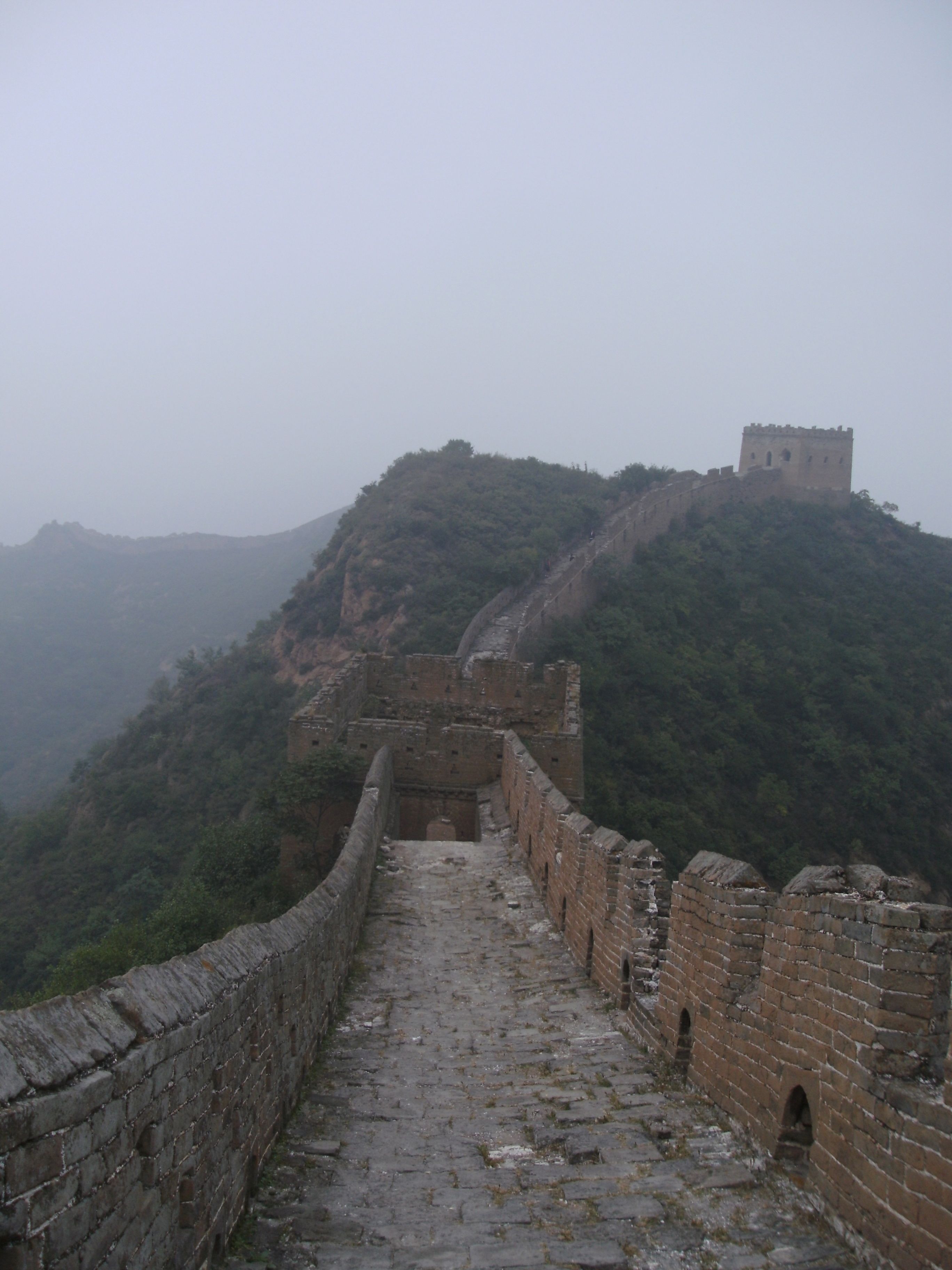 Our impressions are great. We take many pictures
Unfortunately, the visibility is not very good. Neither does the sun really find its way through. We are not quite sure about the reason.
I believe it might be due to smog.
After all, a considerable part of the electricity for the Mega City of Peking is produced by coal-driven power stations. It seems that quite a bit of pollution just sticks to the atmosphere. They say that in the old GDR there were also regions where the sun was hardly ever seen. But then, perhaps it is a natural phenomenon.
We were a lot faster than we had planned. Consequently, we met our driver shortly after 13:00 hours at the destination and arrived back at the hotel quite exhausted around 15:00.
Regardless, we used the rest of the day for quite some more journeying through Peking to say “Good-Bye”. Because tomorrow we are going to GUILIN, which lies in the south of China.
Now we come closer and closer to the highlight of our trip: the wedding.
RMD
Roland DürreTuesday September 11th, 2012
Peking on Monday
Today, we went to see the “Summer Palace”. It was a wonderful day. Very relaxed and rather lazy.…
 We drove under the bridges in a pedal boat and did a little climbing. In this way, we could enjoy the beautiful view into the “Summer Palace” park both from the lake and from above. It certainly is a dream of a garden – maybe it would be nice to be the Emperor of China in one’s next re-incarnation?
And wherever we went, we always admired the Chinese people. No matter where you go, you will mothers and fathers proud of their children, families on a shared outing and again and again the delight of the young people. Everyone’s eyes shine with happiness. Seen as an entity, our environment gives you the impression of true harmony and content.
We used the metro for our return trip. It is very modern, clean and very cheap. In the afternoon, I was a little aghast to see how few people were going places by metro. It almost reminded me a little of Munich at certain times of the day. In the evening, however, I learned my lesson. That was the time when the metro was really full. There were even more people than you would see going to the fairground at Oktoberfest time.
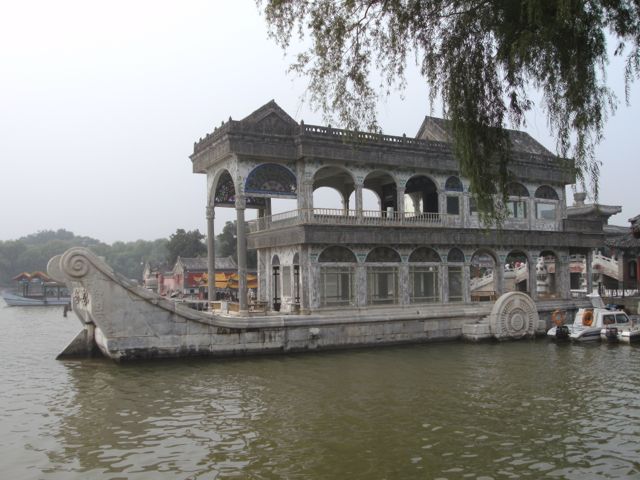 And what is worse – the people are queuing in parallel lines next to the metro train exit like on a rope of pearls. Then people exit and as many as possible enter. And all the time, some will remain standing on the platform. Because the metro is more than jammed. However, this is irrelevant, because two minutes later, the next one will arrive. And after three or four trains, you will finally also be inside.
You know exactly where you have to get out, because the metro is not accessible freely as at home. Instead, there are doors. They will only open when the metro train has entered the station.
For dinner, we eat Peking duck by Chef Dong. Apparently, this is a very powerful chain. A true high-gloss restaurant with plenty of posh. But the duck tastes delicious.
Tomorrow, we plan to go and see the “GREAT WALL”!
RMD
(Translated by EG)
Roland DürreMonday September 10th, 2012
Peking on Sunday
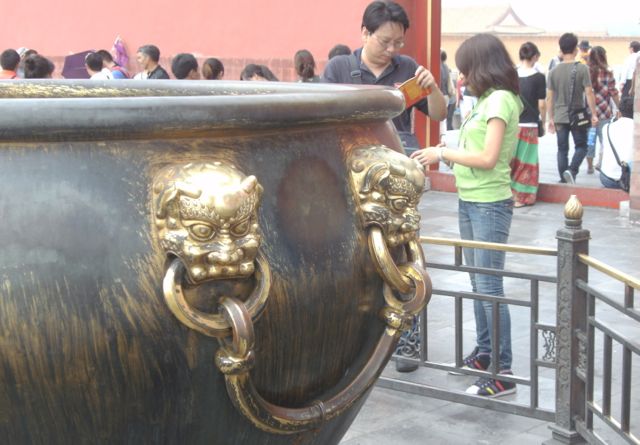 Late in the morning, we went to see the Forbidden City. Before that, we had gone to the Place of Heavenly Freedom. All these locations are full of history and, compared with Europe, the dimension is totally alien.
After having seen the Forbidden City, we drove around a small lake towards a “leisure park”. It was also very touristy: many restaurants, lots of live music, many bikes and boats. We rented a rickshaw for one hour – some way or other, we felt that our legs needed some rest. Everything was very touristy, but still very impressive. Life in this city emanates some special kind of harmony.
Here are a few more experiences:
It is very cheap to go places by taxi – if you manage to get hold of one. It is nowhere near as easy as it looks. Because many taxi drivers try – at least for tourists – to drastically break the price regulation. That is quite easy: since taxis are rare, the drivers work together with sales persons. They stand around on attractive locations and offer “taxi, taxi” to non-locals. If you give them your destination, they will come back with a fixed price, for instance 50 RMB.
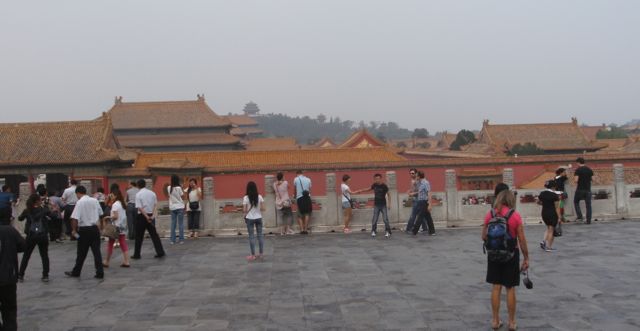 If you then manage to find a taxi driving with the (official taxi) metre, you will discover that the distance was actually worth 17 RMB, instead of the 50.
Instead of the equivalent of 2 €, you pay more than 6 € which, basically is not really tragic for a “rich European“.
Since, however, you want to take a closer look at all of Peking – which extends over a huge area- , you have to take quite a few rides by taxi. And that adds up, doesn’t it?
And it seems that at least at those places where tourism is abundant, the “fixed-price taxis” are decidedly the majority. So you want to be careful.
The (late) breakfast was typically Chinese and excellent. Green leaves (by now my favourite), noodles and diverse pasta dishes that remind me a little of (filled) yeast dumplings. The same is true for dinner. We ate a hotpot. In Peking, the first-class restaurants are overbooked. You will find tables where you can play Halma while you are waiting until you get the signal that there is finally a vacancy.
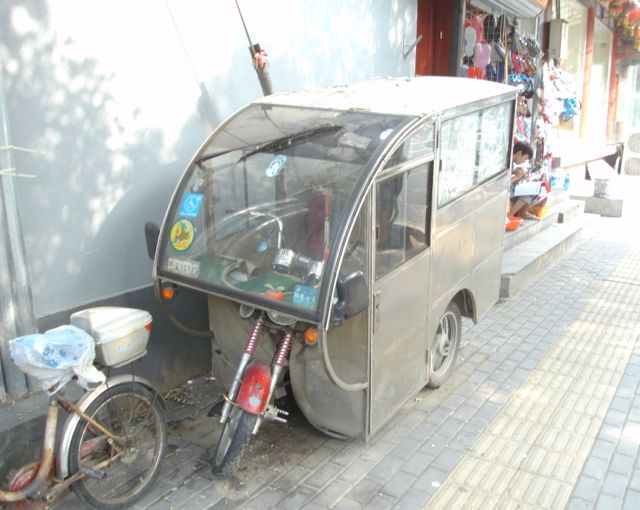 Before dinner, however, we went to visit a fake market. It is even bigger and more sparkling. Just like a real mall. You really start wondering if the difference in price between a true and fake Gucci bag is justified or if, perhaps, quite a few buyers are cheated – which perhaps is exactly what they want.
And after dinner, we strolled through some kind of night market. In the food section, you can find everything: scorpions still wriggling at the skewer, barbecued beetles and snakes (small ones). Occasionally even some kind of huge cock chafer grub. Bon Apetit!
But on the whole, I found the food delicious so far. And tomorrow – quasi for recovering – we will see the Summer Palace; before tackling “The Great Wall” on Wednesday.
RMD
(Translated by EG)
Roland Dürre
“Fish bowl” on September, 25th, 2012
In less than three weeks, the time will have come for our technological IF Forum “Best of PM-Camp” at our Unterhaching office building in the afternoon of September, 25th, 2012. We plan two clusters of presentations on “Projekt Coaching”. The first cluster will be theoretical, the second will be about emotion. As a finish to both clusters, we want to do a “Fishbowl”.
Now someone asked me what exactly a ”Fishbowl” is. Let me describe what it is and which rules you have to observe in a “Fishbowl”.
Let us assume there will be 75 guests at our IF forum. Chairs will be placed in a double-circle. All guests will sit in a circle made up of two rows of chairs that is open in one direction. At this open space, there are five more chairs, also arranged roughly circular. They are the “Fishbowl”.
After their presentations, the speakers will sit on those chairs. The empty chairs can be taken by whoever among the audience wants them. The discussion follows special rules. Only those sitting in the ”fishbowl” are permitted to speak. In other words, the discussion is restricted to those participants who sit on the special five chairs.
Strict adherence to discipline is the requirement for success. There are no “wild arguments” and nobody can indicate that he or she would like to speak. If someone in the room wishes to contribute, he or she gets up and takes a vacant chair in the “fishbowl”. If there is no vacancy, one of the persons sitting on those five chairs must get up and make room. The speakers, too, are permitted to vacate their chairs. Whenever a decision about one person having to get up is made, it is made quite quickly. As soon as chairs inside the fishbowl remain empty (or the allotted time is over), the discussion is at an end.
I already participated in some fishbowls and was always quite impressed by the standard of the contributions and the discussion inside the fishbowl. Also, I was always surprised at seeing how without a glitch and socially competent the change into and out of the fishbowl always took place. But it was also quite remarkable to see how many persons decided to take one of the fishbowl seats and what dynamics became obvious.
Now I look forward to our technological IF forum “Projekc Management” on September, 25th with two lively and constructive “Fishbowls”.
RMD
(Translated by EG)
Roland DürreSunday September 9th, 2012
brand eins in September
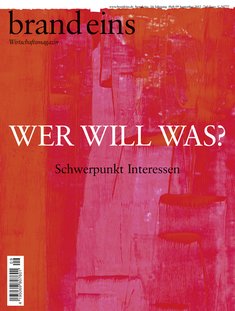 This time around, my “brand eins” copy had to wait in its plastic cover for almost two weeks. On Sunday evening, when we arrived back in Munich on this second day in September, the first thing I had to do was unload the camping stuff. Then followed three intense days in the office, many appointments, etc. – No time for reading.
On Thursday, September 6th, however, I went to Switzerland by train – which finally gave me some time to read “brand eins”.
The September issue is titled:
WHO WANTS WHAT?
The focal point is INTERESTS.
Well, that sounds good, doesn’t it? After all, I certainly believe in the prejudice that our complex society is hugely controlled by interest policy, i.e. by lobbyism. And you all know that is something I hate very much, because I think it causes both my and the “common man’s” normal “interests” to be subdued in favour of systemic powers.
Now wouldn’t it be an important task for journalists to unsnarl the jumbled-up of imagined (group) interests – which probably even have gained their own lives by now – and isolate their dimensions? Consequently, I get more and more eager to read what it says in the magazine. I quickly tear up the cellophane cover with my long fingernails and get under way.
The editorial by Frau Fischer is titled “We only want your best!” Immediately, the old saying comes to mind: “Your Best, Your Money!” And, indeed, the article by Frau Fischer finishes with the formula “Good Products for Good Money!” This is a formula I can easily live with. After all, I have no problem spending my money on good products. Except that I do not appreciate being cheated and deceived!
Here is my experience while reading the current issue:
It is a true pleasure for me to read the magazine as I ride the train to Lindau. Every now and then, I look up from the magazine and see the soft Allgäu countryside gliding along the ALEX windows. And then I go back to reading the next article in the magazine.
I find the focus article ”What You Want“ on page 40 by Dan Ariely particularly remarkable. The ADAC overview shortly before this article, is also rather exciting. Apparently, the “C” has nothing to do with “Club”, neither is it anything like a “Christian C”; in fact, it is clearly for “Cash”.
There is also, at long last, an article about the Board of Trade I have so little love for (“The Keepers of the Grail”). We are forced to be members. And then this club usually supports the opposite of what I consider right. For example, they lobby for the Third Munich Airport Runway.
You see how far we have come in this country? – I am forced to be a member of some lobbyist association. Incidentally, the club euphemistically calls this forced membership “obligatory membership”. What a truly nice phrase.
And the more I browse through the magazine, the more exciting articles I find. Unfortunately, they all support my prejudice of the “interest-controlled society”. Now that hurts a bit. On the other hand, I am glad brand eins is actually telling me I am not dreaming all these things.
Basically, lobbyism is not a nightmare. It is reality. And I certainly need no “Zwickt’s Mi”, das kann doch alles nicht wahr sein” (Wolfgang Ambros 1975) in order to realize it.
RMD
(Translated by EG)
Roland Dürre
Peking in the Afternoon
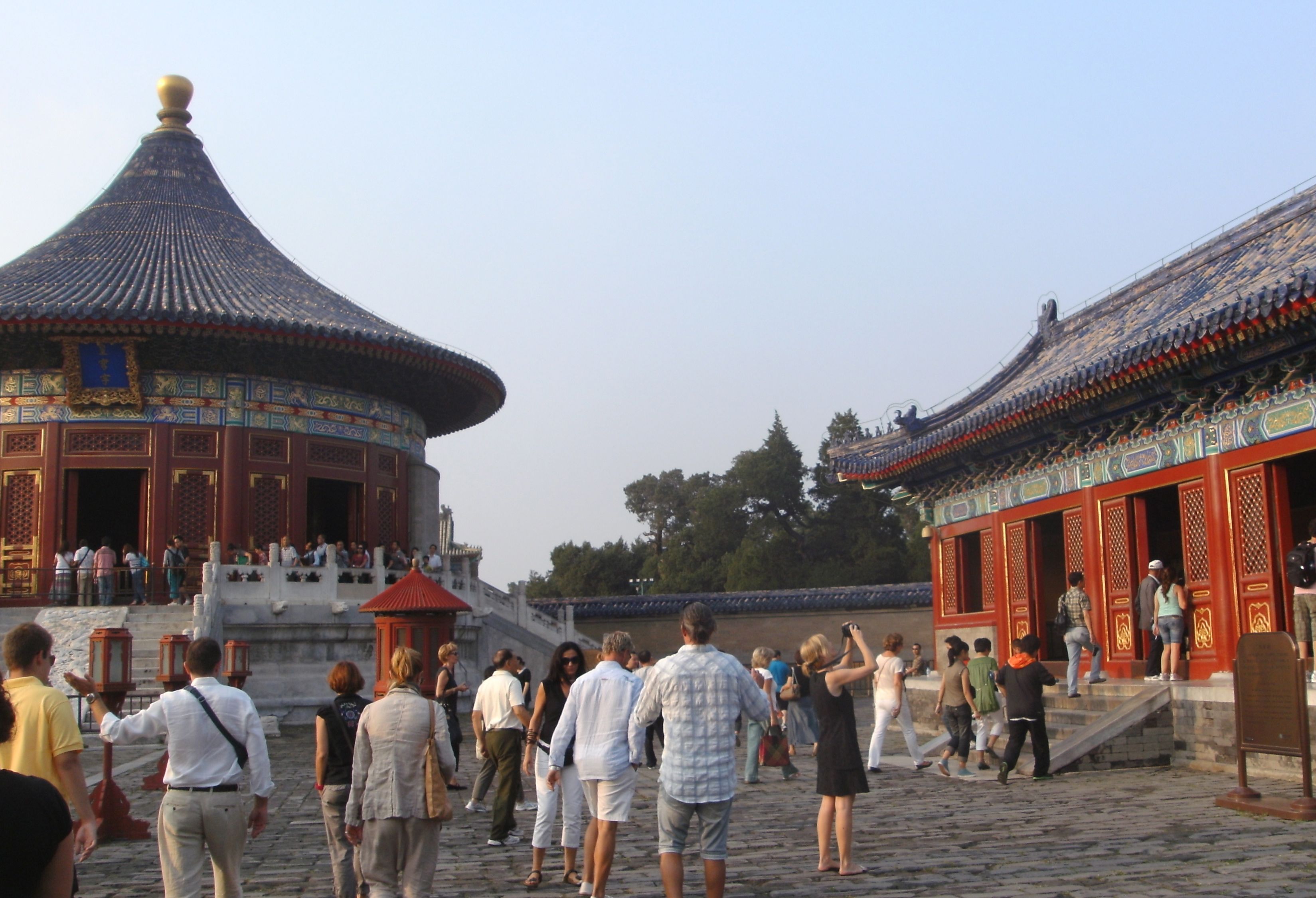
Peking is exciting. On the first afternoon, we stroll through the city and collect impressions.
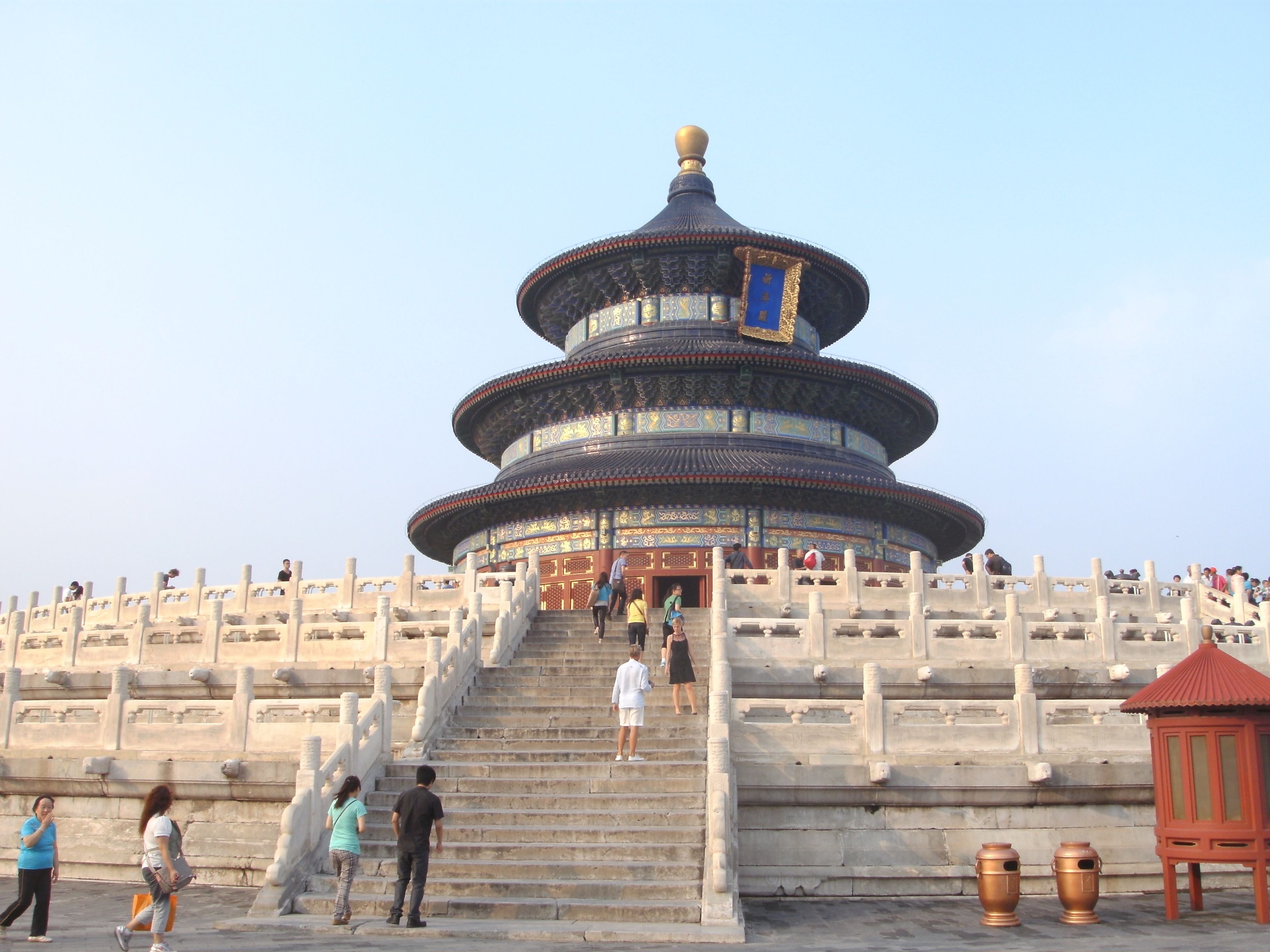
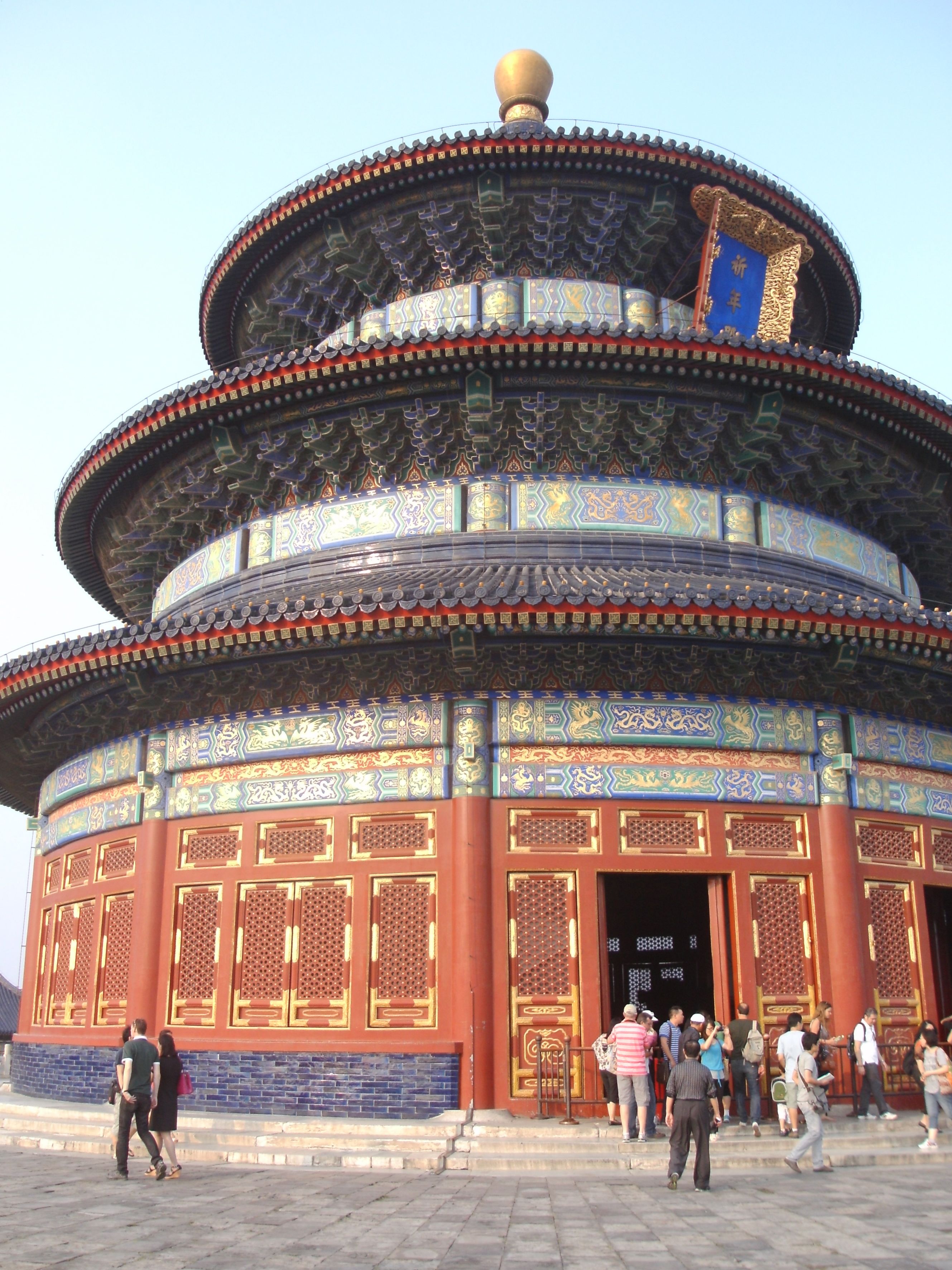 Compared with German cities, Peking is very clean (at least as far as I have heard). To be sure, it is not quite as extreme as I have heard. Even in the “Temple of Heaven Park”, I see the occasional “litter” on the ground. Regardless of the signs with “No littering” you see all over the place. But then, I also see workers collecting the litter everywhere.
Apart from this:
The weather is nice. To be sure, most of the Chinese already wear long trousers, because the winter is approaching. For us, however, the shorts are still good enough.
And, of course, the streets are huge and there is a tremendous amount of cars. It seems, however, that many of them are fuelled with gas – which makes it a little more bearable.
Just as I read in the German Newspaper, I see a whole lot of “e-mobility”. There really are huge numbers of electric vehicles. But you notice – and this fits the evaluation of non-cable electric mobility – that the vehicles are always very light and they drive considerably slower than their fossil-driven big brothers.
 In the evening, I walk from a picture-book Mall into another form of market. Let us call it Fake Mall. Apart from wonderful Adidas fakes that look great and cost only 60 Yuan – that equals 8 € – you can actually find all brands you know. Of course, everything has been produced in Vietnam.
Later, we have dinner at a Mall. The “Food Way“ consists of many restaurants, all situated on patios of the shopping complex. With many open-air seats.
 The food tastes delicious – and they already give you the first experience: food in China has nothing, really nothing at all, in common with the food you are served at “Chinese Restaurants“ in Munich.
In the evening, we leave the hotel “The Great Wall” to go and see the embassy quarter (very impressive) and then some kind of amusement quarter. Here, too, you will find “hanging beer gardens“ at many levels.
You always get an amusing view of other “beer gardens“ or into small alleys.
Now we have three more days left in Peking. Let us wait and see what other great objects of interest I will see: Forbidden City, Great Hall, Ming Tombs, Summer Palace …
In the evening, we were rather tired. But swimming in the “Sheraton The Great Wall” pool this morning definitely woke me up and restored my energy. Starting now, I will live the Chinese rhythm and feel like a Chinaman.
RMD
(Translated by EG)
Roland DürreSaturday September 8th, 2012
Arrival in Peking – Short Report
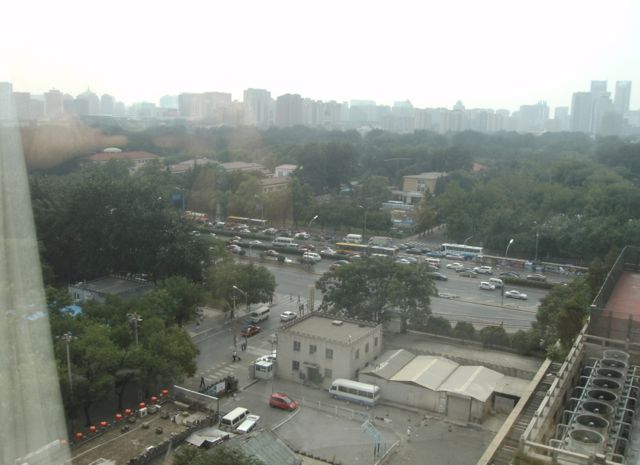
Blick aus dem Hotelzimmer - Sheraton THE GREAT WALL, Peking
This is the view from my hotel bedroom at Sheraton THE GREAT WALL, Peking
Now I arrived. In Peking. For the first time in my life. I am truly impressed …
At the airport, even the conveyor belts and escalators talk to us. They warn against steps and order me to grip the handrail. It is both in Chinese (at least so I assume) and English.
Immigration is organized like a dream. No waiting. Memories of travelling to the USA come to mind…
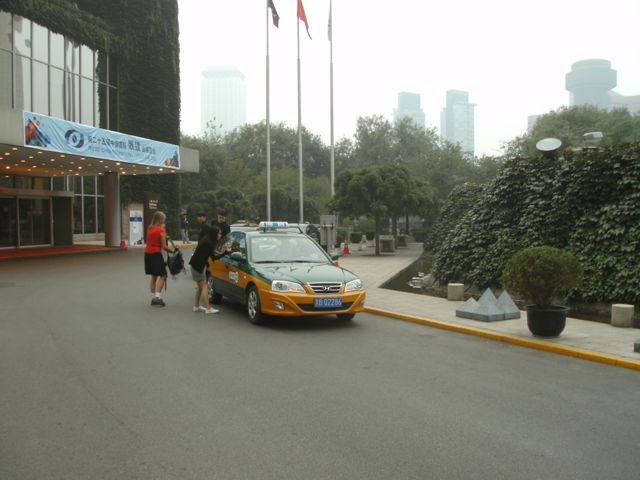
Regardless of the most strict warnings and recommendations, we cannot fight our way through to the official green-and-yellow taxi cabs at the airport. After one of those hustler has caught hold of us, no “normal“ taxi will agree to take us. Basically, all Chinese are one big family …
It is clear that we will now pay twice the usual price (500 Yuan). What is even more annoying is that the driver takes us to the nearer Sheraton. It is the wrong place, because we want to go to the Sheraton on THE GREAT WALL. This time, we catch a real taxi – und what do you think? – It is only 19 Yuan (although the distance is considerably shorter and without poll). And the driver is happy about the small tip he gets.
So what else is there to tell?
The flight was uneventful. It took around 8.5 hours, so it seems we had dexterous winds. Considerably more than half the passengers were Chinese or at least of Asian descent. We flew Lufthansa – and the standards were good Lufthansa standard. A nice crew and the meals were also tasty.
And, of course, you instantly notice that Peking is a special city – just like China is a special country. At first sight, I have no idea how Europe is supposed to keep up. On the other hand, it is easy to imagine that quite a few things that are now being made will make life hard for the people in a few decades (or even earlier).
But then, I travelled to China not only in order to see a couple married, but also in order to learn a lot. I wish to better understand and evaluate this “globalization”.And I am sure two very exciting weeks are awaiting me in that respect.
RMD
(Translated by EG)
Roland DürreFriday September 7th, 2012
Some More Details on the IF Forum of September, 25th, at Unterhaching
In less than tree weeks!
On September, 25th, there will be another very special technological IF Forum in our Unterhaching building. After 2010 (AGILE) and 2011 (LEADERSHIP), this is the third “Technological IF Forum”.
In 2012, the protagonists of the PM Camp will visit Munich (Unterhaching) on the 12th of September. They will bring with them the “Best of PM Camp”.
The day is about:
Projects and work, coaching and success!
Here are the agenda and a short introduction of all speakers and their papers:
Presented by – Roland Dürre
14:00 – 14:15 Welcome (Kornelia Hietmann)
Segment I
14:15 – 14:45 Integrated Project Management (Dr. Stefan Hagen)
14:45 – 15:15 Post-Industrial Project Management (Dr. Marcus Raitner)
15:15 – 15:45 “Fishbowl” on Segment I
Break
Segment II
16:15 – 16:45 Systematic Creativity (Jens Hoffmann)
16:45 – 17:15 Purpose, Nonsense and Chances of Life (Nadja Schröer-Petranovskaja)
17:15 – 17:45 “About Onions and Cultures” (Dr. Eberhard Huber)
17:45 – 18:30 Fishbowl on Segment II
Afterwards:
Happy Hour (discussions, fun, laughter, beverages and snacks)
Now let me introduce the speakers to you and give a short summary of their presentations:
Dr. Stefan Hagen will open up the first section with his presentation about “integrated project management“.
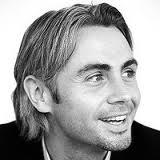 Stefan is the founder and owner of the Hagen Management GmbH.
In the truest sense of the word, Stefan lives his life
Project Management – Organization – Strategy
Consequently, he is also the author of the perhaps best-read German project management blog (pm-blog). In his IF Forum 2012 opening statements, he will plead for “integrated project management“. Here is a short summary of his theses:
- Problems arising in project management can probably only be solved using a conventional approach and methods. Just look at the poor success rate.
- Integrative approaches will be necessary. Basically, this means we have to look beyond our own horizons.
- Horizontal Integration: classic and agile approaches;
- Vertical Integration: humans in (social) systems.
- Stefan will mainly discuss systemic principles currently neglected in an unpardonable way in most projects.
- His conclusion is: we need a “change of level“ in order to generate better frameworks for successful project and team work.
The ideas introduced by Stefan will be completed by “post-industrial project management” as introduced by Dr. Marcus Raitner.
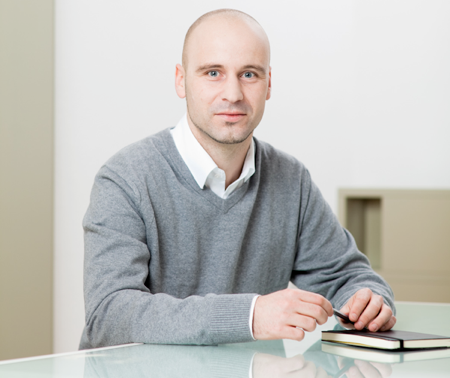
 Marcus wrote his dissertational thesis in Informatics at Passau University.
After five years as a senior project manager with a huge IT service company, he started a new career as senior partner and board member of the esc Solutions GmbH in 2010.
His focus is on IT project management and IT project coaching.
Dr. Marcus Raitner has his own quite famous PM blog. He is on the organizing team of the PM Camp and initiated openPM.
Read what Marcus says about his own presentation:
Many projects are two-class systems: a few persons do all the intellectual and leadership work, while all the rest of the people just execute it. That is what I call planning apartheid. You cannot miss the similarities with the organization of huge enterprises: industrial project management with the main goal of efficiency. Industrial project management will work quite well if the complexity is so small that the creativity of the planning class is sufficient for overcoming obstacles. Except that most of the projects are far beyond this level of complexity. What then?
After the presentations by Stefan and Marcus, we will conduct the “Fishbowl”. Together, we will process all we have heard.
Then, we will take a break.
The second part will be opened up by Jens Hoffmann.
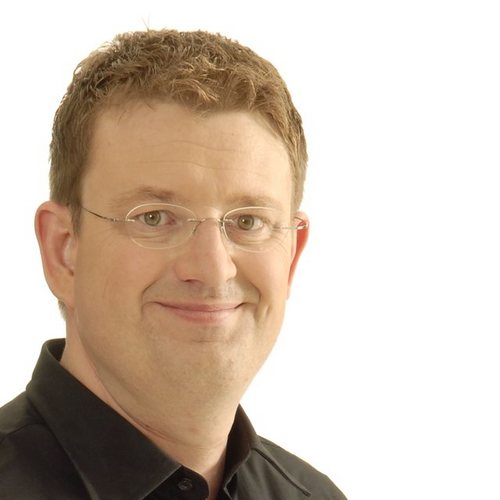
 Jens, born 1967, is managing director and founder of the Hoffmann Consulting GmbH. Originally from Düsseldorf, he started his career very young – at 20 – with Munich Microsoft, before joining Roland Berger & Partner in 1987. He soon advanced to the posts of project leader in Frankfurt, Vienna and Zurich.
In 1999, he founded the Hoffmann Consulting GmbH. It specializes on consulting services for IT communication. His main areas are governance, risk management, compliance and business innovation (Business Model Design, Product and Service Innovation).
One of his most important topics is creativity. That is why he will talk about
Systematic Creativity
Identify new challenges and solve problems efficiently.
Here are some ideas on his paper for you to take a look at in advance:
Just like the enterprises that provide them, products and services, too, get more and more interchangeable. Technological and social competence are matters of course, but creativity is the one skill currently most on demand. Your competence at identifying and addressing the needs of your customer – and then to solve problems efficiently – will certainly determine whether you are a success or not.
For many people, the connection between creativity and business is something they find hard to get used to. Jens will give you an overview about how creativity can be integrated into business as a process and then be developed and used systematically, either by individual persons or in a team.
When Jens has finished, we will all be looking forward to hearing Nadja Schröer-Petranovskaja speak.
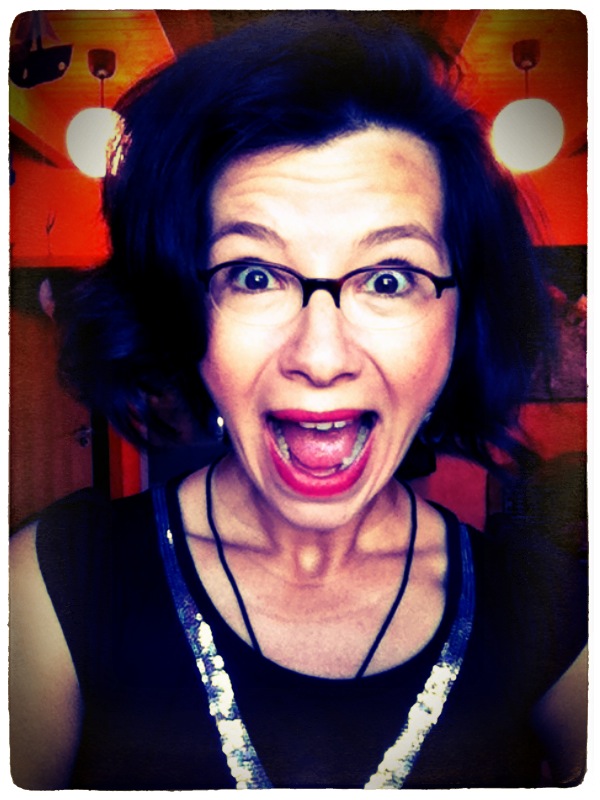 This is how Nadja sees herself:
Human, Russian, psychologist, project leader, business muse, photographer, mother, author, blogger.
She is always looking for something and finding it between countries, (entrepreneurial) cultures, along their inhabitants and sectors. Nothing is pre-assigned with her, except that:
It must make sense.
Freedom-loving, lazy and courageous.
She will tell us her ideas about:
Purpose, nonsense and chances in life!
Nadja’s presentations are always very special affairs. I very much look forward to her impulse presentation. Said presentation will give us new questions, combine facts and introduce new propositions about how we might design the rest of our lives.
Incidentally, this is the one question that I am mostly concerned with these days.
Our cycle of presentations will be closed by Dr. Eberhard Huber.
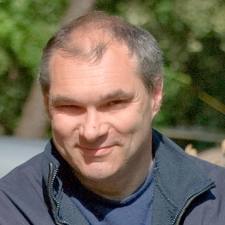
 Dr. Eberhard Huber is the embodiment of experience and knowledge. He can look back on: 25 years of project leadership, having been trainer and coach for project management, group dynamics and team development, project management in research and education (at the universities of Mannheim and Magdeburg), and practice.
His Credo is:
Making a team out of a group of people, developing cooperation that is more than just an accumulation of individual competences, often depends on a few lucky coincidences, the leadership qualities, or the project leader’s charisma. This is where team-oriented project leadership comes in. It accompanies the process of building a team during the project.
Team-oriented project leadership that leaves room for and promotes self-organization will enable you to really make proper use of all the potential you have at your disposal.
This time, Eberhard will tell us about
“Onions and Cultures”
His “onions“ will actually close the circle opened by Stefan. Culture and the active promotion of culture can serve as one solution for the change of level Stefan demands. Eberhard chose the title “onions and cultures“ deliberately, because the plural is important for what this will all be about.
Now is the time for our second “Fishbowl“. We will finish the exciting afternoon together and recuperate from the strains of the intense work during our Happy Hour!
I find it great to have the chance of presenting this super event. I look forward to an exciting and beautiful day with Stefan, Marcus, Jens, Nadja, Eberhard and many friends and partners.
RMD
(Translated by eG)
Roland DürreThursday September 6th, 2012
Tweets on Twittering and Blogging #133
Here are my tweets of last week on:
Blogging and Twittering, Wisdoms and Rules:
120920 Sorrow and misery will grow as the days and hours go – not to forget, twitterers and bloggers. #Twitter #Blogging #Wisdom
120921 Do not worry too much about tomorrow – a good motto to follow, also for twitterers and bloggers? #Twitter #Blogging #Wisdom
120922 Sorrow will turn your head grey and make you old beyond your years – not to forget, twitterers and bloggers! #Twitter #Blogging #Wisdom
120923 If you want the bow to remain functional, do not stretch it too far – also something bloggers and twitterers should not forget! #Twitter #Blogging #Wisdom
120924 Do not eat your bread if you know eggs will be served – is that good advice for twittering and blogging? #Twitter #Blogging #Wisdom
120925 If you save your bread, you will have enough in times of misery – also some strategy among twitterers and bloggers? #Twitter #Blogging #Wisdom
120926 Harmless fun is not meant seriously – that is what quite a few twitterers and bloggers believe. #Twitter #Blogging #Wisdom
There is a new tweet each day. See twitter.com and “follow” RolandDuerre!
Enjoy!
RMD
(Translated by EG)
P.S.
I took the proverbs from Alle deutsche Sprichwörter.


