
Roland DürreThursday December 13th, 2018
The Caribbean – Inspirations, Impulses, Ideas (3) Our World is a Beautiful Place.
? The world is beautiful – that is also true for the Caribbean.
In the Caribbean, our eyes were again fed to the brim with natural and artificial beauty. It made me remember a story of a few years back.
It was in Guinea. With a few friends, I had done an excursion to a place with a particularly nice view. As soon as we arrived, everybody in the group wanted to be the one to best express what a singularly beautiful scenery we saw.
Suddenly, I exploded:
”You know, the Bavarian Lakes are also quite nice“.
I meant the Königsee, the Ammersee and the Starnberger See.
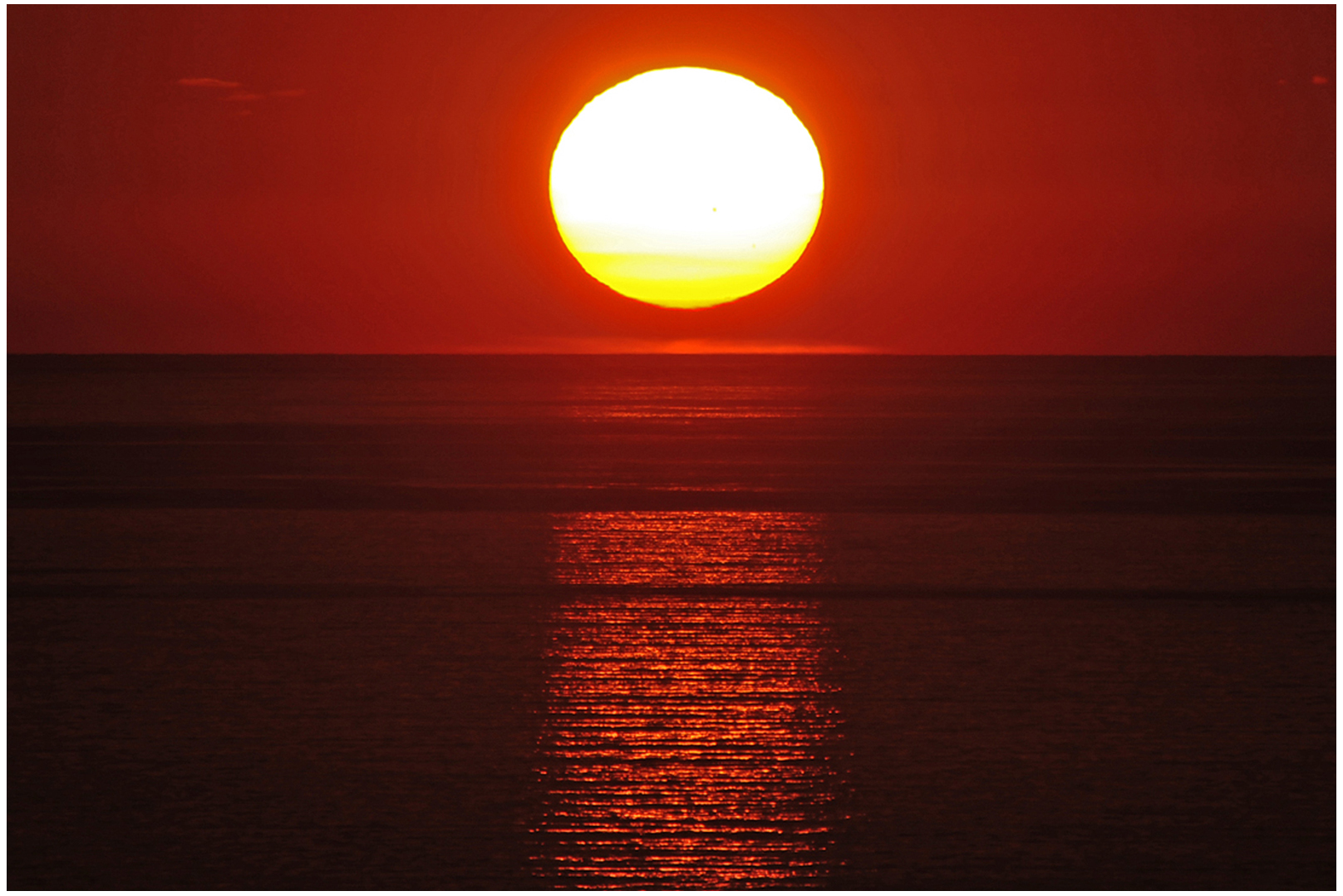
Sunset on Bonaire (Foto © Luc Bosma)
Even today, my friends still teasingly remind me of this sentence.
However, I stick by it. I know no trip of mine where the beauty of this world did not fascinate me. That is true both for my bike-tours in Bavaria and Germany and for my trips through Africa and America.
There were always spectacular views. The same was true in Arctica. Every individual iceberg was a great view. And the Wedell-Lake shimmered spectacularly in the sun.
Even the industrial ruins of the Southern Georgia Whaling Industry presented themselves to me with great beauty.

Between ruins (private picture)
In fact, even the view from our “high-rise ship” in the Dominican Republic onto the sinisterly but intensely steaming chimneys in the La Romana harbour were beautiful in a bizarre way. And the view from the skyscraper down to the slums of Mumbai, too, has its attraction.
There is one impression my soul ate up during my trips that particularly impressed me. It was when we crossed the Alpes by bike on a morning after staying overnight in the Heidelberger Hütte. But even here, I would not say that it was the best landscape ever in my life.
In this context, there is probably only BEAUTIFUL, not more beautiful or even most beautiful.
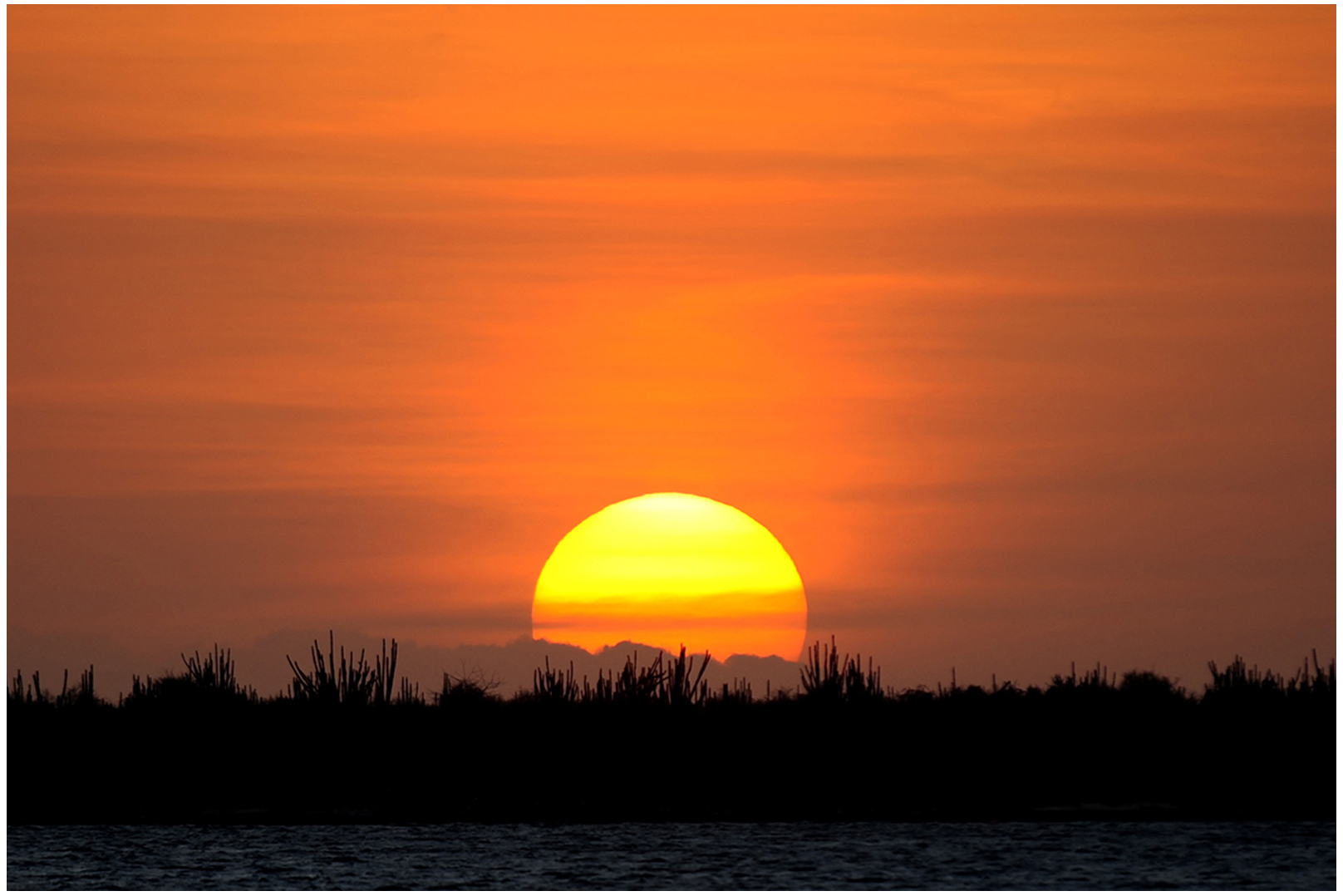
Sunrise on Bonaire (Foto © Luc Bosma)
RMD
(Translated by EG)
Roland DürreWednesday December 12th, 2018
The Caribbean – Inspirations, Impulses, Ideas (2) Society & Economy.
Let me say this up front:
Our trip through the Caribbean made it clear to me that the economic-social principle of life with consumption and profit we are currently practicing can only work in special cases (as it seems to do in Germany but, if you look closely enough, not even there).
So here are my experiences in the Caribbean and what I learned there about the country and the people.
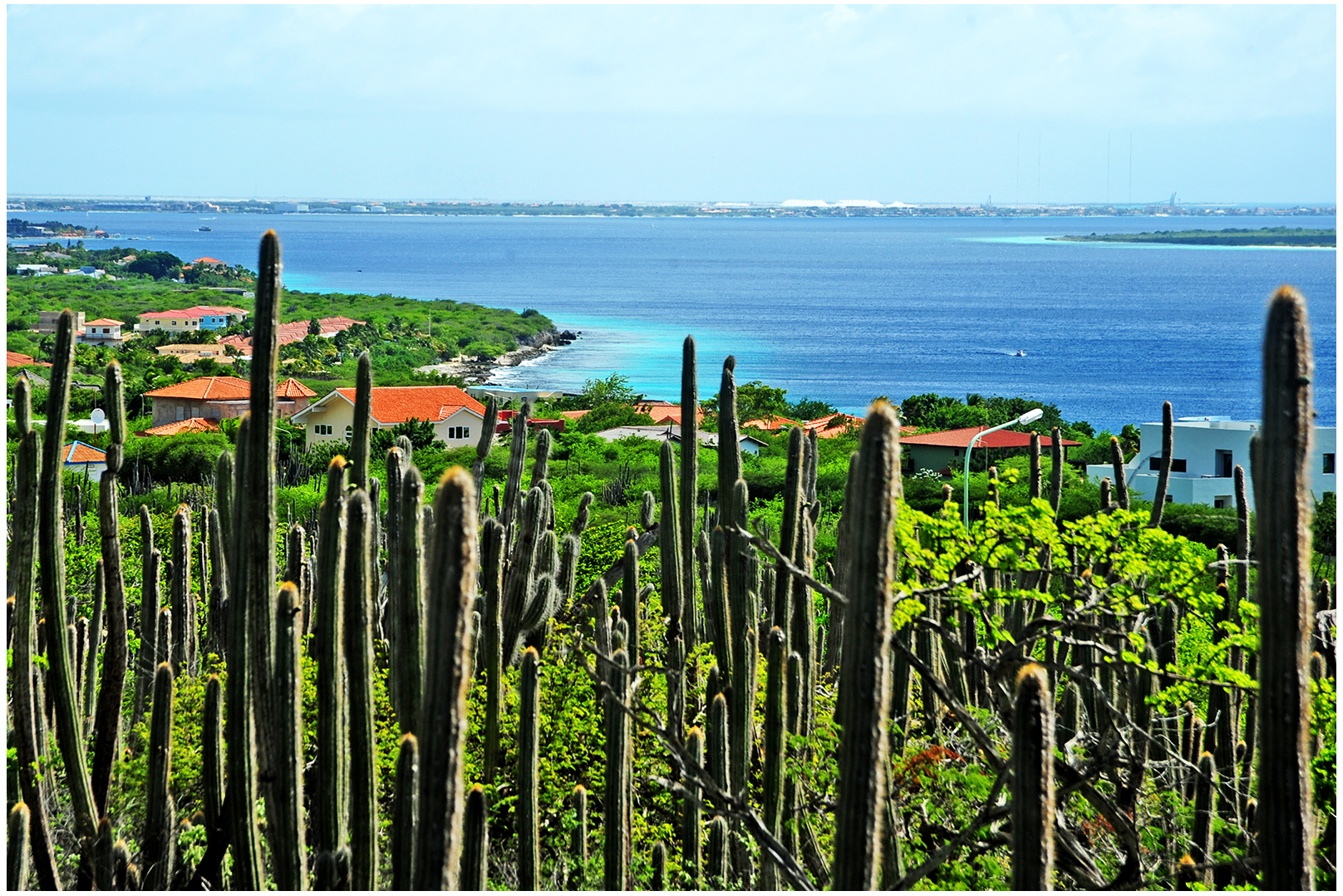
Paradise or Misery? (Foto © Luc Bosma, Bonaire)
We visited nine islands
Two of them are French: Martinique (fully integrated) and Gouadeloupe (almost fully integrated part of the French country, but not part of the EU tax system). They are both part of the EU. The three ABC islands (Aruba, Bonaire, Curaçao) are part of the Dutch Kingdom and the others (Barbados, Dominica, Grenada and St. Lucia are all independent states and members of the Commonwealth of Nations).
The islands have different currencies:
- EURO (French Islands)
- Dutch-Antilles-Gulden (Dutch Islands)
- Eastern CaribbeanDollar (Commonwealth Islands)
Especially on the Dutch and British islands, they accept the US-Dollar.
They have different per-head incomes. On Barbados, for instance, it was 16,363 US-Dollars in 2016. Nominally, this is as much as, for example, they have in Slovakia, but I got the impression that life in Barbados is considerably more expensive than in Slovakia. On the absolutely well-developed island of Bonaire, it was about 1,200 US-Dollars, in Dominica it was certainly less. The unemployment rate is in the two-digit sector for all of them, and not always in the low two-digit sector.
Wherever we went, we found schools and universities, which means there is a relatively high level of literacy. Many of the people speak several languages. Besides the local Creole dialects, many people speak at least one foreign language, often several, mostly English, French or Dutch. However, we also often met German-speaking people.
Politically, the islands are “parliamentary democracies”, and that is what they have been for a long time. You will occasionally also find a “White House”. Yet there are also interesting – and not always hilarious – stories about corrupt politicians and dictators.
Of course, the climate has always been sunny on the islands – the normal temperatures were around 26 degrees Celsius (after all, it was “winter” when we were there). Depending on the humidity, you will think it is even a little warmer than that. That means the Caribbean is a region where physical labour – let alone piece work – is something you will not like at any time of the year.
Some of the islands have a lot of rain – and consequently they have many rivers and waterfalls in the rain forest. But you will also find very sparsely vegetal islands with few rainy days. They have to import their potable water or produce it artificially. Mostly, the islands grew from volcanic activities, but you will also find tongues of folded lime stone formations.
Most of the islands have similar colonization histories. The pre-European inhabitants were often Arawak and Caribbean. More often than not, they were eradicated by the European occupiers. The people living there now are descendants of Europeans, often of Africans and later of Indians. All over the Caribbean, most of the citizens are of African descent – which is probably a consequence of slavery.
What we saw in the Caribbean looked extremely diverse and multi-cultural. Some islands boast that people of forty nationalities live peacefully together in their country.
There is not much social security, which is also true for federal pensions. The people (maybe regardless or because of this?) seem very joyous and happy. Dominica, for instance, has the reputation of being the island of the hundred-year-olds.
There seems to be little crime. The warnings you usually get before entering a country were extremely moderate. Only in the EU countries, we were warned before leaving the ship that, once in a while, a thief from Paris is found on the island.
The islands are extremely diverse – you will find the natural paradise (Dominica with its beautiful hiking trails) as well as the industrial island (Aruba – one half of this islands is purely tourist industry, the other half is the airport and the oil and salt industries).
Similarities
However, it seems that all the islands have one thing in common. Economically, they do not really work well. The French Departments are probably just as much dependent of subsidies as the other islands.
To me, it seemed that the internet access was better than in Germany, but the streets are often in a desolate state of repair.
Varying with the islands, the income comes from growing food such as bananas, sugarcane and spices. There is a little crude oil, but the main source of income is probably tourism.
None of these islands seems to be really capable of survival.
The young generation emigrates because the islands have nothing to tempt them with. If all goes well, they will probably return as successful elderly persons and at least bring back some capital. There is a high emigration rate and a low immigration rate. Many immigrants who came because they wanted to start a new life – often as entrepreneurs – will leave after only a few years.
There is no such thing as a really lucrative business. Competitive survival is achieved through cost optimization and low incomes. And mostly the business is very detrimental for nature, which is the only thing these islands are rich of. This means we have high external costs.
To me, this looks a little like Europe. In the ever so rich EU, most of the countries are also bankrupt. More and more people are impoverished. This is also true for the victorious countries such as Germany, Austria and a few Northern European countries.
It is also true for the big USA. They, too, built their wealth on debt and suffer under the natural collapse of the inflated infra structure, which they cannot counter, if only for financial reasons.
Somehow or other, my visit to the Caribbean Islands served as a model to show that an economy that is based on our capitalist and consumption- and profit-oriented paradigms cannot work any longer. It is probably the biggest challenge for mankind to manage the necessary re-structuring – provided we want to prolong our survival a little bit.
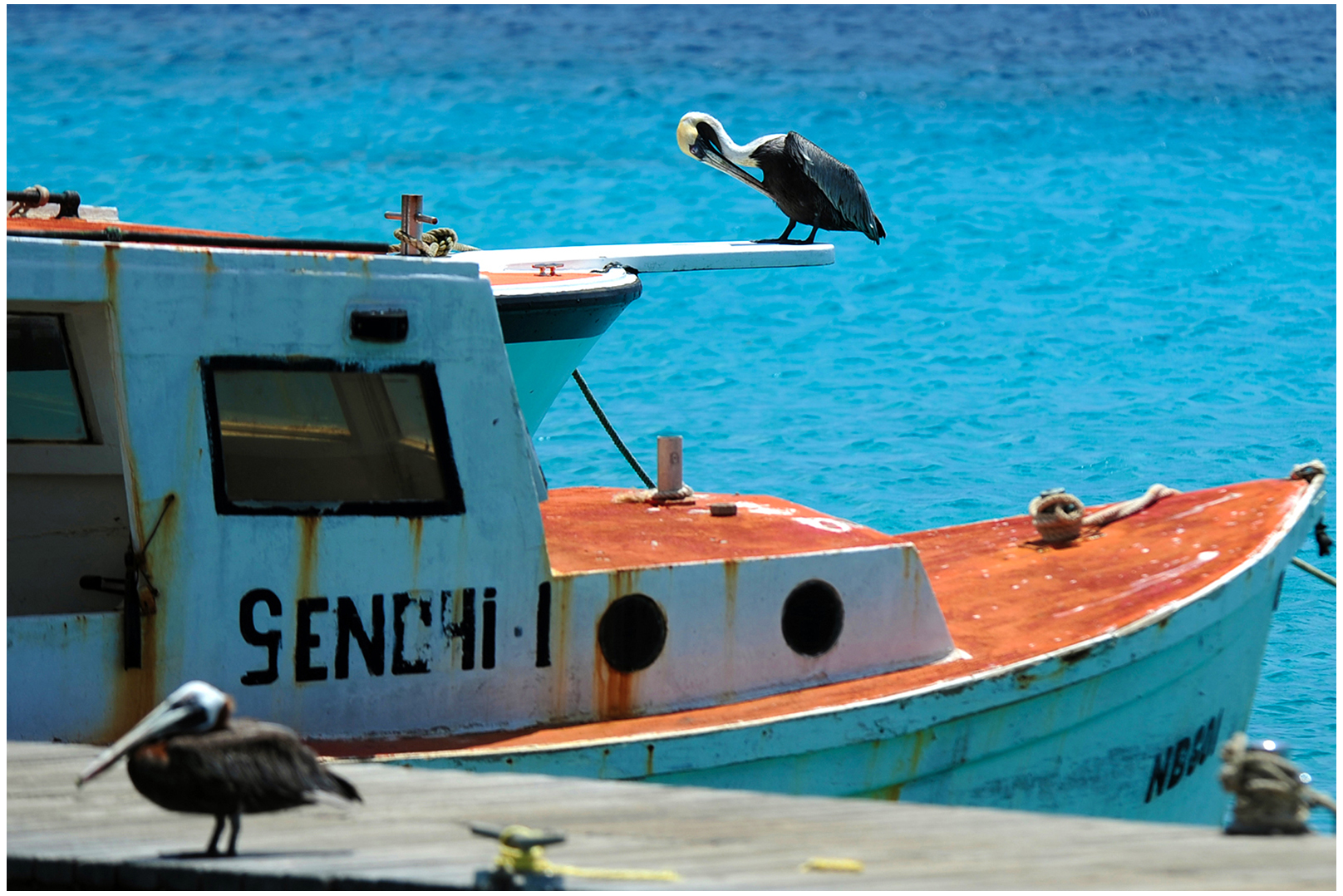
Ship with bird. (Foto © Luc Bosma, Bonaire)
RMD
(Translated by EG)
Roland DürreTuesday December 11th, 2018
The Caribbean – Inspirations, Impulses, Ideas (1) Slavery & Fiefdom.
As you arrive in Curaçao you will read Welcome to Kura Hulanda Museum. This museum is concerned with the history of slavery in the West Indies . No traveller should miss it.
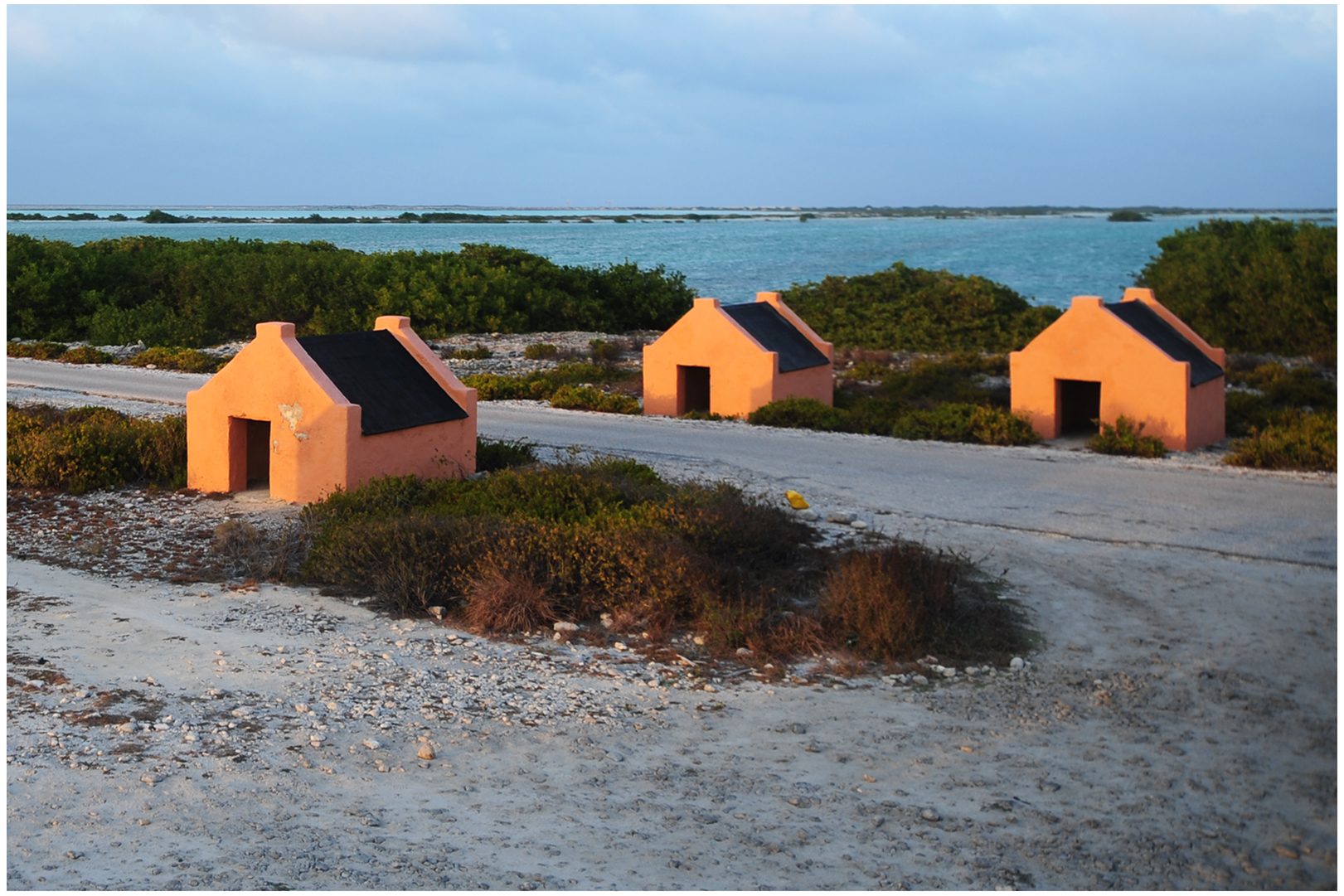
Huts for the slaves in salt production on Bonaire (Foto © Luc Bosma)
Huts for the slaves in salt production on Bonaire (Foto © Luc Bosma)
Following the advice of our ship lector, we went to the Kura Hulanda Museum in the morning, directly after our arrival in Curaçao. And it was well worth it. In Willemstad‘s city district of Otrabanda, you will find the biggest anthropological museum of the Caribbean, the ”Kura Hulanda Museum Kura Hulanda Museum“.
On more than 16,000 square metres and in 15 different buildings, you can inform yourself about the history of those people who, between the 17th and 19th centuries, were captured in their African home countries and, after transport across the Atlantic Ocean, ended up as slaves in Curaçao. The “West Indian Company” played a huge role in the process and Curaçao soon became the biggest slave market on the American continent.
The Facts:
The entry fee for the museum is 10 US Dollars, people who are older than 70 only pay 7 US Dollars. We invested the three dollars we had thus saved in a guide (who costs three USD per person if you were a group). It is a good investment.
The Museum:
We were immersed in the dark past of the island but also of humanity and were deeply moved when we left the museum.
I had never before seen in such drastic detail how slavery used to work. In the museum, you can see how the slaves were captured in Africa and then shipped to the New World. Due to its geographical characteristics, the Caribbean was probably a very important slave market.
On the Caribbean Islands, for instance on Curaçao, other things were traded besides slaves. The invaders from Europe had more or less exterminated the original inhabitants. Consequently, a workforce for producing such sought-after products as sugarcane, bananas, spices, salt (especially on Bonaire) was badly needed. And the slave markets were the most obvious place for recruiting such a workforce.
The museum shows how brutally the slaves were treated and traded. How they were cuffed and hunted, what methods (and tools) were used for disciplining them. And also how the owner branded them.
You can also see how slavery was abolished. In the French sector, this even happened twice, because Napoleon had re-established it. Incidentally, the last colonial masters to abolish slavery were the Dutch.
We also found ownership certificates from German-East-Africa. Those are typical German documents where, as late as 1913, it was officially stated that the owners (former slaves) were allowed to decide upon their own destiny from the issuing date onwards.
Naturally, they still needed a workforce in the Caribbean, even after slavery was abolished. The necessary workers were then billed in India. And the owners of the sugarcane and rum plants soon found out that the new workers were even less expensive than the slaves had been. Because now these workers had to provide for themselves. Now an evil and provocative person could say that the abolishing of slavery, too, did not happen entirely for “virtuous” reasons, but that economic considerations played the major part.
I was so impressed by what I saw in the museum that I totally forgot to take pictures, even though this was explicitly allowed. After the tour, I spent a long time thinking about what I had seen and I did a lot of research.
And I noticed that perhaps slavery and fiefdom are connected. And that slavery is not at all very different from the fiefdom that was practiced in Europe for more than half a millennium as a very self-evident principle. Here, too, you will find a lot of information in the Wikipedia article .
You will discover many surprising details, for instance about the mutual hunting rights among neighbours when it came to catching run-away serfs (slaves?) beyond the border.
You will probably understand that there was basically only one difference between fiefdom and slavery. The article is absolutely worth reading and very shocking.
After having read these things, the reference to our “occidental roots and Christian traditions“ made by politicians sounds like the most stupid sarcasm. Because, at the time, the “C“ also stood for nothing other than slavery and fiefdom. Those were very bleak times. Perhaps our politicians would be well advised to inform themselves a little bit about history, even if, at school, fiefdom was not on the curriculum of history lessons – which was also true for my history lessons.
There is only one difference between the fiefdom in German-speaking and other European countries and the trans-Atlantic slavery:
The slaves were dark skinned and came mostly from Africa. In former times, they were called negroes. According to the church and even according to contemporary philosophers (Kant) they were not humans but animals. At the time of Darwin, it was unimaginable that a refined “English Lady“ might, according to the evolutionary theory, be the descendant of an ape. Animals were so far removed from the ideal of the “human” that you could do with them whatever you wished to. This is also why they were not very enthusiastic about Darwin with his new ideas. And the black persons where just considered animals.
To be sure, the “bond-slaves“ or “bondmen“, who belonged to the owner of the property, were a lower class with no rights. But at least they were considered human. They were domesticated by the upper classes (feudalism, also by the church) also be means of religion. They were “only” the property of other people, either directly or indirectly through the property they lived on.
In the Wikipedia article about bondsmen , you will find some laws and atrocities that, from today’s perspective, look rather odd. One of them is the mutual agreement between municipalities that they can hunt bondsmen who are on the run. You get a clear understand of the meaning of the phrase “town air will make you free“. After all, progress – also technological progress – happened in the town and cities.
Basically, over many centuries, the right to own persons was just as self-evident as we today consider the right to own things like property and the copyright or data protection.
And regardless of the fact that we today are giving the right of ownership more and more strength (especially in favour of artificial persons like concerns), we actually abolished the right to own other persons. Isn’t that remarkable?
One might get the idea that, perhaps, other rights to ownership, too, should be abolished. For instance that goods of the common land, too, should no longer be considered individual property. And that absurdly high amounts of property, too, need to be abolished. And perhaps that the distinction between artificial and natural persons should be made subject to the rule of differentiation in ownership.
Here is a cynical note: On the ships that had sailed from Europe to Africa in order to buy slaves and bring this high insurance freight to the Caribbean, missionaries, too, were among the passengers. They were supposed to bring religion to all those African heathen. On the other hand, said slaves were officially not humans, but game to be hunted.
That is also something you learn in the Kura Hulanda Museum. Consequently, visiting the museum Kura Hulanda left me rather thoughtful.
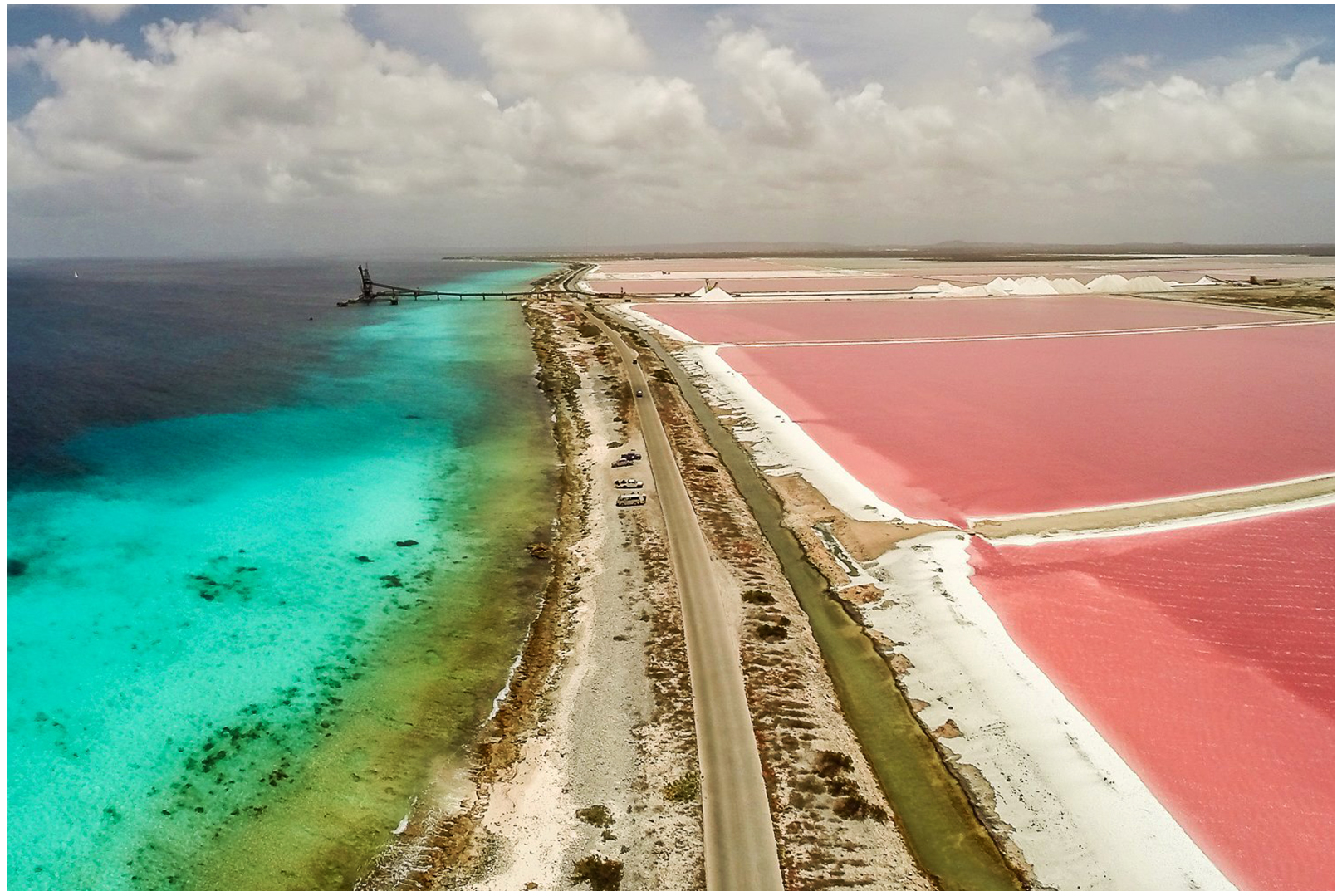
Salt production today on Bonaire (Foto © Luc Bosma)
RMD
(Translated by EG)
Roland DürreMonday December 10th, 2018
The Caribbean – Inspirations, Impulses, Ideas (0) – An Overview
Between November, 23rd, and December, 8th, 2018, Barbara and yours truly spent two weeks aboard a ship in the Caribbean. We saw nine islands. In former times, I often wrote travelling journals during my trips, and reported in great detail what I had done and experienced. This time around, I decided to proceed differently: I will just jot down all the impulses and inspirations I had during the trip.
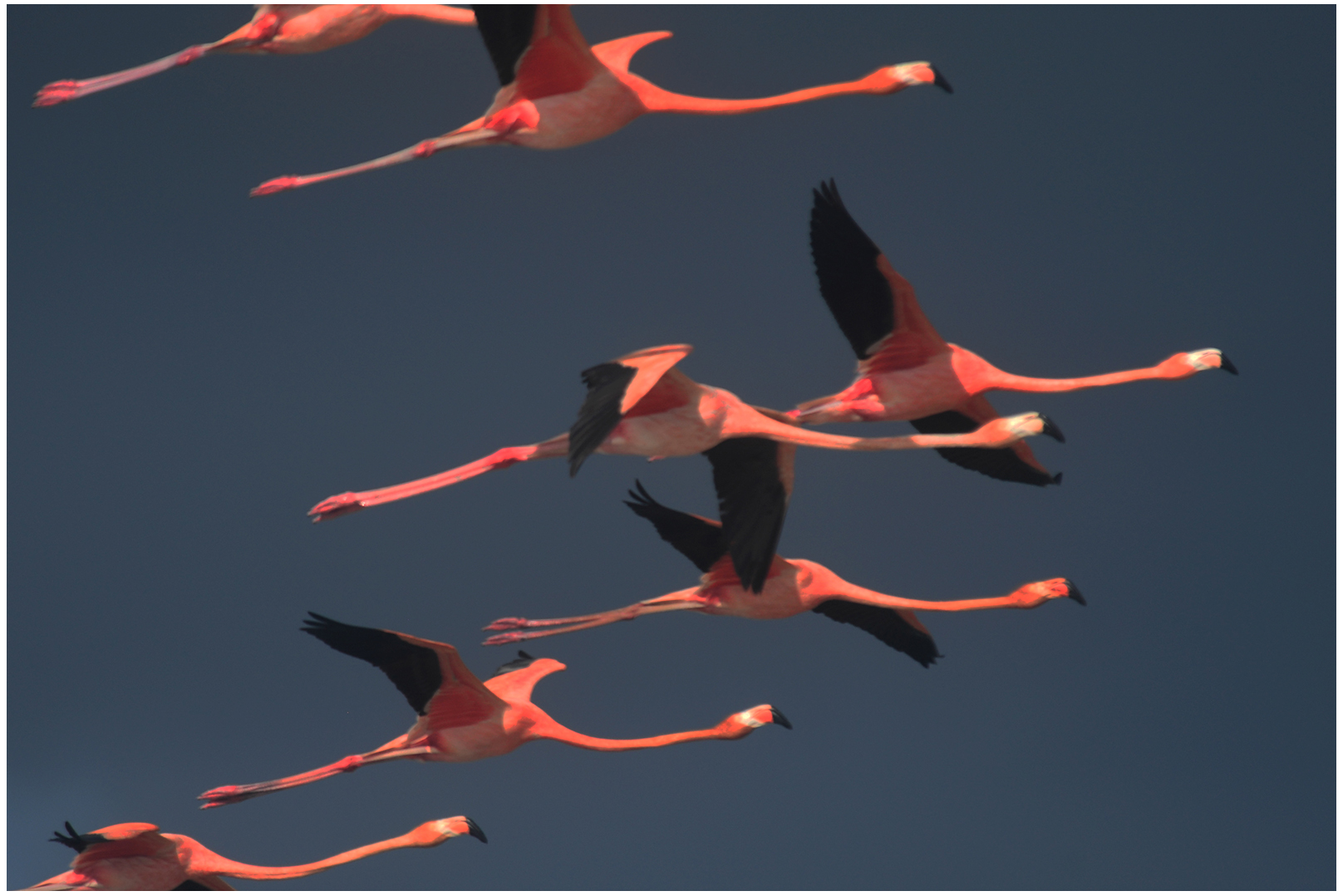
Travelling inspires you and gives you impulses (© Luc Bosma)(© Luc Bosma)
This is supposed to introduce a series of articles about my trip. I will illustrate the articles with nice pictures. Some of the pictures have been taken by me, some are from Luc Bosma. Among those is the picture of flying flamingos you see here.
An Overview:
Setting out from La Romana, we visited the following nine islands:
Martinique (as a French overseas territory in the EU), Barbados (independent and a member of the Commonwealth of Nations), Gouadeloupe (as a French overseas territory in the EU), Dominica, St. Lucia , St. Lucia , Grenada (all three of them are independent and members of the Commonwealth of Nations), Bonaire (a special municipality of the Netherlands), Curaçao (part of the Dutch Kingdom ) and Aruba (one of the four states with equal rights that belong to the Dutch Kingdom ). The last three are also known as the ABC islands and are geographically a part of South America. They are not far from Venezuela. The other islands geographically belong to the Lesser Antilles. If you follow the link, you will find many interesting things. It is well worth reading about.
Each of those islands is a small country. For me, it was remarkable to see that some of these countries actually have no armies. Basically, some of these countries have problems beside which the fear of external enemies looks small.
In the next few weeks, I will tell you all the new things I learned during this trip and what especially impressed me.
And here is a first enlightenment that could not have happened without the trip:
If you arrive on the European part of the Caribbean and all of a sudden you can again use your flatrate on the Smart Phone, you will immediately feel very much at home.
So here is what I postulate: for many people, home is where you have unhindered and cost-neutral use of your smart phone.
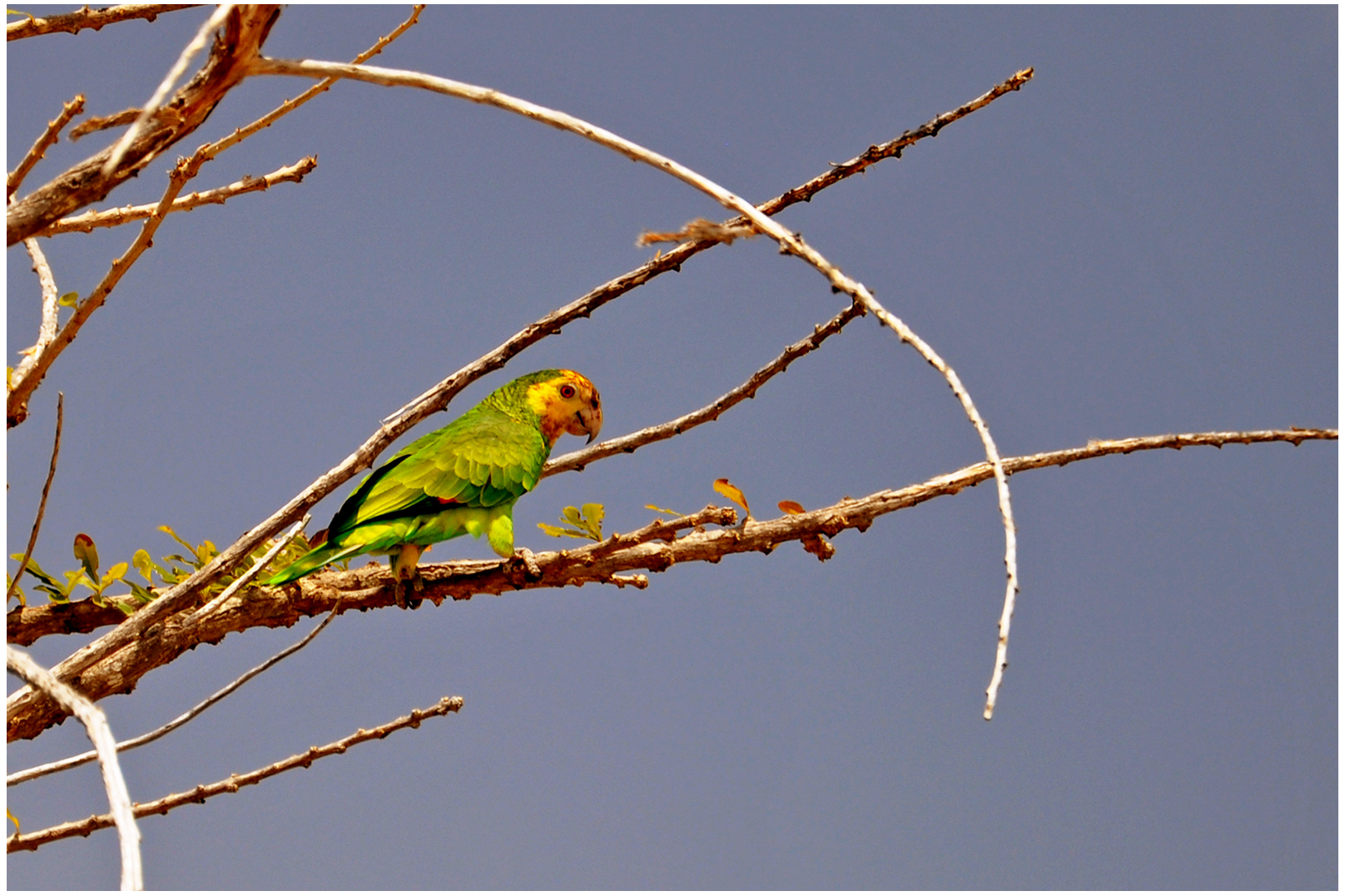
There is somebody at home. (Foto © Luc Bosma, Bonaire)
As I see it, this is definitely a definition of home that should be taken seriously!
Now I will work on the first actual article as instalment #1 – it will be about slavery and serfdom.
RMD
(Translated by EG)


