
Roland DürreSunday March 2nd, 2014
IF Forum 2014 – Starting With Jörg Schindler – TURN OF AN ERA
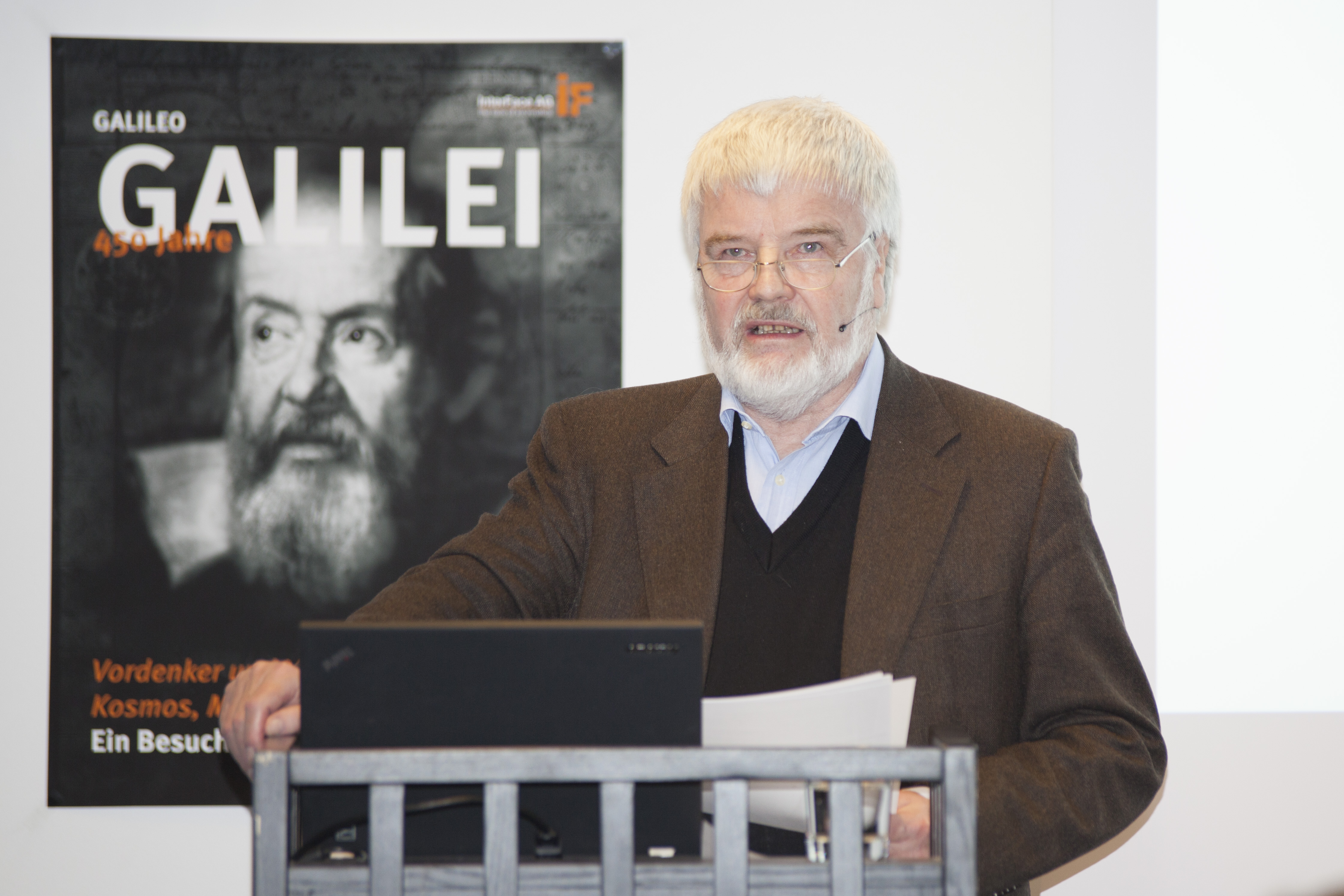 The start-up of the 2014 IF Forum “Galileo Galilei” at InterFace AG was a huge success. Under the heading TURN OF AN ERA, Jörg Schindler delivered a strong appeal in favour of “the future” on February, 27th, at Unterhaching.
With his facts about “The Beginning of the End of the Fossil Era” and the subsequent “Great Transformation of Our World”, he made is pretty clear that, even though we can perceive how the world changes, we actually cannot predict the exact consequences.
Because we are already in the middle of an absolute transformation. It will continue to take place, no matter if this is what we desire or not. Besides, we cannot come up with a master plan, because the transformation cannot be planned. All we can do is refrain from acting in ways that we perceive as non-sustainable.
As often before with other presentations, Friedrich Lehn recorded the presentation held by Jörg Schindler. I will publish the film soon on our YouTube Channel “RolandDuerre”.
There will be two more IF Forum presentations on Galilei Galileo in the 2014 IF Forum:
COSMOS
On Thursday, July, 17th, we will welcome Dr. Stefan Gillessen as our guest speaker. He will talk about:
Big, Bigger, Sharpest
Where is the development of telescopes headed? From Galilei (37 mm lens) to the European Extremely Large Telescope (39 m mirror). What could be more exciting than witnessing how material falls into a Black Hole? Insights into current research.
Stefan is one of the leading scientists at the Max-Planck-Institute for Extra-Terrestrial Physics (MPE)
HUMANS
On Thursday, October, 23rd, 2014, Thomas de Padova will give a presentation. He will talk about the
Secret of the World
400 years ago, two totally different scientists went beyond the limits of the known world. In Venice, Galileo Galilei looked through his telescope and discovered the Jupiter moons. An exciting expedition of human thinking begins – and along with it the turn of the era towards modernity.
Thomas de Padova is a physicist, journalist and historian of science.
RMD
(Translated by EG)
Roland DürreSaturday March 1st, 2014
The Single Entry Bookkeeping System – Maybe Not Such a Bad Concept After All?
Projects gets bigger and bigger, big projects get more and more gigantic. And more and more often, more and more things go wrong. And even if things do not go wrong, the usefulness is often very limited and the price is high. What if what they say is true and actually small but refined is better?
In the public domain, they used to do their accounting with the single entry bookkeeping system. In other words, they did a simple input-output calculation. There were no assets to be considered and to be used for justifying debts. Debt-free fiscal accounting means that you can only spend as much money in a certain time interval (usually one year) as you actually received.
This means that if you build an opera building or a bridge, you have to receive the money you spend for this project during the same year. And you cannot activate these investments as assets and thus justify your debt.
The communities that remained loyal to this method have been criticized all over the place. Consequently, the single entry bookkeeping system was mostly abolished in the public sector.
In retrospect, however, I think the principle was not such a stupid idea. Because, naturally, it will initially make huge investments with doubtful “returns of invest” hard.
And perhaps the principle of single entry bookkeeping could give us a little more moderation when it comes to mega financial and gigantic projects which, when thought through, often basically only render a questionable added value.
Consequently, I will, once more, play the role of the heretic and demand our return to single entry bookkeeping.
RMD
(Translated by EG)
P.S.
Here is the term in Wikipedia.


