
Roland DürreSaturday October 15th, 2011
Some Material to Prepare for my Presentation
A short time ago, I told you all that I will soon give a presentation at the Neubiberg University of the German Armed Forces. It is part of the EAA Colloquium ”Current Developments in Technology and Business “ :
About Projects, Leadership and Management – And It Is Always About People Interacting …
The main focus of my presentation will be on “Leading People”. But it is meant in a very positive, non-manipulative sense.
As a preparation, I would recommend you take a closer look at two particular blogs. Maybe those who intend to listen to my presentation (and, of course, all other IF blog readers, as well) might wish to browse through the PM-Blog by Dr. Stefan Hagen and the /misc byDr. Marcus Raitner?
You will find quite a few very critical and constructive articles leading towards the topic and supplementing my presentation. As always, I will again publish my own presentation shortly in the IF-Blog.
The presentation is to take place on November, 3rd, at 18:15 hours in lecture hall number 33/0101 of the Neubiberg University of the Armed Forces Buildings. I am permitted to invite guests and would therefore be happy to welcome you.
For details, just send me an email.
RMD
(Translated by EG)
Roland Dürre
The Power of Participation
Here an interview sent me by my friend Jowi:
The new protest movements, collective wisdom and the longing for more participation – an interview with Roland Roth.
Collective wisdom. Leitmotif of the internet culture – and yet the idea is two thousand years old. It was the underlying idea of the Attic democracy that prudent decisions would be made through letting all citizens participate. Today, we see its renaissance – as protest movement against a policy that is either dictatorial or has reduced democracy to a minimum. For instance in a network culture and in internet activities for everyone. Everything points towards participation and involvement. Both in society and the world of business.
Revolt!, that is the title of a small pamphlet by Stéphane Hessel. It developed into the leitmotif of a supra-national protest movement which came as a surprise for many. Among them: the politics and protest researcher Roland Roth when he worked on his book on the then not at all exciting topic protest and participation. Today, it is most commonplace. And there are cross-links all over the place: with the internet culture and the basic idea of democracy as in ancient Greece.
Roland Roth is a professor of politics at the faculty for social and health of Magdeburg-Stendal University. He also worked at the University of California, at the Berlin Knowledge Centre and at Vienna University. Roth served as expert in the enquete commission of the Deutscher Bundestag: “The Future of Civil Dedication”. His scientific and political interests are mainly in democracy, social movements, integration, civil and human rights. This autumn, his new book Civil Power was published by the Körber-Stiftung.
The interview:
Roland, your new book also shows your surprise at the unexpected protest renaissance: suddenly, after years of quiet, protest movements develop in totally different countries with totally different issues and for totally different reasons. How did this simultaneity come about?
Basically, we do not really know the answer. In the mid-1960ies, we also had a two-way enhancement of basically independent protests. At the time, freedom movements, anti-colonial protests and the student movements both in Europe and the USA formed a coalition. In those days, Herbert Marcuse called it a “syndrome“. It seems like this kind of coalition is experienced as an extra motivation, even if the individual protests have totally different agenda and the actors have little in common.
The same happens today. I am sure the Arabian Spring has another background than the protests against federal austerity programs and youth unemployment in Southern Europe, or even the anti-nuclear protests that got special momentum after Fukushima. There is no shared reason. Instead, we have a rather random cooperation, because protests are revived in many places all over the world. All of a sudden, there is a new attraction to “being on the street” And, just like in the mid-1960ies, there are again some intellectuals who are perceived in almost all movements. Just like Stéphane Hessel, who tapped the pulse of the age with his book Revolt! and is now read in Spain and France, as well as here, even if the political situation and problems certainly differ considerably.
Is there something like a common pattern to these very heterogeneous protests?
Well, there are shared elements. One of them is the fact that the public awareness gained by protesting plays a significant role. You occupy big areas, show everybody “hey, we exist!“ and in doing so make a demand on the society you live in. Being noticed – the public appreciation – is very important.
A second important component of these protest movements is that, for the first time, the internet culture of the young generation plays a special role. It is shockingly easy to mobilize power through social networks. And how little you need to be organized in the classical sense of organizational or party structures in order to promote these kinds of protests.
To be sure, there are numerous instances of cooperation and links in small, manageable background cells. But still, a quick mobilization for these activities would have been extremely costly in former times. It would have had to include agenda, publicity, etc. Today, through network culture, it is a lot easier.
There is a third factor you are immediately aware of: these protests are not ideological, in that they are not following an agenda that is radically leftist, or communist, or islamist or whatever. Instead, they are strange kinds of search movements. They also project themselves by creating discussion forums and trying to practice a direct democracy, a meeting democracy. We saw this both in Cairo and Madrid. It looks like an attempt to make democracy your own in a different way, to re-invent it from bottom to top, even to some extent against and in opposition to the authoritative rule. But there are also representative forms not seen as representation. This democratic model is also something important they have in common.
About the internet generation: does this shared element of having grown up in a network culture of communication open up a new protest dimension?
Up to now, we had to accept: social movements need direct communication. They need friendship, closeness that can develop in primary groups and in social networks. To be sure, this is still true, but our young generation takes it as a matter of course that you communicate with a larger group of friends on facebook or twitter. Looking at the potential control mechanism and the commercial exploitation, you might easily consider this terribly naive, but it is still a form of socialization that promotes trust and provides the pre-requisites for a quick mobilization. In this way, flashmobs and spontaneous activities can happen.
In your book, you also build a bridge between the classic urge to live in a democracy and the basic ideas of the internet culture: transparency and prudence of the many. Is it a new element in the protests that the basic ideas of the internet culture are now relevant?
It is a lot more interesting than that. Because we are talking a revival of democracy as it played a central role in classic Athens. Josiah Ober, a US historian who did some extensive research in the field of the Attic democracy, identifies “collective wisdom“ as a shared pattern of various kinds of democracy practiced at the time. They had the opportunity to meet, they voted, they practiced different kinds of representation.
Now, they practically re-discovered this diversity of forms of the classical democratic Greece phase on the internet level. Basically, this is not a new idea. Instead, it can be said that the concept of democracy as we in the Western hemisphere of the post-war era know it, namely majority decisions and elected representatives, is a degeneration of the democratic idea. It is a minimalist version of democracy that in no way suffices to meet the basic concept. The concept is that democracies are in fact particularly capable of learning and changing, because the citizens are permitted to have their say in an intense and essential way. That means collective wisdom is made good use of. Today, this idea is re-established – no longer on the level of small city states, but based on the internet. I find that quite interesting.
What does it mean for politics? Is a new era of traditional politics in the making?
We witness changes that will be shaped by new groups. The main reason for this is that the everyday practice of parties is directed against these radical forms of public life. The political culture as we know it is rather hesitant about using internet communication. If at all, it does not incorporate this culture into its own culture, but rather adapt to the tradition. And the common logic of forming opinions inside a party when it comes to decisions is neither oriented towards transparency, nor towards a broad participation. Instead, it is based on back-stage decisions, assertiveness and intransparency. In my opinion, it is time for a different political generation. After all, we can see its advent by looking at the success of the Pirate Party. Its orientation is radically democratic. And that is something many young people can identify with, after feeling they have not been represented and taken notice of for a long time. We need these kinds of groups in order to gain an opening and a step-by-step approach.
You introduce a term that has not been intended for our democratic structures: civil power. What is your definition of civil power?
With this term, I remind people of the definition of power as introduced by Hannah Arendt and Aristotle. It is a definition that was essential to the Attic democracy. The central point is the idea of being able to act together where public affairs – those issues that should interest us all – are concerned. Civil power means more actionability in our mutual affairs. We know this definition of power from concepts like endowment and civil commitment. It is the shaping of mutual affairs by commitment and common activities.
The opposite concept is a state-oriented definition of power based on the ability to assert oneself and decisions from above. Such a definition is strongly influenced by the bureaucratically modelled concept by Max Weber; it is all about finding obedience after an order has been given – no matter what is the motivation for said obedience.
Basically, the difference lies in that in the Weber model you always have powerless and powerful parties. Power, in this model, is a zero-sum game, because only one person can be the one giving the orders, all others have to obey. As opposed to this, civil power does not know this zero-sum phenomenon. On the contrary: we can get more and more powerful to the same degree by which we can design the social facts along our desires, concepts of happiness and goals.
In other words: power is seen as something that will increase by shared use?
Yes, that is the basic idea. As opposed to state power, civil power does not mean obedience and subservience. Instead, the focal point is the desire of the citizens to shape and model the state. You can see this in civil commitment, in self-help and also in the protests we just mentioned
And the protests, along with the enormous increase of civil commitment as seen in the NGO-s, show that this concept is advancing fast?
I get the impression that the sphere of civil power gets more and more important in our democracies. More and more people make use of it. What we get is serious competition with the traditional concept of power, which is based on us electing those who decide and then submitting by accepting that their decisions are binding. This concept, which was self-evident in the 1950ies and 1960ies, has now considerably lost momentum, attraction and the power to convince.
In its subtitle, your book is a belligerent pamphlet for more participation. More participation – what might that actually look like?
Participation starts between the ears of those who currently wield the power – in that they must be willing to take the desire to participate voiced by the protesters seriously. They have to make room for this desire to manifest itself. But first, this willingness has to be strengthened. It is all about convincing people, especially those with more influence than others. But also those who apathically remain remote and let their civil role rest without hope. In this sense, we have to fight for participation. We have to encourage people to participate, to do something, to trust their own claims and judgement and to take seriously their own wish to model something.
So what we are talking is: people have to realize what is the most important thing about participation – the experience that you can actually have an effect. On the one hand, I wish to encourage people to do so. On the other hand, however, I want to point out that politics and the social powers are no longer capable of solving our main problems. Just look at the ecological sector, the financial sector and many more social areas. Everybody can see that we must find other, new ways to solve the problems. It will not help if we employ ever more experts, arm ourselves with their arguments and process all kinds of decisions with an “I-said-what-I-said” policy. Instead, we have to make reasonable use of the design concepts of the masses. In other words: we must re-discover democracy. It is the only way for us to change our habits.
But a strong wind blows against this concept from the established powers in society.
Yes, we are confronted by a broad phalanx of elite thinking patterns. The masses are stupid, but we politicians are a small, enlightened minority. Or: the world is so complicated that citizens cannot decide. You must have specialists. Another argument is that our representative democracy is the best model we ever had and we must not ruin it by direct forms of democracy. It is quite significant that the question of more democracy is reduced to more plebiscites and petitions for a referendum. To be sure, they can be quite helpful. But it depends very much on their actual realization and integration into a democratic participation culture whether they will be able to make the wisdom of the many count or just be reduced to occasional decisions on individual topics.
These kinds of simplifications and resistance are the reason why the debate about a new democratic design with all varieties of participation only makes extremely slow process.
How could you promote this discussion? What forms or possibilities would there be to experimentally practice and try out civil power in a test phase?
There is a world-wide search movement. Democratic experiments, especially in the global South, above all in Brazil and all of Latin America, are justly enjoying a huge amount of interest here. Social forums, citizens’ communities, citizens’ forums – an enormous variety of forms in democratic experiments outside the representative practices and on top of plebiscites and petitions for memorandums have developed. Most of them aim at developing a debate culture. In other words, we have an upgrading of palaver, of discussions, of public debates. They all aim at giving room to a participation that has many voices. These experiments show: there are many acceptable ways of increasing the power of the people. And they are all well suited to make collective wisdom count.
That is the one way: making progress through successful practical steps and giving publicity given to the practice. But there will also always have to be protests. If there was one thing Stuttgart-21 made clear, then it is this: the meagre forms of participation a representative democracy offers leave relevant parts of the population out of an important decision-making process. What remains is the feeling that you were never really asked, that you have no chance of voicing youir opinion, even though we are talking measures that have a massive influence on the every-day life of the people living in the erea. It is part of the process to use protest in order to make it clear that we will not accept just anything.
Here is the classic counter argument: that is just a radical minority talking!
There is a study by the rather unconspicious Herbert-Quandt foundation on authority that shows that this is not true. Among other things, the Stuttgart-21 question was asked. According to the study, a majority today find it acceptable to disagree even with formally correct decisions and to question them by way of protesting. Among the young generation, even two thirds think so. So you can see that the willingness to follow a conservatorship of experts, along with the representative structures coming with it, has decreased significantly. The underlings no longer wish to be governed in this way. At least not always.
Not always and not everywhere. A farewell to the technocratic decision-making expert model is in the making. One – but not the least – of the reasons for this is that this model shows more and more that it reaches its limits. Systematic errors are apparent. For example, experts systematically only take very special aspects into consideration – for instance if something can be technically done -, or else they put financial interests above all else. They do not aid the least expensive and best solution towards getting accepted, but the one where they have to gain most. This kind of expert culture is very questionable.
You also point out an aspect which is far too often discussed as the preservation of economic achievement. When, basically, it is all about creating equal opportunities for social participation through education.
For me, education is a very central topic. One of the reasons is because education has turned into a central argument against participation. It says that the concept of selecting political decision-makers through elections is still the one that gives most strength to representation in the sense of making a participation possible for all population groups if possible. According to this system, elections are the most democratic form. The more, on the other hand, citizens are confronted with the expectation of deciding on certain technical topics, the more likely we are to get a minority reign, namely that of the educated classes.
In other words: the misery of our educational system which basically does not succeed in levelling the educational handicap for some, instead preserving it socio-culturally, is used as an argunent against more democratic participation! I find that outrageous!
What is even more outrageous is the dilapidation and neglect of the educational system as a central qualification means for citizens to not only participate in the professional but also the political life of a society. Education is a central means to make social participation possible for all. However, we are far away from fulfilling this promise. During the last 20 to 30 years, our educational system got more socially selective. Yet it is the purpose of education to make citizenship possible and generate the social requirements for democracy.
And there is also a third aspect I am interested in: how far do schools contribute towards teaching citizenship? How about Citizenshiop Education? The interesting thing is that today about two thirds of the children and adolescents grow up in negotiating families. Their experience is that they are asked their opinion when the family has to make a decision. This same experience, namely being asked their opinion and being permitted to contribute, is one that only less than ten per cent of the children make at school. For 85 to 90 per cent, dependent on the age group, so-called democratic school culture is a word they do not know the meaning of. Democracy is not lived, although today school attendance with eight-hour-days at full-time schools has become a central experience for children and adolescents
Consequently, you can say that school systematically fails when it comes to its mandate to prepare young people for citizenship. And I do not mean in the sense that they can go and put their cross on a sheet of paper on election day. That is something even an illiterate can do. What I mean is in the sense of participating and contributing. Education should prepare you for being able to contribute. And that makes it a major requirement for civil power.
Roland DürreFriday October 14th, 2011
Children
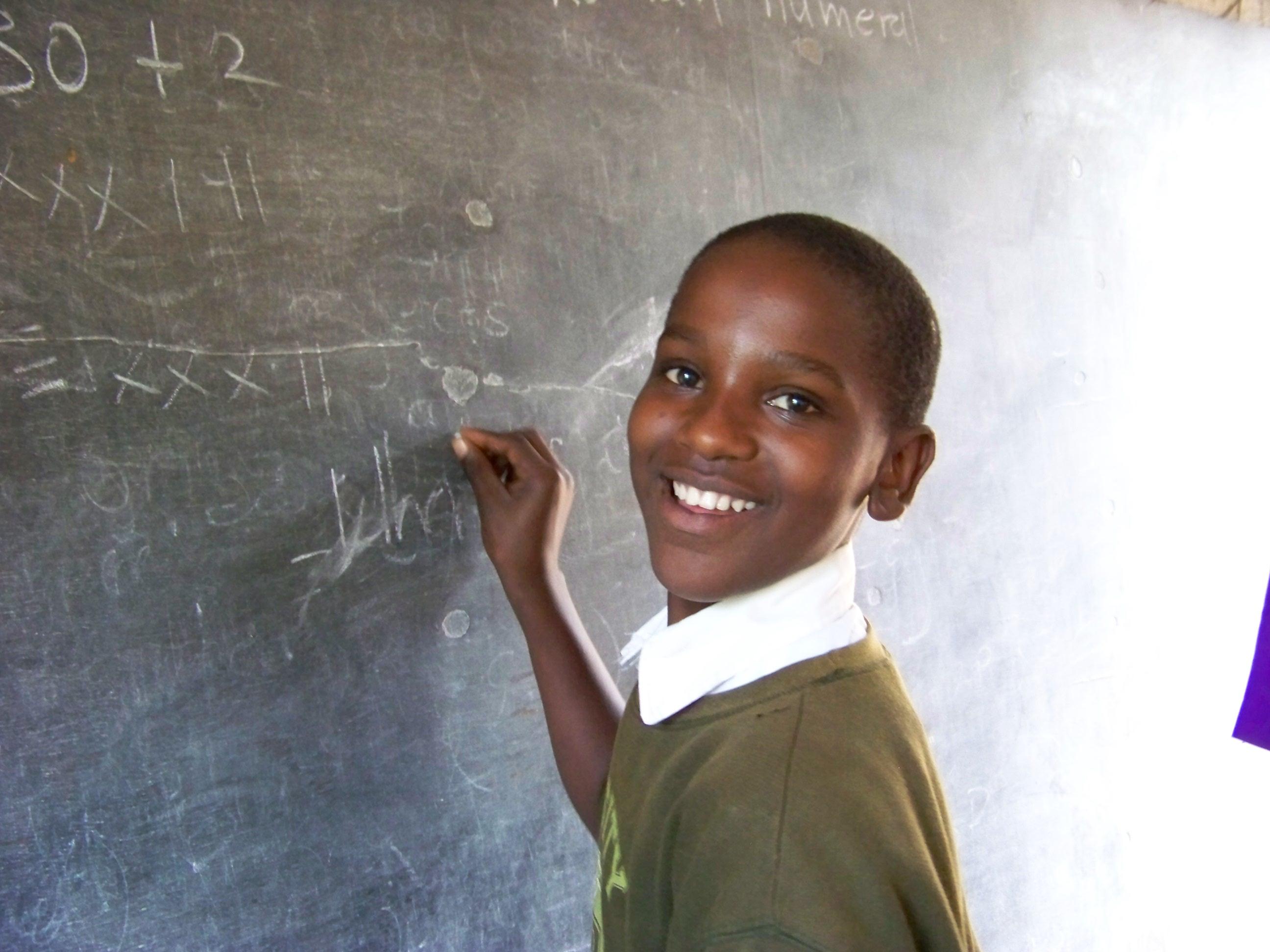 I owe my moments of greatest emotions and deepest memories to my children.
It happens often that the many nice experiences with every one of them creeps up in my memory. For me, however, being a parent also meant a “school of experience”. And I successfully applied what I learned from and with my children in life. For this, I want to thank them and my wife.
A successful professional career, too, was not bad and felt quite nice. Those were often a reason for me to be happy. But their highest value lay in the fact that they made it financially possible for me to afford more than the one or two standard children of today’s average household.
But, above all, you need a wife who goes along. Let me use the partner-slogan: children can turn a good relationship into a great relationship.
🙂 From good to great!
mehr »
Roland DürreThursday October 13th, 2011
Tweets on Twittering and Blogging #086
Here are my tweets of last week on
Blogging and Twitter, Wisdoms and Rules:
111027 We accept the smoke because we need the fire – the same is true for twittering and blogging. #Twitter #Blogging #Wisdom
111028 You learn as long as you live – well, just like when twittering and blogging! #Twitter #Blogging #Wisdom
111029 You have to turn the misery into a virtue – something twitterers and bloggers know. #Twitter #Blogging #Wisdom
111030 You should hear both parties, before you judge – an absolute must for twitterers and bloggers! #Twitter #Blogging #Wisdom
111031 You have to dispel the devil with the devil – not to forget when twittering and blogging. #Twitter #Blogging #Wisdom
111101 Once in a while, you have to look between your fingers – also true for twittering and blogging. #Twitter #Blogging #Wisdom
111102 Once in a while, you have to stretch a point – also true for twittering and blogging. #Twitter #Blogging #Wisdom
There is a new tweet each day. See Twitter and “follow” RolandDuerre!
Enjoy!
RMD
(Translated by EG)
P.S.
I took the proverbs from Alle deutsche Sprichwörterr.
Chris WoodWednesday October 12th, 2011
Evolution and Religion
I post this now, although I wrote it originally as a comment.
On 20.07.11, about 150 of us were privileged to get free food and drinks at Interface, and to hear a talk by Prof. Gerhard Haszprunar, a nice “practising Catholic” Austrian biologist, entitled “An attempt to reconcile Evolution and Creation”. His name is Hungarianised German, and he has a very good job, (C4), in Munich. His motivation seemed to be a wish to share his love of science and of his religion. I think he would understand this subject better if he studied Dawkins’ books more. But perhaps he gave this impression because he did not want to demand too much of his audience. He did not claim to be a believing catholic, and he later quoted somebody who said that one cannot be Catholic and clever and honest)! He looks a little older than the picture in IF-blog, and speaks with energy, wit and charm.
Chris Wood
Solar Diesel
I read an article that suggested that cars in future will be fuelled with hydrogen. So I have written up my doubts about this. I am no expert, but some of my arguments may be useful for other non-experts.
My younger daughter recently bought a (used) car driven by natural gas, proud to be doing something for the climate. She was surprised when I told her this fuel is little better than diesel, if at all. Hydrocarbons have similar calorific value per gram, and the weight is largely carbon. And diesel motors are rather efficient.
Roland Dürre
COMMUNICATIONWORLD
Yesterday and today (October, 11th and 12th) a huge IT event takes/took place at the Munich M,O,C, near the Allianz Arena.
 It was all paid for by sponsors and exhibitors. Besides a number of mobile phone and communications firms, the (platinum) sponsors were made up of the typical material, such as Microsoft, SAP and Siemens.
“The IT Representative of the Bavarian Government“, however, was also on the precious metal list. I am sure he had to cough up a considerable sum..
According to the Website, you had to pay 128.- € (before taxes)/152.32 € (total) for a day ticket at the COMMUNICATIONWORLD – that is the title of the fair/conference -, a permanent ticket costs 198.- € (before taxes) / 235.62 € (total). What an interesting “Pricing Policy”.
Who can buy a ticket before taxes? Maybe it was a hint at the fact that business persons can deduce the added value tax and thus pay less.
The slogan – which, in my mind, told exactly nothing – was
ITelligent mobility
It was probably meant as witty wordplay. You distort an English title and add a green “IT“. I guess the otherwise also often used colour green is meant to suggest that it is a green event. Presumably, the conference was about “intelligent mobility based on IT “.
Since someone had offered me a VIP ticket (which was probably true for most of the other visitors, as well) and since I also like to go out once in a while in order to meet old acquaintances and make new friends, I put yesterday to good use and went there.
Here is how it went down with me:
mehr »
Detlev SixTuesday October 11th, 2011
homo oeconomicus investigates: Thomas Sargent.
 My digital clock shows twenty minutes past eight.
Since I abandoned this silly
analogue clock, my life, again,
turned a little more rational.
I am a little tipsy, if not quite drunk; perhaps not really unusual for a detective; yet insufferable for a business crime detective called homo oeconomicus, unless the drunkenness is absolutely predictable.
I am currently involved in a self-test with a precisely quadrangular whiskey bottle with precisely quadrangular glasses, connected by a logarithmic scale. I thought it was practical and close to reality, but, as – due to the drums in my head – I just discover it was a rather dilettant attempt and perhaps treason against a purely rational doctrin.
My next experiment should be with an
alcohol-efficiency-device with a wonderful algorithm
that even takes the evaporation at the storage place into consideration -
along with long-term weather recording of the micro climate.
Future drunkenness should, therefore, be exactly calculable.
To 1% remaining drunkenness within a precisely determined
time. With a precision level significance of 5% of
the Kolmogorov-Smirnov test.
But here is my new experience, which gives
me quite a bit of hope.
New York City University.
Roland Dürre
Chaos at Munich MVV
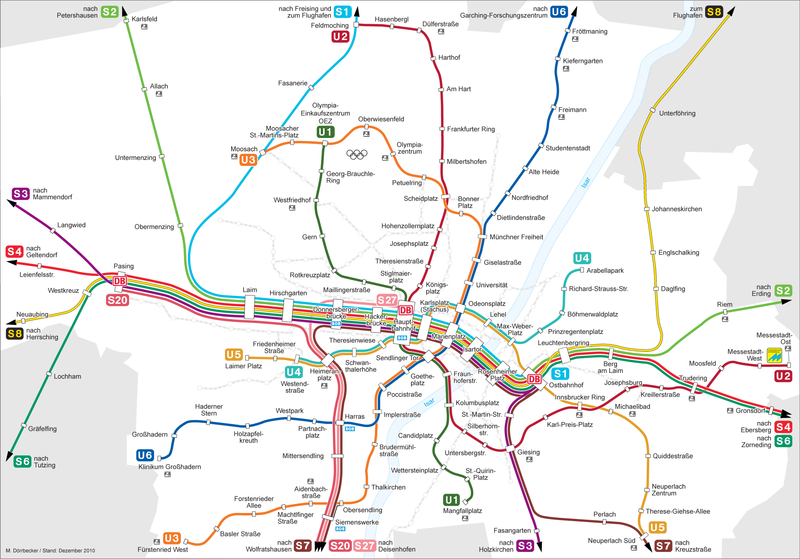 Yesterday morning, it seems that there was, once again, total chaos at the Munich MVV. I read about traffic hold-ups at Marienplatz.
Allegedly, the S-Bahn trains only came at irregular intervals and late until noontime. And thousands of commuters experienced massive delays.
In the AZ , you can read all about the reasons. It is an absolutely readable article, even though from a ”tabloid paper“.
The tiniest reasons are enough to cause a delay. For instance, an underground train signal that kept signalling “RED”. And at the S-Bahn trains, someone collapsed on the main line. Both incidents were enough to cause a public transport infarct.
Tonight, Germany will play against Belgium. A soccer game. If one of the players gets hurt – even if seriously – he will be carried from the playground on a stretcher. The match will continue.
Roland DürreMonday October 10th, 2011
Advanced Training and Presentations
Between October, 21st and October, 23rd, 2011, I will attend a seminar held by my friend Klaus-Jürgen Grün. It will be at the Landhotel Grashof in 36148 Kalbach near Fulda. This is a seminar that already looks back on a tradition of several years, being held in autumn each year.
Last year, it was about “hostility“. At the time, I was truly moved. You can read my report if you click here. This year, Klaus prepared for the following topic:
Lies Dressed Up As Truths
The not quite unproblematic relation between honesty and bluff
On Saturday, October, 22nd, 2011, I have the privilige of giving the final presentation. Klaus suggested the following title:
Entrepreneurial Success Between Honesty and Bluff
To me, this sounds all but simple. I really have to start preparing now and will then, as usual, publish it in the IF blog.
If any of you would like to attend the seminar, there are still a (very) few vacancies. Just send an E-Mail to me.
My next presentation in Munich will be during the EAA Colloquium “Current Developments in Technology and Business“. Here, I was free to select my own title. I decided on
About Projects, Leadership and Management – it is always about human interaction …
This presentation is on November, 3rd, at 6.15 p.m. in Lecture Room 33/0101 of the Neubiberg University of the German Armed Forces. They allowed me to invite guests, so I would be glad to see many of my friends. For details, send me an E-Mail.
RMD
(Translated by EG)
P.S.
For those who are interested, here is the agenda for the Grashof seminar:


