
Roland DürreTuesday July 8th, 2014
Bernhard Findeiss – Kanban or Scrum
Here is a second presentation of our technological IF Forum series
“Self-organization as a Formative Model for Enterprises”
Of June, 27th, 2014. It is now accessible for everybody (creative commons).
Enjoy!
Many thanks to our speaker Bernhard Findeiss!
I am assuming more presentations will now be made available on a daily basis.
Thanks to: Friedrich (Friedrich Lehn).
RMD
(Translated by EG)
Bernhard FindeissTuesday February 25th, 2014
(Deutsch) Clean Code: Wie der Apple SSL-Bug mit einfachen Mitteln zu verhindern gewesen wäre
Roland DürreFriday February 14th, 2014
Ultimative Software Quality!
The awareness for the relevance of “software” as a critical factor towards the success of an enterprise has increased. In Germany, too, the big concerns focus more and more on the IT-based applications and evaluate the quality of same in order to improve it.
For me – totally unstructured – the following questions come to mind:
- Why are there still such big software projects with a hundred and more programmers?
- Why do they still believe high specialization (requirement engineering, architecture, quality, implementation, configuration or project management, …) and division of labour in global development triangles such as India-USA-Europe is a way towards success and minimal costs?
- Why does management never seem to learn anything from all the numerous failures and crises with so many IT projects?
Here are a few answers and theses for improvement:
- Focus on the future!
In order to create quality and thus gain truly precious software, I would recommend to first focus on the new software projects in the enterprises. Basically, this is a huge challenge per se. I would only touch the “old” applications where it is absolutely necessary (except if I have too many resources and too much money). Because, as a general rule, the organizational, systemic and inter-human problems are just too huge, which means that the improvement you get comes at a high price. With new projects, I can at least start on the green field when it comes to project and methodical issues. I can be strict about false structures and developments not getting a chance to develop. - The competence of the employees makes all the difference!
I can now look back on more than 30 years of experience in the s-w development sector and time and again I found out that only a fourth or, if you are lucky, a third of the persons working in projects as programmers – no matter what titles or certificates they can show you – can actually deliver top quality. With the remaining two thirds, there might be the potential for some improvement through intense additional education and training programs with half of them. The remainder would have been better advised if they had never chosen to become programmers. In my perception, this relation grew worse, rather than better, during the last few years. That means that many not very well-educated and/or less talented programmers get carried along with the flow in extremely huge projects. Mind you, this is not because I want to foul-mouth an entire profession. However, what I need in software development are a hundred per cent “top quality” results. And that is something actually only a very small number of programmers working in projects can deliver. When it comes to “architects” or “requirement engineers”, the ratio of truly qualified experts is probably even smaller than with the “implementers” – which makes software development even more doubtful. Incidentally, it seems to me that other sectors do not differ too much with respect to those numbers.
For instance, I also noticed that among “craftsmen”, as a general rule, only one third actually are qualified enough in their job to deliver truly top quality products. And this is also an area where roughly one third would have been better advised to choose another career.
This means that if you constitute a new team, you should only recruit colleagues into the project who actually really know what they are doing. That is true for all roles within the project – and this selection is anything but easy. It is a lot easier said than done – because you have to say “NO” just too often. Regardless of the fact that you really badly need people to work for you. But a compromise in this particular respect will, as a general rule, blow right into your face when it comes to the quality of the results. And if you only take the “good” ones, you will need far fewer … - Communication
The communication within the development team and between all parties concerned with the project must function! How is that supposed to work if in many projects we do not even have a common language? Or if all of the team speak English but every one of them brought his or her “private English version”, which the other party finds hard to understand? It is important to strictly limit the number of meetings. There must be put a stop to the meeting overflow. Because the actual benefit of meetings will decrease with the number of persons attending and the time they take. To the same extent, the damage will increase. A solution of this dilemma is the organization of communication through a reasonable “peer2peer” mechanism. - “Requirement Engineering”
So far, the attempt at describing application software precisely and completely before its implementation has never rendered optimal results. This procedure will always end up showing that many unnecessary items have been built and, to make up for it, some really necessary items are missing. As a consequence, you get costly change requests that often conflict with the functions to be implemented. In other words: the success of every project depends on the quality of the person or persons who constitute the “product owner”. High quality product owners will never know everything in advance. Instead, they constantly learn during the development process. An iterative and agile process of “requirement engineering” is an absolute necessity. For new projects, it is advisable to think in terms of “user stories” and then (to a limited extent) describe the corresponding “use cases”. However, this can only work out if the architecture is flexible. - “Flexible Architecture”
Due to the product owners’ learning process and the iteratively changing functionality, an open and resilient architecture becomes a central requirement for the success of the project. This causes higher expectations for the architectures, but also for the communication between the “product owner” and the “architect” and ultimately also the entire team. Incidentally, as I see it, the two last mentioned factors are true for projects in general, not just software projects. - Mind-set
The mind-set has an impact in many dimensions. For instance, all project participants have to pledge themselves towards an ultimate quality requirement from day one. They must understand that, first and foremost, they create quality for themselves. There must be a shared project vision. Cooperation has to take place at eye-level and with everybody respecting everybody else. Politics in the project is a NO-GO! Quality control factors, such as peer2peer reviews will be a matter of course, meetings must be extremely short and far between and if they take place, they absolutely have to be restricted to discussing necessary coordination processes. To make up for it, there is no reason why you should not once in a while celebrate your success. Unnecessary bureaucracy is another NO-GO, a “good” project culture will make bureaucracy obsolete. The project and its current state are transparent for all parties concerned at all times, “insider knowledge” and “esoteric knowledge” are the exception. Wherever possible, you will dispense with unnecessary efforts for “estimates” and “planning”! - Responsibility
The project participants will never just reduce their own role to one of responsibility. Every one of them must be prepared to work “hands on”. The responsibility for everything – if only for a small fraction of it – is with every individual participant: requirement engineering, project control, architecture, quality, configuration and implementation. Everyone must help reduce unnecessary obstacles against free communication between all the others. This is true for everyone, because every one of them is responsible for the success of the project. Of course, due to the individual qualification, the way how the responsibility is distributed differs. - Craftsmanship
And all parties concerned have to practice their craft all the time. They must be prepared to “learn from the master craftsman” and to “”hand on their special master craftsman competence”, that is to share their knowledge.
If these requirements are met, even small teams can achieve unbelievable things, both with respect to quality and functional quantity. The often unnecessary overhead of big teams does not happen. And eventually, the management will be surprised how a ten-person team could have accomplished something where a team of a hundred failed.
RMD
(Translated by EG)
Roland DürreSunday January 26th, 2014
Interview for the DOAG
„What We Are Looking at is An Evolutionary Process Which is Hard to Predict …”
Progress in information technology is faster than ever. Dr. Dietmar Neugebauer, Managing Director of DOAG, and Wolfgang Taschner, Chief Editor of DOAG News, talked about it with Roland M. Dürre, Managing Director of Interface AG, – well, that is me truly.
You founded Interface AG. What is the business model?
We started in 1984 as a product enterprise and – through our professional text processing software HIT/CLOU – became the European Market Leader on UNIX systems for all manufacturers within a few years. Around the turn of the millennium, we changed to become an IT based, sector-neutral service and counselling enterprise. HIT was the UNIX text system, CLOU was the corresponding 4GL machine for text generation. Even the first CLOU versions offered the option to embed SQL scripts, which meant that the text machine could do a qualified reading of the assigned database and, where necessary, also write it. In many instances, this was the Oracle database.
Besides the Interface AG, there are other enterprises under the IF group roof. What do they do?
Our subsidiaries specialize on services around special manufacturer’s technologies, such as Mircosoft, or IT technologies in general, such as virtualization. One enterprise is an exception: the IF Localization. It organizes translations into all languages and realizes adaptions.
To what extend do you use Oracle products for your customers?
Almost all our customers use the Oracle databases for business critical processes. These databases are the basis for all kinds of IT applications.
Where do you see the strengths of the Oracle products, what are its weaknesses?
In my perception, the oracle products usually do quite well if compared with their competition. As I see it, it is regrettable that, especially in middleware, there is no overview showing the entire variety of products. This is where Oracle has plenty of potential for improvement.
What do you think about the product strategy of Oracle in general?
It is certainly not my place to judge the Oracle product strategy. Especially since I am not even qualified to totally even have an understanding of the diversity. Perhaps a product map might make sense – where you get a description of all the products and their possible use.
Would you recommend to your customers that they use a complete system from hardware through to applications from a single manufacturer, such as Oracle?
Why not? After all, I have always been in favour of SUN systems. But seriously: an integrated and synchronized architecture has many advantages – which probably also pay off. After all, you will always be dependent on the manufacturer, no matter if we are talking Microsoft, IBM, SAP or Oracle or whoever.
What was it that impressed you about SUN at the time?
Well, we were a UNIX firm at the time and I was (wrongly) rather sure that Windows was never going to have a chance for professional use. It turns out that I was rather wrong. At the time, Sun was fairly new and modern – I saw a great future for the graphic interface of the Sun workstations. Besides, I found the then Sun employees very nice when I met them at their events.
What came to mind when Oracle swallowed Sun?
On the one hand, I was horrified, on the other hand, I hoped that this acquisition might be a great chance. The great performance of the Oracle Engineered Systems are a good example.
The Interface AG puts great stock in social media. What is your experience with them?
Personally, I find them truly great. However it is not always easy to persuade persons and also central departments to join. Strangely, I mostly find out through Facebook, Google+ or Twitter what our employees do, even professionally.
What advantages do you see in using social media in an enterprise?
In my opinion, it is an absolute MUST today. Over the years, the understanding of management has changed: now, instead of a hierarchical system, we have a network structure. Consequently, bigger groups that co-operate now need modern tools in order to, for instance, avoid countless meetings. It is, however, essential to convince all the team members that social media have their advantages.
What is the direction IT will take in the coming years?
🙂 If I knew that, I would not be sitting here, would I? Instead, I would be sitting on a beautiful yacht in the Caribbean with a glass of champagne in my hand. But honestly: I assume that IT will find its way and quickly, too. What we see is an evolutionary process which is hard to predict, let alone define. However, I assume that the massive impulses will no longer originate in Europe and not as much as we are used to in the USA either, but in Asia. In the Unix pioneer days, the disadvantage of German companies was that the German market was so much smaller than the English-speaking market. Today, China, and more and more also India, tell you where we the music plays.
What do you expect of an IT enterprise such as Oracle during this process?
It would be a true achievement to find the right mixture and/or balance between “open” and “proprietary”. The IT market changes quickly and can no longer be controlled by a single enterprise. Consequently, technological openness and strategic transparency are to be desired, as well as certainly useful in the long run for IT enterprises.
How do you see the position of a user group such as the DOAG?
Well, I have Siemens experience, both as employee and supplier. At Siemens, we had the Siemens User Association. It always made a huge impression on me how this was formative for very constructive relationships, especially with big customers and suppliers and how beneficial it was for both parties concerned.
What experience from your long professional life can you hand on to other entrepreneurs?
The most important is perhaps: always come up with your own judgement. And remain agile and avoid dogmatic decisions and behaviour on all accounts. Other than that, I try to live up to the rules for modern management as set by Hans Ulrich, the founder of the St. Gallen Management Model. They are: accept the unpredictability of the future as a normal state of affairs, extend the borders of your thinking, be more driven by “as well as” than “either-or”, think multi-dimensionally, understand self-organisation and self-control as a formative model, consider managing a meaningful and meaning-transporting function, focus on what is important and make use of group dynamics. Isn’t it remarkable that these rules have been first written down in the 1980ies?
By now, the interview has been published by the DOAG – so here is my post of same.
RMD
(Translated by EG)
Roland DürreSunday January 19th, 2014
As Time Goes By …
 Around the turn of the years from 1983 to 1984, Wolf Geldmacher and yours truly were rather courageous when deciding to found the InterFace Connection Association for Data Processing and Communication Software mbH together with Dr. Peter Schnupp (InterFace GmbH) and Claus M. Müller (via InterFace Computer GmbH).
And to this day, we have had much joy with what we had done. Wolf and I were the active associates. Initially, we each held a share of 30 %. Exactly 30 years ago, on April, 1st, 1984, the day had come! The InterFace Connection (today InterFace AG) officially started its work.
It was not an “April Fool’s Joke”. After all, we now can look back on 30 exciting and successful years in business. On March, 31st, the Interface will have existed thirty years on this planet. We will celebrate this birthday appropriately on June, 27th, 2014 with many, many friends.
Maybe you want to mark the late afternoon of that day in your calendar, and then the night, as well? Here on the IF Blog, I will also report at length about the event. We will also inform and invite our friends through many other channels.
After thirty years at InterFace AG, I am now in the position of holding the majority of the shares and of being the managing director. My roles at InterFace were diverse. We started out as a rather successful production firm and then developed into a service and counselling company. And we assume that the future of InterFace AG will also be a good one.
This year is my last as managing director at InterFace AG – which is certainly a reason to look back. There is no “Today” without “Yesterday” and no “Tomorrow” without “Today”. So we need to do some remembering. Well, quite a few things come to mind and also seem remarkable.
I have to think of all the many comrades who accompanied me through those 30 years or through parts of the way. I have to think of the many enterprises that came and went. I enjoy thinking of our great customers, for whom we always enjoyed working. And how it always made us happy to see that our software and services contributed to our customers’ success. In fact, there are some customers of ours we served from day one and still serve today!
Many famous and powerful enterprises appreciated us as their supplier. There is quite an illustrious sound to some of the addresses. Some of them have even disappeared by now. For instance the Kirch-Gruppe and the WestLB. But also quite recently the Weltbild publishing company. What marvellous projects we worked with these enterprises! Luckily, however, most of our big customers survived.
30 years of InterFace also means we saw many partners and competing enterprises come and go. Here, too, I have to say that there were famous names among them. We respected them greatly. And then they were gone.
As I think back in this way, I notice that we are something like a “Surviver”. And that probably not too many of those exist. And that we are actually doing quite well. So what more is there to desire?
Except a few more years of good living.
In order to make sure this will continue to be so, we plan a huge party on June, 27th, 2014. We want to celebrate our survival. We will invite as many friends as possible who accompanied us, still accompany us today and hopefully will still accompany us in the future.
RMD
(Translated by EG)
P.S.
For more information about our party, click here: IF-Open!
Roland DürreTuesday October 8th, 2013
“Careful: Email” – Second Video Recording Available – of IF Academy from September, 19th
On September, 19th, we welcomed Hans Bonfigt and Marc Haber of redoxSystems as guests of our IF Forum. The topic was Careful: EMAIL.
Now you can also watch the video with the presentation by Hans Bonfigt. Hans used the opportunity to drastically warn us about the dangers potentially following the loss of the privacy of correspondence.
The essential parts of his presentation are now also available on youtube:
Incidentally, this video, as well as the presentation by Hans Bonfigt, was recorded and processed by Lukas Ziegler.
I would like to use this opportunity to once more thank the two speakers, Hans Bonfigt and Marc Haber.
RMD
(Translated by EG)
Roland DürreFriday October 4th, 2013
“Careful: Email” – First Video Recording Available – of IF Academy from September, 19th
On September, 19th, we welcomed our guests Hans Bonfigt and Marc Haber of redoxSystems at the IF Forum. The topic was: Careful: EMAIL! Their two courageous and personal presentations, they not only informed us about the
“History, Basics, Spam&Virusses”, but also introduced “Concepts for Operating Your Own Secure and Reliable Mailservers”.
In particular, they also reminded us of the perhaps fundamental threats we all face these days.
After the presentations, we had an extremely lively and fruitful discussion. And our guests went back home with a sense of awareness and yet content..
As (almost) always, we made a video recording of the two presentations. You can view the basic parts of the presentation by Marc Haber on youtube.
Both this video and the one by Hans Bonfigt were made and produced by Lukas Ziegler. The part done by Hans Bonfigt will be put online shortly.
RMD
(Translated by EG)
Roland DürreWednesday October 2nd, 2013
Please Note: New Time!!! Third IF Forum in 2013 with Roberto Simanowski on October, 25th, 2013
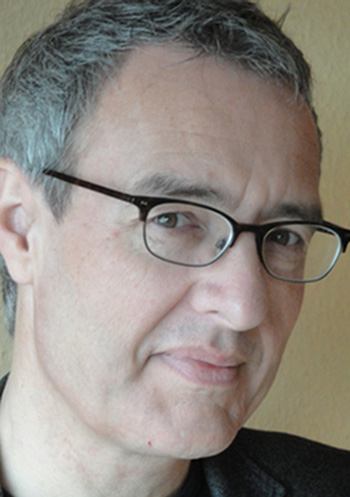 Our speaker of the third and last big IF Forum in 2013 is
Professor Dr. Roberto Simanowski!
He was going to give a presentation about:
Jean Paul, his witticism, the post-modern area and the new media.
The presentation was going to take place on November, 7th. For several reasons, we had to change the date. But be not afraid: the speaker will be the same.
On Friday, October, 25th, 2013 (please note – rescheduled!), Roberto Simanowski will tell us about a Jean Paul who, considering the times he lived in, was rather autonomous, revolutionary, in fact, almost anarchistic. Afterwards, he will give his opinion on the following current topic:
Big Data and Transparent Society: NSA, Self-Tracking and the Internet of Objects.
Here is what he will provide us with:
- Big Data being the “crude oil” of the 21st century also raises the questions of environmental pollution and of an informational sustainability concept.
- Both politicians and citizens refusing to talk about the NSA affair not only points towards non-existent problem awareness, but also to a camouflaged complicity.
- The “cold civil war” does not take place between the citizens and the secret service/surveillance society, neither does it happen between individual citizens. It actually happens inside every citizen. Databases replace stories as a form of understanding the world and yourself. The algorithm becomes the psycho therapist. It neither tells the patient what it found out, nor asks if it may use what it found out
About the speaker:
After having studied literature and history, Roberto Simanowski received his doctorial title in 1996 at the Friedrich-Schiller University of Jena with a work on the mass culture around 1800. Following his time as a scientist at Göttingen University, he was a visiting scholar at Harvard University (1998-2000) and the University of Washington (2001-2002), as well as representing the chairholder for media sciences and cultural theory of digital media at Jena University.
Between 2003 and 2010, Roberto Simanowski worked as an assistant professor at the Department of German Studies of Brown University in Providence (USA). He has now held a professorship at the seminar of media sciences of Basel University since 2010.
In 2011, he habilitated in media sciences at Siegen University with a work about digital media. He is the founder and editor of the online journal for art and culture of digital media dichtung-digital.org.
Here are some of his publications in the field of digital media:
- Text machines – kinetics poetry – interactive installation. On understanding art in the digital media (Transcript 2012)
- Digital Art and Meaning. Reading Kinetic Poetry, Text Machines, Mapping Art, and Interactive Installations (University of Minnesota Press 2011)
- Reading Moving Letters: Digital Literature in Research and Teaching. A Handbook (Mhg; Transcript 2010)
- Digital Media in our adventure society. Culture – Art – Utopia (Rowohlt 2008)
- Interfictions. About writing on the internet (Suhrkamp 2002)
- Digital literature: forms and ways of new literature (Hg., DTV 2002)
- Digital Literature (Hg., Text & Kritik Oktober 2001)
Note:
This IF Forum will be held in our headquarters building at Unterhaching, in the seminar zone under the roof. We start at 18.00 hours. We look forward to welcoming our guests! As always, you can register for the IF Forum via e-mail.
RMD
(Translated by EG)
Roland DürreMonday September 16th, 2013
Bi-Weekly News #34: IF Akcademy / IF-Forum – Thursday, September, 19th, 2013 – Careful! – E-Mail!
This week, the time has again come: on September, 19th, 2913, at 18:00 hours, there will be another interesting IF Forum as part of our IF Academy. You can hear an exciting presentation about:
Mailserver & Mail-Client (Careful E-MAIL!)
“History, Spam&Virusses” or “concepts for the secure and reliable operation of a mail server”
(Hans Bonfigt / Marc Haber – redoxSystems)
And here is the good news:
 Marc Haber will also come.
By now, we can verify that, besides Hans Bonfigt, Marc Haber will also be there. The two of them are experts when it comes to the technology and the depths of our so often-used medium email. In fact, with these two persons we have a couple of “supremely knowledgeable” guests who are both extremely competent and radically critical, since they are “chips of the old block”. Both of them have the special talent of coming up with simple explanations even when the topic is complex. I know them both personally and they will give very interesting reports as co-speakers.
For instance, they will deduce logically that an enterprise basically cannot avoid having its own mail server. They will also show how easy it is to install said mail server and how cheaply it works if you use free software.
Simultaneously, they will give a quasi “first-hand account” about the rather “common” concept of “SINA-Boxes” potentially abusing your civil rights on a daily basis without your having even the slightest chance of so much as noticing it.
Since currently this topic is rather much-discussed, we promoted the IF Academy presentation to become a “special IF Forum”.
Consequently, this coming Thursday evening is another very good opportunity to introduce InterFace AG to our friends, partners, customers and all interested persons, as well as to new colleagues.
So here I am asking you all to support the IF Forum and make it a lively event. I will also be very happy to welcome participants who failed to register on time or decide to visit spontaneously.
For details and registration, click here: LINK !
I look forward to welcoming many visitors!
RMD
(Translated by EG)
Roland DürreMonday August 12th, 2013
Technological IF Forum – Mailserver and Mailclient –September, 19th, 2013
On September, 19th, 2013, at 18.00 hours, we of the InterFace AG invite you for another interesting presentation in our “IF Academy” series:
Mailserver & Mail-Client
“History, Basics, Spam&Virusses” or “Concepts for a Private Secure and Reliable Mail Server”.
(Hans Bonfigt / Marc Haber – redoxSystems)
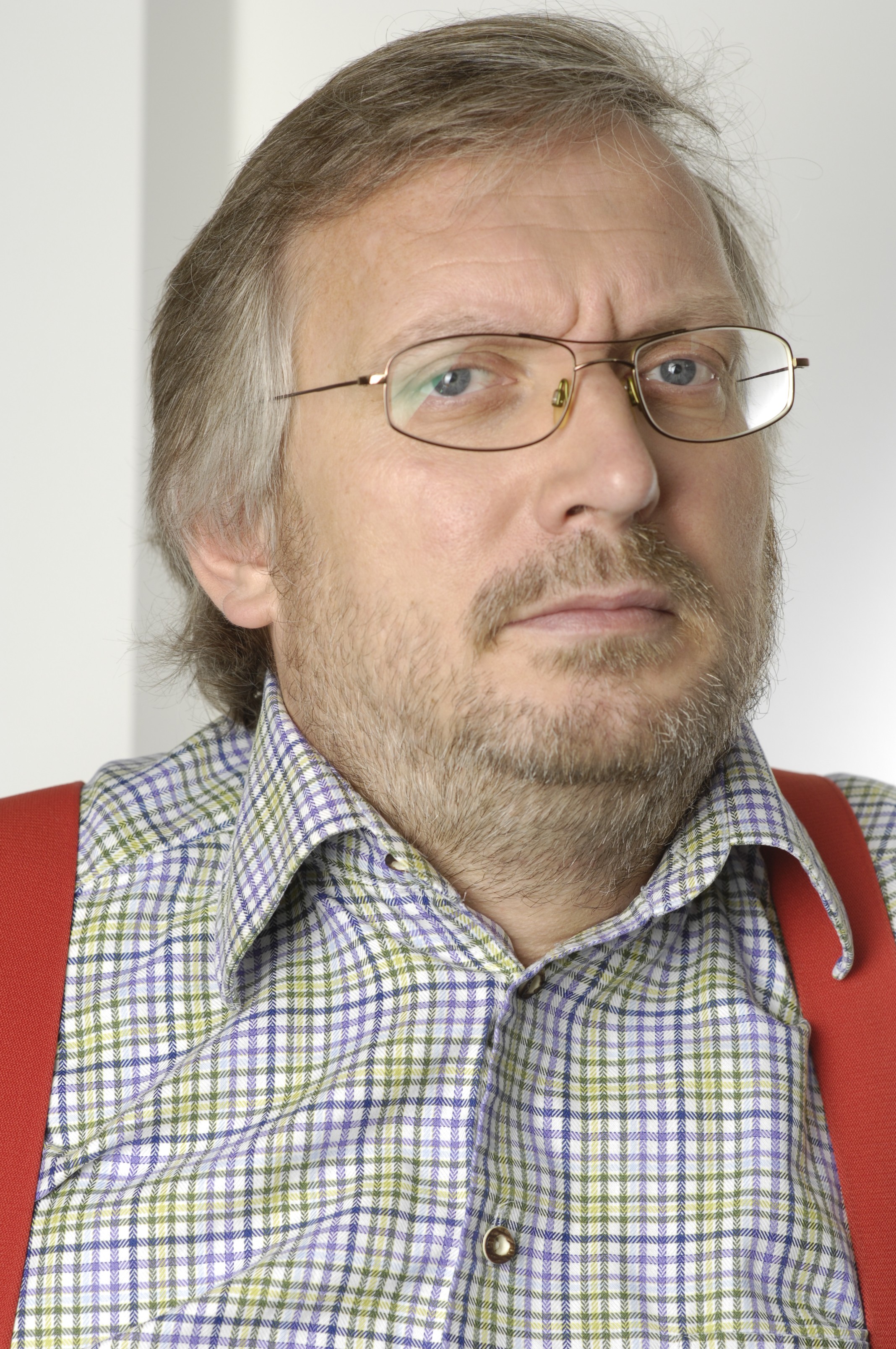 Hans Bonfigt will be our speaker. We are optimistic that his co-author Marc Haber can also come. After the current events and in times of PRISM and Tempora, the timing for this presentation about email and mail in general is just ideal. Consequently, and because we have two of the best experts in the field with us with Hans Bonfigt and Marc, we decided to make a technological IF Forum of this IF Academy event and invite the extended circle.
Every day, we send and receive many emails. It is our totally normal routine and we might very well often be quite thoughtless about it. The underlying technology seems to be a matter of course, even though, more often than not, it is nowhere near as easy as it looks. Hans Bonfigt will introduce the deep secrets and abysses of email traffic and the underlying technology. Here is his summary:
I will give you a historical introduction to the topic “mail”. You will get to see the roots where rats like spammers, viruses and other parasites feast. Also, I will give a clear differentiation between the terms mail server and mail client. This distinction is important, because a mail client is also among those devices you can host centrally. Eventually, I will show you two operating concepts.
My presentation will be structured as follows: warming-up, basics, introduction (around 20 minutes), actual operating concepts (less than 30 minutes) and live demonstration (10 minutes). This should leave enough time for a discussion.
As always in our IF Forum, we will have our “happy hour” after the discussion. I am quite certain that there will be plenty of exciting material to discuss, especially after this kind of presentation.
About the Speaker:
I first met Hans Bonfigt through the IF blog. Hans is a passionate programmer and IT technologist. He actually learned his craft from scratch and consequently also knows all the “camouflaged” levels of many systems. You will find various articles and comments written by him in the IF blog. They are always straight to the point. He ruthlessly criticizes where the development goes astray and where technology is poorly executed. Also, he points directly towards mistakes frequently made. His outstanding ability is to put things in a nutshell.
Registration:
As always, the presentation will be held in the seminar zone under the roof of our Unterhaching headquarter building, starting at 18.00 hours. We look forward to welcoming our guests! For registration to this IF Forum, send an E-Mail.
RMD
(Translated by EG)


