
Roland DürreMonday August 12th, 2013
Technological IF Forum – Mailserver and Mailclient –September, 19th, 2013
On September, 19th, 2013, at 18.00 hours, we of the InterFace AG invite you for another interesting presentation in our “IF Academy” series:
Mailserver & Mail-Client
“History, Basics, Spam&Virusses” or “Concepts for a Private Secure and Reliable Mail Server”.
(Hans Bonfigt / Marc Haber – redoxSystems)
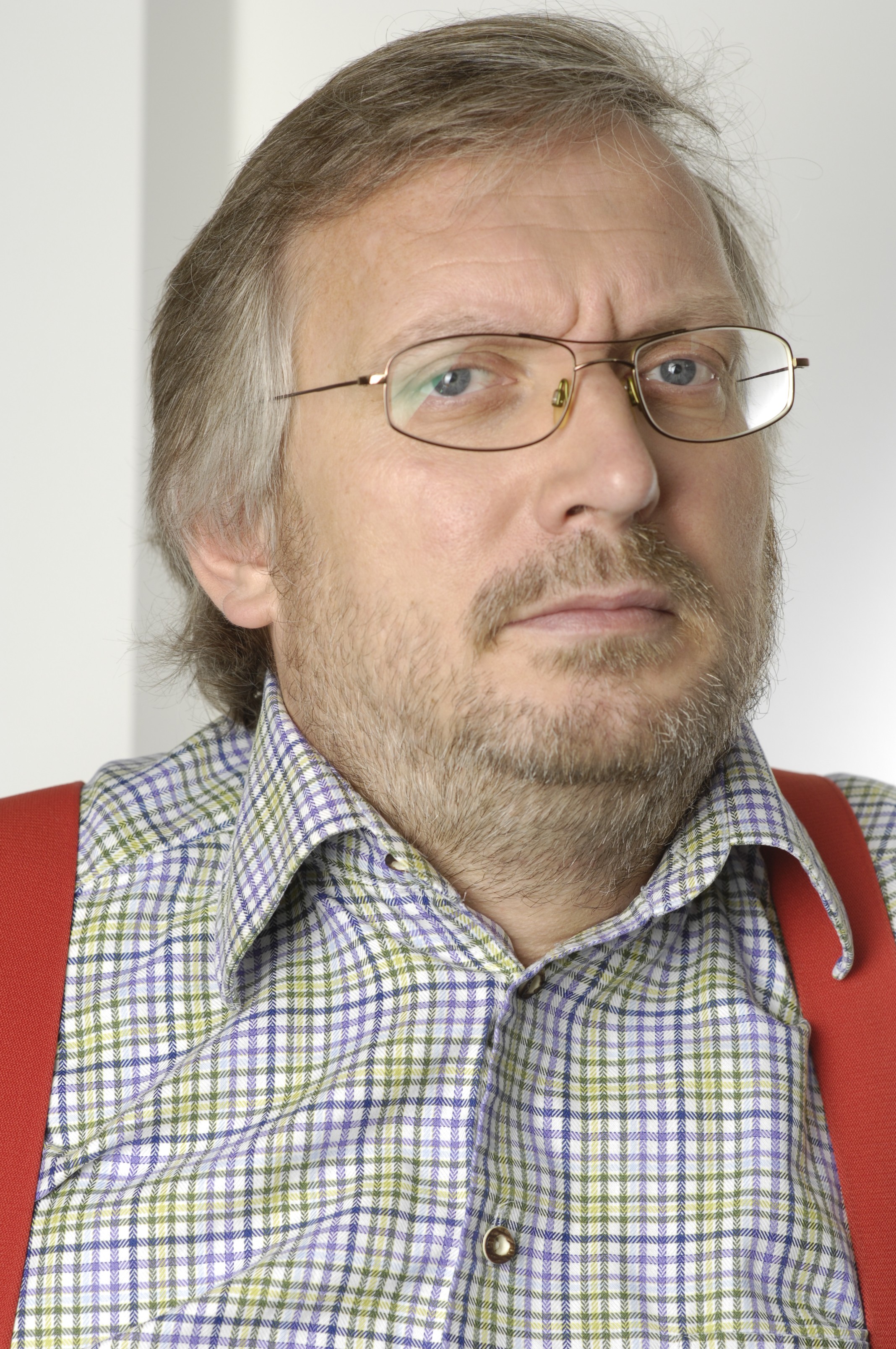 Hans Bonfigt will be our speaker. We are optimistic that his co-author Marc Haber can also come. After the current events and in times of PRISM and Tempora, the timing for this presentation about email and mail in general is just ideal. Consequently, and because we have two of the best experts in the field with us with Hans Bonfigt and Marc, we decided to make a technological IF Forum of this IF Academy event and invite the extended circle.
Every day, we send and receive many emails. It is our totally normal routine and we might very well often be quite thoughtless about it. The underlying technology seems to be a matter of course, even though, more often than not, it is nowhere near as easy as it looks. Hans Bonfigt will introduce the deep secrets and abysses of email traffic and the underlying technology. Here is his summary:
I will give you a historical introduction to the topic “mail”. You will get to see the roots where rats like spammers, viruses and other parasites feast. Also, I will give a clear differentiation between the terms mail server and mail client. This distinction is important, because a mail client is also among those devices you can host centrally. Eventually, I will show you two operating concepts.
My presentation will be structured as follows: warming-up, basics, introduction (around 20 minutes), actual operating concepts (less than 30 minutes) and live demonstration (10 minutes). This should leave enough time for a discussion.
As always in our IF Forum, we will have our “happy hour” after the discussion. I am quite certain that there will be plenty of exciting material to discuss, especially after this kind of presentation.
About the Speaker:
I first met Hans Bonfigt through the IF blog. Hans is a passionate programmer and IT technologist. He actually learned his craft from scratch and consequently also knows all the “camouflaged” levels of many systems. You will find various articles and comments written by him in the IF blog. They are always straight to the point. He ruthlessly criticizes where the development goes astray and where technology is poorly executed. Also, he points directly towards mistakes frequently made. His outstanding ability is to put things in a nutshell.
Registration:
As always, the presentation will be held in the seminar zone under the roof of our Unterhaching headquarter building, starting at 18.00 hours. We look forward to welcoming our guests! For registration to this IF Forum, send an E-Mail.
RMD
(Translated by EG)
Roland DürreSaturday August 10th, 2013
My Continuing Education Program – Personality Enhancement, Seminars, Worskhops, barcamps
I am now working on a series of articles to inform you about barcamps and in particular about the PM-Camp. Also, I wish to do a little advertising for the next PM-Camp in Berlin between September, 13 and September, 15, 2013. In my introduction, I am going to tell you what exactly I did in my life in terms of continuing education and why I ended up at the barcamp. Because continuing education and development is important for everybody and barcamps – in addition to self-studies and working next to a master of your art (in the sense of craftsmanship) – are the best opportunity to advance your own learning curve through the experience of others.
First and foremost, let me tell you my personal educational history. After graduating from high school at the Augsburg Jakob Fugger Grammar School, I went to study at Munich Technical University. The time at the grammar school was a good investment for my personal development. We smelled the spirit of freedom. To be sure, we learned a lot that was totally unimportant, but we also learned a few things “for life”. Even afterwards – against my wishes – when I did my compulsory service with the German armed forces, I gained a lot of experience.
Then I went to study at the Technical University (in those days still called “Hochschule”) of Munich. For me, studying was not something pleasant. We had to “learn from books”. The lectures were not really great and they also cost (too) much time. Time we did not have, because, after all, we had to earn our livings “in our spare time”. Consequently, I taught two tutorials every semester, learning more in the process than during actual lectures. And – considering the times we were living in – the money was not too bad, either.
I learned my craft, however, when I was a student and free-lance worker at Siemens AG. Consequently, studying was more or less a necessary duty and consisted in learning for exams. Because my super ego thought I had to have an academic diploma. In retrospective, I am not sure that my title “Mathematics Diploma (univ)” was all that beneficial for me. But it probably did no harm, either.
After finishing my studies at university, I went to the really huge Siemens AG as a regular employee. I had very interesting tasks and was permitted to develop a totally new technology. However, the time spent there was not one that gave me immense impulses for “personality growth”. For example, I initially programmed in the laboratory and later in special projects. We were all working with a lot of dedication, but there was no room for luxury seminars and besides, there was nothing on offer for a small regular-wage employee like me.
After four years at Siemens AG, I changed to Softlab. In this company, attending “personality enhancing seminars” was a requirement for your professional career. With little enthusiasm – after all, there was plenty of work waiting to be done and I was absolutely prone to prejudices against “personality growth” – I went to one of those seminars held by a company called TPM at Starnberg (Training Psychological Management, one of the two trainers was a Herr Uhlenbrock). I went there full of scepticism, but returned absolutely enthusiastic. Those were the days when my continuing education actually took off.
A short time later, Dr. Peter Schnupp (one of the Softlab founders and very much a freethinker) caused my meeting with Rupert Lay. Totally out of the blue, I was to replace someone who had registered for a coaching session with him. For me and my life, this turned out a huge stroke of luck. At the time, Rupert Lay was probably one of the most renowned coaches. He also was allegedly the Nestor for “ethics and entrepreneurship” of German Business. Through this channel, I also met a few other really great coaches, for instance Baldur Kirchner.
Starting with this visit of a seminar that had been rather accidental, a constant cooperation developed between me and Rupert Lay. In fact, it eventually became a beautiful friendship. Throughout many years, Rupert was my mentor. Between the years 1985 and 1995, many other friends working alongside me at the then still “InterFace Connection GmbH” (that is what InterFace AG used to be called) were also regular attendants of Rupert Lay seminars. It is quite possible that those were the days when the cornerstones of our – hopefully a little different – entrepreneurial culture were built. At the time, I myself regularly spent a week with “my group” at Rupert’s seminars. During those times, I tried to reassign my own lodestar.
Rupert controlled and directed the workshops, improving on them with many small bits of advice. But the experience and the knowledge I collected during those seminars came to an ever higher degree from the group members (they were all persons with special experience in life, also because of their roles as managers and entrepreneurs). Initially, probably 90% of what I learned was from the “teacher” and 10 % from other group members. And this relation continually changed in favour of the group members. In the last seminars, I would actually call it more like a 30 : 70 relation, or even more than that.
As Rupert grew older and held fewer seminars, I found a new “continuing education home”: the regular St. Gallen RISE workshops. The RISE workshops were initially realized by Dr. Simon Grand and then carried out by professors of the Swiss universities (HSG, ETH), entrepreneurs owning medium-sized companies from the IT and fashion sectors, as well as directors of big Swiss enterprises. My experience and development continued during these seminars. All of a sudden, 90 % of all the knowledge and competence came from the other seminarians.
Both in the Rupert Lay seminars and RISE workshops, I always felt very much at the right place and each time, I returned home with something totally new. Then the RISE workshops, too, were over and, yet again, I fell into a deep “continuing education pit”.
And that was exactly the time when I made a sensational new experience during a barcamp. I met people who opened up and shared their experiences, adventures and knowledge. “Open Source”, face-to-face, on a free event. I experienced communication at eye-level based on emphaty with persons I had only just met. Trust grew basically from scratch. And I learned a lot, both technologically and with respect to “personality growth”.
This experience had such an impact on me that I started looking for a barcamp where project managers, entrepreneurs, leaders and managers – that is: people who feel responsible for our future – meet. And where those people are willing to share their precious knowledge and experience.
However, I looked in vain. Consequently, the only option that remained for me was to start a barcamp myself. Stefan Hagen and some more friends, too, felt that the time was ripe for this kind of thing. So we initiated PM Camp in 2011. On these camps, 100 % of the people I learn from are other seminarians.
The first PM Camp took place in Dornbirn in November 2011. It did not take long before one became two in 2012, one of them held in Vienna and the other in Dornbirn. This year, we already had three: in Vienna, Stuttgart and Bad Homburg (Rhein/Main). And two more are to follow – one in Berlin and the other one again in Dornbirn!
SO I found a new home for continuing education – in fact, I even initiated it myself!
RMD
(Translated by EG)
P.S.
The next articles in this series will describe how barcamps function, what types of sessions we do and how you can prepare for them. Basically, it is a guide towards attending a PM Camp.
Roland DürreMonday August 5th, 2013
Entrepreneur’s Diary #89 – Knowledge, Leadership, Organization & Managment
Here are a few theses ….
We often call people good or bad people. There are, however, no bad or good people. The only things that might be good or bad are what these people do. Consequently, you should judge behaviour, rather than persons.
That is more or less what I learned in ethics and philosophy.
It is similar with knowledge. There is no such thing as good or bad, useful or useless knowledge. With applying knowledge, you can “make an impression” or “have an effect”. Knowledge itself is of no value. In order to be useful – for instance for solving problems or on the way towards progress or innovation – it has to live.
You have to share knowledge – then it will actually increase. But how to organize the sharing of knowledge? After all, knowledge is dynamic and always depends on the context. Context-dependent dynamics cannot easily be packed into a container. That is the problem you face with knowledge management.
Here are a few terms probably related to knowledge:
Education • Cultivation • Experience (of Life) • Enlightenment • Expertise • Practice
This is how I arrive at ideas such as craftsmanship. We discover the master and the apprentice. We understand the importance of handing your expertise on, showing someone how to do things, learning and practicing! And how these processes can be promoted through the four-eyes-principle and p2p reviews (peer-to-peer). Mind you, this is not only true for software development.
And new questions arise, as well:
Where to use knowledge? Who uses knowledge? Is it the “white-collar” workers? Can you really call them “brain workers”?
And:
How do people work in enterprises – which I call social systems with an economic goal?
How can you design such a system to be both successful and bearable?
Ideas such as self-organization and self-determining spring up. I believe that the knowledge and expertise of many can be merged in an ethical and dominance-free way, thus being formative for our future.
But in self-organized systems, there will also be roles or activities you can summarize as follows:
Decisions • Leadership • Communication • Management • Responsibility
So what exactly does that mean in such a system? Here is what I propose:
Decisions
Decisions are always accompanied by a certain degree of uncertainty and must have a significant consequence. Otherwise we are not talking a decision. A “good” decision maker can try to do more good than harm by trying to base his decisions on an ethically responsible balancing of values. But he cannot question the unpredictability of the future, neither can he try to burden others with it.
Leadership
Leadership means that you set the scene for all parties concerned in the environment you are responsible for so that their personal lives are more enhanced than reduced in many dimensions. For instance by creating a fear-free zone. And I mean full of the necessary respect you show towards the task of leadership.
Communicating
The requirement for good communication is that you are prepared to meet at eye-level and to listen. You also have to have empathy, think in an altero-centric way and have respect for others.
Management
Basically, it only means you have to treat change with responsibility. If an enterprise is in a state of stability, it will generally do very good business. Except: there comes a time when too much stability will mean death. On the other hand, constant change will be detrimental for the balance sheets. If you manage to give justice to both ends of the scale, then what you are doing is “management”.
Responsibility
The environment I accept responsibility for is where my decisions have an effect. Consequently, I must be aware what consequences my decisions will have. I cannot ignore them.
Persons who decide, lead, communicate, manage and take responsibility are persons I call entrepreneurs.
Entrepreneur
A good manager is a manager whose decisions are more often correct than wrong. Someone whose judgement is more often good than poor.
All of these ideas are contrary to what I officially learned. Consequently, I am now arriving at the
Classical Error:
Many people still believe you can plan the world. Their image of the world is mechanistic and Tayloristic. In this combination, they believe knowledge and dominant logics to guarantee success.
I no longer believe this. The era of a working world strongly based on the division of labour (tayloristic) with mechanized processes disregarding humans is on the decline. It was a very simplistic image of the world. To be sure, it brought us prosperity, but the price was far too high. In order to survive now, we must become AGILE.
RMD
(Translated by EG)
P.S.
At one time, we had a young lady as guest at InterFace. Daniela Blettner (she is now a university teacher) worked on her dissertational thesis for HSG (Hochschule St. Gallen). Her topic was “Dominant Logics During Enterprise Foundation”. And the results were surprising. All the very successful enterprises she examined had been free of “dominant logics” during their founding process. What is worse: some of them almost failed due to “dominant logic strategies”.
P.S. 1
For more articles of my entrepreneurial diary, click here: Drehscheibe!
Markus SeidtSaturday July 27th, 2013
News From Vietnam #17 – Francis is Building Training Centre for Professionals – Initially for the Faculties: Cooking and Restaurant Staff
Dear family, dear friends,
I am going to open a training centre for professionals where handicapped adolescents can learn following the dual system. We will start with the faculties cooking and restaurant staff.
When I lived in Germany, I spent 34 years cooking. I cooked between Munich and Berlin, in station restaurants and 5-star hotels, for simple guests and VIP’s. There was always plenty of work, I was never unemployed. This is not just because I am an industrious person, but also because there will always be enough work in gastronomy.
Education is the Central Chance
For me, too, it was hard to climb up the ladder to the master’s level. The reasons were diverse: financial problems, needing more time for family and children, having to learn a totally foreign language and all the restrictions because I was a non-native.
Why was I never unemployed? Because gastronomy never died. Why did I continue up to the master level? Because in Germany, the opportunity to continue your education gives adolescents a chance.
Dual Educational System after the German Model
Consequently, I will try to offer all I find positive in Germany to the adolescents here in Vietnam, too.
Since the dual educational system is new and alien to the Vietnamese, it is not easy for me to create educational openings. Currently, I am doing a lot of work in order to get there.
As to finances: I receive support from Germany for building and furnishing the school. But it is difficult to run the school, because most of the apprentices come from bitterly poor families. The apprentices also receive wages from the companies they work for, but this is minimal and many parents cannot even spend an Euro each day for their children.
Children from Poor Families – a Vicious Circle
The apprentices come to the city from afar, mostly from the country – where there is still a family tradition: three generations living under one roof, many children and little rice. Many children will terminate their school education and move to the city, such as Saigon, in order to find jobs. They will spend their entire lives working as untrained helpers, they will live in the slums and again have many children who, again – like their parents before them – will spend their entire lives working as untrained helpers.
A finished professional training will give the adolescents a chance to escape from this vicious circle.
We want to give the adolescents this chance.
Take me for an example. I come from a catholic family with nine siblings, bitterly poor. When I was a small child, I lived in the Don Bosco home for orphans, where I had the chance to graduate from high school and get a chance to finish my professional training in Germany.
I managed because many benefactors gave me a chance. That is why I firmly believe that adolescents in Vietnam, too, can do it.
Please support my project!
Let us give them the chance to show it to us and let us lead them on the path; with love and patience, they will manage!
Give me the chance and I will hand it on to those who need it most. That is why I returned to Vietnam: in order to help build Vietnam and preach Christian belief through my own example.
For more information about the new project, consult the website: anremaisen.com
Best regards xin kính chào
Francis Văn Hội
(MS – Editing / Translated by EG)
Roland DürreWednesday July 24th, 2013
Crowd Sourcing & BahnScout
Last Thursday, the “IF Academy” travelled to the TUM at Garching where we were welcomed as guests. In the afternoon, there was a presentation on Crowd Sourcing at the Konrad Zuse lecture hall.
Felix Köbler gave an outline of how it works and introduced “BahnScout” as a good example. ”BahnScout” is short for the application of an APP providing clean and functioning railway stations. We made two video recordings:
Part 1: Crowdsourcing
Part 2: BahnScout
Enjoy!
RMD
Roland DürreThursday July 18th, 2013
Beer & Informatics – July, 18th, 2013 -– Felix Köbler – “Crowdsourcing & RailScout”
Thursday, InterFace Event at TUM:
Technological Presentations for Computer Scientists
July, 18th, 2013 – earlier than usual: 4 p.m. at TUM!
The next presentation in our series IF Academy – Technological Presentations 2013 will be on July, 18th – as usual on a Thursday. This time, however, we will not remain in the Unterhaching InterFace building. Instead, we will go on tour with our circus and the event and Happy Hour afterwards will be at TU München in Garching. The TUM has reserved the lecture hall “Konrad Zuse” for us.
 The speaker if Felix Köbler. Felix spent a huge part of his computer science training and research at TUM.
He will tell us what totally new ways of thinking and opportunities have already been realized through the internet and the corresponding technologies – and also how it might go on from there. His topic will be:
Crowdsourcing & RailScout
An introduction and selected delicacies and crowdsourcing solutions for safe and clean railway stations.
Abstract provided by Felix:
The first part of my presentation will give you an outline of the current technological and socio-technological developments. For example the adoption and use of ubiquitous and mobile technologies which not only are immersed in our daily lives but also make totally new applications possible.
One promising and totally new application is crowdsourcing. It means the outsourcing of tasks or value-creating activities to an un-defined group of voluntary users by an enterprise or institution.
I will discuss the potential and problems of these innovative concepts using various examples beyond the widely known applications and initiatives such as Wikipedia and OpenStreetMap. One of the specialties of crowdsourcing is the extension of existing job-sharing models by the factor motivation, which is often used for applying gamification – that is the use of game elements in non-game contexts – in its socio-technological application.
The second part of my presentation will be about an actual solution and application: “RailScout”, which belongs to the area of the so-called “Mobile Crowdsourcing” as made possible by the technological development in the field of mobile end devices. “RailScout” is a smartphone application for passengers and gives them the chance to call in problems, like technological or maintenance damage and littering at railway stations and infra-structure buildings, directly to the responsible administration.
My presentation is meant to give you both the current results gained from the experiment still under way and diverse insights in to the craftsman-like process (Participatory Design/User-centered Design) and conceptual challenges in the field of gamification during the problem solution development phase.
The Speaker
Felix Köbler is a doctorial candidate at the chair for Business Informatics of Munich Technical University. He holds a B.Sc. and an M.Sc. in Information Systems/Business Informatics of Munich Technical University and studied, among other places, at Shanghai Jiao Tong University, Shanghai, China and Technical University of Tampere, Finland and University Tampere, Finland.
His research is mainly on distributed software engineering, social networking, gamification, persuasive technologies and ubiquitous and mobile computing with a strong focus on human-computer interaction. The results of his research has been published in international technological journals, such as AIS Transactions on Human-Computer Interaction and International Journal of Human-Computer Interaction (IJHCI), as well as presented on international conferences, such as the International Conference on Information Systems, European Conference on Information Systems and ACM SIGCHI Conference on Human Factors in Computing Systems.
Besides having established RailScout, he is also active in the fields of User Experience Design and strategic advice, as well as in Business Development at “FELD M” , which is a counselling company for digital marketing. Also, he works as a freelance counsellor.
Here is some information on the event series
At two-month intervals, we invite people to listen to a presentation with some technological, leader-specific or entrepreneurial topic. Our invitations go out to all interested computer scientists living in the area and, of course, especially to all our colleagues at InterFace AG.
The presentations are meant to hand on innovative knowledge and special experience from practice for practice, following the idea of craftsmanship. Our focal point and content is in the fields of programming as a German engineering feat, modern basic know-how, future-oriented technologies, insider knowledge, changes in established technologies, experience from project such as management and leadership and much more.
Usually our speakers take 30 minutes for their presentation, then you have 60 minutes for discussion. And afterwards, there will always be a “Happy Hour”.
The events take place on every third Thursday of the uneven months of the year.
RMD
(Translated by EG)
Roland DürreThursday June 13th, 2013
Today: Technological IF Forum at Unterhaching InterFace, Starting at 13:00!
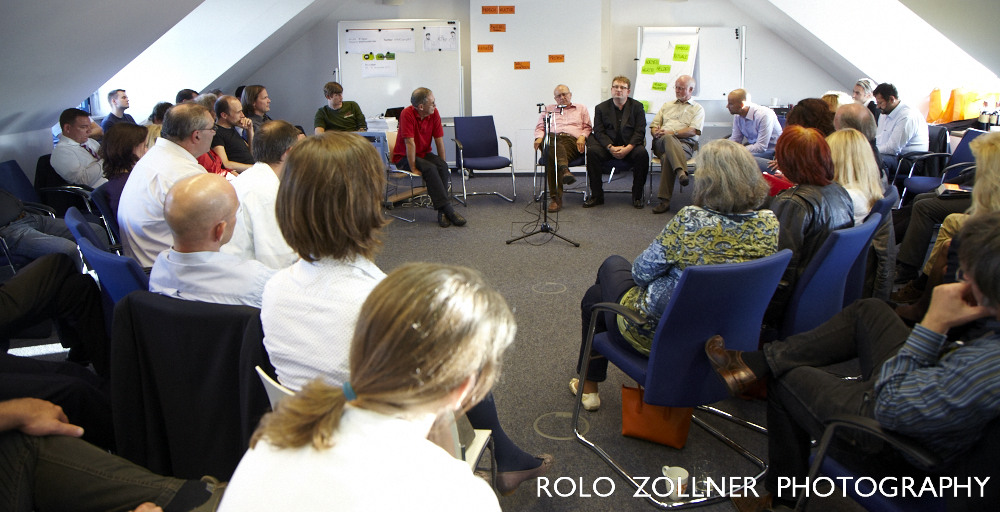 Today is the day!
At 13:00 hours, our Workhop “Craftsmanship” will start!
For more information, click here!
There are still a few vacancies!
And for those who cannot come, we broadcast the presentation live on the internet.
On http://www.ustream.tv/channel/IF-Forum , you can see the video stream of the presentation, starting around 13:45 hours.
In addition, we will – as usual – make a video recording and publish it on youtube (Kanal InterFace AG).
RMD
(Translated by EG)
Roland DürreMonday May 20th, 2013
#barcamp&#pmcamp: Why I Go There!
Great events will cast their shadows before:
 This year, there will be at least four more PM camps.
After the magnificent meeting at Stuttgart #pmcamp13str of May, 3rd/4th, 2013 , we will meet again in Vienna for the #pmcamp13vie on June, 21st/22nd, 2013, in Bad Homburg for the #pmcampRM on 27th through 29th, 2013, in Berlin for the #pmcamp13ber on September, 13th through 15th, 2013 and, as the year comes to an end for the “mother of all PM camps” #pmcamp13 in Dornbirn on November, 14th through 16th, 2013.
Here is the definition:
A PM-Camp is nothing other than a Barcamp, where project managers, entrepreneurs, leaders, students and similarly minded people meet.
This is the reason why I am going to start a small IF blog series on barcamps in general and PM camp in particular.
Today you will read part 1:
Why I Go There!
I was born in 1950. My generation had a nice time to live in. In our Central European home, we experienced luxury as the human race did never before in its history. We were allowed to grow up in a free society. Suppression and force were at least reduced to a tolerable degree. For most of us, education was affordable. And, above all: there was no active war fought on our soil!
To be sure – not all was well. The consumption terror born during the time of the economic miracle was negative. We, too, fell victim to it. The only unnatural threat for our lives was on the streets, where motorized traffic caused many victims, injuries and deaths (in our circles, as well). Perversely, however, we accepted those as logical consequence of our so-called new freedom.
When all is said and done, I and my central European generation probably lived in a time when we were better off than humans had been at any other time. At least that is how I perceive it. I wish to express my gratitude for this and hand as much of my experience and knowledge as possible on to many people.
At the same time, my generation did more damage to this planet than any other generation before us. As I see it, we may not have done it intentionally, but we have certainly been most careless. Because the knowledge we have today (see Club of Rome and others) was already available. Well, there is a lot we would have to make up for, but we will not succeed. For me, this means a duty to also write about the mistakes we made. After all, you can also learn from mistakes.
Consequently, I particularly enjoy doing presentations for young people. Currently, however, the best way to hand on experience and at the same time work on your constructs are barcamps.
This is why I like going to barcamps whenever my time permits it. And I particularly enjoy the PM Camp.
RMD
(Translated by EG)
P.S.
I intend to continue in my series with topics such as
What are my experiences on a PM Camp!
What is my contribution at a PM Camp!
Werner LorbeerSunday May 12th, 2013
It Depends on the Teacher!
 Don’t we all know quite well that:
“The more money you spend on education, the better the education will be”.
“The fewer children are in a classroom, the higher the success rate.”
“The more computers you use at schools, the more modern the education will be.”
And:
“With respect to what money is spent on education, Germany is far behind many others countries.”
These are four theses our educational elite support most strongly, repeating them in every show. The more “Precht-like” it looks, the better a hypothesis is.
Unfortunately, all four of these theses have been empirically proven wrong. Bavaria spends less money on each student than Berlin, still has a higher success rate, performance in mathematics is independent from how many students sit in the class, the effect of the computer on learning is negligible compared to all the other influential variables and – last not least – the FRG is somewhere in the middle when it comes to how much which country spends on education.
Personally, I have my doubts especially about the last statement, because the survey coming to this conclusion was done by the OECD. In order to correctly get an idea, you have to know that private educational agents, such as craftsmen’s or industrial factories will not even be noticed by those ladies and gentlemen in Paris. Actually, their statistics confuse the German “Meister” with the English “Master”, simply assuming it to be the equivalent.
So where will you find any useful information if you wish to familiarize yourself with the reality of learning and teaching in times of electoral campaigns?
Well, here is something I can recommend:
“Auf den Lehrer kommt es an” (It Depends on the Teacher) by Rainer Werner, who is teaching at the John-Lennon-Gymnasium Berlin.
It is probably no surprise that the most critical voices will tend to come out of Berlin or Bremen, because that is where the ideologists are most active.
wl
(Translated by EG)
*) “Precht-like” refers to the TV philosopher Richard David Precht. Incidentally, he was once even a guest of Jauch, where he advertised his very high-strung reform ideas for our schools. It turned out in the end that not much of them remained.
Roland DürreMonday March 25th, 2013
Get In Shape! – IF-Academy – March, 21st, 2013
“Get in Shape!” held on March, 31st at the IF Academy is now over. It was a truly nice presentation by Johannes Schmidt. As soon as the video recording is finished, we will make it available to you.
After “Get In Shape!”, we will present
“Ubuntu & Android Usage in Business”
The test in practice – what can Windows alternatives really achieve? Features, problems and solutions. An overview.
On May, 16th, 2013, Alexander Jachmann of the IF-Tech AG will update us on the current state of affairs. It will, again, be very well worth watching, so write down the time! And the other scheduled presentations can also already be seen on the poster.

RMD
(Translated by EG)


