
Roland DürreSunday June 5th, 2011
EHEC and Crowd Sourcing
I would really have liked to see the questionaire the EHEC patients had to fill in or were helped with filling in by other persons.
Looking at the results, you get the impression that it was not really very efficient. Instead, it seems like it was carried out in a very dilettant way. I wonder what is supposed to be so hard when it comes to finding common denominators for so many persons concerned. All you had to do is find one or several subsets with shared characteristics.
As I see it, the behaviour of our political administrative powers is irresponsible in the EHEC crisis (and not only there, either)!
Why don’t they try to use modern methods such as “crowdsourcing” for such important issues, as well? Together, we all would long ago have come up with a good method and found the origin of the infection. There is, after all, no question that it is important enough to find the source(s) of such dangerous bacteria as fast as possible.
But, no: all they do is come up with some random theories, put the blame on something without any real proof, assume things all over the place and speculate. In the meantime, huge damage has been done but nothing really happened. We have no crisis management group, no think tank. Instead of an open information policy, we have belief in hierarchies. They do not trust your average citizen. After all, he is not fit to hear the truth.
It all reminds me of a confused central economy with a cast who consider themselves the elite just because they managed to climb up in the party. In reality, however, they are more stupid than the people. In some way or other, we in Germany go backwards, and it is not limited to EHEC, either. Unfortunately, however, the way back is not towards the Bonn FRG, but towards the East Berlin GDR.
RMD
(Translated by EG)
Roland DürreFriday May 13th, 2011
(Deutsch) Stefan Gillessen – Der Klang des Urknalls – jetzt im Internet!
Stefan Gillessen – How the Big Band Sounded – Now Online!
It took a little longer, but now we managed: the first presentation of the IF forum 2011 under the motto “Humans and Knowledge (Science)” can now be viewed online. With his “How the Big Bang Sounded“ (Der Klang des Urknalls) , Dr. Stefan Gillessen fascinated all those who were present on March, 1st at Unterhaching.
This is also a good opportunity to remind you of our second presentation in this years trilogy „Humans & Knowledge (Science)“ on Wednesday, July, 20th, 2011. Click on the preview of the presentation to be held by Prof. Dr. Gerhard Haszprunar!
RMD
(Translated by EG)
P.S.
Dr. Gillessen will be happy to give the same and a numer of other interesting presentations for other audiences as well. He therefore wrote a Knowledge Advert in our IF-AGORA. Stefans presentations are works of genius. Having enormous and probably very special technological knowledge, he manages to convey the message to his audience in a uniquely comprehensible way. Yet his presentations are not just very knowledgeable and humorous, they also transport a high degree of social responsibility.
And thanks to InterFace AG and youtube, you all can now see it for yourself!
Roland DürreMonday April 18th, 2011
ATZ – electronik – Some Things …
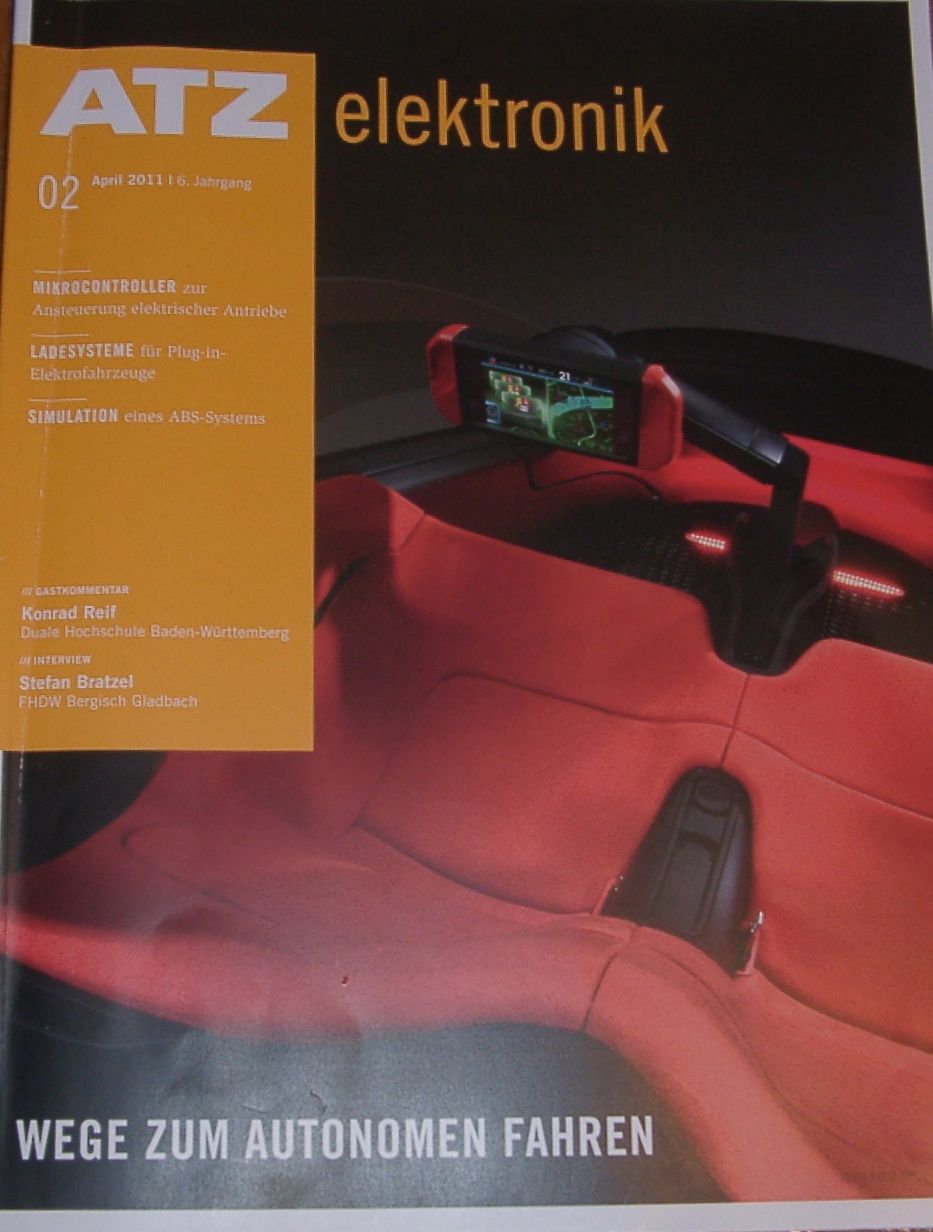 If you are managing director or on the board of directors of a small German enterprise, you are really lucky. You get huge amounts of high-gloss magazines, professional journals, extra editions, even normal newspapers for free. One or several magazines are in my letter box on an almost daily basis.
You find a lot of material. All sectors and topics are represented. You get stuff from enterprises, associations, universities, federally sponsored projects, from the IHK, the health insurance companies, etc.
And you get a lot of lobbyism. You get to read about hotels, fairs, workshops, research, technologies and always again business and economy. Some of the magazines are quite thick, some are quite thin. Some are multi-coloured, some are more decent. More often than not, fantastic prices are printed on the title page. I am sure nobody would ever pay them.
In the beginning, you try to forward those unwelcome benefactions to people who might perhaps be interested. Since, however, those people are just getting annoyed by the extra work, you throw the magazines into the rubbish bin more and more often at first sight.
It happens very rarely indeed that such paper-spam arouses my curiosity. Then I take a closer look. This week, it happened when I found a journal simply named ATZ elektronik . It looked rather unobtrusive. And I found some things in there that were quite amazing (for me).
mehr »
Edwin EderleMonday March 7th, 2011
(Deutsch) Stefan Gillessen – Der Klang des Urknalls
Roland DürreTuesday February 22nd, 2011
Bi-Weekly News #26 – IF-Forum and “up and away”!
Dear IF-Blog readers,
Firstly, I want to inform you about the next IF Forum presentation:
On March, 1st, Stefan Gillessen will talk about
“How the Big Bang Sounded” at the IF Forum
(Link or http://bit.ly/gMkGZA).
There are still a few vacancies – so I would look forward to welcoming a few additional “latecomers”. Besides, we are, again, broadcasting live via u-stream, so people can watch from remote places, as well. I can promise you it will be a really exceptional presentation: exciting and even with sensational first-hand news.
Evelyn (EG), our translator, is off duty for a few weeks. She moves into her new house and currently has no internet access. Consequently, there will be no English versions to any of my articles during the next few weeks – which is a pity, especially for our many English-speaking readers inside and outside Germany. But after her vacation, she wants to be back on full drive.
And in a little more than one week, I will be away, because I want to see the other side of the world. Starting on March, 4th, I will be gone for a little more than three weeks. My arrival back in Munich is planned for March, 29th. But I am quite determined to keep writing in the IF blog, be it via satellite or by whichever method. Hopefully, I will be able to report all my impressions abroad.
I wonder how it will all turn out.
But I wish all those who stay behind that they can soon enjoy the first sunny and warm spring days. After all, it cannot be long now, can it?
RMD
(Translated by EG)
Roland Dürre
IF FORUM 2011
By now, the planning stage for our traditional series of presentations “IF Forum” is more or less finished. As every year, we will again offer three presentations at our IF Forum in 2011. Again, we chose a special motto:
Humans & Science
The presentations in 2011 will be about the universe and the evolution. They will inform you what basic research today actually means.
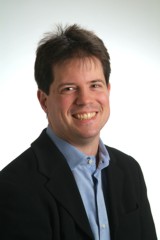 Dr. Stefan Gillessen of the Max-Planck-Institute for extra-terrestrial physics (MPE) at Garching near Munich will be our first speaker on Tuesday, March, 1st, 2011:
“How the Big Bang Sounded”
For a long time, cosmology was held to be a little on the shady side among the sciences. There were too few cosmological parameters that could actually be measured, too much speculation was possible. This changed drastically during the last few years: satellites are investigating the light echo of the big bang, thus giving the scientists very precise insights about what happens in the young cosmos.
For instance, the mixture of ingredients for the universe contains only little normal material. To make up for it, however, there is plenty of dark material, and a dark form of energy penetrates the cosmos. As opposed to this, the geometry of the universe seems to be rather simple, namely flat. These results fit rather neatly into the concepts cosmologists have been working out for many decades.
The presentation will introduce the modern big bang theory and will explain in detail what the Nobel-prize winning measuring results of the satellites COBE and WMAP mean for the universe: by now, the big bang is an empirically recognizable concept which has been well tested.
Roland DürreFriday February 18th, 2011
Dissertational Theses
I am a little surprised that our politicians do not initiate a special protective legislation: maybe it should be forbidden to publish a dissertational thesis written by a civil office holder.
🙂 Or maybe they should at least be pixilated on publication.
I can think of quite a few reasons in favour of this procedure:
Data Protection
(in order not to motivate the political competition to use your own knowledge for their political goals) and
Privacy Protection
(of the politician who in such a dissertational thesis certainly gives access to a lot of intimate details, which will allow the reader to draw conclusions about his personality).
Moreover, the “elaborated code” mostly used in dissertational theses in the political and social sciences might well be misunderstood by the simple citizen who is more used to the “restricted code” as seen in “Bildzeitung”. This might easily cause said citizen to vote in the wrong way and thus the voter’s wishes will be totally jumbled up.
What is worse: the former trust of the citizens in their political leadership might die if, for example, a dissertational thesis in physics or economical science written by an important administration official contains nothing new or perhaps even something downright wrong.
But my opinion is still a little more complex:
The problem is not just a problem of politics!
Marc BornerThursday February 17th, 2011
Summa cum stupiditate
What is the role model function of Federal Ministers? Are they just elected representatives who can then do as they wish, or do they, perhaps, have a prestigious function?
During the last few days, you could rightly assume that the world has become a little topsy-turvy. In one of the most loved and biggest German newspapers (BILD of February, 17th, 2011), Herr Franz Josef Wagner even gives the advice: „To hell with doctorial titles”. That is very interesting. It probably has model function.
But it gets even better, because some people now even start telling you that plagiarism is not identical with plagiarism. You can only call it plagiarism if the person who wrote it “intended to deceive”.

Here is a citation (FAZ of February, 17th, 2011): „For scientific plagiarism, the consequences depend on whether or not there was an intention to deceive. The speaker of the ombudsman for science, lawyer Prof. Wolfgang Löwer, told the dpa: “You have to distinguish between poor science and deceit”. Löwer, too, warned against a prejudgement of Guttenberg. „It is genuinely a question to be answered according to university law, and the faculty has to answer it“.
Werner LorbeerThursday February 10th, 2011
How Are You Supposed to Know You are Highly Gifted?
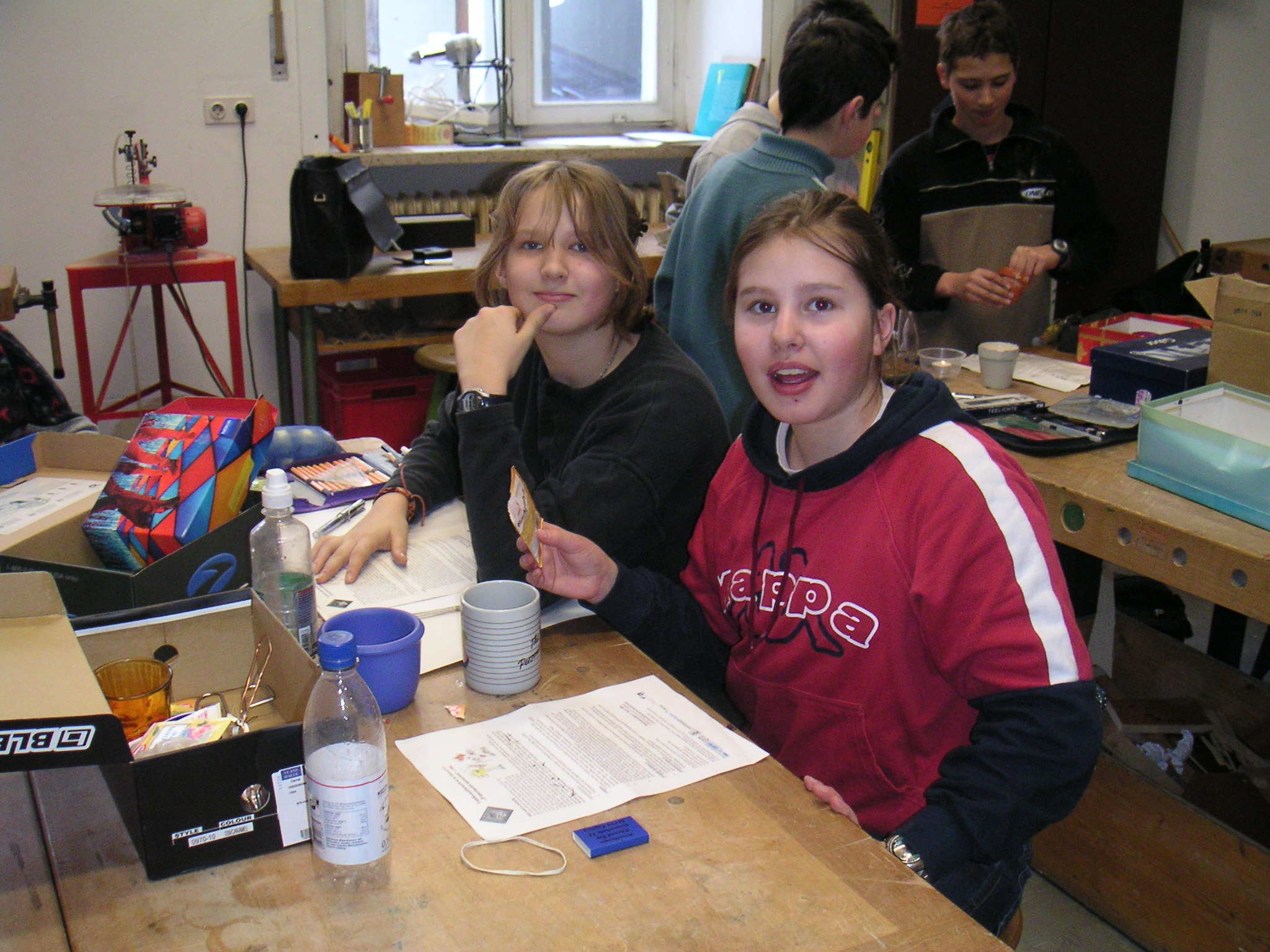 Promotion of the highly talented relies on special courses and special classes.
But then, who of those who have a little talent wants to be highly gifted? As a general rule, what you get out of it is a negative social labelling from outside. Unpleasant expectations from well-meaning grown-ups – even worse: parents – goes together with a demanding society. Neither can you rule out subjective misunderstandings: “I am talented, there is no need for me to work hard and learn anything … “.
mehr »
Roland DürreWednesday January 19th, 2011
“Of People and Enterprises, Leadership and Values, Shareholders and Stakeholders”
Here is the raw manuscript of my presentation in Nuremberg on January, 17th, 2011, at the VWA Nuremberg (Academy of Administration and Business). It was part of the lecture series “Organization and Leadership III” by Prof. Dr. Alfons Madeja.
This presentation links terms that should be meaningful to all entrepreneurs and leaders. Let me start with the word ENTERPRISE. Can you just draw a mental concept of what (as a language game in economical studies) you associate with the term “enterprise”?
Well, you get totally different concepts. You might think of a huge concern like Siemens, but also of a government agency like the BA (Federal Employment Agency) or the Max-Planck-Institute. On the other hand, you might easily think of a mom-and-pop grocery store, the local painter or an architect’s office. And how about Google or Facebook?
How else could it be? Even if you draw a mental concept of the term “table”, which, incidentally, is a lot more palpable than “enterprise”, everyone thinks of his or her own table: one of us thinks of a table with three or maybe four legs, another one thinks of a round, oval or rectangular table, made of wood or metal, with a table top made of glass, a high one for the kitchen or a low one for sitting behind on the sofa, etc.
COMMUNICATION is nowhere near as easy as it looks. Even when it comes to trivial terms, we have totally different mental concepts.
My next question is:
What could an enterprise best be compared with?


