
Roland DürreMonday August 12th, 2013
Technological IF Forum – Mailserver and Mailclient –September, 19th, 2013
On September, 19th, 2013, at 18.00 hours, we of the InterFace AG invite you for another interesting presentation in our “IF Academy” series:
Mailserver & Mail-Client
“History, Basics, Spam&Virusses” or “Concepts for a Private Secure and Reliable Mail Server”.
(Hans Bonfigt / Marc Haber – redoxSystems)
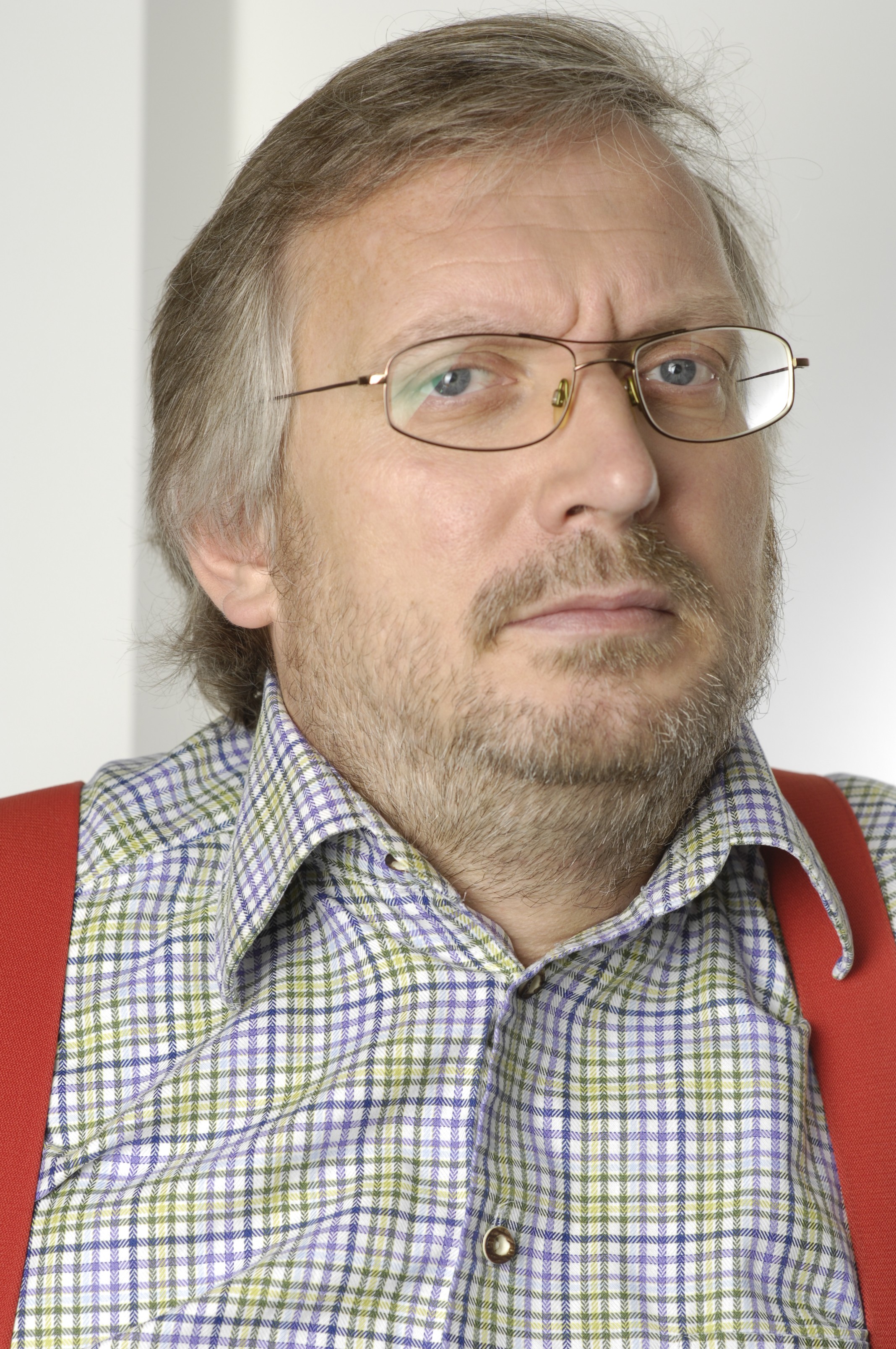 Hans Bonfigt will be our speaker. We are optimistic that his co-author Marc Haber can also come. After the current events and in times of PRISM and Tempora, the timing for this presentation about email and mail in general is just ideal. Consequently, and because we have two of the best experts in the field with us with Hans Bonfigt and Marc, we decided to make a technological IF Forum of this IF Academy event and invite the extended circle.
Every day, we send and receive many emails. It is our totally normal routine and we might very well often be quite thoughtless about it. The underlying technology seems to be a matter of course, even though, more often than not, it is nowhere near as easy as it looks. Hans Bonfigt will introduce the deep secrets and abysses of email traffic and the underlying technology. Here is his summary:
I will give you a historical introduction to the topic “mail”. You will get to see the roots where rats like spammers, viruses and other parasites feast. Also, I will give a clear differentiation between the terms mail server and mail client. This distinction is important, because a mail client is also among those devices you can host centrally. Eventually, I will show you two operating concepts.
My presentation will be structured as follows: warming-up, basics, introduction (around 20 minutes), actual operating concepts (less than 30 minutes) and live demonstration (10 minutes). This should leave enough time for a discussion.
As always in our IF Forum, we will have our “happy hour” after the discussion. I am quite certain that there will be plenty of exciting material to discuss, especially after this kind of presentation.
About the Speaker:
I first met Hans Bonfigt through the IF blog. Hans is a passionate programmer and IT technologist. He actually learned his craft from scratch and consequently also knows all the “camouflaged” levels of many systems. You will find various articles and comments written by him in the IF blog. They are always straight to the point. He ruthlessly criticizes where the development goes astray and where technology is poorly executed. Also, he points directly towards mistakes frequently made. His outstanding ability is to put things in a nutshell.
Registration:
As always, the presentation will be held in the seminar zone under the roof of our Unterhaching headquarter building, starting at 18.00 hours. We look forward to welcoming our guests! For registration to this IF Forum, send an E-Mail.
RMD
(Translated by EG)
Roland DürreWednesday June 26th, 2013
Bernhard Findeiss and Dr. Elmar Jürgens at the IF Forum (Video)
The work of art by Wolf Nkole Helzle which was created during our IF Forum CRAFTSMANSHIP has already been submitted to all of you as a form of saying “Thank You” (Danke Schön).
Besides, the first two IF Forum presentations (Vorträge) by Wolfgang Menauer and Kristin Block were made available live by me a few days ago. Today, you get the next two!
Firstly, we see Bernhard Findeiss, “Technology Evangelist” at InterFace AG. He tells you about “a day in the life of a software craftsman”:
Dr. Elmar Jürgens of CQSE reports about his own experience and the good team results with Peer2Peer reviews in the interest of quality:
Thanks to Bernd, Elmar and Friedrich!
RMD
(Translated by EG)
Roland DürreTuesday April 16th, 2013
Video: “Get in Shape!” Now Available (Beer&Informatics)
In our Lecture Series (Vortragsreihe)
“IF Technology – from Computer Scientists for Computer Scientists”
(also known as Beer&Informatics), Johannes Schmidt gave a presentation on March, 21st, 2013:
Get In Shape!
How Video games and activity control will get us off the sofa?
We made a recording of this beautiful and interesting presentation and filled two video tapes with it. Here they are – very much to be recommended!
In the first part of the presentation, Johannes Schmidt gives an overview of the history of activity control.
What is the difference between Sony EyeToy & Nitendo Wii and Microsoft Kinect?
The second part shows you how easy it is nowadays to program this technologically very challenging topic.
Including live programming!
Our next Beer&Informatics presentation will be on May, 16th, 2013. Again, the location is our Unterhaching office building.
The presentation will be about:
“Ubuntu & Android as Used in Business”
The practical test. – What exactly can the windows alternatives do? Features, problems and solutions. An overview.
Alexander Jachmann (IF-Tech AG) will tell us everything about the current state of affairs on that Thursday. And, of course, there will again be beer and meatloaf afterwards.
RMD
(Translated by EG)
Roland DürreMonday March 25th, 2013
Get In Shape! – IF-Academy – March, 21st, 2013
“Get in Shape!” held on March, 31st at the IF Academy is now over. It was a truly nice presentation by Johannes Schmidt. As soon as the video recording is finished, we will make it available to you.
After “Get In Shape!”, we will present
“Ubuntu & Android Usage in Business”
The test in practice – what can Windows alternatives really achieve? Features, problems and solutions. An overview.
On May, 16th, 2013, Alexander Jachmann of the IF-Tech AG will update us on the current state of affairs. It will, again, be very well worth watching, so write down the time! And the other scheduled presentations can also already be seen on the poster.

RMD
(Translated by EG)
Roland DürreThursday March 14th, 2013
Presentation by “(Fe)Male Students for (Fe)Male Students”
Since it is our upcoming event, here is the poster announcing the next IF Academy presentations. I am always happy to remind you of “upcoming events”:
Johannes Schmidt (TUM, IF-Lab/InterFace AG, Glassbox Games) will speak on Thursday, March, 21st, 2013, starting at 6 p.m. at the InterFace building in Unterhaching. His Topic
Get Under Way!
How video games and movement control want to get us away from being couch potatoes!

Of course, this invitation is not exclusively for f(e)male students. The event is free for all who want to come. After the event, we will again have a little “happy hour”.
For more information on the series of presentations by “(Fe)Male Computer Scientists for (Fe)Male Computer Scientists” click here. If you want to print the poster in high quality, just send an email to me – I will gladly send you the print PDF version.
RMD
Werner LorbeerTuesday March 5th, 2013
John von Neumann – Elegant but Overcharged?
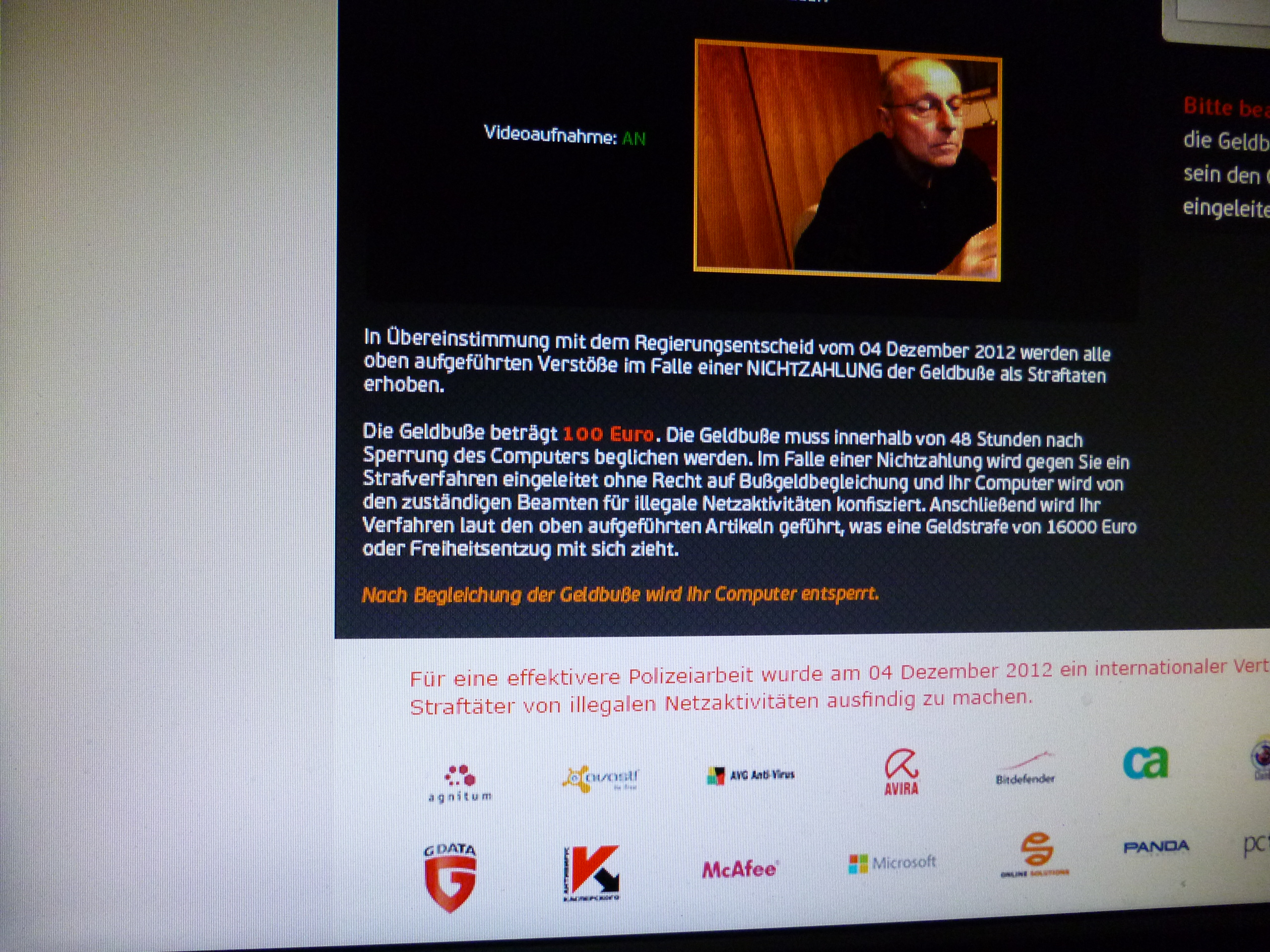
BKA Virus took over. Property has been confiscated.
The data are the program? Really ingenious, truly dangerous.
Here is my experience in a nutshell: while AVIRA professional was running, the BKA virus took command. I experienced live how the windows registry was overwritten and then there was the usual command by the virus… 100 € – or else no more access.
How is that possible?
What is the requirement for a chain of symbols, called virus, to gain the status “executable” on my PC? I will go so far as to come up with the following theory: program and data cannot be distinguished, because they have the same status. I go back and arrive at the Turing links which then became the pattern for the von-Neumann principles for computer construction.
I presume that this is where the errors originated. If every string can be advanced to program code by an interpreter, all doors are open for everything. In particular, the owner will be robbed of the right to property by some network criminals who were given the executive right by some crazy interpreter.
If you take a look at the technology of patches and patchworkers over the last few years, then you have to note they put civilization at risk. But they cannot avoid this, because the machines they have to work with do not permit other solutions – due to their flat data logic.
Assuming I had a free wish, I would wish for Post-Neumann machines that can guarantee the user the ownership of his rights on the PC. These machine principles probably already exist. If not: I have some blue—prints.
wl
(Translated by EG)
Roland DürreFriday February 15th, 2013
Get In Shape! IF Academy – March, 21st, 2013
On March, 31st, 2013, Johannes Schmidt will be our speaker at the IF Academy. He studies Informatics at TU München, minoring in Medicine. “Additionally“, he also works at the InterFace AG IF lab.
 He has also several years of experience as an entrepreneur and started Glassbox Games with a group of friends. The young team programmed all kinds of smaller video games and Apps for various platforms.
In order to try and learn new things, Glassbox Games was founded by the same group. By now, Glassbox Games already won some smaller prizes and developed into a small enterprise. The goals have grown and now include serious entrepreneurial visions. And, of course, the Glassbox Games and InterFace AG are closely connected and on very friendly terms.
In his presentation, Johannes will focus on “movement control”. He will tell us about the historical development of this technology and show in a practical exercise how easily this technically really demanding topic can now be programmed.
Besides, he will introduce an IF lap project that reasonably integrates movement control. The presentation will conclude with a short outlook on what we might expect in this sector in the near future.
As always, the presentation will be held in our seminar zone. I strongly recommend it. Johannes will take us on a trip to a world that is alien to many of us, but it might suddenly become a very relevant part of ”common IT“. You really should have some basic understanding of it.…
We start at 6 p.m. – visitors are welcome from 5.30 p.m. After the presentation, there will again be a happy hour, called “beer and informatics”.
We look forward to welcoming many visitors from all age groups!

- Here is where Glassbox Games had their display in the Olympia-Halle when the Major League Volleyball match Generali Haching – Berlin Recycling was playing.
Of course, Glassbox Games also have their own Website and can be found on Facebook.
If you are interested in the tournament, click here.
RMD
(Translated by EG)
Roland DürreWednesday January 16th, 2013
Knowledge and Humour for Computer Scientists
On January, 17th, 2013, the IF-Lab and IF Akademie at InterFace will start a new series of presentations (Vortragsreihe) at Unterhaching.
Thomas Baldus of IF Blueprint AG will be the first speaker at 6 p.m. (in the InterFace building, top floor, teaching area). He will speak about:
APPetite Whetted for Microsoft?!
How exactly does the new taste offensive look as it reaches our shores after its trans-Atlantic voyage?
For more information on the series of lectures, click here: IF-OPEN. Very important – this is not just about the lecture, but also very much about “meeting” during a presentation in the modern format with a “Happy Hour” after the event.
I look forward to a huge audience. Also, I am looking for speakers who would like to share their knowledge and fill the slots on other days. Here is our motto:
From practitioners for practitioners.
Or:
Informatics & Beer.

RMD
Roland DürreFriday November 30th, 2012
The Change in Management (Presentation)
The two presentations I gave last week on “The Change in Management” never got boring. I enjoyed them very much and I got the impression that my audience, too, had fun. Consequently, the feedback I received was also very nice for me
Since the presentations were quite interactive, it is not easy for me to put them in writing. Still, let me write down a few points, even if quite a few things that happened during the presentations will be lost to you.
Change will come – if we want it or not.
My two presentations were about
- Project Management;
- Management;
- Entrepreneurship;
- Leadership;
- Innovation as Creative Destruction;
- Craftmanship;
- The “Co” Era: co-creation, co-programming, co-operation …
- Future is Female
Why do so few women serve time in prisons?
All these are elements both of our private and professional world. In enterprises and institutions, we create future. The following factors play an important role:
- The culture we practice in the social systems and
- how said systems are organized.
Processes of communication, decision and responsibility change.
Who knows the terms:
Barcamp, Jam Session, OpenSpace, Fishbowl?
If not, maybe you should look them up in Wikipedia.
Today, the following is important:
Sharing knowledge, hand on experience. From those who are in the thick of it for those who are in the thick of it. Consumers want to turn producers.
You meet at eye-level. Fear-free rooms make creativity possible.
What was it like in former times?
- Trees grew from the bottom to the top.
- At the top, you had the hierarch, clear command structures, disciplinary bosses.
- And it worked for a long time. It was a simple and well-structured, and, above all, a stable world.
Example: German electronics concern (dealing with everything around electricity) as a hierarchical organization. It was built following the pattern of the German Reichswehr. Build up and procedures are organized, structured into enterprise sectors with up to 10 hierarchical levels, staff divisions for shared tasks, such as F&E, Marketing and all kinds of central functions. - That is how the matrix: organization with full/dotted lines and staff and central units was created.
- Example: electronics concern, business areas motors/generators, small appliances… Shared design, etc., sales, etc., research were central staff units.
- This organizational model originated with the industrial revolution – Taylorism-style and mechanically. And for a long time, all went well with it.
- After a few years, the organization (mostly only parts of it) had to be modified. But that was easy.
Today, this is no longer an option – which is why so many people lament about their enterprises suffering constant re-structuring. Except that this is not enough for following the speed of change. Consequently, “after the re-structuring” more and more often means “before the re-structuring”. Even worse: the next re-structuring will begin before the last one is finished.
And even in nature, trees grow from bottom to top. The first ones who noticed this were a few idealists in the informatics sector. They put the trees upside down.
- But then, it is not an option to turn trees upside down.
- It would make the CEO the one who supports all (big Frederick as the country’s number one servant).
- So you see, trees are not enough.
- New means of communication, too, cause change. Change brings communication.
- This is how the transition from the tree to the network happens in the shape of a ball in the three-dimensional space.
(Note: even in military dimensions and in warlike conflicts, it seems that – when all is said and done – network-like structures are superior to hierarchical command structures, even if the latter have a huge resource superiority).
Well, all of this is not precisely news. As early as in the 1980ies, there was a remarkable development, for example at St. Gallen College. They came up with a “management model” which makes the HSG world famous. Its basic points are the eight theses by Hans Ulrich – “Management – Essays, part 2, 1981 – 1998 On the Change in Management”:
- Accept the uncertainty and unpredictability of the future as normal state of affairs!
Strategy as planning of a future: acceptance that decisions will always have to be made with an uncertainty factor. - Expand the limits of your mental concept!
Against the “but” … and for freedom of ideas. But also: sharing knowledge. - Applying the categories “both-and“, instead of “either-or“!
Black-and-white is out, colorful is in. - Thinking multi-dimensionally!
Balancing of interests in an ethically responsible way. Basically, humans can only deal with three ideas simultaneously. - Self-organization and self-control as the model for your enterprise!
Responsibility, Subsidiarity. - Consider a manager’s job as a meaningful task that makes sense!
New management image. - Focus on what is really important!
Working economically. - Make use of group dynamics!
Cultures, symbols, rites, rituals.
Today, all is about producing knowledge quickly and shaping the future together. Consequently, what we need is creativity in order to find the problems (first creative obligation). After we found them, we have to make use of our knowledge and generate solutions.
Taylorism and “mechanism“ is no longer possible in modern social systems. It is better if we gain the necessary knowledge through the new communication formats.
(Note on private life: the traditional family model, too, was Taylorist and mechanistic. Does anybody still want it?)
Unfortunately, many managers to this day do not understand it and many enterprises still live in the yesterday. This also explains why the “new enterprises” are such a success. It took them only a few years to overtake the “old industry”.
The roots of what happens today and in this country can be found among the (then criticized) prophets of the Bonn republic, such as Adorno and Habermas (Frankfurter School):
Dominion-free/fair discourse as a basis (Habermas)
- No outward restraint must hinder the discussion.
- Having the best argument is the only reason for winning.
- Everyone gets an equal chance to take part in the discussion.
- Everyone must be capable of “self-portrayal without offense“ and make himself transparent for the others.
- Everyone must be prepared to talk about the basic decisions he made in life and be prepared to have them criticized. (There is a clever system of speech and counter-speech, having to prove all you say, experience, authority, etc.).
- Nobody enjoys special privileges because of his age, experience, authority, etc.
- Everyone must be prepared to change behavioral expectations with everybody else. The same is true for switching roles.
- The discussion will continue until a consensus is reached. As soon as the truth is accepted, it will determine the future life and behavior of all the parties concerned.
It all sounds unrealistic and utopian, but it will become more and more reality:
- Through formats such as jam session, barcamp, openspace, fish bowl;
- Pecha Kucha, Ignite;
- Round meeting halls;
- Web 2.0 (interactive Blogs, Twitter)
- Wikipedia and Open Source
- Social Media like Facebook and Google+ as a logical conclusion.
Thesis:
The dominion-free discourse is filled with life. In a hybrid combination with the internet (social web), the new world of shared interests gets stronger and stronger. A new society of communication and “gaining knowledge“ is built. Belonging and sharing get more and more important as values.
And being part of it will make you happier and more successful!
So I tried to give a future-oriented presentation.
RMD
(Translated by EG)
Roland DürreTuesday November 20th, 2012
Data Security and Industrial Espionage …
When discussing data protection and security, you often hear the term “industrial espionage”. Federal agencies or our oh-so-important business associations keep warning us:
Over the last few years, industrial espionage increased dramatically!
And, of course, the focus of said espionage is on German enterprises and their know-how.
The same sentences can also be read in a survey done by “CORPORATE TRUST – Business Risk & Crisis Management GmbH”.
You can access it through the following link . It is rather worth reading, especially with respect to how you can make people fearful?
You will find the warning that “cyber war has become reality a long time ago” and that it “has arrived in the middle of our society”. Neither can the “computer worm Stuxnet“ be ignored. After all, it was “probably developed especially in order to sabotage the control mechanism Simatic S7 – which controlled the frequency converter of the motors in Iranian nuclear programs.”
(Note the word “probably”).
To be sure, the exact goals of the customers were unknown, but the complexity of the attack shows that we went from an era of script kiddies and crackers towards a new dimension of danger – etc.
 Mind you, these are all original sentences taken from the study. The very choice of words in its martial character already makes me sceptical.
Regardless of this, I take the subject of data theft a lot more seriously than, for example, the fear of personal data being abused. I also believe that “stolen” data will help you to reach your goal faster than having to develop “something new”.
I have a vivid memory of a project we did a little less than 30 years ago. We were asked to develop something totally new. Except that we did not have the slightest idea how the “new” could be done. In those days, studying the sources the competition used was quite helpful. And to this day, I do not know if we made use of said sources legally or, maybe, in a certain shady area.
Still, I do not think industrial espionage is quite as menacing as it is projected – and not only in the internet. One of the reasons I give for this is that these fear-inspiring studies originate with firms which want to sell special counter-espionage services and products. And, of course, federal agencies and business associations are quite ready to chase the pig through the village. After all, there is nothing else they are busy with. What a nice idea to employ James Bond! Isn’t it a beautiful shiver you feel whenever you hear how evil the world is and how you yourself are absolutely powerless?
But let us remember what it used to be like!
 When I worked for Siemens, we were absolutely prohibited to take any secret documents with us when we left the building complex. And almost everything was secret. Consequently, there was a random generator at the portal. Occasionally, it lit up. When it did so, you had to open your briefcase and show what was inside. It went without saying that taking pictures on the factory premises was not allowed.
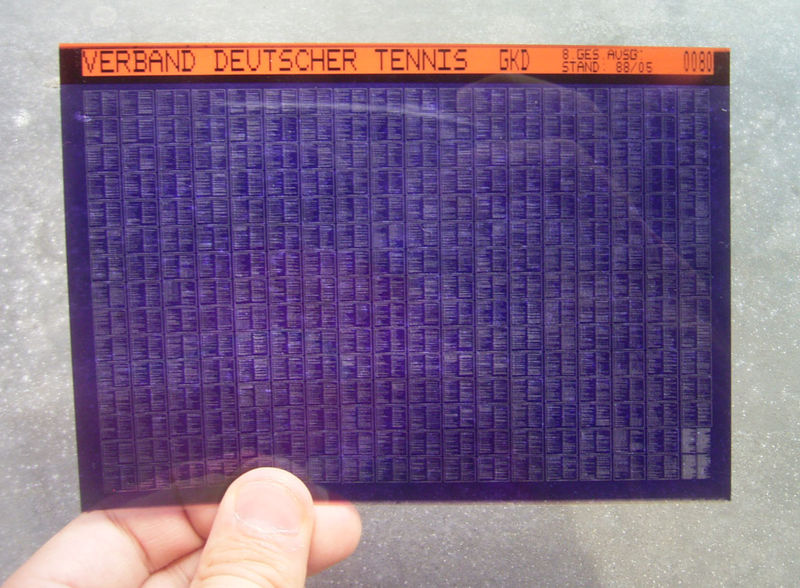
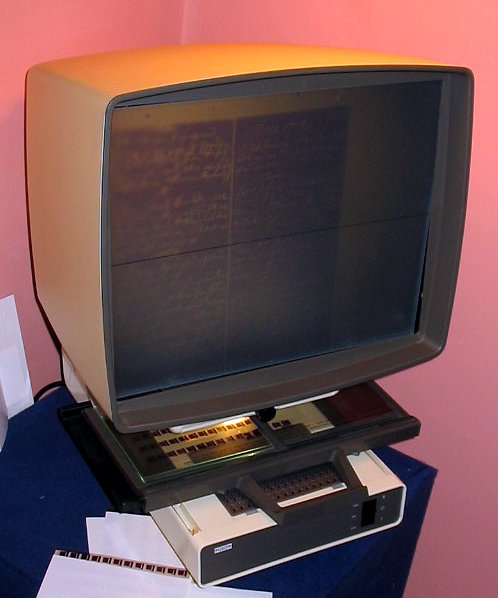
Those were also the times when we used those blue “Micro-Fiche-Films”, along with the reading devices that went with them. Micro-Fiche, or rather microform is the first technology I know which you could use for storing many data on little material. For us, it was usually sources of complete operating systems that were stored on a small square of film so we could carry it around with us in our briefcases.
Of course, it was not realistic that the secret papers were never leaving the factory premises. For one thing, our firm was quite distributed. Some data were needed when you went to see a customer. And once in a while, you also wanted to do some work at home. Consequently, we had permission papers. If you had this paper, you were permitted to take any secret paper you needed. The higher echelons – I do not remember up from which AB or GB level you qualified – were also permitted to take secret documents without the permission paper. I also do not remember if AB truly was short for “departmentally authorized“ and GB for “generally authorized“.
But then what a strange (and totally stupid) kind of firewall was that? It was certainly no more secure than the modern firewalls offered by IT?
Incidentally, the first two colleagues from the former GDR we employed directly after the re-unification confirmed this opinion. They came directly from Robotron Dresden. And they told us that, naturally, at Robotron, they always had the latest plans of the Siemens chip developers on their desks the moment they were made. Except they were not able to put them to any use. The necessary raw material (purest Silicium) could not be obtained in the GDR. Neither did they have the necessary tools to even produce the prototypes.
To be sure, I do not know if our ex-GDR engineers were just after spinning us a good yarn, but I can easily imagine that this is actually how it happened. Basically, I believe data will always end up where they should not be. But mostly it makes not the slightest difference, even if, perhaps, you get quite annoyed, and justly so.
But I also believe the methods changed. And the new methods are a lot more efficient, even though they have nothing at all to do with IT. Let us take a look a China, where, allegedly, the enterprises want to spy on Western firms. Do they really need to do that? Or are there, perhaps, far easier methods?
Here is what you can read in “invest in Bavaria” at “China in Bayern”
Currently, more than 130 Chinese enterprises, for instance Huawei Technologies, Pearl River Piano, ZTE, Yingli Solar, ET Solar and a little under 11,000 Chinese citizens reside in Bavaria. About a third of them live around Munich. Approximately 3,000 Chinese students at Bavarian universities further attest to how attractive the Bavarian universities are.
I also know that there are Chinese branches in the “regions with weak infra-structure“ in Bavaria that have such lovely scenery. Those Chinese branches specialize on R&D (research and development). Actually, these enterprises are quite heavily subsidized by the Bavarian authorities – and accordingly, their moving here is celebrated quite bombastically. Because, as a general rule, F&E is a clean sector. It does not damage the environment and attracts intelligent engineers.
And what is the first thing a Chinese F&E enterprise will do? No question! They lure away the German engineers formerly employed by their German competition. And the best ones at that! Those with exactly the kind of know-how most urgently needed in China. And the German engineers are happy to come. They are quite attracted to live cheaply in a nice place, do some F&E in a modern laboratory and mostly even be paid better than before. This is how the Chinese can choose from the best persons with the right knowledge. Now isn’t that a lot more efficient than having to crack networks and servers?
Neither can I find any fault with it. After all, we live in a globalized world and I rather like the Chinese with their friendliness and tasty cuisine… And I seem to remember “knowledge is the only raw material that grows as you share it“!
After all these ideas, I read the aforementioned “study” with totally different eyes. “Installing fear“, is, after all, a very successful marketing strategy…
RMD
(Translated by EG)
P.S.
I took the pictures from the central media archive Wikimedia Commons. They were taken by Nichtich and Tomasz Sienicki [user: tsca, mail: tomasz.sienicki at gmail.com]


