
Roland DürreFriday May 14th, 2010
Technology
Technology and accidents are inseparable siblings. Because there is no such thing as safe technology. This is true for the coach, the bicycle, the railway, the plane, electricity, nuclear energy, and gene technology and oil production.
Even “100% safe” technologies, such as cable cars, sometimes have accidents. Sometimes a heater blower causes a cable car to catch fire, sometimes the wing of a fighter jet cuts through the cables of a passenger tram. More often than not, human failure is the reason for accidents, for instance with the absolutely safe magnetic railway.
We try to make technologies more and more dependable. And to reduce human failure. We are a success in this respect, even if there are occasional drawbacks. But a hundred per cent safety is just not possible.
We manage to reduce the risk. But the technology gets more and more powerful. And the more powerful the technology, the more significant its effect and, in case of accident, the possible damage. Incidentally, the world’s biggest machine is the CERN particle accelerator. I just hope nothing bad will happen there.
Roland DürreFriday May 7th, 2010
IT
IT Guideline for Medium-Sized Enterprises
I often hear directors of medium-sized enterprises lament about IT technology being so complicated and costly. By way of answer I mostly give them the following very pragmatic guideline:
Roland DürreWednesday May 5th, 2010
Electric Cars
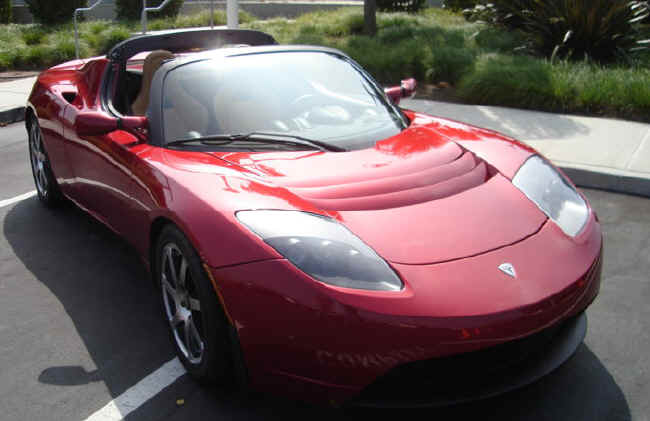 According to our Federal Chancellor, there should be 1,000,000 electric cars on German streets by the year 2020.
To me, it seems unlikely that we can even get anywhere near that number of cars powered by electricity and still being equipped with anything remotely like the standards of modern cars with combustion motors (driving performance, heating, air conditioning, electrical appliances and functions, not to mention cruising range).
Roland DürreMonday May 3rd, 2010
Tag Along Science
Frau Prof. Dr. Kathrin M. Möslein at IF-Forum
On March, 2nd, 2010, Professor Möslein gave this year’s first presentation of the IF forum at Unterhaching. She spoke about:
“On Our Way to Tag Along Science!”
We filmed her presentation, cut the video into three parts and loaded them to YouTube. So now you can not only read the report here at IF blog, but also watch the videos.
Here they are:
1 – OpenInnovation
Roland DürreSaturday April 17th, 2010
An Interdisciplinary Retrospective of RE
Here is my report about what I presented at TUM.
On April, 13th, 2010, I gave a presentation at “Hot Spots of Software Development 2010” on:
Requirements Engineering (RE) in Small and Medium-Sized Enterprises.
The event was organized by TU Munich in cooperation with BICC-NET and VSEK.
When I prepared for the speech, our experts for requirement engineering, Michael Greulich and Johannes Naumann were a huge help. Many thanks to Michael for his precious advice and Johannes for the beautiful slides for the presentation RE ([download#77]).
The general motto of my talk was:
Talking about problems inflates the problems.
Talking about solutions improves the solutions.
I first read this “great sigh” on twitter. It was written by a suffering human being belonging to my business sector.
Roland DürreMonday April 12th, 2010
Hot Spots in Software Development 2010
On April, 13th, I will give a presentation at Munich Technical University on
Requirements Engineering in Small and Medium-Sized Enterprises
The sub-title is:
An Inter-Disciplinary Retrospective of Requirement Engineering (RE)
Talking about problems inflates the problems!
Talking about solutions inflates the solutions?
Here are some ideas that will recur in my paper:
Roland DürreSunday March 28th, 2010
Security, Signature, Digital Signature.
 In former times, I often wrote letters. How very long ago that seems! It has been a long time since anybody received a personal letter from me.
It used to take a few days for conventional letters to reach their destination. You could never be entirely sure if they actually arrived at all. That is why we had special services like “registered mail”. This service was quite expensive and therefore only rarely used, just for very special purposes.
For short messages, you used postcards. They were less expensive. Nobody was very concerned about people reading the content of a postcard while it was on its way.
Roland DürreWednesday March 24th, 2010
Green IT 2
Some of the feedback I received suggests to me that my article Green IT probably contained a little too much technological gibberish, after all.
So let me try to tell you the same again in very simple terms. Today, IT can be exemplified and explained in a simple architecture using four levels:
- Storage
When talking about storage, we mean powerful NAS or SAN systems used by the servers in the computer centres. By now, huge computer centres have storage room with the capacity of terabytes, some people even talk of petabytes. - Server
Nowadays, we use the term “server farms”. In these farms, any number of computers performs in a gigantic calculating and processing dimension. In such a physically large system, you mostly simulate many virtual servers later used for all imaginable ends. - Network
The internet is based on a gigantic network. Mostly, the feeders of the internet are separate connected networks. - Client
Clients are the personal PCs, Laptops, SmartPhones and whatever else we have. They are connected to the internet either through networks (VPNs, LAN, WLAN …) or through providers (FIBRE, UMTS …).
Now what I postulate is that a gigantic wastage takes place on every one of these levels.
Roland DürreSaturday March 20th, 2010
KIS,S – KISS or Yet Another KISS
KISS can be interpreted in numerous ways:
Keep it simple, stupid. („Halte es einfach, Dummkopf!“; sinngemäß: Mach’s so einfach wie möglich)
Keep it simple and stupid („Halte es einfach und leicht verständlich“; sinngemäß: „In der Kürze liegt die Würze“)
Keep it small and simple („Gestalte es klein und einfach“)
Keep it sweet and simple („Gestalte es gefällig und einfach“)
Keep it simple and straightforward („Gestalte es einfach und überschaubar“)
Keep it short and simple („Gestalte es kurz und einfach“, aus dem Bereich des Marketing)
Keep it simple and smart („Mach es einfach und schlau“)
Keep it strictly simple („Mach es konsequent einfach“)
Keep it speckless and sane („Mach es sauber und gesund“)
Keep it sober and significant („Mach es schlicht und wesentlich“)
I took these 10 abbreviations from Wikipedia, where you can find more on the KISS principle.
Well, I constantly suffer a little under the criticism of some very scrupulous people. You could also call them know-it-alls.
Roland DürreThursday March 11th, 2010
Neuperlach
 On Tuesday, March, 9th, they elected the workers’ council at Siemens Neuperlach. Throughout all the parts of the building still used by Siemens, the loudspeakers were heard inviting everybody in German and English in the most urgent terms to vote. It was so loud you had to interrupt your meeting.
Although I had spent plenty of time behind these walls during my life, this was the first time I heard the loudspeakers consciously. I am always a little moved by loudspeaker announcements in buildings. The reason must be a mixture of school, armed forces and Orwell.
All the time, some rumours are spread behind the fences at Siemens Neuperlach. Still being on friendly terms with quite a lot of people there, I am informed about all the newest whenever visiting.


