
Roland DürreWednesday October 31st, 2012
Why So Many Conferences and So Many Presentations Are No Good!
A short time ago, some of my friends attended a forum conference on project management. Their reports when they came back were not too enthusiastic. Occasionally, there was a keynote that really made a good impression on the listener. Some streams, too, obviously were high enough quality. But all in all, most of the presentations had been rather a disappointment – dominated by insignificance, lack of practical applicability, self-importance and adverts. Besides, many presentations were rhetorically deficient and often just manuscripts read aloud.
This is no exception from the rule. Especially with expensive conferences that have a very good reputation, I have started noticing quite some time ago that the quality of the presentations deteriorates. Consequently, I only attend these kinds of events if I absolutely have to. Basically, this is regrettable, because it is really important to attend conferences and meet others. You want to contact people, make friends with them and communicate with them. However, they are also time-consuming. And who, nowadays, is keen on wasting two or three days in a row if the result is less than satisfactory?
I have an explanation for this doubtlessly existing phenomenon of poor presentations at conventional conferences. As I see it, one of the reasons is how the presentations are selected.
At regular intervals, I receive “calls for papers”, often quite personal ones. Many of these events actually have titles that I find rather interesting: business, leadership, management, projects, change, innovation, agile methods. Actually, I could even well imagine myself contributing with an interesting presentation once in a while. But in order to be on the list of speakers, I would have to hand in a paper. A paper in which I would have to make up my mind what to talk about half a year in advance.
To be perfectly honest, I find this a little too stupid and time-consuming. Even the extra motivation of being permitted to attend the conference without having to pay for it does not make a difference. Just like, basically, I do not have two days at my disposal for listening to more or less unattractive presentations.
Besides, I have enough invitations to speak at all sorts of events and institutions. That is more than satisfactory for me. If a group who asked me for a presentation is to my liking and I have time, I agree to speak for them. If it is a university and/or non-profit or “modern” forum, my presentation is always “for free”. I consider itt part of the policy “sharing knowledge”.
My friends and the good speakers I know follow the same principle. None of them needs to hand in a paper, just in order to present themselves at a conference or in order to advertise his or her enterprise. If the event is for a good purpose, they talk for free or ask for a donation for some charitable organization (I mostly choose AI). Or else, they demand a honorarum, sometimes even as high as Mr. Steinbrück.
So what kinds of people do typically hand in their work following a “call for papers“? I often find people working at the university who wish to see their work being noticed outside their direct sphere, employees of firms who want to improve their marketing. Their maxim is: the boss said “Mayer, why don’t you give presentations at conferences A, B and C?“. Sometimes you also find people who are fanatically in the grip of a topic. Or super theoretical persons who want to spread their personal theory like a Messiah. Mostly, however, you will find persons who I am sure do a good job, but basically want to earn their merits, because by improving their reputation, they hope to gain professional standing. Which is definitely not reprehensible.
Since there is usually a limited number of papers submitted, all those who have sent a paper will actually be permitted to speak. After all, the organizers will be happy to have names to put into the stream slots. If there are more papers than slots, we have the next problem. As a general rule, the selection follows the paper situation. There is no correlation between the formal quality of a paper and the competence of the speaker. Consequently, it is quite possible that even the good speakers will fail to qualify.
I can imagine solutions to this problem. For example, the committee might want to see a presentation? If this is too much ado, you could send a recorded video tape. Or, even better, a link to Youtube. To be sure, you will not have the live-effect, but at least you get a pretty good idea. It would be even better if the committee were to meet the presenters personally. They might arrange to talk about the presentation and thus be able to get a rounded picture of everything.
Here is a very pragmatic and perhaps innovative idea of mine: invite many people to attend a conference, look at all the registrations with a big team and ask those participants you know personally, directly or indirectly to give a presentation. Of course, this causes a hen-egg problem, because the attendants must be convinced it will be a super conference and the right kinds of people will attend.
But even this will not make a difference about one fact: those who actively take pains to give a presentation are usually not the good ones. The good speakers are those who are asked to speak all the time, anyway. This impression of mine got confirmed when I attended the GSA (German Speaker Association) competition. At regular intervals, the GSA does some sort of “Germany is looking for the super model“ for speakers. If you are a member or wish to become one, you can introduce yourself with a presentation. Most of the applicants are “professional speakers” who (want to) make a living as speakers or trainers. The appallingly low standards shocked me. Most of the “professional speakers” I saw could not hold a torch to the people I know from Barcamps or Jam-Sessions.
No, the good speakers are definitely those who get asked to speak, they never have to apply. Or else, they sit among us silently, just concentrating on their competence. So the trick is to find them! Or they spend a weekend at a Barcamp where they exchange knowledge. Conferences are actually the only places where you usually will not find them.
My closing remarks in this article are to advertise our PM-Camp at Dornbirn between November, 8th and 10th. (Unfortunately, it is already almost completely full).
RMD
(Translated by EG)
Roland DürreWednesday October 17th, 2012
Video: Jens Hoffmann at the IF Forum “Project Coaching”
After the “fish bowl” of the first section and a short break, Jens Hoffmann opened the second part of our technological IF Forum. The second part consisted of three presentations. Jens started with an appeal for “systematical creativity“ or “creativity with systems“.
I hold Jens in very high esteem. In my perception, he has an exceptionally precise way of thinking things through and is a critical listener. Regardless of being rather critical (or perhaps because of it), he always has an open ear for fantastical and creative ideas. He is someone you can wonderfully make plans with. As a sparring partner, he is irreplaceable. Here is his presentation:
The Third Technological IF Forum was about “Project Coaching“ and the speakers were from “The best of PM-Camp“.
Jens came all the way from Hamburg just for his presentation – of course he came by train. I am particularly delighted about that. So here I am, thanking Jens for his contribution, which truly enirched our IF Forum.
RMD
(Translated by EG)
Roland DürreMonday October 15th, 2012
Video: Dr. Stefan Hagen at the IF Forum “Project Coaching”
You can now watch the opening presentation of our technological IF Forum by Dr. Stefan Hagen from Lustenau on Youtube. It is a true pleasure to watch.
The Third Technological IF Forum was about “Project Coaching“, the motto was “best of PM-Camp“.
Again, many thanks to Stefan for his presentation. He was responsible to a huge extent for making our IF Forum a success. Stefan is also the author of the most frequently read German language blog on Project Management – pm-blog.com.
RMD
(Translated by EG)
Roland DürreMonday August 27th, 2012
Education
IF blog is now in the middle of its Summer Slump. I am staying near the beach for two weeks, seeing to duerre.de. And I add a few “catch phrase articles” to the “keywords”. Today, I will write about “education”:
In our complex society, education is the basic requirement for success.
This is both true for every individual person and a good society.
Education will create knowledge, knowledge will give you joy, joy generates courage.
If you have knowledge, joy and courage, your chances of happiness are pretty good.
Woe to those societies that economize on education.
Is it possible that the shortest articles are the best?
RMD
(Translated by EG)
Roland DürreFriday August 24th, 2012
(Deutsch) Warum unterstütze ich PM Camp?
Why I Support the PM Camp?
Marcus Raitner is one of the PM Camp protagonists and the founder of openPM. His blog /misc is truly remarkable and even more worth reading. While organizing the PM Camp, he wrote to me:
Since the InterFace also regularly sponsors us, maybe you can write a short article about: “Why we support the PM Camp“. Why not tell your readers something about your company and why you all find the PM Camp such a good idea that you even agreed to sponsor it.
Please send your text to info@pm-camp.org – we will then publish it along with your logo in the blog (www.pm-camp.org).
Here is my reply:
InterFace AG:
The InterFace AG started in Munich in 1984. It was all about agile development of software. Today, we mainly work in sector-independent, process-based and goal-oriented knowledge and pragmatic experience around the often critical use of IKT technology in enterprises. We are a very active knowledge enterprise. Projects play a central role in our company.
Why PM Camp:
Classical educational systems, such as schools, universities and institutionalized associations try to standardize knowledge. The pure acquisition of facts and thinking in pre-defined patterns push creativity to the side.
PM Camps are free, non-institutionalized “Anti-Conferences” and therefore a true alternative to the classical meetings of the “Project Management – Industry”. PM Camps are active, because during PM Camps, you will meet all kinds of people: young and old, female and male, project managers, students, leaders, freelancers and entrepreneurs.
In a PM Camp, you live openness and transparency. The motto of the day is always the non-authoritative, ethic discourse. Everybody thou-s and thee-s each other, all attendants meet at eye level, traditional concepts of the world will be questioned. If you came as a “consumer”, you will soon be turned into a “producer”.
These is an ideal environment for honestly sharing and multiplying experience and knowledge. Consequently, all attendees agree that they did plenty of intense learning and benefited hugely after a short time – and still they all say the PM Camp was great fun.
🙂 Now I look forward to reading this text – or a modified version of it – on the PM Camp homepage this Tuesday.
RMD
(Translated by EG)
Roland DürreTuesday August 14th, 2012
New Videos with Rupert Lay: “Change of Values” and “Going and Going Astray”
This weekend, I downloaded two presentations by Rupert Lay from the year 2002 toYoutube. The topics were:
Going and Going
Astray
From Information to Wisdom
April 2002
Strategies for Coming to Terms with Change
September 2002
I would be happy to know that many of you take a closer look.
Both presentations were given by Rupert Lay for the Ronneburger Kreis. They were recorded on videotape by Bernd Sielaff and edited by Friedrich Lehn.
RMD
(Translated by EG)
Roland DürreTuesday August 7th, 2012
Certifications – Mania or Reasonable? – III
Here is the third and last article of mine on the common addiction to standardizing everything and certifying humans.
A short time ago, my “small” daughter (aged 16) proudly showed me a certificate. She earned it, along with others, last year at school. I was taken aback. Her annual report did not look very good, but to make up for it, she earned a few certificates.
I used to believe that you get taught some general knowledge at school, thus earning your “general qualification for university entrance”. And that said “qualification“ is documented by these reports. Now it seems reports are no longer good enough. Schools, too, now follow the general trend and issue certificates.
But does this make sense? Do “schools”, too, now think they can no longer ignore the speed that seems to prevail in this world? Do they want to prepare the children for their future role as experts in order to later turn them into one of those small links in the world of adults? Because, after all the cheating they started with products, they now also have to certify knowledge and competence?
Isn’t education and gaining new competence something personal and private? First and foremost, you learn and practice for yourself, don’t you? The basis is always your own interests and values. And then you look for experienced teachers who take you by your hand and make it possible for you to learn even more. In order to then look upon your own competence and experience self-consciously and critically, instead of looking at a collection of certificates.
Equipped with your own competence, you can enter the market. Not as a “small functioning executing system”, but as a human being who delights in his or her work. And this is also the only way to further develop your own personality step by step. Without fear of the future.
RMD
(Translated by EG)
Roland DürreMonday July 23rd, 2012
(Deutsch) Teach Me and I will forget, involve Me and I will learn!
Teach Me and I will forget, involve Me and I will learn!
This message was a tweet written by Dr. Hartmut Feucht (@DrHartmutFeucht) as a comment on the article by Stefan Hagen in his pm-blog.com on Emergence and Project Management (Emergenz und Projektmanagement).
What can I say? The sentence says exactly what I feel. And what I have been feeling all my life.
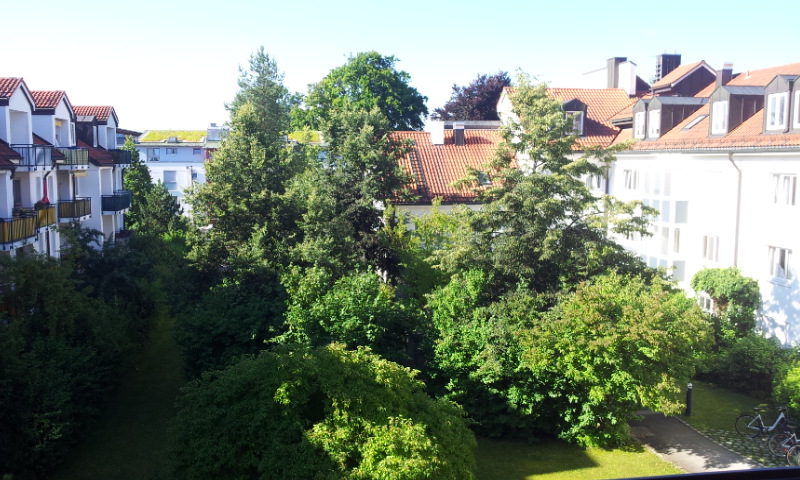 At school, when I had to listen to teachers trying to teach us, my eyes wandered towards the windows where I saw the great outdoors. A little of what the teachers said remained in my memory – if it was interesting. Much of it got lost. Learning for an exam meant preparing in such a way that there was a chance to pass with a halfway acceptable grade.
It was a little better whenever I was permitted to solve a halfway interesting problem. This was often the case in mathematics. But I really only enjoyed it when I was a part of it. Those were the times when I really learned a lot, understood it and, in the truest sense of the word “got a grip on it”.
Here is what Stefan wrote in his article:
Basically, teaching at school, graduate school and university should leave far more room for students to come up with their own designs. The classical concept of a “reading” is, basically, antiquated.
I could not agree more. Except that I would leave the word “basically” out in both sentences.
The current problem, both at school and university – along with what I see as often rather devastating consequences for education and society – is probably that this is not (I hope: yet) understood.
RMD
(Translated by EG)
Roland DürreMonday July 2nd, 2012
Certificates & Mice
Warning:
The title is a little ambiguous in German. This is not about the heaps of money (German: Mäuse) you can earn through certificates! I am actually talking about mice in my garden.
I am surprised to see what kinds of things get certificates today. Both in IT and project management. Even SCRUM can only be realized with certificates these days. Everything gets “standardized” and “certified”. Perhaps we will soon have certified entrepreneurs. What a nice job idea for me when my time at InterFace is up – acting entrepreneur’s certifier!
On the other hand, the guilds tend to get weaker and almost anybody can claim to be a master electrician. All he has to have is some sort of document issued somewhere in the EU that says he can distinguish between plus and minus.
 This is an interesting development, but I fail to understand it. Yet, I am always prepared to learn. Because I, too, have a problem: as of now, we still live in a huge house surrounded by nature. Consequently, we have plenty of small creatures in our garden.
You will see hedgehogs, once in a while even a blind worm or a lizard. Small toads, numerous snails and, of course, mice.
And, what is worse, the garden mice like to visit us inside the house, too. After all, the patio doors are often open in summer.
How can I solve this problem?
The natural enemy of the mouse is the cat. We always had cats (also dogs and other pets). Now we no longer have any. To be sure, the female inhabitants of my household (Barbara, Maresa, Sophie) have been pestering me for a long time with their wish to get a cat, but so far, I always managed to stall.
But now we have mice in our house! So the next step is clear. The only thing that will help is a biological weapon. The time of the cat is approaching. The entire family is enthusiastic. We are dreaming of all different breeds and colours and even argue about the sex.
For me, it is far easier. All I want is a certified cat. That is my priority. It has to have the highest certificate for catching mice. Issued by the German Mice Catching Association (DGMJ). Everything else is irrelevant.
RMD
(Translated by EG)
P.S.
🙂 In my book the new mice-tom looks as follows: wearing a cap issued by the DGMJ with the logo “top certified mouse hunter”. And, of course, it has to wear the black belt around its waist.
I took the picture from the central media archive Wikimedia Commons. The copyright is with 4028mdk09.
Roland DürreFriday May 18th, 2012
Shortened School Year, Lobbyism, Transparency
Today is the last day the graduates from Bavarian “Grammar Schools” of the year 2012 can give written testimony of their competence. They will be asked questions in mathematics.
Today?
Well, today is May, 18th. In Bavaria, the school year is supposed to last until Wednesday (!), August, 1st. We have to thank the Minister of Culture and Education, Ludwig Spaenle for the shortened year. Mind you, we are talking 2.5 months!
Now isn’t that strange? But how did this shortened school year originate?
I graduated from German “Grammar School“ in 1969. A few years before that, the compulsory military service was shortened to 18 months. Up until then, the graduation exams were written at the end of term, in July. Some universities, such as TU München, only allowed freshmen in the winter term (starting in November). The military service for the graduates started on October, 1st, which meant that you returned one and a half years later, at the end of March. That meant you had to somehow spend another half year before you could start with your university studies. In other words, the total time lost for the so-called “W18-Mann” was two whole years.
Consequently, they introduced the “W15+” for the first time in my graduation class of 1969 – strangely enough, the girls, too, were concerned. The underlying idea was simple. If the male graduates who had to be trained for ”defending the country“ were allowed to start their military service on July, 1st and permitted to serve the missing three months “at a not yet specified time in the future”, they would return late in September and the total loss of time would only be one year.
Accordingly, the last school year (depending on how you counted, it was named either the 9th or 13th form), was made a shortened school year. Of course, they stuck to this nonsense until today, even though the duration of the compulsory military service has been shortened several times, which should have made the shortened school year unnecessary.
I had assumed that the introduction of the G8 (reduction of the grammar school time from 9 to 8 years) would have been the latest date for abolishing this shortened school year. Because if you shorten the entire education time so considerably, keeping up the shortened school year definitely seems less goal-oriented than the abolition of an entire school year.
Today, I realize this assumption of mine was totally incorrect. I assume the teachers’ lobby had a word or two to say in the process.
So now we did not get a G8, but a G7.5. This is another one of the escapades of Bavarian educational policy. Maybe Herr Stoiber just forgot to take a closer look when he introduced the school reform.
But then, what can politics do where lobbyism is so strong? Again, it is all about votes. As always…
Incidentally, I do not know a single W15 who later had to go back and serve those missing three months. Well, this is a rather harmless form of the then also quite normal “injustice in the legal procedure of compulsory military service“. Also, I personally know quite a few super athletes who were excused from military service for very fishy medical reasons, regardless of their having been “fit as a fiddle”.
That, too, was quite normal in those days. Well, it is also a kind of lobby, isn’t it…
RMD
(Translated by EG)
P.S.
Incidentally, to this day, I never saw any of my graduation exams again. At the time, we fought quite fiercely for being permitted to see them after correction. But in 1969, the administration and politics were just as arrogant as today when it came to ignoring what the citizens wished. The reasons given were always obscure, if there were any reasons given at all.
Even after the legal preservation time for the exams had expired, my graduation works, which I consider my personal intellectual property, were never handed back to me. As I see it, I have a legal right to intellectual property, at least as far as my German essay is concerned. But they ignored this argument. Of course, I would have been happy to take photocopies, instead of the originals. After all, the paper I wrote the essay on was not my property.
Today, the graduate students do not get their works back either. They can only take a look if very special circumstances are claimed. So is it a surprise that more and more people demand more transparency?
And it also shows that intellectual property is only taken seriously if commercial interests of certain sectors are concerned and they are backed by their lobby. So, again, we have lobbyism. Incidentally, lobbyism can be very stupid, because more and more often, it is detrimental to precisely those it wants to advance.


